


Neuroscience of Emotions & Tools for Improving Emotion Regulation | Dr. Ralph Adolphs


Dr. Ralph Adolphs, PhD, is a Professor of Psychology, Neuroscience, and Biology at Caltech and a leading expert on the science of human emotions. We discuss how emotions shape our attention and decision-making, whether emotions are truly “stored” in the body, and whether facial expressions are truly reliable signals of emotion. We also cover tools for improving emotional regulation, including cognitive reappraisal and deliberate cold exposure. This episode provides a modern scientific explanation of how emotions are created and regulated in the brain and body, their many impacts on other aspects of brain function, and practical tools for improving emotional wellbeing and processing.
Articles
- Investigating Emotions as Functional States Distinct From Feelings (Emotion Review)
- Motivational and emotional controls of cognition (Psychological Review)
- Sustained experience of emotion after loss of memory in patients with amnesia (Proceedings of the National Academy of Sciences of the United States of America)
- Impaired recognition of emotion in facial expressions following bilateral damage to the human amygdala (Nature)
- On the dimensionality of odor space (eLife)
- The human amygdala and the induction and experience of fear (Current Biology)
- Constants across cultures in the face and emotion (Journal of Personality and Social Psychology)
- Emotional Expressions Reconsidered: Challenges to Inferring Emotion From Human Facial Movements (Psychological Science in the Public Interest)
- Are owners' reports of their dogs' 'guilty look' influenced by the dogs' action and evidence of the misdeed? (Behavioural Processes)
- Assessing personality using zero-shot generative AI scoring of brief open-ended text (Nature Human Behaviour)
- Dynamic facial expressions of emotion transmit an evolving hierarchy of signals over time (Current Biology)
- Fear and panic in humans with bilateral amygdala damage (Nature Neuroscience)
- Bodily maps of emotions across child development (Developmental Science)
- What is an emotion? (Mind)
- Organization of high-level visual cortex in human infants (Nature Communications)
- A Bayesian model of category-specific emotional brain responses (PLOS Computational Biology)
- Intensely pleasurable responses to music correlate with activity in brain regions implicated in reward and emotion (Proceedings of the National Academy of Sciences of the United States of America)
- Aesthetic preference for art can be predicted from a mixture of low- and high-level visual features (Nature Human Behaviour)
- Neurons in the human amygdala selective for perceived emotion (Proceedings of the National Academy of Sciences of the United States of America)
- Long-term meditators self-induce high-amplitude gamma synchrony during mental practice (Proceedings of the National Academy of Sciences of the United States of America)
Books
- What Emotions Really Are: The Problem of Psychological Categories by Paul E. Griffiths
- The Neuroscience of Emotion: A New Synthesis by Ralph Adolphs, David J. Anderson
- The Expression of the Emotions in Man and Animals by Charles Darwin
- Descartes' Error: Emotion, Reason, and the Human Brain by Antonio Damasio
- The Book of Human Emotions by Tiffany Watt Smith
Other Resources
Huberman Lab Episodes Mentioned
- Dr. David Anderson: The Biology of Aggression, Mating & Arousal
- How to Expand Your Consciousness | Dr. Christof Koch
- How to Set & Achieve Massive Goals | Alex Honnold
- Cultivating Awe & Emotional Connection in Daily Life | Dr. Dacher Keltner
- Rick Rubin: How to Access Your Creativity
- How to Make Yourself Unbreakable | DJ Shipley
- Science-Based Meditation Tools to Improve Your Brain & Health | Dr. Richard Davidson
People Mentioned
- David Anderson: Professor of Biology, Caltech
- Joseph LeDoux: Professor Emeritus of Neural Science, New York University
- Paul Ekman: Professor Emeritus of Psychology, University of California, San Francisco
- Lisa Feldman Barrett: Professor of Psychology, Northeastern University
- Herbert Simon: social scientist, Nobel laureate
- Antonio Damasio: Professor of Neuroscience, University of Southern California
- William James: established Harvard’s psychology department
- James Gross: Professor of Psychology, Stanford University
- Justin Feinstein: clinical neuropsychologist
- Wim Hof: extreme athlete, known as The Iceman
- Eddie Chang: Professor of Neurological Surgery, University of California, San Francisco
- George Floyd: police brutality victim
- Botond Roska: Professor of Vision Research, University of Basel
- Philippe Schyns : Honorary Senior Research Fellow, University of Glasgow
- Rachael Jack : Professor, Area Lead of Computational Biology, Vanderbilt University
- Doris Tsao: Professor of Neuroscience, University of California, Berkeley
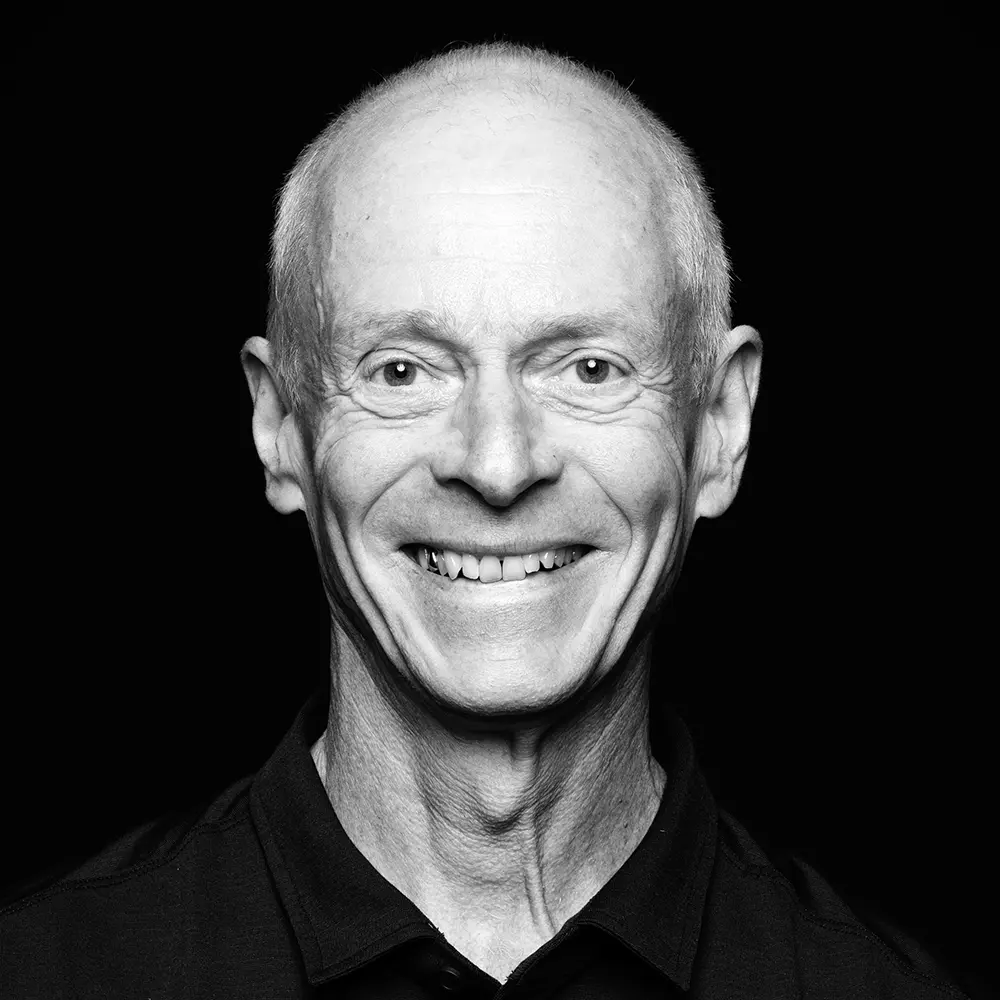
About this Guest
Dr. Ralph Adolphs
Ralph Adolphs, PhD, is a Professor of Psychology, Neuroscience, and Biology at Caltech and a leading expert on the science of human emotions.
This transcript is currently under human review and may contain errors. The fully reviewed version will be posted as soon as it is available.
Dr. Ralph Adolphs:
I see somebody come up behind me. They can see I'm trying to park. They can move over. No. They come right up behind me, go on the horn, and you immediately feel just an immediate anger response, right?
Andrew Huberman:
Mm-hmm.
Dr. Ralph Adolphs:
Well, after the ice bath, it's flat. So there was an immediate automatic downregulation of my autonomic emotional response to a psychological stressor-
Andrew Huberman:
Mm-hmm
Dr. Ralph Adolphs:
... to somebody honking at me, that was trained and generalized from the ice bath. This is an experiment of one. I'm not claiming this as a published study. But, so I think there's a direct autonomic training component as well in terms of the strength and the automaticity, the ease with which you can regulate emotions, that they can become kind of automatically regulated. You don't have to overthink it. It becomes smooth and effortless to some extent, and that's the place where you want to get.
Andrew Huberman:
Hey, everyone. To celebrate the launch of my new book entitled "Protocols," I'm pleased to share that I'll be hosting three live events very soon. The first live event is in New York City at Radio City Music Hall on September 17th. The second event is in Los Angeles at the Dolby Theatre on October 8th. And the third live event is in San Francisco at the Masonic on October 28th. At each of these events, I'll be discussing topics from the book, and my favorite part, taking questions directly from you, the audience. To get tickets, you can go to hubermanlab.com/events and use the code PROTOCOLS to get early access. Again, that's hubermanlab.com/events, and use the code PROTOCOLS to get early access to tickets. Welcome to the Huberman Lab Podcast, where we discuss science and science-based tools for everyday life. I'm Andrew Huberman, and I'm a professor of neurobiology and ophthalmology at Stanford School of Medicine. My guest today is Dr. Ralph Adolphs. Dr. Ralph Adolphs is a professor of psychology, neuroscience, and biology at Caltech University, and a world expert in the neurobiology of emotions. Today, we discuss what emotions are, how they grow and shrink in our brain and body, and why some emotions seem to recruit our behavior and decision-making, and some simply don't. We also discuss where and how emotions are mapped in the body, and we dispel common myths about the brain-body storage of emotions from our past, which is a very commonly discussed topic that frankly, as you'll learn today, many, if not most people, get wrong. We also discuss why some people are able to observe but not react to their emotions, and what tools may assist in helping you build better emotion regulation. As you'll soon realize, Dr. Adolphs is uniquely positioned to explain the real neuroscience and psychology of emotions and how to put that information to use. Today's conversation, therefore, ought to be valuable for people of every age and profession, and for anyone interested in improving their emotional life and understanding of others. And now for my conversation with Dr. Ralph Adolphs. Dr. Ralph Adolphs, welcome.
Dr. Ralph Adolphs:
Thank you, Andrew. Pleasure to be here.
Andrew Huberman:
Longtime admirer of your work because you're one of the few people who has studied these things we call emotions, brain states, cognition, and much more in humans. There have been others in the field of neuroscience, of course, but I would argue few people have combined a real grounding in neural circuits with an interest in what most people think of as a psychological set of issues in a way that also takes into account the animal data and really the broadest picture of this thing that we call emotions. I'm just going to start with a statement of gratitude. Thank you for doing that because it's so easy for people to stimulate a brain area, see an animal or a human behave or speak in a certain way and say, "Oh, this is the brain region for this." And you've long been pushing back on that.
Dr. Ralph Adolphs:
It's a tall order. And one impetus for the work that I've been doing in the book that I co-wrote with David Anderson, the book that I have forthcoming with Princeton University Press, is precisely to do what you just said, is to kind of integrate and pull together findings on emotion from animal studies, findings from social psychology. Typically, those people in those fields don't talk to one another. They do very different studies, have very different methodologies, and so trying to integrate across disciplines that are that far apart to really try and get a sense for what are emotions in a sense that would satisfy psychologists and laypeople about human emotions, but that would also speak to the mechanisms that you can study in mice, for example, or flies, as David Anderson does.
Andrew Huberman:
So how do you think about emotions, and how do they relate to brain and bodily states?
Dr. Ralph Adolphs:
The basic answer is that I think of emotions as functional states of a particular type. They should be understood by what they do, their function, rather than how they happen to be constituted in the human brain or differently in an octopus nervous system, or in an AI, which we should talk about. And so the way to situate them is to think of control of behavior in response to particular types of environmental challenges. So at the sort of simplest level, you would have reflexes. I put my hand out on a hot stove, or you tap the patellar tendon in my knee, and there's a very rigid behavior that's adaptive, that's very rigid, but just for that particular circumstance. I withdraw my hand, that's a reflex. At the opposite end, you would have goal-directed general volition and planning, the stuff we do all the time that's extremely flexible. And so if you have a bear or a tiger, something charging at you, that challenge requires a control of behavior that's intermediate between those two extremes. I can't have a reflex for a bear if it's far away, or if it's close, or if it's a rattlesnake or a tiger, or all the different kinds of potential threats out there. Instead, I need something that's more flexible, which emotions are. So that's the sort of big picture, that emotions are functional states that have particular features or operating characteristics for dealing with certain types of environmental challenges, like running away from a bear. First of all, I think the question, what is an emotion Is a good and a valid question. It's not an ill-posed question. You occasionally run into the view that, well, emotions don't really exist, or we can't really say anything about them. The question is just ill-posed or meaningless. I don't think that's the case. Paul Griffiths, a philosopher, wrote a book some years ago, I think '97 or so, "What Emotions Really Are," where he first kind of made the claim that, well, they don't really exist. And you could see how people come to that conclusion if you survey all the different theories that are out there. Joel LeDoux or Lisa Feldman Barrett or Paul Ekman, they look pretty different, and so you might come away with the impression, look, even the experts can't agree on what emotions are. The words we have for emotions predate modern science, so it's just a confused concept. I don't think that's the case. I think there's room for revision, but I think everybody kind of knows what emotions are, and I think it deserves a straight answer that science should provide. I think the question is well-posed enough to admit of an answer. And then how could you start getting to an answer? So let's just start sort of from the simplest case, would be to list some examples. So you could say, well, emotions are anger, fear, disgust. You could list specific examples that are uncontentious, I would hope, where pretty much everybody agrees, okay, these are examples of emotions, right? You could do the same if I asked you, what's a car, right? And you would say, well, it's a Mercedes and a Honda and a Toyota. Or if I asked you what's a bird, and you would say it's a robin and a hummingbird and an eagle. So you could list examples. That's not an answer yet. What you would then want to say is, well, what is it in virtue of which these examples, what makes them all instances of an emotion? What do fear, anger, et cetera, share in common? What features do they have that makes them emotions? Just like what the cars or the bird species have in common that makes them cars or birds. And so David Anderson and I did that in our book a decade ago or so, now, "The Neuroscience of Emotion," where we listed some features of emotions that helps to answer the question and sort of get a handle on what is it that these all share in common. I elaborate on that and have a longer list and really go into detail on, okay, so what are the features of emotions in my forthcoming book. Maybe I'll just list a couple to go through them quickly. So one feature of emotions is priority, which is that they can take over your behavior. That they share in common with reflexes. If I put my head on a hot stove, I can't help but withdraw it. And if you're suddenly confronted by the bear, you can't help but run away or crawl into a ball or whatever your adaptive behavior is. So they have priority and interrupt your behavior, which is something that the Nobel laureate Herbert Simon already pointed out in a paper back in the '50s or '60s, that they're interrupt mechanisms of a certain kind. If you're just going about your business and normal goal-directed behavior, you always need to be monitoring for the bear or the tiger, the predator that's out there, and if you detect that, emotions have to take over or you're dead. So priority is sort of one. That doesn't distinguish emotions from reflexes or fixed action patterns. They share that. Another one is valence, that psychologists ubiquitously mention, which is sort of the simplest dimension along which you can organize emotions in terms of their similarity. So anger, disgust, fear, you might say, are more similar to one another than either of those is with, say, happiness. There's some similarity structure, some emotions clustered together, some are further apart. And the simplest dimension, which is one that Charles Darwin already mentioned in his book, "The Expression of the Emotion in Man and Animals," he called it principle of antithesis, is valence, which is approach or avoid, pleasant or unpleasant, this basic valence dimension.
Andrew Huberman:
Are there any neutral emotions? I ask this because your colleague at Caltech, who I respect tremendously, Marcus Meister, once wrote a review where he said, a good way to think about sensory systems and maybe neural systems of all kind is that they're encoding for yum, yuck, or meh. And the meh is a very interesting one.
Dr. Ralph Adolphs:
Yeah.
Andrew Huberman:
Just like an animal or-
Dr. Ralph Adolphs:
Right
Andrew Huberman:
... including us, can go forward, backward, or stay put. Now, we can go side to side too, of course. Those are just different versions of forward in this context. And I sometimes wonder, because algorithms are repurposed across different neural systems, if there is indeed a meh emotion, or maybe the emotion is meh. I don't want to take us down a philosophical path, but does that make sense?
Dr. Ralph Adolphs:
It makes sense.
Andrew Huberman:
Because as long as we're talking about valence-
Dr. Ralph Adolphs:
Sure
Andrew Huberman:
... anger and happiness, clearly, sad and happy, okay, opposite ends of the spectrum. But what was it, apathy? Is there a state of prioritization of doing nothing?
Dr. Ralph Adolphs:
It's a really good question. I think when you list these features, like priority, valence, I'll get to some others, one question is, which of these are necessary? Like a package of all of these features that emotions have, do you need all of them, or are some of them sufficient? And I think the answer is some of them are sufficient, but there's some that are necessary. I think priority is necessary. I think valence may be not, as you were alluding to. I could imagine there's still valence, but it's at a neutral region of the spectrum. But then there's other ones, which are the ones that David Anderson has studied in particular in the hypothalamus in mice, and I think goes into great detail in the podcast that you had with him, which are scalability and temporal persistence.
Andrew Huberman:
Mm-hmm.
Dr. Ralph Adolphs:
And so scalability would be that an emotion can scale in intensity. One of the best examples of that is for the case of fear and the bear coming at you. So typically, it would scale from anxiety and monitoring, there's the bear sort of out there, to fear, where you might run away or hide. To panic. So that's your threat imminence scalability. And that's something where emotions are different now from reflexes, because reflexes are binary. It's all or nothing. I either pull my hand away or nothing. The knee jerks or not. There's not some scalable package in there. And then temporal persistence is even more something that's essential to emotions and speaks to their function, which is you have this internal state, let's say, of aggression or of fear that has to last some time because the bear might be around for some time. So you might be running away or you might be attacking in anger. Those are phasic little bouts, but the actual internal state that is motivating those persists for quite a long time. So temporal persistence is really important and it allows the person or the animal to incorporate lots and lots of information that's coming in and to have a motivational state that would be suited for that kind of environmental challenge. It's not like a hot plate where if you pull your hand away, you're done. The bear is out there and it might come back, it might still be lurking in the forest, so you better be afraid for some period of time. David Anderson has studied this a lot in terms of what neural circuits, what properties of neurotransmitters in the brain could actually implement persistence. Would you have really slow neurotransmitters like neuropeptides, for instance, which is what he studied. But my colleagues at the University of Iowa actually did a really cool study in humans that showed the temporal persistence of emotions independent of memory. So here's a study. They took patients with amnesia, so these were four or five people who had medial temporal lobe hippocampal damage. They live in a time window of maybe a minute or so. I used to study these patients when I first started as a postdoc at the University of Iowa with Damasio. And you can talk to them, they can process information, but if you go to the toilet and you come back five minutes later, they would stand up and shake your hand, introduce themselves to you because they would have no recollection of having met you before. So just no memory. Very strong anterograde amnesia, as it's called. So they had those end controls. They showed them really sad movie clips in all cases. The patients can understand and watch the movie clip. They get really sad and weepy. Right after watching these sad movie clips, everybody rates how sad do you feel. The amnesic patients feel really sad. The controls feel really sad. You wait five minutes. You then ask the controls, "Well, how sad do you feel?" And they say, "Yeah, I still feel a little bit of sadness in me because I remember having seen the movie." And if you ask them, "Why do you feel sad?" They say, "Well, because you showed me the sad movie five minutes ago." The amnesic patients, you ask, "How do you feel?" They say, "I feel really sad and I don't know why. I have no idea." And you ask them, "Do you remember seeing a movie?" They say, "Nope." There's no declarative memory of the movie, but there's still the temporal persistence of the sadness. It lasts some time.
Andrew Huberman:
Mm-hmm.
Dr. Ralph Adolphs:
So I thought this was a really cool study because it showed very clearly that there is temporal persistence in emotions, and sadness probably has one of the longest time constants, as we know from personal experience, but it's separate from just declarative memory. It's not that you're remembering that the bear is there. That's going on too. But independently of that, the emotion state has its own temporal persistence. The state has to last some time. And again, that's something that reflexes don't have.
Andrew Huberman:
Right.
Dr. Ralph Adolphs:
It just goes straight through. There's no temporal persistence.
Andrew Huberman:
I'd like to take a quick break and acknowledge our sponsor, Helix Sleep. Helix Sleep makes mattresses and pillows that are customized to your unique sleep needs. Now, I've spoken many times before on this and on other podcasts about the fact that getting a great night's sleep is the foundation of mental health, physical health, and performance. When we aren't getting great sleep on a consistent basis, everything suffers. And when we are sleeping well and enough, our mental health, physical health, and performance in all endeavors improve markedly. Now, the mattress you sleep on makes a huge difference in the quality of sleep that you get each night. How soft it is or how firm it is all play into your comfort and need to be tailored to your unique sleep needs. If you go to the Helix website, you can take a brief two-minute quiz and it will ask you questions such as, do you sleep on your back, your side, or your stomach? Maybe you know, maybe you don't. Do you tend to run hot or cold during the night? Things of that sort. You answer those questions and Helix will match you to the ideal mattress for you. For me, that turned out to be the Dusk, D-U-S-K, mattress. I've been sleeping on a Dusk mattress for more than four years now, and it's been far and away the best sleep that I've ever had. If you'd like to try Helix, you can go to helixsleep.com/huberman, take that two-minute sleep quiz, and Helix will match you to a mattress that's customized for you. Right now, Helix is giving up to 27% off their entire site. Helix has also teamed up with TrueMed, which allows you to use your HSA, FSA dollars to shop Helix's award-winning mattresses. Again, that's helixsleep.com/huberman to get up to 27% off. Today's episode is also brought to us by Rorra. Rorra makes what I believe are the best water filters on the market. It's an unfortunate reality, but tap water often contains contaminants that negatively impact our health. In fact, a 2020 study by the Environmental Working Group estimated that more than 200 million Americans are exposed to PFAS chemicals, also known as forever chemicals, through drinking of tap water. These forever chemicals are linked to serious health issues such as hormone disruption, gut microbiome disruption, fertility issues, and many other health problems. The Environmental Working Group has also shown that over 122 million Americans drink tap water with high levels of chemicals known to cause cancer. It's for all these reasons that I'm thrilled to have Rorra as a sponsor of this podcast. I've been using the Rorra countertop system for almost a year now. Rorra's filtration technology removes harmful substances, including endocrine disruptors and disinfection byproducts, while preserving beneficial minerals like magnesium and calcium. It requires no installation or plumbing. It's built from medical-grade stainless steel, and its sleek design fits beautifully on your countertop. In fact, I consider it a welcome addition to my kitchen. It looks great, and the water is delicious. If you'd like to try Rorra, you can go to roorra.com/huberman and get an exclusive discount. Again, that's Rorra, R-O-R-R-A, .com/huberman. It is striking to me that maybe 30 years ago or so, there was discussion about whether animals have emotions. Based on these criteria, priority, valence, scalability, and persistence, is it generally agreed upon that animals have emotions? I believe they do because I love my dog and other animals, and I-
Dr. Ralph Adolphs:
Yeah
Andrew Huberman:
... want to believe that. But as scientists, if we step back, do they meet the criteria for emotions that you're setting up here for us?
Dr. Ralph Adolphs:
Absolutely. Yes. So if you have those criteria, those functional criteria, and you would add one or two others, many states in animals, and certainly the states that we would ordinarily interpret as emotions in our pets, in our dogs, cats. By the way, I loved your dog-
Andrew Huberman:
Oh, Strong-
Dr. Ralph Adolphs:
... just out in the waiting room there.
Andrew Huberman:
Yeah, he's just hanging out.
Dr. Ralph Adolphs:
They would meet those criteria, and they would have functional emotions. We should talk more about this. There's also the claim now from Anthropic that large language models have functional emotions as well.
Andrew Huberman:
That's so wild. We have to return to that, because I think it kind of boggles the mind. How could a machine have emotions? But-
Dr. Ralph Adolphs:
Right. Well, but again, these are functionally defined emotions, and I think there's no problem assigning to AI, to some extent, and certainly to many animals, those functional emotions. Where it gets complicated is that in us, and also by assumption in animals, I have no doubt, they also have conscious experiences of emotions.
Andrew Huberman:
Mm-hmm.
Dr. Ralph Adolphs:
And most people take the conscious experience of the emotion as the ground truth for the emotion. Emotions without conscious experiences of emotions sound like an oxymoron. It's like you can't have that. The conscious experience is the emotion.
Andrew Huberman:
Mm-hmm.
Dr. Ralph Adolphs:
Which is what William James said, which is what Joe LeDoux says, and I think it's implicitly there across essentially every psychological theory, is the assumption that emotions really are types of conscious experiences. Which I think is the intuition, that if I ask you, how do you know? What's the ground truth, right? How do you know you're having an emotion? You would say, "Because it's a certain type of conscious experience because of how it feels." And if I asked you more specifically, how do you know it's sadness versus anger versus fear, you would say, "Because of how they feel. They feel different."
Andrew Huberman:
Mm-hmm.
Dr. Ralph Adolphs:
And so we take the conscious experience, our own introspective access to the conscious experience, as the ground truth. That has a lot of problems associated with it, deep philosophical problems, but just practically, it has two big problems that I think science should avoid. One is, it gets really problematic to know whether or not animals have emotions, because we don't know how to test whether or not they have conscious experiences. I have no doubt that they do, it's just that there's no scientific way to test currently. So we should have different criteria. And the other question is, if you tie emotion to the conscious experience of emotion, that is you equate, you conflate emotions with feelings, well, then you're not studying emotions, you're studying consciousness. We spoke about Christof Koch earlier. Great respect for people that are studying consciousness, but I don't want to study consciousness. That's too hard.
Andrew Huberman:
Mm-hmm.
Dr. Ralph Adolphs:
And there's lots and lots of debates and disagreements. So if we can avoid that and study emotions in the absence of needing to study conscious experiences of emotions, we can move forward with the science, which is what every other discipline does. So if you're a vision researcher, right, so you study vision. You study consciousness? No, you don't need to. I mean, you can, but there's a huge amount of work that people do studying vision and how that works in the brain, studying memory, any other cognitive process without needing to study conscious experiences. They're typically accompanied in humans, and if you talk to the lay person on the street and just say, "I'm a vision researcher," they take you to be studying the conscious experience of seeing, perhaps. Or if you say, "I'm a memory researcher," they take you to be studying the conscious experience of recollection. But scientifically, most people working in those fields don't study consciousness.
Andrew Huberman:
Mm-hmm.
Dr. Ralph Adolphs:
And it's perfectly valid to study vision and memory in horseshoe crabs or aplysia, where nobody has any claims about consciousness. We should do the same thing with emotion, and then we can have an integrated science across species that can move forward without needing to tackle the difficult problem of consciousness. Again, yes, for sure, we and other animals have conscious experiences of emotions, and that's very important, but we also have conscious experiences of seeing and memory. As a scientific discipline, we should separate the conscious experience from the process, from the emotion. And that's the way we make progress. That's one of the main arguments that David and I had in our book, and that I reiterate in the forthcoming book.
Andrew Huberman:
At risk of taking us in a philosophical direction, I'd like to actually ask a biological, psychological question. Given these criteria, priority, valence, scalability, and persistence, but really focusing mainly on priority. I think all of us have had the experience of an emotion coming on, but not in its overtaking maximal form. Like okay, we feel ourselves getting annoyed, and we can observe the emotion growing. The arousal state is familiar to us. We understand. Let's assume in this example that we understand why it's happening. Maybe you're in line at the store, and the person ahead of you is taking everybody's time by doing something that's really unnecessary and kind of obnoxious to us in that moment. And so our frustration is rising, and we are observing the emotion, even though the emotion is us, right? It's within us. And then at some point, we might blurt something out, or we might feel compelled that we have to just say, "Excuse me, could this maybe be taken care of?"
Dr. Ralph Adolphs:
But you have some control over it.
Andrew Huberman:
You have some control.
Dr. Ralph Adolphs:
Yeah.
Andrew Huberman:
And there's this almost like running together of two consciousnesses.
Dr. Ralph Adolphs:
Yeah.
Andrew Huberman:
There's two of us in there at the same time, observing self, observing the outside world, and then at some point, the prioritization gets to the point where we just do something. And sometimes it's a decision, and sometimes it overtakes us. Now, at the opposite extreme, we've all observed, and you can just go on X, the social media platform, and For some reason, the algorithm likes to serve up a lot of examples of people like on planes losing it, people going unhinged. I like people just completely melting down, and it's very, in our language, hypothalamic, right? And so people are drawn to that. It's like-
Dr. Ralph Adolphs:
I have an antidote to those people.
Andrew Huberman:
Mm.
Dr. Ralph Adolphs:
They should take ice baths. I can tell you more.
Andrew Huberman:
Oh, well, listen.
Dr. Ralph Adolphs:
They should take ice baths. I think this helps. Seriously.
Andrew Huberman:
Yeah. Well, ice baths, yeah. Let's definitely talk about ice baths and ultra races, because you were training for one.
Dr. Ralph Adolphs:
No, but I think what you said is exactly right, and extremely important for humans, and probably unique to humans as opposed to other animals, which is that we can be conscious of and monitor our own emotions, and by doing so, we can regulate them to some extent. So emotion regulation and control and monitoring emotion, being aware of what emotion you have, those two go hand in hand. And your Stanford colleague, James Gross, spawned this huge field in the '90s, I guess when it started, of emotion regulation that is now huge. I just finished my term as co-editor of this journal, "Affective Science", and I would say about a quarter or so, or a third of the submissions are about emotion regulation. It is so important in humans, and most of pathologies and difficulties about emotions are not about the emotion per se, it's about our ability or disability to control them, to regulate them.
Andrew Huberman:
Mm-hmm. If you don't mind, because of your understanding of emotions and states and neuroscience, but also your experience as a human in the world, has anything you've learned changed the way that you watch your emotions grow, decide when to step in, when not to step in? You don't seem like an impulsive person, but most people aren't. We're not talking about pathology here. And I'll cede this question by saying I have a few friends who were in Tier One Special Operations, and that's high risk, high consequence work. We've had Alex Honnold on the podcast, high risk, high consequence endeavors. And they all say the same thing, which are that emotions cloud logical judgment. So they're somehow far from emotions or their emotions don't get prioritized. But of course, all of these people that come to mind have healthy marriages now, healthy families. They're loving people. They have anger. They have-
Dr. Ralph Adolphs:
Yeah
Andrew Huberman:
... emotions, but they've sort of categorized emotions as cloud judgment in the professional or peak performance context. Therefore, they don't allow them to be prioritized. Sounds a little bit robotic, sounds a little bit mechanical, quote unquote, on the spectrum. People will say these things, right? But in some ways, provided they allow themselves to be emotional and let emotions, quote unquote, take over in the right context, that's the ideal circumstance, right?
Dr. Ralph Adolphs:
Yeah.
Andrew Huberman:
So what do you know that has impacted the way that you think about emotion regulation that perhaps people could consider, if not benefit from?
Dr. Ralph Adolphs:
Yeah. I think it's a mixture. On the one hand, you absolutely need emotions. If you have no emotions, as we know from Antonio Damasio's original work in his book, "Descartes' Error", which he put out just as I was starting as a postdoc in Iowa, 1994, I think. If you have massive frontal lobe lesions that make it the case that you're no longer emotionally responding to stimuli, the consequences are devastating, which is that you cannot make complex decisions in your life. You can't organize your life. You're not motivated to take the right path through life, because you don't feel one way or the other about the different options that are available. So it's clear that not having emotions is very bad, and certainly if you were out facing the bear, which may not happen to too many people these days, that would be very bad. On the other hand, being able to regulate them and control them is definitely a human skill that's very important and that helps you a lot. The first part is what you were talking about first earlier, which is the ability to monitor your emotions, to identify your emotions. I think Lisa Feldman Barrett actually first did the main work on this. It's a topic called emotional granularity.
Andrew Huberman:
Mm-hmm.
Dr. Ralph Adolphs:
It's like how fine a grain can you conceptualize and be aware of your own emotions?
Andrew Huberman:
Mm-hmm.
Dr. Ralph Adolphs:
And then once you're aware of them, you can bring various emotion regulation strategies, mostly cognitive reappraisal type of strategies, to bear on the emotion and thereby, to some extent, control your emotions.
Andrew Huberman:
How important is it to use language to provide that granularity? I've certainly experienced feeling a bunch of things around a particular scenario, and if you can't separate out the elements, it can feel overwhelming. People always say if you can name the emotion, but I find that a little tricky because sometimes it's not one emotion.
Dr. Ralph Adolphs:
Right.
Andrew Huberman:
It's a bunch of things.
Dr. Ralph Adolphs:
Sure.
Andrew Huberman:
It's confusion. It's frustration. Are those the same thing? I don't know. And I think many people, myself included, sometimes it just feels like too much, not because the emotion is so big, but because it's such a tangled jungle of where there isn't really language to disentangle it.
Dr. Ralph Adolphs:
Absolutely. Yeah, I don't think you need to put it into language, and I think people's strategies vary. Some people think in words, some people think in pictures. Most people are a mixture. And if you look at different languages, if you're French or German-speaking like me, bilingual, we have different words for different emotions. But you need some sense of the concept, which I think the concepts for emotions are pretty much universal across languages. So there are all these different examples of emotion words from different languages, like schadenfreude-
Andrew Huberman:
Mm-hmm
Dr. Ralph Adolphs:
... is one that people know now. Joy at another person's misfortune from the German. Gigil, I think is often trumpeted as another example. I forget what the culture is, but this is the emotion you feel if something is just unbearably cute. There's a great book, Tiffany Watt Smith has a book, I think it's called "The Book of Human Emotions", which is basically like a little dictionary, an entry from A to Z of all the different emotion words in different languages. But the fact that we don't have a word for gigil or for schadenfreude in English, you perfectly will have the concept. I just described it to you. You have no problem understanding what the emotion is. And so I think as long as you have some concept which need not be put into words, some way to think about and differentiate the different emotions that are going on in you, that gives you a purchase on your ability to To some extent, evaluate them and say, "This is an emotion I want," or, "This is an emotion that I don't want."
Andrew Huberman:
Mm-hmm.
Dr. Ralph Adolphs:
And then to act on it through various strategies, cognitive reappraisal, for example, or acceptance, depending on what your strategy is.
Andrew Huberman:
Yeah, the psychologists seem to disagree here because many people, some who've been on this podcast, all of whom are experts, will say, "If you don't allow yourself to feel the emotion, then it grows." And other people will say, "Well, if you focus on something, then it grows." And, this is where I think neuroscience can be of great help, because probably both things are true, and it depends on the context. But-
Dr. Ralph Adolphs:
Yeah, that's exactly right
Andrew Huberman:
... maybe this is a good opportunity to talk about dynamic attractor states, which is, and I don't throw out that language to confuse people, but there is this idea in neuroscience. If you and I both talk about this cup, and I slide it forward, and then we start looking at it, and more and more brain circuits are going to be devoted to it. We could spend several hours.
Dr. Ralph Adolphs:
Right.
Andrew Huberman:
It's not a very interesting conversation. But if we do that about an emotion we feel because of something somebody said to us at work or online, I think we're all familiar with the idea that we can go down these rabbit holes within our own mind.
Dr. Ralph Adolphs:
Absolutely, yes.
Andrew Huberman:
And it's a very dangerous way to live.
Dr. Ralph Adolphs:
It is.
Andrew Huberman:
And just knowing that it exists perhaps can be helpful.
Dr. Ralph Adolphs:
Yeah.
Andrew Huberman:
Because it's almost like if you go far enough down a path, it's like a horror movie. If you go far enough down a path, it's very hard to extract yourself.
Dr. Ralph Adolphs:
Oh, absolutely. I think cognitive reappraisal or any other sort of complex reappraisal strategy for emotions, it is a double-edged sword. And it's trainable. It's as you say, if I really focus on, okay, now I'm starting to feel sad. I really don't want to feel sad. Well, the more I think about it, the sadder I get, right?
Andrew Huberman:
Mm-hmm.
Dr. Ralph Adolphs:
Or same with anxiety. Some emotions are probably more prone to going down this rabbit hole than others. But again, it's a trainable skill that there are other ways of dealing with it where you can kind of just stop that process from going down at all. You want to stop it at the earliest front end. One quick answer to the question of what's the most successful strategy is the earlier you can stop that process, the better. And so in the first place, don't get yourself into a situation where you're going to be anxious, or guilty, or sad, or whatever emotion you want to avoid. So situational avoidance, just in terms of structuring your environment, would be one strategy. And then once you're in it, I think it's idiosyncratic to a large extent, so you would have to figure out what works for you, but it's definitely trainable. Two parts are trainable. One is the specific strategy, so you can do cognitive reappraisal without overthinking it and going down the rabbit hole and actually feeling the emotion even more, and the other one is just the strength and automaticity of control that you have. Which brings me to the ice baths.
Andrew Huberman:
Yeah.
Dr. Ralph Adolphs:
Shall I briefly talk about the ice baths?
Andrew Huberman:
Please.
Dr. Ralph Adolphs:
Because this is relevant, actually.
Andrew Huberman:
Please.
Dr. Ralph Adolphs:
So I started doing these a while back. One of my former colleagues, Justin Feinstein, who now runs a float clinic on Maui, I forget how it came about, but we were talking about floating ice baths, and he mentioned you, and he mentioned Wim Hof. He said, "Take a look at these guys." And I saw Wim swimming in some frozen lake. It looked kind of interesting. Anyway, so I started doing ice baths some time ago. They weren't that popular yet back then. And now my wife bought on Amazon a horse watering trough or some big thing.
Andrew Huberman:
That works.
Dr. Ralph Adolphs:
Insulated it.
Andrew Huberman:
Yep.
Dr. Ralph Adolphs:
Put it on the porch.
Andrew Huberman:
It's a lot safer than being out on a lake, too.
Dr. Ralph Adolphs:
Put it on the porch.
Andrew Huberman:
We'll talk about that later. Yeah.
Dr. Ralph Adolphs:
And I get these 40-pound ice bags every week.
Andrew Huberman:
Mm-hmm.
Dr. Ralph Adolphs:
They know me very well at Joe's Ice up there. Every time I go in, they say, "Hey, boss. Having a good party again tonight, eh?" I'm like, "Yep." I said, "I need a lot of ice." But so this is the interesting thing. When I start first week, it is terrible. Super painful. You go in, it's like a whole body cold pressor task, right? Second week, your breathing goes up, your heart rate goes up, but gradually, and kind of with some automaticity to it, now I go into the ice bath, immediately my heart rate goes down, my breathing goes down. I get super relaxed. So this is the interesting part apropos of emotion regulation. It generalizes for me. This is an experiment of one, but for me, it generalizes. So previously, prior to the ice bath, driving around Pasadena in, I don't know, in the last year or two, this seems to have risen somehow. I'm trying to park on the street. There's a lane next to me. I have my signal out. There's a parking space. It's clear what I'm trying to do. I see somebody come up behind me. They can see I'm trying to park. They can move over. No. They come right up behind me, go on the horn. And you immediately feel just an immediate anger response, right?
Andrew Huberman:
Mm-hmm.
Dr. Ralph Adolphs:
Well, after the ice bath, it's flat. So there was an immediate automatic downregulation of my autonomic emotional response to a psychological stressor-
Andrew Huberman:
Mm-hmm
Dr. Ralph Adolphs:
... somebody honking at me, that was trained and generalized from the ice bath. It's an experiment of one. I'm not claiming this as a published study. But so I think there's a direct autonomic training component as well, in terms of the strength and the automaticity, the ease with which you can regulate emotions, that they can become kind of automatically regulated. You don't have to overthink it. It becomes smooth and effortless to some extent. And that's the place where you want to get.
Andrew Huberman:
I've known Wim a long time, and although I sometimes, in my opinion, unfairly get tacked to the deliberate cold exposure, as we call it, thing a little too much, because we talk about many things on this podcast, not just that, I do find it very useful. And years ago, my lab had collaborations with the special operations community, and they'll tell you that one of the reasons it's such a wonderful tool is it's so reliable. You always get an increase in adrenaline, norepinephrine in the brain, and to some extent, and this might surprise you, perhaps not, you get often reductions in cortisol, which is kind of paradoxical. But when people practice-
Dr. Ralph Adolphs:
Yeah
Andrew Huberman:
... it's very reliable, and provided it's not so cold, or it's an open lake where you can-
Dr. Ralph Adolphs:
It's reliable and super efficient.
Andrew Huberman:
And safe.
Dr. Ralph Adolphs:
I mean-
Andrew Huberman:
Unless you're doing it in a lake, or you're doing hyperventilation first.
Dr. Ralph Adolphs:
Five minutes after a shower, it's extremely efficient.
Andrew Huberman:
Yeah.
Dr. Ralph Adolphs:
So I do it.
Andrew Huberman:
That's a lot. That's good.
Dr. Ralph Adolphs:
Well, after five minutes, you can look at my body mass index. After five minutes-
Andrew Huberman:
Yeah
Dr. Ralph Adolphs:
... I get hypothermic.
Andrew Huberman:
Yeah.
Dr. Ralph Adolphs:
So I can't stay in very long.
Andrew Huberman:
That's a good long while, even in a cold shower. And there is now evidence of improved resilience to subsequent stressors of the sort that you described.
Dr. Ralph Adolphs:
Yeah.
Andrew Huberman:
And there are some okay papers. I think it's a wonderful tool. Especially for this buffering this immediate stress or anger response.
Dr. Ralph Adolphs:
Yeah.
Andrew Huberman:
Very powerful. Before we went on mic, we were talking about a different type of stressor, which is the ultramarathons that you're currently training for, a 100-mile race. Which is, by the way, super impressive even to just to shoot for it. I know you've done others-
Dr. Ralph Adolphs:
Well, trying-
Andrew Huberman:
Trying
Dr. Ralph Adolphs:
... is the operative word here. I'm trying.
Andrew Huberman:
Okay. Well, I have confidence in you.
Dr. Ralph Adolphs:
Talk to me in two months-
Andrew Huberman:
Yes, I will
Dr. Ralph Adolphs:
... and let me tell you if it worked or not
Andrew Huberman:
... I have confidence in you. You're going to finish this 100-mile race. But we were talking about something that I think is relevant to bring up now, which is, you were describing how at some points during these races, you just feel like complete garbage. But then you start to feel better. And so then the next time you feel like complete garbage, you have the cognitive knowledge-
Dr. Ralph Adolphs:
Yeah
Andrew Huberman:
... that you felt terrible, then better again, and so you're starting to integrate over longer periods of time. So here's another example of emotion regulation, but over much longer timescales.
Dr. Ralph Adolphs:
Yeah.
Andrew Huberman:
It's a little bit harder to access for most people than a cold shower.
Dr. Ralph Adolphs:
No, but I think this is one reason, there are many reasons, but if there's one reason that I love these ultramarathons and sort of identify as an ultra runner, even though I didn't do it for decades and I'm just now getting back into it, because of that nonlinearity. You have these major ups and downs. And a sort of mantra that ultrarunning has co-opted is relentless forward momentum, but the sort of psychological equivalent is just relentless optimism. Like optimism in the face of adversity. You have to just keep that mindset. And everybody there's like that. You come around like mile 40, mile 50, mile 60, you come around some curve and you look and feel like crap. People go, "Looking good!" Nobody says, "Oh, looks like you're not going to make it." Nobody says that, right? So everybody is super positive. You're hanging in there, and it is really hard, and you've just been going downhill. Your knees are shot. You have blisters. You've been vomiting. Super tired, and you extrapolate, and you think, "This is not going to work." But if you refuse to give up, doesn't always work, but about half the time or so, it levels out, and it starts going back up again, and you keep going. I mean, you feel wrecked at mile 50. I feel wrecked, or earlier, mile 30.
Andrew Huberman:
I wouldn't know. I've never run 50 miles.
Dr. Ralph Adolphs:
And so trying to think forward and say, "Wow, I have to do this over again?" This is not fathomable. So it's a really interesting exercise in not giving up and being able to do something that you think is impossible to do. For that matter, all of your listeners would think it's impo-- If any of your listeners went running with me, they would conclude two things. One is they're faster than I am, and two, I'm not going to be able to do 100 miles, which means if I actually finished the 100 miles, all of you would be able to do so as well, which I think is true. I think anybody can do it, anybody who's basically healthy, if they only wanted to, which is the key, could actually do it. So it's just a really interesting exercise. It's only 30 hours. Well, only, but it's only 30 hours. It's not like years. How hard can it be? Well, it's hard, but it's doable. It's definitely doable. And so it's just in that sweet spot of something that seems impossible and is just unbelievably hard, but doable. And that's attractive somehow. If you can do it, which of course doesn't happen all the time.
Andrew Huberman:
Yeah, and I don't know if there are any data on this, but for people that have lived through really hard things and come out better or have pushed themselves to deliberately do hard things of the sort that you're describing, I do think that the memory of that can recall our body and brain's ability to lean into other hard things.
Dr. Ralph Adolphs:
I think so.
Andrew Huberman:
It must be the case.
Dr. Ralph Adolphs:
Yeah.
Andrew Huberman:
I don't know of any good experiments on that, but what's that, post-traumatic resilience, I guess they call it? Some people come out of very difficult circumstances.
Dr. Ralph Adolphs:
Yeah.
Andrew Huberman:
Maybe they do, quote unquote, the work they need to or not, and they just say, "Okay, I'm better for life because I'm out of it." Other people carry the wounds of that forward in a way that their psychological and sometimes their physical health is a downward trajectory. It's a very interesting thing about how should we conceptualize pain and pain ending. Like some people seem to live-
Dr. Ralph Adolphs:
Right
Andrew Huberman:
... in the discomfort of the pain having even happened.
Dr. Ralph Adolphs:
Yeah. You can certainly persevere and overcome severe adversity if it's time-limited. And I think just your own sort of belief in yourself and your capability to overcome adversity, as you were saying, is one important component. Another one is something like gratitude or awe.
Andrew Huberman:
Mm-hmm.
Dr. Ralph Adolphs:
And you get to appreciate and just value just the fact that I'm here talking to you. I'm actually grateful and feeling some sense of awe right now-
Andrew Huberman:
Mm-hmm
Dr. Ralph Adolphs:
... at just existing.
Andrew Huberman:
Mm.
Dr. Ralph Adolphs:
And so getting to that point where every morning you wake up, and you have this sense of, I guess, gratitude and awe or some combination of those emotions, I think that's a really valuable thing to carry out of all of this. And it takes time to kind of accumulate, but I like living that way.
Andrew Huberman:
I want to get back to the emotion system, but I feel inclined to mention, we had Dacher Keltner on the podcast-
Dr. Ralph Adolphs:
Oh, yeah. Well, he's worked on awe
Andrew Huberman:
... and he defined it so beautifully. He said it's when we bring our attention from a small spatial scale to a large spatial scale.
Dr. Ralph Adolphs:
Right.
Andrew Huberman:
Or from large to small. But then during the course of our discussion, he added that this is also true in the time domain. So when we live our life day to day, we start to feel kind of lost in time.
Dr. Ralph Adolphs:
Yeah.
Andrew Huberman:
And awe becomes less common. But when perhaps we run a 100-mile race across 30 hours, we realize how much can happen in 30 hours. One could say, oh, well then you finish the race, and the rest of life seems trivial. But it seems the opposite is true.
Dr. Ralph Adolphs:
Right.
Andrew Huberman:
That we realize that time is this very elastic thing, at least in our minds, and all of a sudden we have awe for the fact that we have so many days of life to live forward. It's very interesting, and it almost speaks to the ice bath again. Like you have this very compressed, stressful experience That gives you that gap, that gap between stimulus and response that seems very hard to access unless we subject ourselves to these kinds of things.
Dr. Ralph Adolphs:
No, and I think that capability, people think chimpanzees maybe can feel awe, but I think it's a uniquely, at least as we have it, it's a uniquely human emotion and it's based on a broad sort of metacognitive ability we have, which is to detach our conscious experience from the here and now and do mental time travel. It's pretty derivative to the need to understand other people. So I could put myself into your shoes right now. I can do that. I could imagine sitting where you're sitting and I'm seeing Ralph Adolphs here. I could imagine zooming around and adopting another person's perspective in space. We certainly zoom around in time and reminisce stuff from the past, imagine things in the future, and I think awe is like that, too. We adopt a different perspective that's not just tied to the here and now, which I think is probably a crucial ability that distinguishes the nature of conscious experience in humans, which is that we have some control over it. I can simulate what it's like to be you. I can imagine being in the past or in the future. I can zoom out broadly when I'm feeling awe, and I think animals are more just stuck with whatever the senses are delivering to them right now. That's the content of their conscious experience. We can use it flexibly, and that's, I think, why we can plan and write novels and fiction and think about most of the time, right? If I ask you what's in your consciousness, what are you thinking about, it's not stuff that's in front of you. You're daydreaming. You're all kinds of places, and that really gives the human mind the power that distinguishes it from any other animals and it's the reason we have everything that we have that makes us so different. So awe, I think, is an example of a uniquely human emotion that derives from that ability-
Andrew Huberman:
Mm-hmm
Dr. Ralph Adolphs:
... to adopt a vast point of view or a point of view that's not tied to just whatever the senses are delivering to you.
Andrew Huberman:
I'd like to take a quick break and acknowledge our sponsor, AG1. I'm excited to share that AG1 has just launched their newest formulation, AG1 Pro. AG1 Pro takes the clinically backed AG1 formula, which is a blend of vitamins, minerals, probiotics, and adaptogens, and adds three important new ingredients, creatine monohydrate, calcium HMB, and zinc carnosine. Each serving has five grams of creatine monohydrate to support muscle strength and performance, as well as brain health, calcium HMB to support muscle recovery and reduce muscle breakdown, and zinc carnosine to support and improve the lining of your gut. All three of these ingredients have compelling science to support them, and therefore, I love seeing them added to the existing AG1 formula. As most of you know, I've been taking AG1 every day for nearly 14 years now. I started taking it long before I even knew what a podcast was. It's a great product, and it's now made even better with the new AG1 Pro formula. If you would like to try AG1 Pro, you can go to drinkag1.com/huberman to get a special offer. AG1 is giving away a free bottle of omega-3 coenzyme Q10 with your first subscription. Again, go to drinkag1.com/huberman to get a free bottle of omega-3 coenzyme Q10 with your first AG1 subscription. As long as we're talking about assessing the emotions or the perspective of another, what are some favorite experiments, either yours or others in the field, about perception and assessment of emotions? I've seen a number of studies like, oh, people with lesions here or there see scary faces as not that scary. What's the sort of general conclusions about those studies now in 2026? Because I have a feeling a lot of what was in the textbooks when I was a graduate student may not still hold up.
Dr. Ralph Adolphs:
When I started as a postdoc in the early '90s with Damasio, I started my career on that topic by studying this famous patient, SM, who had selective bilateral amygdala lesions, and the finding was that she's unable to perceive fear in emotional facial expressions. And-
Andrew Huberman:
Perceive fear. Could she feel fear?
Dr. Ralph Adolphs:
Subsequently, we also did that. It took, for some reason, because it's just harder to do, it took some years. Justin Feinstein, who has the floats clinic in Maui, was the first author on that paper. So some years later, we took that same patient to haunted houses. We took her to an exotic pet store where there were snakes and spiders. We showed her horror movies, a whole bunch of things, and found also she doesn't seem to consciously experience fear either. So there seemed to be this very specific deficit for fear tied to the amygdala from one patient. So that's a big caveat. Does this generalize? Well, yes, the amygdala is important for fear. But just saying it's a center for fear is overly simplistic. It's embedded in a big network of structures. There's individual differences and so on and so forth. The perception of emotions has been studied a lot and probably has been the topic of the most acrimonious debates to some extent. So Paul Ekman back in the '70s, famous, by the way, I dedicate my forthcoming book to him because he probably had the biggest impact on modern emotion science of any single person. But his claim to fame was he went to New Guinea and these non-Western cultures and claimed that universally across all cultures, people recognize these so-called basic emotions from facial expressions. If you Google this now, emotional facial expressions, you will find pictures of emotional facial expressions. Lots of AI companies and computer algorithms are predicated on the idea that you can read out the emotion from somebody's facial expression. He had six of them, happiness, surprise, fear, anger, disgust, and sadness, sometimes contempt added in there. Well, it turns out it's more complicated than that. And actually, Lisa Feldman Barrett, of all people, co-authored a paper with me and three other people a couple of years back that the title was something like "Emotional Facial Expressions Reconsidered." We took stock of the whole literature and asked, is this really true? Is Ekman's claim really true? Can you tell how someone feels from their facial expression? And the answer is, well, not nearly as well as you would think, and in general not. And the reasons are methodological, and once you think about it, they make a lot of sense, which is that the emotional facial expressions that Ekman pioneered, I used them in the first 1994 Nature paper with this amygdala lesion patient. Those aren't actually what you normally see walking around the world. People don't have those facial expressions. They are posed facial expressions-
Andrew Huberman:
I know
Dr. Ralph Adolphs:
... by actors.
Andrew Huberman:
Right.
Dr. Ralph Adolphs:
Yeah, they're very extreme. And then the task is like, well, here's a list of emotion words, happiness, fear, anger, disgust, et cetera. Pick the one that matches the face. That's the typical task.
Andrew Huberman:
So it's multiple choice.
Dr. Ralph Adolphs:
Look, if I gave you a bunch of emoticons and a bunch of emotion words and asked you to match them, you could do that very easily. It wouldn't show you anything about emotions. It shows you that by convention, there's some association between these things and these things.
Andrew Huberman:
Mm-hmm.
Dr. Ralph Adolphs:
That's it.
Andrew Huberman:
Mm.
Dr. Ralph Adolphs:
So when you actually see real-world facial expressions, and when instead of giving a list, you just ask people, just generate freely a word that describes that, you get something that has much more variation, much more heterogeneity, which then was part of the ingredient for Lisa's whole claim that variation is the norm, and that in fact, emotions are in some sense constructed rather than packages to be found in nature, which I disagree with that part. But for the emotional facial expressions, for the perception of emotions in others and in animals, I was just talking before coming in here to one of your colleagues about your cute dog, and they've done studies. There's several studies now where dog owners, if you ask them, "Can you tell if your dog feels guilty when you come home because it did something bad?" Dog owners are pretty convinced they can tell. Well, if you do a controlled experiment, they're a chance. They think they can tell. So our conviction that we can tell something about people or animals, their emotion states, just from looking at the facial expressions, our conviction vastly outstrips our accuracy. We're pretty convinced we can do it, but mostly not so accurate, which makes sense because ordinarily, it's not just some facial ex-- If I see you now and you look sad, I wouldn't stop there and I would say, "Andrew Huberman is sad." I would ask you, "How are you feeling? What's going on?" I would probe you and get a lot more information, and maybe you would say, "Oh, no, it's just this drink I had tasted bad or something that caused me to make a certain facial expression." So in general, these artificial lab situations where all you see is a picture of a face and asked for the emotion, we don't do that in the real world anyway.
Andrew Huberman:
Right.
Dr. Ralph Adolphs:
We would probe further, we would take into account the whole circumstances, we would ask the person, and then you can disambiguate these emotions. So it's not that we cannot tell what emotions people or animals feel, but we don't do so normally just from a single slice, like a facial expression.
Andrew Huberman:
I feel like at least in the context of romantic partnership, so much more of our assessment of another person and their assessment of us is actually a mathematical integration of noticing when frequency of speech or frequency of text is heading in a negative direction relative to the mean, right?
Dr. Ralph Adolphs:
Yep. Absolutely.
Andrew Huberman:
At a particular time of day, and I think the brain is really good at saying, like normally somebody's pretty communicative in the morning, but less at night, for sake of example. But suddenly they're a little more terse with us in the morning, but maybe not even harshness. There's just fewer words exchanged, and then the brain doesn't think, oh, they looked angry or they looked frustrated. You go, oh, it's a little quieter this morning than usual.
Dr. Ralph Adolphs:
Absolutely.
Andrew Huberman:
And then if it's a very quiet person, you have fewer data points to work from, but we become exquisitely tuned to this.
Dr. Ralph Adolphs:
Absolutely.
Andrew Huberman:
Much more than like, oh, they're carrying their shoulders differently. At the extremes, I think we see this. Somebody walks in the door and you can tell-
Dr. Ralph Adolphs:
Yeah
Andrew Huberman:
... they're sad, they're defeated.
Dr. Ralph Adolphs:
But in general, we're looking for change, like what you said.
Andrew Huberman:
You're looking for change.
Dr. Ralph Adolphs:
It's a time series.
Andrew Huberman:
Right.
Dr. Ralph Adolphs:
It's dynamic.
Andrew Huberman:
And the number of times, or even just, you've probably had this experience, in an email with a colleague, let's move it to a different domain. There's a certain kind of language that's used in an email that's different than the usual language. Like they've never really used these words before.
Dr. Ralph Adolphs:
Yeah.
Andrew Huberman:
You don't even identify which words those are.
Dr. Ralph Adolphs:
Yeah.
Andrew Huberman:
Years ago, there was this chart That some graduate student or postdoc put out that if the director of a lab signs off with their name, it means one thing. If they punctuate their email, it means like, "Let's meet," like you're in trouble. If there's just a dash with a first initial, there's all this... And you kind of-- I laugh, too, and then you realize, you go, wow, like they're really paying attention to all these subtle cues. But those seem like the kind of cues that we rely on-
Dr. Ralph Adolphs:
Absolutely
Andrew Huberman:
... much more than like, do they look sad? Do they sound happy?
Dr. Ralph Adolphs:
Yes.
Andrew Huberman:
And I think we vastly underestimate this, and I don't know if there are any good studies of this, but this feels like the more relevant in the real world.
Dr. Ralph Adolphs:
No, absolutely. There are a bunch. Yeah.
Andrew Huberman:
Yeah.
Dr. Ralph Adolphs:
We just finished a study like this where people texted. That's all they had.
Andrew Huberman:
Mm.
Dr. Ralph Adolphs:
But it's dynamic. It's a conversation. There's like a whole transcript. And then the question is, what can you tell about a person, both in terms of their stable personality and their current mood, just from that text? It turns out you can tell a lot. So people did this study recently where people generated, I think it's about a page or so of sort of diary-type written text, and asked just large language models like GPT or Claude to analyze that text without knowing anything else and just tell me the personality profile. And it's as good as the ground truth or as another person or a clinician would be.
Andrew Huberman:
As good as a clinician?
Dr. Ralph Adolphs:
It gets close to the ground truth, and it's-
Andrew Huberman:
Wow
Dr. Ralph Adolphs:
... as good as like a good friend or a person who knows the person. So if you score the big five-
Andrew Huberman:
Yeah
Dr. Ralph Adolphs:
... which is what they did in that study, extraversion, conscientiousness, neuroticism, et cetera, you can tell that. AI can tell that just from a transcript of text quite well. So the information is there, clearly, in what we say, what we write, and the order in which that progresses that tells a lot about a person.
Andrew Huberman:
Yeah.
Dr. Ralph Adolphs:
Enough that AI can basically diagnose your personality from just text.
Andrew Huberman:
It's almost like our brain is very attuned to when we don't get what we were expecting to get in terms of the amount of interaction. Like, I have some people that clean up the graffiti on the street where I live, and there's always an exchange of hello or a hi if one of us is on a call or busy.
Dr. Ralph Adolphs:
Yeah.
Andrew Huberman:
And I can say with certainty, because this happened the other day, that if I looked over and the person saw me and then turned away, even though we-- I don't know their name, well, maybe I do now, but that there's very little familiarity except with we always acknowledge the other's presence.
Dr. Ralph Adolphs:
Yeah.
Andrew Huberman:
If they were to do that, I would think, gosh, like this person's maybe upset. Like, you know?
Dr. Ralph Adolphs:
That's one of the key ingredients of Lisa Feldman Barrett's thinking, certainly in recent years, which is prediction, that most of the information comes from when there's a mismatch between what you're predicting about a circumstance and something that's just different, because that carries information. Something changed, right? Like what you were saying. And Lisa's work, Lisa's thinking on emotions incorporates prediction in a big way these days. That there's something that you're predicting about the world, but suddenly, there's a tiger or something unexpected, and you need to incorporate that, and that carries-
Andrew Huberman:
Mm
Dr. Ralph Adolphs:
... important information. But absolutely, we're always predicting, and there's-- we're taking into account things that change, like the facial expressions. The original studies, like the ones I started doing as a postdoc, where you just show these static Paul Ekman pictures of facial affect, well, we never see that in people.
Andrew Huberman:
Mm-hmm.
Dr. Ralph Adolphs:
It's always dynamic. The face is changing. And so Philip Schyns, Rachel Jack, colleagues in Scotland, for instance, have studied this in great detail and used dynamic, actual videos of people making faces and asked at what point does the brain start to represent different emotions depending on not how the face looks, but how the face is changing. So the-
Andrew Huberman:
Interesting
Dr. Ralph Adolphs:
... dynamics are everywhere. It's super important.
Andrew Huberman:
Because when we look at babies and they start to smile for the first time, or they express what we think is humor or something like that, we are so tuned to faces because they can't really do much in whether or not they're interacting with us or not is really dependent on our behavior. There's a lot of control there. We're putting them in front of us. As they develop more autonomy, then these sorts of dynamics really emerge.
Dr. Ralph Adolphs:
Well, and the face is visible, and the human face has way more muscles and control than other animals do. Great apes have similar sets of muscles, but monkeys or your dog, you can't make those kinds of faces. It just doesn't have the muscle.
Andrew Huberman:
No, he side-eyes me every once in a while, and I project onto him what that's about, but he's a real sweetie. I had another bulldog mutt, they're both mutts, who was much more coarse, less affectionate. This one is like pure butter. But of course, I don't know what's going on in his head. He could be thinking like, "This guy's the biggest jerk in the world." Like, "I wish we were walking right now." This patient, SM, who had bilateral amygdala lesions, could she experience autonomic arousal? Could she experience stress? Could she experience anxiety under any conditions?
Dr. Ralph Adolphs:
She could. And that's really important. So you might think that it's just like, oh, the whole emotion system is gone. You just sort of denervated the entire autonomic nervous system, and that's why you don't have emotions. But it's much more specific than that and fits with thinking about emotions as evolved functional modules for dealing with particular types of statistically recurring environmental challenges that share some challenging feature in common. So she doesn't have fear to external stressors. Like we went with her into a haunted house. She poked the monsters and wanted to touch things. Same with the snakes and the spiders in the pet store. But we did a study, again, Justin Feinstein, I think was the first author on this one as well, with her and with a couple, two maybe, or three patients who had similar lesions in collaboration with Rene Hurlemann from Germany, where we put a mask on them and had them inhale carbon dioxide. If you do that, you get a panic attack in about half the population because it makes you feel like you're suffocating. So as soon as you get that carbon dioxide in, it changes the pH in your blood that's detected by the brain, and you get this massive air hunger, like you suddenly can't breathe. That's what your brain goes into this alarm mode of some suffocation, like a panic. And she and the other amygdala patients had a full-blown panic attack when they inhaled the carbon dioxide. So this interoceptive signal seems not to depend on the amygdala and to depend on other- ... brainstem circuits. So we had a very important association between different types of fear, which is, I think, a bottom-line story for the way that the science is informing our folk psychology, which is these categories we have, like anger or fear or disgust. There are many varieties. It's much more finely differentiated than that once you look at the science, and once you look at the brain systems. There are distinct brain systems in this instance for fear to something out there in the world versus panic of something happening inside you, like having a heart attack or not getting enough air.
Andrew Huberman:
I see.
Dr. Ralph Adolphs:
Yeah.
Andrew Huberman:
Maybe we could talk a little bit about the bodily representation of these things we're calling emotions. Years ago, I posted on social media a picture of a figure from your book with David Anderson, which was describing a study where people self-described, so it's purely subjective reporting as I recall, where in their body they felt different emotions.
Dr. Ralph Adolphs:
Oh, the bodily maps of emotions, yeah.
Andrew Huberman:
So it's kind of like a heat map in the forehead for certain emotions and in the whole body for others, and there were a wide range of emotions. And admittedly, it's subjective report, but does this hold up? I think to myself, where do I feel sadness, like heartache? Well, I tend to feel it around my heart, but maybe that's because it's called heartache. Where do I feel anger? Well, extreme anger I'm going to feel as a whole body experience. Same thing with awe.
Dr. Ralph Adolphs:
Yeah.
Andrew Huberman:
So what, if anything, is important about the regularity and/or the variation in where in our body we feel emotions? Some people would say this is their whole experience of life. They feel things in their body all the time.
Dr. Ralph Adolphs:
Well-
Andrew Huberman:
Some people feel, I think, are more cerebral. They think things more than they feel things.
Dr. Ralph Adolphs:
I think it's a great question. That figure that you're alluding to came from a paper, I think, in PNAS by Lauri Nummenmaa and colleagues in Finland. And he and his colleague, Heini Saarimaki, they've done some of the great recent studies also on experience of emotions in humans using functional MRI. But what you mentioned, so the experiment is I just give you a word. I'm not actually making you feel the emotion.
Andrew Huberman:
Mm-hmm.
Dr. Ralph Adolphs:
I'm asking you, sadness, draw where on the body you think you would feel that emotion. So if you think about it, it's certainly not about actual physiological changes in the body. Nothing's measured in the body. They don't have electrodes on the body or whatever. There's people just drawing on a little mannequin where they think they would feel the emotion. It's also not about conscious experiences of emotion. I'm not showing you sad movie clips or anything like that. I'm giving you a word, a single word. So it's about concepts. It's about where in the body people's concept of sadness or happiness or fear, where that corresponds to changes in the body. Now, that's an interesting question, but you have to narrow it down to that, which is a fundamental problem with most emotion study, including that one.
Andrew Huberman:
Mm-hmm.
Dr. Ralph Adolphs:
I forget what the title is, but it's something like Bodily Maps of Emotions or Bodily Maps of Subjective Experience, maybe even. It should be something like People's Concept of Where in the Body Emotion Words are Associated With Changes or something like that. What's interesting about that study is that Lauri has gone on to look at it in different cultures. He's looked at it developmentally across children and asked how these concepts and where in the body you would feel emotion develop. So it's super interesting work, but it's ultimately about people's concepts of how emotions correspond to changes in the body, not the real, actual changes in the body. But then, as you were saying, of course, there are real changes in the body when you really feel an emotion as well. And that's harder to study, but people have studied it quite a bit with a focus on the part of the brain that gets a lot of input from the body, which is a part of cortex called the insula. And so there's lots and lots of work on the insula. It gets input from all the organs in your body, everywhere in your body. So from your heart, from your liver, from your kidney. I had a kidney stone not too long ago, we should talk about the kidney. Have you had a kidney stone?
Andrew Huberman:
Mm.
Dr. Ralph Adolphs:
Don't. It's really interesting.
Andrew Huberman:
You have to pass it.
Dr. Ralph Adolphs:
Eventually, it's passed, but it evokes very interesting adaptive behaviors. Well, just as an aside, before I forget it. So normally for pain, exteroceptive pain, like we were talking about the hot plate before-
Andrew Huberman:
Mm-hmm
Dr. Ralph Adolphs:
... you pull your hand away or there's some kind of reflex. For the kidney stone, that's not adaptive. There's nothing to pull away. So my wife, this was in Switzerland, we're in a remote little town. In the middle of the night, my wife sees me curled up into a ball on the floor, just breathing loudly and curled up and making rocking motions. And goes, "What's wrong?" And I tell her, "Well, I have a kidney stone." And then she asked me, "Can't you just stop that behavior? Can we get on a plane and fly to the US so you can get ultrasound, maybe get treated for the kidney stone? Can you stop curling up into a ball and making rocking motions?" And I was thinking about that through my haze of pain and said, "Well, no." It's like the hot plate and pulling away.
Andrew Huberman:
Mm-hmm.
Dr. Ralph Adolphs:
It's a really strongly motivated behavior to just withdraw, basically. So it was a very interesting adaptive behavior. And she called the equivalent of 911, and in the middle of the night, some guy came down and put a bunch of opiates into me. And he kept having the scale of, on a scale from zero to 10, how painful is it? And I would go from 10 to 9.5, and it was extremely painful. But eventually, they got me to a clinic there. I passed the stone, and it was an interesting experience. It's pain, but just like what we were talking about for emotions, pain is not pain. If you have a pain in your eye or you have a pain from a hot stove, this is a very different type of pain, and one that's, I would say, worse than the hot stove. It's because you can't escape.
Andrew Huberman:
When you can't rub it.
Dr. Ralph Adolphs:
You can't do anything.
Andrew Huberman:
Yeah.
Dr. Ralph Adolphs:
You just curl up into a ball and pray. It was horrible. At any rate, so at that moment, had I been in an MRI study, my insula would've been strongly activated. So this is a region of the brain that according to Theorists, but Craig was the first. Antonio Damasio has theories in a similar vein. This would be the substrate for the conscious experience of the emotion or of pain in your body. So it's getting all this input from your body and representing the changes in your body as a conscious experience. This was the original theory that William James had back in 1884. He wrote this paper in mind, "What is an emotion?" And his theory was that you see the bear, you run away, your heart rate goes up, and then you feel the emotion, which is a consequence of you perceiving all the changes in your body that happened first. Now that's, I think, the conscious experience of emotion, yes, and a lot of that depends on representing, perceiving everything that changes in our body. But to my mind, that leaves the question of what the emotion is. That's still antecedent to that. You first have to trigger all the changes in your body and run away.
Andrew Huberman:
Right.
Dr. Ralph Adolphs:
What's doing that?
Andrew Huberman:
Right.
Dr. Ralph Adolphs:
That's the emotion. The conscious experience may well come later and unfold over some time, but the emotion state, separate from the conscious experience, as I've emphasized, would be the one that actually motivates all the behaviors and all the different changes in your body. So long answer to your question, there are these two different ways of talking about the role of the body. The one that you alluded to in this figure from Lauri Nummenmaa and colleagues that we reproduced in our book is about people's concepts of emotions, and they're certainly tied to changes in the body. Whether or not those are accurate, I think we just don't know. So is it the case that those drawings that they have in the figure that we were speaking about, if you put electrodes on, you measured blood flow changes, that's actually where things change when you have awe or anger? I think we just don't know. I think that's a set of studies that remains to be done.
Andrew Huberman:
Mm-hmm.
Dr. Ralph Adolphs:
But then in addition, there is the fact that all of the changes in your body are represented in your brain in the insula, and that seems to be a big part of the substrate for feeling the emotion, for the conscious experience of the emotion. And other things, nausea, pain, kidney stones. So it's not limited to emotions. But the strong feelings that we have, like you have a tightness in your chest if you're feeling really sad, for example, that would be represented in your insula.
Andrew Huberman:
Because in Eastern medicine, there's strong beliefs about different organs being associated with different emotional states. Even like-
Dr. Ralph Adolphs:
Yep
Andrew Huberman:
... gall, someone has a lot of gall, the gallbladder. But then again, I always have to remind people that a key feature of schizophrenia and psychosis of other kinds is clang associations. Two words sound alike, and people link them.
Dr. Ralph Adolphs:
Sure.
Andrew Huberman:
And so we also are subject to this in a much milder way in the world of health and science, and especially in the public discourse. People will say, "Oh, a walnut looks like a brain. Walnuts are good for your brain." Well, they have some fatty acids that are probably good for neurons, but it has absolutely nothing to do with the shape of the walnut. It's amazing how these ideas can kind of perpetuate.
Dr. Ralph Adolphs:
Well, and I think there is some truth to them. I think the honest answer is it has not been tested.
Andrew Huberman:
Mm-hmm.
Dr. Ralph Adolphs:
So if you ask someone like Lisa Feldman Barrett, has made this point repeatedly, that there really is no systematic association between specific emotions and specific changes in your body. Well, if you look at those studies, people put a few electrodes on and they measure heart rate changes, blood pressure changes, et cetera. It is extremely crude. You're looking at a tiny, tiny slice-
Andrew Huberman:
Right
Dr. Ralph Adolphs:
... of what's going on in your body. What you would want to do is have a detailed, high-dimensional readout of, okay, your gallbladder and your liver and your kidney and your heart, and changes all over your body, and look at that and ask, is there some kind of association between specific emotion states and changes, some kind of complex change in your body?
Andrew Huberman:
Mm-hmm.
Dr. Ralph Adolphs:
And I would bet that there is-
Andrew Huberman:
Mm-hmm
Dr. Ralph Adolphs:
... but we just don't have those data yet.
Andrew Huberman:
Right.
Dr. Ralph Adolphs:
So those studies remain to be done.
Andrew Huberman:
Yeah, they really should be done, because I could make up a story where if someone or an animal feels extreme anger, like of the sort that they would have right before they were in a fight, that certain immune organs would deploy a bunch of things that prepare for-
Dr. Ralph Adolphs:
Sure
Andrew Huberman:
... wound healing or prepare-
Dr. Ralph Adolphs:
Right
Andrew Huberman:
... for resilience in the aftermath. That just stands to reason. Of course, I have-
Dr. Ralph Adolphs:
Yeah
Andrew Huberman:
... no data for that, but-
Dr. Ralph Adolphs:
Well, and the link between the brain and the body, we now understand that that is so detailed and so intricate that really brain and body are very tightly coupled. And we do know that there are signatures. They're distributed, they're complicated, but Lisa Feldman Barrett herself, in collaboration with Tor Wager, has published neuroimaging studies showing that for basic emotions like anger and fear and sadness and so on, there are reliable signatures of brain activation. They're distributed, they're spread out, they're complicated. They're not just in one place. But given that, given that association between emotions and patterns of the brain and the fact that the brain and the body are so intimately tied together, I think it's a completely reasonable hypothesis that you would find a similar high-dimensional signature of changes throughout your body that are systematically associated with certain types of emotions.
Andrew Huberman:
I had a thought spring to mind based on our earlier discussion. From the perspective of media and advertising, it makes perfect sense why all media and advertising is incentivized to get you to prioritize an emotion to the point where it takes over behavior. To go click and buy something or to vote a certain way or to hate a certain group or to like a certain group. And so really what they're fighting for is this prioritization thing. Like the-
Dr. Ralph Adolphs:
Yeah
Andrew Huberman:
... path to behavior is through the prioritization of emotion.
Dr. Ralph Adolphs:
It's basically an attentional capture.
Andrew Huberman:
Mm-hmm.
Dr. Ralph Adolphs:
It captures your attention.
Andrew Huberman:
Mm-hmm.
Dr. Ralph Adolphs:
Which is what emotions are designed to do. And once you've captured people's attention, you have a captive audience, and you can control them much more.
Andrew Huberman:
And in some sense it's obvious, right? You get people emotional, they're more likely to behave in a certain way versus another. But I think we underestimate the extent to which all day long we are bombarded with these signals. Like subtle advertising doesn't really work well.
Dr. Ralph Adolphs:
Yeah.
Andrew Huberman:
Someone said, I don't know who said it, but, all A B testing leads to like sex or violence, because if you really just look at what's likely to grab people's attention, eventually you regress into the hypothalamus. The more primitive-
Dr. Ralph Adolphs:
Yeah
Andrew Huberman:
... estates like inspire more attention, which tells you a lot about the world. And there-
Dr. Ralph Adolphs:
Yeah
Andrew Huberman:
... are ethical lines and there are societal lines where you say, "No, that's too extreme, too much violence, too much skin." But it's all veering in the, toward the hypothalamus, so to speak. It's all getting more and more primitive.
Dr. Ralph Adolphs:
There's a lot of processing that goes on in all these subcortical structures, and certainly what we understand best in terms of emotions are all these subcortical circuits, and a lot of that is below the radar of our conscious awareness.
Andrew Huberman:
I'd like to take a quick break and acknowledge our sponsor, Function. Function provides over 160 advanced lab tests to give you a clear snapshot of your bodily health. This snapshot gives you insights into your heart health, your hormone health, autoimmune function, nutrient levels, and much more. They've also recently added access to advanced MRI and CT scans. Function not only provides testing of over 160 biomarkers key to your physical and mental health, it also analyzes these results and provides recommendations for improving your health from top doctors. For example, in a recent test with Function, I learned that some of my blood lipids were slightly out of range. As a result, I decided to start supplementing with nattokinase, which can naturally help reduce LDL cholesterol. And it did. In a follow-up test, I could confirm that this strategy worked. My blood lipids are now back exactly where I want them. Comprehensive lab testing of the sort that Function offers is just so important for health. I mean, how else are you going to know what's going on under the hood? And while I've been doing blood work for years, it used to be time-consuming, complicated, and expensive. In fact, I used to spend thousands of dollars per year trying to get this kind of data, and the data, frankly, were not all that good. But now with Function, it's extremely easy and affordable. A Function membership is only a dollar a day, $365 a year. And if you think about the information it provides and the health challenges it helps you avoid and the proactive things that it can do for you to enhance your health, I truly look at it as a savings. To learn more, visit functionhealth.com/huberman and use the code Huberman for a $50 credit towards your membership. Again, that's functionhealth.com/huberman. At the opposite extreme, what happens when I go to the MoMA and I see a piece of art that just for some reason makes me feel a certain way, maybe sadness, maybe happiness. Do you think that art of that sort is able to capture the circuitry related to particular emotions across people? So not just about my unique experience. And art is subjective, right? So there's-
Dr. Ralph Adolphs:
Sure
Andrew Huberman:
... things related to taste.
Dr. Ralph Adolphs:
Sure.
Andrew Huberman:
But let's assume this is abstract art, so there's no apparent faces or animals, or no depictions of scenes. But let's say out of 100 people, more than half say, "Yeah, I look at that and I just feel peace." Is it the case that some art can tap into neural circuits or some music can tap into neural circuits-
Dr. Ralph Adolphs:
Absolutely. Yes
Andrew Huberman:
... independent of the lyrics? I mean, we don't have the brain imaging, presumably, but there is a more sophisticated example. We're not regressing to the hypothalamus.
Dr. Ralph Adolphs:
Yes, absolutely.
Andrew Huberman:
But this is the stuff that, the richness of life is also about that.
Dr. Ralph Adolphs:
Sure.
Andrew Huberman:
Right?
Dr. Ralph Adolphs:
And so the interesting question is which particular features in the music or in the abstract art is it that are driving those generalizable emotion responses? And they're certainly there. One of the earliest studies on emotion actually was done by Anne Blood and Robert Zatorre in the mid-'90s or something, I believe using, I'm pretty sure, using positron emission tomography, PET, rather than fMRI at the time. And what they did was they played music to people, and I think they set it up so that you and I could hear the same piece of music. In your case, the music really does something for you, and the particular measure was does it send shivers down your spine? Do you get like chills, goosebumps from listening to the music? And it does that for you, but not for me. And in your case, same auditory stimulus, different emotion, and from the imaging, they show that the insula, the structure we're just talking about, the amygdala, several of these emotion-related structures are indeed activated when you have shivers, chills down your spine listening to music. For abstract art, my Caltech colleague, John O'Doherty, had a paper a little while ago where again, he found something generalizable. He decomposed abstract art into the constituent sort of visual features that you can feed it into a neural network and get a representation of all the different shades and colors and the basic visual composition, basic visual features that constitute that. And from that, you can reconstitute whether or not it is liked or not liked, whether it's pleasant, whether people find it pleasant or unpleasant. So it doesn't come out of nowhere. Yes, there's something about even if it's abstract, even if it's abstract music, or if it's abstract art, there's some auditory or visual features there that are generalizable and that can be used to evoke emotions. And the big question then is, can we link that back? Obviously, the emotions didn't evolve in order to appreciate abstract art, but they evolved to detect tigers and bears and other things. Well, are there similar kinds of visual features? Presumably, there are. So there's some visual features in the real world- That for which particular emotions evolved that can also then find a place again in abstract art and evoke similar emotions. That's the basic story. But the answer to your question is yes, even for these very uniquely human sort of abstract kinds of stimuli, people have done work and found particular features in those stimuli that will trigger emotion states in humans. And they're great stimuli to use.
Andrew Huberman:
Talk a little bit about hardwiring versus learned emotional states at the brain level. We know there are brain areas that process faces, just the organization of two dots and a vertical line and a horizontal line below it. There are neurons that like that organization of features, and I should know the answer to the next question, but I don't. Are there neurons that are tuned to a smiling face versus a frowning face at the level of almost like very sparse emoji-like level? We call them units in the brain. Are there units that are tuned to frowning faces or smiling faces? And of course, you'd love to be able to do the experiment in somebody who had never been exposed to them for the first time, but that's impossible to do.
Dr. Ralph Adolphs:
Right.
Andrew Huberman:
I have to assume the experiment has been at least thought about, if not done.
Dr. Ralph Adolphs:
Yeah. It's a great question. With respect to face processing in general, the sort of consensus is it's both hardwired and innate in some sense that there's something there in the brain already at birth that's experience independent. But then it also depends on normal maturation and development and experience. And so people like Rebecca Saxe at MIT, for instance-
Andrew Huberman:
Mm-hmm
Dr. Ralph Adolphs:
... has done functional neuroimaging studies on babies and shown them faces and asked the question, how does this pulse system develop? It's always a mixture. People tend to think in terms of black and white. It's hardwired and innate or it's learned. Nothing is either/or. A good example is the visual word form area. So there's regions in the brain like the ones that my former Caltech colleague Doris Tsao studied that are specialized for faces, but there's also a region in the brain, typically on the left in most people, that's for recognizing words, letters. Now, that couldn't have evolved because we had a long history of brain evolution before language, written language, was ever there. So the question is, how does it come about? It can't be hardwired or innate because there wasn't long enough evolutionary time to evolve a region of the brain for figuring out words. But if you take a look in pre-verbal infants at the connectivity of this region that's going to become specialized for processing words, once the infant can read, it's already wired up in a way to other brain regions that predisposes it to be able to do those computations that with experience it can later be used in order to recognize words.
Andrew Huberman:
I see.
Dr. Ralph Adolphs:
So there's certain preset innate-
Andrew Huberman:
Mm-hmm
Dr. Ralph Adolphs:
... systems. Coming back to your question, smiling versus frowning faces, there are two parts to it. The first part is I can find you a single neuron in the brain that responds selectively for anything you like. There's no shortage of them. But those in general, those single neurons don't do anything. They aren't important to understand how the brain works because the rest of the brain that is getting its input from all these neurons and all the downstream processing is not like a reflex. It's not listening to only that one neuron. It's getting input from tens of thousands of neurons.
Andrew Huberman:
Mm-hmm.
Dr. Ralph Adolphs:
So at the population level, if we record from thousands of neurons and we ask from that, is there information in a thousand neurons from which the rest of the brain listening to those thousand neurons, or we as the scientist could decode smiles versus frowns, the answer is yes. We've done that in collaboration with Ueli Rutishauser and Shuo Wang and colleagues where we can record from epilepsy patients, like what Eddie Chang does, same kind of work. And so you have information, and of course, if you think about it, there has to be information in the brain neurons that would distinguish frowns from smiles because you can distinguish them. So where else would it come from? It has to be there in the brain. But it's not there mechanistically at the level of single neurons. They're very noisy. They typically respond to many different types of cues. So you always have to think about hundreds or thousands, a large ensemble of neurons.
Andrew Huberman:
Mm-hmm.
Dr. Ralph Adolphs:
Because that's really the kind of unit of relevant information because that's what the rest of the brain listens to.
Andrew Huberman:
Yeah. I was thinking about how in a hierarchical system like the visual system, we have neurons that are tuned to circles, more or less, center surround, we talk about them.
Dr. Ralph Adolphs:
Yeah.
Andrew Huberman:
But circles, then bars, then oriented bars of a particular angle, then moving bars, et cetera. And so built up from simple stuff-
Dr. Ralph Adolphs:
Yeah
Andrew Huberman:
... to more complex stuff so you can build feature detectors for lots of different things. I guess I was wondering when we come into the world, are there cells in the fusiform area that not just like faces, but that are prepared to respond to Two dots, the eyes, a vertical thing, the nose, and then a bar that is either bent up at the edges or bent down at the edges. And then we build on that scaffold. I don't know that anyone's done these experiments, but-
Dr. Ralph Adolphs:
Not that exact experiment, but I think that in broad strokes, the answer would be that at birth, it's crude, and it becomes much more refined and more granular through experience.
Andrew Huberman:
Mm-hmm.
Dr. Ralph Adolphs:
And then, indeed, exactly what you said happens. And coming back to emotions, if you think about how does the state of fear come about in the brain from seeing the bear or the tiger? Well, at the level of the retina, it's just a bunch of pixels. It's some blobby black shape that is looming and coming closer, et cetera. But then progressively, you have to construct more and more abstract representations. And you well know how this works in the visual system and artificial systems, deep convolutional neural networks that do object classification do exactly that. They take just pixel-wise input, but then build something abstract. Like right now, I recognize Andrew Huberman there. If I look over here, I can still recognize you. Whether you're on the left or the right, whether you're close or far away, I would be able to recognize you invariantly with respect to those details, even though at the level of the retina, like a camera taking a picture, the detailed pixels can be vastly different. You can be left or right or close or lit in different ways, and you need to abstract from that an invariant representation, regardless of the details. Same thing for emotions. Regardless of whether it's a bear or a tiger or a big-arm pickup truck coming at you, or lots of other kinds of stimuli, they all need to funnel in to a central abstract representation. That's another key feature of emotions. They require abstraction.
Andrew Huberman:
Mm-hmm.
Dr. Ralph Adolphs:
And that's what makes them so flexible. And that's where you can get, David Anderson and I have described it in our book as this sort of fan-in, fan-out architecture. I can get to the emotion state from seeing a bear or smelling a bear or hearing a bear or hearing a twig snap, hearing somebody yell, "There's a bear." Zillions of different inputs, completely unlike the rigid reflex, which only has one input, and that's it.
Andrew Huberman:
Mm-hmm.
Dr. Ralph Adolphs:
They get the central state of fear, and then the outputs are also diverse. I can hide, I can run away, I can defend myself. And so that flexibility that the central emotion state affords, you can get to it in many different ways because many different sensory cues are informative about a potential threat, and then you can behave in very flexible ways that are context-dependent. That's exactly what emotions allow you to do and what makes them so different from reflexes. Reflexes is just a single path through. There's only one way to trigger it, and there's only one behavior.
Andrew Huberman:
Mm-hmm.
Dr. Ralph Adolphs:
So if you had only those, you would have to have a separate reflex for the bear and for the tiger and for every possible large threat out there, which you couldn't possibly have. It's not efficient.
Andrew Huberman:
Yeah. The fan-in, fan-out visual is very, very useful, and it gets to the next topic I'd like to ask you about, which is building social intelligence and emotional intelligence, because we define that different ways. People who seem unable to read the room, so to speak, versus people who are hypersensitive to other people's emotions, not necessarily responding to them, but they're really in tune. I'll go out on a limb and say that some of the happiest, most functional, and when I say functional, I also include in that they take great care of the people around them, their families, their coworkers, people that I know and have observed are not super emotionally in tune with the emotions of others, meaning it doesn't seem like they're clocking every little nuance. And some of the more, I'm generalizing here, less functional, more labile people that I've known are really in tune with what everyone in the room is feeling, who did this, who didn't do that. And going back to our earlier conversation, that so much of how we gauge other people's emotions is an integration over how often they tend to acknowledge us when we walk down the hall. If the first time I met you, you walked right by me, which who knows what would have happened, and the second time, and the third time, and then the fourth time you say, "Good morning," I'd say, "Oh, this is a really delightful person." If you did the opposite, said hello, hello, hello three times in a row-
Dr. Ralph Adolphs:
And then stop
Andrew Huberman:
... and then the fourth time-
Dr. Ralph Adolphs:
Yeah
Andrew Huberman:
... just looked at me and brushed right by, I'd probably think, "That's weird." So there's some advantage, actually, to not being in tune with all the subtle cues of everyone around us. What in the brain is known about social awareness, about reading the room? We talk it up these days because indeed, empathy's important, but-
Dr. Ralph Adolphs:
Yeah
Andrew Huberman:
... this is a tricky one. I'm going to get some heat for saying this, but there's also a lot to be said for walking into a room, acknowledging, "Okay, great," and then getting your work done. You don't want to be wrapped up into people's emotional states unnecessarily, because they're labile. They're all over the place.
Dr. Ralph Adolphs:
Right.
Andrew Huberman:
There's a cost.
Dr. Ralph Adolphs:
Well, I think it's extremely heterogeneous, and so it's not one size fits all, and there's not one type of emotional intelligence skill that fits all occasions. And many different kinds can work. They depend on the context. It depends on the circumstances. Initially, when James Gross had emotion regulation, it was focused on some basic mechanisms like suppression, reappraisal, acceptance. And now, the big two topics on emotion regulation are variability and flexibility.
Andrew Huberman:
Mm-hmm.
Dr. Ralph Adolphs:
So there's not just one way, but you need to be able to have many, many different options, and you can vary your emotion regulation responses. But the other big part of emotion regulation, which is obvious once you think about it, any parent would think about it, is it's interpersonal. It's between people.
Andrew Huberman:
Mm-hmm.
Dr. Ralph Adolphs:
You regulate other people's emotions, and you have to pick up on other people's emotions, and you influence other people's emotions. It's a bidirectional interaction. And so I think a big part of emotional intelligence comes from being able to read that probably in a fairly automatic way and in a context-dependent way. And depending on the context, it can be the case that what's most adaptive is if you really get involved with other people and you really talk to them a lot, you're very empathic, or you just take over And that can work too, depending on the circumstances. So there are multiple strategies, and I think for any of these social intelligence, emotional regulation, any of these sort of metacognitive skills, the most successful skill is if you don't just have one, but you have variety, and you can switch between them, and you can use context to switch between those. Just like physiological heart rate variability, you don't want to train to just be able to have a low heart rate. You want to be able to train to have a variable, a big range. Same thing with emotions. What's most adaptive is being able to have a big range of emotions and being able to switch adaptively, depending on the context between them. And I think that's where real long-term, context-dependent social intelligence for people that really come out ahead. It's not one tiny slice where they do well and they don't do well in lots of other circumstances. It's the ability to be really adaptive and flexible and switch around.
Andrew Huberman:
Which requires a keen sense of oneself, like where we are in our internal state-
Dr. Ralph Adolphs:
Yeah
Andrew Huberman:
... and a keen sense of context. In fact, I observed a really impressive physician recently, moving through the hospital environment. He was just like all agency. But then with the patient, it was as if he dropped into a bubble. The patient was understandably a little nervous about what was to come, and it was remarkable. I was like, "Okay, that is superb bedside manner." But then, it comes time to do the actual work, and that's not a time for emotion. It's just like 100-
Dr. Ralph Adolphs:
You have to be able to switch
Andrew Huberman:
... 100%.
Dr. Ralph Adolphs:
Yeah. Yes.
Andrew Huberman:
The life and well-being of the patient relies on being absolutely focused on the task at hand.
Dr. Ralph Adolphs:
It's related, again, to the presumptive association between emotional granularity, what Lisa Feldman Barrett pioneered decades ago, the ability to differentiate and be aware of all the variety of emotions in you, and emotion regulation flexibility. That you're able to adopt many different emotion regulation strategies, but in order to do so, you need the emotional granularity to be able to be aware of all the different emotions that are going on in the first place.
Andrew Huberman:
Mm-hmm.
Dr. Ralph Adolphs:
It's pretty two things. One is an ability to differentiate at a very fine grain, and the other one is to step back and have some kind of metacognitive oversight and control, so you can say, "Okay, here's this full spectrum of things I could do," and you can take a look at all of those, incorporate the context, and pick the one path amongst many that you could take that's the most adaptive.
Andrew Huberman:
It's interesting. Some of my favorite scientists are very emotive people, and then some of my favorite scientists, I'm thinking of one in particular when I was down at UC San Diego, when my lab was there. Most people would probably label as a little bit on the spectrum. I won't mention his name. He would walk into a faculty meeting where someone else was presenting, and he would say out loud to me, sitting there, like, "Is this any good?" And-
Dr. Ralph Adolphs:
I have encountered people like that, too.
Andrew Huberman:
Yeah. And it's-
Dr. Ralph Adolphs:
It's very disconcerting when you're giving the talk.
Andrew Huberman:
It's disconcerting when you're giving the talk, but I was going to say, there's also something incredibly refreshing about it because it's almost like they're asking the questions that they need to ask.
Dr. Ralph Adolphs:
Yeah.
Andrew Huberman:
You're a little embarrassed for them, but it's liberating.
Dr. Ralph Adolphs:
Yes.
Andrew Huberman:
You feel like, ah, we've broken the social mold here a little bit. And someone would say, "Excuse me, so-and-so. So-and-so's presenting," and be like, "Oh, sorry," and then would just sit down and then listen. They're entirely polite, very actively engaged in the conversation, but I sometimes wish, how cool would that be? I'm sure there's a cost other areas in life, but how cool would that be? This person has a little bit less context-dependent flex-
Dr. Ralph Adolphs:
Right
Andrew Huberman:
... flexibility around emotions. And I have to imagine that they move through life in a way that's kind of liberated.
Dr. Ralph Adolphs:
Well, they wouldn't have this huge cognitive load all the time.
Andrew Huberman:
Right. And he's extremely smart. Now, that's correlative, right?
Dr. Ralph Adolphs:
Right.
Andrew Huberman:
But incredible, actually a physicist turned neuroscientist, and I just thought, man, that's pretty cool. And then the more you go into engineering and science fields, the more of these people you encounter. This is true. You see fewer of these people in the performing arts, for instance.
Dr. Ralph Adolphs:
Sure. My lab studies autism, amongst other things, and you certainly would have the case that as a spectrum, yes, indeed, you would have mathematicians, engineers, lots of people who are very successful who are on the spectrum to some extent. And I think, coming back to what you were saying, it's sort of liberating or simplifying. If you had to really effortfully, cognitively think about how to regulate your social behavior and make all the right moves and not offend anybody, you were worried about that all the time, it would be overwhelming. And I think it is overwhelming for many people with autism, that you need to somehow internalize it, and it has to be relatively effortless and automatic. It has to become automatic at some level.
Andrew Huberman:
Mm-hmm.
Dr. Ralph Adolphs:
And then you can move through life fairly smoothly in a socially very complex way, and that's what's difficult for many people with autism, that they lack that part. They can compensate to some extent, but the cognitive load starts really being an impediment, because if you have to track everything, you have to remember, okay, I should make eye contact. I have to remember turn-taking. If you have to cognitively remember all those things, it's just overwhelming, so you have to be able to somehow have it be automatic at some level.
Andrew Huberman:
I'd like to take a quick break and acknowledge one of our sponsors, LMNT. LMNT is an electrolyte drink that has everything you need and nothing you don't. That means the electrolytes, sodium, magnesium, and potassium, all in the correct ratios, but no sugar. Proper hydration is critical for brain and body function. Even a slight degree of dehydration can diminish your cognitive and physical performance. It's also important that you get adequate electrolytes. The electrolytes, sodium, magnesium, and potassium, are vital for the functioning of all cells in your body, especially your neurons or your nerve cells. Drinking LMNT makes it very easy to ensure that you're getting adequate hydration and adequate electrolytes. My days tend to start really fast, meaning I have to jump right into work or right into exercise. So to make sure that I'm hydrated and I have sufficient electrolytes, when I first wake up in the morning, I drink 16 to 32 ounces of water with an LMNT packet dissolved in it. I also drink LMNT dissolved in water during any kind of physical exercise that I'm doing, especially on hot days when I'm sweating a lot and losing water and electrolytes. LMNT has a bunch of great-tasting flavors. In fact, I love them all. I love the watermelon, the raspberry, the citrus, and I really love the lemonade flavor. So if you'd like to try LMNT, you can go to drinklmnt.com/huberman to claim a free LMNT sample pack with any purchase. Again, that's drinklmnt.com/huberman to claim a free sample pack. Let's talk about autism, and I'll just put the mention up front because this is a topic that sometimes gets people triggered. Let's leave out for the time being, not because it isn't important, it is important, let's leave out severe cases of autism where people need lifelong care, they can't care for themselves.
Dr. Ralph Adolphs:
No.
Andrew Huberman:
And let's talk about the rest of the spectrum. Already in that statement, I'm sure I violated some of the newer nomenclature, but let's just liberate ourselves a little bit, come at this from a place of benevolence and trying to understand social dynamics, social processing in the brain. So we're not talking about people with severe stereotypies who just need lifelong care even, et cetera. We're talking about the rest of the category. So something like this former colleague of mine in San Diego, a little bit on the spectrum.
Dr. Ralph Adolphs:
For all I know, he may have been one of our participants-
Andrew Huberman:
Maybe
Dr. Ralph Adolphs:
... in some of our studies.
Andrew Huberman:
I mean, a delightful person, happy marriage, happy family.
Dr. Ralph Adolphs:
Right.
Andrew Huberman:
Everyone in his lab adored him.
Dr. Ralph Adolphs:
Yeah.
Andrew Huberman:
And brilliant scientist, and by my read, highly functional in all aspects of life, but definitely not tuned in to what other people are thinking or doing, and context mattered, right? I mean, he understood what not to do in a broad sense, but he was free of this burden that you describe. So there's a lot of emphasis nowadays on kids who have autism of the sort that we're describing, and the need, we're told, to train them to make eye contact and read faces. So this lands square in your work. Maybe you could just fill out a bit of what's now known, what's thought, what's not known.
Dr. Ralph Adolphs:
It's a great topic. The way that I personally have approached it is not with a primary interest in autism. I don't have a family member who has autism. I don't have any personal experience. It's really been, just like with the amygdala lesion patient, my main motivation has been to just understand the mind, cognition, emotion in general, and with respect to autism, by understanding individual differences. Everybody's different from everybody else, and autism is one particular dimension that we just have a lot of tools to look at, that is social interaction, social awareness, ability to read other people's emotions. And so that dimension of social variability maps onto one of the facets of autism spectrum disorder. And so that's why we've looked at both people who do not have any diagnosis of autism. There's a range of autistic-like traits that you can quantify with questionnaires that are well-regarded. And then once you get to a DSM-5 diagnosis, you have more and more severe cases of autism with respect to social functioning, that again, you can quantify using tools like the ADOS, et cetera. But it's a spectrum that I personally look at as a particularly interesting and important dimension of individual differences in social interactions with other people in my lab that have different motivations. They have family members with autism, for instance, so they're personally interested in autism as a psychiatric category. But coming to your question, there's a lot of really interesting work and a lot of opportunities now that we've been actually using in our lab as well to look at the question of processing about faces, eye contact, et cetera. Right now, how much eye contact are you making with me? How much eye contact am I making with you? It is extremely variable. The eyes move around. They carry a lot of information. Socially, there's a gigantic range there. It's data that are now fairly easy to quantify and collect in hundreds or thousands of people using their webcams. And so we have a study going on where people watch, for example, a Zoom video, other people interacting, talking, and we use the webcam on their laptop to record where they are looking on the screen when they have that Zoom video going on. So we can quantify across large numbers of people, and the basic finding has been that people who are further along, who score higher on this dimension of the autism spectrum of social interaction with just questionnaire-based measures or a psychiatric diagnosis, make less eye contact, and as well as other features. So we're looking at contact with the person who's talking, distraction to other things. We have experimental features where there's a person talking, they're making eye contact, there's TV or something that goes on in the background, and we can quantify to what extent is your visual attention, your gaze, that we can quantify from the webcam, captured by somebody looking, somebody talking, somebody smiling or laughing, the TV going on in the background as a distractor. And we can put all of that into a big model and ask, what is it that normally drives visual attention, and what is it that distinguishes people with autism and where they would look? And the basic answer is that the social features, like eyes or who's talking, have less of a weight on where autistic people would look than the distractors. They tend to be more distracted, and that is, we've been doing this study every month now for a year, that seems to be a temporally stable personality trait-like feature of autism spectrum disorder. So it fluctuates to some extent, and we're trying to quantify, does it interact with whether you've slept badly the night before, or you're stressed, or other things that can change, those do have an effect. But the answer seems to be it's fairly temporally stable, and it's almost like a signature for individuals. So there's some people that are real face lookers, and they look at faces a lot, and there's some people that look at faces hardly at all, and that seems to be stable across time and like a basic personality trait.
Andrew Huberman:
In this population of people diagnosed with autism.
Dr. Ralph Adolphs:
Across the board, for everybody.
Andrew Huberman:
I see.
Dr. Ralph Adolphs:
If I just take the general population-
Andrew Huberman:
Uh-huh
Dr. Ralph Adolphs:
... on average, it's the case that those people who would have a diagnosis of autism or who score higher on autistic traits, even if they don't have a diagnosis, look less at faces. But across everybody, it's the case that some people look a lot at faces, some people don't, and that that's temporally stable. So in general, right now, if you quantified from this podcast, how often do I make eye contact or look at you? And then you ask in a classroom or in a lab meeting, how often do I make eye contact? It would be similar proportion, that I'm just not a face looker or eye looker, and you might be. It's like a stable personality trait, and it's associated coarsely with this dimension in the autism spectrum disorder. But of course, the million-dollar question is, what else is it associated with? Is it predictive of career success? Is it predictive of anything else? And so we don't know. We're measuring everything else and getting lots of questionnaires on these people to ask what are the associations and is there any causal hypothesis that we would come up with that if you don't look at faces a lot, there's some consequences. If you look at faces a lot, there are other consequences. If that were the case, we're not there yet, that would make very interesting predictions, which may-- Well, maybe I should be looking at your face all the time-
Andrew Huberman:
No, no, no
Dr. Ralph Adolphs:
... and the podcast would get a million hits, or who knows what.
Andrew Huberman:
Just be you, as we say.
Dr. Ralph Adolphs:
Well, that's another big question which we're looking at in these longitudinal studies, which is a question of, to what extent can you change who you are? And, we were talking about emotion regulation. You can regulate your emotions. You can have this metacognitive insight. You can have some control. Can you change if you're extrovert or neurotic? Can you change your personality? And the answer seems to be, to some extent. For some variables more than others, but we're trying to quantify that, so we have this big longitudinal data set where we give people tons and tons of questionnaires about their personality, about their mood, about lots of things, and are asking to what extent, over time, do they get pushed around and that can change, and which ones stay constant and constitutes the core of their personality that's unchangeable. But I think it's a super interesting question. What parts of you can change and what parts of you cannot?
Andrew Huberman:
Yeah, I think about this all the time. I feel like some people, this is pseudoscientific, what I'm about to describe. They seem to have very high autonomic, what I call RPM. I have a-- It's more of a former colleague because I haven't been working in that field for a while, but if you ever see Botond Rosca-
Dr. Ralph Adolphs:
Mm-hmm
Andrew Huberman:
... from Basel give a talk, he moves a lot. He's very electric. He's also very thin and he moves, and his brain, he's exceedingly smart.
Dr. Ralph Adolphs:
He has a high basal metabolic rate.
Andrew Huberman:
High basal metabolic rate, and he-
Dr. Ralph Adolphs:
Like a hummingbird.
Andrew Huberman:
Yeah, but he moves a lot, right?
Dr. Ralph Adolphs:
Right.
Andrew Huberman:
And then other people, they move less. I think about this all the time because I'm fascinated by and I love dogs. I go to this AKC Meet The Breeds thing every year. I don't go every year. They do it every year, but I highly recommend people go, even if you don't want a dog, because you get to see all the different genetic variation, which of course relates to body size, but also temperament, and if you just look at a-
Dr. Ralph Adolphs:
Yeah. I mean, bulldogs are probably more on the slow, mellow side compared to Yorkshire Terriers that are more-
Andrew Huberman:
Very little spontaneous movement. I think it's one of the reasons why people feel comfortable approaching a bulldog, whereas pit bulls are always kind of winding around and moving. But some dogs, it may relate to other things, cuteness and whatnot, but some people just seem to have a lot of spontaneous movement. Other people-
Dr. Ralph Adolphs:
Right
Andrew Huberman:
... are more stable in their bodily movements. And it does seem to relate to how excitable they are or not excitable they are. So you can imagine if you're humming at a higher RPM, you can more prone to action-
Dr. Ralph Adolphs:
No, but it's-
Andrew Huberman:
... or speech
Dr. Ralph Adolphs:
... a super interesting observation because the question, of course, is to what extent does it relate to how their mind is working, right? As we're talking now, and as you were just talking, we're moving our hands, we're moving our body, we're moving our face. We're not just sitting there speaking. So to some extent, all of these bodily movements are interfaced with thought.
Andrew Huberman:
Mm-hmm.
Dr. Ralph Adolphs:
If I had to sit completely still and not move, it would be pretty hard to have this conversation, right? So to some extent, bodily movements actually help us structure our thoughts. It's not just like a large language model. It's not just language going on.
Andrew Huberman:
Right.
Dr. Ralph Adolphs:
It interfaces with the body.
Andrew Huberman:
Mm-hmm.
Dr. Ralph Adolphs:
And it punctuates thoughts to some extent. So I think it's super interesting, and it's certainly the case that the way that somebody moves their body does say something about how they're thinking as well.
Andrew Huberman:
Yeah, I've been reading my audiobook, and I asked them, the sound technicians, to allow me to stand while I read it. Much easier to read an audiobook and to put inflection. You actually can lean in when you want to emphasize something, and you can point-
Dr. Ralph Adolphs:
Yeah
Andrew Huberman:
... to the words for a moment, but then when you need to work through a passage that needs to be very finely structured with little emotion, because that happens, too, if you clasp your hands and do it. So our friend Eddie Cheng tells me that the hand representations in the brain are very close to the language center.
Dr. Ralph Adolphs:
Mm-hmm.
Andrew Huberman:
So these were probably our first tools of language, or at least they co-evolved.
Dr. Ralph Adolphs:
Well, your mouth and your hands are the most dexterous and over-represented in the brain.
Andrew Huberman:
Right.
Dr. Ralph Adolphs:
You can control the world with them, and you can move from the most-- Yeah, when the COVID pandemic started 2020, we weren't allowed to go on campus at all. So we sat around in our apartments. I sat at home. We had lab meetings on Zoom, only Zoom, and lectures. All the classes were on Zoom prior to that, and then Zoom took off, and now most meetings are hybrid. But before that point, everything was face-to-face. I would stand up and lecture. We would talk face-to-face. And suddenly switching to just seeing a bunch of often little just black squares, right? For the whole classroom there on Zoom, that was a hard switch. That lack of an interactive nature, which is something that we're looking at now. I think it's going to be super cool. I have a graduate student just starting this. The experiment is this, I would see your face on a screen, and that's it. I would see a video of you. I would Zoom with you right now, and we could be having this podcast over Zoom. I actually thought we were going to have this over Zoom, so I'm very happy it's not over Zoom. We're actually-
Andrew Huberman:
Always better in person
Dr. Ralph Adolphs:
... and then if you're in person, and it feels different. It feels different. And so we're sort of trying to parameterize that degree of social realness, of social interaction. And then we're doing that with people with autism, asking where does it change, and how difficult is it for people with autism to interact with another person? Is it equally difficult over Zoom? Is it equally difficult over Zoom if you have the selfie camera turned off, the other person can't see you, and you know that? And so we're trying to look at the degree of actual social interaction as a relevant dimension, and I think it makes a huge difference. It feels completely different being face-to-face than if you're on Zoom, let alone if I just watch a video that's not actually aligned in time.
Andrew Huberman:
The way I described the kind of higher or lower RPM before made it perhaps sound like one or the other was better. But I think sometimes about Alex Honnold, who again was a guest on this podcast, and there have been claims that his amygdala doesn't react as much. Anyway, we could talk about that. I think Alex kind of maybe chuckles a little bit at those studies because he does experience anxiety and fear, just not in the context of this highly trained situation he's put himself in every single day for so long. But I do have to wonder whether people who go out on long runs, for instance, where there's not a lot of talking going on, or Alex, he's devoting his physical and mental energetic resources toward climbing and figuring out how to navigate high-risk, high-consequence situations.
Dr. Ralph Adolphs:
There you're probably just in flow. You're just totally absorbed in what you're doing-
Andrew Huberman:
Yeah
Dr. Ralph Adolphs:
... if you're doing Alex Honnold-type climbing.
Andrew Huberman:
Once he's got it, but to work out the puzzle of with ropes first of how to maneuver-
Dr. Ralph Adolphs:
Yeah
Andrew Huberman:
... so that he can actually free solo it is a remarkable thing. But I almost get the impression that if people speak less, that they're able to devote more mental and physical resources to the thing they're doing. I never ran ultras, but I recall running. I used to run a long eight- to 10-mile run on Sundays. Used to be a thing. Now it's getting shorter and shorter run. I have to get it back. But come back from those, and there's a fatigue component that confounds what I'm about to say, but one is a lot less reactive when you've spent a bunch of time just in your own head, and you've learned to tolerate the voice in your own head. I find that I'm much calmer after I've spent a bunch of time alone because I've gone through that kind of initial stage of the mind fluttering, and then you want to communicate with people, and I'll lock up my phone in a box these days-
Dr. Ralph Adolphs:
Right
Andrew Huberman:
... to do real work. And I come out of it, and things come my way, and they're sort of out there and over there, and unless they really demand my attention, they kind of just don't grab me. Whereas I think when we're highly engaged in our own mental dialogue, it's almost like we're trying to converse with the world. So I think there's real value to doing these solo treks and to devoting time to getting past that need to engage with the world. I think it's very, very useful.
Dr. Ralph Adolphs:
Yeah. I'm sure it's idiosyncratic. It'll vary, but I think that particular aspect that you mentioned, that you can just be comfortable in your own mind and that that's beneficial, I think that's a big part. And it's a big part of lots of training techniques and big part of lots of meditative techniques. But again, it's very individual. It's not just sort of one size fits all. But the ability to not just be driven by sensory input and be comfortable with your own mind. It's not like you're doing nothing at all. You're training.
Andrew Huberman:
Mm-hmm.
Dr. Ralph Adolphs:
You're training your own mind to be comfortable, and I think the consequence of that is then subsequently when you encounter challenges in the world, you're actually better equipped-
Andrew Huberman:
Mm-hmm
Dr. Ralph Adolphs:
... to deal with those and better equipped to regulate your emotion. But when you're just at peace with yourself, if you're not doing nothing, your brain is being trained all the time, and it's being trained in a useful way. And I think the ability to detach and decouple from the constant challenges and sensory information that's normally coming in, it's like sleep. Allows the brain to actually train itself and focus on particular internal regulation strategies-
Andrew Huberman:
Mm-hmm
Dr. Ralph Adolphs:
... that are then subsequently useful for dealing with the world later.
Andrew Huberman:
Could we say that one form of potentially useful emotional intelligence or social intelligence training is to just spend some time in your own head, either moving or not moving. You could do it meditating, or you could do it-
Dr. Ralph Adolphs:
Yes
Andrew Huberman:
... running, but to just resist the temptation to get pulled out into the world and just get good at just sitting with these things that we call emotions and thoughts.
Dr. Ralph Adolphs:
I think so. Again, it's going to be individual, and it's going to vary, but I think so, especially if you can get some kind of metacognitive or reflective awareness and work on what is going on in your mind. And ultimately, it's training control. It's training control of your emotions and training control of your thoughts. And if you're constantly bombarded and just dealing with stuff coming in, you don't have time to do that. So if you just-
Andrew Huberman:
It's called social media.
Dr. Ralph Adolphs:
Exactly. Yes. Of which I have none. And so if you're just by yourself, if you're running or if you're meditating or if you're trained up, if you're in an ice bath, I think you actually get a particular type of internal training that you just don't have the leisure to get if you're bombarded by social media, for instance.
Andrew Huberman:
Mm-hmm.
Dr. Ralph Adolphs:
Yes. Every beginning of my lab meeting now, people have their laptops open and their phones out. We put them down, and we actually have five minutes of silence, a sort of meditative silence for people to clear their minds at the beginning of-
Andrew Huberman:
Really?
Dr. Ralph Adolphs:
Yeah. Five minute or three minutes at the beginning of every lab meeting, we have a short meditative session. I put a picture up of some beautiful beach on the north shore of Kauai in case people want to look at that, but many people just close their eyes. People can do whatever they want. But the idea is to clear your mind and focus and relax and get into a frame of mind where you're actually now most receptive to listen to the research presentation that's coming up. Because you come in, and your mind is all over the place, and there's an email here, and the phone is going, and your mind is buzzing. So quieting that, finding some focus, and then being able to engage subsequently much better with the real world, listening to the talk. I think that helps, and we do that every lab meeting. Mondays at noon seems to work for people.
Andrew Huberman:
How long have you implemented this?
Dr. Ralph Adolphs:
We started it In 2020, when George Floyd was killed, specifically to remember George Floyd. So there was a very specific starting point because many people were upset, and we figured we needed some kind of remembrance or just a moment of silence to acknowledge things. And then it morphed into, you can remember whatever you like. You can just relax. And then it sort of morphed into this idea, well, let's just have a moment of silence and just recalibrate from the busy world and everything that's just been going on to now, I mean, it's good to do on average every day in any case, but certainly right now before we launch into the research presentation at a lab meeting. So it sort of morphed-
Andrew Huberman:
Mm-hmm
Dr. Ralph Adolphs:
... from a moment of silence to remember somebody to a short meditation, essentially.
Andrew Huberman:
I love it. My neuroscience colleagues are doing ice baths, training for 100-mile races- ... and doing-
Dr. Ralph Adolphs:
The question is-
Andrew Huberman:
Yeah
Dr. Ralph Adolphs:
... am I getting more nature papers as a consequence of any of these things?
Andrew Huberman:
That's a different metric. You seem like a happy, vital person. And-
Dr. Ralph Adolphs:
I'm happy
Andrew Huberman:
... and you're writing books, and you're doing public education here in addition to all that. I'd like to actually stay on this meditation thing for a moment. Rick Rubin, famed music producer, came on this podcast. He also happens to be a friend of mine, and right as we sat down, he said, "Can we do some coherence breathing first?" He plays it. It's like a tone. You do some-
Dr. Ralph Adolphs:
Okay
Andrew Huberman:
... inhale, exhale, and-
Dr. Ralph Adolphs:
Yeah
Andrew Huberman:
... he likes these transition tools.
Dr. Ralph Adolphs:
Breathing exercises are great. Yeah.
Andrew Huberman:
Yeah, these transition tools, and they will increase your heart rate variability and these kinds of things.
Dr. Ralph Adolphs:
Right.
Andrew Huberman:
But I think that one of the most interesting and understudied things in our field is task switching, whether it's emotional-
Dr. Ralph Adolphs:
Oh, yeah
Andrew Huberman:
... task switching or cognitive task switching.
Dr. Ralph Adolphs:
Right.
Andrew Huberman:
We assume the brain operates in step functions. Like, oh, I'm out on the street, I navigate traffic, I park my car, and I come in, and I podcast.
Dr. Ralph Adolphs:
Yeah.
Andrew Huberman:
And what you're doing at the beginning of this lab meeting on one hand is a meditation, but you're pivoting the brain circuits toward what comes next.
Dr. Ralph Adolphs:
Yeah.
Andrew Huberman:
I don't think we talk enough as neuroscientists about the fact that the brain doesn't just immediately switch over, that you're carrying residual activity from whatever you were doing before.
Dr. Ralph Adolphs:
Yes. And there's a cost to that, a well-known cost. So as soon as you switch into something-
Andrew Huberman:
Mm-hmm
Dr. Ralph Adolphs:
... there's a cost carried over from the previous task, and you're much slower, and it's more difficult for the couple of next trials on the new task. So there's always a switching cost-
Andrew Huberman:
Mm-hmm
Dr. Ralph Adolphs:
... which shows you that switching is hard for some reason, and there's a couple of theories for why it should be hard. There's some residue, some sort of inertia being carried over previously. There's some reconfiguration in the brain required between what you were doing in the previous task and the new task. But all of those would seem to require some effort, and it's definitely a skill and something that people are looking at a lot in brain recordings in humans and thinking a lot about how to design into AI. That ability to switch quickly and knowing how to switch, anticipating when to switch is a hugely important skill.
Andrew Huberman:
And we don't teach it. Here we are talking about emotional intelligence, social awareness, and these kinds of things, and I think most people would think, oh, we should sit down and look at a bunch of faces and learn to detect the subtle cues in faces, or we should make more eye contact.
Dr. Ralph Adolphs:
Yeah.
Andrew Huberman:
And what I'm hearing today is while some of that might be true, most things are pointing in a different direction. We had a guest on this podcast, DJ Shipley, who's a former Tier 1 SEAL team operator. That's another high-risk, high-consequence world, but then he's out now. He's no longer deploying, and he talked about his routine for coming home. It's like he knows he's rehearsing as he comes out of the car, just like as if it were an op. I'm going to hit the door. My daughter's going to come running from this direction. My other daughter's going to come. Patsy's going to be in the kitchen.
Dr. Ralph Adolphs:
The bulldog's going to come charging at you.
Andrew Huberman:
Yeah, but he's rehearsed it, and he knows exactly where he'll set his bag, so he can scoop his daughter up.
Dr. Ralph Adolphs:
Yeah.
Andrew Huberman:
People either chuckled or I think were kind of taken aback by that until he said, "But this is the way that I know I can drop everything from the day-
Dr. Ralph Adolphs:
Yeah
Andrew Huberman:
... and be at my best when I enter that environment." And this is the kind of a quote unquote "hyper Y chromosome version" of home and family life, but it was remarkable what the comments when we ran this clip on social media.
Dr. Ralph Adolphs:
Mm-hmm.
Andrew Huberman:
The men were all in awe, like, "You have a system, dude, and you follow it." And the women were like, "Yes, fantastic." This is somebody who's prioritizing how he shows up. He's leaving everything else outside, which is a kind of-
Dr. Ralph Adolphs:
Yeah
Andrew Huberman:
... it's more of a 1950s version of-
Dr. Ralph Adolphs:
But that skill-
Andrew Huberman:
But it's-
Dr. Ralph Adolphs:
... to be able to switch is-
Andrew Huberman:
Perfect
Dr. Ralph Adolphs:
... super important.
Andrew Huberman:
It was super important. And I-
Dr. Ralph Adolphs:
And it's trainable. It's largely trainable.
Andrew Huberman:
Right.
Dr. Ralph Adolphs:
And I think if you have meditative exercises, they train exactly that. It's a huge switch, right? You're switching from constantly being bombarded and dealing with stuff in the world to suddenly putting all of that aside and just being inside.
Andrew Huberman:
Mm-hmm.
Dr. Ralph Adolphs:
And it has health benefits. Richie Davidson, for instance, I don't know if you ever-
Andrew Huberman:
Yeah, we had him here. Yeah, phenomenal guy.
Dr. Ralph Adolphs:
He studied Tibetan monks and long-term meditators who have meditated 10,000 hours or whatever, which we can't afford to do, but he has a lot of studies on even for the rest of us, short stretches of meditation, regular meditative exercises. He's done well-controlled studies have demonstrable health benefits for sure. So again, it comes back to this issue of variability. Being able to switch and having lots of variability and training that is definitely beneficial. It's beneficial for just basic physiology. It's beneficial for emotion granularity and emotion regulation. It's beneficial for control of thought as when you're being externally oriented versus meditating. All of those are To a large extent, trainable skills in variability and control.
Andrew Huberman:
So the experiment I'd love to see done, maybe your lab will do this, would be what is the cost of task switching if you do or do not insert this five minutes of silence?
Dr. Ralph Adolphs:
Hmm.
Andrew Huberman:
Because you're spending five minutes.
Dr. Ralph Adolphs:
Yeah.
Andrew Huberman:
And we know the transition is choppy into the next thing that you're doing, so there's some overlap there. But by introducing the period of silence, you reduce the amount of time in order to switch your brain over to this new mode. Presumably, you're seeing positive effects in these lab meetings of doing-
Dr. Ralph Adolphs:
Yeah, we should do a study. We would have to think about the right controls. We are looking at task switching, actually, in these brain recordings in epilepsy patients. We're looking at single unit recordings and how those representations change when you switch between tasks. It's a great study. We're just working up the analyses now. But we don't have the intervention that you were just speaking about, so we don't have half the patients are getting meditative training and half are not. But the extent to which an intervention like that can improve your ability to switch or some other concrete metric, I think that's, yes, those are exactly the types of studies that should be done. I think Richie's probably doing studies like that.
Andrew Huberman:
They did a study of five minutes of meditation per day and showed that people experienced tremendous increases in anxiety during the initial phase of the study, just having to sit there with your thoughts and let everything stir.
Dr. Ralph Adolphs:
No.
Andrew Huberman:
I actually think of short meditations like that, at least initially, as another version of the ice bath.
Dr. Ralph Adolphs:
Well, it is. And I think when we started, and we have new summer students come in, a new kid in the lab and say, "Okay." I don't usually say too much. I say, "Okay, we're going to just, three minutes of silence." And everybody's like this. And these summer students are looking around. "What's going on?" It's very stressful, right?
Andrew Huberman:
Mm-hmm.
Dr. Ralph Adolphs:
And if you just tell them, "Well, just don't do anything." This is obviously extremely difficult for young children. Don't do anything, just be completely silent and quiet for one minute or five minutes. It is hard to inhibit behavior. It's really hard to do. But it's trainable. It's completely trainable. And a big part of it, we're in this same conference room that David Anderson has his lab meetings in, which is why I can always see that he goes on for hours and hours. It has glass walls. And so people are walking around outside, looking at us sitting there in silence, probably wondering, "Not much progress being done in that lab meeting." So there's that whole social perception aspect.
Andrew Huberman:
Mm-hmm.
Dr. Ralph Adolphs:
But again, once you get over that and get used to it, it's very easy to do these exercises, and it's definitely a trainable skill, for sure.
Andrew Huberman:
Yeah, we were on the East Coast, in Annapolis, at the Naval Academy. These are very accomplished students, almost 4,000 of them. And one of the most incredible things about that environment is everyone goes into the cafeteria for lunch, and all of a sudden, a bell sounds, and you could hear a pin drop.
Dr. Ralph Adolphs:
Hmm.
Andrew Huberman:
But there's thousands of people around you.
Dr. Ralph Adolphs:
Yeah.
Andrew Huberman:
You hear a bell again, the meal begins. Walking into the auditorium, it's shuffle, shuffle, shuffle, talking, talking, talking, talking, boom. It's a step function.
Dr. Ralph Adolphs:
Mm-hmm.
Andrew Huberman:
They're training this in themselves.
Dr. Ralph Adolphs:
Yeah.
Andrew Huberman:
And the other thing, no phones. No one has phones during the day. I think they get an hour where they can access their phones.
Dr. Ralph Adolphs:
My phone, it's on right now because you guys wanted to text me, but normally, my phone is off, or I don't have a phone on me. And zero social media. Not on X, I'm not on Facebook, I'm not on Instagram.
Andrew Huberman:
Instagram.
Dr. Ralph Adolphs:
Zero. And whenever people ask me, they say, "Oh, can I hook you up with..." What's that thing? LinkedIn or whatever.
Andrew Huberman:
Mm-hmm.
Dr. Ralph Adolphs:
I say, "I'm not on LinkedIn. I don't care what LinkedIn..." And they're always surprised, and they say, "Well, why are you not on these social media?" And I say, "Why would I be? I'm already above 100% in terms of people emailing me. I don't need more." So I'm, yeah, zero.
Andrew Huberman:
Love that you've given yourself permission to do that. I put social media on a separate phone so that I can really track my time on there, and I just use it only to post, read a little bit, and then I'm out.
Dr. Ralph Adolphs:
Yeah.
Andrew Huberman:
I can't take the mental noise. Before we started recording, you mentioned that you fortunately successfully overcame a bout of illness.
Dr. Ralph Adolphs:
Yes.
Andrew Huberman:
I'm curious whether the process of going through that, the diagnosis, the treatment, and then emerging from it, thank goodness, healthy, had you at times thinking about the science of emotions. That's an emotional experience, to say the least. You don't have to share with us exactly what it was, but were there times when what your knowledge of the brain's ability to process emotions, for better or worse, was a useful tool to you in that context?
Dr. Ralph Adolphs:
I guess so. Only in the most indirect sense, but I guess it's about emotion regulation. Well, it's about two things. I think it's about emotion regulation. So initially, when you get a diagnosis that reminds you of your mortality, it's sort of a mixture of fear, sadness, worry, all these negative emotions. And so you're regulating that, and it's interpersonal, for sure. So interpersonal emotion regulation between me and my wife, us talking about it. So that's a huge part of the process. You're not regulating those negative emotions anymore, but you're buying into, you're getting more other emotions like awe, gratitude, acceptance, all of these emotions we were talking about before that I think are largely uniquely human, that really make you appreciate and be just grateful for what you have. So that whole process of regulating the immediate stressors and then coming to having more gratitude and awe in everyday life. And then also, I think one big consequence of anything like that is that you have this metacognitive perspective on your lifeline, and where you are, how much time you have left, and how to value that, and what to do and what to plan, and how to allocate your time to things that are worthwhile. And so in my case, one of those components was signing up for this 100-mile ultra-marathon, starting to train for it, and then just pushing through all of that. So one of the consequences of the therapy for this was I had lots of joint pain and lots of fatigue So I tell my doctor about that, and he says, "That's great. That means it's working." It's like, "Yes, but the side effects are preventing me from training for a 100-mile race." And so pushing through that, I think it makes you grateful for what you have and makes you just be in awe of the fact that, we were briefly talking about consciousness before, that there's a world there at all. You tend to have this perspective that physics gives us of the way the world works, that the world is going on, and when you die, you get plucked out of that, and everything else goes on. But from a neuroscience perspective, it's kind of the opposite. You get this sense that the whole world is actually a construction of stuff in your brain. And as you get older, little things drop out, and various people die, and you're unable to do things, and eventually you lose the whole world. So rather than thinking of death as we normally do, as the world loses you, the neuroscience perspective is the inverse, which is you lose the world. So you have a couple of decades left, and then you're going to lose everything, and that's coming, so live it up.
Andrew Huberman:
I love it, and thank you so much for being willing to answer that question.
Dr. Ralph Adolphs:
Sure.
Andrew Huberman:
Throughout today's conversation, I'm struck by the fact that your work plays such a prominent role in your life and your life and your work, even if we weren't necessarily connecting the dots in that way, that the fact that you do practices specifically to tap into your autonomic nervous system emotion regulation, and at the same time, the fact that you look at neural circuits and do extremely well-controlled studies to explore the mechanics that translate to everybody. In case anyone hasn't told you, and because I sit at a unique vantage point, both having done academic research and now in public health communication, people need to hear this and see and experience scientists like you. So thank you so much for coming here today, for being willing to open up about some of this, and frankly, for doing the work that you do for so many years at such a high level. And I'm so grateful that you're writing yet another book. If it's not out yet, we can't put a link to it just yet, but when it comes out, I'll surely get a copy, and even though you're not on social media, I'll be sure to talk about it after I've read it because as I did the prior book that you wrote with David.
Dr. Ralph Adolphs:
Thank you very much, Andrew.
Andrew Huberman:
Yeah.
Dr. Ralph Adolphs:
It was a pleasure being here. We'll stay in touch, and maybe at some point, I can tell you that I finished a 100-mile race and the book got published.
Andrew Huberman:
Excellent.
Dr. Ralph Adolphs:
Thank you.
Andrew Huberman:
I have no doubt that you will. Whether I join you for that 100-mile race is a completely different story. But thank you so much, Ralph. Appreciate you.
Dr. Ralph Adolphs:
Thanks. It was a pleasure.
Andrew Huberman:
Thank you. Thank you for joining me for today's discussion with Dr. Ralph Adolphs. To learn more about his work and to find links to his previous and forthcoming books, please see the link in the show note caption. If you're learning from and/or enjoying this podcast, please subscribe to our YouTube channel. That's a terrific zero-cost way to support us. In addition, please follow the podcast by clicking the follow button on both Spotify and Apple. And on both Spotify and Apple, you can leave us up to a five-star review. And you can now leave us comments at both Spotify and Apple. Please also check out the sponsors mentioned at the beginning and throughout today's episode. That's the best way to support this podcast. If you have questions for me or comments about the podcast or guests or topics that you'd like me to consider for the Huberman Lab Podcast, please put those in the comments section on YouTube. I do read all the comments. For those of you that haven't heard, I have a new book coming out. It's my very first book. It's entitled "Protocols: An Operating Manual for the Human Body." This is a book that I've been working on for more than five years, and that's based on more than 30 years of research and experience. And it covers protocols for everything from sleep to exercise to stress control, protocols related to focus and motivation, and of course, I provide the scientific substantiation for the protocols that are included. The book is now available by presale at protocolsbook.com. There you can find links to various vendors. You can pick the one that you like best. Again, the book is called "Protocols: An Operating Manual for the Human Body." And if you're not already following me on social media, I am hubermanlab on all social media platforms. So that's Instagram, X, Threads, Facebook, and LinkedIn. And on all those platforms, I discuss science and science-related tools, some of which overlaps with the content of the Huberman Lab Podcast, but much of which is distinct from the information on the Huberman Lab Podcast. Again, it's hubermanlab on all social media platforms. And if you haven't already subscribed to our Neural Network Newsletter, the Neural Network Newsletter is a zero-cost monthly newsletter that includes podcast summaries as well as what we call protocols in the form of one to three-page PDFs that cover everything from how to optimize your sleep, how to optimize dopamine, deliberate cold exposure. We have a foundational fitness protocol that covers cardiovascular training and resistance training. All of that is available completely zero cost. You simply go to hubermanlab.com, go to the Menu tab in the top right corner, scroll down to Newsletter, and enter your email. And I should emphasize that we do not share your email with anybody. Thank you once again for joining me for today's discussion with Dr. Ralph Adolphs. And last but certainly not least, thank you for your interest in science.
Become a Huberman Lab Premium member to access full episode transcripts & more
Members also get to submit questions for AMA episodes, plus access to exclusive bonus content. A significant portion of proceeds are donated to fund human scientific research.
Become a Memberor sign in to Huberman Lab Premium

Huberman Lab Essentials are short episodes focused on essential science and protocol takeaways from past full-length Huberman Lab episodes.
Join 1M+ subscribers to get regular emails on neuroscience, health, and science-related tools from Dr. Andrew Huberman.
You'll also get Andrew's exclusive Daily Blueprint. In it, Andrew shares his daily routine. He also shares practical tools and protocols that you can use to stay productive and maximize your health.


