


Transform Pain & Trauma Into Creative Expression | David Choe


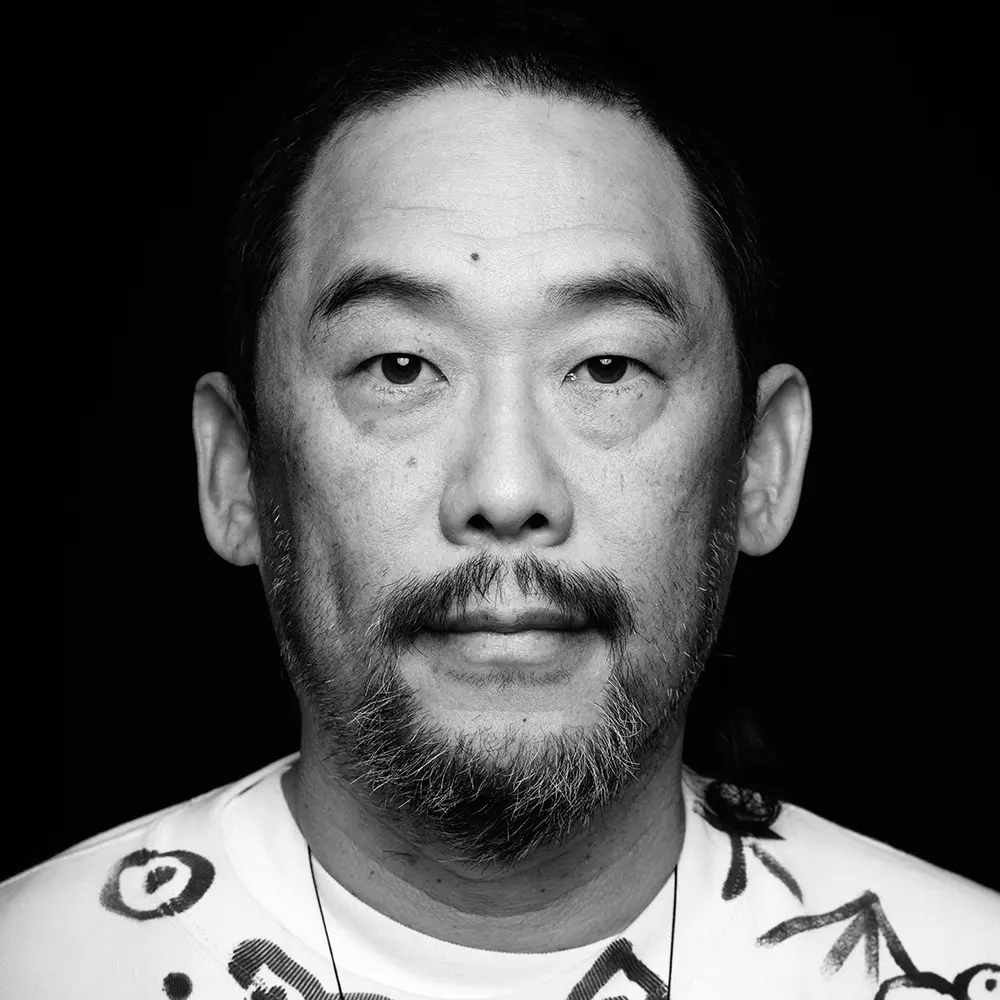
David Choe is a world-renowned artist, writer, podcaster and TV host. He tells how as a child, he was made to believe he was destined for greatness but also that he was a complete disgrace, leading him to channel his energy—including deep shame—into art that brought him global recognition. He shares about his addictions that put him on a decades-long cycle of extreme highs and lows and that forced him to eventually acknowledge and heal the childhood trauma he was battling inside. David shows up with raw, authentic presence to show us how we can transmute pain and shame into our best creative work and, more importantly, how complete vulnerability, especially about our hardest experiences, is the ultimate tool for forgiveness and self-acceptance. He also tells us the actual story about early Facebook, Pee-wee Herman and Santa Claus.
Resouces
- David Choe on The Joe Rogan Experience
- David Choe on Howard Stern
- Thumbs Up
- The Choe Show podcast
- Anthony Bourdain: No Reservations
- 21 Jump Street
- Goodfellas
- Blow
- The Social Network
- David Choe & Anthony Bourdain at Sizzler
- The Choe Show
Huberman Lab Episodes Mentioned
People Mentioned
- Tim Armstrong: singer, guitarist
- Santiago Ramón y Cajal : Spanish neuroscientist, pathologist
- Ian MacKaye: musician
- Paul Reubens: actor, comedian
- Bob Ross: painter, art instructor
- Fred Rogers: actor, tv personality
- Sean Parker: entrepreneur, Napster, Facebook
- Howard Stern: media personality, podcaster
- André 3000: rapper, singer
- Mark Zuckerberg: programmer, Facebook, CEO of Meta
- Peter Thiel: entrepreneur
- Stan Lee: comic book writer, editor
- Rick Rubin: record producer
- Johnny Depp: actor, musician
- Winona Ryder: actress
- David Chang: chef
- Anthony Bourdain: chef, author
- Channing Tatum: actor, producer
- David Arquette: actor, producer
- Sacha Baron Cohen: actor, comedian
- Bansky: street artist
- Gary Panter: illustrator, cartoonist
- Kayne West: musician
This transcript is currently under human review and may contain errors. The fully reviewed version will be posted as soon as it is available.
David Choe:
I'm a severe gambling addict. Every single addiction is gambling addiction. If you drink and drive, you're gambling. Addiction is one of those things you can't apply logic to. People are, "What are you running from, Dave?" It's like, well, I'm running from myself, dude. I don't want to look in the mirror. I don't want to see myself. I hate myself. So I'm just running, so as long as I'm doing graffiti, running from the police, just hopping on a train, literal running. Literally running to make sure I'm never sit still for one second. Like, "What are you doing, Dave?" I'm playing drums in a band. I'm at a casino. I'm traveling, doing the news for Vice. I'm painting at this... I can't sit still, because that means I have to sit with myself, and I can't do that. I can't do that. I couldn't do that. I couldn't do that. I can now.
Andrew Huberman:
Welcome to the Huberman Lab podcast, where we discuss science and science-based tools for everyday life. I'm Andrew Huberman, and I'm a professor of neurobiology and ophthalmology at Stanford School of Medicine. My guest today is David Choe. David Choe is an artist. He's a highly accomplished painter, graffiti and street artist, writer, podcaster, and television host. Many of you are perhaps familiar with David as the guy who famously painted the original Facebook offices, took equity for the job, and got rich. Now that's a wild story, but David's whole life journey, what he did prior to and after that, and what he has overcome along the way, is a million times wilder. As he shares today, David grew up hearing and thinking that he was destined for greatness, but also hearing and thinking that he was a total disgrace. Today, he talks with complete openness and vulnerability about addiction, about cycles of success and failure, and about channeling and overcoming deep shame. Today's podcast is unlike any other that I've hosted. David is wide open about his childhood abuse, his massive success, then career setbacks, relapses, and transmuting every possible emotion into art along the way. So, no matter who you are, David's story, and just as importantly, how he's living right now, how he shows up on this podcast, will change what you think is possible for you in life. It will force you to look inward and to use whatever joy and pain you have inside of you to be the best human being you can possibly be. David Choe is, as we say in science, an N of one, meaning there is no other like him. Yes, because of his incredible art, but also for his willingness to share so openly and honestly so that others can benefit and grow. I consider it a true honor and privilege to host David on this podcast, and frankly, it's impossible not to love him. This one is incredibly raw and honest. It's also full of surprises, many of which are fun surprises. So buckle up. Before we begin, I'd like to emphasize that this podcast is separate from my teaching and research roles at Stanford. It is, however, part of my desire and effort to bring zero cost to consumer information about science and science-related tools to the general public. In keeping with that theme, today's episode does include sponsors. And now for my discussion with David Choe. David Choe. Welcome.
David Choe:
Thank you for having me, man.
Andrew Huberman:
Man, huge longtime fan.
David Choe:
Mm.
Andrew Huberman:
Love your art. I've been super inspired by your YouTube channel. I watch it sometimes before I do my drawing or I prepare for a podcast.
David Choe:
What do you draw?
Andrew Huberman:
I draw a lot of anatomy on top of some paintings. So I do neuroanatomy on top of some paintings that my friend Tim Armstrong's been doing.
David Choe:
Hmm.
Andrew Huberman:
A musician, lead singer of Rancid.
David Choe:
Is it anatomically correct, or is it exaggerated, or is it-
Andrew Huberman:
This is a really good question. So, in essence, it's anatomically correct.
David Choe:
Yeah.
Andrew Huberman:
But around the turn of the last century-
David Choe:
Yeah
Andrew Huberman:
... two guys, Cajal and Golgi, won the Nobel Prize-
David Choe:
Yeah
Andrew Huberman:
... for drawing the nervous system and showing these things no one had seen before, and they stripped away everything except-
David Choe:
I'm going to come paint with you
Andrew Huberman:
... the essential piece. So-
David Choe:
I'm going to come paint with you.
Andrew Huberman:
Yeah.
David Choe:
I don't like what's happening in your painting studio.
Andrew Huberman:
Okay.
David Choe:
Just from what you said so far, it's not good.
Andrew Huberman:
Okay.
David Choe:
But it's good because you did that, and then now we have to strip that away. We have to get at the core of it. Because painting is... Wait, weren't you in the middle of complimenting me? Like, keep going.
Andrew Huberman:
I mean- ... I love your YouTube channel.
David Choe:
Oh, keep going.
Andrew Huberman:
I watch it before I prepare podcasts and before I paint or draw. And I'm back to drawing a lot now. And I converted an art gallery into a living space, and somehow I thought that that would make me more inspired, but it turns out it does. A lot of things do, but I think the key with anatomy and trying to teach science with drawings is it can't be too much detail, can't be too little detail, otherwise people are overwhelmed.
David Choe:
It's the best thing for, I think everyone, but for someone like you who spends a lot of time in your head, I always say the longest journey you'll ever take in your life is from your head to your heart. And to be an intellectual person, you just live a lot. You try to rationalize and apply logic to everything, so painting is not that, music is not that, creating is not that. It's just to get to this. But it sounds, just in the little that you've explained, that your painting is very methodical, and which-
Andrew Huberman:
Super meticulous.
David Choe:
Yeah. We're going to-
Andrew Huberman:
I want to include every cell type. Yeah.
David Choe:
What's your threshold for positive affirmations? Can I go now? Like you-
Andrew Huberman:
I mean-
David Choe:
All right
Andrew Huberman:
... I like to think I have a thick skin, but-
David Choe:
All right. Let's go
Andrew Huberman:
... who knows?
David Choe:
No, it's all love. Okay. For anyone who's watching or listening, this is my first time meeting Adam.
Andrew Huberman:
Andrew. All good?
David Choe:
There you go.
Andrew Huberman:
Yeah. All good. All good. You knew my last name.
David Choe:
You know what? I was thinking about my friend Adam-
Andrew Huberman:
All good
David Choe:
... that you know, that you used to skate with, I think. Adam Kron?
Andrew Huberman:
Yeah.
David Choe:
Yeah. I was just thinking like, oh, I-
Andrew Huberman:
Upper Playground.
David Choe:
Yeah, Upper Playground. So-
Andrew Huberman:
Yeah. His dad owns Kron Shoes.
David Choe:
Yeah.
Andrew Huberman:
In Palo Alto. He worked there
David Choe:
He wants to reconnect with you.
Andrew Huberman:
Man.
David Choe:
Yeah.
Andrew Huberman:
Adam Cron and I grew up together.
David Choe:
Yeah. I was just-
Andrew Huberman:
He had a mini ramp in his backyard. We hung out, we skateboarded, and then he started Upper Playground, The Walrus.
David Choe:
That's it.
Andrew Huberman:
He's your homie?
David Choe:
I did tons of graphics for Upper Playground. So-
Andrew Huberman:
Wow!
David Choe:
Does anyone call you Andy?
Andrew Huberman:
My skateboard friends call me Andy, so yeah.
David Choe:
But that's it? No one in the medical, like science world-
Andrew Huberman:
Not anymore. No, not really.
David Choe:
You start your podcast, and you do your, you're like, "I'm Andrew Huberman, and I'm a-"
Andrew Huberman:
"I'm Andrew Huberman, professor." Yep.
David Choe:
I'm going to be all over the place because I'm nervous being here right now. I hardly do podcasts anymore, so I'm going to be all over the place. It's going to be sloppy. All right.
Andrew Huberman:
This is your canvas, man.
David Choe:
Okay.
Andrew Huberman:
Have fun.
David Choe:
Well, I'm just meeting you. I already called you the wrong name, which is horrible. I hate the black. I hate it. Like-
Andrew Huberman:
The studio?
David Choe:
Just you with the black T-shirt, the black mugs, the black like... I don't like it for you. Because I used to only wear black because I was like, "Oh, I'm a painter. I'm always dirty. I don't want to like..." You could see the ketchup stains on my sweater, and it's like, okay, that's fine. But I just, colors are very important in not just painting, but like the palette for your house or most people talk about in the modern age, modern man is, and I just make shit up, so you could correct. You're like the facts guy. But I feel like most people, human beings alive today are going to die a very, it's mean to say boring, but just the same death, right? You'll most likely die laying down in a bed or hospice or in a hospital. But it's just like no one's dying like, I know there's other countries where there's war and famine, but I'm saying modern cities, there's not like a hero's death, right? So it's all the same, and then you just, the drive here in traffic, it's like everyone either has a black car or a white car or a gray car. And then you get to their house, and their house is a beige or a white, and you're just like, "We only got one of these." Whatever your views on the afterlife are, but this is it. This is it. Like this is it. And it's just like people get mad of like, "Oh, I spilled paint on the floor. Like I got a scratch." I'm like, "Paint everything. Paint your fucking car. Paint and make your..." My kids drew my sweater. It's my favorite s-
Andrew Huberman:
I like that sweater
David Choe:
... paint. So I walk in here, and I go, "Fuck, dude." Like, and I'm projecting on you now, like when I wore all black, it said a lot about where I was at in my life, and I don't know where you're at because I'm just meeting you, but it's like everything is black on black, like black on the black T-shirt, black mug, black, and it's like white T-shirt. For my dream, selfishly my dream is like this podcast would start instead of saying, "Hey, I'm Andrew Huberman, like Stanford scientist," that it's just, "Hi, I'm Andy." And then like can you Photoshop like a white T-shirt on?
Andrew Huberman:
I'd wear a white T-shirt.
David Choe:
I don't know. I don't like black. For me, I have hardly ever black clothes anymore.
Andrew Huberman:
Hmm.
David Choe:
I want to add as much color because I just, maybe that's the season I am in my life or the time I'm in. But, yeah, I appreciate you saying the nice stuff. I never thought I would be a YouTuber, but that's providing a lot of joy in my life. And so I want to say to you, I'm meeting you for the first time. I've never seen you clean-shaven.
Andrew Huberman:
Mm-hmm.
David Choe:
But I imagine, your beard and facial hair to me look very cute. You're very handsome. Your voice, when I hear your voice, immediately is soothing, and I feel like this is a very kind person. Once again, without having, like now I've met you for five minutes, I'm like, "Oh, this guy's super awesome " But these kind of parasocial relationships where I could go even, I don't know how hard you want to go today, but it's like I meet people all the time, and then I meet them, and it's like I've already met you. Like we've already talked.
Andrew Huberman:
Mm-hmm.
David Choe:
I don't know what your views on telepathy and spirituality, and it's like, it's just everyone will meet. Everything's going to happen the way it's going to happen, and everyone's going to meet who they need to meet. It's like all energy, right? You put this like, what? I could sit there and go, "Why does Andrew Huberman want to meet me right now?" And it's like, well, what am I putting out in the universe? And what is he putting out in the universe? And do the souls connect in that way? So I said, if I ever meet him, I just want to tell him how cute he is, how soothing and relaxing, and like, there's something very, this is the invisible ingredient in like everything. In art is did the person care, right? I don't care how skilled and crafted, whatever. Did the person care? And when you do stuff, in your voice, the tone, the frequency that's hitting my soul is like, oh, I don't know everything that guy's saying. He's using some big words, but I feel like he cares. And so I said if I ever meet you, and I know a little bit from us talking on the phone, but I don't know your whole backstory, but I'm like, also, I project a lot, and I make a lot of assumptions, which that's a defect that I'm working on. But I just wanted to say, even though you had a horrific, traumatic childhood, the fact that you're here, you're alive, and that you're doing all this good stuff, it makes me emotional because I'm like, I don't even know you, and I appreciate what you're doing. And you're still a little bit immature, but progress, not perfection, right? I think that's it for now, but I just wanted to tell you all that because I feel that way about you and I'm a big... Sometimes you feel stuff and you're like, "I'll text it to them," and I just go, no, if I feel that, I just want to, especially if it's love and positivity. I know I started by telling you how much I hate your decor and your interior decorating, but it's because I like you. If I'm like, "I don't give a shit about this guy and I don't want a relationship," I would never say anything. But I'm like, I don't know what the science behind it is, but being surrounded by this much black cannot be good. Right? We're walking into a black hole right now. I don't know. Anyways, that's what I wanted to say.
Andrew Huberman:
Oh, man. Well, I'll take that in. Thank you. A lot there. Thank you.
David Choe:
Were you able to take it in?
Andrew Huberman:
Yeah, I was able to take in some of that.
David Choe:
All right.
Andrew Huberman:
It's interesting, when you call me Andy, it's a different part of my persona, just because names carry a lot.
David Choe:
Oh, yeah.
Andrew Huberman:
Thank you for that. I'm going to take that in and I get this little voice in my head that's saying, "I want to be very clear." I had some rough aspects of my childhood. I've made good amends with my parents, so we're good now. I say that for all the reasons people can assume. But here's the thing. I knew somehow that we'd eventually cross paths. I just didn't know when.
David Choe:
Mm.
Andrew Huberman:
So you say the telepathy thing. For me, I was a postdoc at Stanford. That comes after PhD. You do five years. It's kind of like a residency. And I'm from the South Bay.
David Choe:
Mm-hmm.
Andrew Huberman:
And I didn't want to go back to the South Bay because, as you know, no disrespect to the South Bay, a lot of interesting things come out of there, but it was pretty devoid of the things that I like-
David Choe:
Yeah
Andrew Huberman:
... which normally are in cities, like art, live music. It used to be like that. Grateful Dead were in Palo Alto. I saw Fugazi play at The Edge on California Avenue. There was a lot of interesting things about Palo Alto, but it became very right angles when the tech industry really exploded there. And in 2007, when I was a postdoc-
David Choe:
Mm-hmm
Andrew Huberman:
... was when you were muraling at Facebook. I learned that later.
David Choe:
Yeah.
Andrew Huberman:
But that was a time when I was back there for my science career, and I was pretty miserable.
David Choe:
Mm.
Andrew Huberman:
Being close to home again, honestly, I didn't want to ever go back there for a while.
David Choe:
Yeah.
Andrew Huberman:
It was not healing.
David Choe:
Yeah.
Andrew Huberman:
But when I learned your story about muraling at Facebook and some of that, I was like, oh, there was at least one other person here who was-
David Choe:
Mm
Andrew Huberman:
... in the kind of spiritual, emotional fight with what the South Bay is. And then I realized that I heard an interview with Ian MacKaye from Minor Threat.
David Choe:
Mm-hmm.
Andrew Huberman:
It turns out he had been in Palo Alto because his dad was an academic or something like that.
David Choe:
Of course.
Andrew Huberman:
And he had skated some of the same ditches we had. And so there's a history of-
David Choe:
Mm
Andrew Huberman:
... people being really frustrated with being there.
David Choe:
There's some really good Vietnamese food.
Andrew Huberman:
Is there really?
David Choe:
Yeah.
Andrew Huberman:
Oh, in Palo Alto?
David Choe:
Yeah.
Andrew Huberman:
Or the South Bay.
David Choe:
Yeah, South Bay.
Andrew Huberman:
Oh, yeah. Castro Street, Mountain View.
David Choe:
Yeah.
Andrew Huberman:
Yeah. And it's changed a lot, but take me back to 2007. I don't know how you feel about historical stuff.
David Choe:
Okay. I'm definitely down to time travel and time jump and all that.
Andrew Huberman:
Yeah.
David Choe:
But because I'm older, I'm 49 and my attention span is just completely fried, I'll just say right now I'm going to get a lot of dates wrong. People are like, "That's..."
Andrew Huberman:
2007 was when the Facebook offices were what kids from the South Bay call the neck of University Avenue. Right before it goes under the train tracks. As soon as you're on the other side of the train tracks, Caltrain-
David Choe:
Yeah
Andrew Huberman:
... it becomes Palm Drive and it's up to Stanford.
David Choe:
Okay.
Andrew Huberman:
So those offices now are Palantir-
David Choe:
Yeah
Andrew Huberman:
... which catches a lot of heat for other reasons.
David Choe:
Yeah.
Andrew Huberman:
But those offices, right as you go under the train tracks, for us, there was a curb cut right there and there was a board slide thing. And so for the skateboarders, it was one thing, but then that was Facebook offices. And years later I heard David Choe-
David Choe:
Uh-huh
Andrew Huberman:
... was muraling at Facebook. So how did that come to be?
David Choe:
I'm going to be very sloppy, like I said, and it's maybe some of the stuff, because sometimes the way I treat talking and journalism and podcasts is it's like a story in my own head. Someone else is like, "Just shut the fuck up and answer the question," right? But for me, when I paint, I don't sketch. I go straight to a finish. So sometimes I'm figuring out what I'm trying to tell you because you asked me a question that's very direct, but the way it went into my head was very abstract. So, if you let me do a little paint mixing, I hope I'll answer your question. But do you know Pee-Wee... I'm wearing it today. Do you know Pee-Wee's Playhouse?
Andrew Huberman:
I knew it. Oh, yeah.
David Choe:
You-
Andrew Huberman:
I mean, obviously. Yeah. I met him, actually, once.
David Choe:
Paul Reubens?
Andrew Huberman:
Yeah. At a photo show of Mike Muller and Sage, who draws butterflies on Mike Muller's sharks and animals.
David Choe:
Oh.
Andrew Huberman:
And Pee-Wee Herman in his thing-
David Choe:
Yeah
Andrew Huberman:
... in his suit, the whole thing-
David Choe:
Yeah
Andrew Huberman:
... walked up. Laird Hamilton was there.
David Choe:
Nice.
Andrew Huberman:
And he walks up to Laird Hamilton. There are a bunch of people around. Everyone's trying to get to Laird, trying to talk to Laird.
David Choe:
Yeah.
Andrew Huberman:
Laird's like a... This was 2017, and I was in West Hollywood. And Pee-Wee Herman walks up and he goes, "I have to meet you." And the best thing is Laird just goes, "Oh, hello. What's your name?" Like typical Laird.
David Choe:
Yeah.
Andrew Huberman:
Laird's a real gentleman.
David Choe:
Yeah.
Andrew Huberman:
Always.
David Choe:
He didn't know who Pee-Wee Herman was?
Andrew Huberman:
I couldn't tell if he knew or not.
David Choe:
Oh, my God.
Andrew Huberman:
And he's like, "I've really wanted to meet you," this kind of thing.
David Choe:
Yeah.
Andrew Huberman:
And I was like, "No way." And he had the whole thing, like the shiny lips and the thing.
David Choe:
Yeah.
Andrew Huberman:
And I was like, "That's Pee-Wee Herman."
David Choe:
Oh, that's amazing.
Andrew Huberman:
Yeah.
David Choe:
I love that.
Andrew Huberman:
Yeah.
David Choe:
All right. Well, I'm definitely going to have to tell you my Pee-Wee Herman story at some point.
Andrew Huberman:
I'd like to take a quick break and acknowledge our sponsor, Eight Sleep. Eight Sleep makes smart mattress covers with cooling, heating, and sleep-tracking capacity. One of the best ways to ensure you get a great night's sleep is to make sure that the temperature of your sleeping environment is correct. And that's because in order to fall asleep and stay deeply asleep, your body temperature actually has to drop by about one to three degrees. And in order to wake up feeling refreshed and energized, your body temperature actually has to increase by about one to three degrees. Eight Sleep automatically regulates the temperature of your bed throughout the night according to your unique needs. I've been sleeping on an Eight Sleep mattress cover for nearly five years now, and it has completely transformed and improved the quality of my sleep. The latest Eight Sleep model is the Pod 5. This is what I'm now sleeping on, and I absolutely love it. It has so many incredible features. For instance, the Pod 5 has a feature called Autopilot, which is an AI engine that learns your sleep patterns and then adjusts the temperature of your sleeping environment across different sleep stages. It'll even elevate your head if you're snoring, and it makes other shifts to optimize your sleep. If you would like to try Eight Sleep, go to eightsleep.com/huberman to get $450 off the Pod 5 Ultra. This is part of Eight Sleep's extended holiday sale, which goes from now until December 31st, 2025. Eight Sleep ships to many countries worldwide, including Mexico and the UAE. Again, that's eightsleep.com/huberman to save up to $450 now through December 31st, 2025. Today's episode is also brought to us by LMNT. LMNT is an electrolyte drink that has everything you need and nothing you don't. That means the electrolytes, sodium, magnesium, and potassium, all in the correct ratios, but no sugar. Proper hydration is critical for brain and body function. Even a slight degree of dehydration can diminish your cognitive and physical performance. It's also important that you get adequate electrolytes. The electrolytes, sodium, magnesium, and potassium, are vital for the functioning of all cells in your body, especially your neurons or your nerve cells. Drinking LMNT makes it very easy to ensure that you're getting adequate hydration and adequate electrolytes. My days tend to start really fast, meaning I have to jump right into work or right into exercise. So to make sure that I'm hydrated and I have sufficient electrolytes, when I first wake up in the morning, I drink 16 to 32 ounces of water with an LMNT packet dissolved in it. I also drink LMNT dissolved in water during any kind of physical exercise that I'm doing, especially on hot days when I'm sweating a lot and losing water and electrolytes. LMNT has a bunch of great-tasting flavors. In fact, I love them all. I love the watermelon, the raspberry, the citrus, and I really love the lemonade flavor. So if you'd like to try LMNT, you can go to drinklmnt.com/huberman to claim a free LMNT sample pack with any purchase. Again, that's drinklmnt.com/huberman to claim a free sample pack.
David Choe:
For me, art as a kid growing up, like the trifecta, my Holy Trinity of children's education art entertainment is Mr. Rogers, Bob Ross, and then of course, Pee-wee Herman. Pee-wee Herman had Lawrence Fishburne, Gary Panter, Mark Mothersbaugh, Danny Elfman. He was like the ringleader of all this creativity, and he had like, "Mecka leka hi, mecka hiney ho." And do you remember the secret word?
Andrew Huberman:
Oh.
David Choe:
The secret word was like, if anyone our age that's watching Pee-wee's Playhouse.
Andrew Huberman:
What was it?
David Choe:
It was like, "Today's secret word is..." I don't know. What's our secret word today, Rob?
Speaker 3:
Microphone.
David Choe:
Microphone. And if someone says microphone, scream real loud. So can we do that today?
Andrew Huberman:
Sure.
David Choe:
All right. I'm counting on you. I want you to scream the loudest. And you don't take a pee until we take a pee. We got an agreement on that? Okay.
Speaker 3:
Fine.
David Choe:
All right. I hated the South Bay. I have all the typical artist traits. I'm clinically depressed. I'm bipolar. I have all the process addictions, food, sex, gambling, shopping, workaholism. Thank God I don't have any of the chemical addictions because I'm allergic to everything, but severe OCD, severe antisocial traits. I'm just highly sensitive. So coming here today, you asked me, and I kept text... I don't know. We did this dance for a few months, and if I'm just being honest with you, I don't know how to not be me. And sometimes I put a mask on, and I'm like, I think this is what Andrew wants me to be today, but I didn't even meet you yet. And so every time I've done Joe Rogan or any other podcast, I don't know, I just feel comfortable doing my own YouTube or my own podcast. But anytime anyone else asks me, I know who I am, and sometimes I don't, and sometimes I figure that out. And sometimes you meet people on the street at pavilions or at the supermarket, and they're like, "I..." And it's like this parasocial thing where it's like, "I know you. I relate to you." And there's something about that where the intimacy of meeting another human being and then just showing them your heart and then telling them everything, and my parents aren't going to listen to this. My brothers don't listen to it. So in a weird way, you're going to know more about me today than my own family. So the parasocial thing is even, it's real, right? Placebo effect is real, all these things. So I got here early I went for a walk down to that street, and then it's just this beautiful view of the ocean, and it happens every time. I know what it makes me sound like. It's like, "Oh, this guy's very unstable and unhinged," and I'd be the first to admit it. It's like I cry all the time now. It was just like maybe just seeing all the burned houses on the way here, just knowing that I haven't talked in a long time, and there's no upside for me. And I told you that. I was like, I go on these podcasts and I think Howard Stern, like 15, 20 years ago, and Joe Rogan, the multiple times I've been on his show, I think are the only two radio shows/podcasts that have ever just aired it without editing. Everyone else, every time you've ever heard me on any other podcast, it's either severely edited, or they cut out huge chunks of it, or they didn't even air it at all. So I know that, and I know the world we live in today. And so there's something that went in the narcissistic traits where I'm like, "I'm the fucking greatest artist in the world," to like, "Oh my God, I'm a piece of shit." It's just like this thing and before when I was younger, it was like everyone has to see everything. I think I'm so important that everyone has to see everything that I create, painting, podcast, book, whatever it is. And then it went my problem with my shit is it's all or nothing, so it's hard for me to find the middle. And so at this point now, I'm 49. I live a very quiet dad life. I'm a family guy. And there's just thousands of paintings no one's ever seen. There's hundreds of hours, if not thousands of hours of podcasts I've never put out. There's books I've written. There's TV shows, movies that I've made. Before, the ego and the narc is like, "You need to put this out because you're important, and everyone needs to see how important you are." And now, the flip side to that is, and maybe it's not healthy either, is I know who I am. I'm comfortable with myself, and I'm artificially blocked from everything. I don't have my own password to my social media. I have blocks on my phone, so I can't access the Internet. So it's like I do put all these things into place to protect myself because I'm a sensitive person. So, as an artist, there's certain isms and stories. It's like, "Oh, starving artist. You're not going to make any money," like struggling artist. There's these stories that people say, and then you buy into them. But I had a few teachers along the way that influenced me that there's just certain moments happen in your life that live in your head rent-free, and I have a lot of those. And so one of the stories is, I'm 49. It's like you have to live in New York City. If you make it in New York, you make it anywhere. What the fuck am I doing in the 408? What am I doing in Cooper Town? In my head, the story's written that you're a fucking... And I hadn't done shit. But in my head, I'm like, "You're the greatest artist ever in Gilroy." You know what I mean?
Andrew Huberman:
Sorry, no disrespect to Gilroy.
David Choe:
It's like the garlic capital of Garlic Fest.
Andrew Huberman:
Yeah, sorry. Sure.
David Choe:
Garlic ice cream. So there's a story in my head that is like, I got to get to New York City, right? I couldn't get any leeway in Los Angeles. I'm born and raised in LA, and I couldn't... And now I look back, and if I do an inventory of the most creative explosions and the most periods of creativity in my life, it's always found in the mundane. It's always found in cold temperatures. It's always found when there's no Wi-Fi. It's always found in a suburb of... It's like this story like, "And when I get to fucking New York, and I'm going to be part of this movement." It's never that. It's nice to romanticize that, but it's these moments of brilliance. Like someone, whoever's listening right now, they're like, "I got this, and then I'm going to get to this, and then I'm going to meet this person, and I'm going to do..." And it's like, bro, I was fucking living in San Jose for seven years. I met this wonderful lady. She was my girlfriend for seven years. But at that prime, I was 23, and I was like... And for me, the stakes are so high because... So one of the teachers was my mother. My mother is hardcore born-again Christian. So science does not enter the picture. It's like blinders on, and through her, I learned blind faith. Jesus Christ, that's it. So wait, you're telling me there was an actual ark with two animals, and the two animals didn't kill the other in the... And there was Adam, and there was a snake that talked? And she's like, "Yeah." No hesitation. So she gave me that gift of like, "Hey, science, facts? No." Holy shit. Nothing could falter her, and you're like, "You're fucking stupid. You're ignorant." But she's not. She's a bright woman. And now I look back and I just met you. You're a brilliant guy, and I sit here, and I go, I know some of the smartest people on the planet. You know some of the smartest people on the planet, and they're all dumb. They're all idiots. You're like, "Wait, you're a genius. You have photographic memory. You created this company, da, da, da." And you've made some of the dumbest decisions I've ever .... It's like, yeah, you're really good at this, but you don't know relationships or you don't know... So So my mom taught me through just not anything, but just watching her, of just this absolute belief. And one of her beliefs was, you're my son. This is some Jesus shit. Like me, who is like, how I explain this is fucking neurotic mess, growing up in an unstable family and all that, got fucking molested. Every abuse, physical abuse, emotional abuse, just chaotic because they were working and then I was just left out in the wild, abandoned. Spiritual abuse, all this shit. And she's just like, in the same way she believed in God and Jesus, she's like: "You're the one. You're the greatest artist." And I'm five years old. I'm like, "What the fuck are you talking about?" She's like: "No one's better than you. No one's better than you. You're going to be the great-- Your name's David," like a lot of Koreans named after Bible. She's like: "I named you after King David. You're going to be a king." And I go, but now in hindsight, I'm like, and yes, King David beat Goliath, but he also was a sex addict and had a lot of mental illness and failed a lot. She didn't tell me all that shit. So she's raising me, she's brainwashing me. She's like, "You're the best. You're the greatest." And then I've met other artists where it's like everyone has their own paths. Some become great because the parents are like, "You're nothing. You're a piece of shit. You're the worst. Who the fuck do you think you are?" I had the opposite. I had a mom just, it didn't matter. It didn't matter. Like, "But Mom, look at how horrible." She's like, "You're the greatest." And so it's like at some point, I hate myself. I have such a low self-opinion of myself. I'm just down on myself, just this kid, just constantly getting bullied and the world just using me and I'm like, "Of course, she says that. She's my mom." But she just brainwashed me into believing that I'm the best, and I would, as a trickster and a shape-shifter, I would-- what most artists lack is an ability to communicate with words. That's why they're such brilliant artists, and that's why they can make great music and all this because they can't. I can't. I'm going to probably talk to you for a few hours today, and I'm going to leave here feeling misunderstood. I'm going to be like, "Fuck, did I..." Because I'm not-- In the same way I can translate what I feel in a painting. It's like when people describe ayahuasca or something. They try to describe and they're like, the words that you're trying to look for don't exist for what you just went through. So that's kind of why I get really self-judgmental. But I'm like, this woman, and then my dad, he loves me, but he's like, "He's all right. He's okay." And I'd watch my mom, who was just a brutal businesswoman. And she would transform. I spent most of my life either poor or middle class. Being wealthy came later. But so we were on welfare a lot. Our businesses burned down in the LA riots. I saw my parents struggle a lot. But then they would do good, and they had the gambler's mentality, which a lot of Asians do, and I have that too.
Andrew Huberman:
Which is?
David Choe:
Just, I don't know if this is true, but I heard that Asians have the gambling gene more than other races, especially the women. Most women don't have the gambling gene the same way men do.
Andrew Huberman:
Mm-hmm.
David Choe:
So my mom would gamble flipping houses or not in a casino, but just huge swings, which you're like-- I grew up with a fearless woman.
Andrew Huberman:
Mm-hmm.
David Choe:
But so we wouldn't have stuff, but then I would watch my mom open the trunk of her car and put on fake jewelries, cubic zirconium, because she's about to go into a meeting and ask for a lot of money, and just insane lying but hardcore Christian. So, the hypocrisy there. I'm trying to work on my own breaking out, so it's like I'm going to be hypocritical in this interview, and at the end, hopefully, I'll be able to correct any exaggerations or lies. But that's a new tool that I have. I used to just whatever for the story. I lie to tell the truth, all those things. So I'd watch my mom transform from a poor woman. The mentality was she's like, "My son is the greatest artist in the world, and I'm coming out of my Toyota hatchback with the broken window. But when I go into this meeting right now, you're not going to see that." So she'd transform herself into this rich, powerful woman, and then just like get-- I'm just sitting there, a kid in the corner, watching this woman get what she wants. I'm like, "Holy fuck. What the fuck was that performance?" And then just coming out and I'm like, "But Mom, those things you said, that wasn't real. That's not true." And she's like, "Yeah, they don't need to know that." And I'm like, "But we just went to church and we learned the Ten Commandments, and you're not supposed to lie." And it's just all this confusion. And then I meet Sean Parker, who, just the sweetest kid. He started emailing me right when he started Napster. I have all the emails. I keep certain emails and voice messages, and that's my own nostalgia. But I have a voicemail and a handwritten letter from Howard Stern saying, "Thank you for getting me into watercolors." And I was like, "Dude, my fucking hero. Yes." It's such a good feeling. I have a voice message from Pee-wee Herman, which I'll share later. And all my early emails with Sean Parker I kept just because it was He's such an interesting, wonderful... I know the image of him, but we don't talk like we used to, but I still consider him a friend, and I'm forever grateful to him. But so, I met him at a time when, I don't even know how to desc- just complete disgrace and shame to my family. It's like the immigrant story. Talk to any immigrant. Why the fuck did you leave your home to come to another country? Because it was shitty there. That's it. You're not born in a country and you're like, "Dude, let's leave." Right? The only reason why anyone's here is because it was shitty where you were at, right? So then they all, it doesn't matter if you're Asian or Mexican, whatever, you came here for a better life. And what does that mean? Work your ass off. So we're in a nation of workaholics, right? This is an entire country of workaholics. So my parents, I didn't go through it, but they're like, Japanese tanks rolled down the street. And they have the typical fucking war, famine, all that stuff. So they get over here and born and raised in Los Angeles. It's like, don't know who I am, don't know where I belong, just bullied, abandoned, abused over and over, and just... I didn't even really know the concept of suicide, but I hated myself. I couldn't live in my-- It felt like I was burning inside my own body. And so, even made fun of, like I listen to, we have the same taste in music. I listen to Minutemen, Minor Threat. I'm blasting Downset, Inside Out, Soundgarden, Slaves and Bull-- I used to put on Soundgarden's Slaves and Bulldozers, punch myself. I'm in my room, a teenager, just punching myself as hard as I can just to go into a berserker rage. And I just, back then, I found pornography, and it was just so soothing. It was like getting high. I would just masturbate over and over again. So I would do weird self-harm, I guess the kids call it edging, but I'd masturbate but then not come and then beat myself up. And I'm going through puberty, and I would go out and I'd shoplift spray cans, just at hardware stores. And I'm listening to, I would get Faith No More, In Living Color, just some song, and I would just, an OCD, just repeat some lyric in it. "I am a patient boy." And I would just go into a trance, and I would just go out, and I would just fucking spray paint. And I'm living at home. So I'm not hiding this shit. I come home, my hand's covered in black paint. "This is what we fucking came to this country for? This is why we fucking left another country so you could come here and not be an art, but do graff-- You're a disgrace. You're a disgrace to our race." And my dad would just fucking throw me against the wall, and I'm like, "I don't care, dude. I don't care what you're... Do you understand? I wasn't actively trying to kill myself, but I didn't... Do you understand that everything you care about, I don't care. Do you get that?" And you start the show, and I was laughing because it's like, "Hey, I'm Andrew Huberman, scientist, Stanford, this." And I'm like, "I don't care." I like Andy. I like that. And then I was like, "You know what? This is like Stolen Valor." Sean Parker starting Facebook with Mark Zuckerberg. I'm there at the beginning, and so he brings me in, and at the time, when I first, this is years, the emails back and forth. He's like, "I need..." Because the energy I was putting out at the time was what I'm telling you right now, just I don't give a fuck. I don't care what you care about. It's just complete, I don't care if I go to jail. I'm just painting on everything. And it's like graffiti. Graffiti is vandal. It's not graffiti artist or street art. It's fucking vandalism. It's a crime. And people are telling me, anyone out there doing street art, there's so many rules. There's so many. What did you write? Did you use to tag it or anything?
Andrew Huberman:
No, but I had a good friend from-
David Choe:
Shut up. If you skated, you definitely had like a...
Andrew Huberman:
There were some kids in our crew that-
David Choe:
Cubes?
Andrew Huberman:
No.
David Choe:
What did you tag? Come on.
Andrew Huberman:
No, because I had friends who were graffers, and they boxed us out.
David Choe:
Oh.
Andrew Huberman:
The Under Shadows kids.
David Choe:
You never did graffiti?
Andrew Huberman:
No, but we can talk about this later. I want to hear from you now.
David Choe:
Okay.
Andrew Huberman:
But later, we should talk about Orphan and the Under Shadows crew, which is a kind of a thing in the Bay Area.
David Choe:
Yeah. I know them.
Andrew Huberman:
Yeah. He was a good friend of mine. But anyway, I didn't graffiti.
David Choe:
Okay. So I'm-
Andrew Huberman:
But I drew on my grip tape.
David Choe:
All right. That's good.
Andrew Huberman:
But no, I wasn't a tagger, wasn't a graffiti guy.
David Choe:
Yeah. So I'm out doing that, and we can have a conversation about creativity and this and that, and it's like I can't. It's very hard to talk about cre-- It's because it's like, can you teach a craft? Can you teach a skill? Can I teach you to paint the Mona Lisa? Yeah. I know how to do all that. I know how to like... I went to school. I taught myself. I watched videos. You could teach yourself how to paint something to make it look like something. That's a teachable skill. But creativity, where does that come from? Are you just born with it? Is it from deprivation? I can only share what my path is, and it's like The embarrassment. Like, "You're Asian, you need to get a 4.0. You need to get into UCLA. You need to be a doctor or a lawyer." And it's like me, I'm the middle child, me and my two brothers, long hair, listening to heavy metal and punk. "Why are you doing that white shit?" And then you got the Asian kids that are into heavy... There was no identity, right? And then it's just lost. Just like, what the fuck is... We don't belong anywhere. Just the Asian depictions in media is like Long Duk Dong. Asians have small dicks. They can't drive. They're good at math. It's just nothing's good, right? And I'm just trying to figure out my way in this world. And I remember Sean just was attracted to whatever little art I'd start getting some noticed in Juxtapoz, and I was starting to do graffiti everywhere and he's like, "I want that. Whatever that is, I want that. I want to be part of that." And I said... And I forgot what my painting. It was right when I couldn't sell a painting, and then all of a sudden they were selling for a couple thousand. And he was a teenager still. And he goes, "I want your art, but the problem is I'm being sued right now for a trillion dollars because every single song is a lawsuit." I mean, whatever. It ended up the way it ended up. But I remember he goes, "I'm getting..." He showed me a screenshot or whatever. He's like, "I'm being sued for $1 trillion right now, so I can't really afford your art, but I'm going to get it." So we started this relationship, and he would send me these crazy abstract texts of emails of what he wanted me to paint. And then he started another company called Plaxo, and he's like, "No." And then finally, you're catching me in the South Bay. I met this girl, we fell in love, and I moved to San Jose, just the most culturally dead place. And everyone's rollerblading, working at Apple or MySpace or eBay or some tech startup. And they're like, "We're cool because we have a trampoline and we have a kitchen area where you can have all the Red Bull and snacks you want. And we have bunk beds so we..." And that's all, so you could just keep working. And so I meet Sean, and he's like, "Dude, we're starting this company called Facebook, and we finally have some money." And he's like, "Where are you at?" And he didn't know all this, but I had just gotten out of prison. I was in jail in Japan because I had beaten up a undercover security guard. I was 27 when I got out, and I owed everyone money. I owed my girlfriend money, I owed... And so I needed money bad. And I was in a lot of trouble. I didn't know how I was going to pay everyone back because it's really hard to sell a painting. But my paintings did sell once in a while, and they were starting to get pretty expensive. And then all the art that I did in jail, I used to work for Vice Magazine. I say work because, but I never got paid. But I-
Andrew Huberman:
They didn't pay you?
David Choe:
No. I think people, if anyone's listening, as a little side tangent is, and it's going to definitely sound like OCD, like I'm keeping a list, and maybe I am, because I don't think about it, but I was sitting the other day and I go, "They all owe me money." Everyone I've ever worked for. People are like, "I got to get paid." Someone develops a skill, like I'm good at songwriting or this or that. And then they go, "Well, I got to..." Like the young people's mental. Like, "Well, that's my craft. I got to get paid." I go, "I never got paid." I worked for Nike, Levi's, Ruka, Giant Robot, Vice, fucking even my friend Steve Aoki, and just all every, like 88 Rising. If I sit here, I'll name everyone. But either they didn't pay me what they said, or I had to threaten to kill them for them to send me, or they just never paid me. And I met Gavin McInnes when he started Vice, and he had seen some of the art that I did in Giant Robot. He saw that I went to the Congo. He saw, and he's like, "Hey." And it was all punk rock at Vice when it was the big format. And he's like, "Dude." And he just believed in me. I don't know what he saw. He's like, "Dude, send me a drawing of cops beating up this." And I did it fast. He's like, "I need it by tomorrow." And I was like, "I can do it." And then he's like, he just was like, "Hey, write me a story about some shooting in LA Koreatown gangster shit." And I go, "But I'm not..." He's like, "Just do it." And at one point, that was another figure that resonated my mom of, like, the rules, reality doesn't apply. I'm sitting there going, "Wait, but I'm not a journalist. I didn't fact-check anything." And there was some issues of Vice where I wrote five different articles under a woman's name, a Black guy's name, just made-up names, articles just to fill up pages. And I would have done the comic section, illustrations, music review, street fashion, the dos and don'ts. And I'm just like, "You can do that?" And I had already been groomed for that because of my mom. It's like, nope, reality doesn't apply. My mom thinks I'm the best artist, and now here's... So Sean's like, "Okay." And so I'm in what I feel is like purgatory, the 408 San Jose, Milpitas. I'm just like, "What the fuck is this?" And I'm telling myself, "I got to get to, when I get to New York." It's like this Golden Gate, end of the Golden Road, like "Wizard of Oz." Like, when I get there, then I'm going to get discovered, and then someone's going to be like... Because what is it? People are like, "What is..." And I go, I can be a hater. I can be a loving, sweet, selfless person, and I could be a very hard, judgmental hater to myself. And so I take this so seriously, what we're doing here today is talking. I mean, it's mostly me talking, I could see that, but it's like we're having a conversation, but I think without sounding... I think it's important. That's why I'm here. Like I said, I'm like, "Why?" I feel like I trust you even though I just met you, but yeah, I fucking puked down the street because I go, "What's the upside?" I'm going to talk and then maybe I say something that I didn't mean, or I say it the wrong way, or it gets clipped weird or edited, and I go, "I think it's important. I want to come. I want to talk to you." And that's how I feel about my art. So what is that? What is art? What is creativity? And for me, it's like, I think sports are very gay, especially skateboarding. If I never played sports, I would've never seen another man's penis. And then in my time in sports, it was very rough because I told myself, any athlete that I paint with, they always start saying the same thing. "I suck at drawing." And I go, "Why did you do that? Why did you immediately shoot yourself in-- Who said that? Did someone else say that, or did you say that?" They start with saying something negative. And then I go, "That's exactly what I say if they try to teach me how to throw a free throw." I go, "Oh, this is going to suck." And they go, "Why did you do that?" And so for me, growing up, I grew up in a lot of Black neighborhoods where the second-- I don't know how to play basketball, but the second I try and I fuck up, it's like, "Look at the Chinese kid fucking try..." And so I go, "All right. You know what? I'm not even going to try." And it's like, well, you should've just come at 5:00 in the morning when no one was there. But I was so sensitive. I was like, "I don't want to." So I did things in the pri-- Art is a solitary sport for the most part. There's no Rob there. It's just me. Even in the thing, it's like this. Don't look at my sketchbook. But in here, I can fuck up and fix, erase, whatever. But so in sports, it's like you're slapping guys' asses, you're taking showers with them, you're doing all this male bonding stuff. You're just spending a lot of times with other men. And I'm like, "Oh, God." What is the feeling? I'm trying to isolate the feeling. And I remember, because I tell this stuff not to be like, feel sorry for me or I'm a victim. I don't feel like that. I mean, I'm just telling you-
Andrew Huberman:
You don't sound like a victim
David Choe:
... I'm telling you what happened.
Andrew Huberman:
Yeah.
David Choe:
And part of it is you do like a what would you rather, would you rather someone beat you up for five minutes or have the whole world read your diary? These kind of... And luckily, I had both happen. I've been beaten to an inch of my life. I've had broken bones, I've been stabbed, I've been burnt. I've been everything physically you can think of, and I'm still here. Right? So there's not much, because I have my mom's delusion, like when I talk to Joe, and he's shorter than me, but logically, I know he could probably kick my ass. I have no fighting background, but in my head, I'm like, "I'm pretty sure I could kick his ass." And he would fucking-- That's just the way I walk through life. Like I still believe in Santa Claus. People go, I can't believe I just said that. I think that's the first time publicly I've ever said that.
Andrew Huberman:
We're coming up on-
David Choe:
No, I know
Andrew Huberman:
... Christmas. By now, I'm sure that many of you have heard me say that I've been taking AG1 for more than a decade, and indeed, that's true. The reason I started taking AG1 way back in 2012, and the reason why I still continue to take it every single day, is because AG1 is, to my knowledge, the highest quality and most comprehensive of the foundational nutritional supplements on the market. What that means is that it contains not just vitamins and minerals, but also probiotics, prebiotics, and adaptogens to cover any gaps that you might have in your diet, while also providing support for a demanding life. Given the probiotics and prebiotics in AG1, it also helps support a healthy gut microbiome. The gut microbiome consists of trillions of little microorganisms that line your digestive tract and impact things such as your immune status, your metabolic health, your hormone health, and much more. Taking AG1 consistently helps my digestion, keeps my immune system strong, and it ensures that my mood and mental focus are always at their best. AG1 is now available in three new flavors, berry, citrus, and tropical. And while I've always loved the AG1 original flavor, especially with a bit of lemon juice added, I'm really enjoying the new berry flavor in particular. It tastes great, but then again, I do love all the flavors. If you'd like to try AG1 and try these new flavors, you can go to drinkag1.com/huberman to claim a special offer. Just go to drinkag1.com/huberman to get started.
David Choe:
I just remember there's-- I don't know, it's changed now, but I remember when I was a kid, it was around six or seven when they start going, "There's no fucking Santa." But I was eight, and I was like... And they're like, "How dumb are you?" And I understand this reflects back to my mom and Jesus. I go. And they go, "But you've literally never got any presents from Santa. How?" And I'd go to shame. I go, because I'm a bad kid. I cussed. I stole stuff from the supermarket. And they're like, "Hey, fuckface, Santa's not real." And I just was like, "But he is. I believe that he is." And I believe, I go, "Him not giving me a present Because I put him in this God category. Maybe he's not God, but maybe he's a god, like a demigod or something. And they go, "How does he know if you're naughty or nice?" I go, "Telepath." "How does he get every fucking present to every kid in that time?" I'm like, "Oh, he's a mutant. He can multiply. He can make copies of himself." "How does he get through that tiny chimney?" I go, "Teleport." It's not even a question. I just know I believe it, and I don't care how stupid you think. I guess this is me coming out with my Santa Claus, but it's just like, I just believe that, and you can't say anything to make me not believe that. That's my blind faith that I got from my mom. So, every Christmas, I'm almost 50. I'm a fucking middle-aged man that-- And I go, maybe this is the year I'm going to-- But now I look back and I go, the gift he gave me of giving me nothing gave me everything. Right? So I'm sitting there and I'm drawing, but I have that story in my head, too. Like, "I suck. Oh, fuck. That doesn't look like Batman. Oh, his arm looks weird." And then at some point, to this day, all the physical and emotional pain, sorry, just the physical pain, it passes. I've broken bones. I've had my face just pummeled, just where you wouldn't recognize-- Disfigured. But it passes, and if I think back, I don't remember it. But the pain that stays is heartbreak, betrayal, abandonment. And I just remember my dad would make us keep a journal, because he just wanted us to start learning how to write. And it started with, "If I take you guys to the movies, you have to write a movie review." And it was like we were eight years old, seven years old, just, "Today we saw 'Karate Kid.' Johnny got chased by skeletons. The end." It was like a little kid. But he's like, "You have to do it." "Goonies was cool." So we kept a thing. But then he never asked to read it. He just wanted us to do it. And I was like, oh. So I started getting more brave. I was like, "I really like this girl at school." And I would just start getting really vulnerable and open and just knowing because my brothers don't give a shit. But then the thought of what if someone ever read this? So I was opening myself up and just letting-- And I was like, oh, my God. It felt so good. I can't tell anyone I'm having these kind of feelings or I fucking hate Dad , whatever. And I would take the bottom drawer out of my desk out and I would hide it under there. And I shared a room with my brother, so I always did it when he-- I thought I was being secretive. And I was somewhere between seven, eight, nine. As you get better at writing and I got more-- Once I got more comfortable knowing that no one, I just started writing everything. Like, my brother's fucking fart smell. Just everything I would write. Just completely . And I came one day and I saw both my brothers on the bed reading it, and I remember my face just felt so hot. I felt like someone had just-- Ultimate betrayal. And it was like being naked. That's why I bring up the-- I felt more naked than being in a room full of naked guys showering, slapping. It was the most vulnerable. They were being so merciless. "You like her and you did that. I can't believe you've-- " Because I wrote everything in that journal, and I thought I was going to die from shame and embarrassment. And the way kids are, brothers can be. It was merciless. And they made fun of me for years for that. And in the same way my face was disfigured and I've had physical abuse and all that, I lived through it. And I was like, I'm still here. And so why the fuck am I going to be a pussy when I draw? When I draw, no more like I'm going to draw Batman like this artist or that artist. Oh, I'm going to draw like-- Okay, that's fine. You're trying to figure out how to work with tools, and that's fine. Skillcraft, great. But this, showing you-- I had been trained now for heartbreak. Right? A lot of artists spend their whole life being not validated, bullied, rejected, and then finally they figure out how to draw something where people are like, "Yes, we like that." And so they never grow. They do that same verse, that same flow forever. And then you got people like Andre 3000, they're like, "I don't care what-- I'm going to do flute shit." It's like, well, we don't like that. And he's like, "I don't care. I'm an artist. I'm going to-- "You got someone like Flea who's like, "I'm going to just do performance art." And I'm like, I don't even like half that shit, but I just love them because they're-- And I go, how fucking brave is that? How brave is that? But I remember just to this day, right? I am a very successful, established artist, and yet today there's people that are like, "That's the fucking worst art I've ever seen." And I go, cool. But if you don't have that background of just having your heart ripped out, it is the most painful thing to put yourself out on a-- to pour your-- That's you. That's your soul, and someone's like-- And then especially if you're trying to sell it, they're like, "No, thanks." So to have a guy like Sean Parker, who's younger than me, but just Not even the art. He's just like: "I like you, whatever that is." And then I want to change the world with this kid that I met, Mark Zuckerberg. And so I meet him with his flip-flops and then I meet the whole crew and I go: "What do you want me to do?" And he's like: "I want you to fucking paint everything. I want people to be scared. I want investors to be scared. I want everyone to just be like, 'We're not Myspace, we're not eBay.' I want them to be horrified when they come in here. I want you to just fucking paint the microwave, everything." And I go: "Indoors, right?" And he goes: "Yeah." And I go: "All right. So just cover up your computers and then..." They're like: "No, we're going to be working here." And I'm like: "You know how toxic these chemical-- I work in spray paint, I have brain damage because of this shit. I have memory issues." They're like: "We don't care." They were young, they're like: "Fuck the world, hack the world," all that shit.
Andrew Huberman:
Hack the world .
David Choe:
They love saying-
Andrew Huberman:
Oh, my goodness
David Choe:
... so I was there, and they would be like: "Let's fucking blast Daft Punk." This is a world I'm not f-- I like going into different worlds, and they're like: "We're going to blast Daft Punk," because I guess it's something with the repetitiveness and the coding. "And we're going to do these hackathons where we just fucking hack into shit and fucking..." It was punk rock. It was a very nerdy punk rock.
Andrew Huberman:
Mm-hmm.
David Choe:
But they're like: "We don't give a fuck." And I like that spirit-
Andrew Huberman:
Mm-hmm
David Choe:
... but they were such nerds, and they were so earnest. You've never heard people talk like that, where they're talking, they're like: "And we're going to change the world." And I'm like: "I'm into that, whatever that is." And they thought they were so cool when they thought they were giving me a Stanford email. Because I'm not on social media. I'm a Luddite. I'm the last to whatever new technology, I'm like, "All right." I've never touched AI, any of that. And so I was like: "You guys are trying to be like Myspace? But Myspace, it's already here." For the young people listening, there was no Facebook, there was no Instagram. It was Myspace. It just dominated. And they're like: "Yeah, but we're fucking Myspace for Ivy League, Harvard."
Andrew Huberman:
Oh, that's right. In 2007, that's right, because I was a postdoc.
David Choe:
That's how it started.
Andrew Huberman:
In order to get Facebook, you had to have-
David Choe:
It was-
Andrew Huberman:
... an Ivy League or a Stanford email.
David Choe:
Yeah.
Andrew Huberman:
But technically Stanford's not in the Ivy League.
David Choe:
So you're not the only one, motherfucker. Stolen valor.
Andrew Huberman:
I love it.
David Choe:
So I forgot what it was. It was like choe@stanford.edu. But I remember he gave it-
Andrew Huberman:
Probably still exists.
David Choe:
I don't know. I remember him giving it to me like it's something I wanted. I was just painting and he's like: "Dave, you don't have to go. I'll get you a Stanford email, and then you can be part of Facebook." I'm like: "I don't care. You want to be, you and Mark, and all these guys want to be in this like..." And he was confused because he's like: "You don't want the whatever respect and whatever comes with having a Stanford..." And I go: "No, I hate education. I hate learning. I hate teachers. What the fuck are you talking about?" And he was like-- I go: "Why don't you just make it for everybody?" And he's like: "Oh." The thing is, it was so funny when the David Fincher movie came out because it's just an awesome movie, but I was there for all of it and just did not-- Some of the facts are right, but it just didn't go down that way. So Mark is a genius. And Sean, similar to my mother, it's like I think Naomi's still there. It was Naomi, Mark, Sean, Dustin, and me just gassing them out. They're just trying to code, and I'm listening to all their conversations, and I'm telling them how nerdy they are. I'm like: "Bro, make it for everybody." And I would listen in on all their conversations. They're like: "That's so fucking cool, Dave. Joe's painting our office." And I was like: "Oh, they like me." I'm being validated, not just by my mother. And so I do everything backwards, and we start to discuss payment. And at that time, I had once in my life sold a painting for 10 grand, and it was a fluke. And that's another story that I could tell about rejection and all that. So I just did some dumb, ignorant math. I was like: "Well, that painting was this big, and I'm painting..." I was like: "60 grand." And I needed that. I needed that to pay off everyone. And then at the time, up until going to jail, I had been a thief. I was doing a lot of stealing to support my-- I was like, "Graffiti doesn't pay the bills."
Andrew Huberman:
Stealing your paint?
David Choe:
Stealing everything.
Andrew Huberman:
Was Facebook office painted with stolen cans?
David Choe:
Probably.
Andrew Huberman:
Yeah.
David Choe:
Probably. Yes.
Andrew Huberman:
Yeah. My graf friends, graffiti for those that don't know.
David Choe:
Yeah.
Andrew Huberman:
They were world-class crooks.
David Choe:
Yeah, of course.
Andrew Huberman:
Because they were always stealing pens and paint and, I mean, they-
David Choe:
Exactly. It doesn't pay the bills.
Andrew Huberman:
Yeah.
David Choe:
So what had transferred, the nature of addiction is if you don't get to the root of it, it just keeps jumping, right? Like Whac-A-Mole. So it Whac-A-Mole'd into my background, which is watching my parents take huge-- So I got into gambling. Every paycheck, anything, it was always, I got to figure out a way, because gambling feels like stealing. And I sat there, and people were just like: "You work at Facebook?" My friends that aren't in that academia, they're just like: "That's like the The shitty MySpace. Look at the font, look at all the artsy, look at the designs. Fucking what is that? The name Facebook. Come on. That's the most creative... And I said, "I think I'm going to ask them if I could get shares in the company."
Andrew Huberman:
Did you understand equity and that whole thing?
David Choe:
No, I don't understand any of it. And then it's like I have shares in other companies that are all worthless. It was growing up with my mom, watching her, that if I didn't have that, I just... And I don't even understand that shit, I just... I remember having lunch with Zuck's parents, and he comes from a nice family. And I think Yahoo or Microsoft, someone had offered him right in the beginning a billion dollars for it, and he's like, "No, thanks." And he's still sleeping on the fucking mattress on the ground eating Doritos, and I'm trying to pay all my friends back. And I'm like, "Oh, he doesn't give a shit. He doesn't care about money. He cares about what he cares about." It's such a singular focus. He's like, "I want to fucking disrupt the... I want to bring the whole world together." It was youthful idealism. And I remember going to work one day. I just loved working there because I don't get jobs like that where they're like, "Paint everything." You're here doing this, and I'm painting around on everything. And the best part is that they didn't even like what I was painting. Mark would come, and he's like, "What is that, dude?" Sean's like, "Dave, you know that other thing you did I saw at the art show? Can you..." And I was like, "You didn't ask for that. You said fucking destroy, you said scare people when they walk."
Andrew Huberman:
As I recall, there was a big primate monkey with jagged teeth and some crazy-
David Choe:
Yeah. And I was gassing myself out. I'm doing all that shit without a mask on. It's all going right into my brain. I'm like, whatever toxic spray paint fumes does to your brain, and there's no fresh air coming in. And I remember Sean Parker, just bronze skin, like $200 haircut, custom suit, and I go, "Who are you, man?" And he was doing what my mom was doing. He was just fucking doing push-ups, and I was like, this skinny little nerd, just is handsome. And I go, "Oh, this is what my mom used to do before she went into a bitch. She used to fucking..." And he's like, "Oh, we're going to fucking raise some money." And I go, "Holy fuck. This guy's so sick." And he transformed his physical appearance because he was about to go into serious fundraising. And that's when I met the PayPal guy and Peter Thiel, and I was like, this guy's fucking... People give all the credit to Mark, but I'm like, Sean, he was an artist and also out of control, which that attracted each other. And then he was there when he got fired and all that stuff. But I remember the impact that had on me, just wow. You've heard the fake it till you make it, right? It's like I know I'm not the best artist in the world, but my mom thinks so. But Sean Parker, other people think so. But I'm like, but that's whatever. They're just kissing my ass or whatever. And then there can be a switch, and I think it's like sick and tired of being sick and tired or enough is enough. I just can't take it anymore. It's like, well, I can't live like this anymore. I feel like I'm trapped. And so then it's like, "Oh, you can't travel. You need money for that." Well, I'm going to hitchhike then. I'm going to hop on a freight train. I saw the entire world with nothing, no money. Like, "Well, it must be nice to be rich." I go, "I'm rich now." I've had nothing my whole life, and I just had to fucking fight for it. And would I recommend it? A lot of it was illegal. I spent a lot of time in jail, but also jail didn't hurt me. I lived, and I spent some time there. I got to learn who I am. And so it's just to piece out the skills you learn for what's creativity, what's business, what aided me and helped me at this time in my life that which no longer aids me now, and how to... Because the other thing I learned from my mom is just adapts. Oh, our business just burned down in the LA riots. And instead of sitting there, it was like, "Okay, now we're doing this. Now we're doing this. Now we're doing this." And I'm like, I remember getting a job in Beverly Hills right after high school. I was 18, 1994. And it was at this weird comic book, like a high-end comic book store called Comics Top Hits. I'm a comic book guy. I love comics. And I remember I begged the guy for a job. I'm like, "Please, please." And he's like, "All right, fine." The customer seemed... Because I would just hang out there and talk to the customers anyways. And I remember one day, Stan Lee showed up, and I'm like, "Fuck, Stan Lee, my hero." And he sat there, and people were bringing him "Darkwing Duck," "Batman," "Archie," all the things he didn't work on. Hey, Marvel fans. And he'd just sign everything, and I was the guy managing the line that day, and I'm looking at his hair plugs, and I go, "You didn't fucking invent Batman." And at the end of the day, I built up enough confidence to, as everyone left and we're packing up, I'm like, "Stan, dude, you didn't invent Batman. Why the fuck you sign that guy's book?" And he's like, "Did you see their faces? Did you see? They were so happy. Why would I get in the way of their happiness?" And I'm like Holy shit, dude. He's like, "Yeah, don't correct people." And I thought about that. Everywhere I go in the world and there's like, "Ching chong, China." I remember being in Africa, and these kids were just chasing us everywhere going, "Ching chong." And our translator was a French Vietnamese guy, and he was like, "Dave's Korean. I'm Vietnam." It's like they don't give a shit, dude. They don't give a fuck. And I remember just the things I'm talking about is watching Sean Parker shapeshift, watching my mom shapeshift, watching-- Act as if you belong. Act as if you have a seat at the table. It's like, "Oh, no fucking way." It's like I know that's part of being an artist is being shy, nerdy, oh, self-conscious. It's like just pretend like you're the best artist in the world. You just show up and you're like, put like this is the journey from their head to heart. I like when you talk because you make sense. And that's why the smartest people in the world are the dumbest fucking idiots I've met because they try to apply logic to everything. And you're applying logic to spiritual problems. You're applying logic to emotional problems, and it's like, how's that working out for you? It's not. You're never going to outthink a feeling. You're never going to outsmart a feeling. And you're like, "Wait, these people are acting-- Like who would do that? Why would you do that?" And I'm like, "Because it's not logical." It's an emotional thing. It's a mentally ill, whatever it is. It's not logic-based, it's emotion-based. It's mentally ill based. It's spiritual based. You can't fuck with people's religion or what they have faith in and all this stuff. So I'm watching, I remember going, "Stefan correcting the Black kids that he's Vietnamese is making them feel stupid, and they're getting angrier." The kids that think I'm Bruce Lee, and I just confirmed that I'm Bruce Lee are getting happy. Right? It's like people are dumb out there. That's fine. I don't care. I'm dumb. I'm stupid. It's like when someone corrects me, it makes me feel shame and dumber. But then if no one corrects me, it's like, then it's my own shit to figure that out or not, right? So watching these people, very successful people in my life, my mom, she's unstoppable, right? Anything the world throws at her, she just goes, "Okay, I guess we're doing this now." She doesn't hang on. She's like, "Hang on tightly, let go lightly." Right? So it's like, okay, we were real estate people, now we're doing Herbalife. Oh, that happened, Mark Hughes died. Okay, now we're doing this. She just goes like that, adapts to any situation. And right now, I get a call a week from all artists, creative types that there, and we don't have to have an AI talk. I would rather not have an AI talk, but it's Armageddon, right? Everyone's like, "I spent my life doing sound engineering, and now it's gone." Just like the guy who would do the hand letter this and then Photoshop, boom, your job's gone. The Carl Zeiss lens go on the iPhone, and now a photographer. Like it's just gone. You could sit there and start complaining, or you could just keep adapting. And so I think true creativity you can't contain. If you're open and you're ready to get naked and you're ready to, people are like, "Oh, do you have to suffer to be a great artist?" Absolutely, but you've already suffered enough. It's already done. Whatever happened to you in your childhood, that's enough fuel for the rest of-- You don't have to continually. But I see myself and others at times, I hopefully am better now, but I see people continually putting themselves in the situation to suffer more and more and more. And I just remember the shame of, it's just these things, they're decades ago, but they're still like, my dad just throwing me across. Like we left another country so you could be a criminal? A van? He was like, "I'll just kill us all now." We were in the car leaving the police station. He's like, "I'm going to crash the car." And I was like, I was in the back, kind of disassociating, numb, crying, feeling mixed emotions, going from victim to sorry to like, "Well, fuck you then," and everything in between. And then, just going, I accept now. Oops. I accept. Sorry, am I close enough to the microphone?
Andrew Huberman:
You're good. You're good.
David Choe:
Am I close to the microphone? Just going, I'm going to choose to believe what my mom believes in me. I'm the greatest artist on the planet. I was in my 20s, I was like, "Fuck it." Going into galleries, looking at comic books, and can I tell you one quick fuck you Sean Parker story? So at the time I was doing Facebook, things were happening. I had a Vice show selling my jail art, which gave me a little bit of cash. I was starting to work for Heidi Fleiss to do an erotic mural for her sex shop in Hollywood. And I had just gotten a job to do Jay-Z, Linkin Park's mashup album cover, and it's like I needed the money, and it was just like, I was like, "It's starting to happen." And this is while I was doing the Facebook thing, so they hadn't blown up yet. And they gave me the job, and I'm like, "The biggest rock band in the world and the biggest rapper in the world are doing an album together, and they want me, little old me to do the..." I felt so honored. They fucking butchered the art. I gave them the art, and they just made it look shitty. They put a shitty font on it. They did fake graffiti spray. I was like, "What the fuck did you..." Whatever. Anyways, that's a whole other thing. But I'm like, "Cool, what's that going to pay?" And they're like, "Two grand." And I'm like It's like this, "One day I'm going to make it, and my name's going to be in lights." And I knew other artists, so Mir did the Limp Bizkit cover, Shepard Fairey did-- So I knew them well enough where I was like, "Hey, guys, am I getting fucked right now?" And they're like, "No, that's typical." I go, "That's what they pay artists for?" Because back in the day when I was doing art, paintings, whatever, galleries or illustrations, that was the range, 200 to 2,000 at the most if you're doing a cover or something. But I'm like, "An album cover for..." And they're like, "No, that's what they pay." And I was like, "Damn, dude, I thought this is big time." And so I negotiated for that. At the same time, I'm working at Facebook, and I drew this crazy cover, and they're like, "Yeah, that's for the rights for the album cover." Right? So then, I don't know, the album comes out, and then they use the art everywhere. They use it on billboards. My friends reading comic books and it's like, "Oh, they did a full-page ad." And I go, for illustration, that's a separate fee, right? It's like, here's the rights to use on the album cover, here's for advertising, right? And so I'm talking to-- I don't know anything, right? I'm a fucking horrible street artist running-- Oh, I call myself a street artist. Delete that from the microphone. Ah!
Andrew Huberman:
Ah!
David Choe:
Sorry. And you could bleep the names or whatever, because I clearly remember. So I call Warner Brothers, and I go, "Hey, can I talk to whoever's in legal or whatever?" And I go, "Yeah, I talked to my friends who are also artists that are more successful, and they said there's a separate fee I should be getting for billboards, bus bench usage, magazine editorial." Magazines used to be big. Tower Records, Virgin Records.
Andrew Huberman:
Sure.
David Choe:
And I remember the arrogance on this guy, Chip. He was their head legal. He doesn't work there anymore. And I remember the way he talked to me felt like my child, just made me feel-- He's like, "You're some shitty graffiti. Who the fuck are you? Why am I wasting my time talking to you?" And I go, "Well, I..." And he started just hitting me with legalese, and I go, "Hey, I'm raising my hand right now. I'm raising my hand saying I don't understand what you're saying. Can you please talk to me and can you dumb down? You're trying to beat me up with words right now. I'm just saying it should be an additional 10 grand, 15 grand for what you guys did. I'll be happy with another five." Just trying to talk, and he's like, "I don't know who the fuck you think you are." And it was very condescending. And I remember the arrogance of, I was like, "I could be recording this call." But he was just... And I was like, "For a guy named Chip, that's such a weird..." "You could come at us with lawyers, and you may be even right. But guess what? You're fucking with Warner. You'll never win. You will never get another dime out of us." I was like, "Holy fuck. What a fucking..." And like I said, people are like, "Oh, I love painting." Then just paint. Like, "Oh, I want to be..." It's like, you know how fucking hard it is to make money as a creator? It's like, you got to get a thick skin, and you better be ready to-- I had to threaten Nike with blowing up their entire parking lot before they paid me. I was like, "You asked me for these drawings. I did them. I delivered them on time, and you're giving me the checks in the mail." And I called Wieden+Kennedy in Oregon, and I was like, "I live in LA. It's going to take me this many hours to drive, and I don't know which car's yours. I'm going to blow up every car." Check was in the mail the next day. I'm like, "Why did I have to do that? Why did I have to turn into my mom to get the..." But most artists go, "Ah," and then they just get fucked over, right? So that's part of being an artist, is getting fucked over, not getting paid what you deserve, blah, blah, blah. So I'm obviously sensitive and painting in a bad mood, and Sean's like, "What? Dude, what's up, Dave? Are you..." And I told him what I just told you. And he's like, "And Facebook has big money behind it now. It's growing." He's like, "Oh, we got a multimillion-dollar deal with Warner Brothers tomorrow in the meeting." And I was like... He goes, "Check this out." So he has the meeting with Warner Brothers, and they're full, everyone's at the long table, and they're like, "Oh, we want to advertise with Facebook, and da, da, da, and this is the new world, and da, da, da." And they're like, "Okay, cool." And it's millions of dollars or whatever. Hundreds of thousands of dollars. And he's like, "Yeah, but that guy Chip fucked with my friend Dave Choe, so we're not doing shit with you guys." And I was like, "This guy's my dog forever." Just no fucks given, right? I was like, I cried, I gave him a hug, I was like, "Don't fuck with me. Don't fuck with me." It felt so good. It felt so fucking good. And then I found out he got fired and all that shit. I was like, "Yes, sometimes the little guy wins." It felt so good.
Andrew Huberman:
I'd like to take a quick break and acknowledge one of our sponsors, Function. Last year, I became a Function member after searching for the most comprehensive approach to lab testing. Function provides over 100 advanced lab tests that give you a key snapshot of your entire bodily health. This snapshot offers you with insights on your heart health, hormone health, immune functioning, nutrient levels, and much more. They've also recently added tests for toxins, such as BPA exposure from harmful plastics, and tests for PFAS, or forever chemicals. Function not only provides testing of over 100 biomarkers key to your physical and mental health, but it also analyzes these results and provides insights from top doctors who are expert in the relevant areas. For example, in one of my first tests with Function, I learned that I had elevated levels of mercury in my blood. Function not only helped me detect that but offered insights into how best to reduce my mercury levels, which included limiting my tuna consumption, I'd been eating a lot of tuna, while also making an effort to eat more leafy greens and supplementing with NAC, N-acetylcysteine, both of which can support glutathione production and detoxification. And I should say, by taking a second Function test, that approach worked. Comprehensive blood testing is vitally important. There's so many things related to your mental and physical health that can only be detected in a blood test. The problem is blood testing has always been very expensive and complicated. In contrast, I've been super impressed by Function's simplicity and at the level of cost. It is very affordable. As a consequence, I decided to join their scientific advisory board, and I'm thrilled that they're sponsoring the podcast. If you'd like to try Function, you can go to functionhealth.com/huberman. Function currently has a wait list of over 250,000 people, but they're offering early access to Huberman Podcast listeners. Again, that's functionhealth.com/huberman to get early access to Function.
David Choe:
So I got all the typical shame and all that. And to be fair, if you're my dad and you fucking escaped a war and famine to raise your family in America, and you see your kid stealing paint at Home Depot to graffiti dicks on walls, you're not going to... So I give him that. But I felt I didn't know where I belonged. I'm like I couldn't process, maybe I have dyslexia. I was in school, and it just, I couldn't, none of the information-- I was like, "This is so hard." Like I would try really hard to get a C, where other people were like, "Oh, okay. X." I was like, "Why is there an X in math?" And they were like, "Dave." And they'd dumb it down and dumb it down, and I'm like, "I'm retarded. I think I need to go to that class." Like I felt because both my brothers have really high IQs, and I'm like, "I'm stupid." So I felt really small in that area, and I made up the story, like, I suck at sports. I go, "So this is it. This is all I'll ever be good at." So and now I'm going to fully buy in to what my mom's saying, and because I grew up with the Asian work ethic, I'm like, "It's not a fa-- I am going to..." It wasn't like I am going to be the best. I just adopted, I am the best artist in the world. And to that power of thought, like I sat down, and I'd go to museums. I studied everything. I studied comic book art, cereal boxes, museums, fine art. Why does this...? I just got into the business side of art, the creativity, fucking loose watercolors, like tiny detailed pen draw, like everything. And I was like overcom-- I'm like, "I'm going to be good at all of it." Oil painting. So people go, "What kind of artist?" I'm like, "I'm an artist. Everything." When I talk, when I make music, like I am going from I'm a piece of shit, I suck, to like not healthy, but it's like, "I am art God." And so I was in my 20s, just waking up and then that's not how I naturally woke up. I woke up like, "Oh, fuck." And I'd wake up, and I'd have to put that on, like, "You're the greatest." Like hypnotizing myself. "You're the best. You're the fucking best. You're the greatest."
Andrew Huberman:
Were you doing any reading books? Because at the time, when you and I are basically the same age-
David Choe:
Yeah
Andrew Huberman:
... back then, there wasn't a lot about neuroscience and this and that, and actualization. It was all kind of hidden away, but there was the Tony Robbins type stuff.
David Choe:
Yeah.
Andrew Huberman:
And there was this idea and infomercials and stuff-
David Choe:
Yeah
Andrew Huberman:
... that you could program your mind. Sound like you just basically took all that on-
David Choe:
It was just-
Andrew Huberman:
... without any of that.
David Choe:
Yeah, I didn't read any of that stuff. I stole lots of books, and I would read a lot of pornography. I guess this kind of can, I could fit my Pee-wee Herman story, if we're talking about publishing. It's hard to talk about this because kids ask me all the time, like, "How'd you make it in art?" And nothing I did applies to today. It's like I went to Kinko's, and I would have to spend my money or figure out how to do that copy thing, that trick to make more copies. Because color copies were 99 cents. It's like who has...? So I'd have to pick which one of my paintings were the best, make these mini color copy packets, so that's $10, and then I would go to the newsstand and write the address, like Rolling Stone. All the magazines that had prestige and like C.F. Payne, Kent Williams, Baron Story, all these amazing illustrators that would work for Time Magazine, Rolling Stone, Playboy, they would all use. So I would open the front page where it had the heading of art direct, and I would write it down, and the newsstand guy's like... I sound like a boomer right now. It's like, who the fuck? There's kids listening right now. That's a magazine. What's that? But that's what I had to do, and I would be like, "Which magazine do I want to send this $10 packet that I just..." And then I have to mail it to them, hopefully, they get that letter and not some other department. And then just rejection letter after, like sorry. And so I'm sitting down, and I'm ingesting all this, and I have the fire, and I'm sitting down, and I go, "Why is that drawing successful?" Why do... And of course, there's tons of insider trading and corruption in the art world, but I didn't know that at the time, right? It's like, oh, that guy's dad owns fucking water. Like that guy. So I would just sit there, and I would be like, "That guy drew this much. I'm going to draw 10..." Like, "That guy did this, and I'm going to draw..." Some of my paintings, all my paintings back then had at least seven layers, if not more, just layering and layering and dense and it was me. It's like a musician that's like I have to-- Like I saw a thing with Rick Rubin and Flea doing Give It Away now, and he was just like, you know what he can do. But he was like, just do . Just play less. And back then it wasn't. It was like I need to show everyone what I'm capable of, which is I can draw better than you. I can paint. I have to show you that. Now I don't care, but back then it was... And it isn't that. Art is a, it's not who can put the most lines down or, you know? And so I'm trying to like, and it was just everyone has their own path, but I remember year 2000, I'm doing graffiti. I'm getting some gigs to do murals. It's just slowly starting, and someone contacted me at Marvel Comics, and I was like, "Man, I didn't even try, and this is it. This is my dream." And they were, "We want you to draw the X-Men, but a cool X-Men." I'm like, "Fuck, I didn't even have to go to portfolio day." I didn't have to- And I go, "Oh, I knew if I just kept putting my shit out there..." But I'm what? 23 at the time. And I start drawing it, and I guess they fired me. Or they didn't fire me, they just decided to use a different artist, but they never told me, so I'm still drawing it. And I'm a passive-aggressive, angry kid already. And I didn't email. Some people had emails, but a lot of artists hadn't. This is the beginning of the internet. People weren't using it the way they do now. And I remember it was the first message board where my friends were like, "Hey, Dave, you got fired off the X-Men book?" And I go, "What? How did you know?" And they go, "You don't use the internet?" And I go, "What is that?" And they showed us, and I felt shame again. I was like, "Oh my God." I was so excited to... There's little things in my head, like, if I do a comic book, that means I made it. And I wrote the most scathing, homophobic, racist... Just, I was mad. I thought it was funny. I was 23 at the time, and it was 10 pages long, but I didn't know the editor of Marvel. It's probably not even him, it was just... And I didn't know how to get it to him. So I just went to Marvel's website and I just sent it to every single person that works at Marvel. Like copy/paste. And the next day was my first experience in the year, Y2K, 1999, 2000, of going viral. They're like, every artist I look up to, every writer I look up to in comics was like, "We don't know who the fuck this kid is, but he just committed career suicide." And then once again, shame. And so if I go back to all my shame stories, I go, what's the through line? And we should've made the secret word shame, but, oh, I'm a shame chaser. I get high off shame. What's my drug? Oh, workaholism. It's like my drug that I've chased my whole life is shame and anger. Fucking powerful drug. And so I couldn't believe it. I was like, "I'm never going to get to draw The Hulk, Spider-Man, Wolverine." And I have at this point, and I went through the back door, which I always do, it's true. True vandal. But I just remember going, "Holy fuck, this is the worst day of my life." People that I look up to, there was a whole thing of like, "I don't know who this Dave Choe, I've never heard of him, but he's a horrible human being. Listen." And I was like, "But there was context. You should've heard how I heard it in my head." And they're like, "Oh, it looks different." And I was like, "Holy fuck." And that was my first experience of just feeling like me following a pattern of trying to replicate hatred towards me. But not knowing it. I'm just like, "Oh, I don't know what the fuck I'm doing." And some ignorance, some playing dumb, some repeating patterns like a monkey without knowing. And so I had a friend in comics at the time because I was just like, I was going out doing graffiti every fucking night, just doing that OCD, playing music in my head and just tagging up everything. Like the kind of graffiti you're not supposed to do. People's cars, houses. I wanted someone to kill me. I didn't care. I wanted someone to be like, "Dude, I worked hard for that car, and you just ruined it." And in my head I'm like, "But I'm a famous artist." Which I wasn't. I'm 23. And they're like, "I just made your car more valuable." That's how I'm thinking, but I was out of my mind.
Andrew Huberman:
You probably did make their car more valuable-
David Choe:
Well-
Andrew Huberman:
... in retrospect. Can I ask you a question about the shame?
David Choe:
Absolutely.
Andrew Huberman:
I have a friend, he's a addiction trauma counselor guy, amazing guy. He's been on this podcast, name of Ryan Suave. He has a gift for helping people understand trauma and addiction and this kind of thing. We haven't talked a lot about addiction yet today, but you said you got addicted to the shame. And do you think, I mean, who knows, here I'm using my intellectual brain, but-
David Choe:
Yeah
Andrew Huberman:
... do you think that these oscillations of your mindset, like, "I'm a great artist, I'm the greatest artist," sets it up so the shame is that much deeper? Like it's loading a spring? Because he told me once, Ryan once told me, he's worked with heroin addicts, drug addicts of all kinds, sex addiction, everything, and he just said, he goes, "Gambling addiction is the worst because the next time really could change it all." And he said, "But there's something really interesting that happens to gambling addicts." He goes, "Eventually, they get tired of winning, and they get addicted to losing."
David Choe:
Happens really quick. So, I have my own feelings about this subject. I'm a severe gambling addict. I told you I'm going to time jump, so I'm at that point, but I'll jump to the current, which is a very shameful thing for me to admit or talk about but I'm here, so I'll just go there. Shame is so powerful because at this point, I've been to all the 12-step meetings. I've been to Debtors Anonymous, business owner, Debtors Anonymous, Overeaters Anonymous, Workaholics, Sex and Love Addicts, Sex Addicts, Gambling. And so what's the through line? Every single one is gambling. Every single addiction is gambling addiction. If you drink and drive, you're gambling. Your life could be over in your... If you overeat and you're diabetic, it's just every fucking addiction is... So addiction is one of those things you can't apply logic to, and your scientist friend nailed it. As I explore my feelings, because the people, "What are you running from, Dave?" And it's like, well, I'm fucking running from myself, dude. I don't want to look in the mirror. I don't want to see myself. I hate myself. So I'm just running. So as long as I'm doing graffiti, running from the police, just hopping on a train, literal running, literally running to make sure I'm never sit still for one second. Like, "What are you doing, Dave?" I'm playing drums in a band. I'm fucking at a casino. I'm traveling, doing the news for Vice. I'm painting at this... I can't sit still, because that means I have to sit with myself, and I can't do that. I can't do that. I couldn't do that. I couldn't do that. I can now. So, you know what feels good? Winning a lot of money. Not working for it, and sitting down at a casino, and them knowing who you are and upping the limits, and you literally making enough money off baccarat or blackjack, what people don't make in a lifetime. That's an insane feeling. How many shits do you think I took today before I came here? Rob, how many?
Speaker 4:
Two.
David Choe:
Two. One big one and one little one. Scientists don't know what causes IBS. I do. It's stress. When I was gambling, when I was at the height of any of my addictions, seven shits a day at least. Just like, "Okay." And you would never see it on my face, or maybe you would, but I felt like I could gamble with a fortune in front of me and lose it and win it and nothing. Nothing. I was disassociated, dead inside, whatever you want to say. I didn't feel anymore, right? The highs were so high. I'd already been chased by the cops. I'd already been beaten the shit out of. I'd already been molested before. Whatever you could do to me, you've already done to me, and I'm still here. What can you do to me that I... I'm my worst enemy. I beat myself up, right? When the gambling stopped, when I got into recovery. I take one shit a day now. When this fucking asshole asked me to do the podcast, I start stressing. I've taken, when was that, a few weeks ago? Oh, shit, dude, I just took three shit. It started again, because I don't have stress in my life anymore. Or, I have whatever, normal family stress, but I don't have, "Oh, you're going to say something on some guy's show, and then your life's going to be ruined again." I've done that so many times, it's like... So I'm like, "Fuck, I just woke up. I just already took a shit. Why do I got to take another one?" I'm like, oh, the IBS is coming back because there's a part of me that's like, "I hope I say something horrible today, because then I could feel that again." And so what people, when they're listening to this, and I don't know if I'm making... When I talk, sometimes I make sense to myself and sometimes I don't. But if you're an addict, it will make sense to you. Everyone listening to this is either an addict or someone in their life is. Their family member or their friend. But at this point, with social media and their phones, everyone's an addict, right? You can't stop. It's just impossible. You will never find anything more addictive than a phone, right? So in the time that, I haven't been in an actual casino in 10 years. I've been banned from all these casinos. The whole world became a casino. You can't go anywhere without gambling now. Fucking lottery. You can go on your phone. You could bet on anything, right? So at first, in every addiction, you want to win. Oh, fuck, that, I can relate to drugs and alcohol even though I don't do that. But that must feel good to get a little drunk and then be the funniest guy at the party. Or, so eating the most delicious foods that I ever ate that I never thought I would eat in my life, and then okay, that's good. Your body feels good. Why do you need to eat until you're puking and you become binging and purging? Because what you don't understand, because you're applying logic to it, is I want to fucking hurt. Winning a million dollars feels fucking great. Losing $10 million feels even better. Well, that doesn't make any sense. Getting married feels awesome. I'm just making shit up, but put greatest day of my life. Right? Greatest day of my life. And I could get dark. I'll try not to use dark examples, but when something awesome, marriage, having a child, winning a lot of money, doing drugs, and having one of the best days of your life, just when it's on the good side, it feels... That's why you do it. Heroin fucking feels good. I've never done it, but the description of it is like, that sounds awesome. Why would you not do it again? But then when you're fucking scratching your skin and sucking dick for fucking crack, that's another high, where you're at the bottom. And that's a repetition of the pattern of whatever your childhood was. And so I don't fucking know Andrew besides his online persona, right? This is our first time meeting in person. This is not me being a know-it-all. Humans are not that difficult to understand. We're very simple. I called him immature a little bit before. Not to be insulting, it's just part of me is like, this is me being a hater. I love everybody, but I'm just like, what fucking adult gets tattoos? What kind of fucking adult gets... And I know you got fucking tattoos, and I'm like, who fucking just throws their shit away to become a skater and then Are you okay with me asking you questions?
Andrew Huberman:
Sure. Yeah.
David Choe:
Were you sexually abused? Were you-
Andrew Huberman:
No. I had friends that were. I lucked out. I had one guy come at me that... I worked at a skateboard shop in Palo Alto.
David Choe:
Yeah.
Andrew Huberman:
Maybe you saw it, Palo Alto Toy and Sport. It was down-
David Choe:
Yeah
Andrew Huberman:
... on Waverley Street. Guy that worked there did that. I responded differently. I flipped the desk over on him. I made him apologize to me in front of everybody. And my biggest fear at that point was my mom, even though we had our tensions. My mom's from New Jersey.
David Choe:
Yeah.
Andrew Huberman:
She's old school. She knew something happened, and my fear was that if I told her-
David Choe:
Yeah
Andrew Huberman:
... that she would actually kill him.
David Choe:
Oh.
Andrew Huberman:
Like, actually kill him. Because despite whatever challenges she and I have had over the years-
David Choe:
Yeah
Andrew Huberman:
... that maternal aggression, that protectiveness-
David Choe:
Yeah
Andrew Huberman:
... she would've killed him. So I remember being not worried about me, worried that she was going to kill him.
David Choe:
Mm.
Andrew Huberman:
But no, I lucked out there.
David Choe:
I perceive you as a brilliant man, and this is me gathering data and facts in my life. I don't know. But you know very smart. I know geniuses, you know geniuses. The smarter the person, the more intellectual they are, the more on the spectrum they are, the greater the trauma they experienced. Because whether that was always in them and the trauma unlocked it, or you learned that as mental jujitsu to... These people I know in my life that are just brilliant, they can comprehend things that most people can't, they could create. Their childhood was so fucking unsafe. Abandonment. And that's why I asked you about the, it's usually sexual trauma because that carries the most shame. That they're like, "Oh, I was small. I couldn't defend myself. That unless I become a jujitsu master or fighter, how can I protect myself?" And it's with this. So then something gets unlocked here, and they become the smartest person in the room, and they can just destroy you verbally. They can destroy you in a courtroom. And so yeah, to answer the, you become a shame chaser. You get high off shame, and that's even shameful to admit out loud. And so I could sit here, and if I'm being present with g- current, with up to date, I have a great life. I'm telling you a lot of stories from the past, feelings that I've felt in the past, and I tell on myself all the time. When old patterns come up, I have a therapist, I got a men's group. I got friends who love me. I raise my hand. I go, "I need help," which I never did before. I grew up with, "Shut the fuck up and figure it out." My whole childhood was a question mark. Where are we going? What are we doing? Nothing was explained to me. And so there was a lot of violent, a lot of abandonment. And that's probably why I'm really curious and ask a lot of questions, because I didn't know what was happening, and my parents were just working all the time. They're like, "I don't know. Stay at this house or this," and then it's just like, "Who are these people? What's happening? Why is this guy baptizing me for the 10th... Why am I getting on a plane?" It was just like, "Just shut up. Just go along to get along." And so part of my story is if I'm a nice boy, if I'm a nice Asian boy and I do, then the world shits on me, then everything horrible. The second I fucking speak up, scream, "Get the fuck off," just do graffiti, break the law, then I get to do the Linkin Park album cover. Then I get Sean Parker. And I talk to all the jackass guys about this. It's like you're rewarded for bad behavior. You get to be the president. The more I act, and so in one way, okay, that's for career, right? But what about, it just runs hell on your personal life, and that's why when I'm in my addiction and I'm chasing shame, I drag everyone who loves me down with them. So I go, "I need to..." And I don't need my wife or anyone to be my mom. I'm like, "I'll handle it." That's how I grow myself up. And it doesn't need to be, like I said, brilliance is found in Milpitas, in Palo Alto, in Gilroy. Brilliance is found in the mundane, sitting in the waiting room. Brilliance is found in these quiet moments. And so it's like, I don't need to go to rehab and have this fucking movie role. It's a phone call. It's like, "Let me do this." And so, the feelings, the chemistry, it's like when you lose all the money you've ever made in your life in a coin flip, and you're just sitting there like...
Andrew Huberman:
Oh, shit. Sorry.
David Choe:
No worries. Hopefully I didn't get any on the microphone. Ah!
Andrew Huberman:
Ah! What's that line from that 80s movie? "It's not a party till something's broken."
David Choe:
Yeah.
Andrew Huberman:
I always liked that line because it excuses it immediately.
David Choe:
Yeah.
Andrew Huberman:
Some breaks, folks, you just say-
David Choe:
Yeah, in this case it-
Andrew Huberman:
... it's not a party till something's broke
David Choe:
... in this case, it was my soul. So I was very reckless with my heart. I treated myself very poorly. I didn't care what happened to me. And so as I jumped from addiction to addiction, it's like, "Oh, which is the one I can hide in plain sight?" The one that you're in right now. Workaholism. As long as you work all the time, as long as you're providing people, as long as you're helping people and being of service, then that's good, right? But what is being neglected in that? This. I don't tell this to everyone, but as someone in your situation that you have life changes coming up, and I already know your answer, but I would ask why not take one year off And he's like: "Well, I got my this, and I'm this important Stanford guy, and I got..." And I was like: "Yeah, but you only got one life." There's something about it that feels like when I'm in my workaholism. That's the one where I get, in this society, a pat on the back. Good job, Dave. And the Sean Parker story with the Warner Brothers, that was a win. I was like, "Fuck yeah." But it was so much... Can I tell my Pee-wee Herman story? There's some shame in that. I'll bring it around. Part of my character defects is entitlement and impatience. Once I accepted what my mom is saying true, I am the greatest artist in the world according to Jane Cho, and now I'm going to start, not at first, but I'll start to believe that too. Because it's so scary doing graffiti. Not in a crew, not in a gang. To just go out and it's something so comforting to draw in a tiny sketchbook and no one's going to see it. Right? You fuck up, whatever. But to draw something big on a wall and everyone going down the 101 Freeway, thousands of people will see it before 8:00. Like, "That sucks. That guy has no can control." You're naked. You're like: "This is what's inside me, and I did it 40 feet long, and here it is." And they're like: "It sucks." Shame. I'm chasing shame. It's like, what would it feel like if everyone's like: "Dude, that's the fucking masterpiece"? Not as cool. So I'm doing the thing. I'm sending my art out. And La Brea used to have a lot of galleries. And in my head, I thought my art was better than every artist that was in those. I would be like... And I'd go down the street, and I'm like: "Oh, they show that?" I would keep a record of what kind of art they show, then I'd skate back to my house and paint like that style, but better. In my mind, better. And then I'd make a new portfolio, and I'd go down. And they're like: "Who the fuck?" You have to be shown first before they'll even take-- And I go, "But..." So it's just anger, more frustration, coming out sideways, coming out doing more graffiti. Shoplifting food to like... So then I finally get to La Brea and Melrose, where there was an ice cream shop called Double Rainbow, and there's this wonderful lady named Candace there. And I was saying how I'm talking now out loud, and my art's just right here, and she's like: "Let me see." And I show it to her, and she's like: "This is amazing." I go: "I fucking know, dude! I'm the best!" Then she's like: "All right, just chill the fuck out, all right?" She's like: "Put it up on the wall." And then my ego goes: "In a fucking ice cream shop?" And I go: "Well, I guess no one else is offering. Okay." So it was not this. It wasn't minimalist. It was floor to ceiling, hundreds of paintings, some that I spent months on. This was singular, just I'm the best, and I need to show you. It wasn't tasteful, like here's one painting and let that breathe. And it was just like, here's ah. And people are coming in there buying mint chocolate chip, going: "Oh, that's pretty cool." And so every day, I would get a call. "Love your art, want to buy it." I'm like, "Fuck yeah, here we go." They're like $2. I'm like, "You know how long I spent on that art?" And I just was like, "50 bucks?" This is early 2000s. I'm like, "That's less than the art supplies." That I stole, to be fair. But still, I'm like: "Can you cover the cost of materials?" And they're like: "Yeah, it's good, but can you..." Just haggling. Five, 10. I'm like: "That's what a fucking print or sticker costs. This is an original painting." And I remember I got a call one day, and it's these things, the stories that I keep editing in my mind to make me the hero. And the guy's like: "I'll trade you a car for that giant painting," the one that I spent months on. And of course, it's 1972 Plymouth Fury, no brakes, cracked window. Just the complete fucking beater piece of shit. But then the story in my head that I go around telling part of my PR marketing is like: "I traded my art for a car." "Oh, yeah?" And then like: "You don't need to know the details of the car." And the guy in the recycler was trying to sell it for $200, $300. He's like: "Just get this shit off my lawn." And I remember this is how I drove it. I would drive it, and there was no brakes, so I had to-- There was fuel, and I had to pump it a block before, and then I would always hit the car, like ding. And the guy would say: "Hey, what the fuck?" And I'd be like: "Sorry." And I had no money to fix it, but I was just in my head. I did it. I did it. Small victories. Little victories. And then my friend's like I knew all the indie zine make your own fucking punk rock. And I would just get rejection letter after-- Just the continuation of you're not enough. Your art's not that good. You suck. And then maybe they wouldn't say that, but that's how I took every... Not at this time. Not for us. Rejection letter from Playboy, from Rolling Stone. And I just remember one of my friends, he just always had nice sketchbooks, and I go: "Where are you getting that money? You're a full-time artist?" And he was a dirty punk rock guy, and he's like "You know the skin rags pay just as much." It's like they have none of the prestige. I went to the Tower Records warehouse once where they distributed a calendar I made, and it's like this whole table's the warehouse. This is Sports Illustrated, Rolling Stone, this, and all of this is porn. So you don't want to brag about that, but they pay literally the same amount as Rolling Stone, but it's not Rolling Stone. So I go, "Okay, I guess I'm doing that." So then I go to the part of the magazine stand where there's a curtain, and I go back and I start Butthole Fever, just start writing down the art director's name. And that was the thing is I cared. I cared so much about-- It was important to me. It saved me. Art saved me. So it didn't matter if I was doing a logo for Nike or Toyota. I just was like you're still looking at me. Even though if I'm doing a corporate job, I'm in there, and I need you to see me. Even though if I hate the job and you're not even paying me, I'm still going to do my best no matter what. I have pride in my work. And I get that from my parents also. And I love that. I'll go to restaurants where I don't even like the food because I know the waiter is running to bring me water, and he cares. That's the secret ingredient to anything. Anytime I feel like the person cares, it's such a warm feeling. And I cared. And I still do. I care a lot. I sit here and go, "Ah, I don't give a fuck." I do. I care maybe too much. So I write the number for-- I try the legit ones first, Penthouse and Playboy, and they're like, "Nope. Nope." I'm like, "I guess I go to the Hustler and Buttman and Asian Fever." And I get a call from Buttman. They're like, "These butthole paintings you did, they're so good." And I'm like, "I worked really hard on it. It's not like what I want to be doing, but..." And they're like: Can you come in? And it's just true to their title. That's all it is. It's just all anal. There's no stories about anal. There's page after page, and they go, "Can you do this, but, like, every week?" I'm like, "What do you need?" They're like, "Superman fucking Lois Lane. Anal. Spider-Man fucking midgets." Whatever. Just all anal. And I go, "I can do that. I would love to do that." And they're like, "We pay a couple hundred bucks." I was like, and I took it serious. It wasn't like a, "This is my..." And a lot of actually famous artists would do that, but under fake names, and they didn't want to associate their real art with that. So I did all this art for Buttman. Once again, if you want to cut out any names. I remember everyone's name. Art director was Heidi. She was so sweet. She's like-- I was only used to my mom saying she likes my art, so anytime someone not in my family said they liked it, it was, "Oh, it's not just my mom. Other people like it." But then there's also this massive narcissist like, "I'm the best." And like, "No, I'm not that good." But it's both. And I don't know why this always kept happening, but all these places I always worked at, they would always go, "You got such funny stories. Do you got any?" I think I'd been with one girl. They're like: "You have any butthole stories?" And I had been trained by black belt in lying, my mom. She's like, "Yeah, of course." It was so easy for me. They're like, "Oh, because these depictions of anal sex are so graphic and fantastic, and every time you come in, you have some weird story. Do you know any women in your life that have experiences like this?" And I go, "Oh, yeah." Super racist against Asians. I go, "Oh, yeah. Suzy Suzuki." Just making up fake names. And they're like, "You know someone named Suzy Suzuki?" I go, "Oh, yeah." She goes, "Do you think she would write about her experiences?" And I'm like, "How dumb is this lady? I don't fucking know anyone named Suzy. What the fuck?" And she goes, "It's 40 bucks a story." And I'm like, "Cool." They're paying me 150, 200 bucks for this. So I go home, and I would just write the most ridiculous, "Hi, I don't speak English." This is the voice I hear in my head. "I come to America, need a job." And just writing every ridiculous male fantasy. "And then he put in the wrong hole." And pornography. I became a pornographer. It's not the proudest moment of my life, but I'm like, "Oh, God." If God's looking down on me, probably... But once again, shame. I'm cool with it. I've made myself at home. Most people, they change their name, but I was like, "This is what I do." So here we go again, my fucking poor parents. So I'm living at home, right? So I could've done a better job hiding the graffiti. I didn't. They see the spray paint. They see the fucking paint on all my clothes.
Andrew Huberman:
Was it good? Were you happy with the graffiti?
David Choe:
No, I hated it.
Andrew Huberman:
Okay.
David Choe:
I have so much respect for that. It's everything. It's physicality. You're climbing. You're a ninja. It's like fucking Navy SEAL. It's crazy. You need to do a detail of a nose while you're balancing on barbed wire. I mean, it's-
Andrew Huberman:
Yeah, those kids are crazy
David Choe:
... it's insane. I'm like, "Fuck, dude. These people, if they had a little bit of guidance, they could've been Navy SEALs, Green Berets, whatever." So my dad, of course, finds my pa-- Once again. And then I sit here now as I tell this story, and it's coming. Why didn't I hide it better? Oh, maybe I wanted to get caught. My dad fucking throws... He's like, "Sex?" Just once again, it's like this... Think about my dad. It's like his friend's kids are getting the highest SAT scores, they're getting accepted into Stanford, and they're like, "My son has hair covering his eyes." And I think I was starting to get into shitty '80s metal like Warrant and Winger and Cherry Pie, that kind of... I listen to everything. And just shame. Literally, not feeling it, but having another human, your father, tell you, "I'm so embarrassed of my son." Anger tears, just breaking. Why did I come to this country? Now I could feel more when I tell it, but before I just pretended like it was happening to someone else. I just disassociated. I'm like, "Whatever, bro." But it wasn't whatever. It was my dad disappointed in me, my mom disappointed in me. And I'm like, "Fuck, man. This is not really working out for me." Just rejection after rejection, and I just... I remember the shipping. It was in the Larry Flynt building, Wilshire and La Cienega. And I was like, "Fuck, I live... I could skate there. I'd rather..." And I was scared to send... Oh, so this is what happened. So I got busted. The lady, I don't know if she was a lesbian or something, she's like, "I need to meet Suzy Suzuki." It wasn't Suzuki. It was a name like that. It was Trisha Toyota or something. And I go, "Heidi, are you serious right now?" I wrote that story. That story's ridiculous. In my head, I'm like, "That's so obvious a guy wrote that." And she's like, "Hey, we might be 'Buttman Magazine,' but we print the truth." And I was like, "What the fuck? You're telling me the 'Penthouse' letters are real? Shut the fuck up." And she took all my art, threw it at me, and was like, "You will never be published in 'Buttman' anymore." She just, "You're done here." And I was like, "I spent a long time on those paintings." All the folds of the butthole and... I really tried hard. And it's like rejection. I had gotten so used to my parents being disappointed in me. Gallery, art, it was just like, "Cool. All right." I'm sure it didn't feel good, but I had figured out a way to internalize it and just, "All right." And then do my mom's delusional thing. But I'm still the best, even though the world's telling me, "You're a loser." And I go, "Okay, who's the art director at 'Hustler?' W.T. Nelson. Okay, I'm going to..." So I call them, and I go, "Hey, I can skate there. It'll take me an hour to get there, but I have these paintings, and I don't want to send them in the mail. I never sent paintings in the mail before, and I'd rather save on the shipping." And he's like, "I don't know you, dude, and I don't really..." But I had already sent the color copies and the pages that they had printed in "Buttman," and he's like, "But all right, I guess you could come." And I'm like, "Yes, I'm going to go to the Larry Flynt building. This is going to be so cool." And I go there, and he's just like, "Yeah, if you just tweak all these paintings you already did, we'll use those in Asian Fever. We'll use these in different..." There was "Hustler" had 20 different other magazines. And he's like, "Yeah, that story's awesome. We'll print that story." And I was like, "Okay, cool." So I'm like, "Am I a writer?" Part of me was like, "I'm a writer. I'm a published writer."
Andrew Huberman:
Technically, you're a professional writer at this point.
David Choe:
And at the time, I was also writing for "Vice." I was writing for "Giant Robot," also not getting paid. This was the first time I got paid, so it felt like, "Oh."
Andrew Huberman:
Did "Buttman" pay you?
David Choe:
No, they didn't, because we had that fight, and they never sent the-
Andrew Huberman:
Apparently they, quote, "only print the truth"-
David Choe:
Yeah
Andrew Huberman:
... but they also don't pay their bills, so-
David Choe:
Yeah
Andrew Huberman:
... the truth only goes so far for them.
David Choe:
So I can see a lot of my mom in that now, of how the reality is I'm not successful. I'm a pornographer, but in my head, I'm like, "I'm published. I'm a real artist. And I'm a writer. I'm a scholar." And then I remember W.T. Nelson paid me, and then it wasn't that much money, and now it's just that awkward like, "Yeah, we usually don't have the artist come to the... It's all through mail." And, "I don't know. You want some porn?"
Andrew Huberman:
This was before Facebook.
David Choe:
Yes.
Andrew Huberman:
Okay. Because the reason I ask is, and I don't want to take you off track, because I was wondering when Facebook eventually paid out, when the equity popped, basically-
David Choe:
I'll get to all of it-
Andrew Huberman:
Yeah
David Choe:
... and I'm going to time jump, but it's just-
Andrew Huberman:
Yeah, sure
David Choe:
... I want to stay in the-
Andrew Huberman:
Continue
David Choe:
... I want to stay in the feeling.
Andrew Huberman:
Please.
David Choe:
I'm trying to, because these are all stories I've told before, but I've never told them from an emotional perspective.
Andrew Huberman:
Please, yeah.
David Choe:
It's always just been almost bragging, like nah, nah. I go, I'm trying to, for the first time, sit in it, because I want to focus a little bit on the shame part.
Andrew Huberman:
Mm-hmm.
David Choe:
And part of being an artist is just constant rejection. It's like asking a girl out over and over again. It's like, "You're fat, you're ugly. No, thanks." And for art, art is different. What you think is cool, I might think it's cheesy, and it's like Now I can see that, but before, I was like, "You're in the presence of greatness, and you're saying no to me?" I'm like, "Okay, all right. I guess it's not good." So it's what I present and what I feel inside.
Andrew Huberman:
I'm excited to share that Matina, the yerba mate drink I helped create, is now available at Whole Foods stores nationwide. Longtime listeners of this podcast know that yerba mate is my preferred caffeine source. It provides smooth energy without giving you the jitters, and it has a lot of other potential benefits, including helping to regulate your blood sugar, improving digestion, mild appetite suppression, and much more. Matina is my absolute favorite of all the yerba mate brands out there, and I've tried them all. Given my love for Matina, I decided to become a part-owner in the business, and I helped them create their new line of products, which are all entirely zero sugar. These zero sugar cold brew Matina flavors are fantastic. I drink at least three cans of them every single day. You'll often see them on the table during my podcast recordings. I absolutely love the product, and I'm proud to now have it sold at Whole Foods. So check out Matina at Whole Foods stores nationwide. It's cold brewed with the absolute best ingredients. It has zero sugar, and it tastes amazing. And if you don't have a Whole Foods near you, you can also buy it online at drinkmatina.com.
David Choe:
So part of it is they just started sending me boxes. And porn was expensive. Now, these spoiled kids today, you could see anything, right? It's just free internet. But back in the day, if you wanted to buy a video cassette or a DVD or a magazine, those things were $20. It was expensive. And now I'm getting these care packages from "Hustler," just shit that I'm not even into, like bodybuilder, chicks with clit, just a lot of shit. And I'm like... It looked crazy at my apartment. I'd finally moved out of the house. I was dating this girl, this crazy actress, and it was floor to, every room in the house had some kind of... It was kind of my identity. They were like, "Dave the..." And she was starting to get disgusted. She's like, "Who am I dating?" And I've always, at the core of all my addictions is codependence. It's I don't know what's happening, or the world is scary, I don't feel safe, and I need to go along to get along, and I need to make myself small so that everyone around me feels okay, at the cost of me. That's what I need. And so, oh, you like that kind of art? Then I'm a chameleon. I'll switch to that. Oh, you like Fugazi? Okay, I'll listen to Fugazi. So it's not black and white. Some of it's true, and some of it's a mask. And I'm sitting there just really struggling, like stealing fish down my pants so I could eat dinner. I'm not getting paid. There's no money coming in. Graffiti doesn't pay. The pornography, getting paid in porn is cool, but it's not money. And I have a sickness. I have a sex addiction. So it's like, "Hey, do you want 200 bucks, or do you want $1,000 in porn?" Which is nothing to them. It's just... So I'm just having a hard time, and I get to my '72 Plymouth Fury, who every time I get in it, I could kill myself or something. And there's a note on the door, and it says, "Doing a period piece movie in Los Angeles. Your car, 1970, fits the time. Can we dress it up to make it look like an undercover?" Pays something ridiculous, like 1,000 bucks a day or something. I'm like, "Fuck." These small victories. Oh, fuck yeah. I show up the next day. It's on the street. Everything in the street, they made it look like 1970s. There's all these other 1972... And they put the sirens on the top. They took the license plate off. And the guy that's dressing my car, one of the union guys looks in the back, and he's like, "Yo, this guy has so much porn in the back of his car." And I was like, "Yes!" And I go, "What's this movie?" And I see Johnny Depp come out of the house, and he's got blonde hair in a ponytail, and it's "Blow," that movie, "Blow" with Pee-wee Herman. Right? But he wasn't in that scene. And I'm like, "Holy fuck." I love Johnny Depp. I'm like, "Oh, fuck. That's Johnny Depp." And this guy's being really loud. He's like, "This guy has a lot of porn." And I'm like, "Oh, yeah, I work for 'Hustler.'" "You work for 'Hustler'?" So I remember that was the first time I saw a celebrity on that level in real life. And I was like, "Oh, he's kind of short." But he was signing autographs and talking to everyone. I'm like, "This guy looks... He seems very friendly." He had that, whatever, charisma, rizz, the kids say, and star quality. So then it's craft, service, lunch. I've never been on a movie set before, and I'm just like, I'm getting paid to do nothing and just... And between all the background guys, I was the man because I had so much porn. So I grabbed a sampling of it. I had some of the ones that I had drawings in, and I put some bookmark. I don't know. It's like maybe Johnny Depp's going to see my butthole paintings and be like, "Hey, paint me..." I don't know. That's my delusion, right? So I'm like, "Is he going to eat in his own trailer, or is he going to be down with the crew?" And he was down with the crew. So it's lunch, and it was just a scene with, I think, Ray Liotta, and all this. And I'm just sitting there, and I'm like, "I want Johnny Depp to see." I don't know. And I'm like, "Who the fuck?" I'm 23. I do graffiti. I got a car that doesn't work. But I was like, "Oh, it's going to happen." So he's sitting down with the crew, he's telling stories, and I didn't have to do it. Another guy was like, "Hey, Johnny, this guy has all this porn." And this guy was like, "Oh, really?" I can't do a Johnny Depp impression. And I was like, my cue, I was like: Hey, Johnny, see, this is my art. And I had some butt man in there. I grabbed a sampling of my-- Maybe I had some color copies of my art. And he flips through it. He's in his wig, and he's like, "It's a lot of butts. It's a pretty singular vision." I go, "Yeah, I could do other stuff." And he just hands it back to me, and I'm like, "Oh, fuck." And I was like, "Oh, thanks, Johnny." And I was like, "Oh, that was cool." And then I'm trying to spin that in my head of like-- It immediately goes to he fucking hates you. Like, stupid. Why did you do that? And then, I don't know the movie. You know when they do a Hollywood movie, they change the name. I didn't know it was going to be "Blow." That movie's awesome. And I feel defeated, and they're like, "Hey, we were going to pay you for two days, but we finished the scene, so you're only going to get paid for one day." And I'm like, "I'm going to get as much chicken as possible." So I started getting the Tupperware, and I'm like, "I'm going to eat for a week off this craft service food." And I'm walking out, and I see all the star wagons, and I see on a door, Paul Reubens. Melekalikahi makahiki ho. I'm like, "Here we go." Fucking my childhood. And he had gotten caught jerking off in a movie theater or something. Maybe I can verbalize it better with the shame, but when Winona Ryder got caught shoplifting, all of that always made sense to me, and it endeared me to-- It made them look human. I was like, "That's weird, my childhood hero that did 'Pee-wee's Big Adventure,' 'Pee-wee's Playhouse,' getting caught jerking off, and why did he do that? Why didn't he do it at home?" But even those things I didn't understand, now I'm like, "I love that guy." I have nothing but compassion for-- And that's a lot of stuff that I had to work out with myself because a lot of things I do now is I work with murderers and at-risk youth. I'll work with anybody because my old self is like, "Fuck this dude. Fuck this person. Fuck you. You hurt me. Revenge, revenge." Very Korean. And I work with people in prisons. I go, "If you're willing to be a better version of yourself, I'm not a scientist, but I can use art and creativity to work with you to be a better person, or try at least, if you're willing. Only if you're willing. If you're not willing, then I don't want to waste my time, and great." So, fuck it, I'm going to do it. I said, "Johnny didn't want the porn? Here." And I wrote a little-- I don't remember exactly what I wrote, and I was like, "Biggest fan. Love you." I think I wrote, "I don't care what they say about you. I still love you, and I can draw other stuff, but here's stuff I've done for--" And I left it on his thing and knocked, and I was too embarrassed to like-- And I ran away. And there was so many moments. I remember-- And then, so it's gradual, right? It's like, okay, and then this little thing happens, and this. And it was like, I don't know, a decade before the Facebook-- And also, I don't pay attention to that stuff. So as the Facebook stuff was rising, Sean would text me, and he's like, "Hey, you know those shares are worth a quarter million now," or-- But then, at the time, I was gambling, and I was making that much gambling, so I was like, "Oh, whatever. I don't care." And he's like, "Yo, you know they're worth a million now," and I had quietly become a millionaire by the time I was 30. I had a huge art show with Steve Lazarides, who's Banksy's art guy, and I was like, I hit at the right time, that shit. Like, "Oh, fuck you, Dad. Look, I fucking made it." The art that he hated me for, I was like, "Look, there it is." And there was always a lot of anger at that. It's like, "You fucking live in a house that was paid for by spray-painted dicks, motherfucker. Fuck you." And it's like, I love my parents. It's a love-hate relationship. It's complicated. Or maybe it's not that complicated, but it's hearing-- I know how proud of-- Even though it's not very Asian for a parent from another country to say, "I'm proud of you," we kiss on the lips, and he rubs my face, and like, "I fucking love you, dude." He doesn't cuss, but he's like: I love you. I'm proud of you. And it's like, all that shit, it's like, So I have a lot of compassion for my family. So I remember, and then things like I started working for Vice. I had this relationship with Gavin McInnes and Shane Smith, and they're like, "Hey, you went to Africa to look for a dinosaur. You hitchhike." And this was as print is dying, and they were the first early adopters of tech, and they're like, "Vice is going to move to online." I'm like, "Who?" I'm always the guy that's like, "Who the fuck?" I'm like Korean Forrest Gump. I'm just in the room with the most important things in life happening. And I go, "All right, cool." And they're like, "What can you film for nothing?" Spike Jonze was there in the beginning, Johnny Knoxville. It was the beginning of that, of Vice. And it ended all fucked up because of greed and all that shit, but I was like, "Every time I hitchhike, something crazy happens." They're like, "Okay, cool. Film that." So then I started filming "Thumbs Up." This is what I was saying with time. I think it was 20 years ago. And I do all that shit, and then it's like all the things, like I was saying, that I was arrested for or I got shamed for or embarrassed for, now people are giving me money and jobs, and they're like, "Yeah, all that fucked up shit, can you do it on camera?" And I was like, "Oh, they like me. My mother was right." And, so one day, my friend Dave Chang, who also has severe gambling issues. I didn't want to meet that guy because that was like looking in a mirror. Everyone's like, "He's you, but of cooking." And I was like, "I need to meet with people that lift me out of my shit, not..." That's why I hate meeting other addicts, because then it's like you never know how it... Right now I'm sitting here telling you, if I started this show telling you what I least want to share, it's like, now I'm addicted to Pokémon. Right? You go, "Oh, you haven't gambled in a casino in 10 years." And then you pat yourself on the back. And then the worst thing happens. My kid gets into Pokémon, I go in a shop. I had no idea that packs cost $20. I open a pack, and the worst possible thing could happen. I get the hit card. It's like, "You got the Umbreon, the $1,000..." And I'm like, "Wait, wait, wait. Hold on. Wait, what?" And I go, "Oh, this is gambling." And in six months, I've gone from maybe I'll spend 100 bucks, which at the time was, like, for fucking cards, and now I spend thousands of dollars a day on it. And I always turn my addictions, which I'm always open about, into my job. But it's for work. The buttholes, that was for work. Everything's for work. It's like, oh, now I'm drawing on the... I got one for you. I'll give it to you later. I drew on Mike Tyson for you because I know that you like Mike or Jack.
Andrew Huberman:
Yeah.
David Choe:
Yeah.
Andrew Huberman:
I should give context to that. Dave sent me a text yesterday. He said, "Oh, what's your favorite Pokémon?" And I don't know, because I don't follow Pokémon. Then he goes, "What's your favorite athlete?" And I said, "Mike Tyson."
David Choe:
That's a Pikachu painted on top of Mike Tyson for you.
Andrew Huberman:
Oh, this is so dope.
David Choe:
So, I mean, it's like-
Andrew Huberman:
Thank you.
David Choe:
You're welcome. You know the addictions, the things they say about addiction is it's baffling, cunning, seductive. And so I'm like, oh, the gambling comes up in other ways. It's like trading cards, like little things. And it's like, as a middle-aged man, and I'm shaming myself, it doesn't feel good to be... I'm friends with guys that are like Money Mark, who's in the Beastie Boys. He's 65. And my friend Bill Poon, who I used to do a podcast, he's 62. So, I'm a middle-aged man hanging out with other middle-aged men in the middle of the night talking about "Predator: Badlands," talking about childish, arrested development type of shit. And the thing is, I've been to countries and cultures where, even being a Mormon and when you turn 18, there is a ritual that happens that says, "Now you're a man." And we don't have that in our culture, so that's why you have grown men wearing Pokémon T-shirts and talking about fantasy. It's all the same. Fantasy football. It's all fantasy. It's all immature shit. And you just have grown men collecting toys and comic books and talking about cards. And it's like, okay, if it makes you happy, cool, I guess. But there's always a part of me that's dissatisfied. I do my daily affirmations of like, "I don't need to do anything today for Andrew to like me." Like, I'm enough. I have to sit in that. And it's like, "No, I got to..." And then I got it from you. It's like, we talked once on the phone before I showed up today, and you've sent me a mountain of this yerba mate, this delicious Matéina. And I'm like, this is like crack to me now. And I'm like, "Oh, this guy I don't know is just sending... Hey, can I get some more of that?" And I told you I was starting to get sick, and you're like, "Oh, I'm going to send you some peptides and da, da, da." And I go, "What a sweetie." And cute, and awesome, and very handsome, and your shirts, the way they fit every time. I'm like, dude, and you got some guns, and the clothes look good. I'm jealous of your posture. And I just go, "Oh, this guy's a caretaker." I don't even fucking know the guy, and he's sending me, I don't know if peptide's a drug, but he's like, "Oh, I'll help you, Dave. I'll send you these experimental medicines and this." And I go, "Thank you, but also, you don't need to do any of that." I just wanted to meet you and-
Andrew Huberman:
To be clear, I know I don't have to. It's in my nature to want to care for people that I feel loved towards.
David Choe:
I know, but we just met, and I'm like, those things take time. And then you're like, "No, I got people to do that," or whatever. And I go, I'll speak for myself. The cost of that at some point is you, right? When you spend so much time thinking of others. And it feels against how I was raised. I go, "Oh, fuck, this feels selfish for me to..." At the height of my workaholism, I was touring with my band. My podcast was "DVDASA," which I did with Asa Akira, porn star, and Bobby Lee and Steve Lee. It was becoming the biggest. There was no one doing podcasts back then. It was Joe, Adam Carolla. I'm trying to remember. It wasn't what it is now. And so it was insane, because I grew up on Howard Stern, and I'm like Just hearing him fight, you couldn't say a certain thing, and then he'd get punished by the FCC. And then someone was like, "Hey, Dave, you know what a podcast is?" I go, "It sounds weird. What's a podcast?" And they go... And talking about terrestrial radio and the FCC and rules. And it was like, it's a new canvas. I was like, "You can say anything? You can fucking say... You could fucking cuss and tell the worst story?" And I couldn't believe that it existed. I couldn't believe. And I didn't come in with a mission statement, and I know intention's huge, and part of it was I was just running and running. But now in hindsight, I go, "What was that?" And I was like, "Oh, shame chasing." I was like, "How can I record the downfall of me? How much can I go over the edge? How much can I push up against this boundary and see it?" Because let me see if you care, right? First of all, I was like, "No one's listening." Turns out it was a lot of people listening, but I didn't know that at the... We started, I was like, "Let's just go. Let's record our downfall. Let's record our bottom, as an addict, I'm chasing shame." In a way, it's like someone who's a flasher. They're like, "What kind of person gets off on running down the street?" I was like, "That's what I'm doing. I'm not a mentally well person, that I'm dealing with demons inside me that I don't know how to articulate, so I'm going to workaholism. And I'm trying to find myself and find out what I'm trying..." And it's just so painful. And I feel misunderstood, and I go, "Let's just fucking say the worst possible things every episode and make fun of it like a joke." And once again, if I look back and I go, "What's the worst things that ever happened to me?" Jail, getting canceled multiple times. It's like all of it led to the best moments of my life. So I don't sit here and judge, "Oh, this was good, this was bad," because good moments lead to bad. It's just life, right? It's fluid, and there's a spectrum of good and bad. So I remember just there was so many... I'm doing this podcast, and in my mind, I was like... And having Howard Stern write me that, going on his show and him telling me afterwards in private, "Dude, you're out of control," was the greatest compliment. Howard Stern, the king of all media, telling me. And I asked him on the show if he can adopt me, and I'm like, "I'm the prince of all media. I fucking do comics, and I do fine art. I do graffiti. I can do anything." And to have that validation and, we don't talk regularly, but I started sending him watercolor stuff, and then he got into watercolor. And he's fucking really good. Like everything, he went into it. And then at one point, I was talking to his producers about being on Sirius right after him, and I was like, "Jane Cho was right. I am the greatest. I can do anything." And then people started listening, and they're like, "These people are saying the worst shit ever." And I was like, "I know, but don't they know I'm a comedian? You never told anyone." And that's not funny, but whatever. I shouldn't have said a lot of the things I said, and I never gave... As an artist, I don't like expl... Like, "Here's my black penis I painted on the wall." I paint and I do stuff, but the mistake that I made was words. In the spectrum of entertainment and art, everyone watches movies and video g- that's up here, so that has the most eyeballs on it. Then you go all the way down to, at the time, podcasts, art gallery. You do whatever you want. No one cares. And so that's how I was approaching it. And people go, "When you paint the most fucking vile, obscene, disgusting shit, it's still a painting, right? But when you say stuff, people take it literally." Like you're coming at a microphone like it's a- Ah! Ah! Oh, shit, I scared myself. That was so good. I love that. Oh my God, that one felt good. That was a good scream. That was like your punk rock. Someone sample that, turn that into a punk rock song. But I treated it like it was just another... It was Sean Parker. I'm not blaming. It was these people in my life that I witnessed as successful, they didn't take reality seriously, right? I'm like, "I don't care. I'm going to push it as far as I can because I don't care, because I don't respect reality." I never have. Like, "Oh, is that what you saw? You fucking believe in Santa?" Yes. Yes, I believe. Look into my eyes. I believe in Santa Claus 100%. There's no part of me that doubts that. That's who you're talking to, a mentally ill person working on himself, trying to express himself as a perfectly imperfect, unrepeatable miracle of the universe. I'm trying my best. That's it. So I meet, David Chang. I become friends with him. He's like, "Let's go to dinner. I'm going to bring my friend," and his friend happens to be Anthony Bourdain. Immediately, I've met my brother. He's older than me, but it was just ex-heroine addict, got through it through workaholism. And I could see that he was tired. And he had a thing that he kept saying. He's like "What's your life? You just fucking watch TV and watch 'The Simpsons?'" And he had this story like, "I have to live an interesting life." And he's like, "Oh, I'm doing..." So I developed a friendship with him because it was just organic. It wasn't like, "Oh, I want to..." He was, in a way, grooming either Chang or me or Roy Choi. I don't know, he liked Asians, but he was grooming us to take over, basically. And that once again fed my ego of like, "Oh, he can see what my mom... He thinks I'm special. The guy that is the most interesting person on the planet wants me to take over." Like, "Oh my God, this is great." So he's like, his show changes names. "No Reservations," it kept changing. And so, every time I ate with him, it was insane. I don't know if he had eating disorders or what, but it's Anthony Bourdain, so you go in a restaurant, and they bring out every fucking food. Like everything. And I go, I'm watching him. He takes a sip of water. "Thank you. Can you wrap this up?" I'm like, "You're not going to eat?" Because everywhere he went, every chef wanted to... And he's like, "Dave, if I ate all this shit, I'd be like 300 pounds." So I'm like, "Can I take it home?" He's like, "Yeah, you could have it." And then as I got to know him a little better, every time he came to LA to stay at Chateau Marmont, and I'd be like, "Is your life just eating at restaurants?" And he's like, "Yeah." I go, "Hey, from now on, just come to my house. My mom's like..." He's like, "I would fucking love that." He closes his eyes like. So whenever he'd come to LA, he would go to my mom's house. My mom loved him. Tony and my mom were-- I don't know what his relationship with his mom was like, but he loved my mom, and he'd always-- He knew culture, so he'd always bring the Asian pears. He knew, like, "Oh, I'm going to a Korean's house." And then after a while, when I meet people that I love and I respect, I value the friendship, so I don't go, "And that doesn't mean I don't value you." I was like, "I would love to be friends with you first before doing your podcast," but I was like, "Fuck it. Let's just jump into it." But-
Andrew Huberman:
We'll do it in reverse.
David Choe:
Yeah, we'll do it in reverse. And same thing, I never asked to be on his show. But after a while, he just was like, "Dave, I'm doing LA." And I go, "But haven't you done LA?" He goes, "Yeah, but this is specifically Koreatown." And I go, "Okay." I grew up in Korea. I was born and raised in Koreatown. But, so then his production company, Zero Point Zero. I loved it because when I did "Thumbs Up," I'm everything. I'm the director, I'm the production. "Thumbs Up" is me, my friend Harry, a camera guy, and, like, a chase van. That's it. It's four people. But, I was like, "Oh, this is what a real TV show is like." You had guys setting up shots, and it was a lot of people, and I go, "Oh, fuck. This seems cool. You don't have to..." So his producer calls me and goes, "Okay, we're going to set this show up for two months from now, and it's Koreatown centric." And I go, "Okay, but do you want to do fake? I'm down. What do you guys need? I know all the restaurants and stuff in Koreatown now, but Koreans don't eat Korean food. From my era, we didn't have any money, so when we go out, we eat at Sizzler, we eat at Denny's. We get Korean food at home." So if he's trying to do an authentic story about where I eat in Korea, it's in Koreatown, it's Sizzler. And every Korean-American I know eats at Sizzler. And so she's like, "So you're telling me we're going to bring Anthony Bourdain to spend all this money to take him to Siz?" I go, "Hey, I just told you, I'll fake it. I know all the new spots. I know all the chefs. But I didn't eat that shit growing up." He goes, "No, Tony loves authenticity." I'm like, "We're going to fucking Sizzler then." So we do this whole episode. He comes to my warehouse and he's-- It's like pitfall after pitfall. I remember at the time, Channing Tatum came to my-- His agent, this guy Bill, Korean guy, Channing Tatum's agent's Korean, and he calls me and he goes, "My client, Channing Tatum, loves you." And it's like after all these things and getting canceled over and over again in comics and whatever field I went in, there was always, "You're not supposed to do that. You're not supposed to paint on a Mike Tyson card. You're not supposed to paint over this graffiti. You're not supposed to-- There's rules that you're not following." And I'm like, it was this my whole life. So I remember Channing Tatum was also attracted to that, and he showed up with his agent, and he's like, he had just done-- He was a pretty boy. He's one of the most handsome guys, but he's so talented. And I'm like, "I don't fucking want to meet Channing. I don't care about Channing Tatum." And then he came to the warehouse, and he's like, "Don't think of me as just, like, the pretty boy dancing, 'Step Up,' 'From the Streets' guy. I'm about to do 'G.I. Joe,' but I'm like..." And I'd put out zines and self-published books, and I write the way I talk right now, and he'd read that. And I was like, "Channing Tatum read..." He goes, "You're a great writer." And I'm like, "There it is again." I'm like, "I write porn." He's like, "No, no, no. You have a way of talking and writing that I need to be a part of that." I go, "But I've never written a script." He goes, "Whatever you write, I'm going to produce it." And I go, "Holy shit, dude. This is amazing." And then, I don't know, I'm time jumping, but at some point, I got a little cocky, and he'd put out "21 Jump Street," which Johnny Depp, you know. And I said, "There's Ice Cube talking to Korean Jesus during that movie. Do you guys still have that Korean Jesus?" He's like, "Oh yeah, we made that for the..." I go If you guys want to work with me, I need that Korean Jesus. So they sent me the Korean Jesus, and I put it in my warehouse and I prayed to it every night. I prayed to Korean Jesus. And what else? Because of all the canceling, it's like if I get canceled at Marvel, then DC wants to work with me. So it's like, once again, being rewarded for the bad behavior. So there's this editor at DC Comics. Oh, cool. I can't draw Hulk and Wolverine, but Batman, Superman. And this guy, Axel Alonso, who worked at Vertigo, which was the more adult, they do Sandman and stuff like that. He contacts me and he's like: "I've been reading your fucking fucked-up articles in Vice." He's like: "You're a writer." I go, "Whoa." That's the thing that I have the most respect for is writing. I have a book in me. I haven't sat down, but it's in here. I'm too scared to get it out. But he's like: "Yeah, your art's okay." I go, "Okay." And he goes, "I want you to write a book about..." It was like Koreatown gangsters or... And it was shit that I didn't know about, and I was like, "Fuck it, I'll make it up." And I was like: "Yeah, I'm going to write it like this," and he's like, "No, you're going to write it, and someone else is going to draw it." I was like, "Oh, okay." And then I started writing it, and I start writing him emails, like, "It's done," and email bounced back. He quit and moved to Marvel, and I'm like, "Oh, fuck, it was almost about to happen again." And then my podcast starts getting bigger and bigger, so I'm in my full workaholism. I'm aware that I'm an addict. I'm in my full addiction. I'm gambling with my life and life savings every single day while touring with my band, Mongchi, doing the news for Vice, doing art shows legally around the world, and doing illegal. And people are like, "Are you on coke?" I'm like, I don't do... I get high off-- Each thing is like I have to do the-- I'm not enough. That's what I did believe about myself and still sometimes today is everything the world had shown me, besides from my mother, is that you're not. And that was also confusing because she sent me away and abandoned me, so it was like, you're telling me I'm the best, but then you threw me out like trash. So a lot of mixed messages, and the messaging that I heard growing up that I received was, "You're not enough. Women don't date Asians. Your art looks like shit. You're not following the graffiti rules. Your art's a little too aggressive to be refined." It's not like I can kind of be in this field. I have to have the best podcast. And in my mind, that was Howard Stern. So I was like, however extreme he is, I have to go, Howard's the ringleader, but I need to be the guy that's the... And I don't care what happens to me because I've had third-degree burns all over my foot. My brother's read my diary. I've been stabbed in my-- I don't care what you do to me because it'll never be what I can do to myself. I've hurt myself. So then I'm in Russia or the North Pole interviewing. It's my first time doing the serious news. And I remember at the time, Shane and Eddy and everyone at Vice, we sat down, and they're like, "Dave, your podcast is out of control." And they all know me. They're like, "You can't say those things." I go, "I can say whatever the fuck I want." I'm like, "This is Vice, baby. We did--" They're like, "Dave." And it was second season of Vice News on HBO. The first season was Dennis Rodman in North Korea, getting lot of attention. We start getting Emmy nominations. And the year that we did it, I won the Emmy for the news. My ego's like, "Oh, the first time doing the news. Fucking nailed it." And they're like, "I'm God, dude. I can do serious news, and I could do weird butthole talk on this show, and I could do serious fucking delicate watercolors that could be in a museum, and I could do the most craziest..." You can't fucking put me in a box, and if you try to "Oh, eh," I'm like, "I am better than you. I'm better than you as a human being. I'm better than you as an art." And it was like my friends just like-- Because it's easier when you're an alcoholic or drug addict. You're like: "Bro, you're unhinged. You're out of control." But it was just narcissism, hating myself, self-destructive behavior. And the people would come with me. I'd bring them to... Because I controlled my addiction. I knew that I had a problem, and I know the nature of addiction is you can't stop. So I did something that I've never heard another addict do, which is I would hire people, close friends, being like, "I'm an addict. I cannot be trusted. I'm a liar. I'm a thief. And so when I'm in my gambling state, I don't hold my money. So as soon as I win the number I told you I'm going to win, I need you to punch me in the face. I need you to drag me away from the table because now I'm going to say anything to keep going. So I can never touch my own money. If you see me falling in love with a girl and going into my love addiction, I need you to come and punch me in my face." And I gave permission for people to hurt me physically and to physically remove me. If I was an alcoholic, it would be I'm at a bar, and after two drinks, if you see me take a third, boom, and drag me out of the bar. So in that way, very sadomasochistic but successful. Because I had someone... And they would only get paid if they got me to stop. But then I would pay these people to stop me and then try to figure out ways to So at the height of my workaholism is the height of my addiction. I don't sleep. There's days... And then I had a heart attack when I was 35, an angina attack. I collapsed. I went blind. I collapsed, and of course, like a lot of stories, I didn't go to the hospital. As soon as I woke up, I was like, "What the fuck was that?" I woke up 30 hours later, another day, and I just went back to gambling. But it was like, I could go into euphoric recall and just start telling, but I don't want to glamor-- Because it's like I figured out how to be in the world.
Speaker 5:
Mm-hmm.
David Choe:
If I have sex with lots of women and win lots of money and work really hard at all these jobs, then I will be validated and congratulated and held up high in this culture, even though if I'm dying inside. I've spent so much time in shame, I need to go, I want to see what it feels like to be a winner. But then when I got there, I go, "What do you do when you get to the heavy is the crown? It's lonely at the--" I got to the top, and I was like, "Kind of boring. The kid in the village with the match, let's burn it down. We got here." And that was my childhood, literally. I would spend a lot of time building giant Legos with all the loot. We had all mismatched Legos that was hand-me-downs, and I would build a giant starship, and my brother would come and, "Cool. " And just smash it again. I was like, "I worked so long on that." But that was me doing, my brother is somewhere around about to destroy my career. Let me just do it myself. Let me self-sabotage myself. Self-sabotage. It was like mini suicides. And so it's all, I'm like, "Here I am." I'm finally going to be validated as a human being. And then I get Vice telling me, "Hey, you can't do your podcast and the news." And I go, "Then go fuck yourself." And then we win the Emmy, but I'm not part of that anymore. And then I can't keep track because I keep, they're like, "Did you know this artist got caught on saying..." I go, "It's on my podcast. It was my podcast. You don't fucking... It's not like I... I did it on purpose." Anyways, it just kept happening and I'm at the sickest I've been mentally, and I'm trying to make sense of my situation while the world also has its own issues. And I hit my bottom. I just went so off the deep end. And my friends were all like, "You're going to die. It's not like a normal OD with drugs, but you literally had a heart attack from not sleeping and gambling for a week straight." Masturbating nonstop to pornography. Just video games. I couldn't stop playing Angry Birds. Everything's so I can make a joke out of it. And they're like, "That's your safety thing is to make a joke out of it?" And so I walk in to a meeting and Channing Tatum's dude is like, "Channing ain't fucking working with you." And it wasn't him, it was like, "Hey, I've spent all..." It was the agency. It was like, "We've spent all this time building up a heartthrob teen idol thing. He's not going to be fucking seen with a scumbag like you." I go, "Oh, shit. It's happening again. Shame." I walk into Zero Point Zero. Bourdain's like, "When I'm done, it's you. Here's a book deal with my publishing company. Your show's going to be on CNN. It's going to be exactly like mine, but with art. You're going to travel around the art, and it's authentic to you because you already do that." I'm just like, "Holy shit, dude. It paid off." All the bad behav-- I met my kindred spirit, and I knew he wasn't happy. That's one of my... I can't watch. It's been years since all that happened, and I still, I can't. I felt like I met someone who finally understood me. So I know it wasn't him, but I don't remember the guy's name. I remember them, and they could've told me over the phone. They're like, "Dave..." It was like getting caught at the principal's office. It was like... And I'm pumped. I'm like, "My mom was right. Jane Joe was right." The most interesting man on the planet, my friend Tony, is handing me the baton, and I'm going to do him pr- I'm going to go for it. I wasn't married. I didn't have kids. I'm like, "I'm going to fucking really, really..." I took it so seriously. Went to Nat Geo, took all the meetings, and I remember sitting at a table just like this, and the whole Zero Point Zero production team is like, "We love Tony." He goes, "But we are not working with you." And I go, "You couldn't fucking send an email? What are you shaming?" And all of this is fuel for me. They don't know this. I'm like, "The more you fucking do this to me, the more you're giving me my drug," which I'm chasing, which is anger and shame. It's a fucking powerful drug, right? And I go, "Oh, okay. Just another on the list that I got to prove wrong. I will make you regret the same way Chip regrets fucking talking sh-- I will make you feel, you come at me, you better fucking kill me because I'm going to fucking destroy you now. I am going to make the most awesome show ever." And Tony called me and apologized. He's like, "Dude, I don't... They're their own company. We work together, but the optics aren't good." And I go, "All right." And I was like, "Missed it by that much." And I had grown accustomed to it. This is not a new... If I could just keep telling another, "Oh, and then Marvel rejected me, then DC." The episode I did with Tony, I take him to Sizzler. I show him how I fucking did a fusion with a meatball and a taco. It was true to me. I hammed it up a little bit for the camera. I wore my shiny red Sizzler suit, but that was me. That was how my family... And it resonated. It was the most watched episode. I introduced him to Estevan Oriol and Mr. Cartoon. He loved all the lowrider cars.
Andrew Huberman:
Love those guys.
David Choe:
It was a fucking LA episode, and it was my friends, and it was awesome. I felt so good, and I just started getting-- Sizzler asked me to be their spokesperson, and the episode is me talking shit about how horrible their food is, but it has this much- "I'll do it, guys. I'll do it." And so they're like, "It's the most watched episode of that," and then we won an Emmy for that season. And then that happens, and I'm like, "Holy sh-" And then you go on Netflix or whatever it was on, and that episode's just missing. It's back now, but they took it off, and I was like , "Just keep striking." And I'm like, "What did I do?" Like me playing Vic. Like, "What did I do? Did I do that?" Like I'm Urkel, I'm like... You're a fucking idiot, dude. You do dumb shit that you shouldn't do. You should shut the fuck up and just... When I meet the most powerful, intellectually, these powerhouse humans, once again, it doesn't always have to be sexual abuse, but it usually is with men. Women, I don't know that experience because I'm not a woman, but for a man to take your humanity like that, then I see, because it's PTSD. It's right, post-traumatic stress disorder, but then every now and then, I don't know what the exact stats are, you get PT, I'm making this up, PTGD, post-traumatic growth disorder. It's like that should've turned me into a drug addict, homeless person, but instead, I took all that pain and I was like, "K. Rage, I'll show you. I'll fucking show you. You should've never done that to me. You should've never minimized me and put me down and disregarded me. And now I have to teach you a lesson, and I have to show you who you're fucking with." And it's such a horrible... It's such a painful way to live life, and I can't live with that pain, so I have to just keep doing more. It's never enough. I have to just keep showing you that I'm enough. So then I'm living in a very-- I know I'm telling a very name-droppy, douchey LA story, but I have Anthony Bourdain, who I consider a friend and my hero and my idol. I was in a gang called Koreans Gone Bad. That was two people, me and my friend Harry Kim, but we wrote it everywhere, KGB everywhere. And then I remember the episode came out, and he wrote, "KGB forever," or something like that. Koreans Gone-- I was like, "Fucking my gang is Harry Kim and Anthony Bourdain?" It made me so happy that it's like Tony Bourdain is repping my set. Like I'm a fucking gang. It was two fucking dumbasses just writing, drawing dumb bucktooth whales and... I miss that guy so much.
Andrew Huberman:
The people that were close to him, like you and Joe-
David Choe:
Yeah
Andrew Huberman:
... it's the same response always.
David Choe:
So then I'm lost. I'm getting closer and closer to hitting my version of a bottom, and I get a call from David Arquette, the actor. And I love all the Arquettes. But David, this is LA shit, he just reaches out and he's like, "Hey, I am watching TV right now with my," I think fiancée at the time, "and we just saw your Anthony Bourdain." And he's like, "That's the most fucking LA shit." He's like, "I was in a crew called KGB, Kids Gone Bad." And I was like, "No, Koreans Gone Bad." And he goes, "It's crazy. I used to do graffiti and tag. I used to write KGB, and I grew up eating at Sizzler with my family." And he goes, "And I'm turning..." I forgot. He was like, "I'm turning 45 or 50." I forgot how old he was, but it was a big one, like 40. "And I'm having it at the..." Sizzler's almost out of business. I think there's like three left in LA. And he's like, "And it's at the Sizzler that I grew up, and I would love for you to be here." And all that stuff, all weird celebrity stuff always makes me nervous because I'm like, I don't know if they're going to be fake or... And I'm a sensitive person. If I'm meeting new people and they don't like me, I'm like, "Oh, I'm a piece of..." I'm sensitive. I'm a sensitive artist. So, I go to Sizzler with my friend Critter. I was like, "Hey, can you come with me?" And we get to Sizzler, and it's packed, and there's the buffet bar with the cheese toast and He's like: "Dave, I want you to meet some friends here. Come sit at this table." And I sit down and it's Sacha Baron Cohen, my fucking hero, and Pee-wee Herman. And I'm like, "Holy fuck, dude." And both of them are just huge art fans, so they don't know my art, but David Arquette talking, he's like: "This guy's an awesome artist." And they're like: "Oh, cool. We want to check it out." And so Sacha Baron Cohen collects a lot of Banksy and this and he's like: "Fuck, dude. I got to come to your studio." So then I'm like, "Oh, cool." Once again, this, oh, people like me, and if people like me, then maybe I like myself. And it's nice to be liked. It feels good to be validated and liked by people that you look up to, right? So especially Pee-wee Herman's my art god. Like I said, Bob Ross, Mr. Rogers, dope. But for me, that's what I grew up on. The full commitment to that character, the voice, the King of Cartoon, Penny, the stop motion animation. It spoke to me. All the Gary Panter art. So, I go, "Fuck, I don't know when am I going to meet this guy again?" I go, "Hey, I don't know, 20 years ago, 15 years ago, you did a movie called 'Blow.'" And he's like, "Oh yeah, 'Blow.'" I go, "Hey, did you ever remember getting a porn package on your step?" And I'm trying to read his eyes. He's like, "No, I don't remember that." And I was like, "Ah, I guess," you know? But I did get his number that night, and then, I wouldn't be here today without my friends, just all who love me, came, and they're like, "Dave, it went too far this way. You used to be this sweet, nice, humble guy, and you just need a lot of help." So I, like everything else, obviously, it was the hardest thing I ever did in my life, but including plant medicine, therapy, rehabs, men's groups, 12-step meetings. Whatever, if someone said it was going to help you, I'm like, you're just breaking generations of, "Oh, fucking Asians hit their kids. Everyone got sent away." I know, but I want it to stop. It's either I fucking kill myself or I need it to stop. And enough people caring about me made me care about myself enough, and I did. "What? The podcast, the band." Like, the people, and they go, "They'll be fine. Everyone's going to figure it out." And I got help, and as soon as I was out of the first rehab, like 45 days, I was like, "I'm going to do a podcast about this." And Matt out there, he's just like: "Hey, why don't you live this life before you start telling?" It's like, "But I've learned so many." They go, "Yeah, but why don't you implement it in your life?" And so I'm 49 now. I rarely do podcasts. I still do something creative every single day. I like to do it with other people. I'd like to thank the sponsor today for this, God. I know people are like, "Oh, you're religious." I go, "I don't believe in God, but I still pray to him." And God, whatever you want to call it, whatever that is, whatever that thing that controls telepathy and Santa and connection and all this, he doesn't care if I believe in him. He's still there. Right? It's such an ego thing. Who cares what you-- The thing. It's like saying you don't believe in the ocean. The ocean is still there. So I want to thank that guy, and so as I live this life, and then I start to be like, "What is my purpose? Why am I here?" Before, your art was about disgustingness and offending people, and it was just a fuck you, just showing people, "Hey, Asian people aren't all quiet." Like, "You're a rebel." Like, "You're supposed to shut the fuck up and become a lawyer or a doctor." And then just, I always tell people, they go, "Oh, how do I make it? I want to be..." I go, "I'm an expert in disappointing my parents." You must disappoint your parents. My dad is so disappointed in me over and over again until he's not. But I'm like, what would've happened if I didn't disappoint him? I would've got a pretty high SAT. I would've probably been on my second marriage, lawyer, golf. And he would be like, "Ah, I don't know." But I know that he's proud of me now, and it was a long, hard path to get there. And part of me, if you can't tell by now, it goes like this. The pendulum swings very hard. So I said to myself, everything up until now has been about, "Look at me, let me show you." And I go, "I got to take some space for me now," and I work with all these youth groups and stuff, and people go, "Hey, you did a lot of media, and you did a lot of shit where you put yourself out there, showing the worst part of yourself, and trying to prove to people that you're not a good person." It's like it would touch people and help people to see your journey and your path. And I go, "Fuck that. I'm not going to put myself through that. I'm taking space." And they're like, "Yeah, but at some point, are you going to share your story?" And I go, "No, that's too literal." I hate words. Words can be confused. Words can be misconstrued. I'm not doing that. I'm just doing this, and this is enough. Your ego goes, "Oh, I'm working with 12 kids today, but if it was filmed, it could reach millions of people." And it's like, no, you're working with 12 kids today, and that's it. And that's enough. Right? But then at some point, this is years, a decade of recovery, I thought, well, part of the reason why I hate working with Netflix, Hulu, HBO, it doesn't matter. They're all corporations. They could be cool or whatever. And even podcasts, which that's the conversation we had. I'm like, "It all gets edited." It's like as soon as anything gets a little... And so I go, "I'll just make my own show because I have money to do that, and it's not going to cost that much. And then if someone wants to buy it, they will or they won't." So I started making my version of Pee-wee's Playhouse, which was The Chill Show, and it came out on FX, on Hulu, and I got to learn what taking notes and having corporate feedback and whatever. I'm grateful that it happened, but they killed a lot of the episodes and then everyone's like, "Who's your dream guest?" And I was like, "It doesn't matter. I'll talk to anybody. I'll talk to the garbage man." But they're like: "It's for TV, so you should try to get some celebrities or well-known people." And I was like, "I want Pee-wee Herman." And I had his number still from Sizzler, so I called him. And Pee-wee Herman's like ... He's just one of those people that once he gets your contact info, you get a birthday message from him every year or a Christmas card. And I was like, every time I got it, I would show all my friends. It just made me feel so good. So yeah, I have those emails that Sean Parker said about what he wanted from my art to disrupt the world. I have the nice message from Howard Stern, and I have the voice. So I called Pee-wee, and he's like, "Dave, I got some health stuff going on." And he's like, "I feel honored. Thank you. I love your art." Now he got to learn a little bit about me, and he's like, "And I would love to be on your show, but I don't know. I don't want to be on camera anymore." And he's like, "You could send the episodes, and I'll give you some, if you're open to it." I was like, "Of course." I couldn't believe that I was talking to him, and he was talking back to me as an equal. But I got it right away he's not going to do it. And then at the end, right before I hung up, he goes, "You paint butts really good." Oh, man. He got it. He got it. And I he's like, "I'm old. I don't want to talk on the microphone." Ah. So I don't know if that answered your question about the South Bay. I know that was a long answer for the one question you asked me, but I don't know. I feel like you're an open person, so if you ask me something and you're ready to go into my head space and we can go there together, then I feel cared for, listened to. Because you listen and they're not present. They're looking at their phone. They're like, "Okay, this show is two hours." And that's also how I write. Very long run-on sentences, no punctuation. Creativity is such a hard thing to have a conversation about because my path is not someone else's path. And today, it's just every day I wake up with what I didn't have before, which is gratitude. I just wake up and it's like I had a horrible day today. It was not good. The fucking flat tire, appointment canceled, moved back, fucking crazy family shit happening with my dad, and I was just like, I wasn't going to cancel, but the feeling was like this is not the right head space to go. And then I said, "You know what?" I could sit there and self-analyze, oh, you have depression, you have this, and it's like almost some weird OCD, and you're a horrible person, and you have antisocial traits. And then go, "Okay, and then what are you going to do about it?" And so I sit back now, and if I examine my life like a scientist, I go, "Hey, what was all that shit about? Why did you say that stuff on your podcast? Why did you do that thing that's against your value system? What was about the fucking suicidal ideation, all the times you tried to kill-- What was that about?" And not just, like I said, logically, if I sound hypocritical, not just trying to analyze it, but just an examination of my own heart. Doing an X-ray of my heart. It's like, what were you feeling then and what is the shame hitting and why did you do that? And so I sit there and I go, I'll use I statements. The way the culture I was grown was when someone asks you how you're doing, it's just good, okay, which aren't emotions. That's all you say. You don't go, "Oh, let me tell you, I'm feeling shame today." I was raised in a culture of everything's fine, everything's okay. Get along to go along. I was the only Asian family in a white neighborhood or Black neighborhoods, so it's like don't- It's a lot of immigrant story. Like, "Don't rock the boat. Don't do anything to stand out. We're guests in this country. We're lucky to be here. Don't do basically everything I did." "Clear up the campground, leave it nice." And so I sit here, and if I'm being introspective, this is why I say this would be intimate, because this is just private stuff that I'm trying to just know my own heart. So it's like, what? Why? What is the insane opening Pokémon packs about? You could turn that into a joke. Or what is the unmet need? What is your depression telling you right now? What is your anger telling you? If your anger is unmatched with like, oh, there was a little flare-up at school. Some kid said something to your kid, and then your response is like, "Rah!" What's that about? So instead of shaming myself and going, "I'm a piece of shit. Oh, I did all this work and I'm still this much." And I think if I can get quiet and right-sized in that moment instead of, oh, I need to make a story in my head and just sit in that ugliness and uncomfortable. If I can do that, I couldn't do that before. You have to either look at me like I'm nothing or I'm the greatest. I can't just, "Oh, Dave's kind of boring today," or, "He's kind of not making sense," or he feels... It had to be all or nothing. It was very black and white, very Christian, the way I was raised, OCD, like God's way or Satan's way. And so now I just go, "That's Palo Alto." If I could find the Palo Alto in my heart, just like the mundane, culturally... If I could sit in the boring, mundane space and I dare to be mediocre, dare to be moderate, and just like I said, the feeling is like, oh, what's the sensations? Then that's where the brilliance is. Then I could find my inner spark. And then in that is when I feel the closest to you and other. If I'm with another person who's close, this is just like banging my head against the wall. But if I can meet another spirit or soul and I don't have to agree with you. I've been talking my ass off, I understand that. We could go all night. And if you share with me your heart, then it's a shared brokenness. Andrew Huberman doesn't get to this with a smooth... Shit went down. I don't know, but it's on your face, and it's a vibrational thing. You don't fucking tattoo your whole body if everything was cool. You don't just become as smart as you are without-- If you want to destroy me intellectually, you can. I would be like, Right? So if I can sit and be vulnerable and say, "Hey, I'm not perfect, but I'm not a piece of shit. I'm enough. I don't need to do anything today." And that's, for me, that was these cultural moments of watching OutKast be inducted into the Hall of Fame and André 3000 going, "I'm not going to rap." But everyone wants you to. That's not where I'm at right now. I was like, fucking amazing. Or Tarantino saying Paul Dano. This is the worst part of "There Will Be Blood." I was like, "Wow, that's the best thing that ever happened." You saw everyone come out to say how brilliant he is. What if Tarantino just said, "Paul Dano's amazing"? So I just find these, without trying to psychoanalyze or overanalyze every moment of my life, just go, the space. Because I've done the brain mapping, and the way it was explained to me, they dumbed it down. They're like, "You're not a psychopath because you do psychopathic things, but you actually care about people."
Andrew Huberman:
You're not a psychopath.
David Choe:
And they say the space in your brain, there's a bridge. Here's reality. It's like, should I jump off this cliff? And most people will executive function, like, "Oh, okay. Maybe I'm going to get hurt." And that bridge is smaller for people like you. They go, "So you don't really think, you just do." And then that's how you're like, "How did I end up in jail? How did I fucking..." And that makes for a great story. That makes for a great fucking life or a storybook crazy life. And that's a story that's just told. You need to be a fucking psychotic, insane, crazy person to be the greatest artist. If you're just a boring person living at home with air conditioning and Wi-Fi and your warm cup of Earl Grey, you could do good art. You could even do great art, but you won't ever be the best because you're not facing your shadow. You're not looking at yourself. That's just technique. That's just craft. That's just skill. I'm ripping my fucking heart out and showing it to you and being like, "What do you think?" I'm not saying, "What do you think?" I'm like, "Fucking what do you think?"
Andrew Huberman:
No, I feel it. I feel it.
David Choe:
Okay.
Andrew Huberman:
I mean, I-
David Choe:
Sorry, there's spit all over the table.
Andrew Huberman:
Please don't apologize. Don't apologize.
David Choe:
I'm slobbering.
Andrew Huberman:
No, please don't.
David Choe:
I'm slobbering right into your microphone.
Andrew Huberman:
No apology.
David Choe:
Ah!
Andrew Huberman:
Ah! You guys almost got me there. No apology. I feel it. I feel it, and everybody feels it. And if they don't They should take a look inside. It's going to sound like I'm name-dropping now, but-
David Choe:
Go ahead. Go for it
Andrew Huberman:
... I feel very blessed-
David Choe:
Yeah
Andrew Huberman:
... to have Rick Rubin as my close friend.
David Choe:
Yeah.
Andrew Huberman:
Not because he's Rick Rubin who produced all this music. That's super cool, too.
David Choe:
Yeah.
Andrew Huberman:
But because he has antennae.
David Choe:
Yeah.
Andrew Huberman:
And he can feel shit.
David Choe:
Yeah.
Andrew Huberman:
And he can feel it, but he doesn't get absorbed in it. It's very interesting. I don't have that.
David Choe:
Yeah.
Andrew Huberman:
I feel stuff and it-
David Choe:
Mm
Andrew Huberman:
... it just
David Choe:
Yeah
Andrew Huberman:
And, I am certain people feel your heart in what you do. The self-sacrifice part is hard to hear about. I can relate.
David Choe:
Well, I talked to Rob a little bit because he's like a PR dude before.
Andrew Huberman:
Was a PR. He's like a producer now.
David Choe:
I mean, he's out of it.
Andrew Huberman:
Yeah.
David Choe:
That smile hides a lot of pain right there. Look at that smile. But, yeah. It's hard. They say all these dumb quotes like, "No is a complete sentence," and it is, right? If I go, "No," and then have to make up some fake like, "Oh, but my car did get a flat tire," but that used to be a thing I would make up, and then people would be like, "Let me see the metadata on your phone and make sure that's not a screenshot from two years..." So I would lie and make up excuses, but the ability to-- It goes against how I was raised. It goes against my culture to just say no to my parents, no to jobs, no to leaving money on the table, so that I could put myself first for the first time and nurture my own heart and take care of myself is like, it just sounded like that's-- I'd already written my story. And then when you have heroes like Bourdain, I think a lot of people also killed themselves after Bourdain did that because they're like, if the most interesting man on the planet, the guy that's a role model, a guy I look up to, he can't fucking figure it out, then fuck, what's there? And then almost validates it. Like it's, "So you can do it, too. Anyone could." So I had it written out, like everyone I look up to, and it's so fucking boring and cliché when I think about it. It makes me so angry. It's like live fast, die young, and then just have people say nice shit about you, and it's like, or just be a little bit more boring and have wonderful relationships. You call me and you go, "Oh, you're probably busy." I'm like, "I'm not that busy, dude." I'm not a busy person. I make a lot of space for myself now. And I deserve it. I owe that to myself.
Andrew Huberman:
Yeah, I was about to say you've earned it, but you never needed to earn it.
David Choe:
Yeah.
Andrew Huberman:
I'm glad to hear it because-
David Choe:
Will you commit to taking a year off?
Andrew Huberman:
I could use some time off at some point.
David Choe:
All right. So that sounds like I'll start the negotiations at a year, and then if I can get you anywhere close to that.
Andrew Huberman:
Mm-hmm.
David Choe:
Because people will be like, "Oh, shit." The American vacation is a week or two weeks, right? That's nothing. That's barely enough time to-
Andrew Huberman:
Yeah, I have all these war stories. I don't want to make this about me, but I have all these war stories like, my girlfriend at the time, she'll validate these as being diarrhea and vomiting while writing a grant back when. I've had so many wonderful opportunities, but I've been going pretty hard into the paint since I was 19.
David Choe:
Yeah.
Andrew Huberman:
That means nonstop. That means, like, 50 to 100-hour weeks since then.
David Choe:
What's the longest vacation you've ever taken in your life?
Andrew Huberman:
Four days.
David Choe:
This isn't me deflecting. It's just like, I just met you, and I'm so happy that, I was like, if he gives me the space to speak, which you did, and you can feel what I was trying to say and, to me, that's all I want is connection, right? I want to be seen now. Before I was hiding and wearing masks. But in that, I felt you, and I go, I didn't know what you were going to say, but I was like, "It's going to be less than a week." Because I know you don't get to where-- Nobody does. Everyone pays the price. You don't get to where you are right now by taking time off. You just don't. But like you just said to me, I'll say it back to you, you deserve it. And to speak to the workaholic part of you, and I say this to people that are like you and me, you will have more ideas, more inspiration, more-- You can't think now because you're thinking about how's Rob going to get paid. Because you take care of a lot of people, right? But in that time, I could come, I could get rid of all this black, I could add some color here. I could get you some white T-shirts. You could spend time with your family. Just the shit that you're running from. And I feel like, okay, a year is unrealistic. You're like, "I'm running a..." But people, "Oh, go do plant medicine." I was like, just taking a year off and first weeks or months will just be you unlearning the workaholism of just, I got to do something to have value, and I feel like when you come back, you'll be like a thousand. And sometimes in our culture, we get knocked down not by our choice and then, but I'm like, this would be by your choice. Taking care of Andy today. Love you, Rob. Love all you guys out there, but You know what? I'll run your podcast while you're gone.
Andrew Huberman:
That would be sick.
David Choe:
You could feed me some big words to use. But-
Andrew Huberman:
And I'll go paint.
David Choe:
Oh my God. I feel more comfortable with you now, but it's like I think I would lie to you. Whatever you show me, I would be like, "Oh, that's cool." But, I think it's cool that anyone who's a egghead who spends time up here, I think every thinker needs to spend time playing music or painting because it's the opposite of that, right? You're using the other side of your brain, but it sounds like the way you're painting is very in your head, and I would just rip you out of that. And it would be very uncomfortable, but then you could see the... Kind of like life, right? You just see, throw shit at the wall and see what sticks, and through that, it's about control, right? And part of being in 12-step in recovery is like, and the wisdom to know the difference, the serenity prayer, is I had to... You can't control mother nature. You can't control a fire. You can't control what other people are going to think about you or say about you. You just can't. You could try to, "Let me write a paper and fifth," so that... And yeah, you could do that for a little bit, but it's tiring and it's exhausting to try to get all these people to believe what... It's anti. It goes against to the word winning and the word surrender, right? I win every day because I surrender constantly now, and part of that, I got to still fight because it's like you sound like a loser. Why are you giving up, right? It's going to fucking shut the fuck up, pick yourself up by your bootstraps, and get back in. That's how you become the best. All the other artists, they're dealing with... You don't have kids. You don't get married. You fucking paint. You go to the art store, you buy all the paint up. You fucking keep painting. You steal all the paints. It's like just keep painting, never stop, and it's all going to be worth it because one day you're going to die and then legacy, but now we see legacy is nothing, right? I get in an Uber, get in the car, fucking smells like Teen Spirit, right? One of the greatest anthems ever. Guy in the car, 27 years old, "What's this?"
Andrew Huberman:
Well, I'll tell you a-
David Choe:
"You don't know fucking Nirvana? Okay. Have you seen 'Goodfella?'" Whatever. Whatever who's the "Godfather," go down the list.
Andrew Huberman:
The greatest-
David Choe:
Nobody cares
Andrew Huberman:
... Right, the great-
David Choe:
It's over
Andrew Huberman:
... the greatest scientific-
David Choe:
So it's just this. It's just this. This is all you have. So you've done enough. People fucking love you. You've helped so many people, and I want you to take one year off, and I don't care if people are like, "Fuck that guy. That guy helps me every day. I want to hear his soothing voice every night." But I'm like, "AI, bro. Just use AI." No, I'm kidding. I'm just saying I would love whatever you've been running from, whatever you've been doing to... You help a lot of people, but do you help yourself on that level? And it's like, yeah, starting painting, that's taking care of your... It's not complete all or nothing, but someone like you and other people like you are not going to outsmart the feeling, right? You're not going to outrun the pain, and it's like I don't know what your father was like, I don't know what your mom was like, but they're proud of you. You don't need to do more. They're proud of you, and if you go to what I said, the only way to really make them proud is to disappoint them. You just got to fucking, "Andrew, I'm really disappointed in you." Then you know you're doing something right. Sorry for talking over you.
Andrew Huberman:
No, I was interrupting.
David Choe:
Your face says a lot, so I just want to know what you're... Try to-
Andrew Huberman:
Well, the part about legacy is where I was interrupting, but let's let it pass because yes and yes. The legacy thing, it-
David Choe:
It's nothing
Andrew Huberman:
... it's nothing. And-
David Choe:
I feel like I've done so much in acting. I've done all these things, and people are like, "Who's that Chinese kid?" I'm like, "It doesn't matter."
Andrew Huberman:
Well, they don't say-
David Choe:
It doesn't matter. You do all this stuff so that you have something to leave behind, and I go, "You just have this. You just have right now today, and that's it." And we did this today, and then it's off to the universe. I can't control what people are going to think about me, and it's like I came here today with my intention of meeting you, telling you how you make me feel, and how much I appreciate you, and I did that. So that's it. And I have no ill will. I'm not trying to... Yeah, I probably talk shit about a lot of people right now, but it's like fine, okay. And I should probably just let all that stuff go. But to tell someone who's used to winning, who's fought tooth and nail for everything they had to fight and prove people wrong over and over again, to tell someone like that, "Hey, just surrender," it's like, "Fuck you, dude. You don't tell me that." So yeah, that journey from head to heart, it's a big one, and that's why you can't say that to everyone, right? Because they're like, "I got to fucking..." But I'm like, I don't know your financial situation, but I'm like, "I think you could take a year off." But that's the other thing, right? "It must be nice, Dave, from your perspective," and I go, "I was homeless." I've lived the worst.
Andrew Huberman:
Mm-hmm.
David Choe:
I know I sound defensive, but I wasn't born rich. I worked for this. So it's like, "It must sound nice from a rich guy's perspective," and I go If I think back to my happiest moments or even just my most creative moments, it was always less. It was never more. Right? So when I lived in a tiny house, that means less doors to open, less walls to... We're living together and it's fucking cold, but at least we got body. I'm making it sound like we're... We were okay, but I'm like, we didn't have that much. And it was great because we had each other. And I think back and I go, "Okay, creative output. Let's go to work. Let's go back into my head." And I go, oh, every time I had a Renaissance-level creative explosion, there was no Wi-Fi and there was no heater. It was always freezing. It was cold. You're talking about deprivation. Yeah. And then now, it would be with my attention span, it would be impossible for me to get anything done if I didn't go out of my way to block all my electronic devices. I couldn't do it.
Andrew Huberman:
My social media is on a separate phone. It goes into a lockbox that can't be coded out-
David Choe:
Hey, you don't need a-
Andrew Huberman:
... to get work done.
David Choe:
Yeah.
Andrew Huberman:
What I hear... Well, first of all, I want to be clear that-
David Choe:
I don't need an answer from you. I'm just throwing the challenge, the gauntlet down.
Andrew Huberman:
All right.
David Choe:
I would love for you to take one year off. As someone who I just met, who I care about, and we're humans, right? Can't just run forever. There needs to be a recharge, a refresh. There's just things that you get offered, I guess. You're like, "I'm never going to do that."
Andrew Huberman:
I'm not saying I wouldn't do it.
David Choe:
"Why don't you go to this retreat and just work on this part of your heart or this part of your journey for a month?" And you're like, "Pfft, I'm not going to fucking do that." And it's like, but why not? You deserve it. And it's going to be hard. It's not like a fun vacation. And for me, the way I think about it is part of what, because I take podcasting, so I try to manicure how I look and sound, and I do a lot of re- people, and I try to make it look like I didn't, right? Before I go on Joe Rogan or Howard Stern, I call up people and I fucking do, I talk for 12. I go, "Does this work?" And then I come on and I try, and that's fake. And it's been years since I did a podcast, so I was like, I'm getting a very genuine feeling from you, and so I don't want to do that today. And I was fucking, that's why I was puking. I was scared. I was like, I'm just going to come in and I might say something that fucks me up because it has so many times, but I'm just going to be the truest version of... I guess I could... That was scary to me. That was like really being naked. I like to be prepared. And last night, it was late, I couldn't sleep, and I was like, "Oh, fuck. I can't believe..." Because it's like I live a quiet, private, I don't... And I was like, "Oh, man." It was like, let me, not like you're the enemy. I was like, oh, I'm going into enemy territory. What if he has a got you question? I have to have a... It was like I was at Vice again. Vice was so much riffing and witty comebacks, and I was like, "This is exhausting." And I was like, "But can you just go and just..." And I realize it took me two hours to answer one question, but I also accept that about myself. But yeah, I started, Andrew Hub- and then it was like, it finishes your name and all, and I was like, "I'm not going to do this. I don't want to do this. I don't want to just fucking read about you all night and then have come in prepared and-"
Andrew Huberman:
Great. Great.
David Choe:
I was like, I just-
Andrew Huberman:
I'm so glad-
David Choe:
I'm just going to go in
Andrew Huberman:
... you abandoned that.
David Choe:
I did. I did. I said just fucking tell-
Andrew Huberman:
Dude.
David Choe:
Yeah.
Andrew Huberman:
Man, I'm so grateful you showed up here in that frame, that no-frame frame.
David Choe:
Yeah.
Andrew Huberman:
I know as soon as I start talking, if I say anything kind about you, you're going to get that thing.
David Choe:
No, I-
Andrew Huberman:
But I'm just going to tell you. I'll tell you.
David Choe:
I'll prepare. I'll sit down.
Andrew Huberman:
There are a couple reasons you're here. Some of them I touched on earlier. You're an amazing artist. You're an amazing person. But the main reason you're here is because a long time ago, I saw you at a meeting.
David Choe:
Hmm.
Andrew Huberman:
And I learned from you there.
David Choe:
Oh.
Andrew Huberman:
And I was like, "I would like to be his friend."
David Choe:
Oh, wow.
Andrew Huberman:
"And I know I can learn a lot from him."
David Choe:
Oh my God.
Andrew Huberman:
So without getting into any details about that-
David Choe:
Yeah. You can. I don't care.
Andrew Huberman:
Well, maybe another time.
David Choe:
I told you, I'm-
Andrew Huberman:
You've helped me a ton. I also have this model in my head. Maybe this is the scientist in me where, but I feel like you've made yourself the anvil, the hammer, and the metal. And it's like this cycle of the opportunity to do something, to feel something, and then I guess my friend Ryan Suave was right. He said, "People get addicted to shame."
David Choe:
Mm-hmm.
Andrew Huberman:
But to me, it's the whole cycle, right?
David Choe:
Mm-hmm.
Andrew Huberman:
But the thing that I really want you to take in is that people learn from what comes out of your mouth.
David Choe:
Hmm.
Andrew Huberman:
Yes, the stories are interesting, infinitely interesting and entertaining also. And yes, you have a gift for storytelling, just like you have a gift for art. But people learn. And we touched on Bourdain, who I didn't know.
David Choe:
Hmm.
Andrew Huberman:
I know you and Joe were both close to him. I know a couple other people were close to him. And I'm not here on a public service campaign. That's not how I do this podcast. I'm only here with you right now, but there are a lot of people offing themselves.
David Choe:
Hmm.
Andrew Huberman:
Close friend do that recently. A very famous scientist that appeared to have everything, this kind of thing, and it's happening more and more. And I think that when people hear you, when I hear you, I know what people hear. They feel you.
David Choe:
Hmm.
Andrew Huberman:
And they hear the extent to which, yeah, there a lot of hard stuff and great stuff happened, but you're still here and you're still going. And that example is really, really important.
David Choe:
Well, I don't want to be a survivor. It's like I'm a survivor because I survived all this stuff, but so did everybody, and I'm not trying to like-
Andrew Huberman:
Yeah. But you're still going
David Choe:
... but I don't want to survive. I want to thrive.
Andrew Huberman:
Right. You're a thriver. Great.
David Choe:
That's why I think of Korean Jesus or Pee-wee Herman and I go, I try to keep things light and entertaining. It was a lot. It was really painful, right? If you get it, it wasn't easy, and it wasn't easy for everyone. But so then you go, "Well, will you work on yourself? Will you do this work? Will you go to a meeting?" And it's like, are we having fun yet, right? It's a lot of fucking pain and work to just be... And the question is like, are we having fun yet? Aren't we supposed to have fun? My son wakes up every morning laughing. I go, "What the fuck is happening up there?" I can't remember the last time I woke up smiling. It's like and I'm like, oh, if we can remember. It was dumb doing the secret word, but I loved it. You guys scared the shit. And people trigger warning. There's a lot of people killing themselves, on an epidemic. Men. I don't know that many women, but a lot of men.
Andrew Huberman:
It's mostly men.
David Choe:
And so a powerful tool, because I've done so much reckless shit. It's a miracle that I'm here right now, and I'm not saying that to be like, "Oh, I just-"
Andrew Huberman:
No, I think it is a miracle.
David Choe:
I could have been dead a lot of times.
Andrew Huberman:
No, I think God's been looking out for you, for sure.
David Choe:
So I say to myself without aggrandizing myself or being on some guru Messiah-type shit. It's like, so I made it through that. I am having fun despite how much I cry and stuff. But even that, I would be called a pussy and all that if I did that. And I go, I just allowing myself to feel everything, and so I learned this tool called just play the tape out, right? So you go, if you're an idiot, you're an idiot, but if you have any level of intelligence, you go, "Well, how do you think this ends for you? How do you think this drug problem ends for you? How do you think cheating on your wife ends for you? How do you think nonstop gambling..." It doesn't end well, right? That's one of my favorite things to tell my friend. "Ah, it's okay right now. It's..." And I go, but addiction, it just escalates. It doesn't stay. And then someone like me, it escalates very quickly, so it's dangerous. And addiction loves novelty, right? So if someone's sucking dick for crack in an alley right now, that little boy, he was a little boy when they go, "I hope I do that one day." That happened. Started with weed, then it went to coke, and it just escalated, right? He wasn't like, "I want to do degrading acts that I don't want to do for drugs," but it escalated, and that's on the addict side. But I just found myself having a lot of weird broken promises. I swear I'll never do that, but then I'm like, here I am in this weird place doing weird shit that it's going against my value system. Here I am. Oh, I'm chasing the shame again. So I know this is kind of hypocritical because I'm applying logic again, but if you just talk to someone and you use this tool of, hey, you're not an idiot. Play the tape out. Your behavior that's chasing a bottom or destructive or not that destructive yet, but it's on the path, and you're like, "Yeah, I'll be all right." It's like, just play it out. How do you think this ends for you, right? I go, I need to go back to podcasting, right? And then I go on these podcasts and I go, are we having fun yet? You seem like you got the weight of the world on your shoulders. You seem miserable. In general, I don't find podcasters happy people. It's just like, I go so, cut. Let's go. And it's like, oh shit, sponsors. Da, da, da. It's like blah, the numbers are going down this... And I'm like, can we have fun? Is it only about making money and just... It's enough. And it's because we live in a society, especially if you live in a city where the messaging from billboards to social, everything is telling you from the second you wake up. It's not hundreds, it's thousands of messages telling you you're not enough, right? And so I do the brain mapping, I do all, and it's like, wow, Dave, you're really hard on yourself. You say so much. If someone said that to my friend, I would do something. So it's like a lot of punishing self-talk, and then it feels gay to say, "I'm enough." That again, why do you have to say it like that? It's like, oh, I'm worthy. I am a good person. I am a good father. I am a good friend. I am a good brother. It's like, this sounds like just self-help. But I was able to brainwash myself into believing I was the best artist in the world till, so why can't I brainwash myself into thinking I'm a good person? So then I go, when I meet people, I want to say nice stuff, like real stuff, not like that's how I feel. And it's like, that's weird. I don't want to just tell someone his shirt fits good on him, but it does. Even for black, it does.
Andrew Huberman:
Thank you.
David Choe:
So the tools is like ... writing with deodorant, like a thick, white, chunky deodorant. Just so I see it, so it's in my psyche, because every day it's billboards of good-looking people, and I don't look like that. And so the messaging is all fucked up, and unless I'm just going to say, "Fuck all internet" and just move to the African wilderness, which I might do. Yeah, just write on the wall, "I am worthy. I'm enough." And I see it every morning when I wash my face, and it's just like I'm starting to brainwash myself. It's like that's one tool is telling people I love and I care about how I feel about them, not till they're dead, not till it's like they're in their bottom and I'm like, "Hey." I tell them every day, because that's all we have. And then I say that about myself, and then I can catch myself. Like that bridge that was basically like a suicide bridge, just like reckless behavior, reckless, irresponsible behavior, immature behavior. But all of this shit is hard because I'm coming at it with generations of a story that says, "You need to stay sick." Like when you hear Kanye say, "Bipolar is my superpower," there's a part of me that's like, "Of course." And I like my artists fucked up. The more fucked up you are, that's true genius. And I go, I have friends close to me that go, "As someone who's as creative as you, you're so boring and small thinking when you just buy into those things." It's like, is there anyone who lives a moderate life, just the regular, everything doesn't have to be jumping on a train and like, that is doing great art? And I go, "Show me an example." And I go, "But couldn't you be the first?" Well, there's ego and narcissism, and it's just like, and then, okay, fine. Let's play that tape out. Let's just say for you to make the choice to be a normal person, you're never going to have the best podcast or the best art. You're just going to be right there, 70%. What's wrong with that ? But that's going against everything, right? It's hard. And especially something with art where there's just people that are like, "You're literally doing the worst art I've ever seen in my life." It's like, "Oh, their first album was good" type shit. And there's part of me that's like, yeah, the earlier stuff had more angst and way more detail and more labored over, and the stuff now is way more looser. But I love it now. I like myself how I feel, and it's very rare that you have the whole lonely at the top, that you have these champions, people that are the best at what they do, the top 1% of the world champion of this, this, that. You meet them, and they're just like a content, satisfied, happy person. They're just miserable, and you're like, "What was the point? Why?" And it's either you have the courage through yourself and friends to make that change. Like, if you take a year off, we're going to hang out a lot. We're going to paint.
Andrew Huberman:
That's awesome incentive.
David Choe:
We're going to surf. We're going to do all that. But it's always like you got to do it alone. That was my message. Like shut the fuck up. Don't complain. Very Asian, very Korean. Don't say anything. Someone fucking treats you like shit, just keep your head down and just, it's all revenge is a dish best served cold. Just fucking shut-- Don't ever let them know, see you coming, see how you feel, and just your revenge is success. That guy treated you shit at work, then just become the guy that owns that business and then fire him. Oh, I'm so fucking glad that guy Chip got fired. That felt so good.
Andrew Huberman:
Chip sounds like an asshole.
David Choe:
He was such an asshole. And those things, all these tools are like, okay, cool. They're all simple. Okay, wake up every day and say, "I'm a good person." Yeah, it's simple, but it's hard. It's not easy. You have to work at it.
Andrew Huberman:
And feel it.
David Choe:
Yeah. Like, oh, get up every day and do 100 pushups. I could do that, but I don't. But you could. It's like, but you care about your physical health, but why wouldn't you do that for your mental health or your spiritual health? It's like, "Oh, I'm not religious." It's like spirituality is, it's the ocean. It's the universe. It's a power greater than you, right? So, yeah, playing the tape out is a very valuable, powerful... I need to take action in this way, and sometimes the action is to do less, and it's to do nothing, where everything growing up was do more. And I was going to say, "Am I making any sense?" But through your face, I could see that I feel heard, and I feel understood in this moment, which is very special to me, so thank you.
Andrew Huberman:
Thank you. You are absolutely heard, and you're absolutely understood, and I'm very grateful to you, and I know everyone listening is too. The permission to tell oneself and feel that they are enough is, that's oddly the hardest thing, but the encouragement is heard. It lands.
David Choe:
I think also, because I talk so much about shame, and I'll end it with this, it feels like hope and faith is also a very powerful drug. And sometimes like I said with my mom or me believing in Santa, there's no logic in that, but entire wars and nations are fought over faith. And I feel like because I'm sensitive and I'm empathetic to everybody that I meet That it feels like a really hopeless time, and I feel like that's why there's a lot of self-harm and depression. And so it's weird. It's like, how would you be hopeful in a city like LA where there's 70,000 homeless people, natural disasters, drug epidemics, just all this shit. And it's like, then to brainwash yourself, because that's what the connection is. If I don't believe it to go out there and meet someone in real life and say, "Hey, I'm having..." It was the hardest thing to do. It was like, "I need help right now." It's weird to admit to someone that I can't even come up with one nice thing to say about myself. Can you say something nice about me? That sounds very egotistic, but I need that right now. I really don't like myself right now. And to have someone say something nice, and you go, "Okay, maybe tomorrow I'll be able to say something nice about myself." And then you're building something called hope and faith. And so I don't know. I told a long Pee-wee Herman story, but at the end of that, I was like, "What was that?" It's like, okay, that's resilience, that's taking a chance, that's believing in yourself. But I never gave up hope. And that's delusional in a way, but that's... Like how? If you take facts and numbers and it's like, this is the end of the world, AI's going to kill, all this fucking doomsday post-apocalyptic, it's like, I don't need that shit, dude. I don't watch horror movies. I don't surround myself with... That's fine. Everyone do your own thing. And like I said, we were both like, we like punk, but we don't like hardcore. I used to love hardcore because I needed that. I needed to hear that message vibrationally and spiritually and sonically to go like, "Oh, that guy's singing at a frequency that's resonating with me." It doesn't now. And I fucking hated reggae my whole life because those people were happy. And now I listen to reggae. I go reggae on the river, whatever. And I immediately judge, like, "I can't believe you're fucking listening to reggae. This is stoner music." But the frequency is hitting me now, so I can be appreciative of hardcore music. But, yeah, if I look back and I go, what was that? What the fuck was that? It was just screaming for help, lost, and hopeless. And I just go, hope is a hard thing to have in a time like this, but not if you ask for help, not if you reach out, not if you connect with other people. And that is going to be impossible to do if you don't... Now I sound like I'm a fucking know-it-all, but it's like you need to deprive yourself of electronics. It has to happen. You can't have real emotion if you're watching TV or your phone. It's the only way. It's like a secret language. Anytime I'm out and someone has a clamshell phone or a flip phone, a dumb phone, whatever, a brick phone, they have whatever you call it, I give a wink. I go, yeah. Because I know, I'm like, this guy, he cares about himself. Because you can't. Oh, I got to focus. You're like, no, you don't. You don't need to know who's being murdered on every country, and what are you going to do about it? Nothing. So I believe, I have faith, that we're all here for a reason, and to anyone listening, and I don't know when this is coming out, and I honestly didn't know I was going to publicly come out about my belief in Santa Claus, but it is the season. Is this going to come out soon or after Christmas? Okay. Just try it on. Just, I know it's stupid, but just believe in Santa. I know kids already do, but any grown-ups, bitter, jaded adults listening, just try it on this year. He can teleport. He's a mutant. He has special abilities, and he knows if you've been naughty or nice. So yeah. I don't know. This is the problem because where we're at now is when I would start. This was the pre... When I used to do my podcast, DVDSA, this would be like, oh, it wasn't a podcast because it wasn't a conversation. It was you talking the whole time, and we're three hours in, and be like, "Okay, now let's start. Let's get ugly and real." And be like, "Nobody likes to talk for nine hours, dude." I'm like, "I do." So I feel like you'd be down if we wanted to go six more hours.
Andrew Huberman:
Easy.
David Choe:
And we could maybe do that one day.
Andrew Huberman:
We should.
David Choe:
But I feel like, I don't know. You know what? I'm surrendering. Unless you have more shit to ask me, then I'm down.
Andrew Huberman:
Oh, man. In the language of meetings and other things, I think, for now-
David Choe:
Yeah
Andrew Huberman:
... we're complete.
David Choe:
Thank you so much, man.
Andrew Huberman:
Thank you.
David Choe:
Thank you. That was so... I feel good.
Andrew Huberman:
I feel good, too. Very grateful. Thank you.
David Choe:
Thank you.
Andrew Huberman:
Thank you for joining me for today's discussion with David Choe. To learn more about him and his work, please see the links in the show note captions. If you're learning from and/or enjoying this podcast, please subscribe to our YouTube channel. That's a terrific zero-cost way to support us. In addition, please follow the podcast by clicking the follow button on both Spotify and Apple. And on both Spotify and Apple, you can leave us up to a five-star review. And you can now leave us comments at both Spotify and Apple. Please also check out the sponsors mentioned at the beginning and throughout today's episode. That's the best way to support this podcast. If you have questions for me or comments about the podcast or guests or topics that you'd like me to consider for the "Huberman Lab" podcast- Please put those in the comment section on YouTube. I do read all the comments. For those of you that haven't heard, I have a new book coming out. It's my very first book. It's entitled "Protocols: An Operating Manual for the Human Body." This is a book that I've been working on for more than five years, and that's based on more than 30 years of research and experience, and it covers protocols for everything from sleep to exercise to stress control, protocols related to focus and motivation, and of course, I provide the scientific substantiation for the protocols that are included. The book is now available by presale at protocolsbook.com. There you can find links to various vendors. You can pick the one that you like best. Again, the book is called "Protocols: An Operating Manual for the Human Body." And if you're not already following me on social media, I am Huberman Lab on all social media platforms. So that's Instagram, X, Threads, Facebook, and LinkedIn. And on all those platforms, I discuss science and science-related tools, some of which overlaps with the content of the Huberman Lab podcast, but much of which is distinct from the information on the Huberman Lab podcast. Again, it's Huberman Lab on all social media platforms. And if you haven't already subscribed to our Neural Network Newsletter, the Neural Network Newsletter is a zero-cost monthly newsletter that includes podcast summaries as well as what we call protocols in the form of one to three-page PDFs that cover everything from how to optimize your sleep, how to optimize dopamine, deliberate cold exposure. We have a foundational fitness protocol that covers cardiovascular training and resistance training. All of that is available completely zero cost. You simply go to hubermanlab.com, go to the Menu tab in the top right corner, scroll down to Newsletter, and enter your email. And I should emphasize that we do not share your email with anybody. Thank you once again for joining me for today's discussion with David Cho. And last, but certainly not least, thank you for your interest in science.
Become a Huberman Lab Premium member to access full episode transcripts & more
Members also get to submit questions for AMA episodes, plus access to exclusive bonus content. A significant portion of proceeds are donated to fund human scientific research.
Become a Memberor sign in to Huberman Lab Premium

Huberman Lab Essentials are short episodes focused on essential science and protocol takeaways from past full-length Huberman Lab episodes.
Join 1M+ subscribers to get regular emails on neuroscience, health, and science-related tools from Dr. Andrew Huberman.
You'll also get Andrew's exclusive Daily Blueprint. In it, Andrew shares his daily routine. He also shares practical tools and protocols that you can use to stay productive and maximize your health.


