


Science & Tools of Learning & Memory | Dr. David Eagleman


Dr. David Eagleman, PhD, is a neuroscientist, bestselling author and professor at Stanford University. We discuss how to leverage the science of neuroplasticity to learn new skills and information and how accurate and false memories form and are forgotten. We also discuss time perception and why it speeds up or slows down depending on our age and stress level. We cover dreaming and the meaning of visual and other dream content. And we discuss the neuroscience of cultural and political polarization and how to remedy it. This episode provides science-based knowledge and practical tools you can use to enhance learning and better understand your experience of life in the past, present and future.
Articles
- Induction of visual orientation modules in auditory cortex (Nature)
- Recent discoveries on the acquisition of the highest levels of human performance (Science)
- The effect of social networks on the relation between Alzheimer's disease pathology and level of cognitive function in old people: a longitudinal cohort study (The Lancet Neurology)
- Lack of long-term cortical reorganization after macaque retinal lesions (Nature)
- Time and the brain: how subjective time relates to neural time (The Journal of Neuroscience)
- Vision substitution by tactile image projection (Nature)
- Does time really slow down during a frightening event? (PLOS ONE)
- A ten-year follow-up of a study of memory for the attack of September 11, 2001: Flashbulb memories and memories for flashbulb events (Journal of Experimental Psychology: General)
- Echolocation by Blind Men, Bats and Radar (Science)
- The Defensive Activation Theory: REM Sleep as a Mechanism to Prevent Takeover of the Visual Cortex (Frontiers in Neuroscience)
- The formation of false memories (Psychiatric Annals)
- Empathic Neural Responses Predict Group Allegiance (Frontiers in Human Neuroscience)
- Neural responses to ingroup and outgroup members' suffering predict individual differences in costly helping (Neuron)
- Empathic neural responses are modulated by the perceived fairness of others (Nature)
Books
- An Immense World: How Animal Senses Reveal the Hidden Realms Around Us
- Livewired: The Inside Story of the Ever-Changing Brain
Other Resources
Huberman Lab Episodes Mentioned
People Mentioned
- Francis Crick: molecular biologist, biophysicist, Nobel laureate
- Polgar sisters: chess grandmasters
- Ed Catmull: computer scientist, co-founder Pixar Animation Studios
- Søren Kierkegaard: theologian, philosopher
- Shane MacGowan: singer-songwriter
- Craig Ferguson: actor, comedian
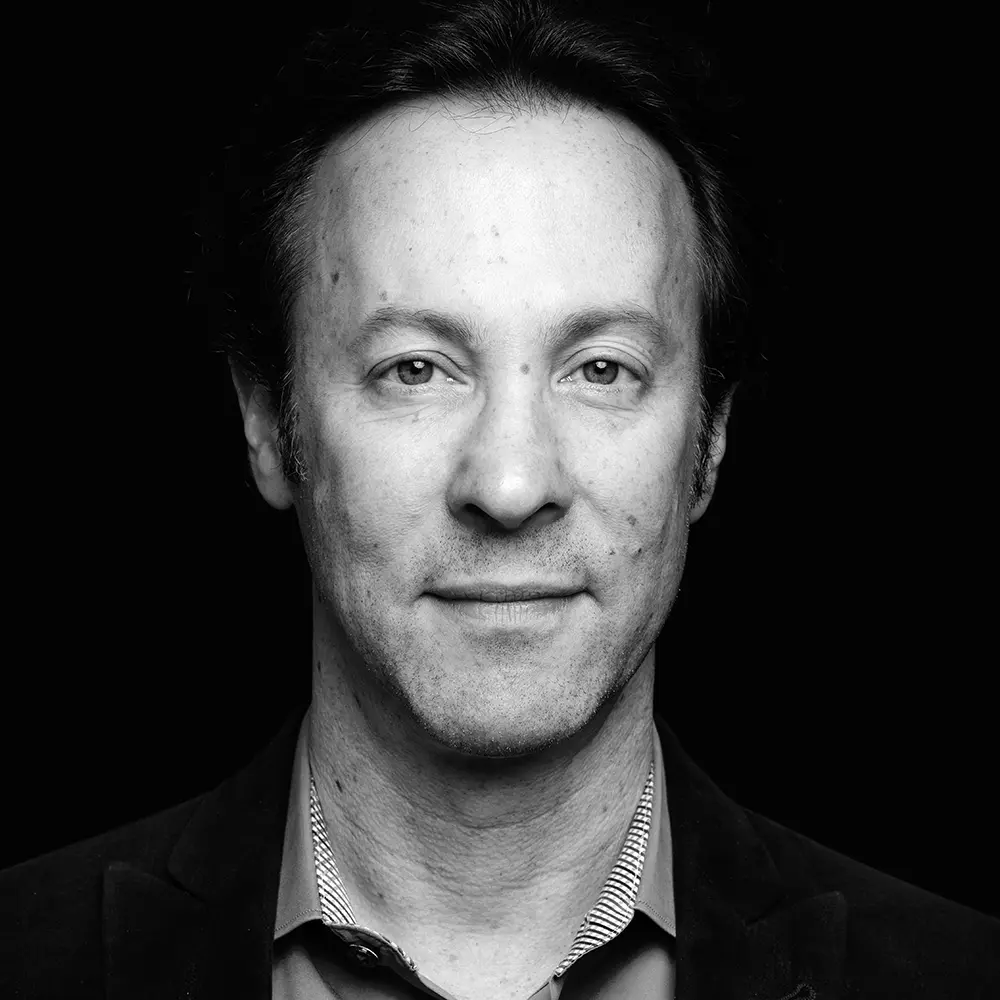
About this Guest
Dr. David Eagleman
Dr. David Eagleman, PhD, is a neuroscientist, bestselling author and professor at Stanford University.
This transcript is currently under human review and may contain errors. The fully reviewed version will be posted as soon as it is available.
Dr. David Eagleman:
Oftentimes people will ask me, like an older person will say, "Hey, I do crossword puzzles. Is that good?" Yeah, it's good until you get good at it, and then stop and do something that you're not good at.
Andrew Huberman:
Yeah.
Dr. David Eagleman:
And constantly find the next thing that's a real challenge for you. That's the key thing about plasticity. Your brain is locked in silence and darkness. It's trying to make a model of the outside world. And if you're constantly pushing and challenging it with things it doesn't understand, then it'll keep changing.
Andrew Huberman:
Welcome to the Huberman Lab Podcast, where we discuss science and science-based tools for everyday life. I'm Andrew Huberman, and I'm a professor of neurobiology and ophthalmology at Stanford School of Medicine. My guest today is Dr. David Eagleman. Dr. David Eagleman is a neuroscientist, a best-selling author, and a longtime science public educator. Today, we discuss several different features of brain science that impact your everyday life. And once you understand the mechanisms behind these features, it will position you to make better decisions, and if you choose, to rewire your brain to be a more effective learner. We start by discussing neuroplasticity, which is your brain's ability to change in response to experience or any form of deliberate learning that you are trying to impose on yourself. We talk about the mechanisms for it and how you can get better at learning and unlearning in the context of skills and information. We also discuss memory formation and the relationship between stress and time perception, and why it is that people experience things in slow motion if those things are very stressful or traumatic, and how that can be useful for undoing traumatic memories. David also takes us through the neuroscience of cultural and political polarization, something that's very timely right now, false memories, déjà vu, dreams, and the meaning of dreams, and a lot more. David is an absolutely legendary science communicator. I say this as a fellow neuroscientist. He is able to embed factual information about the brain into real-life stories, and in doing so, he's able to shed light on how we work as humans and how we can all improve our life experience. He's a true virtuoso of neuroscience and science education more generally. What David shares with us today will change the way that you think about thinking and your own mind, and no doubt will also change the way that you view the world. Before we begin, I'd like to emphasize that this podcast is separate from my teaching and research roles at Stanford. It is, however, part of my desire and effort to bring zero cost to consumer information about science and science-related tools to the general public. In keeping with that theme, today's episode does include sponsors. And now for my discussion with Dr. David Eagleman. Dr. David Eagleman, welcome.
Dr. David Eagleman:
Thanks. Great to see you, Andrew.
Andrew Huberman:
Man, I feel like the kid that was a freshman when you were a senior, because you got into this public-facing science education long before I did, and you've had an amazing career also in your laboratory work, and today I want to talk about all of it-
Dr. David Eagleman:
Great
Andrew Huberman:
... by mostly listening and you doing the talking. And there are so many topics in neuroscience that are fascinating, as you know, but I think perhaps the most fascinating thing about the human brain is its ability to change itself.
Dr. David Eagleman:
Yeah.
Andrew Huberman:
Plasticity. So I know how I think about neuroplasticity. I want to know how you think about neuroplasticity, what it is, and how we should think about it, and what we could possibly do with that information.
Dr. David Eagleman:
Okay, great. This was Mother Nature's big trick with humans, was figuring out how to drop a creature into the world with a half-baked brain and then let the world wire up the rest of it. And so in 1953, Crick and Watson, I worked with Crick at the Salk, they burst into the Eagle and Child pub and said, "We've discovered the secret to life," because they figured out the structure of DNA. But that was really half the secret of life, because the other half is all around us. It's every bit of experience that you have. It's your culture, it's your language, it's your neighborhood. All of that stuff gets absorbed by the brain and wires us up. And I often think about this issue of what if you were born 30,000 years ago, exactly your DNA, you pop out and you look around, and the question is, would you be you? The answer is you wouldn't be. You'd look maybe similar because of the same genetic blueprint, but you would have a different culture and a different language and different stories and all that stuff. You'd be a very different kind of person. So brain plasticity, for anyone who doesn't know, it's that the brain is constantly reconfiguring itself every second of your life. You got 86 billion neurons, and really the way to think about it is these are like little creatures that are all crawling around and moving around. Each one is on average contacting 10,000 of its neighbors, but it's not like a fixed thing like you might see in a textbook. Instead, they're plugging and unplugging and searching around and finding new places to plug in, and of course, changing the strength of those connections. And I actually always find this weird. It's like having all these little creatures in your head that are slithering around, but that's what makes us absorb every single thing in our worlds. And this is what humans have that other creatures have less of, and that's why we've taken over every corner of the Earth. That's why we've gotten off the planet. We build skyscrapers and compose symphonies and so on, because each generation, we land, and we get to spend our first few years absorbing everything that's been discovered before us, and then we springboard off of that and do something new, because we are able to figure out all the discoveries that have come before us because of this ability to reconfigure our own circuitry.
Andrew Huberman:
Yeah.
Dr. David Eagleman:
And if you were an alligator born 30,000 years ago, you'd be the same alligator. Eat, mate, swim, whatever, and you wouldn't be meaningfully different. But humans, because of our flexibility, we are the dominant species.
Andrew Huberman:
Such an interesting take on
Dr. David Eagleman:
time in human evolution that, and I completely agree with you, I just had never thought about it this way before, that we land when we're born, and we're absorbing the outcroppings of all the neuroplasticity that came before us. We often hear that the human brain is kind of like a macaque monkey brain with a supercomputer added on top of it, mostly the prefrontal cortex. A bit more prefrontal cortex. Prefrontal cortex. Prefrontal cortex. Prefron- It's actually cortex in general.
Andrew Huberman:
Interesting.
Dr. David Eagleman:
Because we have four times as much cortex as our nearest neighbors in the animal kingdom, and that seems to be the magical stuff.
Andrew Huberman:
Not just prefrontal cortex.
Dr. David Eagleman:
Right. And I'm sure the listenership knows this, but the cortex is just the outer three millimeters of the brain. It's that wrinkly bit, and that's the magic stuff because it turns out cortex is a one-trick pony. The reason the cortex looks the same everywhere is because it is the same. It's got the same circuitry, it's got six little layers, it's doing the same algorithms, and it gets defined by what you plug into it. So if you plug in a cable that's carrying visual information, then it becomes visual cortex. And we look at it and we say, "Oh, look, it detects the orientation of lines and it detects motion," things like that. If you plug auditory information into it, it becomes auditory cortex, and so on. And it turns out, the way we do this in textbooks is we make a picture and we say, "Look, that's visual cortex, that's auditory, that's somatosensory." But all this stuff is really flexible. It's so much more interesting than the textbook model because you can take the fibers and plug them in somewhere else. So you may know this study in 2000 by Mriganka Sur at MIT, where he, in a ferret, took the visual information, the optic nerve, and he plugged it into the auditory cortex. And then what would have been the auditory cortex became visually responsive, and it started caring about vision. So what does that mean? It means the cortex is a one-trick pony, and we got so much more of it, including the prefrontal cortex. So that has two major effects. One is that there's a lot more room with our species in between input and output. So with a squirrel or a cat or even a macaque monkey, you throw some food in front of it, that sensory cortex is right next to the motor cortex, it's going to eat the thing. But we've got all this computational real estate in between in and out. So we can say, "Well, I'm on a diet, I'm trying," whatever, "I'll eat it later." We've got all these other options that we can take. That's one thing, and then the other thing is exactly what you pointed to, which is the prefrontal cortex, which allows us to simulate what ifs.
Andrew Huberman:
Mm-hmm.
Dr. David Eagleman:
Allows us to think about possible futures, simulate things in a way that we don't have to risk our lives doing it. We can simulate it and say, "Oh, that would be a bad idea. Oh, that'd be a pretty good idea." And then we can take the action.
Andrew Huberman:
A couple different questions. I'm a big fan of Mriganka's work, and I'm so glad you mentioned that work. It really points to the fact that while there are cortical areas that are genetically devoted by virtue of wiring when we arrive in the world, to auditory or visual, that there's a lot of crossover, especially in the extreme cases. So my understanding, correct me if I'm wrong, is that if somebody is blind from birth, the real estate that would be allocated to vision becomes allocated to tactile sensation, especially if they learn how to Braille read, maybe auditory processing, because they rely on it more. So there's really no blank real estate in the cortex. It's all used.
Dr. David Eagleman:
That is exactly right. So it turns out people who are born blind, what we call the visual cortex at the back of the head here, that gets taken over. It's no longer visual. It becomes devoted to hearing, to touch, to memory, things like this. And you can demonstrate that people who are born blind are better at hearing and at touch and so on. They can discriminate things much more finely. Same with people who go deaf. The auditory cortex, all that real estate, nothing lies fallow in the brain. All that gets taken over for different tasks, and they can do things like see your accent. Just by lip reading, they can tell where in the country you're from, and so on. All of this demonstrates that, first of all, the more real estate you have, the better. We are, in a sense, if you've got all your senses, you have to share everything. And so we're pretty good at vision and hearing and touch and so on, but everything has to get shared. But there are pretty extraordinary things that happen when people devote more real estate towards one task. And by the way, just as a side note, this is one hypothesis about what goes on with savantism in autism, is that somebody, for whatever genetic set of reasons, ends up devoting a ton of real estate to, let's say, the Rubik's Cube or the piano or memorizing visual scenes or something, and then they are absolutely superhuman at it. That comes at the cost of other things, let's say social skills that might be needed. But the general story is if you devote a lot of real estate towards something, you're going to get really good at it.
Andrew Huberman:
I'm excited to share with you that Mateína, the yerba mate drink that I helped create, is now available at Sprouts market nationwide. Longtime listeners of the Huberman Lab podcast know that yerba mate is my preferred caffeine source. It provides a smooth energy lift without giving you the jitters, and it has many other benefits, such as helping regulate blood sugar, improving digestion, mild appetite suppression, and more. Mateína is my absolute favorite of all the yerba mate brands out there, and believe me, I've tried them all. The flavors are fantastic. I drink at least three cans of Mateína every single day. You'll often see them on the table during our podcast recordings. I absolutely love the product, and I'm proud to now have it sold at Sprouts market. Also, there's a great new offer. They are giving away a free can of Mateína to anyone who buys it at Sprouts and sends in a photo of their receipt. To learn more about how you can get a free can of Mateína, go to drinkmateina.com/offer. Again, that's drinkmateina.com/offer to get a can of Mateína for free at your local Sprouts market. Today's episode is also brought to us by RORA. RORA makes what I believe are the best water filters on the market. It's an unfortunate reality, but tap water often contains contaminants that negatively impact our health. In fact, a 2020 study by the Environmental Working Group estimated that more than 200 million Americans are exposed to PFAS chemicals, also known as forever chemicals, through drinking of tap water. These forever chemicals are linked to serious health issues, such as hormone disruption, gut microbiome disruption, fertility issues, and many other health problems. The Environmental Working Group has also shown that over 122 million Americans drink tap water with high levels of chemicals known to cause cancer. It's for all these reasons that I'm thrilled to have Rorra as a sponsor of this podcast. I've been using the Rorra countertop system for almost a year now. Rorra's filtration technology removes harmful substances, including endocrine disruptors and disinfection byproducts, while preserving beneficial minerals like magnesium and calcium. It requires no installation or plumbing, it's built from medical-grade stainless steel, and its sleek design fits beautifully on your countertop. In fact, I consider it a welcome addition to my kitchen. It looks great, and the water is delicious. If you'd like to try Rorra, you can go to rorra.com/huberman and get an exclusive discount. Again, that's Rorra. R-O-R-R-A.com/huberman. I don't know if you saw this study that was published in "Science" recently that explored early specialization in sport or creative endeavor versus kids that played a bunch of different sports or involved in a bunch of different creative endeavors. And it turns out that specializing too early, on average, doesn't play out so well in terms of peak of success later. Now, there are exceptions, right? But it turns out that being a bit more diversified in your physical activities and cognitive activities as a young person, into the early teens even and beyond, is more beneficial. And this, to me, kind of runs counter to my images of Tiger Woods putting golf balls with his dad when he was kind of still waddling, he was so little, right?
Dr. David Eagleman:
Right.
Andrew Huberman:
And then he becomes Tiger Woods. Or the Williams sisters, who were intense early on. I think that especially in the United States, we have this notion that early specialization is really what sets you up to be spectacularly good later. So I'm curious what your general thoughts are for every person. You have kids, and some of us still are kids who are listening, and we all have plasticity into adulthood. Do you think that we come into the world with some genetic leanings toward particular activities being right for us or more right for us? And how do you think about it in terms of how many difficult, hard-to-access things we do just so that we're sure that we have a full experience of life? Because what I hear you saying, and I totally subscribe to, is that our early experience becomes the funnel through which we have more or less opportunity later. Like the kind of width of the funnel depends on how many things we did or didn't do early on.
Dr. David Eagleman:
So this is really interesting because, first of all, take somebody like the Williams sisters. They got drilled on tennis from day one, and this stuff can be taught, and this is why they became champions. And this is obvious, but this is the same way you find with chess champions and golf champions like Woods and so on. You have to really spend the time doing it. Now, I find this interesting for a few reasons. One is that cognitively, you can understand what a forehand or a backhand is, a hit in tennis, but to actually get good at it, you have to burn it down into the circuitry. So actually, let me back up for one second, which is the reason that we have brain plasticity is because this is how a brain makes things that you do fast and efficient. So when you're doing a task a lot, like serving tennis or something, you're taking that from the software to the hardware of the brain. Let's say I'm an amateur tennis player and there's Serena Williams, I'm playing against her. It turns out, surprisingly, when we're playing, she's beating me like crazy, but my brain's the one using all the activity. I'm the one burning all the calories with my brain. Why? Because she has burned tennis into the hardware of the brain, so it's fast and efficient. I, on the other hand, am trying to simulate lots of things and figure out where I should go and all that. So the brain does this for reasons of efficiency. Obviously, the brain's main job is to save energy because we are mobile creatures who run on batteries, and so this is one of the big things about plasticity. So people get extraordinarily good by doing things over and over. These three women, the Polgar sisters, who are chess champions, they're the best, to my knowledge, are still the best three female chess players in the world. Their father from day one started teaching them how to do chess and so on, and they all became world champions at this. The thing about whether you need to have diversification, that's an interesting question. I can see why it would be useful because you're learning different ways, different moves about it in the same way that if you learn how to snowboard and ski, you might get better at both of them. But I got to say, when children grow up, let's say, trilingually, or even bilingually, they end up having a lower vocabulary in both languages than if they grow up monolingually.
Andrew Huberman:
Really?
Dr. David Eagleman:
Yeah. It's just because of the amount of practice you get with a language.
Andrew Huberman:
Kids, still do your second language homework.
Dr. David Eagleman:
Yeah. Right.
Andrew Huberman:
In California, growing up here, it's very useful to know English and some Spanish.
Dr. David Eagleman:
Yeah.
Andrew Huberman:
Very, very useful. In fact, I wish I'd gotten better at Spanish when I was a kid. And my father's born and raised in Buenos Aires.
Dr. David Eagleman:
Yeah, cool.
Andrew Huberman:
But we didn't speak Spanish at home, at least not very much. So I can tell you, learn a musical instrument and learn a second language. The musical instrument for your own enrichment-
Dr. David Eagleman:
Right
Andrew Huberman:
... and those around you. But the second language thing I think is extremely useful, at least in California I find it to be really useful. But you're saying that-
Dr. David Eagleman:
A lot of kids are resisting this, by the way, now, because they say, "Look, I can do Google Translate or my Meta sunglasses," and so they're resisting it.
Andrew Huberman:
Yeah, but Google Translate is not Google Relate.
Dr. David Eagleman:
I totally agree.
Andrew Huberman:
I'm hardly fluent, but I can get by now.
Dr. David Eagleman:
Yeah.
Andrew Huberman:
I'm pretty good. I've been practicing my Spanish more and more, and just by virtue of living in Southern California, that just happens. But I think knowing a second language, and being able to have that kind of face-to-face conversation with someone, even the struggle of it ... is enriching in a way, because you're forcing your brain to do some work.
Dr. David Eagleman:
My father spoke eight languages fluently without accent. And that's because he went to medical school in Europe and did his clinical rotations in different countries, and he was a young man, so everywhere he went, he got a girlfriend, and then he had the incentive to learn the language. And by the way, maybe we'll come to this, but when it comes to brain plasticity, the reward systems are a big part of what makes change happen in the brain. Actually, let me just mention, this is tangential, but let me just mention this while it's on my mind. A lot of people really for the last 30 years, ever since the internet became a big thing, really worried about what this is going to mean for kids and education. I think it's terrific. I am very optimistic about this because what kids started getting a few decades ago was this opportunity to learn about something right when they were curious about it. So they want to know how to fix their bicycle tire, or what is this space physics thing or whatever, and they ask the question and get the answer. Why does that matter? It's because brain plasticity really happens when you have the right cocktail of neurotransmitters present. And that cocktail happens to map onto curiosity or engagement. I'm slightly older than you are, but when we were in school, the teacher teaches you the thing. They just dump everything like, "Oh, the Battle of Hastings happened in 1066," and you may or may not ever need to know that. But what kids get now is information right in the context of their curiosity, and that makes a big difference because stuff really sticks.
Andrew Huberman:
Mm-hmm.
Dr. David Eagleman:
And I have been extraordinarily impressed with young people that I meet. I meet all these young people who say these extraordinary things, and I say, "Wow, how did you know that?" And they've watched TED Talks, they've asked Alexa, they've talked to ChatGPT, and they get the information, and it sticks.
Andrew Huberman:
Super interesting. I hadn't thought about it that way. I guess I'm reflecting my age to everyone when I say that I remember being interested in something and then having to bike or skateboard down to Tower Books-
Dr. David Eagleman:
Yeah
Andrew Huberman:
... or go to the library and look things up, and I tell myself that the effort involved in going to get it actually is useful. But you're right. Had I been able to look up what I was interested in and get it right then, I probably would've spent more time implementing the information because I was interested in all sorts of things that usually involved building something or doing something that was going to make a big mess and frustrate my parents, right? But I spent a lot of time searching for the information.
Dr. David Eagleman:
Yeah. Plus, you remember how dinner table conversations used to go, which is that everyone argues about something, and then someone says, "Well, I think it's this," and the other person says, "No, I think it's that." And then it just sort of stops there because no one knows the right answer. But now everyone whips out their phone, gets the answer, and then it keeps going, which is really terrific.
Andrew Huberman:
Yeah. It's dissolved some of the social dominance that-
Dr. David Eagleman:
Yeah
Andrew Huberman:
... comes about when one person's word is the word that everyone has to just kind of believe, just because they say it with more certainty than the other do.
Dr. David Eagleman:
They're the father or whatever. Exactly.
Andrew Huberman:
Yeah. Or the grandfather or whoever.
Dr. David Eagleman:
Yes.
Andrew Huberman:
Or the grandmother in some cases.
Dr. David Eagleman:
Yeah.
Andrew Huberman:
Who knows? Now it gets checked against the internet and Claude for me, or ChatGPT for a lot of other people. I realize that the question I'm about to ask can't be answered completely, but given what you know about plasticity and the fact that, yes, we come into the world with some pre-programming of our brain circuitry, but we have some control over what the inputs are. Some.
Dr. David Eagleman:
Hmm.
Andrew Huberman:
Depending on our circumstances.
Dr. David Eagleman:
It depends what you mean by we. So as infants, of course, we have no control over that.
Andrew Huberman:
Right. As an adolescent, as a teen-
Dr. David Eagleman:
Yeah. Fair
Andrew Huberman:
... as a 20-year-old-
Dr. David Eagleman:
Yes
Andrew Huberman:
... assuming plasticity extends into adulthood, still as adults, although it's harder.
Dr. David Eagleman:
Quite right.
Andrew Huberman:
Some control over what one learns or does. What do you think are sort of the core elements to making sure you build a healthy, well-rounded nervous system?
Dr. David Eagleman:
Yeah.
Andrew Huberman:
Nobody's really ever attempted to answer this question. A howler monkey learns all the things that a howler monkey needs to do.
Dr. David Eagleman:
Yeah.
Andrew Huberman:
Humans, we have, as you said, the benefit of all the technology that comes from the plasticity of those that came before us. And so maybe kids don't need to learn a second language, but what do you think are sort of the essentials? Obviously, learning to communicate and understand, learning to move. But do we have some sense of how you check off the core 10 boxes of neuroplasticity to make sure that by time you land in adulthood, or even if you're still an adult, that you're doing the, quote unquote, "best that you can with your brain"? This is a tough question, I realize.
Dr. David Eagleman:
I would say two things. One is try to maximize along every axis. So try to be an athlete, try to be a scholar, try to be somebody who's good at social life and has a lot of friends. All of these axes of life, it's worth spending the time doing that, and obviously we're in an era, especially now, where there are a million ways to waste time. I sit on airplanes next to people and they're playing Candy Crush for the whole flight, and I just feel like, what a shame, because there's so much you could be putting into your brain and making happen. You could be reading books, you could be listening to podcasts, anything like that. Okay, so there's that. But the other half that I would say is a lot of what we care to be depends a lot on what's going on in the future, and I'm fascinated by, for children now in schools, what choices they should make. Because who the heck knows what careers are going to exist in 20 or 30 years from now? Therefore, the main things they can concentrate on, I think, are critical thinking and creativity. Those are the main things for them to figure out how to do.
Andrew Huberman:
What are some good ways, in your opinion, to access critical thinking and creativity? I can imagine a number of them.
Dr. David Eagleman:
Yeah. Here's something I find very optimistic about AI in the realm of education. In any classroom, it's going too fast for half the kids and too slow for the other half of the kids. What we now have the opportunity for is really individualized education. One way this could be implemented is AI debate. So you take any hot-button issue, abortion, gun control, whatever you want, and you debate with the AI, and you get graded based on the quality of your arguments. And then you switch sides, and you take the other side, and you argue again.
Andrew Huberman:
Hmm.
Dr. David Eagleman:
This is the kind of thing you could never have enough teachers for, they would never have enough patience for. AI is terrific at this. And by the way, it's really important so that students get a 360 view of issues instead of ideological capture. So this is a terrific way to teach critical thinking to every student, not just the kids on the speech and debate team. Okay, creativity, that's easy. That has to do with learning the foundational stuff and then doing remixes, bending, breaking, blending, doing new versions of it. And I think schools can implement this easily and without any extra expense, which is you have to teach the foundational stuff. But you compress that so you have one extra week at the end of each semester, and then that last week you say, "Okay, great, take everything you've learned and now make your own thing with it. Using all the elements that we've learned, bend it, break it, blend it, make your own version of this."
Andrew Huberman:
Mm-hmm.
Dr. David Eagleman:
That kind of exercise, that is creativity. That's all creativity is, is taking your storehouse of knowledge and doing remixes.
Andrew Huberman:
Hmm.
Dr. David Eagleman:
We should be teaching that.
Andrew Huberman:
Mm-hmm.
Dr. David Eagleman:
So critical thinking and creativity. Goethe, the German philosopher, had said, "There are two bequests that a parent can give a child. One is roots and one is wings." And my interpretation of that has always been critical thinking and creativity.
Andrew Huberman:
Love that. And thank you for making it practical. That's something I think any and all of us could invest some more time in. I also agree it's very easy to waste time on the internet. I have a separate phone for social media.
Dr. David Eagleman:
Oh, great.
Andrew Huberman:
That solved a lot of issues. Not that it was really contaminating my life that much. I like social media. I like teaching and learning there and some entertainment there. But by putting it on an old phone, so X and Instagram are just on that phone. People send me things by text.
Dr. David Eagleman:
Yeah.
Andrew Huberman:
And I have to transfer them over. Sometimes I see them, sometimes I don't. My default setting is no longer to just look at my phone and look at social media.
Dr. David Eagleman:
Yes.
Andrew Huberman:
It has increased my productivity and just my happiness and my level of attention.
Dr. David Eagleman:
Yeah.
Andrew Huberman:
Also, when I do social media, I'm doing it like a-
Dr. David Eagleman:
Purposeful thing
Andrew Huberman:
... like watching a show or doing something that I would devote time for, as to not always just scrolling in the background.
Dr. David Eagleman:
Do you find yourself picking up that phone sometimes accidentally?
Andrew Huberman:
No, and if I do, if I find myself doing that reflexively, I have what I call a supermax prison lockbox, which you can't code out of. And the fun for me, and get this, this is really weird, I don't know what this says about my psychology. I'll put it in there, and I'll dial in like four hours.
Dr. David Eagleman:
Yeah.
Andrew Huberman:
And then I hit the supermax button, and then there's this 15-second countdown, and then I'll go, "Five, six, seven, eight, nine hours." Then I go, "Okay, cool, like nine hours." So there's this weird thing where you don't want to let it go.
Dr. David Eagleman:
Yeah.
Andrew Huberman:
But then I really enjoy the freedom from it so much-
Dr. David Eagleman:
Yes
Andrew Huberman:
... that the extra hours that I add on and that last thing, it feels like a gift to myself.
Dr. David Eagleman:
Yes.
Andrew Huberman:
And then I'm like, "I'm going to have a great day." And then when I get back on it, certainly there's this dopamine dynamics thing where you go, "Oh, this is a lot of fun," but you have to be super careful because it'll suck you in. I'm just amazed at how fast time goes, which we're going to talk about time perception.
Dr. David Eagleman:
Hmm.
Andrew Huberman:
Before we do that, though, I have a question about plasticity that I've been waiting to ask you and only you, because we have a lot of friends that are neuroscientists, but I have a feeling you've thought about this more than anyone, which is, are there any things that we can do to extend the window of plasticity?
Dr. David Eagleman:
Hmm.
Andrew Huberman:
Or are there activities like learning an instrument or some sort of game, who knows, that gives us our capacity for plasticity, more height, more width? As opposed to just the same principles. You need to focus on the thing, then you need to make errors, then you need to do some error correction, you get to sleep that night, you rewire, you keep trial and error. We know the basics now. I think most people have heard them. But what can we do to broaden our ability or heighten our ability to get plasticity?
Dr. David Eagleman:
Two words, seek novelty. That's the whole game, is you got to continually challenge the brain, and this is something that as we get older, it's more important than ever. It's finding new things that we haven't done before. You always have to keep yourself between the levels of frustrating but achievable.
Andrew Huberman:
Mm-hmm.
Dr. David Eagleman:
And as long as you're trying new things, so yes, a new instrument is great. Speaking a new language is great. Obviously, we're in a world that's moving very fast, so just keeping up with the technology and figuring out, wow, there's this new opportunity here with this piece of software or whatever. All that stuff is great. This is the critically important part. You may know of these studies. There's been this study going on for decades now called the, what is it? The Religious Orders Study, up in Chicago area, where there's a whole bunch of nuns and priests that agreed to donate their brains when they passed away. And then when they donate their brains, the researchers examine them, do autopsies on them. What the researchers found is that some fraction of these nuns had Alzheimer's disease, but nobody knew it when they were alive. Nobody saw any cognitive deficits. Why? It's because these women died in their 90s, and to the day they died, they lived in these convents. And in the convents, they had social responsibilities. They had chores. They were fighting with their sisters. They were playing games with their fellow sisters. They were singing songs. They were doing things all the time, so they kept their brain active. So even as their brain was physically degenerating with Alzheimer's disease, they were building new roadways. They were building new bridges over these areas. This is one of the big things that tells us that, contrast this with people who retire at 65, and they go home, and they sit on a couch and watch the television They don't have as good an outcome because they're not challenging their brain anymore. So it is so important to be doing things. I once heard the expression that there's nothing as hard that the brain does than other people. And so for these women living in convents that were constantly dealing with... Because you never know what somebody's going to say or how they're going to react or what they're going to do. So this is great challenge opportunity for the brain. Anyway, the point is, we need to always find that with ourselves. Oftentimes people will ask me, like an older person will say, "Hey, I do crossword puzzles. Is that good?" Yeah, it's good until you get good at it, and then stop and do something that you're not good at.
Andrew Huberman:
Yeah.
Dr. David Eagleman:
And constantly find the next thing that's a real challenge for you. That's the key thing about plasticity. Essentially, the backstory is this. As you well know, your brain is locked in silence and darkness. It's trying to make a model of the outside world, and its whole goal is to make a successful model. And when it succeeds at that and says, "Oh, okay, wait, I've got good predictions about what's going on," then it stops changing. That's its goal is to stop changing. And if you're constantly pushing and challenging it with things it doesn't understand, then it'll keep changing.
Andrew Huberman:
Amen to that. I've been trying to beat the drum that the agitation that one feels when trying to learn something new-
Dr. David Eagleman:
Yeah
Andrew Huberman:
... it's actually a reflection in part of the catecholamines, right? Like adrenaline and norepinephrine.
Dr. David Eagleman:
Yeah.
Andrew Huberman:
The frustration and the agitation that we feel, that's the feedback signal to the brain that, hey, this is different than the stuff you know how to do.
Dr. David Eagleman:
Yeah.
Andrew Huberman:
Because the neurons are not thinking, they're firing, right?
Dr. David Eagleman:
Right.
Andrew Huberman:
And so that neurochemical milieu associated with frustration is one of the triggers that generates plasticity. Which actually, maybe you can resolve this question for me. I'm struck by the fact that there's so many studies showing that the adult brain can change.
Dr. David Eagleman:
Yes.
Andrew Huberman:
And some of the more interesting ones involve boosting the levels of some neuromodulator, dopamine or acetylcholine or norepinephrine or epinephrine, serotonin. But what's so interesting to me is that it seems like you can boost the levels of any of those and get plasticity.
Dr. David Eagleman:
Mm-hmm.
Andrew Huberman:
It's not like one neuromodulator gives you the opportunity for plasticity. So many of the interesting studies on psychedelics are using psychedelics that are kind of like serotonin. They act on different receptors-
Dr. David Eagleman:
Mm-hmm
Andrew Huberman:
... but they're very serotonergic.
Dr. David Eagleman:
Yeah.
Andrew Huberman:
I remind people of this because people really like to beat up on SSRIs, and I agree they have their problems and side effects, but they've also helped a great number of people.
Dr. David Eagleman:
Yep.
Andrew Huberman:
But whether it's SSRIs or it's psilocybin, they're both just tools for plasticity that drive serotonin. But we know you can amplify acetylcholine, get a window of plasticity. This is a speculative question, but why do you think it is that there's this sort of equipotential of neuromodulators, where boosting any one of them can open plasticity or the window-
Dr. David Eagleman:
Hmm
Andrew Huberman:
... or the opportunity for plasticity?
Dr. David Eagleman:
Okay, a few things on this. As you well know, all the neuromodulators exist in a dance with each other, and fundamentally, I think we're going to come to understand this in 50 years as sort of combination locks of things. And the way we keep looking at it in science currently is, ah, here's acetylcholine, or here's serotonin, or so on. And it's probably not the right way to look at it, because it's certainly not how the neurons are looking at it. Okay. That said, acetylcholine really feels to me like the main one involved in plasticity. When you are a baby, you've got acetylcholine going everywhere. Whenever you're trying to figure out the world, whenever something's not matching a prediction and you've got acetylcholine going everywhere that says, "Hey, I got to figure out what just happened and how to link this with what I did," and so on. As you get older, it's more like a pointillist artist who just dabs things here or there. You get acetylcholine release very locally in small places, and that's where you make changes. Why? That's because as you get to be an adult, you've got a better and better model of the world, and you don't want to change everything. You just change like, oh, I didn't realize there was that button on the coffee machine that did this new thing, or whatever. So you just change little bits at a time here. We're in this really interesting situation in the history of our species, where now we can do things like, hey, what if we just crank up acetylcholine or obviously we've done lots of things with dopamine. We always find when we tweak these things that it's complicated. Just as one example, with Parkinson's, people have less dopamine, and so the medications are to crank up the dopamine. But what that led to, you may know this fascinating story, this is probably 25 years ago now, where observant clinicians noted that people on these Parkinson's medications were becoming hyper-compulsive gamblers. They were blowing their family's fortune on online gambling and Las Vegas and so on. And what they realized is when you crank up the dopamine, that changes your risk aversion such that people were taking it. So now it's a contraindication that's listed on the bottle. If you notice gambling, turn down the amount here. So anyway, whenever we start dialing these around, we always find things that are a little bit out of our predictive realm. But the general story is that your brain's trying to put together this model of what's going on, and as it gets better and better, it's doing less and less plasticity. I do want to point out, though, that parts of the brain become less plastic and others stay plastic your whole life. As an example, your primary visual cortex at the back of the head, that locks down early. You really can't do much to change that. And there were studies by Logothetis' lab years ago where they looked at changes to, let's say, the retina in an adult monkey, and they expected to see changes in the visual cortex of the monkey, and they didn't see any changes at all. And that surprised them, given all the plasticity literature. But it's because the visual cortex locks down. In contrast, these downstream areas from the visual cortex that care about things like recognizing faces or new brands of fast food restaurants or whatever it is, those stay plastic your whole life because there's constantly new data coming in on those. So the general story is the primary areas are like the, I think about it like the The software kernels where if you're at Microsoft, for example, there's parts of the code that no one ever touches because that's how to add two numbers and multiply whatever. That's the kernel of the code. You never touch that. But you get these higher and higher application layers on top of that, and that's essentially how to think about primary sensory cortices and then all the stuff downstream from there.
Andrew Huberman:
Mm-hmm. Perfect analogy for people to understand how much challenge to embrace. You're not trying to defrag the whole system. And I mentioned psychedelics. I do think they have some interesting therapeutic potential. I also worry about, and I can tell you examples of people that got, I guess nowadays they call it one-shotted. They take ayahuasca a couple of times and they are forever different in ways that does not serve them.
Dr. David Eagleman:
Wow.
Andrew Huberman:
Those examples don't get talked about quite as often as-
Dr. David Eagleman:
I'll bet
Andrew Huberman:
... the also many people who seem to benefit from these things. So plasticity, it seems, is not the goal. Directed plasticity is the goal.
Dr. David Eagleman:
That's right. And it's very hard to direct, so I feel like let's imagine you could take some cocktail of neurotransmitters and get total plasticity of your brain. I don't think you'd want that. You wouldn't be you anymore. Who we are is the sum of our memories and the sum of our skills that we have built, and that keeps changing. We're always a moving target, and who you will be in 5 or 10 years will be different, but I don't think we'd want the plasticity of an infant, even though when you're doing, let's say, language learning, you say, "Oh, I wish I could learn this as well as I did when I was seven." But generally, it's not a state that you would desire, I think.
Andrew Huberman:
If you're a regular listener of the Huberman Lab podcast, you've no doubt heard me talk about the vitamin mineral probiotic drink AG1. And if you've been on the fence about it, now's an awesome time to give it a try. For the next few weeks, AG1 is giving away a full supplement package with your first subscription to AG1. They're giving away a free bottle of vitamin D3+K2, a bottle of omega-3 fish oil capsules, and a sample pack of the new sleep formula, AGZ, which by the way, is now the only sleep supplement I take. It's fantastic. My sleep on AGZ is out of this world good. AGZ is a drink, so it eliminates the need to take a lot of pills. It tastes great, and like I said, it has me sleeping incredibly well, waking up more refreshed than ever. I absolutely love it. Again, this is a limited time offer, so make sure to go to drinkag1.com/huberman to get started today. You've mentioned a few times future self. I think all of us are inherently interested in our future selves and whether the things of our past, present, and what we have control over going forward is going to put us in the best future self possible, right? Humans love to optimize or fantasize about optimal. But how should we think about thinking about our future self? Or should we not do that, right? Should we just avoid that loop-de-loop and-
Dr. David Eagleman:
No
Andrew Huberman:
... and get real stoic about it and just live in 10-minute time blocks or one-minute time blocks? It raises a really interesting question, I think, of where should we set our time horizon?
Dr. David Eagleman:
Mm.
Andrew Huberman:
To not just feel the best, but to be our best and to feel our best going forward.
Dr. David Eagleman:
Yeah. Our capacity to think about our future selves is the most special part of being humans. And if we didn't do it, if we said, "I'm going to be stoic about it," you'd eat the cupcake and you'd do what, all the things that wouldn't serve your future self.
Andrew Huberman:
Or never eat the cupcake like a real stoic and then starve to death, right? Even if the cupcake were the only thing, right? What would the stoic do?
Dr. David Eagleman:
That's right. So yeah. We actually spend most of our time not in the here and now. We're reminiscing about the past, and we're simulating possible futures. Your mind is a movie theater, we're constantly thinking about where things are going. But this is great. This is what makes us able to do all the things that humans do successfully. And in our own lives, this matters so much because we're able to think about who do I want to be? Now, as you know, we've got this rivalry in the brain. You've got all these voices going on at the same time, all these different networks running. So for example, if I put the cupcake down in front of you, part of your brain wants to eat that. It's delicious. It's a rich energy source. Part of your brain says, "Don't eat it. I want to stay fit." And so part of your brain says, "Okay, maybe I'll eat part of it, but I'll go to the gym later," or, "I promised my girlfriend that I'll go do this thing." We've got all these voices. You can cuss at yourself. You can cajole yourself. You can contract with yourself. And the question is who's talking to whom? It's all you, but it's parts of you that have these different drives. Now, the part that's really amazing about us is we've got lots of short-term drives, but we also have this capacity to look into the future and think about who we want to be, and that is essentially subserved by our prefrontal cortex, which as we mentioned earlier is something that the size of it is unique to humans. All of our closest cousins in the animal kingdom don't have a prefrontal cortex that's a fraction of what we have. That's what allows us to unhook from the here and now. Okay, now here's the thing. I have been fascinated by this for a long time about how we sometimes know, okay, my future self is going to act badly in this situation, so I'm going to do something now so that my future self can't act badly. So this is the topic of my next book. It's called "The Ulysses Contract," and where this term comes from is in "The Odyssey," Odysseus, otherwise known as Ulysses, is coming home from the Trojan War, and he realizes that way up ahead he's going to pass the island of the sirens, where you've got these beautiful female creatures who sing these songs that are so beautiful it beggars the mind of the sailors and everyone crashes into the rocks and dies. Ulysses really wants to hear the song, but he knows like any mortal man he's going to fall for this and crash in the rocks. So what does he do? He has his men lash him to the mast so he can't move. He has them put beeswax in their ears so they can't do anything, and he tells them, "No matter what I do, no matter how much I'm screaming, just keep going. Just keep sailing."
Andrew Huberman:
Smart.
Dr. David Eagleman:
Right. It's smart because what is happening is the Ulysses of sound mind is making a contract for the future Ulysses, who he knows is going to behave badly. So he's lashing him to the mast. And what I've been fascinated by is the ways that we do this in our lives all the time. So the example you gave a few minutes ago about locking up your phone in one of these lockboxes is a perfect example, because what you're making sure is that the Andrew of two hours from now can't do the wrong thing, because you know he might. You know he's going to be tempted. So you take away that temptation. By the way, I recently met an older gentleman who told me about an older woman that he'd met years ago who used to take her money, her cash, and freeze it in a block of ice in the freezer so that she couldn't spend the money-
Andrew Huberman:
Oh my goodness
Dr. David Eagleman:
... until she really needed it.
Andrew Huberman:
Yeah, I don't have a money spending thing. And I actually have pretty good control-
Dr. David Eagleman:
Right
Andrew Huberman:
... with the phone and with social media. For me, there's also a, I don't want to call it a sick pleasure. There's a bit of a pleasure in knowing that it's completely off-
Dr. David Eagleman:
Yeah
Andrew Huberman:
... limits because it means I can't even look at it for 10 seconds. I don't know.
Dr. David Eagleman:
Yeah.
Andrew Huberman:
I think it involves something over control of things that I feel like are trying to control me.
Dr. David Eagleman:
Yeah, exactly.
Andrew Huberman:
Which I do not like.
Dr. David Eagleman:
Exactly.
Andrew Huberman:
Yeah.
Dr. David Eagleman:
Because you care about your future self, and you want future Andrew to do the right thing.
Andrew Huberman:
Mm-hmm.
Dr. David Eagleman:
So there are a million ways to make these Ulysses contracts, and I've been studying this for years. Anyway, so I decided to write a book on this because the way that we deal with our future selves is just this fascinating thing, because your future self is a little different than who you are now. But with time, we come to understand that our future self will behave badly in different situations, and so we just try to cut those off. I'll give a couple examples. One is it's super useful to get social pressure involved.
Andrew Huberman:
Mm-hmm.
Dr. David Eagleman:
So, for example, I'm guessing you and I both do this. Going to the gym is something we enjoy, but it's really useful to have a buddy where you say, "Hey, I'll meet you at the gym at 8:00 tomorrow morning." And then even if you wake up, you're a little tired, your shoulder hurts or whatever, you got to go because he's going to be there. So getting social pressure involved is a good idea. I found this thing where it's a boot camp where you sign up for it, and every morning go jogging together and do push-ups, whatever. But if you don't show up, the group jogs to your house, and they stand on your front lawn, and they do jumping jacks, and they scream your name until you come out.
Andrew Huberman:
Amazing.
Dr. David Eagleman:
Yeah. It's really good to commit to that sort of thing so that you're really going to show up. There are ways to do this where you put money on the line.
Andrew Huberman:
Okay.
Dr. David Eagleman:
For example, there was a woman who was trying to quit smoking, and she tried for years to quit smoking. So what she did is she wrote a $10,000 check and gave it to her friend and said, "If you catch me smoking, I want you to donate this check to the KKK," which to her was the most aversive thing that could ever happen with her money. And that's what prevented her from smoking, because the sting of knowing that she gave her money to the KKK was the worst thing that she could imagine. So there are a million ways to do these Ulysses contracts, but what they have in common is how do you lash yourself to the mast so you'll keep the good behavior you want?
Andrew Huberman:
Yeah. The example of this woman writing the check is interesting because I could ask why couldn't she access her inner... Clearly has a lot of inner fight, right?
Dr. David Eagleman:
Yeah.
Andrew Huberman:
She really stands so strongly on one camp, which I agree, the KKK, horrible organization. You would never want to support them in any way whatsoever. And yet she needed to do that, right?
Dr. David Eagleman:
Right.
Andrew Huberman:
She needed a punishment, a potential punishment. And so it speaks to how even if we know something and feel something so strongly in the present-
Dr. David Eagleman:
Yes
Andrew Huberman:
... it still becomes very hard to access our best choices.
Dr. David Eagleman:
Yeah.
Andrew Huberman:
But there's something about the future self that we're not even in yet, that we fear our future self so much more than we can't handle the discomfort of our present self. And so we tether those in this Ulysses contract.
Dr. David Eagleman:
Yeah. It's a kind of wisdom that we come to understand how we will behave when we're not in our present sober, rational moment. We come to understand. For example, people who are alcoholics and they're trying to break that. The first thing they're told at Alcoholics Anonymous is, "Clear all the alcohol out of your house." Because you might think, "Okay, I'm done. I'm firmly going to not drink anymore," so you put the alcohol away up in a high shelf. But on a festive Friday night or a lonely Sunday night or something, you might go up there. Your future self might do that. So what you do is you get rid of the temptation. Same thing with people who are trying to battle drug addictions. They're told, "Never carry more than $20 of cash in your pocket," because at some point, you're going to run into some guy who's trying to sell you drugs. And if you got the money, it's burning a hole in your pocket, you buy the drugs. I don't think we can trust our future selves. When we're in a moment of reflection and we can think about who we want to be, it's worth setting into place some walls.
Andrew Huberman:
So that's about avoiding bad behaviors. What about building toward future self where we're trying to envision a better version of ourselves that involves actively doing things? So there's always dos and don'ts in order to become-
Dr. David Eagleman:
Yeah
Andrew Huberman:
... our better self.
Dr. David Eagleman:
Yeah.
Andrew Huberman:
How does Ulysses contract play in when it's not about the sirens, when it's about knowing that we want to be this person or have these attributes, or having done something and trying to tie our future self to our present behavior? How good are we-
Dr. David Eagleman:
Yeah
Andrew Huberman:
... at that in general?
Dr. David Eagleman:
Yeah.
Andrew Huberman:
Better or worse than avoiding bad behavior?
Dr. David Eagleman:
Oh, we're terrible at all this stuff. Take New Year's resolutions. Everybody makes New Year's resolutions. They rarely last a week or two before they drop off. People get busy. People get tired or whatever. So it's just as important with the positive things to hook things to that.
Andrew Huberman:
Mm-hmm.
Dr. David Eagleman:
For example, this idea of putting money on the line. There are various websites where you can do this. You say, "Okay, look, I'm going to put 50 bucks on the line that I want to be able to bench 250 by this date," or something like that. And then you've given your money to this company, and you have to get to that point, so you get your money back. There are lots of ways to do this. ... obviously putting, I think you had James Clear on-
Andrew Huberman:
Mm-hmm
Dr. David Eagleman:
... a little while ago.
Andrew Huberman:
Yep.
Dr. David Eagleman:
And there's all kinds of good ideas that he's got about put your running shoes near the door or whatever, so that it's easy, you get rid of the friction to go do things like that. But all of those moves are for your future self. When you put your shoes near the door before you go to sleep that night, you are doing something because you know your future self's going to be a little bit lazy and tired.
Andrew Huberman:
I have friends that are, I'll just call them what I would call them to their face because it's a friendly exchange, are kind of neurotic, right? They tend to overthink things. If they're going to go running at 8:00 a.m. and it's 8:02, they're like, "I can't go because it's 8:02, not 8:00. I'll go at 9:00. Got to do it on the hour," this kind of thing. And then I know people who are like, you just do things, and you don't think about it as much, and they're good at suppressing that voice. I think we assume that the chatter, the neurosis doesn't exist for them, but I think it does. They're just better at saying like, "Eh," ignoring that inner voice.
Dr. David Eagleman:
Yeah.
Andrew Huberman:
We're never trained how to do this.
Dr. David Eagleman:
Right.
Andrew Huberman:
We're never taught as kids, here's when you need to really think and deliberate, and here's when you just need to just do it.
Dr. David Eagleman:
Yeah.
Andrew Huberman:
And it's interesting to think about, okay, different career paths, different life requirements, and so forth, but I feel like people fall into two camps with this.
Dr. David Eagleman:
Mm-hmm.
Andrew Huberman:
Some people need to think and analyze less and do more, and some people actually need to probably still do, but maybe think a little bit more about their behavior and reflect a bit more, and they would probably both say I'm crazy about this. I won't tell you where I land. I think I'm kind of in the middle. No, I'm just kidding. It depends on what's at hand-
Dr. David Eagleman:
Yeah
Andrew Huberman:
... for most people, I think. What do you think that's about, the ability to suppress the various versions of oneself or not?
Dr. David Eagleman:
Yeah.
Andrew Huberman:
The inner voice.
Dr. David Eagleman:
Yeah. I would say one of the most fascinating things we've discovered in neuroscience, for my money is, just this issue that along anything we measure, there's a spectrum. So just take something like the internal voice. For my wife, for example, she describes it as her inner radio. She's always hearing her inner voice. I don't really have one. I just never hear that. So we're on opposite ends of the spectrum that way. But one of the things I've studied is aphantasia all the way to hyperphantasia. That means if I ask you to visualize an ant crawling on a tablecloth towards a jar of purple jelly, some people see it like a movie in their head. That's called hyperphantasia. Some people have no picture at all in their head.
Andrew Huberman:
Hmm.
Dr. David Eagleman:
That's called aphantasia, and everyone is somewhere in between on the spectrum.
Andrew Huberman:
What does the middle look like? So if I do that, maybe everyone can do this right now. It's a fun-
Dr. David Eagleman:
Yeah
Andrew Huberman:
... experiment. If you're driving, don't close your eyes. I can see-
Dr. David Eagleman:
Picture a sun coming over the mountain and the-
Andrew Huberman:
Mm-hmm
Dr. David Eagleman:
... rays of the sun poking through the clouds.
Andrew Huberman:
Mm-hmm.
Dr. David Eagleman:
And then it starts raining, and rain's coming down.
Andrew Huberman:
Mm-hmm.
Dr. David Eagleman:
So the question is, do you see it as clearly as a movie, or do you have really no visual anything in your head, or are you somewhere in between? Typically, this is judged on a scale from one to five-
Andrew Huberman:
Mm-hmm
Dr. David Eagleman:
... where five is a movie, one is no visual at all, and three is in between.
Andrew Huberman:
Mm-hmm.
Dr. David Eagleman:
Where do you stand on that?
Andrew Huberman:
I feel like I can see it, quote unquote, in my mind's eye, but it's almost like I'm looking at a silhouette of it. So even though I want to see bright rays of sunshine, one of my favorite things in life, I know they're there, but they're actually pale yellow. It's almost as if it's-
Dr. David Eagleman:
Hmm
Andrew Huberman:
... more opaque than it would be in real life.
Dr. David Eagleman:
Yeah.
Andrew Huberman:
You're saying people with hyperphantasia see it as a-
Dr. David Eagleman:
They see it like a movie
Andrew Huberman:
... the same way I would on my phone.
Dr. David Eagleman:
Essentially, yes.
Andrew Huberman:
Yeah.
Dr. David Eagleman:
They're seeing it like vision. Now, I happen to be aphantasic, so it's very hard for me. I've studied this for years. I've interviewed hundreds of people on this, and so I get their description, but I can't picture that myself. By the way, as an interesting quick tangent, for years I've talked with Ed Catmull about this. Ed Catmull's the guy who started Pixar. Pixar, with all these terrific animated films and so on. Ed has all these patents on how to do ray tracing to get these animated characters looking as amazing as they do. He was surprised when he discovered that he was aphantasic. He doesn't picture anything in his head. So he ended up giving this questionnaire to everybody at Pixar, and it turns out most of his best directors and animators are aphantasic. They don't see anything in their head, and nobody, I think, would've predicted that because it seems so strange to this visual magisterium of Pixar. But I have a hypothesis about why this is. It's because the kid who grows up who's aphantasic, when they're asked, "Okay, draw a horse," the kid sitting next to them who's hyperphantasic says, "Oh, I know what a horse looks like" and just draws it, but the poor aphantasic kid has to really stare and figure out, "Oh, okay, how does that work?" and so on. And they get better at drawing as a result, and that's why all his best animators and drawers are people who grew up aphantasic.
Andrew Huberman:
Interesting. I'm just thinking about that movie. Have you seen that movie Bowfinger?
Dr. David Eagleman:
No.
Andrew Huberman:
With Steve Martin and Eddie Murphy, where just Bowfinger is the, for those just listening, it's where you make two, an L and a sort of reverse L. And it's about making a movie in LA, and it's hilarious. It's spectacularly funny. It's got those two folks I just mentioned, Heather Graham, a bunch of other people. But he's constantly going around and kind of envisioning that this is the movie.
Dr. David Eagleman:
What the shot'll look like. Yeah.
Andrew Huberman:
This is the movie. Exactly. And so I always thought people that make movies are going through life thinking, "Okay, there's the shot, and there's the shot." But I think what you're saying is that there's somewhere in between where people have this kind of fantasy life of like, "Okay, here's the script," and then they can't really imagine it, and so they have to put more work into materializing it.
Dr. David Eagleman:
Yeah.
Andrew Huberman:
Okay.
Dr. David Eagleman:
Well, they have a dialogue with the page. So if you're a guy drawing-
Andrew Huberman:
Mm-hmm
Dr. David Eagleman:
... and you're looking at the horse, or you're picturing what Ariel the mermaid looks like or whatever, you're trying lines and scratching and doing things. You don't come to the table always saying, "Oh, I know what a mermaid looks like," and you draw it. So they just end up getting more practice, and they get better at it.
Andrew Huberman:
Oh, I love this stuff because what we're really getting at here is, I think As you mentioned, everyone has individualized hardware and software.
Dr. David Eagleman:
Yeah.
Andrew Huberman:
But there are some commonalities. And wouldn't it be spectacular if we knew which... Just like we learn, okay, here are the macronutrients, and you perhaps want them in different proportions depending on who you are and what you need. And as a kid, you should probably learn how to climb and run and assuming you have access to all of that, and jump a little bit. But maybe you won't be an athlete, but you need to be active at some point.
Dr. David Eagleman:
Yeah.
Andrew Huberman:
And we tend to figure out what we're good at and then really lean into those trenches. And then by then, we're getting evaluated for it, and the way we're evaluated puts us on a career track.
Dr. David Eagleman:
Yeah.
Andrew Huberman:
And there's very little opportunity to go back and fill in blanks. Right?
Dr. David Eagleman:
That's right.
Andrew Huberman:
I'm never going to be a musician, in part because I'm just not willing to put in the work, because there are other things I'd rather do with my plasticity, right?
Dr. David Eagleman:
Yeah.
Andrew Huberman:
And maybe that's best. So big picture question, do you think that human evolution and the progress of building technologies reflects the fact that people get siloed into different tracks, and on the whole, that's advancing our species, right? You've got people that are hunter-gatherers, still very good at that, and other people building weaponry and other people building AI technologies, and that it would be detrimental to our species if everybody got sort of a core neuroplasticity training, learning how to do a little bit of everything, right? Or is what we see as chance actually part of the reasons why humans are the curators of the Earth, not just the prefrontal cortex, not just the extended window of plasticity-
Dr. David Eagleman:
Mm
Andrew Huberman:
... but how we are afforded different opportunities to work with that plasticity?
Dr. David Eagleman:
Yeah. I'd say a couple things. One is we're clearly predisposed to particular things. And so, for example, I'd like to be a swimmer as good as Michael Phelps, but I just don't have the wingspan that he does. He's got like, I don't know, seven feet between his fingertips or something.
Andrew Huberman:
Geez.
Dr. David Eagleman:
There's no way I'm going to be able to be as good as he is. That's a genetic thing that he drops into the world with that I don't. Fine. So given that people are off on different trajectories anyway, the way I think about this, I don't know how this will translate just in terms of audio, but a space-time cone in physics is where you start in one spot, and then there are all these different trajectories you can take into the future. Picture this like you're starting at the bottom of the ice cream cone, and you can take any different trajectory as long as it still exists within the ice cream cone. Okay. So we drop into the world with our genetic skills and predispositions. We have childhoods that we don't choose. We're born into a cultural language and era that we don't choose, and that defines the limits of the ice cream cone, about where we can go with that. As far as specialization goes, economists will argue this is part of what makes a very healthy society, is that some people become the lumberjacks and some the lawyers and some the accountants, and whatever. I do feel like we're in a really great era, though, in general, in humankind, where kids do get very broad educations, and they're sort of encouraged to try everything and spend a few years in karate and in soccer and in piano lessons and so on. That's wonderful. So my father was a psychiatrist, and he always said, "Really, the whole job of a parent is just to open doors for the child. That's it." So you give the child all these lessons, you open all these doors, and then the kid takes their own path, depending on this extraordinarily complicated formula of things that we'll never understand, but they go through one door and not the others. Kierkegaard said, "Every man starts as a thousand men and dies as one." And what he meant, of course, was that you start with all this potential. You could have been a great saxophonist or whatever, but you're going to die having done exactly what you did and not the other paths. So what's weird about life is that, yeah, every door that you choose, some others close as a result.
Andrew Huberman:
Kierkegaard seemingly understood that the nervous system starts out hyper-wired-
Dr. David Eagleman:
Yeah
Andrew Huberman:
... and then a lot of learning is the pruning back of connections and strengthening of the remaining ones.
Dr. David Eagleman:
That's exactly right. So as you of course know, the brain starts out, you've got essentially a fixed number of neurons. There's some debate about whether there's a few new neurons born in humans or not. Put that aside. What happens is over the first two years, those neurons connect more and more and more and more, and what you end up getting is this hyper-connection by the time you're two years old, and from there, it's just a matter of pruning an overgrown garden, and that's all that's happening. And the way the pruning happens is based on what you're experiencing in the world. The world is what prunes your garden and strengthens particular paths and lets other paths go.
Andrew Huberman:
As a bridge, perhaps, between plasticity and time perception, which we've been sort of doing already, I have this practice that I've been doing for a few years in hopes that it's beneficial for something, and I'd just like your thoughts on it. I'm not looking for approval here, truly, but here's the idea. I was struck by the somewhat obvious thing that we can close our eyes, focus on our interoception, our skin, our breathing. We can meditate, bring our awareness into the "present." The breathing seems like a good way to do that. Or we can open our eyes, and we can focus on something some distance away. Or we can imagine the pale blue dot, and we're just this little thing running around on this pale blue dot. And when we move through those different realms of space, not just outer space, but from body to outside our body to outer space, there's a different time association with each of those, and I'd like your thoughts on that. And I just started devoting a little bit of time to stepping from one of these to another and just spending some ... time trying to think and exist in the different time domains in my head. And so I'll do that maybe for two, three minutes, or four minutes, or five minutes. And I told myself, and I still tell myself, that it affords me some flexibility when something's happening in the moment and you want to get perspective. It's about getting out of that time domain and realizing this isn't going to go on forever, even though it feels like it.
Dr. David Eagleman:
Yeah.
Andrew Huberman:
So I developed this as a bit of a practice for myself-
Dr. David Eagleman:
Nice
Andrew Huberman:
... because I felt like it's not a meditation, it's a perceptual exercise.
Dr. David Eagleman:
Yeah.
Andrew Huberman:
So what I'm curious about is the relationship between time perception and where we place our attention. That's the first question. And then maybe what we can do with this, or could we evolve this perceptual exercise so that I, and others perhaps, if they want to, can start to access different space-time representations. Which sounds so fancy-
Dr. David Eagleman:
Yeah
Andrew Huberman:
... but it's really just a way of getting outside yourself or getting within yourself. Sorry if I'm being choppy here, but this is something that feels very important.
Dr. David Eagleman:
I love that. I think that's brilliant. One of the things that is so striking about time perception is that you don't have a single part of the brain that deals with that. You actually have different mechanisms that deal with thinking about long eras of time, and seconds, and subseconds. Totally different mechanisms going on here, and we can demonstrate this in the laboratory. So time perception's something I've been studying since graduate school, and I'm happy to say I've got papers in "Science" and "Nature" and the top journals on this topic. Why? Because it's such a weird thing that's so understudied about why we perceive time the way we do. So let me say a few things about it. One is that it is these longer timescales, what you're referring to, thinking about being far away in space and time, this is a cognitive development. Children can't do this well, and they learn better and better. So for example, if you talk to a seventh grader, and you talk about the Roman Empire and what was happening 2,200 years ago, it doesn't mean anything. It's like, okay, so that's the past and whatever. But as you get older, if you become, let's say, a professional historian, you get better and better at understanding that. Why? Because you've lived decades, and so now you can sort of think, you can sort of feel what a century might look like.
Andrew Huberman:
Mm.
Dr. David Eagleman:
And you can sort of, with practice, get better at these things. But the point is, that is something we learn how to do, both in space and time. Obviously, when you're an infant in the crib, space is just a really close thing, and eventually-
Andrew Huberman:
It's your whole world.
Dr. David Eagleman:
It's your whole world.
Andrew Huberman:
Mm-hmm.
Dr. David Eagleman:
But eventually, you get outside, and you look down long highways in Utah, and you really start getting a better sense of this. To my knowledge, there's no data on what it would be to sort of throw yourself back and forth between these different space-time scales. I love it, though. One of the classes I teach at Stanford is called The Brain and Literature. I've always been a lover of literature, and one of the things that I love is when authors do exactly this, where they zoom in on something really tight, and they're really paying attention, and then they zoom way out. That is the most extraordinary sort of feeling. So anyway, I commend you on coming up with that version of space-time meditation or whatever it is.
Andrew Huberman:
Yeah.
Dr. David Eagleman:
That's very smart.
Andrew Huberman:
Yeah. Well, it was born out of this thing, the Victor Frankl thing, like between stimulus and response. But there's something about the autonomic nervous system, like when we're in a heightened state of stress, we're not good at getting outside of the moment. People are like-
Dr. David Eagleman:
Yeah
Andrew Huberman:
... "Take 10 breaths," or whatever. And it wasn't that I was having struggles with that. I just thought it's so interesting, like you watch a movie, and it seems to be placed in a different time domain in each scene.
Dr. David Eagleman:
Yeah.
Andrew Huberman:
And then you go for a walk or a hike, and I have this obsession with the idea that when we see horizons, we have a different time perception than when we can't see horizons.
Dr. David Eagleman:
Yeah.
Andrew Huberman:
And there's too many variables to do this right. You could do it in a VR experiment, but-
Dr. David Eagleman:
Hmm
Andrew Huberman:
... because when there are close walls, you have claustrophobia. But there are ways to do this correctly, how you change your vision or visualization changes your time perception. So I don't know. I just look at it as a flexibility exercise, and I'm a scientist and a weirdo, so I do these things. But you're the expert in time perception, so I wanted to ask. And I also want to ask about time perception. How good are people at perceiving time, and why am I always late?
Dr. David Eagleman:
The why are you always late, that has to do with the Ulysses contract thing, which is just it requires a commitment to say, "I'm going to be the kind of guy who's always on time." And the way to do that is to say, "I'm going to commit to always being five minutes early." So you get to a place early, and you just hang out in your car, and you take care of some texts or whatever. That's the way to be always on time.
Andrew Huberman:
Interesting.
Dr. David Eagleman:
Okay, but are people good at perceiving time? No. We're actually quite terrible at it, and some people are better than others. But one of the lessons that's emerged from my research on this stuff is that a lot of time is illusory. So you may know, I did this experiment years ago. I was very interested in this question of does time run in slow motion when you're in fear for your life? Because when I was a child, I fell off of a roof of a house. I almost died. I landed in a push-up position and busted my nose so badly that they had to remove all the cartilage and so on.
Andrew Huberman:
Whoa.
Dr. David Eagleman:
And I've had a terrible sense of smell ever since because I busted the cribriform plate and everything. But the part that interested me, even as a child, was that the whole fall seemed to take so long. It felt like, oh my God, that was this really long thing. Obviously, I was totally calm during it. I was thinking about "Alice in Wonderland" as I was falling and how this must have been what it was like for her to fall down the rabbit hole. This is typical-
Andrew Huberman:
How old were you? Sorry.
Dr. David Eagleman:
I was eight years old.
Andrew Huberman:
Wow.
Dr. David Eagleman:
And this is typical when people are in life-threatening situations, is that there's a sense of total calmness and bizarre thought, but also it seems to have taken a long time. People report this all the time when they're- Car accidents, they say, "Oh, I watched the hood crumple and the rear view mirror fall off, and I was looking at the face of the other guy," and whatever. People experience this in gun fights, like police officers and so on. Everything seems to take a longer time. What happened is when I grew up and became a neuroscientist, I realized no one had ever studied that, and I got really curious about, is it the case that time seems to run in slow motion while you're experiencing it, or is it a trick of memory somehow? So I ran what, to my knowledge, are still the only experiments that have ever been done on this. Do you know about this?
Andrew Huberman:
Yes and no.
Dr. David Eagleman:
Great.
Andrew Huberman:
Yes, I'm familiar with the paper. No, I've never heard it this way, so keep going.
Dr. David Eagleman:
Okay, great. So what I did is I rounded up 23 volunteer subjects, and I dropped them from 150-foot-tall tower in free fall backwards, and they're caught by a net below going 70 miles an hour.
Andrew Huberman:
I want to be in your experiments.
Dr. David Eagleman:
Yeah. You would've loved this. It's terrifying. I did it myself three times first to make sure it was all running all right, and it's equally terrifying all three times because you're falling backwards. Okay. What I did is I then built a device. My students and I built this device. It fits on people's wrist, and it flashes information at them in such a way that we could measure the speed at which they're taking in information. Essentially, we're taking advantage of what's called flicker fusion frequency, where we're flashing lights really quickly, and at a certain rate of lights, you can see exactly what's going on, and just faster than that alternation rate, you can't see anything. Okay. So we drop people, we had them read the numbers on the wristband, and we're finding out, are people actually seeing in slow motion during a life-threatening situation? This is on 23 people. The results were very clear. People do not see any faster in a life-threatening situation, and yet, when we ask people retrospectively with a stopwatch to judge how long their fall was versus watching someone else do the fall, their own fall felt much longer to them. Okay. Turns out this is all a trick of memory, which is to say when you're in a life-threatening situation, you recruit not just your hippocampus for laying down memory, but a secondary memory track mediated by the amygdala. You've got this emergency control center, and you're writing down memories in this other secondary track. When you read that back out, you say, "What just happened? What just happened?" You've got all this density of memory that you don't normally have because you've written down every detail. So your brain says, "Oh my gosh, this is what happened, and the hood crumpled," and so on. But it's because all we're ever conscious of is our memory of an event, as in what happened during the event. So when you're in a life-threatening situation, you write more down, you think it took longer to transpire. And by the way, this issue about memory equals time explains a lot of things. For example, the issue of when you're a child and summertime seems to take forever, and then by the time you're our age, the summertime seems to disappear. It's because, as a child, you're figuring out the world. You're writing down lots and lots of memory during that summer. "Oh, this is the first time I ever saw a waterfall and went hiking here and did this thing." But by the time you're our age, you've sort of seen all the patterns before, and so when we look back at a summer, we don't have much new footage to sort of anchor on. So we say, "Oh, well, it was the winter, now it's the fall. Okay, fine, I guess that was really fast."
Andrew Huberman:
Amazing.
Dr. David Eagleman:
So this is why time speeds up as we grow older.
Andrew Huberman:
Glucose is a key player in how our body functions, not just in the long term, but in every moment of our lives. That's because it is the major fuel for our cells, especially our brain cells. Glucose directly impacts our brain function, mood, and energy levels, and it may even affect our levels of tenacity and willpower. This is why I use the continuous glucose monitor from Lingo. I absolutely love it, and I'm thrilled to have them as a sponsor of the podcast. Lingo helps me track my glucose in real time to see how the foods I eat and the actions I take impact my glucose. When glucose in your body spikes or crashes, your cognitive and physical performance do, too. In fact, large glucose peaks and valleys lead to brain fog, fatigue, irritability, and hunger. What you eat, of course, plays a major role in your glucose. Some foods cause sharp spikes and big crashes, and others do not. But not everyone is the same in terms of how they respond to particular foods. Seeing your glucose in real time helps you build eating and other habits that support metabolic health, mental clarity, and sustained energy. Lingo has helped me to better understand what foods to eat, when to eat, and how things like a brief walk after a meal can help keep my glucose stable and much more. If you'd like to try Lingo, Lingo is offering Huberman podcast listeners in the US 10% off a four-week Lingo plan. Terms and conditions apply. Visit hellolingo.com/huberman for more information. The Lingo glucose system is for users 18 and older, not on insulin. It is not intended for the diagnosis of diseases, including diabetes. Individual responses may vary. I feel like what you're covering today is the most interesting things about life and experience. I have a question about the fall experiment.
Dr. David Eagleman:
Yeah.
Andrew Huberman:
Is it accurate to say that your perceptual frame rate during a highly stressful experience is not different?
Dr. David Eagleman:
Is no different.
Andrew Huberman:
You're not taking a higher frame rate movie.
Dr. David Eagleman:
Yeah.
Andrew Huberman:
Okay, which more frame rate is how they generate slow motion, for instance. Makes sense.
Dr. David Eagleman:
Yes, exactly.
Andrew Huberman:
As opposed to strobe frame rate or just... Right? But that, in some sense, your unconscious frame rate is because the amygdala is tracking more information than you normally would have access to in, say, a calm everyday experience. And so the memory is higher frame rate, but the experience is not.
Dr. David Eagleman:
Yeah, it's really close. I wouldn't use the term frame rate in there. It's just that you have under normal circumstances, you write down almost nothing. Everything's passing through, you're not really remembering much. But in an emergency situation, your amygdala, being the emergency control center, says, "Everybody stop what you're doing. This is the most important thing going on. Everyone pay attention to this." So you're noticing every detail, and you're not used to that. So just for anyone who knows what I'm referring to here as a Bayesian issue, your brain thinks, okay, a certain amount of memory must equal a certain amount of time. Now you've got just a lot more detail, and so it says, "Oh, well, that must have been six seconds or something." What I did, by the way, I collected hundreds and hundreds of subjective reports from people who had been in accidents of various sorts. This guy got in a motorcycle accident and had come off the motorcycle, and it turned over and over and over on the road, and he said as he was rolling over and over, he was composing a little ditty in his head, like a little song to the sound of his helmet hitting the road and so on, because this is the kind of bizarre thought that people have. But it seemed to have taken a long time, and when he saw footage of it afterwards, the whole thing took, whatever, a second or two, but it seemed to him to have taken six seconds. But again, it's in retrospect when he's thinking, what happened? What was the event like? By the way, I'll just mention, after I published this paper, sometimes people would come up to me after a talk and say, "I know that's not true because I was in a car accident. I know it took a long time." And I said, "Okay, look, the person on the passenger seat next to you who was screaming, 'No!' Did it actually sound like they were saying, 'Nooo?' Because if time were running in slow motion, that has to be the consequence, that everything is spread out." And they had to allow that it didn't sound like sounds were distorted and so on. So, it is really about having a higher density of memory.
Andrew Huberman:
Super interesting. What about for non-stressful, non-life-threatening circumstances? Like, just pick a purely happy event.
Dr. David Eagleman:
Yes.
Andrew Huberman:
One would hope. Day of one's wedding.
Dr. David Eagleman:
Yeah.
Andrew Huberman:
I was about to say birth of a child, but depending on who's doing the majority of the work and how stressful it was, of course, the birth of a healthy child is a super wonderful event, but it can be very stressful, too-
Dr. David Eagleman:
Yeah
Andrew Huberman:
... under certain circumstances. So let's pick something purely happy, right?
Dr. David Eagleman:
Yeah.
Andrew Huberman:
A terrific wedding, a great party, maybe a vacation with your spouse or family, where it just is like bliss day.
Dr. David Eagleman:
Yeah.
Andrew Huberman:
Are you clocking more experiences?
Dr. David Eagleman:
So any time you're doing something novel, and this actually ties back to the conversation we had before about seeking novelty. Whenever you're doing something novel, you're writing down more memory, and that's the whole key. So, for example, if you spent your last weekend going off and doing something wacky that you'd never done before, parasailing over sharks or whatever the thing is, you'd come back and you'd think, "Wow, it seems like it was so long since Friday. Now it's Monday, and it's been forever since I was back in the studio." But if you have a normal weekend where you're not doing much of anything but surfing Instagram or something, then you come back and you think, "God, it was just Friday." The difference is just how much memory you clocked and therefore what you can draw on in terms of footage. I actually think this happens with drugs, where people sometimes have the experience on marijuana where they think, "Wow, I've been standing here forever." And it's because they're having a hard time anchoring down on footage about, like, when did I arrive to the kitchen? What happened since I've been here? And so they just don't know. But anyway, the point is, sometimes people have this idea about time speeding up as you get older. They say, well, to an eight-year-old, a summer is this big fraction of their life, but to a 50-year-old, it's a smaller fraction. But I don't think that's it at all. It's what you did this past weekend can make the weekend seem longer. When it comes to some great new event, like the birth of a child or a wedding or whatever it is, it has to do with how much attention you're paying and how much memory you're writing down. And that means it is, to some degree, in our control. If we really attend to things and write down memories instead of letting life just wash over us, we can seem as though we've lived longer. I'm not talking about longevity, I'm just talking about making it seeming as though you've lived longer, which is... Look, here's something that I try to do all the time, is just switch stuff up. For example, brushing your teeth with your other hand. Not hard to do, but it's just one of a million ways of knocking yourself off a path. One thing I try to do every time I drive home from Stanford is I try to take a different drive home, a different route home. Wastes an extra minute, whatever, but I'm seeing new things. I'm observing new things about the neighborhood or whatever that I hadn't noticed before. One thing that's very easy to do is just rearrange your office. Like push your desk over here, take two paintings and just swap them on the wall. All this stuff is super easy, but it really matters. It's important because what it's doing is enhancing brain plasticity in the sense of just challenging. Your internal model says, "Okay, I've got this world," and then suddenly it says, "Oh, there's something new. There's something interesting going on in this world." And it makes it seem as though you've lived longer because you're writing down more memories about everything.
Andrew Huberman:
Gosh, this time perception thing, I spend way too much time thinking about it, and I'm still trying to wrap my head around how much time we should spend trying to be present. So I have a, and this is not an official definition, but my kind of understanding of the dopamine system and addiction, as I say, and people have heard me say before, addiction is a progressive narrowing of the things that bring you pleasure. It also involves continued use or behavior despite negative consequences. But I mention the other definition of addiction, progressive narrowing of the things that bring you pleasure, because I was trying to come up with some At least accurate, but not exhaustive definition of enlightenment. When people talk about enlightenment, right?
Dr. David Eagleman:
Mm-hmm.
Andrew Huberman:
All these monks who get so present through all this meditation, or people who go to Big Sur and they get, they're so present, present, present, enlightenment. I think of one definition might be, okay, I'm not the authority on this, but might be a progressive expansion of the things that bring you pleasure. But to-
Dr. David Eagleman:
Mm-hmm
Andrew Huberman:
... really get pleasure out of a sip of water, I'm not terribly thirsty right now. If I take a sip of water, it doesn't taste anything like if I were very thirsty. But we need to pay attention.
Dr. David Eagleman:
Yeah.
Andrew Huberman:
What is paying attention? It's being, most of the time, in the present, right?
Dr. David Eagleman:
Yeah.
Andrew Huberman:
Paying attention to these things. But if we spend all our time in the present, we eliminate Ulysses contract.
Dr. David Eagleman:
Yeah.
Andrew Huberman:
So the extremes can't be good, but I think examining the extremes, like the free fall experiment, they're useful windows into time perception and how we measure life.
Dr. David Eagleman:
It could be that by establishing Ulysses contracts in many aspects of our lives, we get more of an opportunity to be in the present. Because we know, look, I don't have to worry about my future self. I'm not going to eat that cookie. I am going to go to the gym, whatever, because I've already set up these contracts. I don't have any cookies in my house. I'm meeting my buddy at the gym, whatever. Then you have more of an opportunity to be in the present. You don't have to simulate all kinds of futures. Yeah, I think paying attention to things matters a lot, but we have to be smart about what we pay attention to. It might be lovely to really love the water and so on, but not your Instagram feed or something. So it's just a matter of thinking clearly about what you want to pay attention to and devote your memories to.
Andrew Huberman:
Yeah.
Dr. David Eagleman:
And this translates into what you set up. Like, I'm going to set up a dinner at my house. I'm going to invite my close friends, and I'm going to have this dinner and pay 100% attention to this dinner. I'm going to be present at this thing, because that's the stuff of life.
Andrew Huberman:
Mm-hmm. Where I'm getting to with this is that there's beauty and there's tragedy at every spatial scale-
Dr. David Eagleman:
Yeah
Andrew Huberman:
... and every temporal scale. Right? Unfortunately, in my neighborhood, this issue has not been resolved. In many places, we have homelessness, and drug addicted, and mental illness population, and those intersect in very complicated ways. That is so extreme that you can see people who are paying immense amount of attention to what anyone else would consider trivial, like the-
Dr. David Eagleman:
Yeah
Andrew Huberman:
... bits of dirt on the sidewalk, and this or that. And it's so tragic, right? We can see that that's not a good use of one's time, attention, and focus, right?
Dr. David Eagleman:
Yeah.
Andrew Huberman:
But there's also beauty at all sorts of scales, right? I think one of the obsessions that people have with fractals and these organization at very small scales all the way up to very large scales, is it brings us to this relationship with life. There's all this stuff we can't see, and it's beauty at every scale, tragedy at every scale, right?
Dr. David Eagleman:
Yeah.
Andrew Huberman:
I don't even have to mention a tragedy at massive scale because they're all over the world, and they have been throughout human history, frankly.
Dr. David Eagleman:
By the way, I was just in Las Vegas at CES, giving a talk yesterday. And as I was leaving, I looked out the window and there was this Chinese lion statue, and there was this homeless woman smoking a cigarette, and she was rubbing this thing very vigorously. And the guy driving the car told me, "Oh, that's good luck if you rub the statue."
Andrew Huberman:
Okay.
Dr. David Eagleman:
Which is, of course, ridiculous. But the woman was rubbing and rubbing and rub. We're at a red light, and I watched her for like 60 seconds doing this. And yeah, and it was tragic to me because her brain has set up an association, which is, if I do this action, there will be this result. That's what her future simulation is telling her. And, as far as we can tell, that's not true, that she'll have good luck from doing that. But yeah, that was an example of tragedy.
Andrew Huberman:
Yeah, it's almost like the worst thing for any human suffering from mental illness or not is to perseverate on one spatial or timescale.
Dr. David Eagleman:
Yeah.
Andrew Huberman:
To get in the tunnel of the thing that's right in front of you. Or to be lost out, we see people and we even know some people who are arguably a little bit strange, and not maybe perhaps to the extent of full pathology, but they got their head in the clouds all the time.
Dr. David Eagleman:
Yeah.
Andrew Huberman:
You can't really function in life.
Dr. David Eagleman:
Yeah.
Andrew Huberman:
They need handlers, right? I know some creative people like this. The only reason why they are not like the first person I described-
Dr. David Eagleman:
Yeah
Andrew Huberman:
... is because they have handlers to handle all the stuff that's at closer spatial scale. Get organized. But actually, I'll just give a concrete example because he was so awesome. I didn't know him personally, but Shane MacGowan, the singer for The Pogues-
Dr. David Eagleman:
Okay
Andrew Huberman:
... who had severe, this is not a secret, had severe issues with alcohol. All his teeth had rotted out. Later in life, they gave him teeth. But I was once going to see The Pogues in San Francisco. I love The Pogues. And that day, I got to the city early, brought my work up there, and I see this guy walking along Geary. I didn't know who it was at the time. He's got this really nice, it looked like almost like a silk shirt, and the tag is still on it, and he's just shuffling out into traffic. And I'm like, "Oh my God, this guy's going to get killed," so I get out. It's Shane MacGowan.
Dr. David Eagleman:
Wow.
Andrew Huberman:
And then his team comes running over like, "Oh, we got to get him back." He was so-
Dr. David Eagleman:
Wow
Andrew Huberman:
... blasted. He didn't even know where he was. And apparently that's how he was much of his life.
Dr. David Eagleman:
Oof.
Andrew Huberman:
That evening, he got on stage, barely made it to the microphone, and gave a legendary, one of many legendary Pogues shows, right?
Dr. David Eagleman:
Wow.
Andrew Huberman:
And for those that don't know The Pogues, you should look it up. And if you do, they're in tons of movies, and the "Love You To The End" song that's in every romantic comedy, that's them. So there are people like that, and oftentimes the ultra creatives, they're adrift. I'm not suggesting the alcohol, but to be able to kind of pull all that into the moment seems to be their super skill.
Dr. David Eagleman:
Mm-hmm.
Andrew Huberman:
Most people, it seems, and I wonder if you think a definition of mental health is the ability to switch from these different time domains.
Dr. David Eagleman:
Mm-hmm.
Andrew Huberman:
Because you also don't want to be in a watchmaker mode all the time.
Dr. David Eagleman:
Right.
Andrew Huberman:
That watchmaker needs to pay attention to his or her kids.
Dr. David Eagleman:
Well, I tell you, Albert Einstein said that he really enjoyed tasks like fixing a doorknob in his house or something. And I do that all the time, I live in this very old house, and I'm doing lots of little dinky repairs all the time, and I love that, just-
Andrew Huberman:
Mm-hmm
Dr. David Eagleman:
... crossing these scales. But I do want to say something about addiction, because I think this is an awesome example about brain plasticity, and something that I wrote about in my book, "Livewired," about this, which is Addiction is all about brain plasticity. You put a certain drug in your system, and what your brain does is it up-regulates the receptors for that drug, which is its way of saying, "Oh, I didn't know the world consisted of this stuff. Good, I'm going to prepare for this now, and I expect more of it." So then you give it more, and it says, "Great, I'm going to up-regulate the receptors again." And it comes to expect that this is in the world. And then if you stop, you have these awful drug withdrawal symptoms precisely because you've changed your system. Now it's expecting the world to have that. So I draw an analogy between that and heartbreak, because when somebody that you love, let's say, dies or leaves town or whatever the thing is, your brain has come to expect the presence of that person in your world. Has thought, "Okay, the world consists of this," and now that person is gone. And heartbreak is a really painful physiological thing that you have to go through as your brain readjusts to the world without that person.
Andrew Huberman:
Something that I would hope no one would have to experience, but everyone loses people-
Dr. David Eagleman:
But we all will
Andrew Huberman:
... at some point. Or a pet, or both. Do you think that constant engagement in, let's just say, TikTok-type social media, that up-regulates the quote-unquote receptors of expectation for it, that make it harder for people to stop using it? Because the drug and addiction definition you gave, which I love, you have dopamine receptors for methamphetamine or for cocaine and so on, but for an experience, for gambling, for social media, the receptors become more like circuit activations, or the circuits of the brain anticipate it, and if they don't get it, do you think that there's a kind of a withdrawal-like effect?
Dr. David Eagleman:
I don't know how I feel about this. I wonder, when we were growing up, people said, "Oh, it's the television. The television's ruining everyone's attention span" and so on.
Andrew Huberman:
It'll rot your brain. I remember-
Dr. David Eagleman:
It'll rot your brain. Exactly
Andrew Huberman:
... my mom would kick us out.
Dr. David Eagleman:
Yeah.
Andrew Huberman:
This was very common. She'd say, "You got to go outside." She would lock us out of the house.
Dr. David Eagleman:
Exactly.
Andrew Huberman:
We weren't allowed back in. She said, "Don't come back until dark."
Dr. David Eagleman:
Yes, exactly.
Andrew Huberman:
We did not have the option to watch cartoons for more than a couple of minutes-
Dr. David Eagleman:
Right
Andrew Huberman:
... after school. We were forbidden.
Dr. David Eagleman:
Right.
Andrew Huberman:
So she could get peace, and we could get activity.
Dr. David Eagleman:
Exactly.
Andrew Huberman:
Yeah.
Dr. David Eagleman:
And younger people might not know, the television was called the boob tube-
Andrew Huberman:
Mm-hmm
Dr. David Eagleman:
... where a boob was an idiot, and that was the idea. That's where the term YouTube was a funny derivation of that. Right. So now what kids are watching is lots of content. We're all watching. Lots of content on Instagram, TikTok, much of which is great. It's well-produced. It's matched to our interests, and so are we addicted? Yes. Is it an addiction because it's offering better content than many other things in our life? In some sense, yes. So I'm a little torn on it. The other thing that we've all noticed, though, is that people don't seem to be happy when they spend time scrolling on it. They're kind of tempted to do it, but when they finish, they never feel like, "Wow, that was really a great experience." They're kind of drained from it. So in that sense, it has the characteristics of an addiction where you keep going back to it even though you're not getting the high from it that you did the first time.
Andrew Huberman:
I will say, as long as I use it properly, I love social media and YouTube. I'm not just saying that as a political statement. I teach on YouTube. I learn from you. I learn from others. The other day, I wanted to learn about architecture.
Dr. David Eagleman:
Yeah.
Andrew Huberman:
So during my workout, I put on a YouTube thing and just listened to it, like a basic history of certain architects in the United States. I was like, "I learned so much."
Dr. David Eagleman:
Yeah.
Andrew Huberman:
We couldn't do that when we were kids.
Dr. David Eagleman:
Oh, I know.
Andrew Huberman:
It's awesome.
Dr. David Eagleman:
Yeah.
Andrew Huberman:
It's just awesome. And then that set off in the algorithm some really good suggestions of some other things.
Dr. David Eagleman:
Yeah.
Andrew Huberman:
And then when I didn't watch those, it offered some others, and I'm down the rabbit hole of stuff that I never, ever, ever would have encountered. It's really cool.
Dr. David Eagleman:
This is precisely why all these kids have the opportunity, I think, to be so much smarter than we were. Yeah. I'm just super enthusiastic about it. And now with AI, it can be even a whole different level. I mentioned this thing before about using AI to debate, but just even in general, just saying, "Hey, I'm curious about this. How does a flying buttress work?" or something. "Hey, ChatGPT. Hey, Claude." And you get the answer. Wow, what a great opportunity for kids growing up.
Andrew Huberman:
Are you using YouTube to try and help you fix up these things in your house?
Dr. David Eagleman:
Oh, sure.
Andrew Huberman:
Yeah.
Dr. David Eagleman:
Everything I fix, I learn how to do it on YouTube first. Yeah.
Andrew Huberman:
Very cool.
Dr. David Eagleman:
Now I'm using AI to do it. I've got this lighting thing, and I couldn't figure out, so I took pictures, and I said, "What am I looking at here, and where's the box and the transformer?" Whatever, and it was pretty good at telling me what to do next.
Andrew Huberman:
That's awesome. You have a company. This is not a promotional, anytime I mention a company, but-
Dr. David Eagleman:
Actually, wait, can I pause?
Andrew Huberman:
Yeah.
Dr. David Eagleman:
Neosensory, I actually sold six months ago, so I don't have it anymore. Just-
Andrew Huberman:
Oh, okay
Dr. David Eagleman:
... yeah.
Andrew Huberman:
All right.
Dr. David Eagleman:
Had a company, yeah.
Andrew Huberman:
Congratulations.
Dr. David Eagleman:
Thank you.
Andrew Huberman:
But Neosensory was a really neat idea of combining different senses. People wearing bracelets so they could feel sounds, and so forth. Can anyone do this, even if they're not deficient in vision or in hearing, or in some other modality?
Dr. David Eagleman:
Yeah. So I just got really interested in this topic about pushing information into the brain via unusual sensory channels. So for example, as you referenced, I built a wristband that captures sound and turns sound into patterns of vibration on the skin. This is for people who are deaf, and deaf people could learn how to hear that way. Why? Because this is the same thing that your inner ear, your cochlea does. It's just capturing vibrations on the eardrum, and breaking that up into different frequencies, shipping it off to the brain in terms of spikes, just these little voltage spikes along nerves. We're doing the same thing, except we're pushing it in through the skin. It goes up the spinal cord to a different part of the brain, but the brain can figure that out. How? Because it's doing correlations. It sees somebody's mouth move, it's feeling the sound, and it figures out how to hear that way. Now, this idea of sensory substitution, I wish I'd invented that, but it actually has a long history, and the more I researched, I found out it goes back to the 1800s, when people first started asking, "Hey, can you push information into the brain in a weird way?" So the very first one was in the 1880s They had a little camera lens that would just detect light and dark, and it would get translated into a buzzing on your forehead. And for people who were blind, they could tell, okay, well, there's a wall over here, and then there's an opening over here, and so on. And then people worked on this. The first major paper was in 1969 in "Nature." A guy named Paul Bach-y-Rita took blind people, and he put them in a dental chair, and he had this thing that would poke them in the back, a grid of 40 by 40 little solenoids that would poke you in the back. And he set up a video camera, and whatever the camera saw, you would feel that in your back. So if it's looking at a triangle, you feel that triangle poked in your back. If it's looking at a face, you feel the face. So blind people got pretty good at doing this, especially once he let them control the camera so they could move the camera any way they wanted.
Andrew Huberman:
Mm.
Dr. David Eagleman:
People got really good at being able to tell what was going on.
Andrew Huberman:
So it was following them around as they moved through the world?
Dr. David Eagleman:
No, they were sitting in this dental chair.
Andrew Huberman:
Mm-hmm.
Dr. David Eagleman:
And that's exactly it. In 1969, the technology was really clunky and heavy and got hot and whatever, and there was no way to make it portable in a meaningful way. But as time has gone on, we've been able to do that now. And so Paul Bach-y-Rita, he passed away some years ago, but his research has continued with something called the BrainPort, which is, again, for blind people. So with the BrainPort, the way this works is you're wearing this little camera on your head on glasses, and you've got this little electrical grid on your tongue. And so whatever the camera is seeing, you feel that on your tongue. It feels like pop rocks. So if I'm looking at the coffee cup in front of me, I'm feeling the outline of the coffee cup. And blind people can get so good at this. They can do things like throw a ball into a basket or navigate a complex obstacle course.
Andrew Huberman:
Whoa.
Dr. David Eagleman:
It sounds crazy, but the thing to remember is the way you normally see is your eyeballs are these devices embedded in your skull here that are capturing photons and turning that into spikes that race into the darkness of your brain.
Andrew Huberman:
Electrical signals.
Dr. David Eagleman:
Electrical signals, exactly. And so this is just turning what your tongue is feeling into spikes, these electrical signals that race into the darkness of your brain, and you can figure it out. You can learn how to see that way. And again, it's with correlation because you feel something with your fingers, maybe you hear something also, and so you're putting that together, and your brain says, "Oh, okay, I got it. There's a visual thing out there in the world." And the really wacky part I'll just mention is that people using the BrainPort who, let's say, used to have sight and lost it, they will report it is like sight. They say, "I remember seeing, and this is like seeing," even though it's coming in through their tongue. And with the Neosensory wristband that we built, I interviewed a guy after he'd been wearing it about six months, and I said, "Look, when you hear a dog bark, do you feel the buzzing on your wrist, and then you think, 'Okay, that must be a dog barking?'" He said, "No, no. I hear the dog bark out there," which sounds crazy, but obviously, that's the same crazy thing happening with our ears. We've got this whole mechanism going on that we're very used to, and so we say, "Oh, of course the dog is out there," but in fact, it's all happening in here in the darkness of the skull.
Andrew Huberman:
I'd like to take a quick break and acknowledge one of our sponsors, Function. Last year, I became a Function member after searching for the most comprehensive approach to lab testing. Function provides over 100 advanced lab tests that give you a key snapshot of your entire bodily health. This snapshot offers you with insights on your heart health, hormone health, immune functioning, nutrient levels, and much more. They've also recently added tests for toxins, such as BPA exposure from harmful plastics, and tests for PFAS, or forever chemicals. Function not only provides testing of over 100 biomarkers key to your physical and mental health, but it also analyzes these results and provides insights from top doctors who are expert in the relevant areas. For example, in one of my first tests with Function, I learned that I had elevated levels of mercury in my blood. Function not only helped me detect that but offered insights into how best to reduce my mercury levels, which included limiting my tuna consumption, I'd been eating a lot of tuna, while also making an effort to eat more leafy greens and supplementing with NAC, N-acetylcysteine, both of which can support glutathione production and detoxification. And I should say, by taking a second Function test, that approach worked. Comprehensive blood testing is vitally important. There are so many things related to your mental and physical health that can only be detected in a blood test. The problem is blood testing has always been very expensive and complicated. In contrast, I've been super impressed by Function's simplicity and at the level of cost. It is very affordable. As a consequence, I decided to join their scientific advisory board, and I'm thrilled that they're sponsoring the podcast. If you'd like to try Function, you can go to functionhealth.com/huberman. Function currently has a wait list of over 250,000 people, but they're offering early access to Huberman podcast listeners. Again, that's functionhealth.com/huberman to get early access to Function. Recently, I've been listening to a book that I read previously, which I love. By the way, I love "Livewire."
Dr. David Eagleman:
Thank you.
Andrew Huberman:
I'm not just saying. I've read it three times-
Dr. David Eagleman:
Thank you
Andrew Huberman:
... when it came out. I need to revisit it. I like to reread books.
Dr. David Eagleman:
Yeah.
Andrew Huberman:
I believe in rereading books. Ed Yong wrote a book called "An Immense World." He's not a scientist, but he's a science writer, and it's about different sensory modalities that different animals use.
Dr. David Eagleman:
Yeah.
Andrew Huberman:
And for an animal lover like me, I found it really spectacular. But he says something that I totally agree with, which is that we shouldn't think so much about whether or not a given animal is good at smell and bad at vision, or really good hearing. The valuations of these things are really tough. With visual acuity, we can do it, like an eagle resolution versus human resolution. But when it comes to things like smell or touch, the better question, he says, and I agree, is how much does a given organism or person rely on a given sense will tell you their abilities with that sense.
Dr. David Eagleman:
Mm.
Andrew Huberman:
There are some bounds on that, right?
Dr. David Eagleman:
Yeah.
Andrew Huberman:
I can't echolocate like a bat, but I'm guessing that if I had to, in order to navigate an environment, I could learn to echolocate, and I think there are individuals who have learned to echolocate.
Dr. David Eagleman:
Exactly. In fact, the term was coined in 1930 in a science paper this gentleman wrote called "Echolocation in Bats and Blind Men." And blind people, since almost 100 years now, can do this thing where they use clicks of their tongue or the tap of their cane or any kind of sound that they make, and they listen very carefully for what's bouncing back to them, and they can echolocate. It also turns out that seeing people can echolocate if it is relevant to them. If you really want to put the effort into it, you can learn how to do it. Again, this just points to the plasticity of the brain, how good it is at doing this. Some years ago, I suggested this Mr. Potato Head theory about thinking about the brain, which is whatever senses you plug in to a brain, it'll figure out what to do with that information. And so when we look across the animal kingdom, we find all kinds of very weird stuff, not only eagle eyes and so on, but we find many animals, like let's say snakes, they pick up on infrared range of vision, which is invisible to us. You've got lots of fish that pick up on perturbations in electrical fields. They have electroreception. You have this animal called the star-nosed mole, which has this nose with 22 fingers on it, and it feels its way through these tunnels with these 22 fingers, this weird thing. Lots of birds and cows and insects have magnetoreception, so they can pick up on the magnetic field of the Earth, and they can navigate that way. For years, I was staring at this stuff and figuring out how in the world does evolution happen so quickly that you can do all this. And this is what led me to this theory that Mother Nature really only had to invent the brain once, figure out the principles of brain operation. And after that, she could spend all of her time tweaking the genetics to make all these weird peripheral devices that you plug in, and it's all plug and play. Whatever weird thing you come up with, you just say, "Okay, cool. I'm going to plug this in, and I'm sure the brain will figure this out." And it always does, and that's exactly why we can do sensory substitution and, by the way, sensory enhancement or sensory addition, where you can add completely new senses. One example is my colleagues at Osnabrück built this belt that you wear that's got vibratory motors all around it, and it just has a little digital compass on it, so it can tell where north is. So whichever direction north is on your body, you feel that motor buzzing. So it might be on my left hip if north is that way, but if I turn around, I'll feel that on my right hip, and so on. And people get really good at being able to detect which way north is, just as one example. It's really easy to add new senses, like magnetoreception in this case, and people can figure this stuff out.
Andrew Huberman:
So cool. As a fan of the X-Men, in particular, you mentioned Magneto, but in general, different mutations give rise to different abilities.
Dr. David Eagleman:
Yeah.
Andrew Huberman:
That whole series of the X-Men is really about extremes of genetic mutations giving abilities.
Dr. David Eagleman:
Yeah.
Andrew Huberman:
And there's some social discussion in there, too. But let's talk about dreaming because you mentioned that everything that we perceive as out there, beyond our reach, is occurring by virtue of electrical and chemical events in our brain. It's all vaulted in there. Dreams are a unique situation where typically people's eyes are closed when they sleep, and they're often paralyzed during REM sleep, and yet we have very visual dreams. I know you talked about this in "Livewire," but please share with us what you think is the origin of the visual component of dreams. And I'm curious if it relates back to the visual imagery continuum that you mentioned earlier. Do some people just tend to have more visual dreams and other people don't?
Dr. David Eagleman:
Let me answer that second part first. We're not sure about that. I ask people all the time who are aphantasic or hyperphantasic about their dreams. It's hard to tell. I don't see something obvious there, which is to say when there's dreams, you're getting this activity blasted into your visual cortex, so it's like vision. So let me back up to answer the question about my new theory about why we dream, because this has everything to do with brain plasticity. So here's where this got started. By about 2013, some of our colleagues at Harvard did this experiment where they put people in the scanner, and they blindfolded them tightly, and they were looking at what was going on in the brain and with touch and with sounds. And it turns out that if you're blindfolded, after about an hour, you start seeing a little bit of activity in the visual cortex when you are touched or when you hear something. Now, this was crazy because we know that if somebody goes blind, hearing and touch will take over that territory, but we thought that was on the scale of years. And here what they were demonstrating is that within 60 to 90 minutes, you start seeing little blips of activity. Why? It's because you've got all this cross-modal wiring. In other words, you've got neurons, let's say, in the auditory cortex that actually reach all the way over to the visual cortex, and same with touch neurons and so on. These are normally silent. They don't normally do anything, but they are ready. They're like silent sentinels that say, "Hey, just in case this territory stops getting used, I'm taking over." Okay, so here's what my student and I realized is that because we live on a planet that rotates into darkness every night, the visual system is at a unique disadvantage because when it's dark, you can still hear and smell and touch and taste, but you can't see. And obviously, I'm talking about evolutionary time before the invention of lights, which was the last nanosecond of evolutionary history. It was really dark at night, and you can't see. And so, you go into the corner of a cave and curl up and go to sleep. But the key is that the visual system was in danger of getting taken over during this long, extended period of darkness. So what we hypothesized is that dreams are the brain's way of defending the visual cortex against takeover from the other senses.
Andrew Huberman:
Mm.
Dr. David Eagleman:
And when you look at the circuitry, it's this very specific circuitry. It starts in the midbrain, goes to an area called the lateral geniculate nucleus, and plugs straight into the primary visual cortex, and that's it. Every 90 minutes, you have this volley of activity that just slams into the primary visual cortex. It doesn't go anywhere else in the brain. And so every 90 minutes, you've got this automated way of making activity happen there, and because we are visual creatures, we see that as a dream. We see a whole story, and because the brain is a storyteller, we impose plot, meaning, and we have emotion that goes with that. But the key is this is the brain's way of defending territory in the dark. And so what we did then is we examined, very carefully, 25 species of primates and looked at their brain plasticity. And you can measure this with different proxies like when they start to walk and when they get to reproduction age and so on. And some creatures like the gray mouse lemur, which is a type of monkey, they are born, let's just say, pre-programmed. They pop out, they're really quick to wean and reach juvenile age and reproduce and so on. Whereas you look at Homo sapiens, we're super slow. We've got these extended infancies, and we take a long time to learn how to walk and so on. Okay, because we're very plastic, we end up in the world half-baked. Okay, well, it turns out if you plot how much REM sleep each of these animals get, the more plastic the animal, like Homo sapiens, we've got tons of REM sleep. And by the way, this is mostly in infancy. Infants spend 50% of their time in REM sleep. As you get older and your brain becomes less plastic, you have a drop-off in REM sleep. And by the way, when you look across animal species of all types, you find that the animals that are born with extended infancies need to figure out how to do stuff in the world. They all have much more REM sleep, like eight times more REM sleep than animals that are born essentially mature, like cows and giraffes and zebras and whatever. They show up, they start walking in 40 minutes, and so on. They have much less REM sleep than we do. So anyway, this is our hypothesis about why we dream, and it's the only hypothesis that makes quantitative predictions across species.
Andrew Huberman:
Super interesting. And we know that REM-associated dreams are much more emotionally elaborate than deep sleep dreams.
Dr. David Eagleman:
Yeah, and the important part here, of course, is they're more visually elaborate.
Andrew Huberman:
Mm-hmm.
Dr. David Eagleman:
There are dreams that people can have in deep sleep. Obviously, the way that this gets studied is you rouse a sleeper and you say, "Hey, what were you just dreaming about? What were you just thinking about?" And so if you do that during REM sleep where their eyes are moving around, they'll say, "Whoa, I was just riding across a meadow on a camel, and this was what was going on." If you wake somebody during other stages of sleep, deep sleep, they sometimes have something like, "Well, I was just considering this feeling I had of whatever," but it's not as visual.
Andrew Huberman:
Mm-hmm.
Dr. David Eagleman:
It's not as rich. By the way, people who are blind still have dreams, but their dreams are not visual. They have a dream like, "Oh, I was feeling my way around the living room, but all the furniture was rearranged, and then I felt in the corner, and it was a jaguar, and the jaguar started chasing me, and I was trying to get away from it," and so on. But it's sound, it's touch, it's things like that. Why? Because their occipital lobe at the back of their head is not visual, it's accounting for these other things. So the dreaming circuitry, which is very ancient, is just blasting activity into that area of the occipital lobe, and so they experience whatever that correlates with.
Andrew Huberman:
So cool. I want to move on to questions that I have about science and the law, but before I do, I was told by a very talented magician mentalist recently that there's a guy down in Brazil who does magic tricks for blind people using only the auditory domain. And apparently, if you blindfold yourself and you spend a bit of time around him, you can start to hear these magic tricks.
Dr. David Eagleman:
Yeah.
Andrew Huberman:
And they're not just illusions of sound leaping. And so I said, "Well, give me an example." He said, "You have to just experience this." This is something we should meet this person.
Dr. David Eagleman:
We should do this. Yes.
Andrew Huberman:
We should meet this person. Just a complete perceptual bend to try and get one's head around that.
Dr. David Eagleman:
By the way, counselors who deal with these blind students at these blind schools, they're generally encouraged to blindfold themselves for seven days, and they absolutely start having totally different experiences. Their brain starts changing.
Andrew Huberman:
I still won't do one of those darkness cave retreats. People have tried to persuade me to do those. I have no interest. I love sunlight. I want to keep my circadian rhythm entrainment intact. If that's what people want to do... Also, I heard about someone going to do it, and then they flipped on the lights at the end, they went back in to see it, and the place was covered with spiders.
Dr. David Eagleman:
No.
Andrew Huberman:
So clean the place up. Science and the law. Earlier, we were talking about how under stressful circumstances, frame rate of perception is not increased, but memory density is higher.
Dr. David Eagleman:
Yes.
Andrew Huberman:
Can I therefore take the leap that, let's just say, and these are usually tragic circumstances, if there are two individuals, let's limit it to two, for sake of example, in a high-stress, highly traumatic interaction, but one is more stressed than the other.
Dr. David Eagleman:
Mm.
Andrew Huberman:
Maybe they're the victim In that case, that their density of memory is higher and therefore, even though there's a perceptual difference, perhaps more accurate than for the person who was calmer. Or is there a threshold at which stress limits memory and therefore the person who is calmer has a more accurate memory?
Dr. David Eagleman:
Great question. Well, it turns out, first of all, what victims often have is what's called weapon focus. So if the other person has a knife or a gun, that's all they remember. "Describe the guy's face." "I don't remember the guy's face because I was staring at the gun." So it turns out that what they pay attention to is sort of the wrong thing for forensics purposes. That's number one. But number two is this much deeper issue that even amygdala memories are not necessarily accurate. So, our colleague Elizabeth Phelps did this experiment right after 9/11 in 2001. Shortly after the event happened, she went and interviewed lots of people in Downtown and Midtown New York about what they saw on September 11th, and she was smart enough to interview them also about what they remembered from September 10th, what they ate for breakfast that day and so on. Okay. She then found them three months later. She followed up a year later. She ended up doing that 10 years later as well. What they found is that the traumatic memories of 9/11, even those are amygdala memories, they drifted just as much as the memories of what they ate for lunch on September 10th. And so an unfortunate fact for the law is that memories are not accurate. They drift. Every time we check in on memories, we're changing them, and it becomes like the operator game where one person says something in the other person's ear and the next person repeats that, and the next person repeats that. There's a sense in which we're always playing the operator game with ourselves. Each time we pull up a memory, it's changing, and it gets modified and colored by new information that we have. So that's the bad news for the legal system. And so the legal system has gotten really smart about this over the last 30 years and tried to make sure that they take care of things that happen, let's say, with eyewitness identification. So one thing is police suggestibility. So if I'm looking at a lineup and I say, "Gosh, I think that's the guy," and the police officer says, "Yeah, I think that's the guy. I agree with you on that." Then what happens is when I go to court three months later, I say to the judge, "Yeah, I'm 100% confident," even though at the time of the lineup, I wasn't confident at all, but I come to think I am. There are many, many ways that things get implemented so that we can try to work around how lousy our memories are. One thing is separating witnesses right away because if you and I witness a crime, and then you say, "Oh my God, I think the guy had long hair." And I say, "No, no, I think it was short hair," or whatever. We're influencing each other's memory, and the things that we say end up changing what the other believes to be true. One of the classes I teach is, The Brain and the Law, and I do this thing every year. I sort of hate to give this away on a podcast, but here's what I do. I'm teaching the class and a woman busts into the back of the classroom, starts screaming at me, says, "Are you Dr. Eagleman?" I say, "Yeah." I say, "Excuse me, I'm teaching a class." She says, "I've been sending you emails, and you haven't written back," and blah, blah. I say, "Excuse me, I am teaching a class. I'm happy to talk to you afterwards. I'm sorry I don't get to all my emails." And she says, "Well, I'm going to wait for you." Okay, so then I keep teaching the class, and then after 20 minutes or so, I say to the class, "Look, I'm going to call security, but I don't know what she looked like. I need you guys to write down what you remember about her." I said, "All I remember is that she had a big mole on her left cheek, and that's all I was able to really see." And so everyone writes down their stuff. Now, not surprisingly, eyewitness identification is terrible. Everyone comes up with extraordinarily different descriptions of what the woman looked like. One thing they tend to have in common is this mole on left cheek, which I made up. The woman doesn't have that, but it's a demonstration that planting something, even accidentally, in my case on purpose, will influence your memory of what you think happened. Obviously, it's an actor that I hire every year, but it demonstrates how poorly we remember things.
Andrew Huberman:
How does the legal system deal with, forget eyewitness account, just of potential perpetrators, but just recollection in general?
Dr. David Eagleman:
Yeah. Well, this has been all the way up to the Supreme Court because some guy was accused. He got sent to jail based on the eyewitness testimony of a woman who was up on the second floor seeing him from there, and it was dark out, and he said, "Look, that can't be reliable eyewitness testimony." So this went to the Supreme Court, and they said, "Look, sorry, but we can't guarantee reliable eyewitness testimony, and if we were to ever try to legislate that, that would ruin most court cases because most things are predicated on eyewitness testimony." So what the legal system tries to do is just educate jurors about this, about how seriously to take it. And by the way, I should mention, unfortunately, people are very swayed by this, jurors are. Meaning, a scientist might get up and say, "Look, there's this information or that," but then some eyewitness comes up on the stand and says, "Look, I don't know about all that science stuff, but I know what I saw," and the jury is swayed by that. So it's not easy to educate jurors on this because people fundamentally, even after education, feel like, okay, but I know that my memory is like a video camera. So anyway, but that's one thing the legal system tries to do and tries not to take it as gospel.
Andrew Huberman:
Are kids versus adults more prone to making up stories under these circumstances?
Dr. David Eagleman:
Exactly right.
Andrew Huberman:
I think that I, like most, I'm not going to speak for most people. I assume that kids tell the truth. I mean, kids don't always tell the truth, but that they don't understand all the incentives systems around lying that some adults do. And so I think we tend to believe what kids say.
Dr. David Eagleman:
Oh, but kids are actually more susceptible to memory manipulation. So Elizabeth Loftus at Irvine ran these studies years ago where she... Sorry, this is slightly different, but what she's doing in these cases is she says to someone, "Hey, I talked to your parents." She actually did talk to the person's parent, and she says, "I found out a story from when you were younger about the time you got lost in the mall, and you were found by this woman in a red hat who then found your parents," and so on. And it turns out she can make these stories completely up, and people will come to believe these. And when she interviews them a week later, that is just part of the fact of their life resume, is that they were lost in the mall and found with this woman in the red hat and so on.
Andrew Huberman:
That has huge implications for therapy to unearth repressed memories and so-called repressed memories.
Dr. David Eagleman:
Exactly.
Andrew Huberman:
Maybe we need dogs who are completely unbiased to evaluate the veracity of some of these claims.
Dr. David Eagleman:
Well, here's what I think. Look, you and I grew up in a slightly different world where if I count the number of childhood photos that I have, that I see, I've got little landmarks every couple of years. Oh, that was me at eight years old standing in front of my house in Albuquerque, and that was me at 10 years old, and so on. But now, we have an Alexa in our kitchen, and it's constantly cycling through the pictures of my kids who see that every day. They say, "Oh, that was me a few years ago. That was me last month," and so on. I think kids are now much more tightly tied to their memory in a way that might prove very useful.
Andrew Huberman:
Mm-hmm.
Dr. David Eagleman:
Unuseful in the sense that maybe you can't get away from your childhood, but useful in the sense that at least your memory's going to be slightly more accurate because you're getting repetition, you're getting spaced repetition on it.
Andrew Huberman:
A previous guest hypothesized, I don't think this was based on real data, hypothesized that, like if you go to a concert now, everyone's taking photos of the concert-
Dr. David Eagleman:
Yeah
Andrew Huberman:
... as opposed to just experiencing the concert. They hypothesized that perhaps people have more memory of the photo-taking experience and the photo than the actual experience, which is a kind of an interesting divergence of the-
Dr. David Eagleman:
Yeah
Andrew Huberman:
... perceptual window that you're taking in information through.
Dr. David Eagleman:
Right.
Andrew Huberman:
I'm not telling people not to take photos or videos, but it is sort of interesting that you're at a concert that thousands of people are at, and everyone's taping it and projecting them-- Maybe it's because people want to project themselves into the concert for their friends and followers to see.
Dr. David Eagleman:
I suspect it's a social issue, yeah. Everyone wants to prove that they were there. I went and saw the Mona Lisa at the Louvre recently, and every person there was just taking a picture of it instead of standing there looking at the damn Mona Lisa. But here's my suspicion, is that they might have a slightly less present experience at the moment, but maybe it also lasts longer in the sense that every once in a while, they see that picture of themselves at the concert, and they remember it. So maybe the area under the curve is the same.
Andrew Huberman:
We live in a polarized world right now. I think it was always polarized, but it seems increasingly so. Is it more polarized? And you've done some interesting work on the neuroscience around polarization, and I think it's just important for us to be aware of the fact that we're all prone to this.
Dr. David Eagleman:
Yeah.
Andrew Huberman:
And perhaps also, I would hope, to also push back on it.
Dr. David Eagleman:
Yeah.
Andrew Huberman:
But I also feel like people like to be in the echo chamber, that there might be some dopamine reward or other neuromodulator reward for verifying what we think to be true.
Dr. David Eagleman:
I also think this is a social thing. I think you can't even talk about beliefs that we hold without talking about what that means for identity and for what team we're on.
Andrew Huberman:
Mm-hmm.
Dr. David Eagleman:
Okay, so let me back up. I think we're not any more polarized than ever before. Just as an example, look at the 20th century. If you look really what happened with Nazism in Europe, or in Germany, or fascism in Italy, or what happened in Cambodia with Pol Pot, or in Rwanda, or the Chinese and Russian communist revolutions. All these things were extraordinarily polarized moments where people took up arms and killed their neighbors. And that was all pre-social media. So I don't think that has much to do with it, except that I do think maybe we're more aware because it used to be that everyone was in their echo chambers. Also, nothing new there, but all of your friends and neighbors and whatever all believed in whatever. And so you didn't realize there were other people who believed other things. But I think now we're just much more exposed to that. Okay, so polarization, nothing really new about that, but it's very important for us to understand this. So one of the experiments we did in my lab was the following. We put people in the brain scanner, fMRI. They see six hands on the screen. All the hands look pretty much alike. And the computer goes around, do, do, do, do, do, and it picks one of the hands, and then you see that hand get stabbed with a syringe needle. What happens is you have this empathic response, specifically this network of areas that we summarize as the pain matrix, comes online. It's not your hand getting stabbed, nonetheless, you're watching a hand getting stabbed, and this is the neural basis of empathy. You're feeling, ah, what would it feel like if that were my hand? Great. Okay. Now what we do is we put a one-word label on each hand, Christian, Jewish, Muslim, Scientologist, Hindu, Atheist. Computer goes around, do, do, do, picks a hand, you see that hand get stabbed, and the question is, does your brain care as much if it's a member of one of your out-groups versus your in-group? Turns out the answer, depressingly, is that your brain cares much less. So the size of the empathic response, if it's your in-group, is enhanced from what it was, and if it's any one of your out-groups, it's diminished. By the way, this is not a criticism of religion because we find exactly the same thing with atheists. People who profess themselves as atheists really care when they see the atheist hand get stabbed.
Andrew Huberman:
Really? They're-
Dr. David Eagleman:
Yeah. It's everything about in-groups and out-groups.
Andrew Huberman:
Okay.
Dr. David Eagleman:
So it turns out this is such a low-level response. Now, happily, this doesn't necessarily map onto how you act as a person. This is just your first response. You care more about your in-groups. Other labs, like Tania Singer And others have shown very similar versions of this with even things like sports teams. In fact, one of the experiments we did was we brought fresh people in, and we said, "Hey, I want you to toss a coin. If it's heads, you're a Justinian. If it's tails, you're an Augustinian." So they toss the coin, they find out what they are. We give them a wristband that reminds them that they're a Justinian or Augustinian. Then they go in the scanner, and they see Justinian or Augustinian hands getting stabbed. And it turns out they have a bigger response predicated on their team. Completely arbitrary label, it doesn't mean anything.
Andrew Huberman:
Yeah.
Dr. David Eagleman:
But this is how we are wired very strongly for in-groups and out-groups. Obviously, this is a real problem for everything we're witnessing around us.
Andrew Huberman:
Can I ask you-
Dr. David Eagleman:
Please
Andrew Huberman:
... a question? I have a theory, unsubstantiated by any laboratory data, that we all naturally feel some degree of empathy for both in-group or common group and other group, except for groups that we really despise. Okay? I think there are some people who, provided that the other person isn't being tortured or killed, they're sort of like, "Oh, well," dislike them anyway. But I think we tend to feel, we know how we feel about someone or a group when something good happens for them. To me, it's a much stronger indicator. So has the reverse experiment ever been done, where instead of the hand getting stabbed with a syringe-
Dr. David Eagleman:
Mm
Andrew Huberman:
... the person of same group or outside group is being given something that is of value?
Dr. David Eagleman:
That's interesting. I don't know. I don't think anyone's run that experiment, to my knowledge.
Andrew Huberman:
Because if I tell you, if I were to have access to your thoughts, and I could find 100 people that you know, in your mind, and arrange them on the continuum of really, really adore this person, all the way to, I'm not going to use the word hate, but really, really dislike this person. And I tell you and give any one of them stage three pancreatic cancer-
Dr. David Eagleman:
Mm
Andrew Huberman:
... I imagine, as an empathic person, you're going to be like, "Ah, that sucks." But if I instead flip it and say, "Okay, this person you really like, they had something spectacular happen to them," versus somebody that you dislike, something spectacular. There's a little bit of a twist on the feeling of happiness for somebody that you don't like receiving something that maybe you think they didn't deserve. And I think we are all wired this way to some extent.
Dr. David Eagleman:
Yeah. That's a really interesting point. To my knowledge, no one has done that experiment. And in a sense, it's because this issue of when something bad happens to someone, we naturally have an empathic response if it's a stranger. Look at the issue of, I don't know, let's say some older gentleman gets his nose broken because someone attacks him outdoors at a park. You would feel empathy for that. But now if I tell you, "Oh, look, he was at a Democrat rally or a Republican rally," depending on your perspective on the world, you might have differential empathy predicated on how strongly you feel on one team or the other. Here's the thing. Even with pancreatic cancer, there's a whole lot of experiments from my lab and other labs that shows that sometimes when something happens to someone that we don't like, the reward system actually comes on. Tania Singh had a "Nature" paper on this, showing that you actually show reward system activation when something happens, which is awful. But one thing I have always noticed in the movies is that you're watching the James Bond movie or whatever, and the bad guy falls from a 500-foot building and splats on the ground, and you eat your popcorn. You don't care at all that something awful happened to somebody. Whereas if James Bond gets grazed by a bullet, you feel like, "Oh, ow, poor guy." It's weird how much we can dial this around-
Andrew Huberman:
Mm
Dr. David Eagleman:
... where we simply don't care when bad things happen to other people.
Andrew Huberman:
And what you're describing provides a very useful filter for what we see out there in the media, and just recently, there was this event that's being debated very intensely from both sides. Someone was shot. Whose fault was it? Were they within their rights to shoot her, et cetera? It's immediate polarization around-
Dr. David Eagleman:
Yeah
Andrew Huberman:
... same collection of videos, two totally different interpretations from-
Dr. David Eagleman:
Right, because was that woman your protagonist or your antagonist? And just like in the movies, we have a completely different empathic response based on that.
Andrew Huberman:
In the hypothetical example of an experiment where people that are either same group or different group are rewarded, I feel like it gets to an issue that's a little bit more subtle than when people are harmed, because it gets to this notion of zero-sum. If somebody else gets something, does that mean anything was taken from you?
Dr. David Eagleman:
Yeah.
Andrew Huberman:
Not necessarily, right? But there are some people who go through life seeing people get things, and they feel the pain of what they didn't get by virtue of someone else getting something.
Dr. David Eagleman:
Yeah.
Andrew Huberman:
And it's got to be a very difficult place to live. And yet, I've known people like that.
Dr. David Eagleman:
Yeah.
Andrew Huberman:
There are people who hate rich people.
Dr. David Eagleman:
Yeah.
Andrew Huberman:
And they hate them for a number of reasons. Maybe they were treated poorly, et cetera. They hate famous people. They hate beautiful people. You can see this.
Dr. David Eagleman:
Yeah.
Andrew Huberman:
Right? And what aspect of self, other, in-group, out-group does that relate to? Because it gets us to this notion of how much resource there is to go around.
Dr. David Eagleman:
Yeah.
Andrew Huberman:
Something for someone else is something taken from us is a very different perspective.
Dr. David Eagleman:
Yeah. That's right. I don't know the answer to that except that people clearly are wired differently on that in terms of whether they think it's a zero-sum game or there's infinite resources.
Andrew Huberman:
Do we see it in animals?
Dr. David Eagleman:
Yes, actually.
Andrew Huberman:
Mm-hmm.
Dr. David Eagleman:
There are experiments on capuchin monkeys where the monkey does something and then gets a piece of banana, and then the other monkey does something in the neighboring cage and gets a piece of banana. And so they're doing this, but then the other monkey doing it gets a grape, which is a big treat for the monkey, and the first monkey goes nuts, and he's shaking the bars. He's so angry that the other monkey got a better reward. There's this sense of fairness that's actually quite deep in our evolution about what's unfair and so on. But I want to come back to this issue about rewarding people versus punishing. To my mind, the reason I care so much about this issue of harm happening to people and when we don't care-
Andrew Huberman:
Mm-hmm
Dr. David Eagleman:
... is because of when we look at what happens around the world, I'm not even talking right now. Let's just take the 20th century. We constantly see people murdering their neighbors for all kinds of reasons. For religious reasons, for atheist, communist, secular reasons. For all kinds of reasons, people are perfectly willing to take their friends and neighbors. Look at the Hutu and Tutsi in Rwanda. They had lived together, were friends, there was intermarriage, and then the Hutu raised up their machetes and slaughtered Tutsi at a rate faster than the Germans were able to do with gas chambers and Jews. How these things happen, it's so important for us to understand what are the elements that lead to in-group and out-group stuff. One of the things I've been very interested in is propaganda, and it turns out across place and time, all governments do propaganda in exactly the same way, which is you simply dehumanize the other group by calling them an animal or a virus, a pestilence, rats. Nowadays, you can even call them robots, whatever. Anything that's not human, that turns off these networks that we have in the prefrontal lobe that care about other humans and how to interact with other humans. Our colleague Lasana Harris has studied this stuff. And what happens is when you're dealing with an object now, the famous thing that happened in Rwanda is the Tutsi were described as cockroaches, and the radio was blaring that all the time, "The Tutsi are cockroaches." So killing a cockroach isn't so hard to do. So you grab your machete, and you go do that. And I am essentially dedicating my life to this kind of thing as an education about this, such that when the next generation hears propaganda about any group, they say, "Wait a minute, I've heard that trick before. I know what this is. This is just calling the other group, 'Oh, they're not like us. They're not human,' and so on." Dialing down these networks that care about other humans. Therefore, I don't care about them as much, I don't have empathy for them as much, and I'm willing to take up arms against them.
Andrew Huberman:
Many years ago, I was at a meeting, and one of our colleagues, I'll let them remain anonymous for soon to be obvious reasons, stood up and made a really strong case for not referring to the mice, and at that time, experiments were still done on cats and non-human primates. Those are still used, but to a lesser extent now. But still, to not refer to them as animal models, because he felt that it was, not dehumanizing them, it was removing the sense that they were real beings. And as someone who has worked on a number of species, including humans, and frankly, I'll say this proudly, I'm relieved to not do experiments on animals anymore. I really did not like that aspect. I did like working with humans, we say, not on humans, because they can sign up and consent, and that sort of thing. I think every profession has this. My friends who are psychologists, you said your dad was a psychiatrist. I always ask people, psychologists and psychiatrists, "Do you refer to the people that you treat as clients or as patients?" The language doesn't always matter so much, but I think when it comes to animal experimentation, when it comes to people and professional relationships, it actually does matter. Because I think, as you pointed out, certain circuits in the brain get turned off or on, depending on how we refer to people.
Dr. David Eagleman:
Yeah, exactly.
Andrew Huberman:
Yeah. I know I'm starting to sound a little bit like this is some political statement, but it's not. It's just, I think that words matter. They really do.
Dr. David Eagleman:
Yeah. Oh, I totally agree. I think this political statement does matter because when the society reaches a point where some group of people is referred to essentially as non-human, that's when things get really dangerous really fast. The Tutsi as cockroaches, the Jews as pestilence in Germany, and whatever. All these things make a difference. And by the way, in Germany, in the Reichstag in 1934, all the people elected to the Reichstag were either far-right Nazi Party or far-left Communist Party. It was a really polarized time. And the part that's so scary about polarization of that extreme is that it just takes a moment for one party to eat the other. It goes really fast. And suddenly, when Hitler took power, when the President von Hindenburg died, Hitler just declared himself the Führer and rounded up all the communists and put them in jail, in concentration camps right away. And so that's why polarization, if there are things we can do as a society to work on that, to try to get better models of the other person, to have meaningful debates and listen to the other side, it doesn't mean coming to agree with them or whatever, but it means saying, "Okay. I'm going to assume the other person is speaking genuinely. What is their reason for holding this political position?" Also, by the way, having a better notion of our own internal models, which is that we are extraordinarily limited. This is actually what my next, next book is about. It's called "Empire of the Invisible," and it's about why we all believe our own internal models. We've all taken very thin trajectories through space and time, and we've collected up our little scraps of data, and we think, "Oh, I know the truth. I know how to think about the world and these political issues, and if I could just shout in all capital letters on X loudly enough, everyone would come to agree with me." Essentially, everyone thinks this deep down, irrespective of what their political position is. And that's weird that we can't see the fence lines of our own internal models. So I think it's really important that this gets built all the way down into our education system at the high school level, maybe even junior high, where we understand the limitations of our own model, we understand how to try to understand other people's models, we understand when it's appropriate to blind our biases, in the way that, for example, symphony orchestras have been doing this for decades now, where they do a blind audition of a musician behind a curtain. So you can't have the opportunity for discrimination based on gender or race or anything else. You're just hearing, "Oh, that was a great oboe player." And so things like that. And I also think that there's another technique that might be super useful here, and this is I've been exploring this a lot lately, what I'm calling the complexification of relationships, meaning if you have something in common with someone, and then you find out later that that person has a very different opinion than you do on some hot button political issue, you're more willing to listen to them because you're already pals. You go surfing together, whatever, you like the same sports team or whatever. You're more willing to listen. My example for this is the Iroquois Native Americans who were up in sort of northern Wisconsin area. Five tribes, they all killed each other for years and years. They had a new leader come in, this guy, Deganawida, who came to be known as the Great Peacemaker. What he did is he said, "Look, you've got these five tribes. I'm going to assign each person membership in a clan." So let's say we're in the same tribe, but you're a member of the Beaver Clan, I'm a member of the Eagle Clan, and so on, and these clan memberships are cross-cutting such that now you say, "Hey, let's go invade that tribe over the hill." And I say, "Oh, I don't know. That guy's a member of the Eagle Clan, and so am I." I've got these cross-cutting relationships now, and I'm less likely, I'm less willing to do that. And this ties back to the experiments we did that I mentioned with the hand stabbing. What we now do is we say, "The year is 2029, and these three religions have teamed up against these three religions." And now you see the different hands get stabbed. But the ones who I just told you in one sentence are your allies now, you care more about them, just because I arbitrarily told you that they're your allies. And so when things get complexified like this, we suddenly care more about certain groups, and so on. Anyway, I think this is a really important thing to do. So I've patented a new social media algorithm, which essentially works simply by surfacing what people have in common. So if you and I are both on this algorithm, it, "Oh, we've got this in common, that in common." And all those things get surfaced, and we come to know each other and like each other. And only later, temporally down the line, do we hear, "Oh, wow, I didn't realize you felt so differently about gun control or abortion or whatever."
Andrew Huberman:
Yeah.
Dr. David Eagleman:
We learn that later, and then we're more willing to lean in and talk.
Andrew Huberman:
Fascinating. I thought for a while that the solution to polarization was going to be, it sounds like a laboratory experiment, but the interbreeding across-
Dr. David Eagleman:
Mm
Andrew Huberman:
... first genetic, but also, and geographic, but also racial and cultural and ethnic boundaries, right? And when you have people mixing and having children that are mixed, you can no longer assign identity in a way that allows people to continue to hurt and harm one another. Because I do think that the one thing that runs very deep in our species is this evolutionary drive, and there are other sources of this, of course, but to make more of ourselves and to protect our young. And if those young are of several different races or religions, et cetera, then you really don't have anywhere to go-
Dr. David Eagleman:
Oh. You know, I-
Andrew Huberman:
... in terms of violence. And of course, I started thinking about this in the way that when I grew up, it wasn't that long ago. I was born in '75. But it was 50 years ago that you saw less marriage across races.
Dr. David Eagleman:
Mm.
Andrew Huberman:
You just did, right?
Dr. David Eagleman:
Yeah.
Andrew Huberman:
It happened, but far less frequently than it does now, across religions, even across cultures. And now things are quite different, but the polarization continues.
Dr. David Eagleman:
Yeah. I wish I shared that optimism on that front. But the fact is, in Rwanda, Hutu and Tutsi had been intermarrying for a long time. In Germany, Jews and Christians had been intermarrying there for a long time. But when stuff hits the fan, none of that matters, and people will still make dividing lines and say, "Hey, if you've got some of this in you, you're on the other side."
Andrew Huberman:
Mm-hmm.
Dr. David Eagleman:
I wish I had a more optimistic note there, but-
Andrew Huberman:
No, I think, well, it sounds like the projects you're involved in to try and reduce polarization are, well, I'll say certainly they're very important, and they sound very promising. Look, I feel like we could go another six hours. We have to have you back. Of course, you have your own podcast. Amazing podcast.
Dr. David Eagleman:
Great.
Andrew Huberman:
So tell us about just for folks, we'll put links in the show note captions, but you're writing what? Ten books now. You got a podcast. You're involved in movie scripts. But-
Dr. David Eagleman:
Yeah
Andrew Huberman:
... give us the highlights. What are you up to these days when you're not teaching three different classes at Stanford?
Dr. David Eagleman:
So I'm running the podcast "Inner Cosmos," which is-
Andrew Huberman:
Awesome podcast. I listen to it.
Dr. David Eagleman:
Thank you. Thanks. And that's a really wonderful way for me to put out lots of ideas. Often I do, mostly it's monologue, but I do have guests as well. And I get to just tackle big philosophical questions about time, about polarization, about whatever. I just signed my next two books. One is "The Ulysses Contract," and one I mentioned is called "Empire of the Invisible." And then, yeah, I'm also doing a lot in the realm of movie production stuff. We're making a documentary film right now with the comedian Craig Ferguson, where we're asking the question, can AI be funny? So we've built a robot that Craig is going to go on the road with and do this comedy with, like in the middle of the country. And the reason we're starting there is because that allows us to ask all these deeper questions about AI, but in a way that draws people into the movie, because you can't just make a doomy, gloomy movie about AI and expect anybody to watch it. But this is sort of a really fun, funny movie that allows us to really ask what's it going to mean for our lives.
Andrew Huberman:
Awesome. And when you're not doing that, you're fixing doorknobs-
Dr. David Eagleman:
Yes
Andrew Huberman:
... and stuff in your home.
Dr. David Eagleman:
Yes.
Andrew Huberman:
And raising a family.
Dr. David Eagleman:
Yeah.
Andrew Huberman:
David, thanks so much for coming here today.
Dr. David Eagleman:
Great to see you, Andrew.
Andrew Huberman:
As everyone now sees, and many already knew coming into this, you're a world-class educator and-
Dr. David Eagleman:
Thanks
Andrew Huberman:
... storyteller, and most importantly, a scientist who ran experiments. I think it really helps to have, no diss on science communicators that haven't run labs and things like that, but I think when one has done experiments, you get a real deep sense for how data comes together and what it does and doesn't mean, and you're a virtuoso. So thanks for Coming here today and sharing just so many pearls of wisdom and some practical takeaways that I know myself and other people are really going to work with.
Dr. David Eagleman:
Great. Thanks, Andrew.
Andrew Huberman:
Thanks.
Dr. David Eagleman:
It's a blast being here.
Andrew Huberman:
Awesome. Come back. Thank you for joining me for today's discussion with Dr. David Eagleman. To learn more about his work and to find links to his various books, please see the links in the show note captions. If you're learning from and/or enjoying this podcast, please subscribe to our YouTube channel. That's a terrific zero-cost way to support us. In addition, please follow the podcast by clicking the follow button on both Spotify and Apple. And on both Spotify and Apple, you can leave us up to a five-star review, and you can now leave us comments at both Spotify and Apple. Please also check out the sponsors mentioned at the beginning and throughout today's episode. That's the best way to support this podcast. If you have questions for me or comments about the podcast or guests or topics that you'd like me to consider for the Huberman Lab podcast, please put those in the comments section on YouTube. I do read all the comments. For those of you that haven't heard, I have a new book coming out. It's my very first book. It's entitled "Protocols: An Operating Manual for the Human Body." This is a book that I've been working on for more than five years, and that's based on more than 30 years of research and experience, and it covers protocols for everything from sleep to exercise to stress control, protocols related to focus and motivation, and of course, I provide the scientific substantiation for the protocols that are included. The book is now available by presale at protocolsbook.com. There you can find links to various vendors. You can pick the one that you like best. Again, the book is called "Protocols: An Operating Manual for the Human Body." And if you're not already following me on social media, I am Huberman Lab on all social media platforms. So that's Instagram, X, Threads, Facebook, and LinkedIn. And on all those platforms, I discuss science and science-related tools, some of which overlaps with the content of the Huberman Lab podcast, but much of which is distinct from the information on the Huberman Lab podcast. Again, it's Huberman Lab on all social media platforms. And if you haven't already subscribed to our Neural Network Newsletter, the Neural Network Newsletter is a zero-cost monthly newsletter that includes podcast summaries as well as what we call protocols in the form of one to three-page PDFs that cover everything from how to optimize your sleep, how to optimize dopamine, deliberate cold exposure. We have a foundational fitness protocol that covers cardiovascular training and resistance training. All of that is available completely zero cost. You simply go to hubermanlab.com, go to the Menu tab in the top right corner, scroll down to Newsletter and enter your email. And I should emphasize that we do not share your email with anybody. Thank you once again for joining me for today's discussion with Dr. David Eagleman. And last, but certainly not least, thank you for your interest in science.
Speaker 3:
"I don't think I can be your friend," Isabella said. Rebecca's stomach flipped. This is the love story of real Hinge couple Isabella and Rebecca, written and read by me, Tembi Denton-Hurst. Listen to the free audiobook now.
Become a Huberman Lab Premium member to access full episode transcripts & more
Members also get to submit questions for AMA episodes, plus access to exclusive bonus content. A significant portion of proceeds are donated to fund human scientific research.
Become a Memberor sign in to Huberman Lab Premium

Huberman Lab Essentials are short episodes focused on essential science and protocol takeaways from past full-length Huberman Lab episodes.
Join 1M+ subscribers to get regular emails on neuroscience, health, and science-related tools from Dr. Andrew Huberman.
You'll also get Andrew's exclusive Daily Blueprint. In it, Andrew shares his daily routine. He also shares practical tools and protocols that you can use to stay productive and maximize your health.


