


Improve Energy & Longevity by Optimizing Mitochondria | Dr. Martin Picard


Dr. Martin Picard, PhD, is a professor of behavioral medicine at Columbia University and an expert on how our behaviors and psychology shape cellular energy production and rates of aging. He explains that your mitochondria don’t just “make energy”; they translate what you do—your mindset and your relationships—into the energy you experience as vitality or lack thereof. He explains how exercise, nutrition, sleep, meditation, and even certain thought patterns and our sense of purpose can charge our cells like batteries. He also shares findings that hair greying is the result of cellular stress and is reversible. This episode links physical and mental ‘energy’ with cellular energy and provides science-supported tools to improve your physical and mental health.
Articles
- A human brain map of mitochondrial respiratory capacity and diversity (Nature)
- Features of a successful therapeutic fast of 382 days' duration (Postgraduate Medical Journal)
- Mitochondrial function in the brain links anxiety with social subordination (Proceedings of the National Academy of Sciences of the United States of America)
- Quantitative mapping of human hair greying and reversal in relation to life stress (eLife)
- Metabolic regulation of species-specific developmental rates (Nature)
- Mitochondria metabolism sets the species-specific tempo of neuronal development (Science)
- Daily energy expenditure through the human life course (Science)
- Ponsegromab for the Treatment of Cancer Cachexia (New England Journal of Medicine)
- Cellular allostatic load is linked to increased energy expenditure and accelerated biological aging (Psychoneuroendocrinology)
- Voluntary hypometabolism in an indian yogi (Journal of Thermal Biology)
- Transcendental Meditation to combat psychosocial stress, hypertension and cardiovascular disease (Nature Reviews Cardiology)
Other Resources
- Human Genome Project
- NSDR
- Joe Rogan Experience #1901 - Steven Pressfield
- Is moderate drinking actually healthy? Scientists say the idea is outdated
- Waking Up app
- Baszucki group
Huberman Lab Episodes Mentioned
- How to Prevent & Treat Colds & Flu
- What Alcohol Does to Your Body, Brain & Health
- How to Overcome Inner Resistance | Steven Pressfield
- How to Optimize Fertility in Males & Females
People Mentioned
- Ben Barres: neuroscientist, Stanford University
- Richard Feynman: physicist, Nobel laureate
- Anna Monzel: research scientist, Picard lab
- Caroline Trumpff: professor of medical psychology, Columbia University
- Hazel Szeto: pharmacologist, entrepreneur
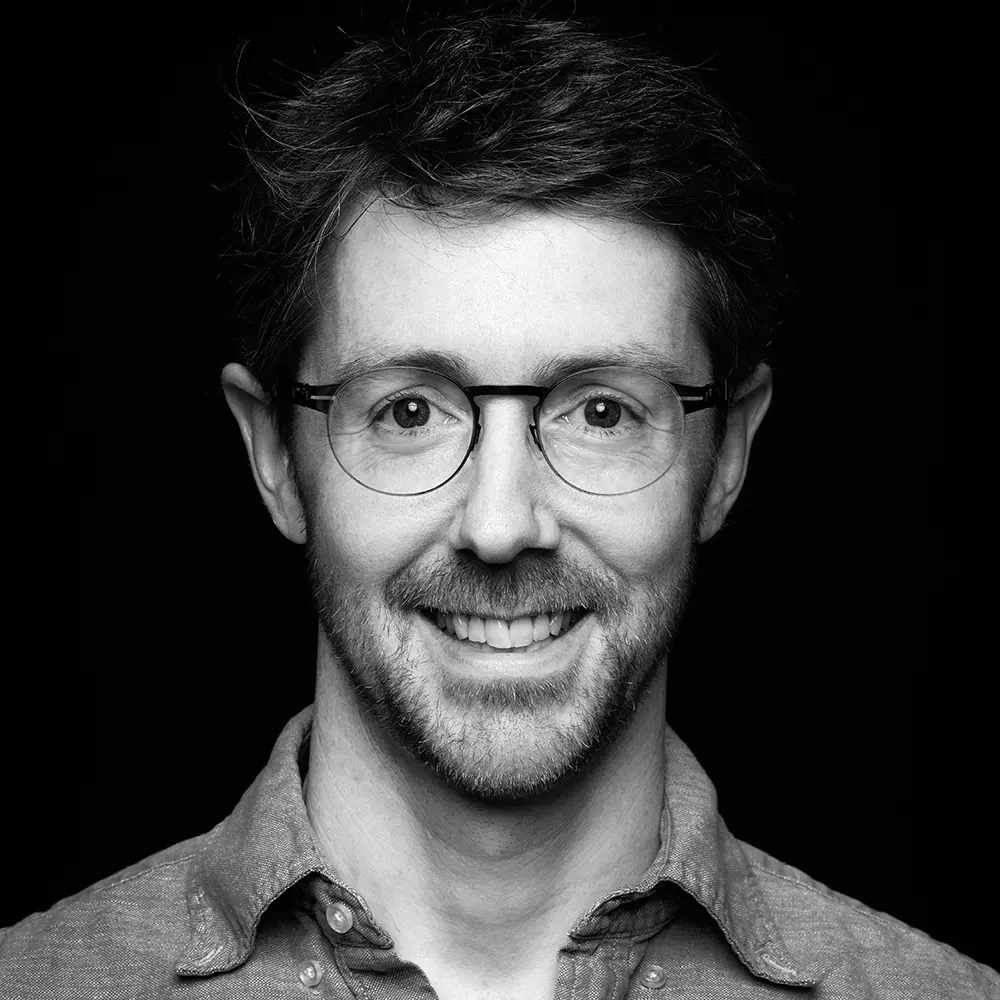
About this Guest
Dr. Martin Picard
Martin Picard, PhD, is a professor of behavioral medicine at Columbia University and a leading expert on how your behaviors and psychology shape cellular energy production and biological aging.
This transcript is currently under human review and may contain errors. The fully reviewed version will be posted as soon as it is available.
Andrew Huberman:
What's the deal? Can people reverse the graying of their hair by reducing their stress? Can people accelerate the graying of their hair by stressing more?
Dr. Martin Picard:
Likely both are true, yes.
Andrew Huberman:
Okay.
Dr. Martin Picard:
And I think what we discovered is that hair graying, at least temporarily, is reversible. This was surprising because it goes against this notion that aging is a linear process that just happens over time no matter what you do. And here we show no, actually. A hallmark of aging, which is depigmentation, losing color in your beard and your hair, is something that happens to almost everyone, but at different stages of life and so on. And then on the same person, and the reason we got into this was that this felt like the perfect experiment. Every hair has the same genome. They're all genetically identical twins. Right? And they're all exposed to the same exercise regime, the same food, the same stress levels. But yet some hairs go gray when you're late 30s, and then some hairs go gray when you're in your 80s. What the hell's happening? If we could figure this out, maybe we can understand why different people age at different rates.
Andrew Huberman:
Mm-hmm.
Dr. Martin Picard:
Because it's very clear that there's no more than 10% of how long you live that's genetically driven. The best studies put this at around 7%. 7% of longevity is genetically inherited maybe, and then about 90% is not.
Andrew Huberman:
Welcome to the Huberman Lab Podcast, where we discuss science and science-based tools for everyday life. I'm Andrew Huberman, and I'm a professor of neurobiology and ophthalmology at Stanford School of Medicine. My guest today is Dr. Martin Picard. Dr. Martin Picard is a professor of behavioral medicine at Columbia University. He is also a leading expert on how your daily behaviors and your mode of thinking, meaning your psychology, change energy production in your cells and can accelerate or reverse biological aging. Most people have heard of mitochondria as the energy-producing organelles within their cells, and of course, that's linked to what we call metabolism and metabolic health. And of course, most people understand that eating properly, exercising, and sleep are critical for metabolic health. But it turns out that's only part of the story. As Dr. Picard explains, mitochondria don't just make energy. They act as sort of antennas to link your psychological experiences to your organ health, your rate of aging, and your sense of vigor, meaning your mental and physical readiness. He explains that how well your mitochondria work in different organs and brain areas reflects what specific forms of exercise you do, as well as how you think and how you manage stress. Today, he explains the things that you can do to enhance mitochondrial function that go beyond the typical get sleep, eat right, and exercise advice. His lab has shown that aging is not linear. It's not just a progression from youth to death where your mitochondria decline over that time. At different ages and stages, mitochondrial health drops off like a cliff, but there are critical things that you can do in terms of how you eat, your mindset, and exercise that can offset those changes. His lab also famously showed that graying of hair is indeed related to stress and is also fortunately reversible. By the end of today's episode, you will not only have had a master class in mitochondria, he explains mitochondria with immense clarity so that you really will understand how these incredible organelles work to produce energy and as these sort of antennas to direct that energy from outside you and by the things you do, and by the end of today's episode, you'll also have a lot of actionable items that you can apply toward your health and to offset aging. Before we begin, I'd like to emphasize that this podcast is separate from my teaching and research roles at Stanford. It is, however, part of my desire and effort to bring zero cost to consumer information about science and science-related tools to the general public. In keeping with that theme, today's episode does include sponsors. And now for my discussion with Dr. Martin Picard. Dr. Martin Picard, welcome.
Dr. Martin Picard:
Thank you.
Andrew Huberman:
Your work is so relevant nowadays. I suppose it was relevant always, but these days we hear so much about mitochondria. Most people have perhaps heard of mitochondria. They think the powerhouse of the cell, but you're going to tell us that it's a lot more than that. And I should say right off the bat that if people think that perhaps a discussion about these little organelles we call mitochondria is not for them, keep in mind, Martin's laboratory was the one that discovered that you can indeed reverse the graying of your hair, that graying of hair is not a prerequisite of aging. There are some other ways that hair grays. So we'll get to that later. Super interesting work. I have a million questions for you. Let's start off with the most important and most basic question, which is what is this thing that we call energy? There's electrical energy. We know the sun gives us energy, et cetera. But when we're talking about the energy of life-
Dr. Martin Picard:
Mm-hmm
Andrew Huberman:
... physical and mental vigor, the feeling that we want to do something as opposed to have to force ourselves to do it, what is this at the organism and cellular level?
Dr. Martin Picard:
Even physicists don't agree on what energy is. And there has been debates. Richard Feynman, who was this amazing science communicator physicist, said we don't even know what energy is and what's the best way to define it, because there are all of these forms, thermal energy, heat, right?
Andrew Huberman:
Mm-hmm.
Dr. Martin Picard:
Light energy, electromagnetic, kinetic energy, movement, speed, right? Potential energy. So energy kind of manifests in all of these different ways. So in a nutshell, I think the best definition I've heard from my wife, Nirosha, who's a biophysicist, energy is the potential for change.
Andrew Huberman:
Mm-hmm.
Dr. Martin Picard:
Right? And that applies to any form of energy you can think about. It's the potential for change, for changing something in the system. And that's, I think, an accurate description of thermal energy. If something is frozen solid, there's no potential for moving something. We need to be at 37 Celsius, right, the human body It gives us the potential to move and muscles to contract and our biology to function. So this is just one example where there's a sweet spot of energy, or there needs to be some thermal energy. You need to be a little warm to be alive.
Andrew Huberman:
Mm-hmm.
Dr. Martin Picard:
So the potential for change, and then it manifests in all these beautiful ways, and it's something that flows. A key property of energy is something that has the ability to flow and to transform.
Andrew Huberman:
Mm-hmm.
Dr. Martin Picard:
So you can never create nor destroy energy. That's a fundamental law of thermodynamics. But energy always transforms. So you can transform heat into motion. In the steam engine, for example, through pressure, another form of energy. Or you can transform electricity into a picture on your screen. That's what your computer does, transforms your raw energy electricity into a picture, a sound. So that's what happens all around us. It's all energy moving, transforming. Energy from the sun, this outer nuclear reactor in outer space beams energy at us. And then what plants do is they take that energy, transform light into biochemistry. And then you get energy, which used to be immaterial, that gets crystallized into biochemistry. And then we, human beings, animals, eat that biochemical energy, and then in our mitochondria, that energy gets transformed. Again, the potential for change. And then that biochemical energy gets transformed into an electrochemical gradient, like you charge your little batteries, your mitochondria. And then that's another form of energy, which again is a potential for change. And then you can make ATP with this. You can make reactive oxygen species. You can make hormones. You can-- All of the beautiful things that mitochondria do. So energy is that potential for change that has all of these different forms that continuously transforms.
Andrew Huberman:
Amazing. Or you can use your brain to create technologies that create other forms of energy.
Dr. Martin Picard:
Exactly.
Andrew Huberman:
Or, excuse me, transform other forms of energy.
Dr. Martin Picard:
Exactly. And your question was about the human energy, vitality, the energy to do something. And that's, I think, another manifestation of energy. As energy flows through this thing that we call biology or the human body, it kind of moves us into action, right? And we know from first principles that the basis for human experiences, the mind and our ability to be inspired to feel positive things or to feel negative things, depends on the flow of energy, right? The difference between a thinking, feeling, conscious person having experiences and being able to go to the gym and lift, and a cadaver is really it's not the size of the muscles, the number of cells, the nucleus, the genes, the mitochondria. It's none of this. The difference between a living person and a cadaver is the flow of energy.
Andrew Huberman:
Mm-hmm.
Dr. Martin Picard:
When you die, all of the structure, the physical stuff remains as is, but energy stops flowing. If you stop breathing, if your heart stops beating, energy flow stops, and then energy transformation, therefore, can't happen, and then that's what we call death. And then the mind dies, right? You don't have an experience anymore. And so the flow of energy, I think, has to be the basis not only of life, which we know to be correct, but also the basis of human experiences. And what we experience as energy. We think about energy, we crave energy, and we know, and the way we talk about this person has really good energy, or this thing really energized me, or "I had this great idea," your friend was telling you, "I had this great idea. I'm buzzing, man."
Andrew Huberman:
Mm-hmm.
Dr. Martin Picard:
What's that buzzing thing? It is a real experience, and most people will have had the experience of feeling really excited about something, right? A new idea, a new person, and then you have butterflies, and there are emotions going on in your body. I suspect emotions, the best kind of first principles definition of an emotion is energy in motion.
Andrew Huberman:
Mm-hmm.
Dr. Martin Picard:
And we can talk more about what we experience in terms of energy, but I think it's pretty clear we don't experience energy per se. You don't have a direct experience, an empirical access to how much fat you have in your body. There are hormones that communicate, and how much energy is in your liver, or how much heat is in something. What you feel, what you experience is a change in energy. When energy moves, you feel that. Right? And I suspect that's what emotions are. There's a movement of energy. Something shifts, and then you experience that. A bit like if you're in a car and your eyes are closed, and you're going constant speed, kinetic energy, you have no way of knowing from first experience if you're going at 100 miles an hour, 10 miles an hour, or if you're standing still. These are very different energetic quantities. The kinetic energy. What you do feel is acceleration and deceleration.
Andrew Huberman:
Mm-hmm.
Dr. Martin Picard:
You feel the delta in energy. The change in energy. Acceleration, deceleration. Same with temperature. If you touch something and it's body temperature, the same temperature as your hand, you don't feel it. You don't feel room temperature or body temperature. What you feel if you touch something that's cooler than your body, what you're feeling is not the temperature of what you're touching. You're feeling your temperature leaving your body. It's the heat of your body leaving through conduction towards this, and then that's what you experience. And if you touch something that's hot, you're not feeling the energy of the thing. You're feeling the heat that's coming into your body. So you feel that delta and that change, and that's how human perception also works. We're able to see colors, to see light. You've studied the visual system a lot. Fundamentally the ability of the eye of the retina to perceive, to sense light requires that you bring photons that are beaming from whatever source short, long wavelength, you need to bring them into stillness. You need to resist the flow of photons. And then so you change the speed of the photon, and it's that change in energy. You get kinetic energy, speed of light and then boom, when the delta V, the change in speed happens, this is when you can trigger a calcium release and then molecular series of events and action potential and so in order to see, you need to resist the flow of photons. You need to resist energy movement, and then that triggers a transformation. Same for hearing. We hear, and I hear your voice, because my eardrum resists the pressure waves that you're producing. So your energy is being channeled and projected through the air as sound waves, another form of energy, and then I'm feeling you through your energy that's carried through the air, and then because my eardrum resists the pressure wave that you're producing, and then it's that resistance and that change, that delta again in speed by resisting the sound waves coming from you, by resisting your energy, now I can perceive them. And then there are little ossicles in the ear that transmit what used to be pressure waves into now mechanical motion and then into fluid into the inner ear and then cilia that move and then ions that come in, then eventually they get transformed to electricity. So again it's one form of energy, pressure waves turn into electricity, and then the brain uses electricity as a form of energy. There are many. But that electricity is just so amenable to computation, processing, and integration. So once you have this common energetic language for sight, for hearing, for touch and smell and taste, then you can integrate that. We perceive energy transformation and change in energy. We don't perceive energy per se.
Andrew Huberman:
I'd like to take a quick break and acknowledge our sponsor, Helix Sleep. Helix Sleep makes mattresses and pillows that are customized to your unique sleep needs. Now, I've spoken many times before on the Huberman Lab podcast and elsewhere about the fact that getting a great night's sleep is the foundation of mental health, physical health, and performance. Now, the mattress you sleep on makes a huge difference in terms of the quality of sleep that you get each night. How soft it is, how firm it is, how breathable it is, the temperature all play into your comfort and needs to be tailored to your unique sleep needs. If you go to the Helix website, you'll take a brief two-minute quiz, and it will ask you questions such as, do you tend to sleep on your back, your side, or your stomach? Maybe you don't know. But it will also ask you, do you tend to run hot or cold during the night or the early part of the night, et cetera? Things of that sort. Maybe you know the answers to those questions, maybe you don't, but either way, Helix will match you to the ideal mattress for you. For me, that turned out to be the Dusk mattress, D-U-S-K. I started sleeping on the Dusk mattress about three and a half years ago, and it's been far and away the best sleep that I've ever had. It's absolutely clear to me that having a mattress that's right for you does improve one's sleep. If you'd like to try Helix, you can go to helixsleep.com/huberman. Take that two-minute sleep quiz, and Helix will match you to a mattress that is customized for you. Right now, Helix is giving up to 20% off sitewide. Helix has also teamed up with TrueMed, which allows you to use your HSA/FSA dollars to shop Helix's award-winning mattresses. Again, that's helixsleep.com/huberman to get up to 20% off. Today's episode is also brought to us by Lingo. Glucose is a key player in how our body functions, not just in the long term, but in every moment of our lives. That's because it is the major fuel for our cells, especially our brain cells. Glucose directly impacts our brain function, mood, and energy levels, and it may even affect our levels of tenacity and willpower. This is why I use the continuous glucose monitor from Lingo. I absolutely love it, and I'm thrilled to have them as a sponsor of the podcast. Lingo helps me track my glucose in real time to see how the foods I eat and the actions I take impact my glucose. When glucose in your body spikes or crashes, your cognitive and physical performance do too. In fact, large glucose peaks and valleys lead to brain fog, fatigue, irritability, and hunger. What you eat, of course, plays a major role in your glucose. Some foods cause sharp spikes and big crashes, and others do not. But not everyone is the same in terms of how they respond to particular foods. Seeing your glucose in real time helps you build eating and other habits that support metabolic health, mental clarity, and sustained energy. Lingo has helped me to better understand what foods to eat, when to eat, and how things like a brief walk after a meal can help keep my glucose stable and much more. If you'd like to try Lingo, Lingo is offering Huberman Podcast listeners in the US 10% off a four-week Lingo plan. Terms and conditions apply. Visit hellolingo.com/huberman for more information. The Lingo glucose system is for users 18 and older, not on insulin. It is not intended for the diagnosis of diseases, including diabetes. Individual responses may vary. Your description brings to mind a number of things, but years ago, a colleague of mine who unfortunately now has passed, stopped me in the hallway at Stanford. This was Ben Barres, my postdoc advisor, later my colleague as a faculty member. He said, "Why do we have so much less energy as we get older?" And I said, "Well, that's probably not a concern with you, Ben." He was known for having tremendous amounts of energy. He probably only slept four or five hours a night. But in any case, I said, "I don't know." And he goes, "Well, how come no one's working on that?" Yeah. "Why are we working on all this other stupid stuff?" And I won't tell you what he listed off because some of it was stuff in his laboratory. And I said, "Well, that stuff's interesting, too." He goes, "But nothing is more interesting than why we have less energy as we get older, except perhaps why it is that the brain can't change as readily when we're young as opposed to older." You said something Very important to underscore and that I'd like to get into a bit more, which is you said, or your partner said, energy is the potential for change, and you mentioned emotions, they stir us, right? And that that feeling, especially of positive anticipation-
Dr. Martin Picard:
Mm-hmm
Andrew Huberman:
... is so much of what we live for. In fact, the signature feature of major depression is lack of any idea that there is a future worth living into.
Dr. Martin Picard:
Apathy.
Andrew Huberman:
So yeah, apathy, et cetera. Whereas vitality and excitement and everything good about life is about wanting to know what comes next. So if we take a biophysical to cellular to psychological set of steps here, we would say that somehow energy is converted into this internal vibration, which we call emotions, that let us physically sense into a future.
Dr. Martin Picard:
Mm-hmm.
Andrew Huberman:
Could be even a negative emotion, but it still senses into a future.
Dr. Martin Picard:
Mm-hmm.
Andrew Huberman:
And then you give this example, very dramatic example, but I believe appropriate, of a cadaver, where all the material is still there right after death, before it degrades, right?
Dr. Martin Picard:
Mm-hmm.
Andrew Huberman:
But it can't move, and therefore, there is no future, period.
Dr. Martin Picard:
And it can't sense. Yeah.
Andrew Huberman:
It's a very different way of thinking about death. So let's talk about psychological energy and physical energy that we call vitality. And if you would, this is a bit of a challenge, but could you perhaps use that as an opportunity to teach us about these incredible organelles that we call mitochondria?
Dr. Martin Picard:
I use a slide often as an opening slide when I give presentations to academics or non-academics, which is a mitocentric view of the world.
Andrew Huberman:
Mm-hmm.
Dr. Martin Picard:
Right? At some point, we realized that the Earth was not the center of the world, and then we switched over to a different model of the universe. So my sense is we need to do something similar in biomedicine. We still have, I think in most people's mind, especially the older generations, a very gene-centric, nucleus-centric view of biology, that the genes are there, and then central dogma, right? The genes drive RNA, drive protein, and then drive phenotype. And we know that that's not the full picture. And phenotypes. For example, in genetically identical mice.
Andrew Huberman:
Mm-hmm.
Dr. Martin Picard:
They're mice that all have the same genome, and some are very anxious, and some are super chill. It can't be encoded in the genes somehow. We found recently that actually there are differences in mitochondria, and part of the reason why these animals behaviorally are different, maybe half of the variance, half of the inter-individual differences, what makes one mouse super chill and the other, the brother, the sister that is genetically identical, very anxious, has to do with energetics in some way. So I use this slide to convey this mitocentric perspective. If you want to have a copy and show people, I'm happy to share this. And one way to understand this is energy comes into the organism as food. We eat, and we breathe to fuel our mitochondria. Right? So the reason you breathe is to bring oxygen into the body. Most people know this, and then once oxygen is in your lungs, it goes into your blood, and then it goes to the heart, and then the heart kind of boom, distributes this across the whole organism. And then when oxygen gets to your big toe, or to your muscle, or to your neuron, and to your hippocampus or some brain region, what happens is the oxygen enters a cell, and then once it's inside the cell, it looks for mitochondria. It looks, I mean, it's attracted by a concentration gradient. So the mitochondria is where oxygen is consumed. And then when mitochondria consume oxygen, they basically create a downhill slope for oxygen to be attracted to that. So you breathe to bring oxygen to your mitochondria, and you eat to bring electrons into your mitochondria. And what happens there is this beautiful sequence of reactions where you have electrons that were initially stuck on food by the plant, taking solar energy to stick electrons onto carbon, and then you make hydrocarbons, and then that's glucose or starch, and then oils, lipids, everything that's good fuel for our mitochondria. Those things, the food and the oxygen, converge inside the mitochondria. And then finally, the electrons that were ripped off as CO2 is broken into oxygen are reunited in your mitochondria. And so your mitochondria actually make water, and then release CO2. So they close the life cycle that we have with photosynthesis. Photosynthesis makes oxygen and food, and then our mitochondria brings oxygen together, and then they release water and CO2, exactly what plants need. So it's this beautiful cycle. So when mitochondria do this, it is basically feeding unpatterned energy into the system, and it starts with the mitochondria the same way that if you feed electricity into a Morse code, right, like dee, dee, dee, dee, dee, dee, dee. You feed electricity, it's unpatterned energy, like food and biochemistry is to your body, and then by pressing and releasing a little lever with a specific pattern, what you're doing is you're patterning electricity, which means nothing. It's just raw current, and then you pattern it in something that means something. Short beeps, long beeps, and then you can spell stuff, you can communicate information, right? So you're creating information by patterning in time, right, by patterning electricity. So mitochondria, the way I see them is they're an energy patterning system And we've called them the mitochondrial information processing system for that reason.
Andrew Huberman:
Should we think of them like a little Morse code lever?
Dr. Martin Picard:
I think it's a decent analogy for part of their behavior, part of what they do fundamentally. They take raw energy, and then they pattern that energy into molecules.
Andrew Huberman:
This perhaps is why I've heard you say that we should not just think about mitochondria as the powerhouse of the cell generating more ATP. That is true, but it's also true that they're controlling the flow of energy in a very detailed way.
Dr. Martin Picard:
Correct. And they're controlling the flow of energy, but they're also controlling the transformation of energy. Right? The electricity can be converted, transformed into all sorts of different messages, signals, right, with your Morse code, depending on the needs, depending on the state, depending on the person pressing, releasing the lever. And sometimes the organism needs a lot of ATP. If you're a mitochondrion and you live in the heart and your job is to make ATP, a lot of ATP, and then there's side jobs. If you're a mitochondrion in the liver, your job is very different, and you're a very different kind of mitochondrion.
Andrew Huberman:
Well, let me ask you this. I think you just answered the question, but are there different types of mitochondria?
Dr. Martin Picard:
Yes.
Andrew Huberman:
How does a mitochondria in the liver versus in the brain versus in the heart know to take the energy that it's transforming-
Dr. Martin Picard:
Mm-hmm
Andrew Huberman:
... and pattern its output so that heart cells can do what heart cells need to do, or liver or brain?
Dr. Martin Picard:
Yep.
Andrew Huberman:
This seems like a very important issue.
Dr. Martin Picard:
Yep.
Andrew Huberman:
Is it possible even that the mitochondria in these different tissues are fundamentally different organelles? And we should probably define what an organelle is for people.
Dr. Martin Picard:
Yes. Yeah. Organelle is the technical term for an organ of the cell. And the cell typically is represented as this skin, and then inside the skin is the cytoplasm, the big soup, and then inside the soup, the cytoplasm, there is a bunch of little organs that allow the cell to do all sorts of things and perform its activities and replicate and so on. Mitochondria is one of those organs, and their purpose is to process, transform energy. And one of the ways in which they transform energy is taking raw energy from biochemistry, the food you eat, empowered by oxygen to flow those electrons and then building a charge and then powering this beautiful rotor. Some people might have seen this. It's kind of a rotary engine kind of thing, a turbine. And then when mitochondria build their membrane potential to become charged, they use that charge to power the rotation of this turbine. And then as the turbine turns, it converts ADP into ATP. So now you have conversion of biochemistry into electricity and electrochemical charge in the mitochondria back into biochemistry, ATP.
Andrew Huberman:
What's in the backdrop of all this, of course, is that all this self-organizes during development. Yes, the genes are the blueprint, but this is all built up from scratch.
Dr. Martin Picard:
Correct.
Andrew Huberman:
And probably a tangent for another time, but so how does a heart cell know to produce a lot of ATP versus a liver cell? And of course, it's coordinated in time with sleep and circadian stuff. But how does it know, or does it even know, I'm a mitochondria inside a heart cell-
Dr. Martin Picard:
Yeah
Andrew Huberman:
... and the amount of energy I need to transform is X?
Dr. Martin Picard:
Yeah. How does a mitochondrion, singular is mitochondrion and multiple is mitochondria, how does a mitochondrion in a heart cell know that it needs to be a cardiac mitochondrion? Right? Is that your question?
Andrew Huberman:
Yeah. Is it genetically different than a mitochondrion from the liver?
Dr. Martin Picard:
No, they're genetically exactly the same. And that's another kind of punch to the gene-based model of biology.
Andrew Huberman:
Mm-hmm.
Dr. Martin Picard:
How could it be that every cell in your body is genetically identical, and the mitochondria have their own genetic material? We all have our mom's mitochondria, which is really beautiful. It kind of-
Andrew Huberman:
100% of our mitochondrial genome is from mom. Is that true?
Dr. Martin Picard:
Correct.
Andrew Huberman:
Okay.
Dr. Martin Picard:
And there were a few papers a few years ago that said, "Ooh, no, look here, there's this one case, this one kid, or these two kids that have paternal father mitochondria." Turns out it was a mistake in the sequencing or-
Andrew Huberman:
So mothers are truly always right.
Dr. Martin Picard:
Yes. Power to mothers.
Andrew Huberman:
People will be thinking, and I'm also thinking, does that mean, and of course there are lifestyle issues, but does that mean that if we were to look at the quote unquote energy levels of mom versus energy levels of dad, that what better predicts the energy levels of a kid is the mother's sort of baseline levels of energy at a given age?
Dr. Martin Picard:
I don't know of studies that have asked that question about subjective energy or the energy to do stuff and which I think we'll talk more about. But people have looked at other, more tractable, which what we do in biomedicine, we take things that we can measure objectively or run on a gel or sequence or objectify with a biomarker in the clinic. People have looked at longevity, right? Are you more likely to live long if your mom lived long or if your dad lived long? Turns out the heritability of longevity is more maternal than paternal. Are you more likely to have a mental health disorder or to have Parkinson's or Alzheimer's if your mom or your dad had it? Some evidence say it's more maternally inherited than paternally inherited. So it could be that part of your ability to live a long, healthy life, or your risk or your resilience to those disorders really are conveyed or carried by mitochondria, by your ability to transform energy. And the reason why through evolution you need parental inheritance. You get your mitochondria from a single parent. Has developed, most people think is because there needs to be a really close metabolic energetic match between the mom and the baby. Right? The baby comes out and then if the mom has a certain type of metabolism, and we're all different, I hope we talk about how different we are energetically, metabolically. So we're all very different. If the baby that was born was so metabolically different than the mom, there's a chance that there'd be a mismatch, right? And then the mom wouldn't be able to support through breastfeeding. Historically, that's how babies survived. And that would be a catastrophe. So, it's probably a good system to have baby metabolism match pretty closely because they have the same mitochondria as the mom to mom metabolism. So that's, I think, a loose hypothesis, but yeah, that makes a lot of sense.
Andrew Huberman:
It does make a lot of sense.
Dr. Martin Picard:
Yeah. Every mitochondria you have in your body, like the brain mitochondria, neuron mitochondria, astrocyte mitochondria, whatever your favorite cell type is, your heart mitochondria, liver mitochondria, muscle mitochondria, they're very different. And now we have a new method. There's a wonderful scientist in our group, Anna Manzel, who's developed a method to profile different types of mitochondria.
Andrew Huberman:
Mm.
Dr. Martin Picard:
We call this mitotyping. The same way that now in neuroscience or in immunology, it makes no sense to talk about a brain cell or an immune cell.
Andrew Huberman:
Right.
Dr. Martin Picard:
If you're a self-respecting immunologist, you know your cell types and there's at least 30 different types. So I think we're at this point in mitochondrial science where we need to adopt a similar level of specificity. There are different types of mitochondria. We call those mitotypes. And they emerge, all of them, from the same mitotype in the egg. Right? The egg that the mother carries and releases from the ovary. There's about half a million mitochondria in that egg. And then those mitochondria, there's a single type of mitochondria in there, and then when it's fertilized, development happens in this beautiful process. And through that process, as the heart starts to form, the brain starts to form, the muscles start to form, the mitochondria differentiate. And then you end up with different types of mitochondria that are adapted and matched to the different demands of cell types, of organs. And one way we think about this is, I think it makes a lot of sense to think about mitochondria as social organisms.
Andrew Huberman:
Hm.
Dr. Martin Picard:
And there are multiple features of mitochondrial biology that obey what behavioral social scientists classify as social. If you study ants, for example, there's a few rules that we know ants are social creatures because they form groups, right? And there are different types. There's division of labor. You have worker ants that work really hard, and you have warrior ants that are really chubby, and they're here to defend the hive.
Andrew Huberman:
They like to fight.
Dr. Martin Picard:
Yeah, exactly. So those two types of ants, you look at them side by side, there's this little flimsy, super active worker ant, and then this chubby warrior ant. Genetically, they're identical.
Andrew Huberman:
Hm.
Dr. Martin Picard:
They have the same genome. They came, as a little larvae from the queen. But their morphology is super different. Their behavior is very different. But through development, there are cues that are applied to the different larvae, and then they end up becoming a worker or a warrior. So the same kind of thing happens in mitochondria. So there are different types of mitochondria, like the two types of ants. There's division of labor. There's some mitochondria, for example, in the muscle that are at the surface of the muscle, just underneath the sarcolemma, the skin of the muscle cells. And then there are mitochondria that are inside, where the actin myosin, the contractile proteins happen. Subsarcolemmal mitochondria and intermyofibrillar mitochondria. Two populations. Their proteome is different. Their molecular composition of those different types of mitochondria are different. Their functions, ATP synthesis, reactive oxygen species production, their ability to handle calcium and release calcium is different. Their morphology is very different. So even within one cell, you get this division of labor and differentiation of mitochondria. And in every cell, mitochondria have a life cycle. New mitochondria are born, and old mitochondria die out, which is what happens in social creatures. And there's a few other features like this that I think make mitochondria social organisms. And once you start to think about mitochondria as social creatures, then you understand maybe a little better why they need to fuse with one another. And if you ask Google, what do mitochondria look like? Or ChatGPT or whatever, it shows you always the same kind of images. It's like a little bean.
Andrew Huberman:
You got it. I brought one as a gift. At one moment, I thought they might be brass knuckles when you first handed them to me. But it's a mitochondrion with the cristae of the mitochondria.
Dr. Martin Picard:
There you go.
Andrew Huberman:
Usually looks like this. But you're saying in reality, there'd be many of these connected to or closely fused to one another.
Dr. Martin Picard:
Yeah. So, and when they fuse, you get these bean or kidney shapes or peanut shape, whatever your preference is, that fuse with one another, and then they form these beautiful filaments. So if you're lucky enough to work in a lab that has one of these cool microscopes called confocal microscope or light sheet microscopy, and then you can make the mitochondria fluorescent. So you put a dye in the dish, and then it's a little fluorescent molecule that goes inside the mitochondria. It's attracted by the big charge that mitochondria have. And then you turn off the lights, look down the eyepiece, and then you see these beautiful filaments of mitochondria moving. They move pretty slowly, and interestingly, they're just at the edge of human perception of how quickly we can perceive things to move. So they move barely fast enough so you can see them. And then they kiss and then fuse completely.
Andrew Huberman:
Either You can invite everyone to your lab to see this, but that's a lot of people. You'd be very busy. We'll put a link to a video of this.
Dr. Martin Picard:
Yeah. We're building a webpage called Mito Life, which is to help people understand themselves energetically and through the beauty of mitochondria, and there are all sorts of different types of mitochondria that move differently. And when the mitochondria are not healthy, and if they can't flow and transform energy properly-
Andrew Huberman:
Mm-hmm
Dr. Martin Picard:
... they start to look really weird.
Andrew Huberman:
It occurred to me that for the longest time, I'm 50 now, so I can say for the longest time. For the longest time, we heard that if we want energy, we need to eat, right? Of course, we need to sleep, but we need to eat. And every kid learns. You're consuming energy so that you'll fuel your body. There are all these discussions. You should eat meat. Don't eat meat. I believe you should eat some meat. You should eat some vegetables, some fruit- ... et cetera. I think you should-
Dr. Martin Picard:
Some fats
Andrew Huberman:
... be an omnivore. Some fats. Yes. That's my belief. But we all understood that, but then at some point, probably about 10 years ago, it became clear to people that just consuming more energy didn't give you more energy. It was an obvious thing.
Dr. Martin Picard:
Yeah.
Andrew Huberman:
But it's now abundantly clear, and based on what you're saying, it should be clear to everyone that the issue is not lack of energy going into the system.
Dr. Martin Picard:
Mm-mm.
Andrew Huberman:
It's that the transformation of energy that occurs in mitochondria somehow is not happening correctly in people that are obese-
Dr. Martin Picard:
Mm-hmm
Andrew Huberman:
... or in people that are eating and feeling lethargic.
Dr. Martin Picard:
Mm-hmm.
Andrew Huberman:
And of course, there's blood sugar aspects to this, and we could discuss all of that, and we won't, because that's not the topic for today. But I think if nothing else, if people can just understand that they have not just these powerhouses, but these power plants-
Dr. Martin Picard:
Mm-hmm
Andrew Huberman:
... within their bodies that are transforming the energy, and that the mitochondria are essential to how the energy is transformed and distributed-
Dr. Martin Picard:
Mm-hmm
Andrew Huberman:
... on an organ-by-organ basis, I think that would be a helpful concept for people to get into their mind because people are talking about mitochondria all the time.
Dr. Martin Picard:
Mm-hmm.
Andrew Huberman:
People are talking about and hearing about nutrition all the time, and so often we just think about calories, and everyone knows that a calorie is a unit of heat output when you burn a given food. And we learn this stuff-
Dr. Martin Picard:
Yeah
Andrew Huberman:
... but it doesn't transform into good health practices.
Dr. Martin Picard:
Mm-hmm.
Andrew Huberman:
But I think nowadays, people are starting to get a sense of how their bodies work, and you're adding a lot of important detail and aspects to that today. So I just wanted to frame that up.
Dr. Martin Picard:
Yep.
Andrew Huberman:
If you have any reflections on that, great. If not, it was just a point that came to mind that I think might be useful.
Dr. Martin Picard:
Yes. It's so important. And we are energy. Fundamentally, we are the flow of energy through this biological infrastructure, right, that we call the body. But you are not the cells or the genes or, right, that thing. You are much more that energy that is flowing, which is why when the energy stops flowing, you are no longer. When you die, all the physical stuff remains, but you no longer have an experience. You no longer exist as a person.
Andrew Huberman:
The way I think about this is rather than thinking in nouns, think in verbs.
Dr. Martin Picard:
Mm-hmm.
Andrew Huberman:
And I think as biologists, when we teach biology, you have to teach some nouns-
Dr. Martin Picard:
Mm-hmm
Andrew Huberman:
... some names of things. But if you can get people to understand the verbs as concepts, it's worth a gazillion nouns.
Dr. Martin Picard:
Yes. Yes.
Andrew Huberman:
And so I think people thinking about themselves as a verb state-
Dr. Martin Picard:
Mm
Andrew Huberman:
... of as energy transformation-
Dr. Martin Picard:
Yep
Andrew Huberman:
... being, it sounds-
Dr. Martin Picard:
Yes
Andrew Huberman:
... so mystical, but it's not mystical. It's biochemical-
Dr. Martin Picard:
It is
Andrew Huberman:
... I think could be useful. Along those lines, I do want to talk about this recent paper that you published, which essentially, my understanding is that looked at different brain areas and found that different brain areas have different concentrations of mitochondria. And we know that different body areas and different organs have different concentrations of mitochondria. But I heard you say someplace, and this is such a beautiful, sticky topic, as they say, that perhaps the things we do in life-
Dr. Martin Picard:
Mm-hmm
Andrew Huberman:
... maybe lift weights, maybe study biology, maybe play the piano, maybe some combination of things-
Dr. Martin Picard:
Mm-hmm
Andrew Huberman:
... will enrich the mitochondria, these energy transformation sites, in particular organs and areas of our brain more than others. And so we really become what we pay attention to.
Dr. Martin Picard:
Mm-hmm.
Andrew Huberman:
We become enhanced for what we do, and that makes sense at the level of endurance runners run, and their muscles become, and everything becomes optimized for running. Weightlifters, something else. But in the brain, this gets very interesting.
Dr. Martin Picard:
Mm-hmm.
Andrew Huberman:
This means that if we read poetry, for instance, or study biology, that the areas and circuits of the brain that are responsible for that, in some sense, become better at doing that.
Dr. Martin Picard:
Mm-hmm.
Andrew Huberman:
And I think this is a very important topic because it really gets to the essence of who we are as individuals-
Dr. Martin Picard:
Yes
Andrew Huberman:
... based on our choices of what to do and what not to do.
Dr. Martin Picard:
Yep.
Andrew Huberman:
So with that as the backdrop-
Dr. Martin Picard:
Mm-hmm
Andrew Huberman:
... if you could tell us about this paper and tell us about what you think about these findings and what they might mean-
Dr. Martin Picard:
Mm-hmm
Andrew Huberman:
... I would love that.
Dr. Martin Picard:
We flow as energetic processes, right, to your point. We're transformative processes. We transform, we flow, we are the energy that flows, and the more you direct energy to one area, right? If you go to the gym and you do bicep curls, you're resisting the flow of energy while you're contracting, and then you do this a few times, and then when you let go, you get blood flow, right, energy flow through the system. And we know exercise training is a beautiful example. If you train to run a marathon, for example, you can double the number of mitochondria in your muscles.
Andrew Huberman:
Wow.
Dr. Martin Picard:
Double, right? And my understanding of this is as energy flows through the existing mitochondria, you're basically bringing your energy into that system, and then the biochemical energy gets transformed into molecules, into metabolites, and then eventually into proteins, and then structure gets created as energy flows And so the flow of energy, first, you resist it. We call this energy resistance. And then when you let go of the resistance, that's when we build, that's when we grow. Arnold Schwarzenegger said, "Muscles are torn in the gym, they're fed in the kitchen, and are grown in bed," I think .
Andrew Huberman:
In an Austrian accent.
Dr. Martin Picard:
Yes.
Andrew Huberman:
Yeah.
Dr. Martin Picard:
So, yeah, if you direct energy towards a muscle, then one way to direct energy is to resist the energy flow and then to let go. And that's what exercise fundamentally is. You resist the energy flow, and then you let go. When you resist energy too much, it feels uncomfortable, which is the burning pain. And then when you let go is when growth and building can happen. And we know the same thing happens everywhere. This is not a mysterious thing of the muscle and of exercise physiology. This is a fundamental biological principle. If you flow energy in one area, then it will grow. It will get better. It will get more efficient. And if you block energy flow to one area, like you block blood flow, for example, or you get in an accident and the nerve gets damaged, then the muscle doesn't contract anymore. You're basically blocking the flow of energy there, and what happens? It atrophies. Atrophy is a normal movement of life when energy flow decreases. And if there's no energy flow, really, there's no purpose for that structure. If you feed, if you stimulate that structure, be it a muscle or brain circuit, a brain network or brain area, then naturally, that area should grow and build. And what we know happens in the brain and also happens between different organs of the body is there's a competition for finite energy resources.
Andrew Huberman:
Mm.
Dr. Martin Picard:
What you said earlier, you can't just eat more to get more energy. Now we know very well if you overeat, you eat more than your body is actually flowing, consuming in terms of energy, transforming, you get sick. If you can, you put on fat, which is a good adaptive coping mechanism to eating too much. But then eventually the systems get overwhelmed, and then that hurts the mitochondria, and it hurts cells. They become insulin resistant. And so there's all sorts of consequences to eating too much. You cannot eat more to get more energy. And that is, I think, still scientifically a very big mystery. That why can't we just ramp up our energy consumption, energy transformation, and then sleep less and work out three hours every day? Even professional athletes who devote all of their energy to building muscle mass, building skills, or building aptitudes, there's a limit to how much you can eat. We don't really know why that is, why there's a limit to that. And so the body operates an economy of energy. You have X amount of energy. You can push that up over short periods of time. Like if you start to work out, or you're a cyclist, you do the Tour de France. For three weeks, you're going for 5,000, 7,000 calories a day. You do this for three weeks. There's a reason why the Tour de France is not four weeks and five weeks .
Andrew Huberman:
Mm-hmm.
Dr. Martin Picard:
There's a cap. And there's beautiful data showing that the longer the event, the athletic event, the lower the max output per day. And if you looked at that curve, the first point, max power output you can develop over 10 seconds is what you see in the 100-meter sprint. And then you get the 400 meters, and then it goes down. And the Tour de France is, marathon is here, Tour de France, three weeks is here, then you get crazy run across America, multiple weeks. And then at the very end, nine months, pregnancy . And it costs energy to grow a human being. And some of the data suggest that when you grow a human being for nine months, the woman is basically operating at the max of her capacity if you integrate over a nine-month period.
Andrew Huberman:
Do pregnant women accumulate more mitochondria, or the energy demands are entirely for the mitochondria of the developing fetus?
Dr. Martin Picard:
That is a good question.
Andrew Huberman:
We know certain brain areas grow during pregnancy.
Dr. Martin Picard:
That the brain remodels.
Andrew Huberman:
Yeah.
Dr. Martin Picard:
Exactly. There are different demands. As a mother, if you're pregnant now
Andrew Huberman:
Mm-hmm
Dr. Martin Picard:
... you need to start to care about different things.
Andrew Huberman:
Mm-hmm.
Dr. Martin Picard:
Maybe it's adaptive to start to think about the world a slightly different way-
Andrew Huberman:
Mm-hmm
Dr. Martin Picard:
... and it's not just about yourself, and-
Andrew Huberman:
Mm-hmm
Dr. Martin Picard:
... so there are certainly even long-lasting brain changes that happen in the woman's brain. So this economy of energy between organs is likely what explains if you're a young woman and you exercise a lot, you lose your menses. Amenorrhea. And this is not because the reproductive system is broken or because the ovaries are sick or something like that. The best explanation we have is there's a shortage of energy. You're pushing and driving all of your energy budget towards your working muscles, towards making more mitochondria in your muscles, and there's no more energy to fuel reproduction.
Andrew Huberman:
I have a practical question related to this. I have always wondered why is it that when we're coming down with a cold or a flu or some sort of other infection, that there are a bunch of processes that make us more lethargic and tired, and these are very adaptive.
Dr. Martin Picard:
Yep.
Andrew Huberman:
And we know we need to rest, but it's not just about getting sleep.
Dr. Martin Picard:
Yeah.
Andrew Huberman:
We actually need to slow our circulation down. We need to rest.
Dr. Martin Picard:
Mm-hmm.
Andrew Huberman:
And there are all these theories about do you feed or starve a cold or flu, and-
Dr. Martin Picard:
Yep
Andrew Huberman:
... I covered that in a different episode. I will put a link. It's not straightforward, but follow your appetite, stay hydrated, keep your electrolytes up, and so forth-
Dr. Martin Picard:
Yes
Andrew Huberman:
... is the short answer. But is it that the immune system needs more energy, and the body, as a protective mechanism, as an adaptive mechanism, is saying, "Slow down everything else and devote yourself to ... healing, to fighting this infection, as opposed to spending energy even walking up the stairs as much as you typically do during a day. Is that the idea?
Dr. Martin Picard:
Yep. I think that's the best model we have. And I had a personal experience of this over New Year's a couple of years ago, where I could feel I was coming down with something before New Year's dinner. And so it ended up being a pretty short night. I went to bed early, and that night was terrible. The next day I was so off, and I was starting to work on the book Energy, and then I thought, "Ooh, this is such a cool opportunity." Now I'm experiencing, I'm feeling drained. Right? I'm in bed. Everything hurts. And then I thought, "I should be writing about this." Right?
Andrew Huberman:
Mm-hmm.
Dr. Martin Picard:
And then just the thought of grabbing my computer, then I thought, it doesn't cost a lot of energy, just wiggle my fingers on the keyboard. But there was no drive. I stopped caring about stuff that I usually care about.
Andrew Huberman:
Mm-hmm.
Dr. Martin Picard:
Right? Everyone has experienced this when you're really sick. Motivation, right? Zero.
Andrew Huberman:
Mm-hmm.
Dr. Martin Picard:
My capacity to be the best human being that I am and to be kind-
Andrew Huberman:
A little diminished.
Dr. Martin Picard:
Yeah. Right? I was just trying to fucking survive.
Andrew Huberman:
Mm-hmm.
Dr. Martin Picard:
And what we know in terms of biology and mitochondria and energy, that happens when you're fighting something like this, the immune system costs a lot of energy.
Andrew Huberman:
Mm-hmm.
Dr. Martin Picard:
So I think the best model interpretation we have of sickness behavior is what you were describing, the technical term, is you feel sick, right? And you don't want to move. You feel cold, right? Which then forces you to put covers or to dress to avoid cold environments.
Andrew Huberman:
Mm-hmm.
Dr. Martin Picard:
It hurts to move your body-
Andrew Huberman:
Mm-hmm
Dr. Martin Picard:
... to contract muscles, and there's allodynia, right?
Andrew Huberman:
Mm-hmm.
Dr. Martin Picard:
You become more sensitive to pain. All of these things likely exist in service of conserving your precious energy budget. And even not eating, right? Follow your appetite, yes.
Andrew Huberman:
Right.
Dr. Martin Picard:
And eating costs energy. Nothing in biology is free. Everything costs something. And if you eat food, now you need to masticate, you need to have peristalsis, you need to have gastric acidification, movement, secreting digestive enzymes, and release some bile. The orchestration of digestion is pretty expensive. It's like 10, 15% of your daily energy budget. So that's a 10, 15% of your daily energy budget, if you're running limit, is a lot.
Andrew Huberman:
By now, I'm sure that many of you have heard me say that I've been taking AG1 for more than a decade, and indeed, that's true. The reason I started taking AG1 way back in 2012, and the reason why I still continue to take it every single day, is because AG1 is, to my knowledge, the highest quality and most comprehensive of the foundational nutritional supplements on the market. What that means is that it contains not just vitamins and minerals, but also probiotics, prebiotics, and adaptogens to cover any gaps that you might have in your diet, while also providing support for a demanding life. Given the probiotics and prebiotics in AG1, it also helps support a healthy gut microbiome. The gut microbiome consists of trillions of little microorganisms that line your digestive tract and impact things such as your immune status, your metabolic health, your hormone health, and much more. Taking AG1 consistently helps my digestion, keeps my immune system strong, and it ensures that my mood and mental focus are always at their best. AG1 is now available in three new flavors, berry, citrus, and tropical. And while I've always loved the AG1 original flavor, especially with a bit of lemon juice added, I'm really enjoying the new berry flavor in particular. It tastes great, but then again, I do love all the flavors. If you'd like to try AG1 and try these new flavors, you can go to drinkag1.com/huberman to claim a special offer. Just go to drinkag1.com/huberman to get started. You mentioned that if women exercise beyond a certain threshold, they stop menstruating, and that it's because there's not enough energy, essentially, to menstruate.
Dr. Martin Picard:
Mm-hmm.
Andrew Huberman:
One idea would be, well, if you just eat enough, then you have enough energy.
Dr. Martin Picard:
Yeah.
Andrew Huberman:
But we have to think in verb states, not absolutes. And so what I'm realizing is that while one needs sufficient energy input-
Dr. Martin Picard:
Mm-hmm
Andrew Huberman:
... in the form of food, and this could also be true for the example of being sick. It's necessary but not sufficient because the mitochondria are doing two things. They're transforming that food energy into bodily energy to menstruate or to move or exercise or think or care about a book, et cetera.
Dr. Martin Picard:
Mm-hmm.
Andrew Huberman:
But part of their job is not just to transform the energy, it's to distribute the energy.
Dr. Martin Picard:
Mm-hmm.
Andrew Huberman:
And so you really need two conditions. And I'm not a computer scientist, but I know enough about programming and engineering that this concept of an and gate. You need sufficient energy coming into the system, and you need to be able to distribute that energy properly in order for something to occur. It's an and gate. You need both things-
Dr. Martin Picard:
Yes
Andrew Huberman:
... basically.
Dr. Martin Picard:
Yes.
Andrew Huberman:
So I now and forever going forward will think about mitochondria as not just energy production, but energy distribution organelles-
Dr. Martin Picard:
Yes
Andrew Huberman:
... thanks to the way you described it. And now it makes perfect sense as to why when I'm sick, if I'm not hungry, I'm not going to force myself to eat, provided I have enough body fat stores. I need to eat eventually, but whatever weakness or fatigue I feel is probably in that situation where I don't have an appetite, is probably not a lack of caloric energy driving that fatigue. It's that my body is saying, "You know what? You're better off just not having me shuttle that food energy through you so I can shuttle your immune cells to the proper place."
Dr. Martin Picard:
Exactly.
Andrew Huberman:
And this is when people say the body is smart. There's an intelligence to the system. I think that's true because with our brains, we think, "Oh, no, I'll just cram more energy into... You need to eat. You need to..." So no, maybe not.
Dr. Martin Picard:
No.
Andrew Huberman:
Whereas if I do have an appetite, I don't care what people say about feed a cold, starve a flu or starve a flu, feed a cold. I'm just going to do what my body tells me to.
Dr. Martin Picard:
Yes. Yes, and I agree. The body is wise. Animals who don't have a very... Other non-human animals like your dogs-
Andrew Huberman:
Mm-hmm
Dr. Martin Picard:
They don't have a mind to distract them from living in alignment with their energetic states.
Andrew Huberman:
Mm-hmm.
Dr. Martin Picard:
So when they're sick, the immune system, just the part of your budget that gets consumed by the immune system expands, right?
Andrew Huberman:
Mm-hmm.
Dr. Martin Picard:
So this extra energy needs to be stolen from somewhere, because you can't eat more to have infinite energy. So where is that energy coming from? And so not contracting your muscles because you feel in pain is a good way. Not having to thermoregulate because you cover up, another way to conserve energy. And then stopping to care about stuff, like becoming asocial and apathic, and all of those features of sickness behavior or energy conserving strategies. And not eating. If you can have free 10, 15% of your energy, now you can allocate it to your immune system, that is a very good strategy. Most people walk around with multiple weeks, if not months, worth of energy under the skin, in our love handles. The record, actually, for not eating is from this Scottish man, 382 days.
Andrew Huberman:
Was he fat when he started?
Dr. Martin Picard:
He was very fat.
Andrew Huberman:
Was he fat when it ended?
Dr. Martin Picard:
He lost, how much he lost? Like 250 pounds, I think.
Andrew Huberman:
That's a lot of stored sandwiches.
Dr. Martin Picard:
Yeah. So most people can go a full month without eating. And this maybe goes back to what we talked about earlier, we don't feel energy quantity, right? If you close your eyes and you feel your energy, you don't feel how much fat you have on your body or how much glycogen you have in your liver or in your muscles. What you feel is the transformation of energy.
Andrew Huberman:
The neural energy.
Dr. Martin Picard:
Do you want to do a little experiment? We can do a little experiment to feel our energy.
Andrew Huberman:
Definitely.
Dr. Martin Picard:
Yeah? Okay.
Andrew Huberman:
By the way, a tenured full professor at Columbia School of Medicine just said, "Do you want to do a little experiment to feel your energy?" And we both closed our eyes, which tells you that it's definitely 2025.
Dr. Martin Picard:
The reason-
Andrew Huberman:
Good things have happened in the world, okay?
Dr. Martin Picard:
The reason we both closed our eyes and kind of stopped moving our bodies, which is kind of what you do if you want to meditate or something like this, is because it turns off the noise.
Andrew Huberman:
Mm-hmm.
Dr. Martin Picard:
Right? And if you want to survive in a dangerous physical world, you need to be aware of stuff that might hurt you or kill you. And feeling your body, like proprioception and all of this, needs to be very high level. It needs to be prioritized over whatever interoceptive signal there are. There's some interoceptive signal, that's what we'll feel into, that can overcome that. But just not moving the body, closing your eyes, it kind of helps you to tune into your energy, and I suspect there's a lot of value there.
Andrew Huberman:
Yeah, we'll talk more about some incredible results about meditation and restoration of energy.
Dr. Martin Picard:
Yeah.
Andrew Huberman:
Can the audience do this along with us?
Dr. Martin Picard:
Yes.
Andrew Huberman:
Provided they're not driving.
Dr. Martin Picard:
Yes, yes.
Andrew Huberman:
Okay, great.
Dr. Martin Picard:
Yeah. So to do this, best is you're sitting comfortably, and you can close your eyes if you want to. I think that helps with the process. We'll take one breath in, and then we'll hold our breath for a little bit. So breathing in , breathing out . And you can breathe out all the way down, and then hold that breath. And for the first few seconds, it's generally not too uncomfortable, but then as you hold this, feel into your body, to your belly, into your chest, into your head. What's the effect of not breathing? And then you start to feel maybe this urge to breathe, and this desire to bring oxygen into your body, to your mitochondria. And then when you need to, you take a breath in. You can open your eyes. If you can hold it longer, you do, yeah. What did you feel?
Andrew Huberman:
So when I went to the full exhale and held my breath-
Dr. Martin Picard:
Mm-hmm
Andrew Huberman:
... what we geek speak, what neuroscientists call interoception, my perception of things from the skin inward, became more salient, and I could feel my heartbeat more and more. And then it didn't speed up, but I could just feel my heart beating. I was more aware, excuse me, of my heart beating. And then as the impulse to breathe started to kick in, you could feel a bit of ramping up of, it's not anxiety, but it's a sense of urgency.
Dr. Martin Picard:
Mm-hmm.
Andrew Huberman:
Hardwired, fortunately-
Dr. Martin Picard:
Yes. Yes
Andrew Huberman:
... sense of urgency. And then with an inhale, there's a relaxation of that sense.
Dr. Martin Picard:
Yep.
Andrew Huberman:
And there is this sense that energy moves out from the center at that point.
Dr. Martin Picard:
Mm-hmm.
Andrew Huberman:
Like you feel more of your body.
Dr. Martin Picard:
Yeah.
Andrew Huberman:
Because I think any time we don't have air, our brain goes to, "How do I bring air right here, right now?"
Dr. Martin Picard:
Yes, yes.
Andrew Huberman:
You're not thinking heartbeat, you're thinking-
Dr. Martin Picard:
Yes
Andrew Huberman:
... "Get air."
Dr. Martin Picard:
Yes.
Andrew Huberman:
Something of that sort.
Dr. Martin Picard:
Yes. I think if you do that and the urgency, the anxiety, the stress, or it feels dangerous, right? And I think to many people, dying by drowning or suffocation is one of the worst death, and so why is that? What is that sense of urgency, of anxiety? It's CO2 building up in your blood. CO2 is the product that mitochondria release as they transform energy. And then when CO2 builds up, it means oxygen is getting depleted. If oxygen gets depleted, the electrons from the food you eat can no longer flow. If there's no oxygen at the end in your mitochondria to accept the electrons flowing, you stop flowing. So you, as a movement of energy, are at risk of ceasing to exist. Not being able to breathe, being out of breath, is an existential threat to your energetic self.
Andrew Huberman:
Without getting into the details, I've talked about it on other podcasts, I had a scuba diving accident a few years ago, 2017, ran out of air in a-
Dr. Martin Picard:
Mm
Andrew Huberman:
... in a bad situation to begin with. And I'll tell you, the sense of urgency is very immediate. And, fortunately didn't end up with any PTSD from that. It obviously worked out okay. I'm sitting here and talking. But now I understand why, and I never did this to another kid, nor did anyone ever do it to me, but there's this joke that kids play on one another where their friend is coming up from underwater-
Dr. Martin Picard:
Mm
Andrew Huberman:
... and you're ready to take a breath. That's why you come up from underwater.
Dr. Martin Picard:
Yep.
Andrew Huberman:
And if someone holds your head right at that point-
Dr. Martin Picard:
Terrible
Andrew Huberman:
... even though it's just a moment, the sense of urgency that kicks in-
Dr. Martin Picard:
Yep
Andrew Huberman:
... is very intense-
Dr. Martin Picard:
Mm-hmm
Andrew Huberman:
... and very, very fast, which speaks to just how hardwired these circuits are. Because at that point, presumably, there was enough air to stay under for another five seconds or whatever it is. But when we anticipate getting oxygen and we don't-
Dr. Martin Picard:
Yeah
Andrew Huberman:
... there's a big increase in stress.
Dr. Martin Picard:
Yeah.
Andrew Huberman:
Energy goes straight to whatever areas of the brain, amygdala and other areas presumably, that are like, "This is a bad situation. Do anything and everything" becomes about resolving the situation.
Dr. Martin Picard:
Yes. And that's because we are energy. We are the flowing energy through the system. And if energy starts to stall, it just feels so uncomfortable. We have to have evolved to feel this. If something is making your energy stall, like there's not enough oxygen around, you need to get out of there, and you need to have this instinct, right, to survive. So what's trying to survive is not like the physical body, it's this flow of energy that's being threatened, right, from lacking oxygen.
Andrew Huberman:
Many times already, you've talked about the flow of energy, and that concept I think is going to be threaded through as we go forward. When you hear about practices like Tai Chi or when you hear like in the martial arts where people are taking other people's energy and converting, and this is not just a thing of aikido, but the notion that if you box, you learn that you're not just hitting with your arm and your shoulder, you have to keep your feet planted, you're pulling from the floor in some sense.
Dr. Martin Picard:
Mm-hmm.
Andrew Huberman:
You're transferring the energy, but you're actually pushing back against the floor, and then it's coming up through your body. People talk about the fascial slings, when people run. There are a bazillion different variations on this, but it's all about this concept of flow of energy.
Dr. Martin Picard:
Mm-hmm.
Andrew Huberman:
And I find that so much of what we find incredible when people dance, when people sing, when people do incredible athletic feats or channel everything they've got into something, this channeling of energy, is the human animal deliberately channeling all their energy in the form of practice into something. In many ways, we love that-
Dr. Martin Picard:
Yeah
Andrew Huberman:
... even though by definition, it creates a very lopsided person. And I'm not trying to get into the psychology of this so much as I want to go back to this notion of our brain areas having different amounts of mitochondria-
Dr. Martin Picard:
Mm-hmm
Andrew Huberman:
... probably from birth. But then, if we play soccer, and we like math and pottery, we get a different brain than if we like reading and theater and movies, and we'll exercise, but we're not too crazy about it. If we exercise, our brain works better, we've heard.
Dr. Martin Picard:
Mm-hmm.
Andrew Huberman:
But there's also the notion of the person who just spends all their time exercising and their brain doesn't get better.
Dr. Martin Picard:
Mm-hmm.
Andrew Huberman:
I'm being gentle there. And I like exercise-
Dr. Martin Picard:
Yeah
Andrew Huberman:
... and I like thinking. So-
Dr. Martin Picard:
Is there a trade-off?
Andrew Huberman:
Is there a trade-off?
Dr. Martin Picard:
Yeah.
Andrew Huberman:
Because I believe in staying fit and staying healthy and living a long life, but most people are not competitive athletes. Most people don't want to be the strongest person in the gym or the best runner. Most people, I believe, and I'm one of these, I want to be strong enough, I want to have endurance, I want to have some speed, but I want to be able to think.
Dr. Martin Picard:
Mm-hmm.
Andrew Huberman:
I want my mitochondria balanced across all my systems. My girlfriend would say, "Well, you're a Libra. Of course you do." But I'm saying I want it because I want to be able to lean into a lot of different aspects of life.
Dr. Martin Picard:
Yep.
Andrew Huberman:
I don't want to become the atrophied in one area and hypertrophied to some great extent in some other area human.
Dr. Martin Picard:
Yep.
Andrew Huberman:
So what are your thoughts on these, through the lens of the results that you-
Dr. Martin Picard:
Mm. Mm
Andrew Huberman:
... recently published, is it a trade-off?
Dr. Martin Picard:
I don't think we know exactly, but we did a study recently that points to the fact that there might be trade-offs-
Andrew Huberman:
Mm-hmm
Dr. Martin Picard:
... between different systems.
Andrew Huberman:
Sorry, meatheads. No, I'm just kidding. I love working out in the gym, but you have to read, too.
Dr. Martin Picard:
We tested the hypothesis that if you have more mitochondria in your muscles, you also have more in your brain and in your heart and in your liver and in your skin. And the result is that's not the case.
Andrew Huberman:
Mm.
Dr. Martin Picard:
And you, Andrew, I think you seem to derive a lot of fulfillment and you live up to your full potential when you can do all of these things, right? And you're a great communicator. You're a great integrator. The kind of thinking you do is this beautiful integrative thinking, which might be what has led you to do what you do now, right, with most of your time, because this really taps into your strengths. It really moves you, I suspect, energetically. I think I-
Andrew Huberman:
I enjoy it.
Dr. Martin Picard:
You enjoy it.
Andrew Huberman:
I enjoy it, yeah.
Dr. Martin Picard:
What does that mean? Right? Enjoyment is kind of an emotional state, an affective state, that it's an energetic state. We're all different energy transformers, right? You transform energy, and you have this ability to do what you do. Other people have very different skills, right, and gifts. I think we're born with something that doesn't seem to be fully just encoded in people's genomes. There are genetically identical twins-
Andrew Huberman:
Mm-hmm
Dr. Martin Picard:
... that have very different aptitudes and personalities, and we don't know where this comes from. And then we are fed. We're moved and inspired by different things. And when people seem to follow that, it appears to bring them energy. And what this means biologically, the role of mitochondria, I think our research is starting to point in a direction that says if You're engaged in things that bring you purpose and fulfillment. There's another study we did. Our colleagues in Chicago asked people before they died, like, "How much sense of purpose do you have in your life? How meaningful social connections, well-being?" Right? And then the negative stuff, depression, loneliness, anxiety. And then every year they answered those questionnaires, so we knew how these people felt about themselves, about life, about some greater power beyond them. And then they died, gave their brain to science. We got a little piece of brain, and now we're measuring the mitochondria. And Caroline Trump, a researcher who works in our group who's a bona fide mitochondrial psychobiologist, so she asks questions between the psyche and the biology of mitochondria. So she asked, could it be that how people felt before they died relates to the mitochondria in their brain, in the prefrontal cortex, the DLPFC, the dorsolateral prefrontal cortex. And what she found is that people who felt more purpose in life, and who felt more connected to others, and who felt well-being for whatever was bringing them well-being, it seemed like that was sufficient to increase the energy transformation capacity of the mitochondria in their brain. So is this because of the experiences that they're fortunate to have or that they're actively fostering in their life that's actually transforming the mitochondria in their brain? Maybe. Or it's the other way around. For some reason that we don't understand, they have more of the energy transformation capacity in their brain mitochondria, and that is leading them to experience the world as more positive, and as more purposeful, and as more meaningful, right? Animal studies say it probably goes both ways. So if you tweak the mitochondria in a rat brain, you can change the behavior of that animal from more submissive to more dominant or from more dominant to more submissive. Beautiful work by Carmen Sandi at EPFL in Switzerland that showed this. And then the other way around, if you chronically stress animals, you deprive them of freedom of choosing different options, so chronically stressful things actually damage the mitochondria in the brain. And in some brain areas, there are fewer mitochondria, and they don't transform energy as well. So the mitochondria are responsive, it seems, to our states of mind, and that the mitochondria in our brain can also influence our states of mind.
Andrew Huberman:
Mm-hmm.
Dr. Martin Picard:
And if we want to talk about the philosophy of this, thinking about what's causing what maybe isn't really the right question to ask. But what's emerging that's relevant to your question, there's a clear connection between the subjective experiences that we have, that we know from first person to be meaningful, right? Because that's what we have access to primarily, is how we feel, how we experience the world somehow is related to the biology of the energy-transforming units, energy processing units in our brain.
Andrew Huberman:
Man.
Dr. Martin Picard:
And maybe also in our immune system, and so we've done work in immune cells and in brain tissue. And we're currently analyzing mitochondria from 5,000 human brain samples. That's 10 different brain and muscle samples from 500 people.
Andrew Huberman:
Do you have histories on these people as to-
Dr. Martin Picard:
Yeah, same
Andrew Huberman:
... how much purpose, what they did-
Dr. Martin Picard:
Yeah
Andrew Huberman:
... how much life fulfillment they had?
Dr. Martin Picard:
Yeah.
Andrew Huberman:
I'm so glad that biologists like you exist. I just want to say that. Not just because you're agreeing to be a public health educator, but just it's incredible how much things have changed in the last few years in terms of the public awareness about biology and psychology.
Dr. Martin Picard:
Mm-hmm.
Andrew Huberman:
But I have the genuine sense that with you doing the kind of work that you're doing, that no longer are we going to be talking about the Eastern philosophy of energy versus mitochondria in a laboratory at some medical school, at an Ivy League medical school. But you're merging these ideas in real data, and I think it's going to bring together ideas that have been in cooperation for a long time but didn't realize it, and I think it's going to transform human health.
Dr. Martin Picard:
Yeah.
Andrew Huberman:
Because if we think about ourselves as energy transformation beings, we're going to think pretty carefully about where we invest our time and energy, and also, I do think start to listen to our bodies more when we're feeling shut down. Like, what does that mean?
Dr. Martin Picard:
Mm-hmm.
Andrew Huberman:
Now, we can't respond to everything as just a, well, does it give me energy, not give me energy, because we also have to build up some circuits to be proficient in life-
Dr. Martin Picard:
Mm-hmm
Andrew Huberman:
... that perhaps are inconvenient for us to build up.
Dr. Martin Picard:
Resistance.
Andrew Huberman:
But at the same time, I think there's a lot to be gained from this idea of does something give me energy.
Dr. Martin Picard:
Mm-hmm.
Andrew Huberman:
I think people confuse drama and friction with certain people as like that's energy expenditure. That's not good transformation of energy.
Dr. Martin Picard:
Yeah.
Andrew Huberman:
And you hear about this stuff now-
Dr. Martin Picard:
Mm-hmm
Andrew Huberman:
... more in the psychology relationship space. People will say, "They're not good for my nervous system." It's so funny how neuroscientists now-
Dr. Martin Picard:
Oh, the brain.
Andrew Huberman:
Or, "I just feel relaxed around them," or, "I can sleep next to them so comfortably."
Dr. Martin Picard:
Mm-hmm.
Andrew Huberman:
And we kind of write these things off as like, oh, that's cute. That's kind of woo. Uh-uh, this sounds like real biology if pushed through the lens of what you're telling us about mitochondria as energy transformation units.
Dr. Martin Picard:
Mm-hmm. Yep. I think everything you just mentioned doesn't make much sense from this molecular biology lens that's really captured biomedicine. Many years ago, 50 years ago or so, there was this wave of, whoa, there's DNA that exists, and there's proteins. We can sequence stuff. We can measure the components of a cell, and we can look at things under the microscope, and we can scan the brain, and all of those assets that we were all of a sudden able to capture. It was really convincing, compelling. We built a whole research and academic science ecosystem around this. And I think by nature, this reductionistic framework pushed aside the mind Right? All of the subjective experiences, it's in your head or whatever, all of this was pushed aside. So the human experience is the most direct way in which you can know whether the content of your life matches your energy, right, and matches what matters for you and what you really care about. So, pushing aside, which is what biomedicine has done, pushing aside the mind and all of those subjective experience, I think has been really damaging to understanding the basis of health and understanding what allows some people to be healthy for a really long time, and to live long, healthy lives, and to live fulfilled lives. If we think of ourselves as molecular machines, there's no way we can make sense of this. And then we have consciousness research that's trying to make sense of this beautiful spectrum of human experience, right? From, "I can't get up in the morning, taking a shower is too difficult, and I'd rather die." This is one end of the spectrum. And then the other end is, "Oh my God, the world is so beautiful. I'm so grateful. I feel inspired to be a good person, and I can do good in this world." Right? And then everything in between.
Andrew Huberman:
Mm-hmm.
Dr. Martin Picard:
And we're left now, we don't have a science of this. We've said this is not science. This is psychology. This is woo stuff, and we can't access this with biomolecular science. And I think it's true. I don't have a lot of hope that we will make great inroads in fully capturing the nature of consciousness, the nature of the human experience, the nature of well-being, of what it means to be a fulfilled human being that lives up to their full potential. I don't think at this point that we'll find answers in molecular biology. But what I do think is that an energetic understanding of life and an energetic understanding of ourselves, right, as a flow of energy, not as the molecules and the metabolism that support this flow, but as the flow itself, I think that is kind of a point of consilience. Energy flow is the linchpin between matter, the stuff of biology, and experiences. Again, we don't experience energy itself. We experience a transformation of energy. When energy flows through this metabolic circuitry that we have, metabolism is just an energetic circuitry, electrons flowing not as free electrons in a copper wire, but as electrons from food to oxygen through enzymes. Right? So this thing is a metabolic carbon-based energetic circuit. And when energy flows through this, somehow, for reasons we don't fully understand, it feels like something. Right? And emotions, energy in motion, subjective experiences of feeling inspired and doing good or feeling terrible, wanting to die, these states all live and all emerge from the transformation of energy. Energy is kind of that consilience point where we have behaviors, everything we do in neuroimaging, right, the EEG, whatever. When we look at the brain, we're really looking at energy patterns. If you just change how much energy flows in one region or another, you change the anatomy, you change the biochemistry, and then that gets encoded. If energy flows a certain way or is patterned a certain way, it will change how genes are expressed, right? It will change the epigenome because of metabolites and whatever intermediates are there.
Andrew Huberman:
I'd like to take a quick break and acknowledge one of our sponsors, Function. Last year, I became a Function member after searching for the most comprehensive approach to lab testing. Function provides over 100 advanced lab tests that give you a key snapshot of your entire bodily health. This snapshot offers you with insights on your heart health, hormone health, immune functioning, nutrient levels, and much more. They've also recently added tests for toxins, such as BPA exposure from harmful plastics, and tests for PFAS, or forever chemicals. Function not only provides testing of over 100 biomarkers key to your physical and mental health, but it also analyzes these results and provides insights from top doctors who are expert in the relevant areas. For example, in one of my first tests with Function, I learned that I had elevated levels of mercury in my blood. Function not only helped me detect that but offered insights into how best to reduce my mercury levels, which included limiting my tuna consumption, I'd been eating a lot of tuna, while also making an effort to eat more leafy greens and supplementing with NAC, N-acetylcysteine, both of which can support glutathione production and detoxification. And I should say, by taking a second Function test, that approach worked. Comprehensive blood testing is vitally important. There are so many things related to your mental and physical health that can only be detected in a blood test. The problem is blood testing has always been very expensive and complicated. In contrast, I've been super impressed by Function's simplicity and at the level of cost. It is very affordable. As a consequence, I decided to join their scientific advisory board, and I'm thrilled that they're sponsoring the podcast. If you'd like to try Function, you can go to functionhealth.com/huberman. Function currently has a wait list of over 250,000 people, but they're offering early access to Huberman Podcast listeners. Again, that's functionhealth.com/huberman to get early access to Function. What I think has been missing in this whole landscape of health, frankly, has been somebody who understands the different levels of analysis. A great neuroscientist now at NYU once told me that a real intellectual, of which you are, is somebody that understands and can communicate something at multiple levels of granularity. That's very, very important. So I'm very reassured by everything I'm hearing and where this is taking us. Yeah.
Dr. Martin Picard:
That takes us to your ... opening question, which takes us through mitochondria and how that affects cellular and organ and behaviors.
Andrew Huberman:
Mm-hmm.
Dr. Martin Picard:
I think what we just touched on here is mitochondria flowing, transforming energy, and then that energy kind of ripples out-
Andrew Huberman:
Mm-hmm
Dr. Martin Picard:
... at the level of the cell, and there are metabolites that are mitochondria-producing. Based on the energetic state of the mitochondria, there'll be more acetyl-CoA and citrate and lactate and alpha-ketoglutarate, and those are all molecular imprints of an energetic state. And then those molecules carry this energetic signature that's in the mitochondria to the nucleus, and then boom, they get written down as the epigenome. And now the cell all of a sudden has this gene turned down, turned off, or this other gene turned on, and now the cell is a different kind of cell-
Andrew Huberman:
Mm-hmm
Dr. Martin Picard:
... because there was a change at the energetic level in the mitochondria.
Andrew Huberman:
Mm-hmm.
Dr. Martin Picard:
And then that ripples out. Now the cell experiences its environment in a certain way energetically, right? It starts in the mitochondria, ripples out to the nucleus. Now the nucleus is able to make proteins like cytokines. And so cytokines, in many ways, are signatures of an underlying energetic state. So what we call inflammation, my understanding of inflammation is it's an energetic state. And in many cases, if the energy doesn't flow freely or with low resistance in the system, if you're a cell and either you're running out of oxygen, right, you're hypoxic, electrons can't flow. As a cell, you have this primal experience of what you experienced earlier, right? You're not breathing. You're like , "I have to take a breath, or I'm going to die."
Andrew Huberman:
Mm-hmm.
Dr. Martin Picard:
So if you're a cell and you experience a version of this, a really primal version of this-
Andrew Huberman:
Mm-hmm
Dr. Martin Picard:
... you need to do something.
Andrew Huberman:
So you call out.
Dr. Martin Picard:
You call out.
Andrew Huberman:
Yeah.
Dr. Martin Picard:
You call out for help, and that's where-
Andrew Huberman:
That's where the cytokines come in.
Dr. Martin Picard:
Yeah. Cytokines are universal language of cell-cell communication.
Andrew Huberman:
Mm-hmm.
Dr. Martin Picard:
Cytokines are not immune. They're this fundamental way that cells have to talk to each other.
Andrew Huberman:
Assuming that it is this repeating set of principles of energetic flow, let's get a little woo for a moment. Let's get really woo for a moment. We are in California. Because I am beginning to understand it's grounded in real biology. For instance, people have heard of the 27 Club. It's not a club anyone wants to be a part of, which are incredible musicians and artists who just seem to have this incredible talent and intensity, and they die at 27.
Dr. Martin Picard:
Mm-hmm.
Andrew Huberman:
And there are, of course, certain things like music and art, sometimes there's overuse of substances and substances were almost always involved in these various cases.
Dr. Martin Picard:
For sure, yeah.
Andrew Huberman:
Jim Morrison and Jimi Hendrix and Janis Joplin, and there are others. I don't know if they're all in the 27 Club, but I believe so. And there are others. But this idea that for people whose, quote-unquote, "flame burns really hot," their intensity, their charisma early on, they tend to die young, and if not at 27, there are a lot of examples of this. If you look into these different cases, not the ones I just mentioned, you often find that there was amphetamine use.
Dr. Martin Picard:
Mm-hmm.
Andrew Huberman:
And you say, "Well, what is amphetamine and cocaine use really?"
Dr. Martin Picard:
Yeah.
Andrew Huberman:
Well, it taps into the dopamine system, the epinephrine system. This is definitely the stuff of energetic deployment and release and transformation. These are not drugs that subdue people.
Dr. Martin Picard:
Mm-hmm.
Andrew Huberman:
These are drugs that energize people.
Dr. Martin Picard:
Yes. Yeah.
Andrew Huberman:
And it's as if really there was a lot more life packed into a shorter period of time-
Dr. Martin Picard:
Yep
Andrew Huberman:
... and they die early.
Dr. Martin Picard:
Yep.
Andrew Huberman:
In a parallel vein, I once had a conversation with someone that I understood was a child prodigy, and he stopped me at one point and he said, "No, former child prodigy." And I thought, "Okay, we're being kind of detailed here." But I went and started reading about child prodigies. You don't meet many adults that are brilliant who continue to get brilliant their entire life, more and more and more and more brilliant.
Dr. Martin Picard:
Mm-hmm.
Andrew Huberman:
In other words, child prodigies eventually plateau. They just get there a little earlier-
Dr. Martin Picard:
Mm-hmm
Andrew Huberman:
... and in some cases, a lot earlier. Have you ever heard of somebody graduating medical school at 16 and then becoming the best physician in their field, continuing into their 70s and 80s? No.
Dr. Martin Picard:
Mm-hmm.
Andrew Huberman:
People caught up. People catch up to prodigies. And so there's this idea perhaps that the allocation of energy, when it's really directed in time and in space to certain circuits of the body, we see incredible feats.
Dr. Martin Picard:
Mm-hmm.
Andrew Huberman:
And we're like, "Whoa." But then it doesn't continue forever.
Dr. Martin Picard:
Mm-hmm.
Andrew Huberman:
And I'm going to bring this around to this concept of longevity in a moment, but I'd love your thoughts on that.
Dr. Martin Picard:
Mm-hmm.
Andrew Huberman:
And then I'd like to talk about how the things that all of us can do can keep our mitochondrial reservoir high enough so that we can allocate it in different directions.
Dr. Martin Picard:
Mm-hmm.
Andrew Huberman:
But just curious your thoughts about people who their fire burns really bright-
Dr. Martin Picard:
Mm-hmm
Andrew Huberman:
... and then it goes out early.
Dr. Martin Picard:
Yeah.
Andrew Huberman:
And prodigies seem to channel all their energy and do phenomenal things, and we're delighted by the doctor who's 16-
Dr. Martin Picard:
Precocious, yeah
Andrew Huberman:
... or the person who graduated law school, took the bar at 17 or something. But then you look later and they're doing interesting things, but they're not phenomenal later in life. People caught up.
Dr. Martin Picard:
There's a parallel in biology, which is how different species develop much faster, and then they reach reproductive age much faster-
Andrew Huberman:
Mm
Dr. Martin Picard:
... and then they die much earlier. Like mice, for example. They live two to three years, and they develop really quickly.
Andrew Huberman:
Mm-hmm.
Dr. Martin Picard:
So everything is accelerated. And there's two beautiful papers, one published in "Nature", one published in "Science", on the same month in 2023, that I think shed some light on this. They ask what controls the pace of development In mice and in humans. And so they took mouse cells, human cells, stem cells, put them in a dish, and then you look for the rhythm of development. And they found that as others had seen before, the mouse cells, which came from an animal that develops, grows, and dies in three years, versus human cells, an organism that develops, grows, and dies in like 80-ish years, have very different developmental rates. And then they ask what's different between that? What controls the pace of development? And they found that the main driver of this, and then they did experiments where you can accelerate or decelerate the pace of development by modulating mitochondrial metabolism.
Andrew Huberman:
And when you say mitochondrial metabolism, is it fair to go back to the analogy of the Morse code-
Dr. Martin Picard:
Mm-hmm
Andrew Huberman:
... thing where the animals that develop quickly and die earlier, it's like a faster transformation of energy.
Dr. Martin Picard:
Exactly. And that was regulated by NAD. I think a few people who listen to this know about NAD. And so NAD seems to be kind of a dial on the rate at which energy is transformed.
Andrew Huberman:
So interesting. Long ago, I was getting frustrated because all the discussions in the longevity space were failing to acknowledge, I'm a developmental neurobiologist first, that development is the most rapid period of aging ever. Look at a kid at one versus three.
Dr. Martin Picard:
Mm-hmm.
Andrew Huberman:
That's a lot of aging.
Dr. Martin Picard:
Mm-hmm. And a lot of energy.
Andrew Huberman:
We don't think of it as aging because they haven't peaked in terms of their vitality and their maturation yet. Look at somebody before and after puberty.
Dr. Martin Picard:
Mm-hmm.
Andrew Huberman:
First of all, completely different organism of any species, right?
Dr. Martin Picard:
Person. Different personality.
Andrew Huberman:
But also much more ra-- But it's probably the fastest rate of aging we ever undergo.
Dr. Martin Picard:
Mm.
Andrew Huberman:
And so I had this theory that I'd love somebody to test. Maybe your lab could do this. If you look at the rate at which people acquire secondary sex characteristics going through puberty-
Dr. Martin Picard:
Mm
Andrew Huberman:
... typically, they acquire one or several all at one stage, and then it continues.
Dr. Martin Picard:
Mm-hmm.
Andrew Huberman:
How long the acquisition of secondary sex characteristics carries on-
Dr. Martin Picard:
Mm-hmm
Andrew Huberman:
... essentially is a measure of the duration of puberty because it reflects a bunch of changes in the hypothalamus, we know that.
Dr. Martin Picard:
Yeah.
Andrew Huberman:
And that it cascades out to the body, hormones, and so forth. I knew kids in junior high school who we went away for a summer, we came back, and there was a kid on my soccer team. I'm like, "That's a grown man." Like he had a beard and he... But I won't mention who this is. And he was very muscular and lean, and he would score like nine goals every time. He went to the more advanced soccer league and stuff. I saw him in my 30s, and I was like, wow, he is-- And there was no envy or upset about this, or schadenfreude or anything. I really like him as a person. I was like, "Oh, he looks like he's like 45." He had aged much more. And then I knew other people that had, they kind of matured more slowly.
Dr. Martin Picard:
Mm-hmm.
Andrew Huberman:
And sure, lifestyle factors play in here, but they were developing in a way as adults where you're like, wow, they're really taking great care of themselves. But it speaks to this idea that first of all, that maybe the rate at which one moves through puberty is predictive of lifespan.
Dr. Martin Picard:
Mm-hmm.
Andrew Huberman:
Plus or minus some lifestyle factors. So what are your thoughts on that? Is it conceivable?
Dr. Martin Picard:
I think it's conceivable. And there's nice data on energy expenditure, how much energy is the body burning-
Andrew Huberman:
Mm-hmm
Dr. Martin Picard:
... to go through whatever it's going through. And again, nothing in biology is free. That's kind of one of the basic energetic laws of life.
Andrew Huberman:
Mm-hmm.
Dr. Martin Picard:
Everything costs energy. And in development, you see when babies are born, they're a little hypometabolic. They don't burn as much energy as an adult per kilogram or pounds of body weight. But then within a year, you see this massive increase in energy expenditure, and then it kind of peaks around five years of age, when kids are developing so quickly. My son is six years old, and he's learning so much, changing all the time. So energy expenditure peaks around this time, and then by 10, 15 years old, it's back down, and then by 21-ish, it's adult.
Andrew Huberman:
Mm.
Dr. Martin Picard:
And then it's a flat line for the rest of adulthood. Then around 70 years old, you start to see this decline.
Andrew Huberman:
Yeah, it's a myth that metabolism slows as we age.
Dr. Martin Picard:
Uh-
Andrew Huberman:
I mean, it's true that if we don't keep our muscles and movement, et cetera, breathing-
Dr. Martin Picard:
Yes
Andrew Huberman:
... exercise, a lot of it is just breathing.
Dr. Martin Picard:
Yeah.
Andrew Huberman:
As a friend-
Dr. Martin Picard:
Bringing oxygen to your mitochondria
Andrew Huberman:
... Well, as a friend who's in incredible shape, once told me, I said, "What's your workout regimen?" He's in his 60s. He's just in fantastic shape. He says, "I make sure I'm doing something every single day where I'm breathing hard for one hour."
Dr. Martin Picard:
Mm.
Andrew Huberman:
And I said, "What do you do if you're trapped on a plane?" He's like, "I breathe hard for an hour." Former SEAL team guy, so they're a little extreme. But he makes a good point. But the idea is that we understand from this paper published in "Science" a few years ago that metabolism, basal metabolism, doesn't change much as we age. We thought, "Oh, my metabolism slows." It's not true. Once you hit adulthood, once you hit your 20s, your metabolism is not changing much at all-
Dr. Martin Picard:
Mm-hmm
Andrew Huberman:
... I think, as you pointed out, until one's 80s.
Dr. Martin Picard:
Yeah. It depends at what level you look at metabolism. If you look at the cellular level, they're-
Andrew Huberman:
I'm referring to the basal caloric need.
Dr. Martin Picard:
How much energy you should consume to-
Andrew Huberman:
Yeah.
Dr. Martin Picard:
Yeah.
Andrew Huberman:
Minus basal metabolic rate.
Dr. Martin Picard:
Yes.
Andrew Huberman:
Like minus the running, the lifting, et cetera-
Dr. Martin Picard:
Yeah
Andrew Huberman:
... that you do. Now, of course, lifting can add muscle, which then raises your basal metabolic rate. But just this idea that, oh, my metabolism is slowing as I age, turns out to be completely false. People have used that as an opportunity to write off their overeating. They're overconsuming energy-
Dr. Martin Picard:
Mm-hmm
Andrew Huberman:
... in most cases.
Dr. Martin Picard:
Yep. We've developed a model called the energy conservation model, the brain-body energy conservation model of aging, the BEC model. And so we could dive into this, but I think there's significant changes that happen in some cells. As cells age, they start to actually burn energy faster.
Andrew Huberman:
Mm-hmm.
Dr. Martin Picard:
When cells become senescent, they burn energy faster, and then they're sending signals, "I'm struggling," energetically speaking. And that's what I think inflammaging is. You have some cells, not all cells, some cells in the body, they're kind of over the edge, they're becoming senescent, and then they send signals, and those signals are the same signal that we release during sickness behavior. If your immune system-
Andrew Huberman:
Mm-hmm
Dr. Martin Picard:
... is really struggling energetically-
Andrew Huberman:
Mm
Dr. Martin Picard:
... because it's trying to fight off a virus-
Andrew Huberman:
Mm
Dr. Martin Picard:
... it's going to send those same cytokines.
Andrew Huberman:
Mm-hmm.
Dr. Martin Picard:
And when those cytokines reach the brain, the brain says, "Oh- Oh, shit.
Andrew Huberman:
Mm-hmm.
Dr. Martin Picard:
We're going to go bankrupt. The energy budget is threatened here, so let's save energy. And then you become apathetic, you become cold, you shrink your muscles, and those are all good energy saving-
Andrew Huberman:
Mm-hmm
Dr. Martin Picard:
... energy conservation strategies to a viral infection, right? The same thing seems to happen slowly as you age. If you have those cells that are sending those signals.
Andrew Huberman:
I see.
Dr. Martin Picard:
But if you exercise-
Andrew Huberman:
Mm-hmm
Dr. Martin Picard:
... and if you don't eat too much-
Andrew Huberman:
Mm-hmm
Dr. Martin Picard:
... and once in a while you feel hungry, maybe intermittent fasting or like you actually now can get rid of those signals of energetic stress, and you can make the organism more efficient. I think a significant benefit to exercise is improving efficiency. And then you can fight off inflammation. Really what this is is you're bringing the organism's energy resistance, the cells that are struggling, you're kind of normalizing them, and then you don't feel like you're running out of energy. So I think it's a perception problem.
Andrew Huberman:
So I'm now going to imagine that one of the reasons why we have less energy, in quotes-
Dr. Martin Picard:
We feel less energy, yeah
Andrew Huberman:
... we feel less energy, thank you, as we age is because of inflammation in the body calling more energy to be allocated to those cells that are in the inflamed area, and they're consuming more energy. So by reducing inflammation, you have more energy to allocate to other things.
Dr. Martin Picard:
Correct.
Andrew Huberman:
Got it. And so this is very different than how we were talking about at the beginning when I said, "My advisor came up to me, 'Why do we have less energy?'" I just imagined it was rundown of mitochondria.
Dr. Martin Picard:
Mm-hmm.
Andrew Huberman:
So this is what creates a kind of dynamic tension, and that's very practical for me and for everybody. For instance, I could run more to increase the number of mitochondria in my body.
Dr. Martin Picard:
Mm-hmm.
Andrew Huberman:
I can sleep a little bit more to offset the inflammation from the running. But ultimately, I'm playing a game. I have to budget. Am I going to exercise more to get more mitochondria so my brain and body have more energy? But I'm also going to create some inflammation when I exercise, and that's going to eat up a bunch of energy, too. So it's just like time or money or anything else.
Dr. Martin Picard:
Yeah.
Andrew Huberman:
You can't do everything. So my mindset has always been, and I think I'm going to stick with this, frankly, lift weights three days a week, do cardio three days a week, rest completely one day a week.
Dr. Martin Picard:
Amazing.
Andrew Huberman:
Do the other things like sauna and cold as you see appropriate, but make darn sure you're getting six to eight hours of sleep each night. I've been pretty religious about that for-
Dr. Martin Picard:
Mm-hmm
Andrew Huberman:
... a long time.
Dr. Martin Picard:
Mm-hmm.
Andrew Huberman:
And try to not burn energy on drama or mind-numbing things, and certainly don't use any substances that use up a lot of energy-
Dr. Martin Picard:
Mm-hmm
Andrew Huberman:
... excessively. I do drink a lot of caffeine, but prescription stimulants that I know people rely on a lot, like I'll just call it out, Modafinil, I've taken it once when sleep deprived. You feel as if you slept eight hours, but you're borrowing that energy from someplace.
Dr. Martin Picard:
Yeah.
Andrew Huberman:
And it's not just the crash that happens later, it's the long-term effects of this. And I think this is why people who use amphetamines and cocaine and things like that, stimulants, we often find that, sure, they die of heart failure. That's very common, actually, in people who used cocaine earlier.
Dr. Martin Picard:
Burning out earlier.
Andrew Huberman:
We won't talk about this, but let's just be direct about it. They're borrowing energy from the future, is what you're doing.
Dr. Martin Picard:
Yeah.
Andrew Huberman:
And so I think I'm a big fan of people exercising more, eating better, et cetera, but at some point you're increasing inflammation that way as well.
Dr. Martin Picard:
Inflammation, as a reframe that to me completely changed my perspective on what inflammation is, inflammation is an energetic signal.
Andrew Huberman:
Mm-hmm.
Dr. Martin Picard:
If there are cytokines in your blood, it means somewhere in your body, and that's not true of all cytokines, but the major cytokines that we think about, like IL-6, interleukin-6, it's secreted by muscles, not during the exercise. Like you're doing your run, right? Say you run intensely for an hour or two hours. IL-6 doesn't increase. It's when you stop exercising, boom, you get this beautiful spike of IL-6. And then you ask, "Well, what is that?" So IL-6 is a cytokine, right? It's a cellular signaling system. And then IL-6 goes to your fat, and then it says, "We need energy." Like lipolysis. Chop out those lipids that's stored in your fat, release that in the blood because the liver needs it to make glucose. And then the IL-6 goes to the liver as well, and then tells the liver, "Make glucose," because the muscle is depleted, right? And the IL-6 burst after exercise is particularly strong if your glycogen depleted. Right? If the muscle is out of its internal-
Andrew Huberman:
Like after resistance training or sprinting or high intensity training.
Dr. Martin Picard:
High intensity.
Andrew Huberman:
Yes.
Dr. Martin Picard:
So then the IL-6 then is a signal, right? To mobilize energy. It's the muscle's way of telling the rest of the body, "I'm running low on energy." Right? "Please help." And then it recruits the fat, it recruits the liver, and then it sends signal to the brain. The brain has IL-6 receptors as well, and it says, "Feel like crap. You need to recover. Lose your vitality, your vigor-
Andrew Huberman:
Yep
Dr. Martin Picard:
... at least for a little bit-
Andrew Huberman:
Yep
Dr. Martin Picard:
... and rest."
Andrew Huberman:
Yeah.
Dr. Martin Picard:
And like Arnold said, you become stronger, you make more mitochondria, and you become fitter, not during the exercise. It's during the rest period.
Andrew Huberman:
Definitely.
Dr. Martin Picard:
So getting sleep six to eight hours, definitely. And about stimulants like caffeine, and other stimulants, what they do is they prevent you from feeling energetic stress.
Andrew Huberman:
Mm-hmm.
Dr. Martin Picard:
So if energy is not flowing properly in your body and you should be sleeping to kind of decrease that energy resistance, then those stimulants kind of make you oblivious to those signals. And now there are clinical trials, and which I think are potentially dangerous, that are happening where those drugs are being developed, antibody-based drugs, to prevent the brain from feeling signals of energetic stress in the body.
Andrew Huberman:
That sounds like a terrible idea.
Dr. Martin Picard:
Well, if you think about it simplistically, and you think the body is a molecular machine, you think here's what's happening when people are sick, they have cancer. GDF15, just growth differentiation factor 15, which is a protein. It's a cytokine. It's secreted by cells when energy can't flow properly in mitochondria. So if the cell is burning energy faster than it can sustain-
Andrew Huberman:
Mm-hmm
Dr. Martin Picard:
... it will start to secrete GDF15. So people with cancer who end up developing cachexia, where their muscles melt away, they tend to have very high GDF15. And then GDF15 can go to the brain, and as far as we know, or as far as the community believes, the only place where there's a receptor for GDF15 is in the brain. But the brain doesn't make GDF15. GDF15 is made by every other organ in the body, including tumors. So what happens is that people with very high GDF15 feel terrible. And if you actually inject GDF15 into an animal to ask what does it do? What does GDF15 mean if you have a lot of it in your blood? Well, animals actually puke, and it caused an aversive reaction. Visceral malaise is the technical term. So you feel like shit. GDF15, which is produced by cells struggling energetically anywhere in the body, signal to the brain and makes you feel like shit. We know now also GDF15 is the trigger for morning sickness in pregnancy. So the reason women, especially hyperemesis gravidarum, HG, which is terrible. Women who have this, many of them want to terminate their pregnancy. It's so horrible. If GDF15 rises 10,000-fold, there are not many hormones that can increase that much. During pregnancy, the placenta sends out GDF15 maybe to tell the mother, "Chill out, reallocate your energy. You're growing something that is costing a lot of energy." So we know GDF15 does this. So now what pharmaceutical companies have tried to do is they say, "Okay, let's block GDF15 signaling so people don't feel like shit." And so there's this one trial that was published in "The New England Journal" last year, and they show, as expected, if you block GDF15 with a monoclonal antibody, people don't feel as terrible, and they eat a little more, and they don't lose as much weight. So it's basically if you're sick in a hospital, you have cancer, you're getting chemo, you don't want to eat. And energetically, I suspect this is the right thing to do because you're saving 10, 15% of your energy budget, reallocating it to healing processes, your immune system, whatever the body needs to survive that challenge. Now you're kind of depriving the brain of that signal, so people actually don't lose as much weight. So then that trial said success.
Andrew Huberman:
Mm.
Dr. Martin Picard:
If you look at the fine print and you look at the table where they report mortality, mortality was double in people who were receiving the drug. That trial was not powered to detect mortality as a primary outcome. It was powered to detect changes in body weight. So that didn't end up being a main finding. But if this is real, you're preventing people from losing weight, and they feel a little less nauseous, but there are twice as many people who died during that trial.
Andrew Huberman:
Because the body is smart, and it knows to not allocate energy to eating under normal conditions.
Dr. Martin Picard:
To eating?
Andrew Huberman:
Well, there's nothing normal about chemo conditions, but I think you understand what I mean.
Dr. Martin Picard:
Yes.
Andrew Huberman:
That the body's intuition to not eat is smarter than any kind of molecular chicanery to overcome that signal-
Dr. Martin Picard:
Correct
Andrew Huberman:
... and have you be hungry. And you would think, oh, they're getting more nourishment. I thought you were going to tell me that more of them lived. You're saying to me twice as many died.
Dr. Martin Picard:
Died.
Andrew Huberman:
Yeah.
Dr. Martin Picard:
And recently, there's another large-scale trial for heart failure that looked at using this antibody to block... Because when the heart struggles, dilated cardiomyopathy or congestive heart failure, energetically, it's really demanding for the heart to be pushing against high blood pressure or to be failing. So there's an energetic stress in the heart at that point. GDF15 goes through the roof. So now people know in cardiology GDF15 is a really good marker of heart failure. And then the thinking, I think our way of thinking energetically about GDF15 is a little different than what the rest of the field thinks. People see GDF15 as a marker of inflammation, and then maybe that's immune or... I think it's a marker of energetic stress. The heart is calling out for help and trying to kind of calm down the rest of the system by signaling onto the brain. Turns out many more people developed heart failure and adverse events under the drug, so they stopped the trial.
Andrew Huberman:
Where you block GDF15.
Dr. Martin Picard:
Yes. So if you block the-
Andrew Huberman:
This is the danger of molecular thinking of everything in terms of receptors and ligands, like the things that plug in. People might not know what ligands are, things that plug into receptors-
Dr. Martin Picard:
Yeah
Andrew Huberman:
... and activate them. I love modern biology and medicine-
Dr. Martin Picard:
Oh, there's a lot of beautiful things, yes
Andrew Huberman:
... but the systemic effects are impossible to predict. I guess that's why you run these trials.
Dr. Martin Picard:
Yeah.
Andrew Huberman:
I do have a question as it relates to this, which is a big theme of your work, which is about stress.
Dr. Martin Picard:
Mm-hmm.
Andrew Huberman:
Well, I'm sure people are wondering by now, tell us about the gray hair reversal. So let's start with that. Let's just get that out of our systems. I will say, despite some theories, not that anyone cares that much, I've never dyed the hair on my head. I do have some grays, but the number of them waxes and wanes with how much sleep I'm getting.
Dr. Martin Picard:
Mm-hmm.
Andrew Huberman:
It's kind of interesting, perhaps. But my beard's gray.
Dr. Martin Picard:
Mm-hmm.
Andrew Huberman:
And I'll tell you, I'm not sure that all gray can be reversed by just reducing stress.
Dr. Martin Picard:
Correct.
Andrew Huberman:
But I don't dye either my hair or my beard, so I'm a natural experiment in this.
Dr. Martin Picard:
Yeah.
Andrew Huberman:
What's the deal? Can people reverse the graying of their hair by reducing their stress? Can people accelerate the graying of their hair by stressing more?
Dr. Martin Picard:
Mm-hmm. Likely both are true, yes.
Andrew Huberman:
Okay.
Dr. Martin Picard:
And I think what we discovered is that Hair graying, at least temporarily, is reversible. And this was surprising because it goes against this notion that aging is a linear process that just happens over time no matter what you do. And here we show no, actually, a hallmark of aging, which is depigmentation, losing color in your beard and your hair, is something that happens to almost everyone, but at different stages of life and so on. And then on the same person, and the reason we got into this was that this felt like the perfect experiment. You have every hair on your body, is about 100,000 hairs on your head. Every hair has the same genome. They're all genetically identical twins, right? And they're all exposed to the same exercise regime, the same food, the same stress levels. But yet some hairs go gray when you're late 30s, and then some hairs go gray when you're in your 80s. What the hell's happening? I thought if we could figure this out, the basis for the heterogeneity, right, the hair-to-hair heterogeneity, maybe we can understand why different people age at different rates.
Andrew Huberman:
Mm-hmm.
Dr. Martin Picard:
Because it's very clear that there's no more than 10% of how long you live that's genetically driven. The best studies put this at around 7%. 7% of longevity is genetically inherited, maybe, and then about 90% is not.
Andrew Huberman:
Is lifestyle factors.
Dr. Martin Picard:
Lifestyle, food exposures, whatever is not genetic.
Andrew Huberman:
People will take solace in those numbers.
Dr. Martin Picard:
Yeah. I think those are really powerful numbers. And they surprise me because I'd learned through my training education that the majority of how long you live is your parents, and I think this is legacy. It's like dogma. It's not science-based. It's dogma from the Human Genome Project era. Through the '90s, we were hoping we would find the gene for cancer, the gene for heart failure, the gene for Alzheimer's, the gene for schizophrenia, and then the human genome was sequenced, 2001, and then there was 10, 20 years of GWAS, genome-wide association studies, trying to find people who have this disease and trying to find which gene do they have that other people don't have, right? Those large-scale studies. And if the Human Genome Project and the search for causal genes for common chronic diseases had been an RCT, it would've failed its primary endpoint.
Andrew Huberman:
Mm.
Dr. Martin Picard:
I think if we're real about this, the hypothesis was wrong.
Andrew Huberman:
Mm-hmm.
Dr. Martin Picard:
It was a useful hypothesis, like many hypotheses are.
Andrew Huberman:
Mm-hmm.
Dr. Martin Picard:
It led us to learn a bunch, and the human genome, the sequencing, that was such a driver of progress in biomedical science. But it's failed to solve the big mysteries about why we get sick, when we get sick. No genes will tell you this.
Andrew Huberman:
Yeah. I would say the Human Genome Project, like so many things, the brain connectome, proteomes, inflammatomes- ... necessary but not sufficient.
Dr. Martin Picard:
Correct.
Andrew Huberman:
We want and need the information, but it's not sufficient to demonstrate anything except it's a hypothesis-generating experiment.
Dr. Martin Picard:
Yeah.
Andrew Huberman:
I know this because I sat on grant panels for a long time, and you look at these incredible studies, like, "We're going to measure the difference between this cancer cell and that cancer cell and this..." And it's great, but the information you get is necessary, but it's not conclusive of anything.
Dr. Martin Picard:
Yeah.
Andrew Huberman:
But it is good work.
Dr. Martin Picard:
Yeah. It's good. Of course. It's good.
Andrew Huberman:
Yeah.
Dr. Martin Picard:
There's a lot of really high-quality science that's happening. But I think in general, academic science has kind of lost track with its core purpose. And now we have an incentive system, and there's a lot of forces at play in administrative processes that don't serve the primary end goal, which is-
Andrew Huberman:
Well, it's all getting revised now, so it's for better or worse, it's all getting revised. So I see your point. I'm warmed by the fact that even though my parents are still alive and are doing well, thank goodness, that only 7% of longevity is dictated by the genes. So if you have parents that lived a long time, this also means upkeep is important.
Dr. Martin Picard:
Mm-hmm.
Andrew Huberman:
But what you do is key. So with respect to graying hair isn't the most important problem. People can dye their hair-
Dr. Martin Picard:
Mm-hmm
Andrew Huberman:
... if they want to. People can shave their head if they're losing hair. There are a bunch of ways around this monumental problem of graying hair.
Dr. Martin Picard:
Mm-hmm.
Andrew Huberman:
But I think what it illustrates is really interesting. So-
Dr. Martin Picard:
That there's plasticity.
Andrew Huberman:
Yeah. So could you explain the result?
Dr. Martin Picard:
So when we started to think about this, we thought what if we found hairs that have-- The same hair has two colors, right?
Andrew Huberman:
Mm-hmm.
Dr. Martin Picard:
So you have a piece of a segment of the hair that is dark and then a segment that is white.
Andrew Huberman:
Mm-hmm.
Dr. Martin Picard:
And then if you could find a hair that was dark, so the tip of your hair used to be inside the body.
Andrew Huberman:
Yeah.
Dr. Martin Picard:
It's a bit like tree rings.
Andrew Huberman:
Mm-hmm.
Dr. Martin Picard:
If you cut down a tree and you look at the tree rings, you can basically go back in time and say, "Ooh, 20 years ago there was a fire here."
Andrew Huberman:
Mm-hmm.
Dr. Martin Picard:
Right? And then 45 years ago, there was a drought, and the tree rings look different. And so there is information encoded in the structure, right? So we all walk around with kind of a molecular record, like a physical timeline of our biological history, because-
Andrew Huberman:
Stressed, relaxed, good relationship, bad relationship.
Dr. Martin Picard:
Yeah.
Andrew Huberman:
Yeah.
Dr. Martin Picard:
And hair is grown about-
Andrew Huberman:
Writing a grant after the grant. Yeah.
Dr. Martin Picard:
That was actually part of the data for that study. I was one of the participants early on because we became interested in this. We found hair that were two colors. The tip was dark, and then the root was white. And then we thought, "Oh, if we can figure out that hair transition, and then if you measure it and you know how quickly the hair grows, then you can say, 'Okay, two and a half months ago.'" Then you can look at the calendar and say, "About here, this hair went from being dark to being white. What happened in this person's life?"
Andrew Huberman:
Mm-hmm.
Dr. Martin Picard:
So that was the idea. And then Back then, my partner went to the bathroom, and then she brought back, she had very long hair, and then you could see clearly the same hair, two different colors. It's like, shit, aging. Hair graying is, there's plasticity here. And then we found hairs where the hair was white, and it went back to being dark. And this was a little confusing. And then we had one participant who brought a hair, a young Asian woman, and her hair was so beautiful. She had really dark hair, and then the root was dark, and then there was a segment, two centimeters, about almost an inch of white, and then the rest of the hair was dark again.
Andrew Huberman:
What happened in that two centimeters? Did she share?
Dr. Martin Picard:
Yeah, exactly. So that became the question. So then we developed, we said, okay, we need to do this quantitatively.
Andrew Huberman:
She didn't tell you what had happened?
Dr. Martin Picard:
No, no, no.
Andrew Huberman:
Okay.
Dr. Martin Picard:
We were collecting hairs in Ziploc bags.
Andrew Huberman:
Okay.
Dr. Martin Picard:
So now people started to mail us Ziploc bags with hair. And we got some hairs from friends, hairs from Canada, from different places in the US, across body regions in South Asian, African American, white. So it was clearly real. And then we thought we need to develop an objective, semi-quantitative method to quantify stress. Because we quantify now, we bought a scanner, old style photo digitization system. So we bought one of those high-end scanners, and then we could iron out a single hair, tape it down, and then scan at super high resolution. So then we can get a digital readout of the hair, like tree rings. And then you could see, okay, the hair was dark, and there's actually information. It looks like EEG almost, but we're looking at hair color. And then it lost color. So then you can say, okay, this is the point. And then we needed something similar for psychological states. What happened in this person's life, ideally you would get blood or saliva or something else, but we could go back in time with this. And then I sat down with this participant and said, "Okay, this is now, and this is a year ago. And then you can look at your calendar. What was the most stressful part of the past year?" And then for her, it was very clear. And then what was the least stressful part of the last year? And then people would rate this. The Y-axis is most stressful at the top, the least stressful, zero at the bottom. And then they put points and then connect the dots with the line. So then you end up with a line graph of someone's recall of their stress levels anchored in some objective life events. So that was the methodology we used. And for her, she had sent us the hair a few months ago, and then we were doing the interview, and her profile was so beautiful. And she said, "I submitted my thesis." She just graduated her PhD at Stanford, actually. And then she had a chill summer, and everything was okay. Then she had some issues with her boyfriend, and they broke up, and then she was in crisis. What do I do with my life? Do I get this job or that job? She had to go to Europe for some family issues. And then she ended up moving to New York City, getting a job, reconnecting with her boyfriend, and then life was great. And her graph looked exactly like this. And that period lasted two months.
Andrew Huberman:
And it mapped to the gray zone.
Dr. Martin Picard:
It mapped surprisingly perfectly with the graying. Where the hair lost color. So it was the stress peaked for two months and then came back down. She said, "These were the most stressful two months of my life."
Andrew Huberman:
Super interesting. And the paper's got a lot of press as it should be.
Dr. Martin Picard:
I've received about 300 emails since that paper was published. People from sending me pictures from all over the world saying, "I found this two-colored hair. I thought I was crazy. Googled this and found your paper."
Andrew Huberman:
When I was growing up, my dad told me that he had a cousin who worried so much that he went to bed one night and woke up, and all his hair was on the pillow. And I didn't know until I was an adult that that story was designed to get me to stress less and that it wasn't completely true. But that's hair loss, not graying. But is there any graying of hair, beard hair, or head hair, that is just simply related to age? Or can we say that any graying of hair that's age-associated is likely to be associated with the increased inflammation that comes with aging-
Dr. Martin Picard:
Mm-hmm
Andrew Huberman:
... AKA stress, a different kind of stress-
Dr. Martin Picard:
Mm-hmm
Andrew Huberman:
... not psychological stress.
Dr. Martin Picard:
Yeah. Maybe it depends how we define stress. We define stress as anything that costs energy.
Andrew Huberman:
Well, inflammation costs energy is-
Dr. Martin Picard:
Inflammation costs energy. And making a cytokine costs energy. And if you're a cell and you have a receptor for a cytokine and the cytokine docks, the ligand docks, that's going to cost energy.
Andrew Huberman:
It occurred to me that based on what you've told us, that when we're young, we need a lot of energy, and we don't want kids to overeat, but they need energy, and their levels of inflammation are very low. Kind of a perfect situation for development. As we get older, we generally move a bit less or a lot less.
Dr. Martin Picard:
Or a lot less, yes.
Andrew Huberman:
But ideally, it's just a bit less. Or maybe we move more. And in general, people need to eat less.
Dr. Martin Picard:
Mm-hmm.
Andrew Huberman:
Not more, as a rule.
Dr. Martin Picard:
Yep.
Andrew Huberman:
Okay, but there are always exceptions to that rule. But there's a lot more inflammation, so we're actually much more energetically expensive because of inflammation-
Dr. Martin Picard:
Right
Andrew Huberman:
... as we age.
Dr. Martin Picard:
Yep.
Andrew Huberman:
And I'd be willing to bet that some of the graying of hair is related to the aging inflammation thing. My level of stress, who knows what it is, because it's been jagged line for so many years. I don't know what baseline is. I drink caffeine. Like most people, we're masking a lot of the things that are going on. But-
Dr. Martin Picard:
Yeah
Andrew Huberman:
... I love the results showing that increased stress grays hairs.
Dr. Martin Picard:
Mm-hmm.
Andrew Huberman:
And reducing stress un-grays hairs.
Dr. Martin Picard:
It's a correlation.
Andrew Huberman:
It's a correlation, but it's a really cool result. I want to talk about restoration and recovery of energy.
Dr. Martin Picard:
Mm-hmm. Maybe with the hair graying-
Andrew Huberman:
Mm-hmm
Dr. Martin Picard:
... I think what connects the hair graying with everything else we've talked about ... is the analysis we did of knowing molecularly what happened when this one hair goes gray, and then it recovers its color. What's happening energetically? So we took a single hair and chopped it into pieces and did proteomics.
Andrew Huberman:
You have to because you're a molecular biologist, right?
Dr. Martin Picard:
And mitochondria is our way to tap into the biology of energy.
Andrew Huberman:
Mm-hmm.
Dr. Martin Picard:
So then we thought maybe there's something there. And initially, I didn't think there was mitochondria in the hair. It turns out, every hair that we walk around with is loaded with mitochondrial DNA. And forensic, if you find a hair on a crime scene, you can figure out who was there.
Andrew Huberman:
Mm-hmm.
Dr. Martin Picard:
The DNA that gets sequenced is not the nuclear genome, it's a mitochondrial genome.
Andrew Huberman:
Really?
Dr. Martin Picard:
And because hairs have a very high concentration of mitochondrial DNA.
Andrew Huberman:
So you guys, you can't commit a crime and expect to get away with it, because if you leave one hair- ... Martin's lab is going to-
Dr. Martin Picard:
Oh, we don't do-
Andrew Huberman:
... sequence it.
Dr. Martin Picard:
We don't do forensics.
Andrew Huberman:
Sure you don't.
Dr. Martin Picard:
The signature, the molecular signature that was the most robust, comparing the white hair to the dark hair in the same person-
Andrew Huberman:
Mm-hmm
Dr. Martin Picard:
... or comparing white to dark in different people, was mitochondrial proteins. And I did not expect that, and we repeated those experiments in two different proteomics core. And the proteomics core hated that experiment because hair is notoriously full of keratin, those super high abundance proteins, and then they mask every other signal. But we were able to get good resolution data for other non-keratin, non-hair proteins. And three mitochondrial proteins were consistently upregulated. There was more of the mitochondrial energy transformation machinery in the gray hair compared to the dark hair.
Andrew Huberman:
Love the direction of that result. I don't love that stress increases graying, but I love the direction of that result because it's yet another brick on the wall of what you're telling us, that stress is an energy requirement.
Dr. Martin Picard:
It causes-
Andrew Huberman:
Inflammation associated with aging is an energy requirement.
Dr. Martin Picard:
Correct.
Andrew Huberman:
Being sick creates different energy requirements, and we need to obey these different energy requirements. Fascinating.
Dr. Martin Picard:
Yeah.
Andrew Huberman:
So in terms of removing or reducing metabolic demand in order to keep our system going-
Dr. Martin Picard:
Mm-hmm
Andrew Huberman:
... first, of course, is sleep. Right?
Dr. Martin Picard:
Yep.
Andrew Huberman:
You were telling me earlier before we started recording that during sleep, how much does our metabolic needs become reduced?
Dr. Martin Picard:
Decrease? Yeah.
Andrew Huberman:
Yeah.
Dr. Martin Picard:
Most people know when you sleep, your heart rate goes down, and your body temperature goes down, and that allows us to stay alive with 10, 15% lower energy expenditure. And they're different between different people, but 10, 15% is an average of how much energy you're saving by sleeping.
Andrew Huberman:
Mm-hmm.
Dr. Martin Picard:
And there's a theory of why does every animal need to sleep, and if you sleep deprive a mouse or a rat or an animal, they die eventually. And we know from severe cases of mania and bipolar disease, people can die from going without sleep for multiple days. And that might be one hypothesis too, because sleep saves or conserves energy, and if you don't go into that state of torpor, almost like mini hibernation, then somehow the organism can't sustain that. And we have some thoughts as to why this is.
Andrew Huberman:
I was reading recently about this glymphatic clearance of waste in the brain-
Dr. Martin Picard:
Yeah. Another theory
Andrew Huberman:
... that occurs during sleep. And there was an interesting figure in this paper showing that every mammal puts its head down during sleep, and there's some cute pictures of pandas sleeping on their side. The giraffe apparently puts the top of its head down in order to presumably increase glymphatic clearance. But I could also imagine that resting one's head reduces energetic demands. Some people can sleep standing up against a pillar or something. I've done that, fallen asleep like that a bit. But in general, sleep is a time when we want to rest our body and our mind.
Dr. Martin Picard:
Mm-hmm.
Andrew Huberman:
And with the exception of rapid eye movement sleep, when the brain is very active, sort of a reboot of sorts, periodic reboot.
Dr. Martin Picard:
Mm-hmm.
Andrew Huberman:
Sleep just seems like this beautiful way to allow the mitochondria to either restore or you can't outeat sleep deprivation-
Dr. Martin Picard:
Mm-mm
Andrew Huberman:
... either.
Dr. Martin Picard:
No. You can't eat more to get more energy.
Andrew Huberman:
Mm-hmm.
Dr. Martin Picard:
That's very clear.
Andrew Huberman:
Yeah. That's a very important statement.
Dr. Martin Picard:
Yes. Yeah.
Andrew Huberman:
Now, I'm long been curious about things that people can do in order to either reduce their sleep need, or I refer to it as increasing their vitality while waking.
Dr. Martin Picard:
Mm-hmm.
Andrew Huberman:
And it is true, there are data showing that people who meditate for an hour or so per day, or two 20-minute sessions-
Dr. Martin Picard:
Mm-hmm
Andrew Huberman:
... seems to be the most typically used protocol, can fairly dramatically reduce their sleep need, and really go from an eight-hour need to a six-hour need with a 40-minute investment of meditation. What are the data on how meditation reduces mitochondrial function and energy use?
Dr. Martin Picard:
I want to start by saying we don't know what mitochondria do when we sleep. Do mitochondria sleep? You lose consciousness and the body goes into this hypometabolic restorative state, and yes, there's glymphatics and garbage clear out in the brain, which I suspect might have an energetic effect. If you have garbage in your brain, probably the brain becomes less efficient-
Andrew Huberman:
Mm-hmm
Dr. Martin Picard:
... so it needs to burn more energy to do the same thing.
Andrew Huberman:
Mm-hmm.
Dr. Martin Picard:
So maybe the reason why the brain clears out stuff and why that's an important part of sleep is for an energetic purpose.
Andrew Huberman:
Mm-hmm.
Dr. Martin Picard:
Right? So we just finished an experiment where we had people come in the lab for 24 hours, sleep in the lab, and Evan Shosen, a student in my lab, is analyzing those data. And I think for the first time we'll be able to know what do mitochondria do when you fall asleep? And you go into this hypometabolic state and you're kind of conserving energy. How is energy reallocated? So we see sleep as a two-arm process. One, it slows some things down.
Andrew Huberman:
Mm-hmm.
Dr. Martin Picard:
If the heart beats 10 times less per minute, that's a lot of energy. Every time the heart contracts right, systole, diastole both contraction and relaxation cost energy. And then if you do this 10 times less per minute, that is a bunch of energy that can be reallocated, redistributed. So, we suspect that there's three main buckets of energy expenses that the body needs to sustain at some point in time. One is vital. You need to keep your heart beating. That's your resting heart rate, the brain function, your kidney, you need to be detoxifying, clearing the blood, and all of your vital organs. That's vital cost. Second is stress cost. Right? If your sympathetic nervous system is activated because you're worrying about the future or worrying about the past or you're stressing yourself out, this costs energy. And then your blood pressure increases, that costs energy. Heart rate increases, costs energy. You're sweating a little bit, costs energy. Your hair rises .
Andrew Huberman:
Mm-hmm.
Dr. Martin Picard:
Anything that you're doing, it will cost energy and then steal that energy, we think, from a third bucket, which is what we call growth, maintenance, and repair, GMR. And those GMR processes happen at the level of organs, right? When you have an organ that gets bigger and stronger, for example, after weightlifting, it can happen at the level of a cell. If the cell needs to repair its membrane, needs to repair its DNA, this would be growth, maintenance, and repairing. If you're making more mitochondria, mitochondrial biogenesis after a workout, that would be growth, maintenance, and repair. And because there's a finite energy budget, there's an economy of energy. How much energy you have needs to be distributed between those vital costs, the stress costs, and the GMR, growth-
Andrew Huberman:
Mm-hmm
Dr. Martin Picard:
... maintenance, repair costs. So if you're stressing out all the time, we suspect this actually steals energy away from GMR. And then you're not healing, you're not growing, you're not learning maybe. And what sleep might do is actually shut down all of those stress processes. When you sleep, heart rate variability increases, right? Parasympathetic tone increases. Sympathetic nervous system goes very quiet.
Andrew Huberman:
Mm-hmm.
Dr. Martin Picard:
And then all of the stress-related expenses then become quiet, then that piece of the energy budget can be allocated to growth, maintenance, and repair. And when you meditate, and there's this beautiful study that shows expert meditators can go into a deep state where their energy expenditure goes down by 40%.
Andrew Huberman:
Wow.
Dr. Martin Picard:
So 10 to 15%, we said earlier, that's how much you can save energy by just sleeping. Meditating, it seems, in some trained people, can bring energy expenditure down by 40%. This is more than sleep. So they're able to shut down, right, or quiet down, maybe vital processes.
Andrew Huberman:
Mm-hmm.
Dr. Martin Picard:
We know the heart rate can go down to extremely low.
Andrew Huberman:
Mm-hmm.
Dr. Martin Picard:
Probably stress processes. We know this from measurements and meditators. And then maybe that energy can be reallocated to growth, maintenance, and repair. So if you do more of GMR-
Andrew Huberman:
Mm-hmm
Dr. Martin Picard:
... in your waking life because you live more mindfully and you don't stress yourself out thinking about the future or the past or about self-related thoughts , then maybe you can do more GMR during meditation or during your daily life, and then you don't need as much sleep. If the purpose of sleep is to reallocate energy towards growth, maintenance, and repair.
Andrew Huberman:
It's definitely been my experience. I've talked before on the podcast, I'm a big fan of yoga nidra.
Dr. Martin Picard:
Mm-hmm.
Andrew Huberman:
Where I coined a variation on it, non-sleep deep rest. It essentially consists of lying down-
Dr. Martin Picard:
Mm
Andrew Huberman:
... intentionally staying awake and for 10 to 30 minutes, and you do a progressive bodily relaxation while keeping your mind awake. The reason it's useful is twofold. One, you emerge from it with a ton of energy-
Dr. Martin Picard:
Mm
Andrew Huberman:
... mental and physical energy. Your vigor is restored-
Dr. Martin Picard:
Mm-hmm
Andrew Huberman:
... even on less sleep.
Dr. Martin Picard:
Mm-hmm.
Andrew Huberman:
The other is that it doesn't impede your ability to sleep at night. If anything, it facilitates it.
Dr. Martin Picard:
Mm-hmm.
Andrew Huberman:
Whereas naps can often create a sleep inertia. You feel sleepy afterwards, then people drink caffeine, and then that can cause issues or just even make it harder to fall and stay asleep at night-
Dr. Martin Picard:
Mm
Andrew Huberman:
... after naps.
Dr. Martin Picard:
Mm-hmm.
Andrew Huberman:
Whereas non-sleep deep rest, yoga nidra, is very efficient this way. The other thing is, that I've been playing with lately, that I've found to be tremendously useful, I sort of joke about this. I was telling my girlfriend the other day, we'll just say for the hour or so before sleep to just listen to music, have the lights dim, just really relax.
Dr. Martin Picard:
Mm-hmm.
Andrew Huberman:
Or maybe the 30 minutes before sleep, just really relax. And it's almost as if, you're awake, you're not asleep, but I noticed that it dramatically reduces my sleep need. I wake up from six hours feeling like I got eight.
Dr. Martin Picard:
Mm.
Andrew Huberman:
And I monitor my sleep, and so it's a pretty robust thing.
Dr. Martin Picard:
Mm.
Andrew Huberman:
I suspect it's the slowing of the heart rate-
Dr. Martin Picard:
Mm
Andrew Huberman:
... before sleep.
Dr. Martin Picard:
Mm-hmm.
Andrew Huberman:
I suspect that's what it is. Because it's not actual sleep-
Dr. Martin Picard:
So you think it helps you get into deeper state of sleeps faster or...?
Andrew Huberman:
I think it's restorative in its own right.
Dr. Martin Picard:
Mm-hmm.
Andrew Huberman:
And it probably helps sleep as well because it's anti-stress, and so-
Dr. Martin Picard:
Mm-hmm
Andrew Huberman:
... it's hard to tease those apart.
Dr. Martin Picard:
Yeah.
Andrew Huberman:
But I think this idea of not just lowering the lights, dimming the lights, but also reducing the heart rate as you head into getting ready for sleep, brushing your teeth, getting ready for sleep, and pre-sleep activities being very relaxing-
Dr. Martin Picard:
Mm-hmm
Andrew Huberman:
... we hear that for the de-stress component.
Dr. Martin Picard:
Yeah.
Andrew Huberman:
But I suspect that the brain is already going into a sleep-like state.
Dr. Martin Picard:
Yeah. So I suspect that's accurate, and if you're by- ... creating that environment, and then it allows you to relax. Right? What relaxing means, basically, is you decrease the energetic cost of sustaining your organism. Then lowering heart rate, lowering cortisol in your blood, norepinephrine-
Andrew Huberman:
Yeah
Dr. Martin Picard:
... catecholamines, and the things that cost a lot of energy. We've done experiments in cells in a dish. You give cells glucocorticoids, like a cortisol mimetic, or norepinephrine.
Andrew Huberman:
Mm-hmm.
Dr. Martin Picard:
And then we wanted to know how much energy does it cost to mount a stress response. Those hormones are not damaging by themselves, but if you give them to cells, those cells go into a whole choreographed response, evolutionary, ingrained response that prepares them for the future. Right? It's called allostasis. And that costs a bunch of energy, and we found it was about 60%. So this doesn't happen in human beings, but if your energetic metabolic rate increased by 60%-
Andrew Huberman:
Mm-hmm
Dr. Martin Picard:
... right, with glucocorticoids, you'd be in big trouble. So it might not be as much in the whole body, but we know now that just a stress hormone on cells in a dish, human cells, is able to increase the energetic cost of life. So it costs energy to worry about stuff. So if you can decrease the level of those hormones and decrease the level of cytokines in your blood, inflammation, that's going to save energy. And then, yes, maybe sleep is more restorative. In the sleep study we did, there are people whose sleep energy expenditure drops significantly, like 20%. Other people, it doesn't drop almost at all. In particular, people whose mitochondria don't work very well. So we've been so fortunate to work with patients, and I'm not a physician, but I'm in the clinic half day a week, too, and I see patients that I've followed now for about six years who have genetic mitochondrial diseases. So they're pretty rare, but they have a mutation or a deletion in the mitochondrial DNA. Some of them is in the nucleus, nuclear genome, but it affects the mitochondrial energy transformation capacity. Those people are always tired. They don't feel well. They avoid exercise at all costs because it just feels so terrible, because their mitochondria have increased resistance to energy flow. So if you try to push more energy through, it's really uncomfortable. GDF15, through the roof.
Andrew Huberman:
Hmm.
Dr. Martin Picard:
The best biomarker of mitochondrial disease is actually GDF15, which tells us something about what GDF15 means to the organism. When the mitochondria don't work properly, those cells that can't flow energy properly send out GDF15 as a signal. And if you do a sleep study on those individuals, and you look at how well do they decrease their energy expenditure to go into this restorative state, the parasympathetic nervous system can't kick in.
Andrew Huberman:
Hmm.
Dr. Martin Picard:
So some of the biggest difference we see between mitochondrial disease and people who have normal, healthy spectrum of mitochondria is this inability to slow down and to go into this restorative state at night. So that positions mitochondria in the context of restoration and our ability to heal, and lifespan in those people is decreased by about three decades.
Andrew Huberman:
As long as we're talking about sleep and meditation and lowering one's heart rate before sleep, by whatever means-
Dr. Martin Picard:
Yeah
Andrew Huberman:
... we should talk about nutrition and exercise and supplements-
Dr. Martin Picard:
Mm-hmm
Andrew Huberman:
... dare I say, and prescription drugs.
Dr. Martin Picard:
Yeah.
Andrew Huberman:
Including the GLPs. So I realize you're not a nutrition expert-
Dr. Martin Picard:
Mm-hmm
Andrew Huberman:
... but you think about energy. You can't out-eat a bad night's sleep, but we all need nutrition. When you personally step back from all the noise around nutrition, what are the key takeaways for you in terms of how you think about optimizing your mitochondrial-
Dr. Martin Picard:
Mm-hmm
Andrew Huberman:
... health and energy flow?
Dr. Martin Picard:
Yeah. I think we've gotten things wrong for two main reasons. One is we don't think about the individual. We try to find one size fit all solutions. Carnivore is good, or keto is good, or high carb is good, or meat is bad, or right? There are all of these variations which people feel really strongly about. And this brings us back to the value of the human experience. You know for yourself, if you change your diet and it changes your life, you have vitality you haven't had in 20 years, and your symptoms, inflammation, right, is gone, and you have clarity of mind you've never had. I've met several people now who've had this kind of life-changing energetic shift happen when they go on a ketogenic diet-
Andrew Huberman:
Mm-hmm
Dr. Martin Picard:
... and when they install intermittent fasting. Life-changing shit.
Andrew Huberman:
Mm-hmm.
Dr. Martin Picard:
So they know that this is real, right? And then you do an RCT and you say, "Okay, let's test the ketogenic-"
Andrew Huberman:
Randomized control trial.
Dr. Martin Picard:
Yeah. Thank you. You do a randomized clinical trial, and then what you do there is you feed everyone the same thing, ketogenic diet or standard Mediterranean diet or whatever diet as usual, and then people are on this diet for X amount of time, 12 weeks. And then at the end, you compare whatever outcome you determined you decided was the right outcome. And then you have, let's say, 50 people here, 50 people here, and then you ask, "Did the ketogenic diet improve mental health?" Or "Did it reduce inflammation?" Or did it do that? And then often in RCTs for dietary interventions or drugs, what you find is not really. Maybe a little bit. Right? And then if the study was adequately powered and there's an 8% shift in your primary outcome, then it becomes p less than .05. The p-value, the statistical value here becomes significant. And now you say, "Ooh, the ketogenic diet is effective for this," or, "The ketogenic diet does not work for X." And this is, I think, highly misleading because when you peel the surface of any randomized clinical trial, you find that there are people who were like amazing responders. There are people whose lives was changed truly.
Andrew Huberman:
Mm-hmm.
Dr. Martin Picard:
And then there are people who it didn't change anything. And then there are also people who got worse. And then you average everyone, you squish everyone into this average, and then the RCT is a statistical test of averages. Nobody is the average. Like, nobody is actually the average.
Andrew Huberman:
Right. Literally.
Dr. Martin Picard:
Literally.
Andrew Huberman:
Literally.
Dr. Martin Picard:
And then the ketogenic diet could literally save lives, and it could cure or be a really solid treatment for schizophrenia or bipolar or Crohn's disease or whatever it is, for 20% of the population. And we'll never find out-
Andrew Huberman:
Mm-hmm
Dr. Martin Picard:
... just because we have a science of averages.
Andrew Huberman:
Yeah. Well, a safe self-experimentation is the only solution to this.
Dr. Martin Picard:
Yeah.
Andrew Huberman:
It's the only solution.
Dr. Martin Picard:
Yeah. There's a clash here between the value of the human experience, right? You know that this thing works for you and that you live at a higher level, right? You can fulfill your potential. And then you see the Science, the capital S Science that tells you, "No. What you think works doesn't work." And they just, "No, but it works for me." And then you have a white coat-wearing person who says-
Andrew Huberman:
Mm-hmm
Dr. Martin Picard:
... "No, no, I have the authority. I can tell you this RCT shows that it's not effective." And I think this really is damaging. It makes me angry. I feel uncomfortable when I talk about this because this is completely disregarding the human experience in service of this framework that doesn't serve the individual. The RCT was invented for very good reasons and it's very useful in some circumstances, like do antibiotics work? Should you be doing surgery this way or that way? But when you get to interventions or treatments that are likely to have highly individualized effects, and there are people who respond amazingly to this, to that, then you end up disempowering people. So I think there's a clash of, I know this to be true from my experience, and then I have this person in this position of authority, this scientist or this doctor that says, "No, this doesn't work because the RCT showed that it didn't work." This breaks trust and so I understand the frustration of so many people who've lost confidence in science and the medical establishment, I think for good reasons in many cases.
Andrew Huberman:
Is it fair to say that then there is no best diet for mitochondria except the one that's energetically not calorically excessive?
Dr. Martin Picard:
Yeah. So eating too much for sure damages the whole system, including mitochondria. So the first piece of response to your question is because we don't think about diet in individualized way, we're missing the boat on actually finding diets that work for different people. So we're working on a platform that would empower people to get some objective readout, right? Of energetically, how are they doing.
Andrew Huberman:
Mm-hmm.
Dr. Martin Picard:
And then a framework also to we can all be thinking scientifically about our own health and about ourselves, and once you realize you are the flow of energy-
Andrew Huberman:
Mm-hmm
Dr. Martin Picard:
... that rushes through your body with different levels of resistance, then you can think about the food you put in your body is actually fueling that flow, right?
Andrew Huberman:
Mm-hmm.
Dr. Martin Picard:
You are the movement of energy, and that is continuously fueled by what you put in there, and then by the activity you do and the kind of things you engage with. So yes, we need a framework for this. We're working on that. So that's the individualized piece, right?
Andrew Huberman:
Mm-hmm.
Dr. Martin Picard:
At this point, I'm pretty convinced there's no one diet that is a best diet for everyone. I've seen people thrive on very different diets-
Andrew Huberman:
Mm-hmm
Dr. Martin Picard:
... since we've been kind of working on related areas, and a few years ago, I received a research prize, the Baszucki Prize in Science, which was so enabling. And Baszucki group is a family foundation, their son was diagnosed with bipolar disease and tried all sorts of treatments and drugs that didn't work very well or actually made things worse. And so they were on a diagnostic odyssey and trying to find something for years. And then finally, they came across a psychiatrist who was using the ketogenic diet as a treatment. And so he went on a ketogenic diet, and Jan Baszucki, the mom, said, like, "I had my son back." Within a few weeks-
Andrew Huberman:
Amazing
Dr. Martin Picard:
... his mood got stabilized. He was able to sleep and he stopped kind of cycling between mania and major depression. So for him, that really worked. And so I was sensitized to that area of work and research and then dozens of other patients. And I've met so many people now who manage their mental health disorder with a ketogenic diet, and they test their blood ketones to make sure they're still in ketosis. And there's now a continuous ketone monitor, CKM, CGM, right?
Andrew Huberman:
Mm-hmm.
Dr. Martin Picard:
So you can test your ketones. I wore one for a month and learned some really interesting things about my body and about how-
Andrew Huberman:
Were you ketogenic?
Dr. Martin Picard:
I tried.
Andrew Huberman:
Mm-hmm. Did you like it, being in keto? Ketosis, excuse me.
Dr. Martin Picard:
I really enjoyed the state of ketosis. And I think there's a reason why fasting is a common practice in every ancient tradition. And every religion has a fasting component to them. It puts the organism in this pro-healing state, right? Which is probably why you don't eat if you're sick, and why animals also stop eating when they're unwell. So it seems to foster, promote something. And then I had much more better clarity of mind, and that's what a lot of patients report as well. Like they-
Andrew Huberman:
Did you stay on it?
Dr. Martin Picard:
No.
Andrew Huberman:
It's hard to maintain.
Dr. Martin Picard:
It's hard to maintain, and I didn't feel the need. I missed berries. I avoid-- I know I don't handle sugar well, so I ditched refined sugars maybe like-
Andrew Huberman:
Right
Dr. Martin Picard:
... 20 years ago.
Andrew Huberman:
Do you drink alcohol?
Dr. Martin Picard:
I don't. There's good research. When I saw that study, I was like, "Oh my God. This might be why I feel like shit the next day after I have alcohol, or my sleep is not good, or..."
Andrew Huberman:
Oof.
Dr. Martin Picard:
And patients with mitochondrial disease, the majority of them are very alcohol intolerant. And then you can make all sorts of theories about maybe it's the detoxification enzyme in the liver and like energetically, they're on edge, right? And then if you look at how much energy does it cost to get rid of the alcohol, right? It's a toxin.
Andrew Huberman:
Mm-hmm.
Dr. Martin Picard:
So everything in biology costs energy.
Andrew Huberman:
Mm-hmm.
Dr. Martin Picard:
Nothing is free. A basic energetic law of life. So if you put alcohol in the body, now the body has to spend a precious portion of its energy budget to removing alcohol.
Andrew Huberman:
And it disrupts your sleep. The data came out recently, this was covered in the traditional press, I think. You can look it up, folks. There's something like a 50% reduction in alcohol consumption in the United States.
Dr. Martin Picard:
Yeah.
Andrew Huberman:
Now, I think it's the lowest alcohol consumption in something like 90 years. It's pretty spectacular. We did an episode about alcohol a couple of years ago. It turned out to be a very popular episode. The argument has been made by me, but others now as well, that zero is better than any.
Dr. Martin Picard:
Mm-hmm.
Andrew Huberman:
And the upper limit for sustained health before you start to run into some issues is probably one or two drinks per week.
Dr. Martin Picard:
Mm-hmm.
Andrew Huberman:
But this idea that wine is good for us, there's been a reanalysis of that by Keith Humphreys and others at Stanford. If you look at the way those studies were designed, and he's coming on the podcast, so I'm not going to detail it now, the way those studies were designed was poor experimental design. All of it speaks to the fact that zero is better than any.
Dr. Martin Picard:
Uh-huh.
Andrew Huberman:
And now that's not to say people shouldn't enjoy a drink every once in a while if they want to, but they should know what they're doing.
Dr. Martin Picard:
Yep. Are you willing to sacrifice 10% of your energy budget going towards alcohol detoxification? Can you spare that at 10%? If you care about that 10% and you want your vitality, then maybe you don't drink.
Andrew Huberman:
When I was going to a lot of scientific meetings, there's a lot of drinking that happens at scientific meetings. I would take solace in the fact that, A, I'm going to sleep relatively early. 11 o'clock isn't that early. But I didn't stay out late, and I wouldn't drink, and I'd watch other people in my field that I was competing with stay out late drinking. And some of them were more senior than I am, with bigger labs, and I was like, "I'm going to take your lunch." "I'm going to take your lunch."
Dr. Martin Picard:
The competitive edge.
Andrew Huberman:
Yeah. That, and I'd recommend that they watch certain Netflix series, because that'll definitely- ... take your competition out. No. I would watch people who are in the field of health and science degrade their health-
Dr. Martin Picard:
Mm-hmm
Andrew Huberman:
... in real time, and it was perplexing to me-
Dr. Martin Picard:
Yeah
Andrew Huberman:
... because the amount of alcohol consumption. Anyway, I'm editorializing now. It's bad for your mitochondria, is what I'm getting at.
Dr. Martin Picard:
I think it steals a piece of your energy budget.
Andrew Huberman:
Okay.
Dr. Martin Picard:
So whether you want to allocate that energy, if you have extra energy to spare, you want to do that. But it's-
Andrew Huberman:
That's a good way to think about it
Dr. Martin Picard:
... in some cases, let's say vital processes, nothing you can do about this, and as you age, probably those increases. Stress processes-
Andrew Huberman:
Mm-hmm
Dr. Martin Picard:
... right? The mind creates most of those-
Andrew Huberman:
Mm-hmm
Dr. Martin Picard:
... stress-related energetic costs. And then growth, maintenance, and repair. If you're, for some reason, circumstantial or we all have shit from our past that we deal with. If this is burning a big chunk of your energy budget, right, every day you're a little traumatized or you worry about the future, about your self-image or whatever. If this is burning, let's say 20%, 30% of your energy budget, and when you drink alcohol, that 30% goes to 5%, right? You're maybe wasting, let's say, 10% of your budget to detoxifying alcohol. But if you're relieving that stress, I suspect this is why there's people that really like their social drinking, because it relieves kind of a stress energy wastage.
Andrew Huberman:
Yeah. No, it makes sense.
Dr. Martin Picard:
Yeah.
Andrew Huberman:
No, the stress piece is huge. You've set up this framework for us, which I really, really like, about energetic flow as opposed to just energy coming into the system as a key thing to think about, and then how we allocate energy-
Dr. Martin Picard:
Mm-hmm
Andrew Huberman:
... at the mitochondrial level, but at the decision-making, subjective, whole person level. Doing things that bring us a sense of meaning clearly is energy building-
Dr. Martin Picard:
Mm-hmm
Andrew Huberman:
... not just energy expending. Although we can't take it so far that we're not getting enough sleep. There's always the housekeeping that needs to be done-
Dr. Martin Picard:
Yeah
Andrew Huberman:
... of sleep and nutrition, et cetera. I am curious about exercise. You mentioned training for a marathon will double the number of mitochondria.
Dr. Martin Picard:
At most, yes.
Andrew Huberman:
But where's the sort of sweet spot of doing more exercise in order to increase mitochondrial density and-
Dr. Martin Picard:
Mm-hmm
Andrew Huberman:
... et cetera, efficiency, but not so much that you're robbing mitochondria from other areas of your biology that are critical?
Dr. Martin Picard:
Mm-hmm. Yeah. Good question. If you exercise too much and you're a young, healthy male, you can actually decrease testosterone level. Right? Endurance training-
Andrew Huberman:
Mm-hmm
Dr. Martin Picard:
... can shut down your testosterone production, your reproductive system, basically.
Andrew Huberman:
Mm-hmm.
Dr. Martin Picard:
So that tradeoff, the kind of tradeoffs we talked about with young females also applies to males in those kind of ways. Where that threshold is, I think, is also highly individualized And um, like overtraining syndrome is a very real thing.
Andrew Huberman:
Mm-hmm.
Dr. Martin Picard:
And even people who devote a lot of their life and energy to becoming better athletes, like there is a limit. And I used to be a competitive cyclist, and I raced kind of semi-professionally in my college days, and I knew that if I worked out, if I was on the road, then I used to do like intense and long-distance workouts. I logged all of my training, how many hours, kilometers, all of this. If I did more, like 20, 22 hours a week on the bike, I would get like Achilles tendon, that was kind of my sweet spot, or my sensitive, weak spot, or my knee. So there was a limit, right? And for me, that limit was 20, 22 hours. And maybe that's why I never became a professional cyclist. I wanted to at some point. I thought maybe after undergrad I'll be a professional cyclist, but you realize you need to spend a lot of hours on the bike to do this. And my limit was that, right? And I did some plyometrics and some other sprint building exercises, and I weighed like 10, 15 more pounds than I do now. I was investing more resources there.
Andrew Huberman:
Mm-hmm.
Dr. Martin Picard:
Then when I started the PhD, I was more inspired to, at some point it was like, "Okay, do I write this paper or do I go for a three-hour bike ride?"
Andrew Huberman:
Mm-hmm.
Dr. Martin Picard:
And then spend like three hours recovering, making a great amount of food. And so the trade-offs, at some point, I started to feel like I want to put my energy towards developing these ideas. And so there was kind of a trade-off from athletic performance and muscle-building towards more intellectual activities. And that sweet spot, I think, is unique to each person. And some people, I think, use running as like a therapy.
Andrew Huberman:
Mm-hmm.
Dr. Martin Picard:
Some people use eating, some people use running, some people use gambling. Whatever it is for you. So I don't know that there is kind of a number of hours, number of miles per week, for sure not. And whether you do something that inspires you or whether you do something and it's a fucking grind, I think that makes a difference for how much energy you have to do it and how much is good for you.
Andrew Huberman:
Mm-hmm.
Dr. Martin Picard:
I know you spend a lot of time in the gym. Steven Pressfield, who you chatted to, and his concept of resistance.
Andrew Huberman:
Mm-hmm.
Dr. Martin Picard:
Right? I think that there's something there. You need to give the body a certain amount of resistance.
Andrew Huberman:
Mm-hmm.
Dr. Martin Picard:
And that's true physically, but also true mentally. Too much resistance crushes you, right? And then it's too difficult, and it's demoralizing and de-energizing. But not enough resistance is not inspiring. And then being bored, like being imprisoned. That might be why being in prison is such a thing we do to people who've done really bad things, because it really crushes a human spirit when you have nothing to do. And having something to do is kind of exerting resistance to the human mind.
Andrew Huberman:
Mm-hmm.
Dr. Martin Picard:
So bumping your mind against something, and that's something academics I think really typically enjoy. Having a problem, being curious about something.
Andrew Huberman:
Yeah. Resistance through the lens of what we're talking about today is very interesting. I think it's worth underscoring it again because we've established, you've established, let's be fair here. You've established that it's not just about mitochondria making ATP and energy. They're actually controlling energy flow-
Dr. Martin Picard:
Transforming it
Andrew Huberman:
... transforming it-
Dr. Martin Picard:
Mm
Andrew Huberman:
... à la the Morse code rate and content. And so there's this allocation piece, but then there's also this idea that in order to transform energy, it has to meet resistance.
Dr. Martin Picard:
Yes.
Andrew Huberman:
And that's where the transformation occurs.
Dr. Martin Picard:
Yes.
Andrew Huberman:
And so perhaps the whole concept of getting more vital, getting better, learning, et cetera, it's about that feeling of friction.
Dr. Martin Picard:
Yes.
Andrew Huberman:
When I've done episodes about neuroplasticity, I've tried to really get into people's minds. The moment you feel agitation, that means the opportunity for plasticity is turning on.
Dr. Martin Picard:
Yeah.
Andrew Huberman:
Your brain doesn't change if it's in a state like any other state.
Dr. Martin Picard:
Yeah.
Andrew Huberman:
This is unfortunately why traumatic experiences are so good at rewiring the brain.
Dr. Martin Picard:
Mm-hmm.
Andrew Huberman:
Because your brain goes, "I'm not used to this much adrenaline and norepinephrine. Whatever's happening now is really important."
Dr. Martin Picard:
Yeah.
Andrew Huberman:
And it actually grabs too much.
Dr. Martin Picard:
Yep.
Andrew Huberman:
And that's PTSD. It grabs random events. It's a whole thing. But for healthy learning-
Dr. Martin Picard:
Yeah
Andrew Huberman:
... adaptive learning, you have to have the resistance.
Dr. Martin Picard:
Yes.
Andrew Huberman:
If you can do the thing, your brain won't change.
Dr. Martin Picard:
Exactly.
Andrew Huberman:
If you can do the thing, your body won't change.
Dr. Martin Picard:
Yeah.
Andrew Huberman:
And I try and explain this in the context of cognitive stuff, that agitation and frustration, you have to seek that out. You don't want to overdo it, but I wish they had told me that when I was in school.
Dr. Martin Picard:
I know.
Andrew Huberman:
Right? I mean, I was a pretty avid learner, but it's like you just want to tell people the moment you're frustrated-
Dr. Martin Picard:
Mm-hmm
Andrew Huberman:
... awesome. Your circuits are primed to change.
Dr. Martin Picard:
Yeah.
Andrew Huberman:
Yeah. Anyway, I get very impassioned about this.
Dr. Martin Picard:
Yeah, me too.
Andrew Huberman:
So because it's how we get better.
Dr. Martin Picard:
Yeah.
Andrew Huberman:
And I think most people feel that, and they think, oh, they're doing something wrong, but actually the errors signal that more and tell your brain you have to change.
Dr. Martin Picard:
Yeah.
Andrew Huberman:
Yeah. It's just that the change takes time.
Dr. Martin Picard:
And it takes time, and it takes energy. The reason change is difficult, transitions, moving house is one of the most stressful things, divorced, getting divorced or changing relationships. Any kind of transition. By definition, a transition requires change-
Andrew Huberman:
Mm-hmm
Dr. Martin Picard:
... which requires energy.
Andrew Huberman:
Mm-hmm.
Dr. Martin Picard:
And I suspect the reason why life transitions are difficult is because they cost energy, and we have a finite amount of it. So resistance, the energy resistance principle is something that we've developed recently with Neurosha that encapsulates this. It says like Life is resistance. You cannot have life if there's no resistance. There's no transformation.
Andrew Huberman:
You're a cadaver.
Dr. Martin Picard:
Yes, exactly. Or you're like a beaming light ray in outer space.
Andrew Huberman:
It just goes on.
Dr. Martin Picard:
It just goes on, never transform. There's a potential for change, but there's no transformation. It's never going to change until it hits resistance, a green leaf on Earth, for example.
Andrew Huberman:
I love it. It's such an important concept.
Dr. Martin Picard:
And just to refer, I think you think about bodybuilding and or working out, how the body gets stronger. The way the body gets stronger is by facing resistance, right?
Andrew Huberman:
Mm-hmm.
Dr. Martin Picard:
If your muscles get accustomed to a certain weight, if you want to grow in strength or in mass, you need to go heavier, right?
Andrew Huberman:
Mm-hmm.
Dr. Martin Picard:
And so it's increasing resistance. Same thing if you send an astronaut in outer space, their body gets so weak. Their bones demineralize, and their muscles atrophy, and their hearts weaken. And then they come back onto Earth, and then they struggle. And that's because when you go out in outer space, there's no resistance, right? You don't feel gravity because you're constantly falling, right, in orbit. And then there's nothing resisting the structure of your body.
Andrew Huberman:
They age very fast.
Dr. Martin Picard:
Yeah, exactly. They just-
Andrew Huberman:
Astronauts don't fare well.
Dr. Martin Picard:
No.
Andrew Huberman:
Now they have ways to compensate for this. I'd like to take a brief break and acknowledge one of our sponsors, Waking Up. Waking Up is a meditation app that offers hundreds of guided meditation programs, mindfulness trainings, yoga nidra sessions, and more. I started practicing meditation when I was about 15 years old, and it made a profound impact on my life. And by now, there are thousands of quality peer-reviewed studies that emphasize how useful mindfulness meditation can be for improving our focus, managing stress and anxiety, improving our mood, and much more. In recent years, I started using the Waking Up app for my meditations because I find it to be a terrific resource for allowing me to really be consistent with my meditation practice. Many people start a meditation practice and experience some benefits, but many people also have challenges keeping up with that practice. What I and so many other people love about the Waking Up app is that it has a lot of different meditations to choose from, and those meditations are of different durations. So it makes it very easy to keep up with your meditation practice, both from the perspective of novelty, you never get tired of those meditations. There's always something new to explore and to learn about yourself and about the effectiveness of meditation. And you can always fit meditation into your schedule, even if you only have two or three minutes per day in which to meditate. I also really like doing yoga nidra, or what is sometimes called non-sleep deep rest, for about 10 or 20 minutes because it is a great way to restore mental and physical vigor without the tiredness that some people experience when they wake up from a conventional nap. If you'd like to try the Waking Up app, please go to wakingup.com/huberman, where you can access a free 30-day trial. Again, that's wakingup.com/huberman to access a free 30-day trial. I'm curious what your thoughts are about the fast-emerging space of supplements and peptides that people are taking to ostensibly improve their mitochondrial function, health, output, et cetera. The ones that come to mind are the following-
Dr. Martin Picard:
Mm-hmm
Andrew Huberman:
... just to constrain it a bit because it's a huge space. Coenzyme Q10, a number of people, including me, take. This isn't a plug for it, it's just I take it. I was told that it can help my mitochondria. I don't take methylene blue. I'll mention why in a moment. There are some peptides, like SS-31 is becoming very popular now. Cocktails of NAD SS-31, things like this. Oh, yeah, people are injecting this stuff like crazy.
Dr. Martin Picard:
Really?
Andrew Huberman:
Oh, yeah.
Dr. Martin Picard:
SS-31?
Andrew Huberman:
I guarantee within a radius of one mile- ... there are a lot of SS-31 injected.
Dr. Martin Picard:
Oh, my God.
Andrew Huberman:
We're in Los Angeles. So, oh, yeah, SS-31 in cocktail with NAD is very common. There are a couple others. SLU, S-L-U, there's another one. All of this is MotC. A lot of people are injecting these peptides in effort to improve their mitochondrial function. Would love your thoughts on this. Don't worry, you're protected no matter what direction you answer.
Dr. Martin Picard:
Yeah, the term mitochondrial function, mitochondrial dysfunction, I think are misnomers because mitochondria have many functions. And so I think that the nomenclature, that's more of a maybe a researcher kind of niche kind of thing. But I think it's misleading to talk of mitochondrial dysfunction because mitochondria transform energy and make ATP.
Andrew Huberman:
Right.
Dr. Martin Picard:
They make hormones, and they make signals. But to your point about supplements, I was a student when SS-31 was discovered. And I remember the person who discovered, Hazel Seto, who discovered SS-31. She was presenting at meetings. And so I've seen now it was commercialized as a stealth peptide, and then it went on the publicly traded. So it's not lived up to its expectation. It was supposed to be a treatment for mitochondrial disease, and mostly the trials have been negative. Those things, we're trying to tweak the system. I think what we're trying to do with supplements is to optimize, tweak the circuitry, the metabolic circuitry that we have for flowing electrons to oxygen. In an ideal world, electrons flow from food to oxygen, like two poles of a battery-
Andrew Huberman:
Mm-hmm
Dr. Martin Picard:
... like a simple circuit, with just the right amount of resistance.
Andrew Huberman:
Mm-hmm.
Dr. Martin Picard:
Right? Too much resistance, and then it feels terrible. It feels like if you hold your breath-
Andrew Huberman:
Mm-hmm
Dr. Martin Picard:
... and you feel like you're going to die. That's too much resistance. Not enough resistance feels like you're unhinged, and probably we think that's what mania is.
Andrew Huberman:
Mm-hmm.
Dr. Martin Picard:
Right? Where you feel like there's so much energy that you can't contain it.
Andrew Huberman:
Mm-hmm.
Dr. Martin Picard:
And then you can't sleep, and then your life kind of falls apart.
Andrew Huberman:
ADHD is another good example of that.
Dr. Martin Picard:
That might be.
Andrew Huberman:
Yeah.
Dr. Martin Picard:
So maybe those kind of conditions, disorders of the mind, we think are disorders of energy resistance. We don't have direct evidence for most of it, but I think that's-
Andrew Huberman:
Mm-hmm
Dr. Martin Picard:
... a fairly well-supported idea. And supplements, in cases when your circuitry is impaired If you're deficient in coenzyme Q10, if you take it, you're going to feel it. And if you're deficient in something like vitamin B12, there are many parts of mitochondria that require B vitamins to flow electrons towards oxygen. So vitamin B deficiency, different vitamin Bs, including NAD, can really be terrible, and people have chronic fatigue-like syndromes from vitamin B12 deficiency, for example. So in cases where there's a deficiency or you think there might be a deficiency, maybe supplements can help palliate those. My sense is that we've evolved over very long periods of time, and we're really well optimized. And the body and the mind, as two expressions of this energy flow, can work harmoniously together if we bring awareness to it .
Andrew Huberman:
Mm-hmm.
Dr. Martin Picard:
And if we keep energy flowing through exercise, through not eating too much-
Andrew Huberman:
Mm-hmm
Dr. Martin Picard:
... and being hungry once in a while, I think there's ways to optimize the system. And there's a lot of people who live long, healthy, fulfilling lives, and they get sick once in a while, but they recover without supplements and without medical intervention. So I think there's a path to get there. And so I think there's a place for supplements, but I've never taken a supplement. And-
Andrew Huberman:
And you have plenty of energy .
Dr. Martin Picard:
I cultivate my energy in different ways.
Andrew Huberman:
Mm-hmm.
Dr. Martin Picard:
And I feel like it's a better investment of my energy and my research group. We haven't studied drugs or, and we've been solicited to help pharmaceutical companies or other supplement type to test the effects of supplements on mitochondria. If we go in that route, then I think it's one approach that might lead useful results at some point. But I feel like my energy, my contribution as a scientist is better positioned in understanding the energetic basis of mind, subjective experiences, body, and developing a more holistic system for what we are energetically and what we can do to support that.
Andrew Huberman:
Well, you're doing awesome work, so stay on the track you're on. I just wanted your thoughts there. And I should just say for sake of being responsible, folks, don't inject peptides that are for quote, unquote research purposes only. People are getting them on the gray market. I mentioned methylene blue, so I should just close the hatch on that one, that I've avoided it for two reasons. One, I saw the images of blue brains from people who had recently taken it. Doesn't mean their brain stayed blue because they had taken it recently, but there are some data that point to the fact that methylene blue can intercalate into DNA and possibly cause some mutations there.
Dr. Martin Picard:
Mm-hmm.
Andrew Huberman:
That worries me. And there are some data as well, and Chris Masterjohn talked about this recently, that if people are mitochondrial damage deficient, dealing with carbon monoxide poisoning, other metabolic issues-
Dr. Martin Picard:
Mm-hmm
Andrew Huberman:
... that perhaps methylene blue, because it can reroute some of the pathways for these electrons, can be helpful.
Dr. Martin Picard:
Mm-hmm.
Andrew Huberman:
But if people are generally healthy, that it can cause more problems than it solves.
Dr. Martin Picard:
Mm-hmm.
Andrew Huberman:
And that was enough for me to just say, "I'm going to just stay away from this stuff." Also, I don't want to have a blue tongue like a monitor lizard. Anyway, that's not a serious thing, but it just seems a little shaky for me, and I do worry-
Dr. Martin Picard:
Yeah
Andrew Huberman:
... about people just taking it. So, and I'm very happy that your laboratory is focusing on the molecular aspects, but also, as you said, the experiential aspects, meditation, meaning, purpose, and this notion of flow is something that I want to just ask you about. When you see things like Tai Chi-
Dr. Martin Picard:
Mm-hmm
Andrew Huberman:
... if you're in New York City, if you see people early in the morning, if you get up, you see them doing Tai Chi, or years ago, I saw an interview with Iggy Pop, as a musician from, gosh, the '70s, and he's in tremendously good shape now and has always been. And they asked him, "What's your secret?" They always ask these kind of, "What do you eat?" kind of things. And he was like, "It's all in the qigong breathing."
Dr. Martin Picard:
Oh, yeah.
Andrew Huberman:
And I chuckled because Tai Chi, qigong breathing, I personally believe that whether or not it's running, Tai Chi, qigong breathing, or lifting weights, the activity itself has certain benefits related to respiration, blood flow, muscle stress, et cetera, and recovery, but that the additional layer of benefit comes from the understanding over time, yoga as well, the understanding over time of how to direct energy-
Dr. Martin Picard:
Mm-hmm
Andrew Huberman:
... in your body and mind.
Dr. Martin Picard:
Mm-hmm.
Andrew Huberman:
To be able to force yourself to get through some hard repetitions, but then to rest completely in the rest period.
Dr. Martin Picard:
Mm. Yes.
Andrew Huberman:
To dynamically move from one position to another, not just as a physical movement-
Dr. Martin Picard:
Yeah
Andrew Huberman:
... but as an exercise in being able to anticipate, "Okay, here comes the painful part. I'm going to not brace myself too much. I'm going to try and, quote, unquote, 'flow through it', but I'm also going to put some restraint and pull back." And so I do think that for every physical and mental activity, there's the learning, and then there's the meta learning-
Dr. Martin Picard:
Mm-hmm
Andrew Huberman:
... that comes from just having done it over and over, so you have this expectation and understanding. You're learning how to allocate energy.
Dr. Martin Picard:
Yes.
Andrew Huberman:
And I would just like your thoughts about this.
Dr. Martin Picard:
Yes.
Andrew Huberman:
So I don't think it's qigong per se-
Dr. Martin Picard:
Mm-hmm
Andrew Huberman:
... Tai Chi per se-
Dr. Martin Picard:
Yeah
Andrew Huberman:
... yoga, Pilates per se, lifting weights per se. I think those have each different benefits.
Dr. Martin Picard:
Mm-hmm. Yep.
Andrew Huberman:
But what are your thoughts about learning to be a better, oh gosh, this sounds super woo-woo, but what the heck, energy channeler? Two scientists talking about energy channeling.
Dr. Martin Picard:
Well, this is not woo. The mitochondria flow energy. You can say they're a channel for energy flow, from biochemistry to electricity to ATP to metabolites to reactive oxygen species. All of these are different forms or modalities of energy. Is there like a molecular reality to qigong or to qi or to prana or... Like maybe. And maybe if we look at all of these practices and we ask, what's the point of consilience? Like what's true? Maybe they all have like a little piece of the truth. Like molecular biology and molecular sciences also has a piece of the truth, but it's not the whole truth. And my sense is what is true that kind of is a bigger container to contain both our molecular physical existence and our experiential existence. The emotions, the states of consciousness, states of mind that we know are real, like crazy states of consciousness that we can experience with psychedelics, for example. Like what can encapsulate all of this? What's the bigger truth? And I think the bigger truth is that we are energy, and we flow through this channel, this body. We have mouth, we have nose, lungs, heart. All of this you can understand or the anatomy. Human anatomy you can understand as an energy delivery, an energy flow system. Like a flow cell.
Andrew Huberman:
Mm-hmm.
Dr. Martin Picard:
Like a microchip. And then there are gates that close and open, and then you can process information. Instead of electricity flowing through, we flow food, and then oxygen is at the other end pulling on electrons. So maybe all those practices have something to do with the movement of energy, which ultimately is electrons flowing through your metabolism, through your mitochondria, but then there's an experiential dimension to that, which is just as real.
Andrew Huberman:
Mm-hmm.
Dr. Martin Picard:
We don't have scientific tools to measure this. We can't image this with an MRI, maybe not yet, but I suspect there's a truth there. And maybe one piece of that truth, and that's the way you describe Tai Chi and the way we do exercise. Like you exercise, you push hard, and then you need to rest hard. If you don't rest hard, you're going to injure yourself, and you're not going to get as strong. You're not going to grow or evolve. Mentally, we need resistance, and there's like... So think about energy resistance brings us to think there's a philosophy of education that could be built around this.
Andrew Huberman:
Mm-hmm.
Dr. Martin Picard:
The art of education is finding the right amount of resistance to expose a child to. If the problem is too hard or too severe, you're going to crush them. You kill their spirit. But if you don't apply any resistance, there's no rules, then the energy is like this, and then they'll never learn. There needs to be like just a sweet spot. That's what great masters, great mentors are able to do. I think I've started to see my role as a mentor for people in the lab like this a little bit. I see them as energetic processes. They're transforming energy. They need the right amount of resistance and not too much, and it brings me more compassion, maybe for them as energetic movements. And then I realize I'm more sensitive to the effect I have on them. But all of this movement and the Tai Chi, the exercise, lifting and resting is analogous to what the heart does. The way that the heart works is by contracting systole and then by relaxing.
Andrew Huberman:
Mm-hmm.
Dr. Martin Picard:
And then contracting and relaxing. Same thing for like the way neurons work. Boom, action potential, refractory phase. You need to have that period of silence. Boom, action potential, and refractory. Same thing with sleep-wake cycles. You need to get awake, your body temperature rises, cortisol spikes up, you're aware of the world, you're exposed to stressors. If there's not enough stressors/challenges/meaningful things in your life, you get bored, and you want to die. So you need that, but then you need to kind of let go and sleep. So sleep-wake cycle, same thing. And maybe all of this has evolved from our existence on this planet. Like the sun rises, things get warm, and there's energy flowing around, and then the sun sets. The same movement as sunrise, sunset, day, night, there's contraction, resting, yoga. The whole practice of yoga is based around this. Like you strain your muscles, a great poor crazy positions, of immense resistance on your muscles, and then for what? For Shavasana.
Andrew Huberman:
Mm-hmm.
Dr. Martin Picard:
And the whole point of yoga is Shavasana. So you ready the body by bringing so much resistance into it so that you can finally relax. And then the art of training maybe is not about the doing, but it's about the being.
Andrew Huberman:
Mm-hmm.
Dr. Martin Picard:
And maybe that's a broader kind of philosophy of life, but the art of being. Because if we do too much doing, I think many professionals know this, if you're always into doing and you're never kind of sitting back and resting and just being, and being really means just flowing, to use verbs. Being is just having your energy flow, and it's doing its thing, and it's healing. It's healing the body and consolidating memories and everything, all the beautiful things that happen during sleep. And-
Andrew Huberman:
As opposed to transforming it into something in the outside world-
Dr. Martin Picard:
Correct
Andrew Huberman:
... like a paper or investing or... And it's the balance. Clearly, what I'm hearing, and I don't want to speak for you, but what I'm hearing is that so much of health, mental health and physical health, and life really is about states of mind and body and mastering the transitions into and through and out of those states.
Dr. Martin Picard:
Mm-hmm.
Andrew Huberman:
But in a controlled way.
Dr. Martin Picard:
Mm-hmm.
Andrew Huberman:
Learning to direct those so that we're not at the whim of... I mean, this is the challenge that we get pulled into the drama or the numbing out of some online activity, or the energy of something going on over there that really pulls us.
Dr. Martin Picard:
Mm-hmm.
Andrew Huberman:
And so I think we have to have that self-awareness. But I love the idea that resistance itself is the thing to seek, not as a permanent state-
Dr. Martin Picard:
Mm-hmm
Andrew Huberman:
... but as a temporary state that you can then move through.
Dr. Martin Picard:
Yeah.
Andrew Huberman:
And I think if But if clearly people learned a ton today, but if nothing else, they now understand the biophysical principle that it's through that resistance that you direct and create energy-
Dr. Martin Picard:
Yeah
Andrew Huberman:
... for something else.
Dr. Martin Picard:
Transform.
Andrew Huberman:
You transform.
Dr. Martin Picard:
Yes.
Andrew Huberman:
Exactly. Thank you.
Dr. Martin Picard:
Good managers know this. Like if you want to have fulfilled employees, right, and a team that really derives joy and purpose, like people need to grow and learn. And and the way that happens is by creating the right amount of resistance. And Steven Pressfield said this, the first time I heard of him, he was on the Joe Rogan podcast talking about his book and resistance, and he talks about it in slightly different ways. But I think his resistance philosophy boils down to energy.
Andrew Huberman:
Mm-hmm.
Dr. Martin Picard:
And he talked about how when you feel afraid of something, right? Like, as an artist, I think he speaks as an artist and for artist. Like you feel into like this problem or this challenge or this new project and you're like, "Oh, like, I don't know, like this is scary shit." Well, I think his advice was when you feel fear, this is the signal-
Andrew Huberman:
Mm-hmm
Dr. Martin Picard:
... that there's something there for you, right? That this can help you grow.
Andrew Huberman:
Mm-hmm.
Dr. Martin Picard:
And I resonate with this and I make a lot of my decisions, I can think rationally and think logically about steps in a biochemical pathway and about like logically like in 10 years like doing strategic planning. But I have an increasing sense that when you make decisions with your heart, and basically this is by listening to your energetic state
Andrew Huberman:
Mm-hmm
Dr. Martin Picard:
... you feel you see something, you see someone, you're like, "Ooh, like I like this," or like, "This is a little scary," right? I started to ask my wife and she's really good at this, "How do you feel?" I think I used to ask my partner, "What are you thinking?"
Andrew Huberman:
Mm-hmm.
Dr. Martin Picard:
And if you ask someone, "What are you thinking?" Like right away, whoop, you go into this like cognitive level, which is really devoid of like the beautiful movement of energy. If you ask someone, "How are you feeling?" And then if that person, if you helped, you create the space for that person to really answer from that place, then you actually get to tune in to their energetic state. And then you can be, I think, much better partner, if you see a relationship as an energetic exchange, right? And then I can be in a better state if I know that, ooh, she's not feeling great and then I think we've-- I think the more you cultivate this kind of energetic awareness, I agree. Awareness, personal awareness, and I would say energetic awareness, feeling into your mitochondria, maybe that's what it boils down to, I think is our greatest superpower a- as human beings and that's not a new concept. It's I think the foundation for a lot of spiritual traditions, like cultivating awareness of self and then you realize at some point there's no self. I'm just like movement of energy, and then you movement of energy, and then we're all kind of arising, emerging from an underlying current of consciousness and there are ideas about this. I'm not sure how it all fully gels together, but awareness also as a scientist. If you move through science without self-awareness, then your biases end up ruling the kind of projects you take on, end up ruling the kind of grants you apply to, and end up ruling the kind of science you produce and you generate. And so without self-awareness, I think we're not always doing, fulfilling our potential and fulfilling our collective potential, right, as humanity. Like if we can be the best person that we can be, then we can help other beings being their best self. We can be present. And when you're present to someone, it's basically saying, "I see you, energetic process, and I'm opening to you. How are you feeling?" That's why I think those kind of conversations and connecting deeply with another human being is so rewarding. And that's true, I think, across the board. We're social creatures, and what this means is we love connecting with other people.
Andrew Huberman:
Mm-hmm.
Dr. Martin Picard:
And I suspect that's because it helps us flow, right? It helps us in our energy flow. And then we love projects that are stimulating, inspiring, and what those words mean. Stimulating, inspiring, they're all like energetic terms. So the things that helps us flow, being like cognitive or spiritual or intellectual, social, all of those I think probably boil down to, is this thing helping energy flow through my mitochondria more easily, or is it bringing me resistance?
Andrew Huberman:
Mm-hmm.
Dr. Martin Picard:
Or is this thing bringing me resistance that I feel I have the capacity, the inner potential to push through, and then when I let go, then I become stronger, right? And I grow as a person and I learn.
Andrew Huberman:
I love it. It's a mitochondrial, or energy flow centric view of everything, and I think it is the basis of life. I know you're working on a book now.
Dr. Martin Picard:
Mm-hmm.
Andrew Huberman:
It sounds like there's also another book to follow that one, "The Mitochondrial Marriage" at some point. I'm only half kidding. What you described is really beautiful, and it captures so much of what people are seeking, and I think what people understand intuitively about the things that make them feel good versus the things that make them feel bad.
Dr. Martin Picard:
Mm-hmm.
Andrew Huberman:
And the we have to pin above that resistance is critical to growth. So it's not just about things that don't take effort versus things that take effort.
Dr. Martin Picard:
It's not about easy.
Andrew Huberman:
It's not as simple as that.
Dr. Martin Picard:
Mm-hmm.
Andrew Huberman:
It's not infinitely complicated, but it's not as simple as that. Speaking of solutions, before I came in here to talk with you, I solicited the internet for some questions. We sometimes do a, not rapid-fire, but brief answer Q&A.
Dr. Martin Picard:
Mm-hmm.
Andrew Huberman:
So, if I may, I'm going to go fetch my phone, and gather a couple of questions to ask for some short answers. First question is, why is it that over-consuming calories causes disruption to the mitochondrial pathways?
Dr. Martin Picard:
Yep. I think it's because it increases energy resistance. It's like a simple electrical circuit, maybe a computer, and then you're cranking up the voltage, right? So you're pushing. When you eat too much, you're putting too much food, too much energy into the system, and then the system gets overwhelmed. And then that increases blood glucose or blood lipids. And so the effect this has, we understand it, it pushes electrons onto your poor mitochondria. Mitochondria evolve to be super sensitive, and then when there's a bit not enough energy, they change their behavior. If there's too much energy, they change their behavior. If there's chronically too much energy pushing on them, we have a little equation that helps us think energetically about this called the Energy Resistance Principle, ERP. And this says, if you raise the concentration of glucose, you raise the energy potential, like the voltage equivalent, and then that increases energy resistance. If you're not flowing that energy, if you're not moving, being active, stimulated by something, you just put too much food in the system, it increases the resistance to energy flow, and then you start to have more dissipative losses-
Andrew Huberman:
Mm
Dr. Martin Picard:
... like too much reactive oxygen species and too much molecular damage can happen. That's probably why overeating, and why diabetes, and why metabolic diseases increases the rate of aging and increases the rate of all sorts of different diseases. I think it all converges on energy resistance.
Andrew Huberman:
Someone asked, "Has there been any progress made on tissue or organ-specific mitochondrial optimization?" And I'll add to that, "and/or measurement."
Dr. Martin Picard:
Mm-hmm. So the measurement piece, we're working on this. Anna Manzo in our group, who's moving to Germany now, is developing a mitotyping platform. And if you want to explore, if you're a scientist or not, and you want to explore the molecular differences between mitochondria and different organs of the body, you can go to mitotypeexplorer.org, and then explore the different mitochondria and different organs. Tissue, organ-specific mitochondrial optimization, I think, mostly is going to be driven by the organ or tissue-specific use and flow of energy in that tissue. Like we were talking about earlier, if you train on something, you train on playing the violin, parts of your brain are going to be more activated. Specific circuits are going to be activated together. They're going to wire together and then make more mitochondria, most likely, and probably become more efficient as well. So there's rewiring at that level. So I think mitochondria are there to serve the flow of energy. So if you flow more energy in your legs, you're going to make more mitochondria to increase the number of flow channels. Mitochondria has little channels to flow energy towards oxygen. So yeah, I don't know that we have ways yet, maybe with light therapy, photobiomodulation, or maybe electromagnetic field at some point. We need to be developing as healing science unfolds, and we understand ourselves energetically. I think we need energy-based or energy-informed approaches to help organisms heal, and probably those are going to target mitochondria.
Andrew Huberman:
Mm-hmm. Yeah. Using light or other tools to direct healing of specific internal organs.
Dr. Martin Picard:
Mm-hmm.
Andrew Huberman:
That's going to require something, a device of some sort, as opposed to using one area of the body or one component of the brain-
Dr. Martin Picard:
Yeah
Andrew Huberman:
... is what I'm hearing.
Dr. Martin Picard:
Yeah. Most likely. Although there's some crazy things that monks can do, apparently, like increasing their blood flow in one hand, but not the other. There's even data showing that advanced meditators can increase blood flow in one part of the brain.
Andrew Huberman:
Mm.
Dr. Martin Picard:
And so there might be unsuspected ways of tapping into using the mind, basically, to direct energy in different ways. I've started to see the mind as a master regulator, controller of energy. The mind can literally depolarize your muscles, right, and then cause you to run, right?
Andrew Huberman:
Mm-hmm.
Dr. Martin Picard:
It starts up here with the inspiration or the motivation to contract your muscles, and or to run or to do any behavior. This is the mind controlling the energy flow in your muscles and then making more mitochondria as a result.
Andrew Huberman:
What are the best or most sensitive tests for mitochondrial health, if any exist? And I will say, a number of questions, and there were many, many questions, centered around this idea-
Dr. Martin Picard:
Mm-hmm
Andrew Huberman:
... of how can I measure mitochondrial health as a patient or with my physician? Are there any companies that make good mitochondrial health tests?
Dr. Martin Picard:
There are diagnostic tests that clinics offer somewhere, and those are good to diagnose mitochondrial diseases. There's a few companies that have popped up because this is the future. Thinking about ourselves energetically, realizing we are energy, if that's true, which I think it is, then what do you do about this? And I suspect we're working on developing an institute that will really bring together the science of energy, mitochondrial biology, and psychobiology with the human experience. That really is what moves us into action and ... determines whether our life is worth living. Those things haven't been brought together. And we haven't also explored scientifically the healing process. So we're developing an institute that will work, do the research to develop those technologies, and then will do the work as well to bring those into technologies that can reach people and people can have in their homes, or maybe as a wearable, or right, as a kit that you get at home to really help you tune into your energy and know what works for you, which diet, which supplement or which there might be that this person in your life, when you're with them, energetically, it really does well for you. And maybe that means it's a good person for you.
Andrew Huberman:
Mm-hmm. Yep.
Dr. Martin Picard:
And there might be other people that really suck your energy. So we're working on initiatives and new methods to tune into mitochondrial health. I don't know now of things that I would use to tap into the health of our mitochondria.
Andrew Huberman:
I can attest to both the pro-mitochondrial health and anti-mitochondrial health- ... of certain relationships.
Dr. Martin Picard:
Yeah.
Andrew Huberman:
What are some small daily tweaks that can help increase, and people have said energy, but let's just use that as a proxy for energy flow. If you could give just one, two, or three recommendations. There are a lot of busy people in this question list.
Dr. Martin Picard:
Mm-hmm.
Andrew Huberman:
They're saying, "I've got kids, I've got a busy job." One, two, or three things that are straightforward outside the typical exercise, get your sleep, et cetera. What are some tweaks, dare I say, hacks?
Dr. Martin Picard:
I think trying not to eat in the morning, like skipping breakfast seems like it does a lot of well for a lot of people. And I've heard for a long time breakfast is the most important meal of the day. That my dad used to say that. He still believes that, and I think it's hurting his health in his, like now in his 60s. So I think trying to be hungry once in a while is probably a good thing. And then when you feel that hunger, and then you're reflexively reaching for food, I think you're probably doing something good for your mitochondria. Your mitochondria when you're hungry or when a cell, what we know the science is if a cell is hungry in the dish, the mitochondria start to fuse, and there's more kind of the social connection between your mitochondria. So maybe that happens inside the body, and then you get rid of the bad mitochondria, you make more new ones that work better, more and more efficient. So being hungry once in a while is probably a good thing. And then being out of breath. You mentioned one of your friend, I think, who says, "I just need to be out of breath for an hour."
Andrew Huberman:
Mm-hmm.
Dr. Martin Picard:
Finding ways to be out of breath. That can be a run, can be being at a gym. Whatever makes you breathe harder. You breathe harder because your mitochondria are calling for oxygen. It's that simple. So if you feel like you need to breathe harder, it means your mitochondria are flowing more energy, and it's probably good for you.
Andrew Huberman:
Great.
Dr. Martin Picard:
Yeah. I need to say something about meditation.
Andrew Huberman:
Mm-hmm.
Dr. Martin Picard:
I think somehow meditation does something to our energy that is valuable. And just yesterday, there was a piece published in Nature Reviews Cardiology about transcendental meditation. I think that shows that the world is changing.
Andrew Huberman:
Mm-hmm.
Dr. Martin Picard:
A clinical medical journal, like Nature Reviews Cardiology, saying maybe there's something about calming down the body, right? And not only is this calming down the mind, sure, maybe it improves wellbeing, this could actually be a treatment to help the heart recover.
Andrew Huberman:
Mm-hmm.
Dr. Martin Picard:
Right? And to help treat a very serious, life-threatening disease, cardiovascular disease. I suspect there's something about meditation. I have a 10-minute every morning. I sit down and says, I'm religious about this. I wake up, first thing I do is sit down for 10 minutes, with Sam Harris's Waking Up app, and it just helps me connect, ground, connect with my energy. And then I think for the rest of the day, I'm a little more in tune, and I probably can make better decisions, and I'm more grounded mentally, but probably also physically.
Andrew Huberman:
Awesome. There's a lot of discussion about peptides. MOTs, MotC, Huminin, SS-31, also called Ellama PreTide?
Dr. Martin Picard:
Ellama PreTide.
Andrew Huberman:
Didn't know that.
Dr. Martin Picard:
Yep.
Andrew Huberman:
GHK-Cu, copper, and various BPC-157, TB-500 analogs. I told you this stuff's getting popular. People are curious.
Dr. Martin Picard:
Yeah.
Andrew Huberman:
Let me ask you this. I'll jump in on their question, I guess we talked about some of this earlier. Would you inject any of these things?
Dr. Martin Picard:
I wouldn't.
Andrew Huberman:
Would you let your sibling, mom, or dad inject these things?
Dr. Martin Picard:
No.
Andrew Huberman:
There were many questions centered around the fact that fertility doctors, OBGYNs, are recommending various things to improve mitochondrial health for sake of fertility and egg quality.
Dr. Martin Picard:
Mm-hmm.
Andrew Huberman:
This makes sense because the mitochondrial genes are involved in the spindle and the formation of the embryo, et cetera. And the questions were specifically about the recommendations of ubiquinol and CoQ10, urolithin A. These are very prominent in the health space, especially in the fertility health space right now. Is there any real evidence that these compounds can improve mitochondrial health and therefore egg quality?
Dr. Martin Picard:
There's some good data on urolithin A that improves quality in cultured cells and then in animals. So it's possible, and I think I saw recently some very compelling data on sperm mitochondrial DNA content like per sperm, linked to infertility. So I suspect that this massive crash, which is really worrying in fertility. We're well below replacement right now. We're having very few babies as a society. It could be that part of the issue behind this is mitochondria aren't ... as optimal as they should be, or energy is not flowing as freely as it should be. So I don't know about whether those treatments could solve the issue. My sense is the issue behind infertility doesn't arise from some molecular deficiency in our mitochondria. It arises from some higher-level process that ends up messing up our energy.
Andrew Huberman:
Last question. Feel free to pass on this one. There were a number of people who asked whether there is any evidence, animal studies, in vitro, or even in humans, that electromagnetic fields can disrupt mitochondrial flow.
Dr. Martin Picard:
Mm-hmm.
Andrew Huberman:
This is, I realize, somewhat of a barbed wire topic because it immediately gets us to the place where people think, "Oh, they're worried about 5G and Bluetooth and things like that."
Dr. Martin Picard:
Mm-hmm.
Andrew Huberman:
But I don't know. I did an episode on fertility where I reviewed a meta-analysis of data showing that indeed, sperm motility can be impacted. But what are the data on EMFs or other electrical-
Dr. Martin Picard:
Mm-hmm
Andrew Huberman:
... signals or other energy fields that could potentially impact brain, sperm, eggs?
Dr. Martin Picard:
If there is something in most cells that could respond to electromagnetic fields, I think it would be mitochondria, if you reason about this from first principles. In the mitochondria, there's a bunch of iron, iron sulfur clusters, which some of them at least are paramagnetic, meaning they interact with magnetic fields. So I think in terms of biological plausibility, I think there's basis to believe that mitochondria could be sensitive and respond and be functionally impacted by some magnetic fields. So that's for biological plausibility. Data, I know some data where people have measured mitochondrial respiration, which is flowing electrons to oxygen, and you see oxygen disappearing. So you can measure this very well in the lab, and then you can measure this in the absence of any magnetic field, and then with a bit of a field, a stronger field, a stronger field, a stronger field. And it seems like there's an effect on this one function of mitochondria, which is respiration. So there seems to be data that says this could happen. What we're talking about in terms of magnetic field there is not 5G, and it's not some Wi-Fi, widely used magnetic fields or electromagnetic radiation. They're pretty specific, and the Earth's magnetic field, which is very low level, seems to perhaps have an effect also on mitochondria. And there are biophysicists, like my wife, Nirosha Murugan, who has done experiments with patterned magnetic fields, which is different than just you apply a static magnetic field, like with a magnet, or a field that doesn't change over time. It's like a sine wave. There's no information there. But you can pattern a magnetic field to have information, to have content, like Morse code, back to the Morse code analogy. So you can deliver information through that, and it seems we have preliminary data that shows the mitochondria might be changing in response to this. Basically, you're beaming energy at a certain pattern instead of with molecules like glucose and pyruvate and lipids and stuff, or light. Now you're beaming energy in another modality, as electromagnetic waves. And there are proteins, clearly, and iron sulfur clusters that can be sensitive to that. So I think there's some biological plausibility. There's evidence that this might happen and affect mitochondrial respiration. And there's, I think, another layer of sophistication that tells us this potentially could be harnessed eventually to help kind of rewrite some energetic states in the body. Maybe we can use those at some point to promote the healing process.
Andrew Huberman:
Love it.
Dr. Martin Picard:
So we'll see.
Andrew Huberman:
We will see.
Dr. Martin Picard:
Yeah.
Andrew Huberman:
Dr. Martin Piccard, thank you so much. You gave us a master class in mitochondria, mitochondrial function. You clarified a lot of what is clearly confusion for people out there, including many biologists, mind you, about how mitochondria work and the spectacular things that they do. And the way you frame this whole notion of energy flow, and I guess we should credit your wife here, for energy is the potential for change.
Dr. Martin Picard:
Right.
Andrew Huberman:
And the behaviors, the mindsets, the small moments where you can give yourself relief, like an exhale, and just take the tension off the body, those are surely creating energetic savings that you can allocate to other things. And to just think about life as a game of sorts-
Dr. Martin Picard:
Mm-hmm
Andrew Huberman:
... of controlling your energy, and it gets us to sleep, and all the things that we love talking about on this podcast, and the way you framed it is truly novel and is just spectacular. Also, you're reversing graying of hair. You're giving people agency over that. And I just want to reemphasize how incredible it is that you're approaching things at this very high level of subjective experience, this very real level that people live in all the time.
Dr. Martin Picard:
Mm-hmm.
Andrew Huberman:
And yet you're able to bridge across all these levels of analysis down to the subcellular and biophysical mechanisms. It's really spectacular. You're truly an N of 1, as we say. And I'm very excited for what you're putting together in terms of this scientific institute to solve healing. Your book, we'll talk again later at some point about your book. And I should probably also sit down and have a conversation with your wife because she's got some spectacular results in this realm, too.
Dr. Martin Picard:
She does.
Andrew Huberman:
Just thank you, thank you, thank you for the education and the actionable items that you're providing. Thanks for coming out all this way. I'm very grateful to you. Thank you.
Speaker 3:
Thank you, Andrew.
Andrew Huberman:
Thank you for joining me for today's discussion with Dr. Martin Picard. To learn more about his work, please see the links in the show note captions. If you're learning from and/or enjoying this podcast, please subscribe to our YouTube channel. That's a terrific zero-cost way to support us. In addition, please follow the podcast by clicking the follow button on both Spotify and Apple. And on both Spotify and Apple, you can leave us up to a five-star review, and you can now leave us comments at both Spotify and Apple. Please also check out the sponsors mentioned at the beginning and throughout today's episode. That's the best way to support this podcast. If you have questions for me or comments about the podcast or guests or topics that you'd like me to consider for the Huberman Lab podcast, please put those in the comments section on YouTube. I do read all the comments. For those of you that haven't heard, I have a new book coming out. It's my very first book. It's entitled "Protocols: An Operating Manual for the Human Body." This is a book that I've been working on for more than five years, and that's based on more than 30 years of research and experience. And it covers protocols for everything from sleep to exercise to stress control, protocols related to focus and motivation, and of course, I provide the scientific substantiation for the protocols that are included. The book is now available by presale at protocolsbook.com. There you can find links to various vendors. You can pick the one that you like best. Again, the book is called "Protocols: An Operating Manual for the Human Body." And if you're not already following me on social media, I am HubermanLab on all social media platforms. So that's Instagram, X, Threads, Facebook, and LinkedIn. And on all those platforms, I discuss science and science-related tools, some of which overlaps with the content of the Huberman Lab podcast, but much of which is distinct from the information on the Huberman Lab podcast. Again, it's HubermanLab on all social media platforms. And if you haven't already subscribed to our Neural Network Newsletter, the Neural Network Newsletter is a zero-cost monthly newsletter that includes podcast summaries as well as what we call protocols in the form of one to three-page PDFs that cover everything from how to optimize your sleep, how to optimize dopamine, deliberate cold exposure. We have a foundational fitness protocol that covers cardiovascular training and resistance training. All of that is available completely zero cost. You simply go to hubermanlab.com, go to the menu tab in the top right corner, scroll down to Newsletter and enter your email. And I should emphasize that we do not share your email with anybody. Thank you once again for joining me for today's discussion with Martin Picard. And last but certainly not least, thank you for your interest in science.
Speaker 4:
This episode is brought to you by Caesar. If you're looking to serve your dog high-quality dog food, just eat Caesar. Whether it's a protein-rich beef recipe or savory chicken and vegetable dinner, Caesar offers a variety of delicious meals made with freshly crafted, slow-cooked ingredients, all designed to support your dog's everyday nutrition without compromise. So if you're looking to serve a meal your dog actually looks forward to every single day, they should totally just eat Caesar. Learn more at caesar.com.
Become a Huberman Lab Premium member to access full episode transcripts & more
Members also get to submit questions for AMA episodes, plus access to exclusive bonus content. A significant portion of proceeds are donated to fund human scientific research.
Become a Memberor sign in to Huberman Lab Premium

Huberman Lab Essentials are short episodes focused on essential science and protocol takeaways from past full-length Huberman Lab episodes.
Join 1M+ subscribers to get regular emails on neuroscience, health, and science-related tools from Dr. Andrew Huberman.
You'll also get Andrew's exclusive Daily Blueprint. In it, Andrew shares his daily routine. He also shares practical tools and protocols that you can use to stay productive and maximize your health.


