


The Mental Frame & Specific Daily Actions to Succeed | Andy Stumpf


Andy Stumpf is a retired Navy SEAL, world-record-holding wingsuit BASE jumper, martial artist, and author. We discuss the mental framework and moment-to-moment decision-making process that can allow anyone to build discipline and resilience and better navigate both everyday life and life's most challenging moments. Andy explains several simple-yet-powerful tools gleaned from his time in — and after — his SEAL career that can help you determine where to focus your actions and how to clear your mind of things you can't control or that hold you back mentally. Andy also shares and reflects on lessons learned from some of the deeply personal challenges he faced outside of combat and freefall. Finally, we explore the all-too-frequent tragedy of people — including high performers — taking their own lives, and consider what might be done to prevent more such losses.
Articles
- Stress disrupts hippocampal integration of overlapping events and memory inference in humans (Science Advances)
- The will to persevere induced by electrical stimulation of the human cingulate gyrus (Neuron)
- The tenacious brain: How the anterior mid-cingulate contributes to achieving goals (Cortex)
Books
- The Secret Pulse of Time: Making Sense of Life's Scarcest Commodity
- The Art of Spending Money: Simple Choices for a Richer Life
- The Psychology of Money: Timeless Lessons on Wealth, Greed, and Happiness
Other Resources
- Andy Stumpf Wingsuit Flight
- Admiral William H. McRaven's "Make Your Bed" Speech
- Ambio Life Sciences
- Veterans Exploring Treatment Solutions (VETS)
- Black Rifle Coffee Company
- Navy SEALs
Huberman Lab Episodes Mentioned
- What Alcohol Does to Your Body, Brain & Health
- Dr. Bernardo Huberman: How to Use Curiosity & Focus to Create a Joyful & Meaningful Life
People Mentioned
- Chadd Wright: retired Navy SEAL, endurance athlete
- Jacko Willink: retired Navy SEAL, author
- Chris Williamson: podcaster
- Rick Rubin: music producer
- DJ Shipley: retired Navy SEAL, GBRS Group
- Chad Wilkinson: Navy SEAL
- Eddie Penney: retired Navy SEAL, Contingent Group
- Kelly Starrett: mobility expert
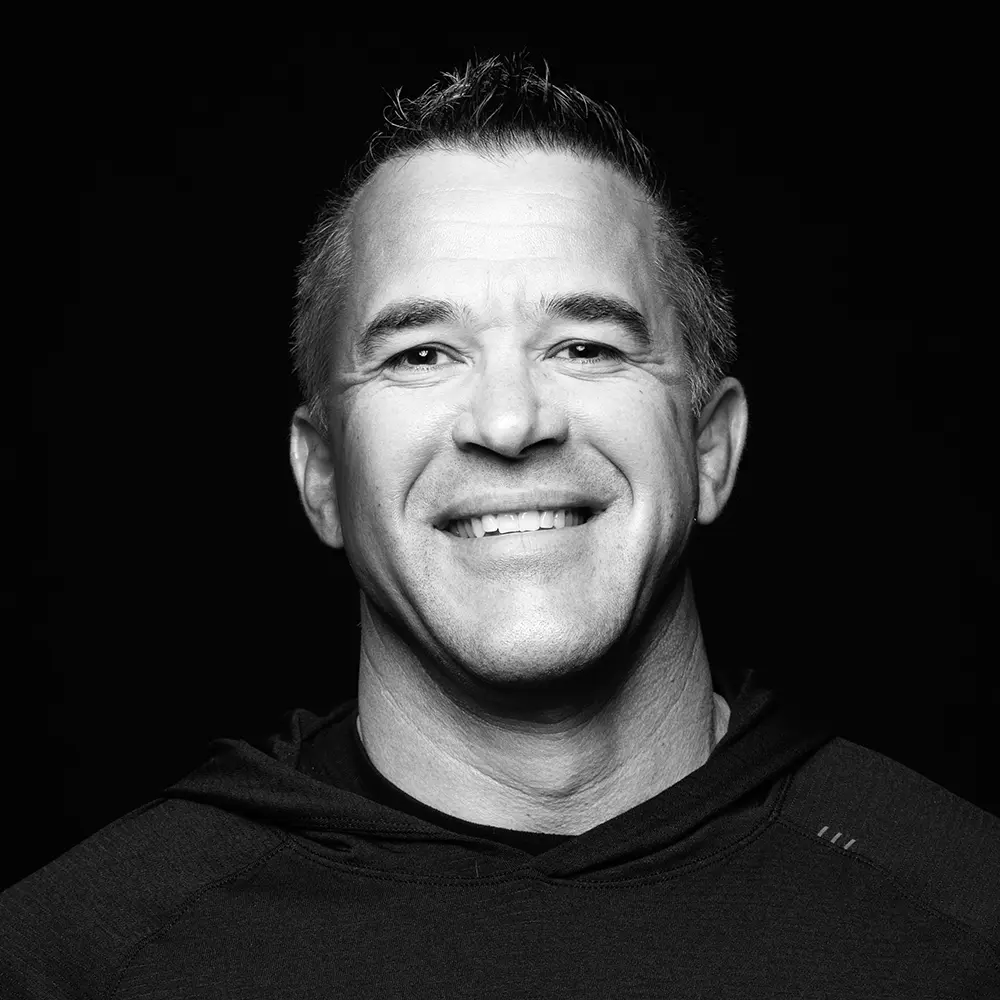
About this Guest
Andy Stumpf
Andy Stumpf is a retired Navy SEAL, world-record-holding wingsuit BASE jumper, martial artist and author.
This transcript is currently under human review and may contain errors. The fully reviewed version will be posted as soon as it is available.
Andy Stumpf:
Pick the choice as often as possible that is slightly more difficult. To me, it's the small stuff that nobody sees that makes the biggest difference in the world. Everybody knows the harder choice versus the easier choice. Everybody, to include myself, will look externally and say, "What do I need to do?" I know what I need to do, and so do they. They need to do the thing, then even if it's microscopic, that they want to do less more often than they do the thing that they want to do more. That, over time, is the juice.
Andrew Huberman:
Welcome to the Huberman Lab Podcast, where we discuss science and science-based tools for everyday life. I'm Andrew Huberman, and I'm a professor of neurobiology and ophthalmology at Stanford School of Medicine. My guest today is Andy Stumpf, a retired Navy SEAL and subsequently a member of the Red Bull High Performance Team, where he was a wingsuiter, where they literally get into what some people call squirrel suits and fly. He set two world records wingsuiting. But today's discussion is not really prompted by his career in the military, nor his wingsuiting, although it does impact the discussion. Today's discussion was prompted by my reading of Andy's recent book called "Drownproof." Now, there are a lot of books out there by former Navy SEALs, but upon reading it, I realized that this was a special book, and that Andy's experience and the lessons he shares, and most importantly the tools he shares, are both unique and indeed important for everyone to hear. For instance, he describes a tool in there that I now use every single week, which has allowed me and many other people, and I'm certain you, to separate out issues of concern versus issues of impact. Meaning to allow you to actually be able to impact, perhaps not control, but certainly have an impact on certain things while ignoring the issues in life that distract you, that pull you into drama, and that can numb you out, and that essentially waste your life. Today, you'll learn what that exercise is and how to implement it in your life. You'll also learn a lot of other simple tools about how to take the slightly harder road in certain moments versus the easier road. You'll also learn from Andy about the most difficult things that he encountered in life and how he navigated them. And no, those weren't in the military, nor wingsuiting. It actually comes from his personal life, which he shares very candidly. And finally, we have a very serious, and in many ways, somewhat emotional discussion about suicide and mental health more generally. I do hope that that discussion will benefit all of you. I'm certainly, we are certainly, I should say, very open to your input. That discussion, of course, raises more questions than it provides answers. But I think we can all agree that this is an extremely important and timely topic. The frequency of suicide is increasing significantly in all communities. So for reasons related to the range and the nature of the specific topics that we discuss today, you're in for a very special episode. Thank you, Andy Stumpf. Before we begin, I'd like to emphasize that this podcast is separate from my teaching and research roles at Stanford. It is, however, part of my desire and effort to bring zero cost to consumer information about science and science-related tools to the general public. In keeping with that theme, today's episode does include sponsors. All right. My book is finally ready for release. "Protocols: An Operating Manual for the Human Body" is coming out in three months. It's my first book, and I've been working on it for many years now, and it's really a reflection of decades of research and experience that came even prior to starting the book. My goal for this book is that it serves as an easy-to-use manual for dealing with any number of different pain points or performance goals that you might have in terms of mental health, physical health, and performance. It covers the science and most effective protocols for sleep, nutrition, exercise, focused learning, and neuroplasticity, stress management, and much more. I'm super excited to share it with all of you. The launch date is September 15th. You can learn more about it or pre-order by going to protocolsbook.com. It's also available on amazon.com, and I'm super excited that "Protocols" is finally ready for release. And as always, thank you for your interest in science. And now for my discussion with Andy Stumpf. Andy Stumpf, welcome.
Andy Stumpf:
Thank you for having me.
Andrew Huberman:
I read your book, "Drownproof," recently.
Andy Stumpf:
Which makes me nervous, by the way. I've told you that before we started.
Andrew Huberman:
Listen, I've read a lot of books, including a lot of the quote-unquote SEAL books. It's awesome. I'll mention a few of the reasons why it's awesome, but I'll let people read it for themselves. But just to really get right to it, one of the practices that you describe in the book is something that I decided to do right away, and I've been doing every week since I listened to it. Now granted, I just listened to the book a few weeks ago.
Andy Stumpf:
Yep.
Andrew Huberman:
So that means twice. But I've found it to be tremendously useful, not just during the exercise, but in the days that follow. And it's really remapped a lot of what I would call my unhealthy tendencies and given me much more sense of agency, and my days are just going so much better. In fact, I was on time today for the first time in my life.
Andy Stumpf:
Influence versus concern?
Andrew Huberman:
Yes.
Andy Stumpf:
Yeah.
Andrew Huberman:
So could you describe this simple exercise, because I'll tell you, having done it, it is immensely powerful.
Andy Stumpf:
Yeah.
Andrew Huberman:
I only wish I had learned about it, like, in junior high school.
Andy Stumpf:
Story of my life. Yeah. So first off, not my creation. This is something I don't remember, and I think I said this multiple times in the book, because I want to be very clear that of basically taking ownership over nothing in that book because they're not my unique ideas. They were things that were taught to me that I'm trying to pass forward. So I don't remember exactly where I first saw this. But the way it was first positioned to me was your circle or sphere of influence, which is very small, and your sphere of concern, which for most people, to include myself, is very large. So if it was the size of this table, that would be your concern. The influence would be the size of a pin drop on the table. And the exercise is actually really simple. Take a standard piece of paper, draw a line down the middle. Concern on one side, influence on the other, and you just take the time to write down the things that are occupying your waking hours. I don't know if you're anything like me I try not to set an alarm unless I have something really pressing that day. But if I do wake up and my brain does a revolution, I have to get out of bed, because otherwise I'm staring at the ceiling in the bedroom. And if I have really sticky things in the morning, I'll usually do this about once a month or once every six months now, but almost every time, that thought will be on the left-hand side of the column. It's just a concern. Why is it preventing me from going back to sleep? Why can't I let go of it? And it's social media, the world that we all live in. It's things you can't control. It's just all the stuff that you spend your energy and effort focusing on. And then you go to the other side of that paper, and I'm still yet to find more than one thing that you can write down, and that's the direct influence that you have. And all you really can write on that is yourself. Now you can tranche that out and say your thought process, the way you speak to yourself, the way you plan your day, the way you manage your time, but all that goes back into things you can actually directly control, which leads you to the realization, or leads me to the realization, that I have no control over what happens to me in my life, but I have absolute and complete and total control over how I respond to it. And I think that speaks to the agency piece. And it helps me, especially when I have those sticky thoughts, it helps me at least take a step back. I'm not going to say I'm perfect and I can put down a lot of the things that I'm concerned with, but it will identify for me a healthy or an unhealthy attachment to those things, and it does help me cross back over to, okay, I understand that this is scary or concerning, but being scared or concerned about it doesn't impact outcome. Everything on the right-hand side of the paper does. So that's what it does for me. Man, you want to talk about developing some more efficiencies? It's a great tool.
Andrew Huberman:
Yeah.
Andy Stumpf:
It's startling how much is going to be on the left and how-
Andrew Huberman:
Right
Andy Stumpf:
... little is going to be on the right.
Andrew Huberman:
Yeah, it's been a game changer for me because, and maybe I misinterpreted the exercise a little bit because on the right-hand side of the page, I've been listing out the things that I can control and the things that I can do with my time. And-
Andy Stumpf:
But that still goes back to you-
Andrew Huberman:
Yeah
Andy Stumpf:
... you're controlling the management of your time.
Andrew Huberman:
Right. Okay.
Andy Stumpf:
That's totally fine. And with all these tools, I don't think there is a wrong answer. If it has the impact that you're looking for, again, you could titrate all that back up to you controlling yourself and what you do with your time. I think it's perfect.
Andrew Huberman:
Yeah. Again, just an awesome exercise. I really encourage everyone to do it. For me, once a week has been very helpful. And it just pops to mind anytime I'm thinking, like, I saw something in the news yesterday, and you start going down these rabbit holes, and you're like, "Wait, what am I doing?"
Andy Stumpf:
Yeah.
Andrew Huberman:
You're like, "What am I doing?" And we can blame the algorithms, we can blame the world, but ultimately-
Andy Stumpf:
Yeah
Andrew Huberman:
... once you realize that you're being manipulated, I think the obligation is to not follow that path.
Andy Stumpf:
The algorithm is real. I don't know what it means. I've listened to people argue about it ad nauseam. But I have the choice as to whether or not I interface with the algorithm.
Andrew Huberman:
Mm-hmm.
Andy Stumpf:
And that's where the power.
Andrew Huberman:
Mm-hmm.
Andy Stumpf:
That's what I think the algorithm is trying to do, is figure out a way to take that power away from you-
Andrew Huberman:
Mm-hmm
Andy Stumpf:
... and put it back into their hands. But it's optional.
Andrew Huberman:
You learned this some years ago.
Andy Stumpf:
Yes.
Andrew Huberman:
In the teams.
Andy Stumpf:
Yes.
Andrew Huberman:
But you still do it now about once a month.
Andy Stumpf:
Mm-hmm.
Andrew Huberman:
Mm-hmm.
Andy Stumpf:
Yeah.
Andrew Huberman:
Do you carry it around with you?
Andy Stumpf:
If you're anything like me, I spend a lot of time on airplanes. It's a really good time to occupy yourself with something that is, for me at least, productive as opposed to just tuning out and watching YouTube videos of sovereign citizens get arrested, which is one of my favorite pastimes. I highly recommend people get into it.
Andrew Huberman:
These are the people that say, "You can't arrest me. I'm a sovereign citizen."
Andy Stumpf:
Right to travel.
Andrew Huberman:
Right to travel.
Andy Stumpf:
Which they do have the right to travel.
Andrew Huberman:
Okay.
Andy Stumpf:
But you don't have the right to drive without a driver's license in all 50 states.
Andrew Huberman:
Are they out there testing the law, or are they hoping that they'll get flagged and that there'll be a video so they can promote this sovereign citizen thing, or are they just really into being sovereign citizens and living their lives?
Andy Stumpf:
I think some of them fall under the first category, and I think some of them actually just legitimately believe.
Andrew Huberman:
Okay.
Andy Stumpf:
There's amazing things on the internet.
Andrew Huberman:
Mm-hmm.
Andy Stumpf:
You shouldn't believe all of them.
Andrew Huberman:
Right. Maybe even most of them.
Andy Stumpf:
That's a fair point, actually. The vast majority of things you should take, I think, with a large dose of scrutiny on the internet.
Andrew Huberman:
We're about the same age, so late 40s for you-
Andy Stumpf:
Yep
Andrew Huberman:
... 50 for me. I was thinking about this in light of this concern versus influence-
Andy Stumpf:
Mm-hmm
Andrew Huberman:
... exercise, which is that they created these 10 and 20 and 30 year high school reunion things, I think for the reason that you have the choice to go back and learn about what people are doing and who's still married, who's still alive, who's thriving or whatever.
Andy Stumpf:
Yeah.
Andrew Huberman:
Whatever the reason is, we have these things called reunions. But with social media, there's this opportunity to be constantly aware of everybody you grew up with, them of you, people you knew five years ago in a job that you no longer think about. So I feel like that left column now has grown tremendously. Regardless of somebody's age, the opportunity to be aware of so many more things, not just distant in other countries and other issues entirely, but our past lives are very much anchored to us now, unless we really literally draw that line and sever from all that stuff. Because as much as I wish the best for all my classmates and all these people in graduate school and whatever-
Andy Stumpf:
Yeah
Andrew Huberman:
... a lot of it should not occupy one's mind. Do you ever wonder whether social media itself is making it harder to do this exercise?
Andy Stumpf:
I think it could be. Do you know who Chad Wright is?
Andrew Huberman:
Yes. I know of him, and we've corresponded a little bit.
Andy Stumpf:
He is hilarious.
Andrew Huberman:
We should probably describe it.
Andy Stumpf:
He does the same type of stuff that Goggins does. He's an endurance athlete.
Andrew Huberman:
Long red beard.
Andy Stumpf:
I call him the Forest Gump of the SEAL teams, to his face. So I'm comfortable saying it. He's amazing. I've had him on the show a couple of times, knew him when we were in the teams together. And he came on my show in November. And I don't know how we started talking about it, but it was this conversation around screen time. It's like, "All right, bud. Let's pull the phones out. Let's see what we got." It's not awesome. I think it was four and a half hours. So we decided that in January of this year, we're going to try to drive our screen time per day to under an hour for total phone usage. I think phone calls we were able to strip out of that. I think the closest he got was about 90 minutes, and then the last week of January for me, I got mine down to 30 minutes. Now, for clarity, I was still doing a lot of the stuff that I was doing on my phone, but I forced it over to my laptop, which was a really interesting experience because it's way less sticky on that platform.
Andrew Huberman:
Mm-hmm.
Andy Stumpf:
So Instagram on your laptop sucks. It's not intuitive. The things that you would normally just do with your thumb, they don't exist, so you end up closing your laptop up. So I'd get on there, post what I wanted to, and then just leave. My mental health was better in January than it had been in a long time. So I 100% think that social media is not only designed to suck up as much as that left-hand portion of your list as possible, but again, it's optional. You create content. You have a massive platform. I create content. We can easily tell ourselves we have to exist on these platforms, which to a degree we do. The question I ask myself is, is the platform working for me, or am I working for it? And that's the healthy relationship. And I think actually that goes right back to that exercise. Am I targeting what I do with my time and being efficient with it and then moving on, or am I just getting stuck into this thumb scroll of death, which is right before bed. I've heard you say it's the best time to have electronic device light.
Andrew Huberman:
Yeah. Real bright in a dark room.
Andy Stumpf:
Right before bed, right?
Andrew Huberman:
If you really want to maximize, make sure you do it first thing in the morning, too, and don't get outside and look at the sun.
Andy Stumpf:
But it's so sticky. I'm telling you, when I hopped over to my laptop, at first, I couldn't even figure out how to post a picture.
Andrew Huberman:
Mm-hmm.
Andy Stumpf:
And it's so clunky-
Andrew Huberman:
Mm-hmm
Andy Stumpf:
... and so not intuitive that you don't want to play with it.
Andrew Huberman:
Are you still there now?
Andy Stumpf:
Oh, no. I went right back to using my thumb.
Andrew Huberman:
What's Chad doing now with his social media? Is he still-
Andy Stumpf:
Oh, he's probably doubled it. He said the same thing, too, by the way. "Man, this is amazing. We should do this more often." And just right back to being on your thumb again by probably March.
Andrew Huberman:
So what's mind-boggling about this is, and you'll tell me, "No, we're just ordinary people who were trained to do extraordinary things," but SEAL selection pairs down for every 100 guys, maybe 15 get through.
Andy Stumpf:
Mm-hmm.
Andrew Huberman:
Maybe 10. Consistently, right? Discipline is certainly a piece of that. Resilience, mental toughness, whatever language you want to throw at it. You have that. Chad has that. You guys were weaned in that. You were forged in that. Then you do high-risk, high-consequence work, right, and on minimal sleep, et cetera. And here are two guys challenging each other to spend less time on social media, accomplish it by virtue of competition, okay, cool, and then you say revert. What does that say, not about SEALs- What does that say about the platforms? Because think about the rest of the world.
Andy Stumpf:
Yeah. It says everything you need to know about the platform. The fact that you can, like you just said, you can recognize all of those things. You can both text each other back and forth in your limited phone usage for the day, "Man, this is awesome," and 60 days later, you're back to the same behavior that led you to the November or December conversation.
Andrew Huberman:
Mm-hmm.
Andy Stumpf:
That's all you need to know about the platforms.
Andrew Huberman:
Okay. I have to drill into this. This is not where I thought we would go first. But it gets right to the heart of discipline and self-control versus-
Andy Stumpf:
Yeah
Andrew Huberman:
... influence and time, and time is everything. When you are on a social media platform, and you're scrolling away, are you aware of the time that's drifting away from you?
Andy Stumpf:
Yes.
Andrew Huberman:
Are you thinking, "Why am I doing this? But I feel compelled to do it"?
Andy Stumpf:
Almost always.
Andrew Huberman:
Or are you oblivious? Is it like being drunk, where you're not thinking about the fact that you shouldn't be doing it until you sober up?
Andy Stumpf:
I'm aware.
Andrew Huberman:
Okay.
Andy Stumpf:
I am aware that it's not healthy, and I will actually, sometimes, I don't know if you're like this. I talk to myself out loud. Somebody from the outside would probably think I'm a psychopath, but I will say to myself, "Why are you doing this? This doesn't feel good." And just...
Andrew Huberman:
For hours.
Andy Stumpf:
Not for hours.
Andrew Huberman:
An hour. 45 minutes.
Andy Stumpf:
I can't go that far.
Andrew Huberman:
Okay.
Andy Stumpf:
I would feel as if I needed to take a shower if I went that far.
Andrew Huberman:
Right.
Andy Stumpf:
But if I have 15 minutes-
Andrew Huberman:
Mm-hmm
Andy Stumpf:
... man, it's enticing.
Andrew Huberman:
Mm-hmm.
Andy Stumpf:
And I don't know what it is about it. And I don't feel joyful after doing it. I try not to compare myself to other people. Good luck being on the internet and doing that. I try not to get caught in the negativity aspect of it because I recognize the negativity bias in myself, where you'll get 99, "This is amazing," and one guy's like, "You kind of suck." And you're just like, "You mother ..." That's the only comment you pay attention to.
Andrew Huberman:
The brain is wired to identify those outliers. Yeah.
Andy Stumpf:
So I refuse to be mean on social media.
Andrew Huberman:
Mm-hmm.
Andy Stumpf:
I won't make negative comments.
Andrew Huberman:
Great.
Andy Stumpf:
Don't get me wrong. You can insult people by not being mean. Just have to work your way around it, and it takes a little bit longer. But I know it's not healthy.
Andrew Huberman:
Mm-hmm.
Andy Stumpf:
I know I could do anything other than that time and be more productive and maybe move my life just a little bit in the direction I want to, but I don't.
Andrew Huberman:
I'd like to take a quick break to acknowledge our sponsor, Our Place. Our Place makes my favorite pots, pans, and other cookware. Surprisingly, toxic compounds such as PFAS or forever chemicals are still found in 80% of non-stick pans, as well as utensils, appliances, and countless other kitchen products. As I've discussed before on this podcast, these PFAS or forever chemicals like Teflon, have been linked to major health issues such as hormone disruption, gut microbiome disruption, fertility issues, and many other health problems. So it's very important to avoid them. This is why I'm a huge fan of Our Place. Our Place products are made with the highest quality materials and are all PFAS and toxin-free. I particularly love their Titanium Always Pan Pro. It's the first non-stick pan made with zero chemicals and zero coating. Instead, it uses pure titanium. This means it has no harmful forever chemicals and does not degrade or lose its non-stick effect over time. It's also beautiful to look at. I cook eggs in my Titanium Always Pan Pro almost every morning. The design allows for the eggs to cook perfectly without sticking to the pan. I also cook burgers and steaks in it, and it always puts a really nice sear on the meat. But again, nothing sticks to it, so it's really easy to clean, and it's even dishwasher safe. I love it, and I use it constantly. So if you're looking for non-toxic, long-lasting pots and pans, go to fromourplace.com/huberman and use the code Huberman. With a 100-day risk-free trial, free shipping, and free returns, you can try Our Place with zero risk, and you can see why more than one million people have made the switch to Our Place kitchenware. Today's episode is also brought to us by Wealthfront. In today's financial landscape of constant market shifts and chaotic news, it's easy to feel uncertain about how to save and invest your money. Wealthfront is the solution that helps you take control of your money while managing risk. For nearly a decade, I've trusted Wealthfront to navigate this volatility. With the Wealthfront Cash Account, I can earn 3.3% annual percentage yield, or APY, on my cash from program banks. And I know my money is growing until I'm ready to spend it or invest it. One of the features I love about Wealthfront is that I have access to instant, no-fee withdrawals to eligible accounts 24/7. That means I can move my money where I need it without waiting. And when I'm ready to transition from saving to investing, Wealthfront lets me seamlessly transfer my funds into one of their expert-built portfolios. For a limited time, Wealthfront is offering the Huberman Lab audience an exclusive 0.75% APY boost over the base rate for three months, meaning you can get up to 4.05% variable APY on up to $150,000 in deposits. Over one million people already trust Wealthfront to save more, earn more, and build long-term wealth with confidence. If you'd like to try Wealthfront, you can go to wealthfront.com/huberman to receive the boost offer and start earning 4.05% variable APY today. That's wealthfront.com/huberman to get started. This is a paid testimonial of Wealthfront. Client experiences will vary. Wealthfront brokerage is not a bank. The base APY is as of January 30th, 2026, and subject to change. For more information, please see the episode description. I've got a theory that I'm just going to share- Please ... that I've been thinking about a lot lately, having just spent some time with, let's just say, one of the major providers of online content. It's not a social media platform. So I have this theory that unlike being drunk or doing drugs of any kind, opioids or amphetamines or something, where people exit the state of intoxication, and they realize, like, "Oh my God," like, "That was a huge waste of my time, my life. I made these mistakes," et cetera. Being on social media is different because there's this awareness that we're on there, and we probably could or should be doing something else, often. And I have this theory that it's the perfect addiction because it's what I would call low resolution enough that it doesn't occupy all of your mind. Like, when people are really intoxicated, they're not thinking about the fact that they shouldn't be intoxicated. That's the state they're trying to achieve. Mm-hmm. This is a state that people come out of and report. There are data on this. They go, "Yeah, it didn't feel good being on there for the last 45 minutes or 30 minutes," or, "I feel like I wasted a lot of time." So they're aware of that even while they're doing it. Very unusual for addictions, right? Yeah. Most addictions fall into the category of trying to erase the sense of time, lose themselves in the activity, forget the trauma, if you think it's trauma-related, just forget everything else and just be in this moment. Gamblers will say this, right? It's that zone they crave so much. This is different. Doesn't feel really good. You're aware that you're not supposed to be doing it quite like that or that much. So I actually think it's the, quote-unquote, ultimate addiction because it's low resolution enough that your brain circuits can get attached to it and keep doing it while you're monitoring yourself. And yet you can run these two tracks at the same time, so you're not getting absorbed and coming out of it and going, "Oh my God, I didn't study for my final exam. Oh my goodness, I didn't pick up the kids from school." It's just low resolution enough that you can still kind of tend to the kids, kind of be in a conversation, sort of be on the Zoom, sort of like, and- Kind of still be driving your car ... your life doesn't totally fall apart. Exactly. And so in some ways, because it's not so extreme, I think that's actually one of the problems. The other problem is, of course, our brains can but are not really designed to be split into these two different activities for terribly long. It's not just an inability to multitask. I actually think that low resolution thing is, you can kind of do it while you're doing other things. Yeah. So I'm just, this is something that I actually want some laboratories to look at. Where does that lead, if left unchecked? Well, for you and for me, the consequences are different and probably less immediate because we've already built our careers. Mm-hmm. There's the social detriment, relationships to family and stuff that undoubtedly suffer somewhat, right? But they're doing it, too, right? So there's that. I do worry, now I really sound like I'm in my 50s, like, about the younger generation because I don't know whether I would've been able to escape this tunnel- Yeah ... had these devices been around. So I think that otherwise incredible accomplishments and human beings and careers and families and everything in between, art and music, is literally not going to be made. I fear this much more than I fear AI, to be honest. Yeah, much, much more. Yeah. In terms of taking away jobs and taking away careers, I think that because it's... I'll tell you this, I am confident that it is way, way worse than the, quote-unquote, opioid crisis, which was already terrible. I think we're going to be okay. So I have three data points- Mm-hmm ... which happen to be my children. Mm-hmm. So almost 18, almost 21, almost 23. My middle son has got it dialed. He's going to college in Bozeman. I think he's getting ready to start his junior year in mechanical engineering. He's doing an internship at a quantum computing laboratory. I don't know what that means. He tries to tell me. I'm like, he just talked to my wife. It's super cool stuff. He made a robotic hand. Of course, the first way he tested it was a middle finger, which I deeply, deeply appreciate. He is your son. 100%. He exists on social media. Mm-hmm. He downloads the app once per week, spends an hour on it, erases it, because it's the pendulum going the other direction, for him. Mm-hmm. My oldest keeps it on his phone but uses it very sporadically, and it's almost, at least, so the middle one's going to be 21. The other one's going to be 23. My oldest now is almost at the point, and I think his peer group is almost at the point, a little bit, of mocking people who spend- Mm-hmm ... you know what I mean? It's almost now, it's almost on the other side, like, oh
Andy Stumpf:
You're one of those, even though they were raised with electronic devices in their hand. My daughter, on the other hand, surgically connected to her hand, and is constantly consuming. So I think she will get there as well too, because when I can kind of pull her out of that digital world, or we go places that have less than optimal cell coverage intentionally, and somehow the Wi-Fi doesn't show up because dad unplugs the router, be like, "Oh, there's no Wi-Fi at the house. That sucks." She can see the light. But my other two, as they've gotten a little bit older, they have seen it and found it on their own. And I think we're going to be okay-
Andrew Huberman:
Mm-hmm
Andy Stumpf:
... because I think that generation now is really viewing these platforms with a little bit more of a wary eye.
Andrew Huberman:
Mm-hmm.
Andy Stumpf:
And I don't know why, but my middle son was the first one. He just was like, "Nope, this is what I do. I'm on there for an hour." It's 100% for memes for him, and then he just deletes the thing.
Andrew Huberman:
Great.
Andy Stumpf:
Yeah.
Andrew Huberman:
No, I'm very reassured by what you just said. I mean-
Andy Stumpf:
That's at a point of three, though. So-
Andrew Huberman:
Well, it's interesting because-
Andy Stumpf:
It's all I got
Andrew Huberman:
... the data on, for instance, smoking in teens. Like when we were growing up-
Andy Stumpf:
Mm-hmm
Andrew Huberman:
... a lot of people smoked, young people smoked. You know that-
Andy Stumpf:
Had to be your first act of rebellion
Andrew Huberman:
... there were all these campaigns to try and get young people to quit smoking, and they did not work. It's going to give you lung cancers.
Andy Stumpf:
Yep.
Andrew Huberman:
This is your lungs after smoke-- None of that worked. What worked was the ad campaign that had these old white dudes cackling and talking about all the money they were going to make on these young kids smoking. So the rebellion of youth, if you leverage it against the big industry platforms-
Andy Stumpf:
Yeah
Andrew Huberman:
... no one likes to be manipulated, but when kids realize and teens realize that they're being manipulated, they'll push back in a way that can be really good for them, which is a little bit of what we're hearing here. So, you know, um-
Andy Stumpf:
As a parent, I can tell you they push back in ways super hard. Maybe-
Andrew Huberman:
Yeah
Andy Stumpf:
... almost pendulum the other way.
Andrew Huberman:
Mm-hmm.
Andy Stumpf:
I tell you what they're also pushing back on in my all three of their generation, alcohol consumption. Damn. Don't get me wrong, there's a time and place for everything.
Andrew Huberman:
Mm-hmm.
Andy Stumpf:
We go to a yearly jujitsu retreat in Costa Rica. The drinking age is 18. One of my sons is in college, like I said. It's an interesting watching those two. That might be the only singular time they drink in an entire year. That was the opposite of me growing up and the culture of the first community I went into. It is wild to see the push in the other direction. And now talk peptides, or my middle son, I told him I was coming here, he's just like, "Oh! Ask him what I need to be doing for sleep optimization." I'm like, "Oh my God."
Andrew Huberman:
Happy to send it to him.
Andy Stumpf:
That's his generation.
Andrew Huberman:
Mm-hmm.
Andy Stumpf:
I think I started looking at sleep optimization about last Thursday.
Andrew Huberman:
Mm-hmm.
Andy Stumpf:
It just wasn't the thing that we were looking at. So I actually, as much as my children, I truly believe children are just designed to sharpen their teeth on the parents' bones, I also have a lot of faith-
Andrew Huberman:
Mm-hmm
Andy Stumpf:
... on the next wave coming through.
Andrew Huberman:
This is not a question I ever thought I would ask on this podcast. As somebody who did an episode on alcohol that got some reach and got people rethinking whether or not they wanted to drink, and I should just quickly say, the major response to that was one of three different types. One was, "I don't like drinking, and now I can justify not drinking." There were a lot of people-
Andy Stumpf:
Mm-hmm
Andrew Huberman:
... who felt that they had to drink, and now they had justification not to. Other people who said, "Wow, I didn't realize that it can increase breast cancer risk," or, "We have cancers in our family," and that's a real thing. It's class one carcinogen, et cetera.
Andy Stumpf:
Mm-hmm.
Andrew Huberman:
And then the third category, like, "I wish you hadn't told me this information. I really enjoyed drinking, and now my friends don't want to drink with me." Fair, and I don't tell people what to do, and et cetera. But I have to ask, do you think that your kids and their generation are possibly missing out by virtue of not drinking at all?
Andy Stumpf:
That's a fantastic question. It is a social lubricant-
Andrew Huberman:
Mm-hmm
Andy Stumpf:
... for a degree. I was probably, and still am, antisocial in large crowds. Is there an aspect of that where it legitimately helped me, not necessarily feel more comfortable, but maybe get out of my own way when I was younger? Yes. Did it lead to some bad decisions along the way? Yes. Did bad decisions and those consequences shape the human being that I would become along the way? Yes. I don't know where it lands. I do think that there is a chance that, yes, they are missing out on, maybe not formative life experiences, but important life experiences.
Andrew Huberman:
Well, I think the camera phones are a big concern with drinking now because-
Andy Stumpf:
Yeah
Andrew Huberman:
... people are so worried about becoming less inhibited and maybe not even saying or doing the wrong thing, but even things as trivial as like, look, not everyone is an awesome dancer. They can get filmed, they can get posted, they can get teased. There's social shame.
Andy Stumpf:
Yeah.
Andrew Huberman:
The other problem is that many, many people are awesome at certain things, and those are the things that tend to be high amplitude also, and so people feel like if they're going to be seen online, they have to be in some-
Andy Stumpf:
Yeah
Andrew Huberman:
... impressive form. So I don't really know. I do worry about the cannabis thing because I'm not anti-cannabis. But I do think given a couple drinks a week versus smoking weed in terms of the overall risk-benefit-
Andy Stumpf:
Yeah
Andrew Huberman:
... alcohol seems less risky to me. But the can-
Andy Stumpf:
Really?
Andrew Huberman:
Yeah, I think so. Look, there are high performers and people-
Andy Stumpf:
Yeah
Andrew Huberman:
... who can use cannabis, and they're like, not a problem. Young males in particular who have a predisposition to psychosis or bipolar disorder-
Andy Stumpf:
Yeah
Andrew Huberman:
... some of them smoke high-potency weed or even low-potency weed, and they never come back from the psychotic episode. I know a lot of examples of that, and that's in the data now. So alcohol, yeah, you can drive off a cliff, you can run somebody over, you can say or do something really, really stupid. But assuming those things don't happen, the immediate risks and long-term consequences of having a couple beers or a couple drinks or maybe even a few more, provided you get home safe, you don't say or do anything stupid-
Andy Stumpf:
Yeah
Andrew Huberman:
You're not going to make yourself psychotic.
Andy Stumpf:
I'm kind of in the same boat that you are. I'm not here to tell people how to live their life. I do think that they should pay attention to the risk versus reward. Live your life how you want. Your choices are going to have potential consequences, and some of those can be pretty big. There's some things I deeply regret about my expressions of being a human being when I was drinking when I was younger, and there are some things that I feel like my life would be completely different without, that I would never want to give those experiences back.
Andrew Huberman:
Mm-hmm.
Andy Stumpf:
I don't know how you table that, though. This is a fascinating cover.
Andrew Huberman:
I didn't know we were going to go here.
Andy Stumpf:
Yeah. In my own life, I wouldn't give up those experiences.
Andrew Huberman:
Mm-hmm.
Andy Stumpf:
But I also don't feel comfortable saying you have to drink to have them.
Andrew Huberman:
Mm-hmm.
Andy Stumpf:
I don't know what the difference looks like, though. Maybe later on, as you grow into your-- I'm a more confident person now, absent alcohol, than I was a more confident person younger, absent alcohol. So maybe time will help you get to those places where you could take those actions where you needed that social lubricant. But maybe not. I don't know, man.
Andrew Huberman:
Well, it's like sleep is super important, and I think it's great for everyone, especially young people, to understand just how great they can feel and mentally and physically perform when they're well-rested. I think it's also an important, not just rite of passage, but experience to know just how terrible you can feel after a night of no sleep- ... and still go take a midterm exam-
Andy Stumpf:
Yeah
Andrew Huberman:
... or go for the run you were supposed to go for. Not because it's, quote-unquote, the best thing for you, but just because how do you explore the outer margins of your capacity unless you know how feeling really great feels and how, let's just say not lousy, but how minimally good you can feel and still complete something while you're completely crushed. After a breakup, after two or three nights of poor sleep, in a very stressful time, not having eaten perfectly. It's good to understand what a workout or what going to class and forcing yourself to stay awake or having a hard conversation with your significant other feels like when it's the last thing your body wants you to do. I think there's utility there. It's kind of like the ice bath of mental experiences, right?
Andy Stumpf:
Are you a fan of the ice bath?
Andrew Huberman:
I am. And-
Andy Stumpf:
What temperature?
Andrew Huberman:
Cold.
Andy Stumpf:
34?
Andrew Huberman:
So on Rogan, I said low 50s, and he was shocked and dismayed. It was like an older brother or a guy you respect- ... looking at you like, "Oh, man, should we even continue this podcast?" I was like-
Andy Stumpf:
I thought I knew you
Andrew Huberman:
... and I quickly went to, "Yeah, but I go into the sauna at 220 degrees Fahrenheit," which I do. I'm very heat-tolerant, not as cold-tolerant. I like to do cold shower, cold plunge or whatever. Low 40s now.
Andy Stumpf:
All right.
Andrew Huberman:
To me, there is nothing as reliable and, provided you don't jump into an ice hole or something stupid like that, or do hyperventilation breathing and then jump into cold water, which has killed people.
Andy Stumpf:
Yeah.
Andrew Huberman:
Provided you don't do that, I don't know of anything that is both safe and reliably can give you that adrenaline spike in a way that you can start to learn to work with what it's like to be in a highly adrenalized state. I think that there's just value in having your body flooded with adrenaline, somewhat against your will, but you're controlling some of it, and learning, I think it's a great space to explore, okay, do I distract myself? Do I lean into it? You can explore a lot of your own consciousness in these high arousal states, and I do think there's carryover. And yes, there's a nice long wave of dopamine-
Andy Stumpf:
Mm
Andrew Huberman:
... that lasts many hours. That's known. There's a nice long wave of adrenaline. But yeah. I think it's a great training tool. You don't want to do it immediately after resistance training, because it can reduce some of the, quote-unquote, "gains" you would get-
Andy Stumpf:
Yeah
Andrew Huberman:
... because it vasoconstricts. I mean, you want blood flow. You want to perfuse the muscles in order to get the strength and the hypertrophy benefits from the training. But provided you do it before on off days or six hours after you resistance train, I think it's a really valuable tool.
Andy Stumpf:
What protocol would you use? I like to have my cold plunge at about 80. What would you do? Like 10 in, five out, couple times?
Andrew Huberman:
80 degrees Fahrenheit.
Andy Stumpf:
It's great.
Andrew Huberman:
So you got-
Andy Stumpf:
I can bump it to 85-
Andrew Huberman:
Yeah
Andy Stumpf:
... if you think-
Andrew Huberman:
I got it
Andy Stumpf:
... that that's a little too low.
Andrew Huberman:
Team guys have this advantage that they did all that, so they can be like, "I did it. I don't want to do it." Right? That's kind of like, "I went through that."
Andy Stumpf:
I don't know if that's an advantage.
Andrew Huberman:
It's like the people who are sleep-deprived in medical school. They're like, "Yeah, I don't do that anymore." I get it. You guys suffered enough. When I went down to Jocko's, he specifically had me do a heat/cold protocol, because I like to do three rounds of each.
Andy Stumpf:
Okay.
Andrew Huberman:
Heat at somewhere about 210, 215, maybe as high as 220, which is hot, but I'm pretty heat-tolerant.
Andy Stumpf:
For how long?
Andrew Huberman:
That'd be 20 minutes. And then go into the-
Andy Stumpf:
Damn
Andrew Huberman:
... you don't want to start right off with that. And then go into the cold. And so they packed the sauna, they cranked that thing up, and they kept resetting the clock. And literally, he'll tell you, I was down on the floor where it's- ... not cool, but it's still cold-
Andy Stumpf:
Yeah
Andrew Huberman:
... or heat rises, obviously. And his daughters, they were laughing. His family and so everyone in there, young and old, male and female, was just laughing at me. So he has what he calls the factory reset protocol, which is where you don't know how hot or how long you're going to be in there, and you don't know-
Andy Stumpf:
Feels the worst?
Andrew Huberman:
... how cold or how long you're going to be in there. And we'll talk about this a little bit about time, but I don't know. If you don't like the cold, you don't have to do it, but I do think most people can really benefit from it.
Andy Stumpf:
I'm saying I'll develop a protocol for 80. The sauna will be at 97. Easy transition back and forth. Who knows?
Andrew Huberman:
All right. Taking it from the guy who jumps off of mountains in a squirrel suit. Let's talk about the squirrel suit.
Andy Stumpf:
Sure.
Andrew Huberman:
And why in the world anyone who values their life, seriously, though-
Andy Stumpf:
Yeah, no, I get it
Andrew Huberman:
... would do this. And is there an off-ramp? Is there a parachute? And when you learn how to do this-
Andy Stumpf:
Yep
Andrew Huberman:
... how hard is it to learn, and what's the juice there?
Andy Stumpf:
Okay. A lot of questions there. Okay. It's funny. A lot of people call them squirrel suits. It's just a wing suit. Squirrel is actually a manufacturer of one of the suits. Fantastic branding. They happen to be the suit that I jump. So essentially, it is a human body turning into a nylon wing. That's really all it is. It's nylon. It's some neoprene around the wrist, so you have a little bit of flexibility in the wrist. They're really actually advancing the leading-edge technology with the fabrics. It's crazy to look, I don't know the name of the program, but you're looking at all of these images from the side of wind angles and how the suits, they're looking to reduce drag. And it's more than just the rigidity of your body. So at least the suits that I jumped are modern suits. They are ram-air inflated. So there is an outer layer on both sides, an upper layer, let's say for your back, and an under layer for your belly. In between, it's much like a canopy. There's ribbed fabric with portholes. And on the front and back of the wing, as you give it airspeed, either exiting an airplane that's already in flight, most skydiving airplanes are probably doing 80 to 120 miles an hour, or in the BASE jumping world, and this is where it can get spicy, is you have no airflow for about the first four seconds because-
Andrew Huberman:
BASE jumping, for those that don't know, is-
Andy Stumpf:
Call it a fixed object. Building, antenna, span, or Earth is what the acronym stands for. You're probably not going to do it off of buildings because you need time to get the suit actually flying. But it's a different experience, because if you jump out of an airplane, those ram air inlets fill up. Your suit, it's pressurized. You can feel it, and you can already fly your suit. You can flip over. Actually, I've gotten above aircraft many times. You can basically translate that horizontal lift into power and go above them. Shortly, you're going to come back down. Otherwise, you'll stall the suit, and it starts waffling down. But in the BASE jumping world, it's a zero airspeed exit. So for the first about zero to four seconds, you don't have any air filling up the ram air inlets. So if you don't go off in the right body position, or if you go head low and are scorpioning, or head high and then you pitch through that and there is terrain below you, that's how a lot of people die. But the suit itself is basically that. There's wings. There's a large wing between your leg, a wing underneath your arm on both the left and right-hand side, and they come in a variety of sizes. So learning it is simple, not easy. First off, skydive before you throw a wingsuit on in the skydiving world. I think I had 3,000 jumps before I put a wingsuit on the first time.
Andrew Huberman:
Is it important that people do different types of skydiving? By the way, I'm not versed in skydiving.
Andy Stumpf:
Yeah.
Andrew Huberman:
So what's the most basic type of... I assume a tandem jump, then you start doing individual jumps.
Andy Stumpf:
The first time I did a skydive, I had an instructor holding onto me from both sides until my parachute deployed. It's a very structured program that most modern drop zones will have. A lot of people will do a tandem first, which I recommend. If you've never done it and you're uncertain about whether or not you would like it, I think there's two really good options. One is a tandem, but if even that idea makes you a little bit uncertain, there's now enough wind tunnels around, commercial wind tunnels. There's Oceanside Wind Tunnel. There's one in LA. There's one in San Diego. They're all over the place. I was just in Virginia Beach. There's one in Virginia Beach. So it simulates the sensation of falling through the air in an environment where you don't have to wear a parachute. You don't have to ride an airplane. You literally hop in there. They can hold onto you, and it feels like skydiving.
Andrew Huberman:
Sounds like fun.
Andy Stumpf:
It's leveled up what people can do in the air because it's this contained environment where you can see if you're moving a millimeter. The number of jumps I have had where you jump out into the air, where your only reference is another person that's moving around, and you were sliding all over the place. Like, "Fuck you, you were sliding all over the place." And neither of you know because your reference is the Earth just flying around. And then you get into the wind tunnel, and you're both up against the glass, you're like, "Oh, we both suck." So makes it a little bit more difficult. The most basic type of skydiving would be just exiting the plane in flight, falling with your belly oriented towards the ground, and deploying your parachute on time. Skydiving is two parachutes, main parachute and reserve. Reserve is packed by an FAA rigger. And I believe for one period of time, it was 90 days in between pack jobs. I think it's six months in between pack jobs now. But full, they open it up, the reserve. They open the parachute up. They inspect it. They make sure that the canopy is good, the lines are good, the automatic activation devices, which are computers sensing fall rate, barometric pressure with a firing criteria, which will fire your reserve for you if you do nothing, which has hundreds of documented saves, by the way.
Andrew Huberman:
Hm.
Andy Stumpf:
For an unconscious jump or whatever it may be, or as crazy as it is to say, somebody falling through the air, forgetting to look at their altimeter because they're having so much fun. It happens. So Cypresses or Vigils or just AADs, automatic activation devices, have saved hundreds of lives. So that reserve parachute is packed by a rigger. Most civilian jumpers will pack their own main parachute. It takes five minutes for an experienced jumper, maybe 20 minutes for somebody who is learning. And you can go do, I think the most jumps I've ever done in a day was probably 30. That was at an event called a Boogie, where it's just as fast as you can go, and you're just jumping, jumping, jumping. On an average day for me when I lived in San Diego, it would be six to eight jumps.
Andrew Huberman:
I'd like to take a quick break and acknowledge our sponsor, AG1. AG1 is a vitamin mineral probiotic drink that also includes prebiotics and adaptogens. I discovered AG1 way back in 2012, long before I ever had a podcast, and I've been taking it every day since. The reason I started taking AG1, and the reason I still take it every day, is because AG1 is, to my knowledge, the highest quality and most comprehensive of the foundational nutritional supplements on the market. AG1 is designed to support things like gut health, immune health, and overall energy, and it does so by helping to fill any gaps that you might have in your daily nutrition. I get asked pretty much all the time, "If I could only take one supplement, what should that supplement be?" And my answer is always AG1. It has just been so helpful for supporting all aspects of physical health, mental health, and performance. If you would like to try AG1, you can go to drinkag1.com/huberman to get a special offer. For a limited time, AG1 is giving away a free bottle of their new omega-3 coenzyme Q10 product. Omega-3 and coenzyme Q10 are known to support cardiovascular health, cellular health, and energy generally, brain health, and much more. I personally take them both every day. Again, go to drinkag1.com/huberman to get a free bottle of the new omega-3 coenzyme Q10 with your first AG1 subscription. For somebody's first non-tandem jump, how high is the plane off the ground?
Andy Stumpf:
13,000 is about average, 13 AGL. So if you're learning in Colorado or another Rocky Mountain state, you might only get 12 AGL because you might be up to 16 to 18,000 feet.
Andrew Huberman:
Mm-hmm.
Andy Stumpf:
But there's flying with your belly oriented to the Earth. There's people who like to do it vertically, either feet down or head down, people who fly on their back. There are formation jumps where they'll get a bunch of people together. I think the world record is hundreds of people linked up in free fall. You can watch it from the ground. It's crazy to see. They'll have eight aircraft, and you just see these just people bombing out of the back.
Andrew Huberman:
Mm-hmm.
Andy Stumpf:
And they'll make these snowflake configurations, and people are just sitting there on the ground, watching with either naked eye or with binoculars. And then at break-off altitude, everybody's tracking away, and then all these canopies open up, and then on landing, it gets a little bit wild. So it can get as much as you want, and then wingsuiting is just a part of that. But you can jump a smaller wingsuit. So the suits I ended up jumping had a lot of fabric because I wanted to have a nice glide ratio, and I wanted to be able to extend the amount of time in the air. You can get suits with a smaller wing, which give you more maneuverability, and you learn in those, and then get a little bit bigger, a little bit bigger and bigger, bigger. So as safely as possible, graduating your way towards those larger suits that can have more consequence. You can end up on your back in the wingsuits in flat spins, and I've seen people... You can get out of it. You need to get out of it quickly, but we're talking fully blown red eyes when they get to the ground from centrifugal force, and pretty quick, too. That's the skydiving world, two parachutes. The base jumping world is you're now down to one parachute that is packed very similar to a reserve, but it's packed now by the jumper who is doing the base jumping. And the reason for that is you are generally very close to the ground at an altitude where a reserve isn't going to save you, because it does take a couple hundred feet for a reserve to open up. And in the US, there's one place to legally do it 24/7, 365. It's the Perrine Bridge up in Twin Falls, which is where I learned. The legality aspect is if people want to go that way, do your research because there's some cities that had some problems with it, so they made it a felony, which will change your life if you want to test gravity off of a building. I don't know if the capital F is necessarily worth it. Vegas and New York are two good examples of that. Most people start off at that bridge. And then an antenna is, of course, exactly that, radio antennas. And there are other countries in the world where that is legal to do, and a lot of times people will travel. Buildings, you can get permission, depending. I know one of your guys worked with Red Bull, not for Red Bull, he clarified for us. Shockingly enough, if you write a large check, things that were once illegal can become legal for short periods of time. So they will get permission to go off of buildings. Or you can go to Dubai, where for I think it was a year, they had this huge, it was fully just set up for legal base jumping off one of the top floors of one of those skyscrapers, which is unbelievable. And then Earth, which is obviously that, and cliffs. My first base jump off of a-- Actually, it was from the bridge. Actually, I have done an antenna, buildings, not many buildings, but my first jump off the Earth was Monte Brento in Italy, which you jump, open your canopy, land, walk across the street, and there's an Italian espresso just waiting for you.
Andrew Huberman:
Perfect.
Andy Stumpf:
It's basically heaven. And then we stayed there for two and a half weeks and went into Lauterbrunnen in Switzerland. But I had been skydiving and flying a wingsuit. Then I had to learn how to base jump, and then at some point you have to combine those two. So one day you have to go from never having pushed off of a cliff in a wingsuit and having time flying it in the air to kind of bridging that gap where now you have this first four seconds that you have to deal with where the suit feels really sloppy. It doesn't feel rigid, and you can't really do anything until it powers up and you can pull away. So that's kind of the activities. The why, I can't answer for anybody other than myself. But the why for me actually had nothing to do with the activity itself. And it is dangerous. There are some people who try to romanticize the danger of that, and if people want to participate in things because they're dangerous and that's how they want to define themself, I leave that to you. Just be aware of the potential consequences you might get yourself into. For me, I got into that about three years after I got out of the Navy. And I didn't realize what it was I enjoyed so much, but it was the mental reset associated with that. At about one minute out on a helicopter, for me, and I can only speak for me, talking about time, your entire circle of concern goes away, completely gone. And there are very few times in my life where I've ever been able to get into that headspace. But it might be the most powerful headspace I've ever been able to arrive into, and my ability to find my way there lasted for months afterwards.
Andrew Huberman:
Mm-hmm.
Andy Stumpf:
Because overseas, yeah, they ask you to do some bizarre stuff. But you also likely at some point in your career will have a family, maybe your first house, whatever it is, and like, "Fuck, the washing machine just broke." And you're dealing with real-life stuff. "Did I write enough checks before I left?" Before the digital age. "Did I write enough checks before I left to make sure that the rent was already paid?" These are the things you're thinking about, just normal, everyday life, an argument with your spouse, your kids, the holidays you may have missed, all that stuff. You get on a helicopter, and you start heading towards an objective, and all that stuff starts to go away. And for me, about the one minute and in until it lands or you're stepping off, it becomes this focus on The next three seconds of your life is the only thing I was capable of thinking about and that is such a beautiful place. God, you want to talk about the ability to perform and not feel like you're necessarily, you're not trying to force it, you're just... There's books been written about the flow state-
Andrew Huberman:
Mm-hmm
Andy Stumpf:
... for lack of a better term. Incredibly impactful and I didn't realize how much I needed that, and I didn't realize how much that job was providing for me until it was gone. And then the static of everyday life just is overwhelming. Skydiving, I guess you could get that, or maybe I got that when I first started, but after a few thousand jumps, about everything that's going to go wrong, you're going to have your first cutaway. You're going to have a mo- You know what I mean? You're going to deal with your gear, your reserve is going to open, and so that really narrowed focus, it actually starts opening back up. The BASE jumping world, I remember the first time, the guy who taught me, he's like, "All right. Just climb over the edge of the rail here," and you're looking at 486 feet. You test the wind by spitting and if it drifts past a certain point, you're good to go. So you can track your spit to where you are going to deck if you don't pull your parachute. Now on the first one, he's holding onto the pilot chute, so it rips it off for you, so you don't have to worry about it. But you want to talk about that, shh, right back-
Andrew Huberman:
Mm
Andy Stumpf:
... into that space. Holy cow. That's what BASE jumping was for me. I had some of the deepest conversations with my friends on the four-hour hikes that would lead to a 90-second jump, and two weeks of those 90-second jumps, I could get myself into such a more dialed head space for six months and be better at business, a more patient father, a more patient husband. That to me is why.
Andrew Huberman:
Mm.
Andy Stumpf:
And at some point, probably due to the death of my friends, and I had found other activities that had started to provide that, it crossed the metric for me where the risk was no longer worth the reward. I have been skydiving since 1999. I could take five years off and go jump out of an airplane and I'd be fine, but I can't do that in the BASE jumping world. The currency and competency piece is so important. And then when I moved to Montana, my access to the drop zones and the ability to maintain currency and competency in that wingsuit really decreased, so it got to a place where it wasn't worth the risk. Skydiving's still a bunch of fun, but I found other activities that I could kind of lose myself in. Maybe not to the same, I don't think to the same degree. It's hard to describe zipping up in that suit with a maximal heart rate to the point where you're looking over at your buddy and he's like, "Hey, are you hearing my heart too? Because it's pretty loud." You know what I mean? Like that thrush in your ears.
Andrew Huberman:
That's informative- ... to hear that your heart was maxed out because I wondered if adrenaline was low, if it was high.
Andy Stumpf:
Terrified.
Andrew Huberman:
Something had happened systematically over the years in the teams where your adrenaline was set too low, you need to crank it above a certain threshold. Sounds like you were right where any rational person would be, which was terrifying.
Andy Stumpf:
Yeah. Because at some point, you grab your little tail wing, and you make a little nice little teepee with it, and you get your toes to the edge, and you check all your stuff, and then you are just looking out into the abyss. And you have to make yourself rock forward past a point of no return that if you change your mind, oopsies, that doesn't work anymore. And then you need to have maximal human performance for about the next four seconds of your life-
Andrew Huberman:
Mm-hmm
Andy Stumpf:
... if you want your life to continue. So if you're not scared in that environment, I would recommend you stop that activity immediately because you're not paying attention. It was terrifying, and that's probably why I liked it so much. It was awesome. Don't get me wrong.
Andrew Huberman:
Mm-hmm.
Andy Stumpf:
Ripping down a mountain in Switzerland, six feet off the ground, almost playing tag with your shadow, and then turning around and carving through trees, amazing.
Andrew Huberman:
So you're actually pretty low to the ground, just going very, very fast-
Andy Stumpf:
If you want to be
Andrew Huberman:
... over steep ground.
Andy Stumpf:
Yes.
Andrew Huberman:
Yeah.
Andy Stumpf:
If you want to be.
Andrew Huberman:
Mm-hmm.
Andy Stumpf:
Not everybody chooses to fly that way. And you can have, on the exact same jump, I can think of one very specifically. It's at the far end of the valley in Switzerland. It's a four-hour hike up, and it's, you're getting water in your canteen or Nalgene out of these glacially, just spouting out of the rocks, and there's sheep and stuff, and it's like a postcard. You walk for four hours. You can have a really aggressive jump on that and fly for 60 seconds, or you could flatten your suit out and just glide and fly for two and a half minutes. Same jump, different choices. Not that necessarily flying farther out, you still need to pack your parachute correctly and all those things, but your likelihood of impacting a tree at 100 miles an hour with your face is a lot better than flying six feet off the ground around corners that hopefully you've done some test jumps on and gotten lower and lower and lower and lower instead of just flash pointing that thing and hoping for the best as you come around the corner. Which people do.
Andrew Huberman:
How fast are you moving once you're above the ground?
Andy Stumpf:
If you really bend those suits over, I'd say you could get them to about 120. Face first.
Andrew Huberman:
You're a human missile.
Andy Stumpf:
It's awesome.
Andrew Huberman:
Those of us, like myself, listening to this can only wonder, right? Yeah.
Andy Stumpf:
You can feel it in the suit.
Andrew Huberman:
Mm-hmm.
Andy Stumpf:
So again, the ram air inlets, when you're a little bit flatter flying slow, it feels like you're on an air mattress is really what flying feels like. As you bend the suit over and you're just violently diving at the ground, you can feel the suit. It's almost like it's just your power meter is just all the way up. And so if you get in trouble, you can flatten that out, and that's your safety. You can disconnect-
Andrew Huberman:
Mm
Andy Stumpf:
... from the terrain. Which is how, unfortunately, some people die. They're not paying attention to that sensation, and they're slowly getting flatter and flatter and flatter and flatter. Then they encounter flat terrain, and they don't have enough performance in the suit to clear it, and they impact. But that, when you're pitched over like that, and that thing is just, and you It feels like you are licking the largest nine-volt battery you've ever licked in your life.
Andrew Huberman:
Would your parents say that this is a window into the young Andy Stumpf, or is this a departure or an evolution, devolution, evolution?
Andy Stumpf:
I don't know if they would've called that one. I don't know if I would've called that activity, if I would've said this one was going to be interesting to me.
Andrew Huberman:
Let me ask you this.
Andy Stumpf:
Yeah.
Andrew Huberman:
When you were a kid, not recommending anyone do this, but when you were a kid and your guy friends, someone found one of the larger firecrackers available, were you the kid that would hold it after it was lit until the last second and then throw it? Because I knew that kid, but it wasn't me.
Andy Stumpf:
Does he still have both hands?
Andrew Huberman:
Yes. He was a great skateboarder, by the way.
Andy Stumpf:
Yeah.
Andrew Huberman:
Became a pro skateboarder right out of high school. Moved on to other things eventually. I think those things were correlated, right? I mean, he's doing big railings. He had a very good relationship with confronting fear. There was another kid in our crew who would've been around the corner the moment the thing came out. Okay, I was neither of those kids.
Andy Stumpf:
Yeah.
Andrew Huberman:
Right? And then there's a distribution in the middle.
Andy Stumpf:
Yeah.
Andrew Huberman:
Where were you?
Andy Stumpf:
My answer's not going to make sense to you because holding it that long sounds dangerous.
Andrew Huberman:
It is dangerous. But wingsuit-
Andy Stumpf:
I know, that's what I'm saying. It's not going to make sense. That sounds dangerous.
Andrew Huberman:
Uh-huh.
Andy Stumpf:
But just for the sake of danger, which somebody could 100% say-
Andrew Huberman:
Yep
Andy Stumpf:
... about BASE jumping as well. But I don't know if holding on to, say, an M80 and wondering how long you can, provides for you that mental... I mean, I'm talking about your canopy opens, you land, you're laying in a fucking meadow in Switzerland on your back. At a sense of ease and peace.
Andrew Huberman:
Mm-hmm.
Andy Stumpf:
I don't think you're getting that from an M80.
Andrew Huberman:
No. The reason I ask is that there are a lot of questions that the scientist in me wants to know about-
Andy Stumpf:
Yeah
Andrew Huberman:
... resetting of adrenaline set points and because people can become desensitized to-
Andy Stumpf:
For sure
Andrew Huberman:
... to high risk, high consequence type situations.
Andy Stumpf:
You see that in the wingsuiting community. I would say specifically the wingsuit BASE jumping community, the fatality rate is high.
Andrew Huberman:
Mm-hmm.
Andy Stumpf:
I would never tell anybody that it is a safe activity, but I think you can do it as safely as possible. There's still immense residual risk. So you have to ask yourself, what is it worth?
Andrew Huberman:
If we were to plot out number of wingsuit jumps-
Andy Stumpf:
Mm-hmm
Andrew Huberman:
... and plot time of fatality relative to first jump, right? So, the question, the area under the curve.
Andy Stumpf:
Yeah.
Andrew Huberman:
To address what you just said, are you getting more deaths the longer people have been doing it? Independent of the number of jumps, right?
Andy Stumpf:
Mm-hmm.
Andrew Huberman:
You can't really do that experiment. It's not a perfect experiment. The question is, are people getting more dangerous to themselves because they're pushing further and further into the abyss, getting closer to the edge, taking risks? Or is the novice more dangerous because they're a novice?
Andy Stumpf:
I think the Dunning-Kruger effect is always-
Andrew Huberman:
Mm-hmm
Andy Stumpf:
... the most dangerous aspect of it. I think you would probably track, you certainly see people, especially in the content age, I've seen people reach out, not to me, but to forums, "Hey, I just want to get into wingsuit BASE jumping as fast as possible." And everybody on there is like, "Whoa. No." Most people recommend skydiving 200 jumps to even before you put a wingsuit on, which for most people who aren't doing it professionally, that's going to take a year or two. It's a slow progression. But that person reaching out saying that doesn't have time for that. So you're definitely going to get some people early on. The guys who are around the longest, the ones that I know who are the titans in the sport, it's not that I don't worry about them. I worry less. Honestly, I think it's that Dunning-Kruger curve where it's going to get people. Especially when, let's say you do this amazing jump, right? You're ripping around a corner, and things you learn later on, like, hey, is it ascending or descending thermals right now? Where's the wind coming from? What type of day is this? I just jumped off, maybe it was a western-facing slope that I jumped towards, and I felt this amazing uprush of air, which is what you want to feel on an exit point. Same thing as why airplanes take off into the wind. It helps with performance. Well, as I am cruising down this mountain, am I thinking about the fact that three-quarters of it is covered in the shade, and maybe the thermals have swished along the way, and you're going to start feeling this pressure of almost a hand on your back. The first time you do that jump, and you survive, the dangerous thing to say is, "Nailed it." But did you nail it or did you get away with it?
Andrew Huberman:
Mm-hmm.
Andy Stumpf:
And that's what kills people, and that's that perfect Dunning-Kruger ascending line.
Andrew Huberman:
Man, there's a quote that should be stamped into everyone's brain, young and old. Did you nail it or did you get away with it? Because-
Andy Stumpf:
There's a difference
Andrew Huberman:
... this translates to a lot of areas of life that could spare people a lot of pain-
Andy Stumpf:
Yes
Andrew Huberman:
... and some important insights.
Andy Stumpf:
I got away with it more than I nailed it.
Andrew Huberman:
Are you just being humble?
Andy Stumpf:
No.
Andrew Huberman:
Okay.
Andy Stumpf:
No. You don't know what you don't know, until you see somebody else get bit by the same thing. Or you're on a jump with somebody, and only one of the three makes it out, or two of the three makes it out, and they all had the same idea and plan.
Andrew Huberman:
And you describe some of that in your book. I don't want to give that story away, but-
Andy Stumpf:
Yeah. With Alex specifically. I wasn't there for Alex's jump, but I had jumped with Alex enough for years. The one thing I wish I could do looking back with him is I was there with him for some close calls that he had. A few were bad decisions that he, I would like to think, corrected for, because there is a phase in anything that you're doing that my instructor taught me how to fly helicopters. He's like, "Listen, once you know better, you can do better." But there's a phase where you don't know any better And so you think what you're doing is correct until either somebody points it out or you watch something so horrific happen, and you pay attention to an investigation afterwards or a debrief afterwards, and you can learn from that. But with Alex, I wish I could go back and just honestly slap him around a little bit because that's what it would take for him to pay attention. He would be appreciative of it, I think, if he understood what it would save. But I would associate his death directly also with that Dunning-Kruger curve, and he had been doing it for years. That doesn't mean you're out of that. It's that middle area where you think you have everything dialed. I think he had gotten away with it more than he had nailed it, and I had too.
Andrew Huberman:
Would you let your kids squirrel suit?
Andy Stumpf:
Do I have the right to stop them?
Andrew Huberman:
Yes.
Andy Stumpf:
No. Knowing the risk, I would do everything I could to prepare them as much as possible. And by that, I mean scare the absolute dog shit out of them with the reality and confront them with the actual reality of it. Show them how long it would actually take, what they would need to do, what they would need to sacrifice in order to be able to get at that level. But then if they wanted to make that choice, I don't feel like I have the right to stand in between them and that desire.
Andrew Huberman:
Appreciate the honest answer.
Andy Stumpf:
Yeah.
Andrew Huberman:
I'm sure they do, too. I don't know if your wife appreciates that particular answer, but we'll ask her. I don't get involved in marital disputes. That's a-
Andy Stumpf:
We don't have any. Our relationship is perfect.
Andrew Huberman:
Excellent answer. Wait, you've been married before.
Andy Stumpf:
Correct.
Andrew Huberman:
No, that was a joke. Sorry.
Andy Stumpf:
That is correct. I tell you what, I learned some stuff.
Andrew Huberman:
I learned a lot.
Andy Stumpf:
I learned some stuff.
Andrew Huberman:
You talk very openly in the book, to the extent you don't reveal specifics-
Andy Stumpf:
Yep
Andrew Huberman:
... about the challenges of the ending of that first marriage. You-
Andy Stumpf:
Hardest thing I've ever done in my life. People think that being a SEAL is hard, and it is. But a lot of that is truncated with, hey, we're going to go overseas for this short period of time and time away, and it can be physiologically and psychologically challenging. But once you're in that community, I didn't encounter anything. The military never asked me to do anything that got me to a place where I was judging or asking myself what type of person I was, or if I was a good enough person to be able to continue going forward with anybody other than just myself. Those questions I wasn't asking myself in the military. At the lowest points of a nearly two-year divorce process that was very contentious, and quite frankly, the reason I don't go into details is I have built a larger, or a platform, and my ex-wife doesn't have one, and that's the fairest way to be about it.
Andrew Huberman:
I totally respect that.
Andy Stumpf:
If people want to go talk with her, trust me, I know the story you're going to get. Enjoy it. Believe what you want to believe. I always tell people if you hear bad stuff about me, please believe it.
Andrew Huberman:
That's what you tell them?
Andy Stumpf:
Yeah. Why not? I am certainly not everybody's cup of tea. There's no way to please everybody, ever.
Andrew Huberman:
Amen to that.
Andy Stumpf:
So if somebody is out there who wants to run me through the mud, cool. Just believe every word that you are told if you want to. But if you want to get the real spit, come hang out with me for a bit and maybe compare and contrast those two things. But if you don't want to do that, cool.
Andrew Huberman:
Yeah.
Andy Stumpf:
That's on you. It took every tool that I wrote about in that book to get through that circle of influence, circle of concern, all the things that I was worried about. What can I do today? Breaking time down into the shortest chunks humanly possible, controlling how I talk to myself. It was absolutely soul-crushing, and 10 out of 10 do not recommend.
Andrew Huberman:
Yeah.
Andy Stumpf:
Zero stars on TripAdvisor.
Andrew Huberman:
Yeah. That portion of the book stopped me, I have to say. There were other parts of the book that paused me, where I was like, "Whoa, I didn't expect this coming," and I take notes on-
Andy Stumpf:
Yeah
Andrew Huberman:
... what I listen to. I also read the hard copy. I should have mentioned that earlier. I like to do both. It's really helpful for me. I think maybe other people would benefit from that as well. But that segment where you said, "This is the hardest thing I'd ever been through," and it was, as you put it again, soul-crushing.
Andy Stumpf:
Yeah.
Andrew Huberman:
And what I gathered was, and I certainly can say I've experienced this before in a different context, that when other people's narratives start to, the boundaries between other people's narratives and your narratives, and in your case, kids were being affected-
Andy Stumpf:
Yeah
Andrew Huberman:
... which is huge. As a child of divorced parents, I think it's also probably got to be somewhat different. You talk very kindly of your own parents. Your story of your relationship to your mom-
Andy Stumpf:
Yeah
Andrew Huberman:
... and her passing, which we can also get to, that also stopped me. Also got me to call my mom. So she'll thank you, right? I called my mom. Well, time and-
Andy Stumpf:
You never know how much you have left.
Andrew Huberman:
You never know how much time you have left. But what inspired you to talk about that in particular? I know you're not one of these guys in, I don't want to say Team Guys in particular, but you're not one of these guys who wants to paint a perfect picture of himself.
Andy Stumpf:
Yeah.
Andrew Huberman:
But talking about how a contentious divorce came close to, brought you really close to your edge.
Andy Stumpf:
Yeah.
Andrew Huberman:
Maybe to your edge, but fortunately not over it. It's an interesting choice, and one that I appreciate, and I know readers will appreciate.
Andy Stumpf:
Yeah.
Andrew Huberman:
It humanized the whole thing. But at what point did you decide that you wanted that in the book?
Andy Stumpf:
Probably from the beginning. I think one of the biggest mistakes people would make is if they would look at a job like the one I used to have and think that the people who do it are not normal people. I was talking with Chris Williamson about this, and it's a mistake that people make. There's no Captain America shield and cape and cowl that you actually wear. The things they ask you to do are sometimes pretty nutty. But after that, you go take your gear off, clean yourself up, get some food Get together with the guys, and you just talk about normal day-to-day shit. If you were having an argument with your wife before you went out on an operation, you're coming back to that. If your house had burned down, which I wish I could say I didn't know somebody's house burned down, but I did. They got that notification shortly before we went out on objective. Hopefully, didn't allow that to invade their mental thought process during, but when they came back, that's what they're dealing with. Then you come back from deployment and you're presented with all of those things. It is such a mistake to think that there are people out there who have everything figured out or that are impervious to the things that are damaging to you as the person. I started doing Q&A sessions on Friday for my show because I kept getting just this volume and wave of emails. And at first, I wasn't really trying to tranche them into buckets, and I thought if I started doing the Friday episodes, it would decrease, but instead, it multiplied them by orders of magnitude. And I realized there really were some deep themes. One of them is, "I just don't know how to get started on my goals." But another one is, and this is the most dangerous one, "I feel like I'm alone. I feel like I'm the only person dealing with this. Hal, can you give me some advice? I look at your life from the outside, and it seems like you were able to do all these hard physical things. What would you do if you were me?" I'm like, "Dude, I am you." So you have to put that in there. How can you not? At the end of the day, I don't know what I want to do with my life, but I want to try to help people. I don't think you can do that if you're trying to sell bullshit. But I do think you can help if you can talk about your own personal experiences and your own mistakes and the things that you have suffered with. Not always past tense, because my life is certainly not perfect when I go through seasons of my life now, as does everybody. Why not be honest about that? Why try to portray this, follow my 12-step program for $19.99 every month, and you're going to have it all figured out. Those are some of the most unhappy people that I know, by the way, and oftentimes not nearly as successful as they are presenting themselves.
Andrew Huberman:
Definitely.
Andy Stumpf:
I would rather just be like, "Listen, you think your life is bad? Why don't you put a seatbelt on your chair? I've got a little story for you." And then people hear that, they're like, "What? You mean you guys deal with that stuff, too?" It's like, yes. That's the whole point. You're not alone. You're not unique in this. So I think from the very beginning of deciding to write it, I didn't know necessarily that I would use that particular example, but it was the most difficult thing I've done in my life. I'm obligated to put that in there and talk about it as openly as possible while maintaining the privacy of the other person involved.
Andrew Huberman:
Yeah, I was impressed how you maintained respect for your kids-
Andy Stumpf:
Yeah
Andrew Huberman:
... for your ex-wife, your current relationship, and at the same time acknowledge that the exchange was anything but cordial.
Andy Stumpf:
It was anything but cordial. And, I've talked about this before, but, and I don't know if it made it in the book, but I lost contact with my oldest son for 18 months. I was the one who initiated the end of the relationship, and he was the oldest at the time. And I don't know if it was a matter of him being in a certain phase of his own life, and shoot, you know the deal. Being a young man is not the easiest path, nor is being a young woman by any stretch. But it's really interesting how adults forget how difficult it was in those years to just get through the day when you think that everything is, you don't even know who you are. You're trying to figure it all out. But for 18 months, I tried calling him. I tried texting him. I tried writing him letters to his mom's house. I would pull up next to him at a parking lot that he would go to before he went to work, and he would burn out of the parking lot without even acknowledging that I was there. And you think SEAL training's hard? Imagine something that you don't have the vocabulary to describe how much you love and thinking every day, "I don't know if I'm going to get this back. What else can I do?" And now, thankfully, by staying the course, I think I have a closer relationship. And not everybody has that outcome, but our relationship is probably closer than it has ever been, and he'll call and ask for my advice or just want to bounce stuff off of me, which I think as a parent, if your kids are soliciting your time to ask questions, whatever it is you're doing, stop doing that and take the time. Because it's pretty awesome. And it means that they care about what you say. But I thought that was gone, man. You want to talk about soul searching? There's nothing I did in the SEAL teams that made me wonder whether or not I was a good enough man to still exist. But that experience did.
Andrew Huberman:
I'd like to take a quick break and acknowledge our sponsor, Function. Function provides over 160 advanced lab tests to give you a clear snapshot of your bodily health. This snapshot gives you insights into your heart health, your hormone health, autoimmune function, nutrient levels, and much more. They've also recently added access to advanced MRI and CT scans. Function not only provides testing of over 160 biomarkers key to your physical and mental health, it also analyzes these results and provides recommendations for improving your health from top doctors. For example, in a recent test with Function, I learned that some of my blood lipids were slightly out of range. As a result, I decided to start supplementing with nattokinase, which can naturally help reduce LDL cholesterol. And it did. In a follow-up test, I could confirm that this strategy worked. My blood lipids are now back exactly where I want them. Comprehensive lab testing of the sort that Function offers is just so important for health. I mean, how else are you going to know what's going on under the hood? And while I've been doing blood work for years, it used to be time-consuming, complicated, and expensive. In fact, I used to spend thousands of dollars per year trying to get this kind of data, and the data, frankly, were not all that good. But now with Function, it's extremely easy and affordable. A Function membership is only a dollar a day, $365 a year. And if you think about the information it provides, and the health challenges it helps you avoid, and the proactive things that it can do for you to enhance your health, I truly look at it as a savings. To learn more, visit functionhealth.com/huberman and use the code Huberman for a $50 credit towards your membership. Again, that's functionhealth.com/huberman. Wow. Well, I will say, as the description of your final moments with your mom led me to call my mom, I wasn't being facetious, it really did. The description of the divorce process and the challenges that go there that, I don't want to make this about my story, resonated in certain ways. I grew up in a very high-conflict divorce. What you just said now, I'm on good terms with my dad, but I'm familiar with being the son who wants to be protective of his mom but still loves his dad, and being caught in the middle. And I would think about those, too. How could you not, with all three of my kids, how... And I have this conversation with my wife now, who honestly is the only reason that I think I pulled out of that, was the recognition and seeing from somebody else like, "Hey, just so you know, I know you're going through it, but this person sees something in you that is worth..." I mean, I dedicated the book to my kids and to my wife for that reason. But we'll talk about this now because something, it's like, why would they say that, or why would they do that? And she's like, "Listen, that's always going to be their mom." I'm like, "Yep, got it. Totally nailed it. I understand now." And it re-centers and- Mm-hmm ... like, okay, doesn't make it any easier to deal with, but I understand. Sons and fathers have a certain dynamic, and mothers and sons have a certain dynamic. And of course, mothers and daughters, too. Yeah. And mothers and daughters and fathers. I only know my own experience. Yeah. I do have a sister, so there's a parallel experiment. There's a control experiment. She wouldn't appreciate me calling her the control experiment, but- Did you realize in your parents' divorce that it was going bad before it did, before they got divorced? Definitely. And listen, I've done a lot of work with both of my parents, too. Mm-hmm. We're on great terms now. I can truly say that. My dad was on this podcast. I know you've had conversations with your dad publicly. My dad and I are quite close. And I now look at it differently. I'm living in a state of gratitude these days, where I basically am like, "Okay, they gave me life." Yeah. That's huge. You can't realize that when you're younger, because you're like, "F my life," at times. But they gave me life, so there's that. They gave me so many opportunities. And then the hardship of those years, I had my own story and version of it. But recently, just because of some evolutions in my personal life, which are all good, I'm like, "I'm going to try and put myself in my dad's frame, where he was, what he was trying to do in his career and in his personal life, and then my mom's frame." I confess it's a little harder to do that because my dad and I are both male. Yeah. And there's always going to be that. But my mom and I were still at home, and he was living elsewhere. So I've tried to really work through it in those ways, and I keep coming back to this place where now I go, "Oh my God, that must have been so hard for them." Not for me. I had years of understanding of how hard it was for me. Yeah. I go, for them, I'm like, holy shit, that's got to be so tough. I was really hard on my dad. How old were you when you realized your parents were just people doing the best they could? Yesterday. No, I'm just kidding. No, but that, I mean- No. I- For a long time- Yeah ... in life, as kids, though- Yeah ... your parents are, what they say, gospel. Well- And they must have the answers to everything because they're older than any human being's ever been. Oh, man. And then you realize they are out there making shit up on the fly, doing the best they can with the data set that they have in front of them, not doing great most of the time. Yeah. It's not because they're not trying- Yeah ... to do great. They're just fucking people. Yeah. Well, I can't speak for your kids, and I wouldn't. But I can say that for me, I joked yesterday, but it was actually very young because I came to this kind of black-and-white conclusion, which was not the correct one, which was, "They don't know what they're talking about." Hmm. And that led me to go elsewhere to look for answers, and I found a lot of answers to a lot of things that I wanted. I also found some wrong answers. Yeah. I had great mentors throughout my life. And the day you realize that your PhD advisor doesn't have the answers, that's when you go get a postdoc advisor. And then you realize they don't have the answers, and you go start your own lab, and then you realize, oh, my God, how hard their job was, because now you're dealing with graduate students that are saying things like, "Do you even know what you're doing?" Until the paper gets accepted, and then they're like, "Oh, my God, you really know what you're doing." My first graduate student will laugh when she hears that. She's actually a professor now. She has two kids. She's happily married. She has a super successful lab. And I said, "Have you gone through that evolution?" And she's like, "Absolutely." So I will say this, and again, I can't speak for your kids whatsoever, but there was a real benefit to having that realization early that they don't know everything. Yeah. Because you're forced to go look for certain answers elsewhere. There's also something really beautiful to the reconnect that I have with my dad, and my mom and I were more constant over the years because, as you said, the relationship can be that much closer. Would you wish it on anyone? No. Would you wish divorce on anyone? No. But at the same time, my life wouldn't be what it was. So that portion of the book, I have to say, surprised me. I know you're very humble, so please hear this as it lands. It impressed me that you were willing to put it in there in the way you did and how you handled it, and it really got me thinking about my relationship to my dad, my own family life now, where that's going, and it gave me a lot of hope and humility around like It's hard being a person, let alone being a parent.
Andy Stumpf:
Yeah.
Andrew Huberman:
And the kid piece is easy to relate to, but it really opened my perspective. So I'm grateful to you for putting that in there.
Andy Stumpf:
Yeah. To me, it just seemed natural. I didn't even give it a second thought. Yeah.
Andrew Huberman:
But you're also jumping out off mountainsides in squirrel suits.
Andy Stumpf:
Yeah.
Andrew Huberman:
You know? You-
Andy Stumpf:
But I'm telling you, if you've ever tasted that 9-volt the way I did, you might actually be like, "So what is this progression?"
Andrew Huberman:
Let's talk about the wingsuit and the 9-volt battery a little bit more, because you talked about the state that you were in, not just during, but in the six months or so afterwards.
Andy Stumpf:
It was after.
Andrew Huberman:
So that's not going to be the long tail of adrenaline, I'm guessing. I don't think you were walking around for six months like amped on life completely.
Andy Stumpf:
Oh, no, the opposite.
Andrew Huberman:
You said you were able to dial in.
Andy Stumpf:
Yeah.
Andrew Huberman:
Could you talk a little bit more about that? Did you ever take some time to think about like, "What is this?" And did you get that after a gunfight? Did you get that after a funeral? You've gone to more than your fair share of those. What do you think is going on there?
Andy Stumpf:
It was the opposite of walking around adrenalized. People oftentimes have asked me, "What does it feel like to be an adrenaline junkie?" And I'd say, "I don't know. I don't feel like I am one." I might participate in some things that from the outside would be viewed as people seeking adrenaline, but I don't like that hyper adrenalized feeling where... Well, and it could be different for anybody and everybody, whether it's the tasting copper in your mouth, or the heart rate, or the feeling in your hair. I don't like that sensation. And that's not what I felt on the edge. I just was scared shitless, quite frankly. It's not an adrenaline, and it would be the opposite of walking around feeling like that. I would describe it as feeling settled or anchored.
Andrew Huberman:
Mm.
Andy Stumpf:
And the ability to just sit into it and think clear. It's like having a stereo dial and the static, and you're just twisting it down. And then the BS of life, and it comes back up, and it comes back up, and it comes back up. Then you go on another one of those trips. Or I, I should say. I would go on another one of those trips, and it would dial it down. After a gunfight, it's not like the movies. Most of the time it is so fast, but it's such a rote decision.
Andrew Huberman:
But it's high adrenaline, presumably. Moderate?
Andy Stumpf:
I think it would depend on how much time you had to make a call. Most of it is, or in many times, a broad example, come around a corner, binary threat or not threat. There's not a whole lot of time to get ramped. You've got to make a decision right there. I think maybe afterwards you might get an adrenaline dump, or it might catch up with you. And I can't really think of any... Anytime I've thought about an adrenaline dump or I've seen it, people actually kind of melt a little bit, the far side of that, where they just-
Andrew Huberman:
Mm-hmm
Andy Stumpf:
... their performance degrades, for sure. They're on the other side of the bell curve of performance. I didn't see anybody experiencing that, or maybe they were doing that when we were on a helicopter or vehicle on the way out. Not that much adrenaline. And again, it's just not as much time as movies and TV shows make it out. It's just not that sexy. When you got back, I would say, for myself, if the optic of time starts coming in at about the one-minute out, I would say as you were to get back, and I would say for most guys, it's more of a routine, but taking gear off a certain way, hang it up, uniform off, shower, food. I think you find that settling spot once the guys come back together, generally communally over a meal or back in your hut, whatever. Your team, we would usually have it separated by team. I think you would find your way to that settled space as well, too. So similar. I don't know if it was as powerful, though.
Andrew Huberman:
Let me ask it slightly differently. Coming back from a wingsuit jump, and it went well.
Andy Stumpf:
Mm-hmm.
Andrew Huberman:
Everybody lived, including you. Maybe learned a few things. Maybe some errors you were able to correct, which is also learning-
Andy Stumpf:
Mm-hmm
Andrew Huberman:
... but you feel good about it. How do you sleep that night?
Andy Stumpf:
Oh, so good.
Andrew Huberman:
Hmm.
Andy Stumpf:
Yeah.
Andrew Huberman:
Mm-hmm.
Andy Stumpf:
Yeah, probably better sleep. Let me see. I'm trying to think about sleep. God, you're going out so repetitively. Yeah. Guys are... Well, it was an unhealthy reliance upon Ambien. Is that sleep or hallucinating?
Andrew Huberman:
Ambien can induce some amnesia. But it has its place, but it's not the first line of attack. I know SEAL team guys liked Ambien. I think nowadays they're using things less-
Andy Stumpf:
It's what they had available.
Andrew Huberman:
Yeah. Yeah.
Andy Stumpf:
And unrestricted, in a bowl, take what you want. I know people who would take two, unpackage another two, put them next to their bed with a little cup of water for the middle of the night when they woke up.
Andrew Huberman:
Right.
Andy Stumpf:
I don't think four is healthy. I'm not a doctor, but I don't think four is healthy.
Andrew Huberman:
There are better ways. But when you're out with your wingsuit buddies-
Andy Stumpf:
Mm-hmm
Andrew Huberman:
... and you guys had a great jump that day, and you're going back, everyone knocks out.
Andy Stumpf:
You're wiped. You're just wiped.
Andrew Huberman:
And so for that next six months, you're feeling like you're in a really good space.
Andy Stumpf:
You would feel it changing at like the three-month mark.
Andrew Huberman:
Mm-hmm.
Andy Stumpf:
But for a nice three months, for me, it was clean. You could just think better. And I don't know the mechanism behind it, other than maybe your brain gets better at parsing out the bullshit that doesn't actually matter, and as you get that focus. So once it identifies it in that moment, you hold onto it less. I don't know what's going on there.
Andrew Huberman:
It's still a mystery. I've spent some time looking at this in advance of this conversation.
Andy Stumpf:
Yeah.
Andrew Huberman:
The simple theory would be it raises your stress threshold. So the things that get you to secrete adrenaline, like everyday trivial things, that's not happening anymore. Okay, that's a reasonable theory.
Andy Stumpf:
Mm-hmm.
Andrew Huberman:
That's actually what the ice bath will do.
Andy Stumpf:
Yeah.
Andrew Huberman:
That's what a morning workout will do. But it turns out that's not what happens when people go into these flow states, and you get this long tail of flow opportunities.
Andy Stumpf:
Yeah.
Andrew Huberman:
Because the tendency when people's stress threshold goes up too high is that they tend to engage in a lot of meaningless behaviors because they're not stressful enough. You want the sensation of like, "That was a tough conversation, and I've got to deal with it," or, "That was a tough conversation. I just need to avoid this person." This is just not a healthy... Stress is a good indicator of pain.
Andy Stumpf:
Mm-hmm.
Andrew Huberman:
And sometimes it's a psychological pain that we need to overcome ourselves. Sometimes it is a psychological pain we need to excise from our lives.
Andy Stumpf:
Yeah.
Andrew Huberman:
So it sounds very different than that. And the reason I'm so interested in this is it's the exact same way that, he seems to come up a lot on this podcast, Rick Rubin has described after putting together an album with some amazing artists where they've just been working and working and working, it's not just the time while doing the work, it's in the months that follow.
Andy Stumpf:
Yeah.
Andrew Huberman:
It's like this piece. It's the post-flow state something. We don't have a name for this.
Andy Stumpf:
And it's almost like it lowers your stress threshold.
Andrew Huberman:
Mm-hmm.
Andy Stumpf:
Because I agree with you. If it just raised your stress threshold, I would've just continued to do riskier and riskier behaviors. But at the end, I feel like it lowers it and just strips away the BS stress and makes you less likely to invest in those other potentially nonsense, high-risk behaviors. I have no ability to describe it whatsoever.
Andrew Huberman:
Mm-hmm.
Andy Stumpf:
And again, I didn't realize what that head space was giving me while I was in the military. I knew something was missing after I had gotten out, and I think a lot of guys find themself in that kind of abyss of how do I replicate this? Spoiler alert, you can't really, and they have to deal with that and work their way through that. And I'm not recommending that wingsuit skydiving or BASE jumping is the path for guys getting out, and I specifically wrote about this. I've seen people who can do this in art, getting lost in creating something, or yoga or meditation or ice bath or sauna, or I found a lot of it in the ability to detach and be in the moment in jujitsu. Even though it's totally artificial violence, you're in the moment, because it sucks when your friend chokes you, because you want to choke your friend, obviously. But you can find it, it doesn't have to be prescriptive. But if you can find your way there, I don't care that nobody can describe what it is. I am here to tell you it will change your life if you can find your way into that space. It really will.
Andrew Huberman:
There's a wonderful book, in addition to yours. It turns out there's another great book out there.
Andy Stumpf:
How dare someone.
Andrew Huberman:
No audio version, but it's called "The Secret Pulse of Time."
Andy Stumpf:
Okay.
Andrew Huberman:
And it's about time perception. And so the idea that comes to mind that maybe we could talk about is perhaps these endeavors, whether or not it's wingsuiting or producing an album or painting or gardening or whatever it is, jujitsu, whatever it is that somebody does to access this flow state and gets this long tail of post-flow benefit, whatever we-
Andy Stumpf:
Mm-hmm
Andrew Huberman:
... whatever that is. We don't have a name for it, again. It seems to calibrate our time perception, is one idea.
Andy Stumpf:
Hmm.
Andrew Huberman:
That perhaps brings us so much into each moment, that it's almost like our ability to capture moments becomes high fidelity. Again, you talked about getting the static out.
Andy Stumpf:
Yeah.
Andrew Huberman:
Right? And then when we go back into everyday life, it's almost like we're perfectly calibrated. I'm stating a theory here. So now you wake up the next morning, you're home, and your kid comes in, and they're talking about something, and you're thinking, and we'll get back to toilet paper in a little bit. And you'll be like, "Listen, dude, you're talking about this, but you didn't take care of the toilet paper." This will become relevant in a moment. If you read Andy's, I've never thought so much about toilet paper rolls in the bathroom and how they're stacked. My girlfriend and I had a conversation about it the other day because of Andy's book. That will all make sense in a few moments. But it's almost like you can still be in that real-world stuff, but your time perception is adjusted so that you know what you're doing. It's just that thing.
Andy Stumpf:
Yeah.
Andrew Huberman:
So then when you pivot to the next thing, and you need to sit down and do some work, it's almost like you can adjust your frame rate appropriately.
Andy Stumpf:
It's like it pulls you into that.
Andrew Huberman:
Mm-hmm.
Andy Stumpf:
It allows you to sink into those things-
Andrew Huberman:
Mm-hmm
Andy Stumpf:
... and digest better, to think better. Yeah, the clarity of thought, and it would change how I thought about an argument or a conversation, and it would allow me to look at it from a different perspective. And I have no idea why that was the case. But I agree with what you're saying. I think there might be some aspect of that, the fidelity and the ability to truly see clearly in that moment, pulling you and anchoring you into that. There's something there. I don't know.
Andrew Huberman:
Mm-hmm. A really cool paper came out just the other day showing that when we're stressed, prior memories, while we can still access them, we can't make insightful connections between things. And I won't describe the whole experiment. It was really cool. They basically have people remember pairs of objects, and then there's some link between the two pairs. So, it would be like apple, yerba mate, and there'll be yerba mate, wingsuit. And then at some point later, you need to link the wingsuit to the apple, right?
Andy Stumpf:
Yeah.
Andrew Huberman:
Conceptually, not just that way. They built up from basic things like I just described. And as you ramp up people's levels of stress, you essentially lose the ability to make these connected insights. And this speaks to the hardwiring and the software that the brain uses. I almost wonder whether or not your stress threshold, as you said, is brought down so that you can now have novel insights. Like, "Oh, this conversation with my son about the toilet paper is actually important-
Andy Stumpf:
Yeah
Andrew Huberman:
... in a way that isn't just me being annoyed." And I feel like maybe. It'd be fun to explore this as the science evolves with you, and talk about it more. Because I think-
Andy Stumpf:
Yeah
Andrew Huberman:
... the reason I'm so obsessed with this is for two reasons. One is navigating everyday life, which is a lot. That's a lot of what people are challenged with. It's so vital. The other is how to navigate the hard stuff in life. So I want to get to both of those things and talk about some examples from your life and from your book. But before we do that, I feel like we're obligated to talk about toilet paper.
Andy Stumpf:
The number of pictures I have received via email of people taking pictures of their kids' bathrooms and basically saying, "I thought I was the only one."
Andrew Huberman:
Okay. All right. This is really seeming like an inside joke now for those that read Andy's book. You go, "All right. We will get back to time perception, navigating the everyday-
Andy Stumpf:
Oh, God
Andrew Huberman:
... and the hard things in life." I won't forget. We'll spin that plate in the background.
Andy Stumpf:
Yeah.
Andrew Huberman:
It's spinning. The toilet paper section, yes, it made me laugh. It also made me think about the little things I do each day and the little, tiny, itty-bitty shortcuts that I'm taking and how those ratchet up. So tell us about toilet paper.
Andy Stumpf:
It always takes longer to do it wrong, is the bottom line. And we all are tempted with these shortcuts. So-
Andrew Huberman:
That's the mantra we have to remember
Andy Stumpf:
... my children, their bathroom, if there was going to be an Ebola outbreak in the US, it might start there. I don't know anything about Ebola, but I feel like it might start there. So, as with most bathrooms, there's toilet paper rolls, and my kids, when they finish a toilet paper roll, instead of popping it off the holder, taking it, and going and getting a new one, they go get a new one, and they sit it right there. So it's like empty toilet paper roll up against the wall. You would think that when this one is done, they would take them both, but instead, they do this. So there's two against the wall, and then the other roll goes here. Now, I can't use this one because this is open, but when this roll is done, you would think that they wouldn't create a pyramid, which historically, from my understanding of math, isn't great to balance things on. But they will make a pyramid and then put this up here, and inevitably this roll goes forward, hits the ground behind the toilet, and then they start screaming from the bathroom, "I need toilet paper, Dad." To which I respond, "You got yourself there. You can figure it out on your own."
Andrew Huberman:
This is all of your kids?
Andy Stumpf:
Yeah, for sure.
Andrew Huberman:
Okay.
Andy Stumpf:
Yeah.
Andrew Huberman:
And they're all your kids?
Andy Stumpf:
Yeah.
Andrew Huberman:
All right.
Andy Stumpf:
I just-
Andrew Huberman:
I'm not really saying anything there. No, I'm just-
Andy Stumpf:
I'm just, it's... And so the point in all of this is, if you don't want to be somebody screaming for a toilet paper roll, it actually takes less time to go, and when you're out of toilet paper, disconnect it, throw it away on the way, and bring another one in. It's the same thing as laundry. Do your laundry. I'm not perfect at this by any stretch, but do your laundry, fold your laundry, put it away. That always takes less time than do your laundry in a pile. Then you're in a pinch, and you're looking for your T-shirt, whatever shirt you want to wear.
Andrew Huberman:
And I own a lot of black clothing.
Andy Stumpf:
Oh, my God. I do, too. It's all blues, blacks, and an occasional red. The red ones are easy to find in that particular cohort. But otherwise, you're in there, and it's stuff's inside out, so you don't know if it's got the right logo. There's socks coming out of the sleeves. 5X the amount of time that would take you as opposed to just wash your laundry, dry it, fold it, put it away. I have tried to express this message to my children to the limits of my vocabulary. I went into my daughter's bathroom before we came up here. There was three rolls of toilet paper. Two of them were empty and wedged on the side, and the third one was vertical, and I just closed the door and walked away, pretend like it didn't happen. They don't listen to me. It always takes longer to do it wrong, and those are the little shortcuts that we all take.
Andrew Huberman:
Mm-hmm.
Andy Stumpf:
We tell ourselves, "I'll do it later," or, "I don't have time to do it right now." We all have the same amount of time. It's where you're allocating your time. Do it up front, and I assure you. The McRaven speech about making your bed. The number of parents that probably thought that was life-changing was just amazing. Like, yes, somebody else is telling my kid to make the bed. It's not actually about that. It's about having the discipline to do the little things, and it is way better at the end of the night when you're tired to come back to a bed that is made and ready for you to hop into than having to, not most people would do this, but make it first and then get into it. But it just gets worse and worse and worse. And in the end, it will take you longer to correct for that than the individual action of just doing it right the first time.
Andrew Huberman:
What's your advice with respect to this?
Andy Stumpf:
I can give you the advice, but I also don't follow it all the time either. Every single decision that you have in front of you in your life will have a slightly easier and a slightly harder choice. Make the slightly harder one more often than the slightly easier one. And the thing I liked a lot about McRaven's messaging around the bed is that it started your day with a small act of discipline that could seem meaningless, but then what if you pair another small one with that? And then another small one with that. I think that can really set you up for success in your day. And yes, at the end of the day, boom, your bed's ready to go, and you can hop back into it. It just feels better to get into a made bed.
Andrew Huberman:
It took me a while to realize that most of the people that I could tell were really squared away in their jobs, and because I happen to know their personal lives, too, also their personal lives, they're pretty tidy people.
Andy Stumpf:
Yeah.
Andrew Huberman:
Whether by sheer will or by reflex, they're just pretty tidy.
Andy Stumpf:
I don't think it's ever by reflex. I think it's always by will.
Andrew Huberman:
Mm-hmm.
Andy Stumpf:
And it's not fun, and don't get me wrong. I'm not perfect at it. But if I can look back at my lives or my life at times where things were a little bit less effort involved in being successful or making traction, it wasn't in chaos. It was in a little bit more of a controlled environment by me, again, controlling what I can control, which is my actions in the morning. If you sit down in front of a desk and you can't even find the thing that you're looking for to do the work on it, I don't know anybody who has become ultra-successful in life with that model. But I think we could both sit down and talk about some people who are nailing it, and I think the vast majority of them would fall into that tidy category or disciplined category. But it's micro discipline that can make it seem as if you have this macro discipline, but that's not actually what it is. It's the little things that nobody sees. That's what leads you to that end state.
Andrew Huberman:
It's interesting. Earlier, we were talking about social pressure and alcohol and social media. It's interesting to me that there seems to be some degree of social pressure to not do the slightly harder thing.
Andy Stumpf:
Hmm.
Andrew Huberman:
What we're describing now, I never get into thinking about what the comments would be, but I'd be willing to bet one pinky that A fair number of people are either thinking or commenting directly "Yeah, like that's really neurotic. Like loosen up."
Andy Stumpf:
Yeah, take a picture of your fucking room and send it to me.
Andrew Huberman:
Yeah.
Andy Stumpf:
I bet it looks like shit.
Andrew Huberman:
Exactly. My dad's first generation immigrant from South America, and I'll never forget when, it was in the mid-'90s, he probably took me to a movie in an attempt to repair our relationship, and eventually it worked, Dad. We're doing great. Talked to him today. I called him today. We're on such good terms. It feels good to be able to say it. And I'll never forget, we were at the movies, and there were these people walking by, and they were wearing kind of like baggy sweats and flip-flops or something. And he stopped me, and he's a very orderly guy, and he said, "See that? That's the beginning of the end." And I said, "What do you mean?" And he said, "I come from a third-world country. When people start going to the movies in their pajamas, it's the beginning of the end." And I thought, hey, this is like, you couldn't be more out-- I actually think he's right. What he was talking about is that when the social pressure is not sufficient to keep people feeling as if they need to show up as if they're in public.
Andy Stumpf:
Yeah.
Andrew Huberman:
Right? And he might've been a bit extreme, but when that social pressure isn't there, then the social pressure eventually erodes around what people can say, what they can do, and then I do think that era of kind of Jerry Springer daytime television, where people would watch people who were way more screwed up than them so they could feel a lot less screwed up.
Andy Stumpf:
What's that called? Schadenfreude? When you take pleasure in other people's pain?
Andrew Huberman:
Yeah. Well, I think that's the word for it, for sure. But I think this is kind of adjacent to that, where it's like giving yourself license to not feel that bad because, either they're just so neurotic that I don't want anything to do with that kind of world where everything's right angles, or like, well, at least I'm not in-
Andy Stumpf:
Yeah
Andrew Huberman:
... total squalor. And this is where I think that, we hear so much about, oh, everyone's presenting their best selves on social media. Also a problem to seem perfect-
Andy Stumpf:
Yeah
Andrew Huberman:
... because no one's perfect. But I do think that there is this drift where we go, well, it's not going to crush my life, the toilet paper thing. Like, if it were going to cost me my relationship or my allowance, your kids might think about it differently, right?
Andy Stumpf:
Yeah.
Andrew Huberman:
But what I got from your book, this section of your book, is that it's because the consequences are so small at the individual level, but the upside is so big-
Andy Stumpf:
Yes
Andrew Huberman:
... when you collect these things together, that the real incentive to do the slightly harder thing is there.
Andy Stumpf:
The toilet paper's not going to cost you your life. If it does, I'm going to need a case study on how that happened, because I'm fascinated at this point. But what if it, we'll call it what it is, either the lack of discipline or the laziness in the moment changes the trajectory of your life because you apply that to everything in your life, because that's how you start your day and how you end your day. I get it. I'll take a picture of my room and send it out. Guess what? It's not hospital corners on the bed, and there's probably something in the corner. I'm not saying that I'm perfect in this, but it's not being neurotic. It's doing the work that nobody sees. And for the people who say, "Oh, that seems too neurotic for me." Let's have a cup of coffee. Where do you want to be in your life, and where are you at in that journey? I'm fascinated by, and like we were saying, the Internet's the best worst thing. People can find this conversation and then critique us to death and say that we're being neurotic. But I'd also love to connect with somebody and say, "Listen, why do you have an allergic reaction to that particular statement? Is it because perhaps you're living it? And if you are, let's talk about the potential impact that it's having." Because again, I didn't create this. I'm passing along one of the mantras in the teams, how you do anything is how you do everything. There's so many stupid small things that you do specifically in training that have nothing to do with anything except doing the stupid small thing. That's it. The two-mile swim, you have a Ka-Bar knife in one of your hands and a CO2 cartridge in another, and you're wearing your life jacket, and we're like, got a jeweler's loupe out looking at the little twist-in section of the CO2 cartridge. God help you if I find a grain of sand or a fleck of rust. Guess what? The jacket's still going to function even if both of those things still exist because it actually has nothing to do with the knurling of the CO2 cartridge and everything to do with, I told you to have nothing in this to make sure it was basically brand new because you have to follow the procedure. Because the procedure is what's going to save your life. Can you, even when you're exhausted and you don't want to and you have limited time, do what I told you to do because of the impact that it'll have? That exists in that community everywhere. So it's not me. I'm just telling you. The most successful people that I have encountered are not becoming successful in chaos. Now, of course, there will be somebody that can point to something and say, "Well, what about this person?" I'm not saying that there's not a, what do they call it, a white elephant or a black elephant, whatever it may be. Does that scale? No, it doesn't. So if you're trying to replicate that, "Oh, they did it through chaos, so I'm going to as well." Live your life however you want to, but maybe you and I aren't being neurotic. Maybe we're just trying to help.
Andrew Huberman:
Yeah. You said even when exhausted and limited in time, those are the two times when these little, I guess I used to think about them as extras. I'm trying to start thinking about them as foundational. That's when they become really tough.
Andy Stumpf:
It's when they matter the most, though.
Andrew Huberman:
Mm-hmm.
Andy Stumpf:
Because if you, it's like this toilet paper roll weighs 2,000 pounds. There's no way I can get it to the garbage with this tire. The days you don't want to work out, those are the most important days. Even if you do less, the mental victory there, in my mind at least, and I'm not an expert in any of this, far outweighs any of the physical aspect. It's the fact that you did and you didn't want to. If you stack that up over a lifetime, you're going to blow people away with what you can accomplish.
Andrew Huberman:
Yeah, and the generalizability of what you just described is Definitely supported by science. People have perhaps heard me say this before, so I'll make it very brief, but there's this brain area, the anterior midcingulate cortex, which most neuroscientists that teach neuroanatomy, including me, didn't know what it did until a few years ago. And a guy at Stanford, Jill Purvis, he's a neurosurgeon, he was stimulating this brain area and regions adjacent to it, looking for epileptiform foci in a patient. That's how they find out where to burn out the seizure site. And he's stimulating in the cingulate cortex, and then he gets to this anterior midcingulate cortex. And in every patient where he taps this region electrically, the person feels and reports, "I feel like there's a storm coming, and I want to lean into it. I know I can go through it." Someone else might describe it as, "I feel like there's this big thing about to happen, but I'm going to persevere." So it's amazing, right? So this anterior midcingulate cortex turns out hypertrophies. Well, it grows in volume, maybe in number of connections, et cetera, number of neurons maybe, but certainly grows in volume when people successfully diet, when they take their existing exercise program and just add three 30-minute sessions of cardio. But here's the caveat. If they hate cardio. If you love the ice bath, your anterior midcingulate cortex, which by the way predicts successful dieting, predicts successful completion of-
Andy Stumpf:
Yeah
Andrew Huberman:
... any of other hard things, all of that relates to whether or not the thing that you're introducing is something that you do not want to do in the moment that you do it. And so there's real science to this now. There's a long review that I can put a link to in the caption if people want to get into the science. So this is in human studies, and it goes just on and on. So it's not the thing, it's the thing you don't want to do.
Andy Stumpf:
Yeah.
Andrew Huberman:
And so when people say, "I love working out, and the final two reps of that set, that teaches me how to be hard in life." You're like, "Do you like working out?" They're like, "Love it." And you're like, "Ah, it's not doing anything for your anterior-
Andy Stumpf:
At all
Andrew Huberman:
... midcingulate cortex."
Andy Stumpf:
Yeah.
Andrew Huberman:
So I think this is very important science, which is why I keep bringing it up on multiple podcasts.
Andy Stumpf:
Yeah.
Andrew Huberman:
And I think the toilet paper roll. So your kids have this amazing opportunity. Other people have to, I don't know, do whatever. They seem like very hard-driving kids in the way you describe them anyway. So it turns out that for them, the toilet paper thing, and no, your dad didn't pay me to say this. The toilet paper thing turns out to be the route to anterior midcingulate cortex growth, which then translates to... By the way, growth of this structure is the defining feature of what are called superagers. Bit of a misnomer, because these are people who maintain cognitive ability and many of their physical abilities relative to their peers into their 80s and 90s.
Andy Stumpf:
That makes sense.
Andrew Huberman:
So it may even be related to the will to live. It may be the tenacity structure in the brain, which people who successfully push back against certain life confrontations and things, and on and on.
Andy Stumpf:
Yeah.
Andrew Huberman:
So it's a pretty cool structure, and it may be the basis of the toilet paper phenomenon.
Andy Stumpf:
It's the same thing as putting your dishes in the dishwasher when you're done, as opposed to just dropping them in the sink for the next morning. The examples are everywhere. Not that that would ever happen in our house, but...
Andrew Huberman:
We're going to get back to the time perception piece, but you've mentioned jujitsu a few times.
Andy Stumpf:
Yeah.
Andrew Huberman:
What's an aspect of jujitsu that, for you, is this thing, this friction point where you actually don't want to do? Or do you just love the whole thing?
Andy Stumpf:
What I love about jujitsu is it can't be mastered. There's no way. And I have been very fortunate enough now to train with people or be around them that have been black belts for damn near as long as I have been alive. And I love asking them, what do they like about it? And it's these seasons and phases where they think they have it figured out, and then they see something else, and their realization is they haven't even begun to understand. And so they build back up, and something again. And the more experience these people have, the less they think that they have it all figured out. And I don't know what the key to aging is, but I love doing things that seem as if it is impossible to master them.
Andrew Huberman:
Mm-hmm.
Andy Stumpf:
I think that's the key to staying at least mentally as young as possible, constantly learning new stuff.
Andrew Huberman:
I would like to take a quick break and acknowledge one of our sponsors, Joovv. Joovv makes medical-grade red light therapy devices. Now, if there's one thing that I have consistently emphasized on this podcast, it's the incredible impact that light can have on our biology and our health. Now, in addition to sunlight, which I've talked about a lot on this podcast, red light, near-infrared, and infrared light have been specifically shown to have positive effects on improving numerous aspects of cellular and organ health. These include faster muscle recovery, improved skin health, wound healing, improvements in acne, reduced pain and inflammation, improved mitochondrial function, and even improvements in vision. Nowadays, there are a lot of red light devices out there, but what sets Joovv lights apart and why they're my preferred red light therapy device is that they use clinically proven wavelengths, meaning they use the specific wavelengths of red light, near-infrared, and infrared light in combination to trigger the optimal cellular adaptations. Personally, I use the Joovv whole body panel about three to four times a week, usually for about 10 to 20 minutes per session, and I use the Joovv handheld light both at home and when I travel. If you would like to try Joovv, they're offering up to $400 off select products for listeners of this podcast. To learn more, visit Joovv, spelled J-O-O-V-V, .com/huberman. Again, that's J-O-O-V-V, .com/huberman. I seem to be referencing your book a lot, but there's a great story in your book about some intestinal distress that is not-
Andy Stumpf:
Is that what we're calling it?
Andrew Huberman:
Yeah. That is not of just the diarrhea, constipation type, but you described it as the worst pain-
Andy Stumpf:
Yeah
Andrew Huberman:
... you'd ever experienced. Which, when most people hear a statement like that, they go, "Okay, well, what pain have you experienced?" Well-
Andy Stumpf:
Let's ask
Andrew Huberman:
... turns out you've also been shot.
Andy Stumpf:
Yeah.
Andrew Huberman:
Turns out your job selection process involved a fair amount of immediate and long-term pain processes under limited sleep and so on. So we can check the box easily for you, like understands pain, and then this was the worst pain. What do you think about this notion, maybe I heard this from Chad Wright, that when you vocalize about how hard something is That you make it more real. I was wondering if in that moment where you're in the hospital, I don't want to give it all away. It's a great chapter, actually. And you're dealing with this worst pain of your life, not from being shot, but from the other thing.
Andy Stumpf:
Yep.
Andrew Huberman:
That were you just cursing? Were you quietly cursing in your head? Do you think that we can make our physical pain and just challenges in general worse by talking about them? Or do you think holding it in makes it worse?
Andy Stumpf:
I don't think you could make it worse by talking about it. I think if people were open and honest about, let's just say pain in general, whether that is internal or external, I think what they would be shocked to find is they're generally surrounded by people willing to do anything they can to help relieve that pain. So I think you could probably make it much better.
Andrew Huberman:
Mm-hmm.
Andy Stumpf:
For anybody who thinks that I might have stuff figured out or I'm an intelligent person, here's a story for you. Here's how stupid I am. So I was doing a podcast when I felt the first little shift in my stomach. I took a sip of coffee. I was like, "Huh, that's weird." And I thought it was a gas bubble. My wife was teaching a jujitsu seminar at the time. We were just south of Salt Lake City. So I got done with that. I couldn't really stand up straight, but it was the open mat portion, so throw the gi on, go roll for 90 minutes. Couldn't, definitely could not stand up straight after that, so I was just slouching in a chair, to try to hide it from my wife, who had, at that point, started looking over at me. And she was like, "What's going on?" I'm like, "I just got a stomachache. It's not that big of a deal." And we were going to drive from Salt Lake City back to Kalispell, Montana, where I live, which should take a day. And she was saying, "Hey, let's get you some gas medicine or something like that." And she wanted to go to In-N-Out. We don't have any In-N-Outs in Montana. For people who live around In-N-Outs, I'm here to tell you, it's a really big thing to people who don't live around them. I don't know why. I was raised-
Andrew Huberman:
In-N-Out's pretty darn good.
Andy Stumpf:
Yeah. I was raised by them-
Andrew Huberman:
Mm-hmm
Andy Stumpf:
... or around them, so to me, not that big of a deal. I'll grab one when I can, but also not going to totally detour off to go get one. So she goes and gets her Double-Double, whatever it is, pulls into the Walgreens. I'm in the passenger seat at this point. First off, she tricks me. I drove her to the In-N-Out. She's like, "Just let me drive." And I'm like, "Fine." We get to the Walgreens. I'm in a good amount of pain at this point. She goes inside to get Gas-X pills or whatever. She comes out. I am upside down in my seat trying to relieve the gas bubble because that's what I thought it was. So my head was down by where you keep your feet. I didn't let her know I was-- So she comes back into the car and was like, "What are you doing?" Just fully inverted in the car. I'm like, "I'm fine. Just, I was just trying to see if I could get the gas bubble to dislodge." And she asked me, "What do you want to do? Do you need to go to the hospital?" I'm like, "I think we're going to be okay. Just start driving home. We'll be going through Salt Lake, so we'll get to a higher level of care if it gets worse." She got onto the phone, Googled the nearest hospital, and drove me straight there. So that's how smart I am when it comes to pain. I wasn't verbalizing how bad it was. And it was incrementally getting worse, but that's an example of, A, I 100% don't have anything figured out. That's how dumb I am. And B, keeping it to myself didn't help much, but she knew me well enough that it was time to go. I was able to walk into the emergency room, and then I ended up laying on the emergency room floor, mostly because it was cool, and I was starting to sweat at that point. They bring me in and did a bunch of imaging, and I had an intestinal blockage, which required emergency surgery the next day. The most painful portion of that, though, was about six hours when they gave me this fluid that you drink to constrict all of your intestines that they generally give to elderly people who haven't shit in weeks. So what I ended up having is I had a loop of scar tissue on the inside wall of my stomach that a piece of intestines had gone through, and it cinched.
Andrew Huberman:
Mm.
Andy Stumpf:
So that particular red juice of death was the single most consistent pain that I have ever been in. Athletic sweat through all my clothing. My sister and I have a genetic blood abnormality where I don't process opiates the same way as people do. So morphine to me doesn't even do anything. I did not know that until I got to the emergency room in Baghdad after being shot. And I kept asking for more morphine, and the guy pulled out a chart and said, "This is what you weigh. This is your dosage. You are now at the threshold. If we give you more, your heart's going to stop." So they stopped the morphine, put me on Dilaudid, barely touching the pain at the maximum dosage of Dilaudid. But that was the worst pain I've ever been in. And it's funny that you ask about talking about it or not. My sister is a nurse. She's been in healthcare for quite some time. And they had just gone on vacation. And my wife wanted to get ahold of them. And I'm like, "Whatever you do, do not call them and ruin their vacation." What she was trying to do was understand what she needed to say to the staff so she could talk to them in their language because the dosages they were giving, it just wasn't doing anything. And I think to a degree, they thought I was seeking meds, even though I think the athletic sweat might've been a little bit of a tell. And the fact that I'm writhing, and the doctor's coming, I'm like, "I don't care what it is. Cut it out right now. We can just do surgery." He's like, "Oh, we've got to do imagery, and you've got to do paperwork." I'm like, "Sign my name. Let's just do the knock me out and cut this out of my body right now. I don't even care what's left." But I didn't even want to share that with my sister because I didn't want to ruin her experience with her family in another country, and that didn't make anything better. Shortly after that, right after I told my wife not to call her, she went outside and called her, and then I got switched over to the ICU, where they hit me with ketamine, and that did the trick. Almost to the point where they almost pushed me into the K-hole, and I didn't like that at all. I could hear the hairs on the inside of my ears starting to move around. And it was a dead quiet room, and I remember saying to my wife, "Can you hear it? It's so loud in here." And she's like It is completely and utterly silent right at the lip, to the point where I told the doctor, "Please, no more ketamine, regardless of what it takes." But then they went and did the surgery. All of that to say, the more open and honest I was, the better it got. In the time where I was trying to not share that or not talk about the pain, it was still just as real for me, but there was no benefit in being quiet like that. And I think that that's something that people can... In my life, and I'm not sure yours, every time I verbalized pain or grief or struggle surrounded by people willing to help out, why not talk about it? What's the potential downside, if you look at it purely from a physical perspective, was me suffering for a few more hours because I'm an idiot.
Andrew Huberman:
Well, I totally agree that when it's real pain, it's important to share. Also, God bless your wife for not listening to you around this particular issue.
Andy Stumpf:
She's got me figured out.
Andrew Huberman:
Yeah.
Andy Stumpf:
It's everything up to a point. She's like, "Nope, we're going to go ahead and take the wheel from here."
Andrew Huberman:
Yeah. Well, it's like before we came in here, we were talking about dogs. We'll get back. But having owned a bulldog mastiff, you realize that they hide their pain. Like he-
Andy Stumpf:
Yeah
Andrew Huberman:
... ran out two, they don't have knees, right? But he ran out two ACLs, right? He was his own worst enemy, but he would never quit on me either. So it's like-
Andy Stumpf:
Yeah
Andrew Huberman:
... you kind of have to know that about bulldogs, right? So there's enough bulldog in you. You have a dachshund.
Andy Stumpf:
Yes.
Andrew Huberman:
A wiener dog. I know that they're very, very smart-
Andy Stumpf:
Yeah
Andrew Huberman:
... and they're kind of mischievous.
Andy Stumpf:
Yeah.
Andrew Huberman:
Right? But they're loyal. Are they like-
Andy Stumpf:
Incr-
Andrew Huberman:
Yes? Yeah
Andy Stumpf:
You are either one of their people-
Andrew Huberman:
Mm-hmm
Andy Stumpf:
... or you're one of their enemies.
Andrew Huberman:
Is that you?
Andy Stumpf:
I'm probably his favorite person.
Andrew Huberman:
No, I meant is that your phenotype, too? Is that you're either one of my people or you're one of my enemies?
Andy Stumpf:
I don't think so.
Andrew Huberman:
Okay.
Andy Stumpf:
I am-
Andrew Huberman:
Yeah, you don't strike me that way.
Andy Stumpf:
I am inherently distrustful of human beings, just based off my own personal experience.
Andrew Huberman:
All human beings?
Andy Stumpf:
Not all human beings. Well, yes, the species.
Andrew Huberman:
Mm-hmm.
Andy Stumpf:
But not every person that I meet.
Andrew Huberman:
Mm-hmm.
Andy Stumpf:
I am just aware-
Andrew Huberman:
Mm-hmm
Andy Stumpf:
... that there is a subsection of who we are that is out there that ticks in the completely opposite manner with which I do, and I'm not here to say that's right or wrong, but I've seen it enough with my own eyes that I can never forget that.
Andrew Huberman:
You're talking about from your time on deployments?
Andy Stumpf:
Yeah.
Andrew Huberman:
Yeah.
Andy Stumpf:
Just seeing beliefs and ideologies that are completely at odds with what my beliefs and ideologies are, and sorry for anybody listening to this, whatever your belief and ideology is, there is an axis out there that feels that way. That's just the way that it is. It doesn't mean you should distrust everybody. I just remind myself that human beings are really capable of some gnarly stuff, but I also don't walk around snap-judging everybody. I try to enjoy my life just like everybody else does.
Andrew Huberman:
Mm-hmm.
Andy Stumpf:
But yeah, for that dog, you can go from being one of his enemies to one of his friends, though, if you have enough treats and spend enough time around him.
Andrew Huberman:
Mm-hmm.
Andy Stumpf:
Then he gets super excited when he sees you. But they're amazing dogs.
Andrew Huberman:
Yeah. I love dachshunds. I don't know that I have the tenacity to own one. But because bulldogs are stubborn-
Andy Stumpf:
Yeah
Andrew Huberman:
... but they're so food-driven, and they're not that smart.
Andy Stumpf:
Don't tell them that.
Andrew Huberman:
I've had a bulldog long enough, and now a second one, to know that it's part of what makes them great. They don't do advanced math on their life experience.
Andy Stumpf:
Yeah.
Andrew Huberman:
They're doing basic addition and sleeping.
Andy Stumpf:
We have to do-
Andrew Huberman:
They'll die for you-
Andy Stumpf:
Yeah
Andrew Huberman:
... but if your life isn't on the line, they're not doing shit at all. That's kind of like the bulldog.
Andy Stumpf:
Our dog does puzzles.
Andrew Huberman:
Yeah. So right. That's what I'm talking about.
Andy Stumpf:
Yeah.
Andrew Huberman:
Yeah.
Andy Stumpf:
And like we have an outside fetch ball that I thought didn't fit through the doggy door. It was in the house the other day. What's going on here?
Andrew Huberman:
Right. Totally. Same species, completely different brain structures.
Andy Stumpf:
Man.
Andrew Huberman:
Yeah.
Andy Stumpf:
Well, and they were bred to be independent because they were bred to be down in little tunnels, going for... I tell people they were bred to fight lions. Nobody seems to believe me. And I'm also not sure that that's true, but-
Andrew Huberman:
You need 75 of them.
Andy Stumpf:
Yeah, like rats. Yeah.
Andrew Huberman:
Yeah.
Andy Stumpf:
That's what I tell people. They hunt in packs, obviously.
Andrew Huberman:
Mm-hmm.
Andy Stumpf:
I would be terrified if 75 wiener dogs chasing me down.
Andrew Huberman:
Absolutely.
Andy Stumpf:
No, they're down in tunnels, and that's also why they bark so much and why their bark is so loud. So it's their handlers could track them as they went.
Andrew Huberman:
Mm-hmm.
Andy Stumpf:
So a lot of that stuff makes sense, not necessarily in an urban setting, but-
Andrew Huberman:
Mm-hmm
Andy Stumpf:
... it's fun to deal with. Your dog needs to do puzzles or he'll drive you crazy.
Andrew Huberman:
Man, we could go down the conceptual rabbit hole of dog breeds, but we won't because we left an important plate spinning that I want to return to.
Andy Stumpf:
What'd we leave?
Andrew Huberman:
This notion of time perception-
Andy Stumpf:
Mm
Andrew Huberman:
... to navigate everyday life more effectively, and time perception to navigate the real, really hard stuff. Your community, by virtue of the work that you guys did and do, loses a lot of people. Relative to other professions, there's a-
Andy Stumpf:
Yeah
Andrew Huberman:
... there's a high fatality rate relative to other professions. But in the larger outside world now, we are seeing much more suicide. Let's just be real blunt.
Andy Stumpf:
Yeah.
Andrew Huberman:
Walking in here today, we were talking to one of our team members here, not SEAL team members, but editors that, somebody, a real luminary in the skateboarding world. Cause of death still unclear, but there's yet another example of somebody highly accomplished, family, et cetera. I have a colleague who recently, sadly, took his own life. This just happens across domains, right?
Andy Stumpf:
Yeah.
Andrew Huberman:
And it's not just men, it's women, too, but it does seem to be higher among men these days. It raises some really complicated, but I think important questions around what is going through people's minds that would lead them to think that it was or should be the end of the line for them. For themselves. Goes against every bit of adaptive evolutionary biology. It goes against all religious doctrine in terms of what's adaptive. So, there's no straightforward answer to this. But earlier, we were talking about, before we were recording, perhaps people get into a tunnel of the idea that the way they feel in a given moment is the way it's going to be forever. So as two guys sitting here who are not in that state to-
Andy Stumpf:
Yeah
Andrew Huberman:
... kind of wonder about that, we can only speculate. But what do you think, based on what you've observed, and you're welcome to share if you like, this from your book, you talk about Dave.
Andy Stumpf:
Yeah.
Andrew Huberman:
Is there any understanding of what's going on for people in the days, weeks, months, moments leading up to those decisions that maybe we can do some good here and help people identify if they are starting to enter that it's always going to feel like this mode?
Andy Stumpf:
Man, there have been so many conversations about this, and there are so many programs that exist to try to help, I'll say guys, because that's the community that I came from with this. The Green Beret community has now lost more people to suicide than combat operations since 2001.
Andrew Huberman:
What?
Andy Stumpf:
Yep. I don't know where the SEAL community is with that, but I bet you they're close. The numbers will eclipse, for sure. So it is an issue. It is an unavoidable issue. Every situation is different to a degree, but they share some similarities. So in speaking specifically of the SEAL teams, there's the biggest similarity, right? They came from that community, and they probably had some semblance of shared experiences, whether that be deployments, time away from family, the psychological and physiological stresses of the job. But it doesn't seem to impact everybody equally either. Everybody's experiences differ. You could be in a room, I was going to say with six people, but it's unlikely you'll be in a room with six people just because we don't generally have that many people, and we try to solve issues with as few as possible. But let's say four. I have no understanding why the same shared experience, although maybe viewed from a slightly different angle, in totality could break somebody but not the other three, or why everybody has a different volume of, somebody's got this much volume versus this much, versus a thimble. And I don't understand why those experiences seem to break some people, or in my opinion, I think they can, if you put the work in, make you an even better version of yourself. And I also think that you can pour some of the stuff out or drill a hole in the bottom and work through these things. Dave being the example. The things that stick out would be, and again, this is me speaking, I can't speak for Dave. There was a huge delta, I think, between how he thought of himself and how other people thought of him. And in most of the funerals that I've gone to that involve suicide, the number one question is, why? Why didn't somebody reach out for help? And maybe they did, because you don't-- I guess you could look at their electronic device or maybe it was a face-to-face. It's hard to say. But the difference in what Dave left behind, he left behind some journals. And I think that there are pros and cons. If you are in a place where you have the opportunity to read somebody, what they have left behind and not, you may not want to know. It may make it more difficult because I've also seen people attach a very immense amount of grief because they either think that what was written and left behind was specifically about them, or they, "Oh, man, I was there and I could have." The could've, would've, should've, which is all hypothetical and doesn't change the fact that it already happened. But I've seen people deeply, deeply struggle with that. So that would be the negative. The pro could be perhaps, I don't know, closure. So it really depends on the person. Choose wisely, as somebody who has experienced that. My experience is it was a combination of both. I felt a deeper level of understanding, but also a deep sense I wish I would've done more. The internal struggles and self-talk and monologue, I couldn't read it without crying. And I don't think he realized how highly other people thought of him. The gap between the two is just unbelievable. He, and not everybody is, he was isolated at the time. There was alcohol involved to the best of my knowledge, which unfortunately, especially in the community that I come from, those two things are pretty often tied, not always, but often tied to alcohol and that decision as well. And the stats are pretty well back about the alcohol being, you could speak to this, the central nervous system depressant. It's not like, "Yay, I'm feeling the best I've ever felt." It generally will spiral you in the other direction. But when I look at Dave, he was and is to this day what I would consider to be the standard for a team guy. And what I loved about him so much is that not only did he expect that standard from other people, but he held it himself. And actually more than that. I think I would say he held himself to a higher standard than he would hold other people to. If you met his standard, you were going to get two thumbs up. Probably not a pat on the back, but you were going to get two thumbs up, and you were going to know you did a good job. If you did not meet his standard, which I tested many times, you were very specifically told where you're deficient in life and as a human being. And he, God, he had a tongue like a whip. He was awesome. And I think at the end, and this is me speaking for him a little bit, I think he arrived at a place where he couldn't live with the reality that he couldn't hold himself to the standard that he had expected from other people, and I think it destroyed him. But I don't know if he shared that with anybody. I don't think so. Some of the last people that he spoke with knew that he was struggling, for sure. He had an alcohol addiction issue, for sure. And for clarity, Dave would be pissed, actually, if I didn't mention that, because he would never tolerate anybody else beating around the bush. He legitimately had an issue with alcohol, as some people do from that community. They knew that he was struggling. He's the only guy I know who did multiple treatments of, I have zero experience in psychedelics, but from listening to people talk about Ayahuasca and Ibogaine, rides that don't seem to be a very good time, and oftentimes will instantaneously change the relationship they have with substances, whether it's opiates or alcohol. Not that you would never drink again, but their relationship with it just shifts. They're like, "You know what? Ugh, I don't even have the desire to do so." 72 hours later, 96 hours later. And it's not like he just tried once. He would go back. He would even facilitate treatment for other people. But it wasn't working for him. But he wasn't sharing that. And that isolation and loneliness and that difference between that standard and what he was able to do got him to that place where he put a gun in his mouth alone, isolated at his family home in Florida. And when everybody showed up at the funeral, it's like, what could we have done more? Nobody's at a funeral saying, "Ah, did everything I could." Never have heard that, by the way. They're just, "God, I nailed it." I'm like, really? Exhibit A, none of us nailed it. We all fucked up. Or did we do the best that we could and it's something that we can't stop? I don't know. I've started to have pretty deep conversations with friends from that community around what can be done. I don't think an absolutionist approach is good. I think driving it to zero is impossible because it's an affliction that strikes all of humanity. A reductionist approach, I think, is helpful. But at this point, I don't know what else can be done. Millions of dollars advocated towards these type of programs. Things like Ambio, just south of the border, or what Marcus and Amber Capone are doing with the vets, which are largely an interface to that. And there's portals and people, and I'm on some of these groups where even the inkling somebody is in trouble or you need help, people are there trying to get stuff done, getting connected. People are getting on airplanes. And I was with mutual friend DJ, I think it was last week, and one of his new guys who had become a team leader who had gotten out just killed himself. And we sit there with faces like this with things that we don't know what to say in between us. I don't know. I don't know what's going on there.
Andrew Huberman:
Yeah. Well, I certainly don't know either. I think that if we can borrow anything useful from other areas of mental health and neuroscience, because I think ultimately this is a brain issue.
Andy Stumpf:
Mm-hmm.
Andrew Huberman:
Right? I don't think it's like a gut health issue, although that could impact it, right? I might be wrong.
Andy Stumpf:
Could be corollary.
Andrew Huberman:
Right. Yeah. It could be, but I think it's a thought process that leads to a decision that-
Andy Stumpf:
Yeah
Andrew Huberman:
... and that's in the brain. So if we were to just start at ground truths, not to try and make this reductionist, we'd say maybe suicidality is not one thing. Just like we know that you can get a fever from a lot of things.
Andy Stumpf:
Yeah.
Andrew Huberman:
I don't want to say no one is immune, because I do think that fortunately, it's not everybody, but maybe everyone has the potential to go there, and there's certain buffers that we're not aware of.
Andy Stumpf:
You might come out of the box immune to it, but I think either something psychologically or physiologically can happen that maybe could open a door that had started off closed.
Andrew Huberman:
Mm-hmm.
Andy Stumpf:
That's a guess.
Andrew Huberman:
In all these instances that are leaping to mind of, unfortunately, real-life suicides, every single one of the people was a very high performer at one point.
Andy Stumpf:
Mm-hmm.
Andrew Huberman:
Very highly regarded.
Andy Stumpf:
Yeah.
Andrew Huberman:
Revered, et cetera. And so I think you've really touched on something important, which is that this notion of it's lonely at the top. It's true that people are busy. The general public is not so concerned about winners and their plight. But when you hear about something like this, you realize that people can be quite lonely, and perhaps as the number of true peers that somebody has, because they're in a leadership position over already ultra-high performers-
Andy Stumpf:
Yeah
Andrew Huberman:
... the need to impress, the need to not have their image shattered, it goes up and up and up and up. There might be something there. I think there's certainly important work to be done, but there aren't real data, I don't think, on the number of people who were kind of veering in this direction, but somebody reached out.
Andy Stumpf:
Yeah.
Andrew Huberman:
And then they're six months later saying, "Hey, thanks. You really helped me back when," and maybe they weren't right at that edge.
Andy Stumpf:
Yeah.
Andrew Huberman:
So we don't have data on what worked to keep people away from this edge either. So it's a really tough problem. But tough problems are tractable.
Andy Stumpf:
Yeah. I worry less about the guys who are able to verbalize what they're going through. It's the ones who are more quiet. You talk about lonely at the top. I left Dave's military career largely out of it. He originally wanted to go to Development Group and didn't make it through the screening process, I think largely more due to a personality conflict with one of the instructors, which totally happens. You get on somebody's radar, you might have to come back through. But he ended up going to another JSOC command that works at an incredibly high level, very less known, oftentimes by yourself in adversarial countries, and he crushed it there, I think for 10 years. He's like the top performer of performers. And then they contracted him to come back and teach guys in their own very long selection course. What I didn't realize is how much he was struggling just holding up that image, though. A part of their selection course occurs out in Las Vegas. He had more than one incident where he thought his career was going to be over because he went out and got shit-faced and got arrested. They work so independently and individually so often, nobody even realized he had gotten in trouble until his security clearance came back around and it popped on his security clearance, which then leads to a whole variety of other things. But that happened to him while he was active, and then after, while he was out. But if you were to look at the guy, you'd say to him, "How do I match your career exactly? What exactly are you doing to be able to do what it is that you're doing?" Man, behind the curtain, holy shit. Just suffering. You could see it in the writing, just in the shape and texture of the words. You could see it degrading towards the end. It's gnarly.
Andrew Huberman:
And look, I'm not one of these people that thinks everyone should just go do ibogaine, which is not a recreational-
Andy Stumpf:
He tried it
Andrew Huberman:
... experience. Right. But I was going to say, the fact that he did-
Andy Stumpf:
Yeah
Andrew Huberman:
... that has worked. I'll just say this on, I've said it publicly before, but I'll make sure I hammer this, straight in the middle, that I've been very supportive of veteran solutions because-
Andy Stumpf:
Mm-hmm
Andrew Huberman:
... and the work that was being done at Stanford to support them. The arc of both successful escape from addiction and PTSD, whatever you want to call it, through the proper use of ibogaine, medically supervised, as well as the number of just tragic instances of people who didn't make it there. I happen to know Chad Wilkinson's-
Andy Stumpf:
Yeah
Andrew Huberman:
... wife and talked to Sarah.
Andy Stumpf:
Sarah, yeah.
Andrew Huberman:
And it's a painful thing to be at these things and hear all these wonderful stories of people that feel like they were rescued, their spouse was rescued, and then the spouses that are there saying, "I'm grateful this exists, and I'm frustrated that it wasn't there in time-
Andy Stumpf:
Yeah
Andrew Huberman:
... for their spouse or parent or kid." So many people have benefited, but some people just seem like they're refractory to it. Well, hopefully, talking about suicide frankly will get people thinking about different avenues around it. That's the hope.
Andy Stumpf:
Yeah, I don't know the angle.
Andrew Huberman:
Yeah.
Andy Stumpf:
I've tried to focus sometimes on talking about the impact that it has on those left behind in the hopes that that would, I don't know, buy somebody a 1%, maybe think about that for 1% and it changes literally the trajectory of their life. I don't understand the choice. I will describe the choice of ending your own life as an irrational decision. I can't make any sense of it other than to say, like you said, it goes against every evolutionary everything that we can understand. So somehow, people are arriving at an irrational decision and considering it to be the only rational solution. Talking about the people that they left behind and the impact it's going to have doesn't seem to have impacted it at all. I don't know what the answer is. Many times, whatever's left behind are text messages, the world's better off. You know what I mean? Better off without me. I'm not going to say they feel as if they're doing the world a favor. That's not what I mean to say, but oftentimes the language is close to that, like, "I am doing this because you will be better off without me." And again, irrational decision as their only rational option. Dude, I don't know. I do know that statistically it's way higher in the occupation that I came from. What I didn't realize and what I've started talking with a lot more about guys I served with is their time before the military, though. The trauma in the military can certainly be unique. But I tell you what, the number of guys that I've talked to now that I didn't have these conversations with when I was in, they brought a full seabag of trauma with them before. And if you layer that on top of everything that happens while you're in, and you don't get a handle on that, it's going to get a handle on you, and I think that's played itself out many times. A lot of the emphasis is on just the military aspect, and I'm not saying that everybody from the military world came in with a broken, shattered, fill in the blank bucket of trauma, but there's a lot of them, the more that you dig into this, and that has to be addressed as well, too. And it makes sense. If you had a jacked-up childhood or you were bullied, what better job than to be able to dispatch bullies or those that are preying upon others? Yeah. That's exactly what you're going to want to do. But that doesn't mean that the little suitcase you brought with you isn't going to meet you on the tail end of that journey. Then you pair that with isolation. A lot of times guys get out, they'll move back to where they came from, so away from their social circle. The uniform goes up in the closet. Identity and purpose struggle that we all have when you go from that occupation. Social isolation. Maybe they bring with them some unhealthy social habits, alcohol, whatever else it may be with them, with that isolation, with those struggles, with that baggage. It's a lot, man.
Andrew Huberman:
You make a very important point. I think perhaps one of the reasons they went into that profession is they were traumatized going in. But of course, as you also pointed out, many guys are not. They-
Andy Stumpf:
I won the genetic lottery with my parents. They were spectacular. But now, I wish I had been mature enough to sit down with people when I was young and be like, "Dude, are you okay? What was your background coming up? Tell me about your life before the teams." Because nobody ever asks about your life. They're like, "Where are you from? Cool. Shut up. Did you make it through BUD/S? Great. Go get your shit. It's time to go do gangster shit." I'm like, "Okay, cool. Let's go do gangster shit." It's afterwards where I get to know these people better at a deeper level. I'm like, "I'm sorry, what? What situation did you come from?" Dave was a good example. He brought a lot with him. Again, that's a data point.
Andrew Huberman:
Mm-hmm.
Andy Stumpf:
I can't apply that broadly, but in the anecdotal conversations I have had, it is trending past 50% of the guys brought a lot of stuff with them.
Andrew Huberman:
Yeah, and the hyper proclivity for alcohol might have been related to that. We can do a just so story, but what you're saying, it ratchets together in a logical way. And of course, everything we're talking about wicks out to the world at large. Checking in on people is no small thing.
Andy Stumpf:
Yeah.
Andrew Huberman:
A few years ago, I talked about how this group of people will just check in in the morning, and it seemed people were like, "Oh, well, that's supposed to be the health act." It's like, I don't know. There's one guy in my crew, every single morning, if we don't hear from him by 8:00 a.m.- ... we're like, "He's dead." And then at 8:15, he's like, "Sorry I'm late, guys."
Andy Stumpf:
Yeah.
Andrew Huberman:
And just by virtue of that group, he sends out-
Andy Stumpf:
Yeah
Andrew Huberman:
... a little Bible passage, sometimes a wish for the day for folks. Everyone checks in. It's a real thing. It's a real thing. And it's not just that I would be worried about him. Honestly, I'd be worried about me if he didn't send that. Now, am I completely dependent on it? No. But those small things, back to this notion of small things, they can really matter. They can really make the difference. I don't know. My mind goes to all these places, and maybe I've spent more than my fair share of time with our mutual friend, Eddie Penny. And forgive me, because I'm a scientist, but these days, I talk very openly. I actually think that evil forces can hijack people's minds. I know it sounds crazy. It sounds like conspiracy, but I believe that inside of our minds, we have a susceptibility to positive messaging-
Andy Stumpf:
Mm-hmm
Andrew Huberman:
... and we have a susceptibility to evil messaging, and it can come in in different forms. And I think bad forces can work through us, and they tend to come through the places of shame. They come through the things that we don't want to acknowledge. The way it was described to me by someone far smarter than me is it's like a lighthouse that's spinning its illumination, and then there's some dirt on the lighthouse, and it casts this shard of a shadow, and that's where stuff comes in and gets us. And if we can see that stuff and really acknowledge it, that's what the real trauma healing process is about.
Andy Stumpf:
Mm-hmm.
Andrew Huberman:
And once you own it, it's very different. Things can't get to you the same way. Now, I'm speaking in riddles and metaphors here.
Andy Stumpf:
Yeah.
Andrew Huberman:
And so I want to be careful because I'm a scientist. I believe in biology, but I think that hopefully conversations like these will start to open up the thought and maybe in the dialogue around this, because I think the mental health community, but really the general public needs to start thinking about this-
Andy Stumpf:
Yeah
Andrew Huberman:
... in a real way. Because the numbers, as you mentioned, the SEAL teams and other special operations communities are staggering, but it's growing, and on and on. And I don't believe anyone is completely immune, just given the examples. These are people who had, quote-unquote, "everything going for them"-
Andy Stumpf:
Yeah
Andrew Huberman:
... and then some. So God willing-
Andy Stumpf:
Yeah
Andrew Huberman:
... this will have some positive impact.
Andy Stumpf:
I think it's important that somebody like yourself as a scientist is open to other non-scientific answers or possibilities, at least, because we clearly don't have it figured all out yet, that I'm not a scientist, but I'm pretty sure scientists don't know everything, regardless of how some of them might like to tell you that they do.
Andrew Huberman:
They definitely do not know everything.
Andy Stumpf:
And if we don't know everything, maybe let's just keep it open to possibilities, because in that journey, hopefully one day we will figure out everything. But if we lose a bunch of people along the way because we were unwilling to at least even table a conversation about something maybe outside of the science realm, I don't think it's worth knowing everything.
Andrew Huberman:
I think that we were talking about dogs before. I think our species is a remarkable species. Technology development, I think that we have incredible capacity for goodness, and I think we also should finally acknowledge, after many thousands of years, that we have a hardwired failure to understand ourselves, that the answers are just not going to come from us. This is where I sit now.
Andy Stumpf:
Mm-hmm.
Andrew Huberman:
I don't want to sound too dogmatic about this. It's just obvious. You wouldn't expect 50,000 dachshunds to come up with-- Well, maybe they could come up with a supercomputer, but-
Andy Stumpf:
I'm in on this experiment so far. Do you know anybody who'd be willing to back us?
Andrew Huberman:
In this day and age? I probably do. We tend to think that because we are the curators of the Earth, we are the ones that control the technology. All that is true, that we're sort of above our own bullshit, and we're not.
Andy Stumpf:
No.
Andrew Huberman:
And so the big revelation for me was, like, oh, maybe we shouldn't look to ourselves, certainly, or even other humans, or even groups of humans, or the technologies we create, or that combination for every answer. I do think gene therapies are going to cure a lot of diseases. I think that AI actually is going to be of great benefit, et cetera. It's got its issues, but we'll navigate that. But when it comes to how somebody like Dave could literally take his own life, I think the implementation of the solutions will have to come from humans, but that really understanding the root of the problem is not going to come from a strictly scientific, psychological understanding. This is just my belief.
Andy Stumpf:
I think it's okay. I like that type of malleable willingness to accept other options much more than I like the dogmatic, rigid, "You're not going to do anything other than it's either this way or the highway."
Andrew Huberman:
I feel comfortable sharing this. Let's just say that I knew someone very well. I still know him, fortunately, he's still alive, in your community, who was in a really challenging place. And the only language I heard someone else speak to him, and fortunately, he's still around, they'd said something to him to the words of, "Your goggles are foggy, so you can't trust anything you think or see about yourself for the next six months. You only can trust these three people."
Andy Stumpf:
It's not a bad approach.
Andrew Huberman:
And he said, "Okay." And he's like, "You cannot do that. It's as if you're wearing prism glasses." It's kind of what I jumped in with.
Andy Stumpf:
Hmm.
Andrew Huberman:
Borrowed that from a neuroscience experiment.
Andy Stumpf:
The DUI glasses is a better analogy for this community.
Andrew Huberman:
You're grasping for the mug here, but it's actually right here.
Andy Stumpf:
Yeah.
Andrew Huberman:
And if you can just accept the fact that your optics are off, your thinking is off, you cannot trust it. And the reason that resonated with me and got me thinking about the other thing I just said is I think that we all have this innate desire to not be controlled. And I think that I'm not going to do the if only game, could have, would have, should have, but if people as hard driving as team guys or just anybody, we're told that, "Listen, what you feel, it actually is not coming from you. You're being controlled." That can set up a resilience. I do think you can trigger that anterior midcingulate cortex. And it's like instead of fuck me or fuck all these other people, it becomes, no. You can start to resist these forces.
Andy Stumpf:
Yeah.
Andrew Huberman:
And I do think there's something there. So I don't think science alone is going to cure suicidality or psychology alone. I don't think it'll come in the form of a pill. Again, I think the implementation will be very much of the human world, but I think that the core understanding about what's happening in those moments is going to come from accepting a bigger picture. And I think it's obvious what I'm talking about here. And hey, why not?
Andy Stumpf:
It's a deep topic, man. It's a tough one. I know everybody wants easy solutions. I just don't think there is one on that topic.
Andrew Huberman:
Yeah.
Andy Stumpf:
It's a painful, long road.
Andrew Huberman:
Bringing it to the everyday life.
Andy Stumpf:
Mm-hmm.
Andrew Huberman:
I was imagining if I was like a, I don't know, 20-year-old or 30-year-old or 40 or 50-year-old.
Andy Stumpf:
Did you ever think you'd be 50?
Andrew Huberman:
And I said, oh. Actually, you know what? My 50th birthday, I was like, Joe Strummer, one of my heroes, died at 50. My graduate advisor, dead at 50. Like, lot of friends, even though I was in the military, dead early. I felt really lucky to make it to 50. And, I feel very excited about what's to come, but I'm mindful of everything we just talked about.
Andy Stumpf:
Yeah.
Andrew Huberman:
But no, I never did. But the fifth floor is awesome because Kelly Starrett described it to me best. He said, "Listen, when you're in your 40s and you're in good shape and your life is together, you're like, yeah, you're doing okay relative to your peers. The moment you hit 50, you're like, 'All right, I'm doing great.'" And he said, "But you have to be very careful because that's like comparing yourself to people who are really slacking." "So you got to triple down here, Berman." He goes, "Don't come off the gas pedal." So.
Andy Stumpf:
Oh, Kelly Starrett.
Andrew Huberman:
Yeah. I can imagine that many people are thinking, "Okay, give me the program." I know you're anti-hacks. I am too. But what would that look like? What can they do? Start with the bed? So wake up in the morning. Let's walk through it.
Andy Stumpf:
Yeah. The bed. Do the bed, don't do the bed. I would say start as early as you can with some semblance of a disciplined act. If you don't want to do the bed, drink a 16-ounce glass of water in the morning before you have a cup of coffee. Not many people enjoy doing that, especially if it's not flavored with something. But I tell you what, I implemented that, and it's kind of amazing how much better you feel when you hydrate a little bit after you sleep with your mouth tape, of course, on your sleep metrics because you have to have a competition with your wife on who's winning the sleep score. Not a big deal. And I hate being prescriptive, and so just broadly, I tell people to pick the choice as often as possible that is slightly more difficult. And the reason why the bed doesn't work for some people is that you have somebody you care about deeply still sleeping on the other side. And maybe your day starts at a time where they're not ready to get out of bed, right? So you don't want to negatively impact somebody else's life so you can have this, "I have to do this to get started." To me, it's the small stuff that nobody sees that makes the biggest difference in the world. It's the choice to have the water before your coffee. It's the choice to, the night before you go to bed, if you know you're going to have a busy day, meal prep or if you're going to have a breakfast that is other than ready to eat or complicated, do all the prep work beforehand so it makes it... You know what I mean? It's just the small things that, oh great, post it on Instagram. Look, I'm cutting up asparagus so I can put it into my omelet. But the next morning, when it's ready to go and you actually have a healthy breakfast over something far less healthy, the difference in your life and the difference in your energy and your thought process and all those things continue to build. I try to get people or advocate sweat or get as close to sweat as you can once a day. For some people, that's just getting off the couch and walking around. And I get it. I have limited time just like everybody else does. If I push my physical exertion until later in the day, I am far more likely to push it off until the next day. So I try to bring it a little bit earlier into my day. The jujitsu training for me usually occurs around midday, so that's a nice setup, and that's based off a class schedule, not my own creation.
Andrew Huberman:
Are you working out early day as well?
Andy Stumpf:
I will either do jujitsu or work out. I generally don't do both. As I'm getting older as well, I see the utility in both and the lack of utility in doing both very hard in the same day.
Andrew Huberman:
Mm-hmm.
Andy Stumpf:
Because, man, you can auger yourself in with a little bit too much. So I'll do one or the other. But also sweat could be, and again, they can get as far out there as you want. It could be sitting in a sauna for 30 minutes if that's all you got and you don't have... You know what I mean? Figure it out.
Andrew Huberman:
Which, in your case, is an ice bath.
Andy Stumpf:
Well, I mean-
Andrew Huberman:
I'm just teasing
Andy Stumpf:
... 80.
Andrew Huberman:
The 80, yeah. Exactly.
Andy Stumpf:
Set the sauna to 105-
Andrew Huberman:
Right
Andy Stumpf:
... which is the perfect temperature for a sauna.
Andrew Huberman:
Right.
Andy Stumpf:
Easy. You could put one in the other.
Andrew Huberman:
Mm-hmm.
Andy Stumpf:
Ice bath and sauna. How much research has been done on that, Andrew? Not enough. We could create the world's first ice bath sauna. I don't think it's going to sell.
Andrew Huberman:
We'll call it The Stumpf.
Andy Stumpf:
It's not going to sell.
Andrew Huberman:
It's not going to sell.
Andy Stumpf:
Yeah, it would just be at 90 degrees for both of them, which I think actually would be perfect and delightful. Everybody knows the harder choice versus the easier choice.
Andrew Huberman:
Mm-hmm.
Andy Stumpf:
Everybody, to include myself, will look externally and say, "What do I need to do?" I know what I need to do, and so do they. They need to do the thing, then even if it's microscopic, that they want to do less more often than they do the thing that they want to do more. And I know that's broad, and I know people want more of a prescription than that, but that over time is the juice.
Andrew Huberman:
What I like about it so much is that it transcends circumstances, and it transcends the kind of moment to moment. So there's always an opportunity to do something slightly harder.
Andy Stumpf:
Yeah.
Andrew Huberman:
And then you find yourself in that friction point, that laziness point of like, "Oh, I'll do this later," or like leave that dish in the sink and you know.
Andy Stumpf:
How many times you realize, oh, shit, I got to go, and you got a coffee cup in your hand, finish it off, and the sink's right there, and so is the dishwasher. This is a perfect example. The easy one, put it in the sink, which you have to deal with later. Crack the dishwasher open, put the thing in there, close it up, and be on your way. That is an example to me of a small victory. That's making the slightly harder choice. Is that in and of itself going to change your life? No. But what if you make that choice 100 times in your day? You're telling me it's going to look the same as it did yesterday? No way in hell. Pair that out over a week, over a month, over a year. Your life's not going to look the same.
Andrew Huberman:
Yeah. I think the social pressure to not do that stuff is the new counteracting pressure, and the draw to the phone and all these things. But look, it's just all more opportunities to grow your anterior midcingulate cortex size, right?
Andy Stumpf:
Without somebody sticking, I'm assuming, a thing in your head.
Andrew Huberman:
Yeah.
Andy Stumpf:
That doesn't sound fun.
Andrew Huberman:
Yeah. The funny thing about neurosurgeons is they'll tell you, "Well, listen, after we make the little hole in your skull..." They literally say this. One of my best friends from childhood is the chair of neurosurgery at UCSF, and he'll tell you, "Look, yeah, we make the hole, we do the thing, but then we put a titanium plate in there afterwards, and that's actually better than a skull, because it can protect your brain even better."
Andy Stumpf:
Maybe on that one little tiny area.
Andrew Huberman:
No. People actually, if you look this up, there are people who have these big pieces of titanium plate. Anyway, fortunately, the wingsuiting thing, you close shop with that-
Andy Stumpf:
Yeah
Andrew Huberman:
... early enough that you don't need those things. Which brings me to kind of the final question, although there might be one more. What are you super excited about these days?
Andy Stumpf:
So of all the things I do now, and for people who aren't familiar with me, I own a coffee shop.
Andrew Huberman:
Black Rifle.
Andy Stumpf:
I own a Black Rifle Coffee shop in Kalispell, Montana. Very good friends with the founder. He allowed me to open up the first one in Montana. I host a podcast. I travel the world with my wife. She's coaching. I do not coach jujitsu. I participate in jujitsu. Please don't ask me for jujitsu advice, because I'm going to tell you I'm not a coach. Go talk to someone who does this professionally.
Andrew Huberman:
You roll with her?
Andy Stumpf:
Yes. If you can beat your spouse, don't. That's going to save people a lot of pain and suffering right there. It's not worth it. I have beat my wife one time. And for clarity, before somebody clips this, I am talking in the context of a jujitsu- As that was coming out, I'm like, oh, no.
Andrew Huberman:
Ugh.
Andy Stumpf:
In a consensual jujitsu exchange, I have submitted my wife one time. And the visual of our eye contact, I should've realized before finishing the submission what the potential long-term consequences would be. I did not. And let me be the test subject for anybody else out there who trains with their significant other. Just drill. Let them assume a dominant position, and if they beat you, great. Take my advice for that. So jujitsu, coffee, podcast. I guess I can say I'm an author now. I have no plans for a second book. I had no plans for a first book, but here we are. All of those things, if you had given me an unlimited amount of time for a month when I was getting out of the SEAL teams and had said, "Here's a bunch of legal paperwork, like legal notebooks and a pen, as many as you want. Write down anything that you think you could possibly be doing when you get out," not a single thing that I am doing right now would've been on that list. Couldn't even have fathomed it. I worked for a strength and conditioning company for a while. In doing that, I started being the pilot for the owner of that company, which led me to doing Part 135 charter operations, flying jets, which I did that for a little bit. And then I was a professional skydiver and BASE jumper for years. I got into the public speaking world. Moved to Montana, then got into the coffee shop stuff, and I lost complete and utter sense of what the hell I wanted to do with my life somewhere in that mix. And what I'm actually the most excited about now is that I have absolutely no idea what I want to do next. And I am old enough to realize that I don't have to white-knuckle it, that it's going to present itself, because that has been the case in my life up to this point. So, money's a great thing. I only want to make enough money so I can say no to things. That's my favorite, most powerful word. Yes, the addition and subtraction, as the older I get, subtraction is way more powerful.
Andrew Huberman:
Are you good at saying no?
Andy Stumpf:
No. It can be hard. It depends.
Andrew Huberman:
Mm-hmm.
Andy Stumpf:
Because if the question comes from a pure business aspect, my litmus test is, do I naturally do this in my life, and would I actually enjoy this regardless of the check? If either of those is a no, it's an easy no. Tougher ones are friends, family, "Hey, do you want to do this?" That one gets just a little bit tougher because it's a little bit of a mix of personal and professional. But I am at a place where I know that I have the tools That I will be able to sort whatever comes my way. And by relaxing a little bit and white-knuckling it less and not having a specific target that I'm throwing darts at, it has actually provided more opportunities for me than anything else. So, yeah. I wish I could give you a specific answer, but truly, the realization that I know I'm prepared for whatever comes next is actually what I'm the most excited about.
Andrew Huberman:
Very cool. I can sense your excitement about the uncertainty about exactly what it will be, but the certainty that you've got a process that's now well worked out-
Andy Stumpf:
Yeah
Andrew Huberman:
... within you that just emerges, and that it's going to happen.
Andy Stumpf:
When I first got out of the military, it was almost crisis mode. I was working for this strength and conditioning company as my initial bridge out, and I had been doing so on the weekends, moonlighting. So I had, from an economic off-ramp, I went from making what I was making in the military to what I was making for that company. There was a slight increase as opposed to a decrease, which is great. Until that ended 16 months later when I quit without having another job lined up whatsoever and then went into the garage and started selling things on Craigslist, which is a really good way to meet really weird people. If you haven't tried it, give it a go. Maybe meet them away from your house. Or meet them down the street somewhere. But it was, for years, "Am I going to have enough money to pay the bills? Am I going to have enough money for the mortgage? What am I going to do if somebody doesn't reach out with an opportunity?" Built, I would say, I mean, I was going to say a toolkit or a skill set, but it's more a mentality than anything, to realize that you can solve what does come out, and you can kind of build on your foundation of the work that you have done, and that can slowly build out over time. It takes time. This is not something that happened in a matter of one year. This is well over a decade at this point. But getting out of that survival mode and just having the ability to assess opportunities from a place of, "Do I even want to do this?" As opposed to a place of, "I feel like I have to." Man, you want to talk about a sleep score difference.
Andrew Huberman:
Totally. Oh, can relate. Can relate. Oh, it's a world apart.
Andy Stumpf:
Yeah.
Andrew Huberman:
And you've earned it.
Andy Stumpf:
But it takes time.
Andrew Huberman:
Mm-hmm.
Andy Stumpf:
And that's what people don't want to see. It's the overnight 10-year success, which, again, I'm sure you could point to somebody who has that. Does that scale broadly?
Andrew Huberman:
Yeah. And it doesn't last. I don't know anyone that came up quick, and it just had a step function where it's still going. It's, you know-
Andy Stumpf:
Or continued on the vertical forever.
Andrew Huberman:
Yeah.
Andy Stumpf:
Yeah.
Andrew Huberman:
Yeah.
Andy Stumpf:
And again, it's an outlier. Cool. Totally get it, and two thumbs up for that person, but for everybody who thinks they're going to replicate that, even by doing exactly the same things, hasn't been my experience.
Andrew Huberman:
Last question. You talk about the price of success.
Andy Stumpf:
Mm-hmm.
Andrew Huberman:
And just acknowledging it. Wouldn't want to scare anyone out of going after their dreams.
Andy Stumpf:
I would. That's what I'm here for, Andrew.
Andrew Huberman:
Either short-term or long-term dreams, because I'm like a, pick the target and go after it.
Andy Stumpf:
Yeah.
Andrew Huberman:
I think five-year increments are really good. Anyway, that's just my bias, but there is a price.
Andy Stumpf:
Mm-hmm.
Andrew Huberman:
I could list off the number of things I missed or didn't do or failed or whatever. You certainly talk about some of those, and they can go from the many small things that one can miss out on that, in total, turn out to be bigger things, and then there are key moments that people miss. And maybe let's just get your thoughts on gauging the price of success.
Andy Stumpf:
Yeah.
Andrew Huberman:
Should people have a sense of what their line is before they jump into the line of pursuit for their goal? Or do you think it's just something that you just got to learn by experience?
Andy Stumpf:
I think until you learn through at least a little bit of experience, it's hard to gauge where your line is, because for a while, you just don't know what you don't know. And maybe we live in a world where information is more accessible, and so people can figure it out. Like my middle son as an example. It was fascinating watching my kids use the internet to bridge gaps in knowledge. Going on to you, my middle son specifically started two businesses when he was in high school. He started a window cleaning company called Peeping Tom's Windows. Which by the way, I came up with both of these names. That was the only marketing help I had. And he had a Christmas light company that was called Epstein's Lights because they're not going to hang themselves, right? Again, I came up with the names. He had to go door to door. But everything to include LLCs, equipment, it's YouTube. How do you start an LLC? How do you get a business license? How do you get insurance for a window cleaning company? So, I think when you and I were growing up, you were kind of out there smacking your head against the wall a little bit, unless you could find somebody who was exactly in that profession. So when I was in high school wanting to be a team guy, I didn't know any team guys. I mean, I knew Charlie Sheen, but who didn't, right? Documentary movie who probably inspired thousands of people to join the military, and then they get there and like, "Oh, this is all made up. Damn it." Except for the opening scene where he's shitfaced, wakes up in the ocean, relatively accurate. Beyond that, though, don't take that movie seriously. You're not jumping off your Jeep over the bridge in Chesapeake to get to work. I didn't actually run into a SEAL to get beta from until I was in the military. So, I didn't even have access to that. I mean, I saw this when I was an instructor. There are websites that list every single day of training with relative accuracy to everything you're going to do that day, which actually the instructors were pissed about, and then I realized, oh, that's a good thing. That plays to our favor.
Andrew Huberman:
Hmm. Because you were an instructor.
Andy Stumpf:
I was an instructor. You can then remind them how much time they have left. You can play the time game in reverse with them. But again, growing up, I I didn't have a real good place to get this information where my kids do now. So, I think there's an opportunity if you smartly use these tools that you can maybe learn a little bit more, and at least get access to some of the mistakes, or just the mistakes that you would naturally make because you just didn't know. Like you probably could do a window cleaning business, but you might get in trouble from the city because a year into it you didn't realize you needed to have a business license. Like okay, you could skip that because you could go to the internet and find out what you need, and the requirements and all that stuff. I, much like you, I don't ever want to tell people that they shouldn't pursue their goals, both short-term and long-term. But I am now of the opinion as I get older, that I would rather have people arrive a little bit under this massive lifetime goal and be a really happy, really fulfilled, really enriched person than somebody who carves out everything from their life, life experiences, social experiences, family experiences, holidays, and they get exactly what it is that they wanted, and they have nothing. Because I think both you and I know people who from the outside, oh my god, the money, the fame, the fill in the blank. They're not that happy, but they have everything that they wanted, and they have nothing. That sounds like hell. I'd rather have people fall a little bit short of that and be really happy about where they are. But it's tough. How can you be prescriptive with that? How do you say, "Aim for your goal, Andrew, but just a little bit short."
Andrew Huberman:
Yeah.
Andy Stumpf:
That's a shitty fortune cookie.
Andrew Huberman:
Right.
Andy Stumpf:
Try hard, but leave some for yourself.
Andrew Huberman:
It is a tough one. And, if people at sort of top 1% of their careers were willing to open the veil on their lives and show what Christmas Day looks like for them, or what New Year's Day looks like for them, or a typical Friday evening looks like for them-
Andy Stumpf:
Yeah
Andrew Huberman:
... a lot of people would probably rethink their goals.
Andy Stumpf:
I think it would shock a lot of people.
Andrew Huberman:
Mm-hmm.
Andy Stumpf:
And again, the people we're talking about, these are publicly facing people. You could look at them and think that it's perfection. And we have a little bit of social circle overlap, and I've rubbed elbows with a couple of these people, and kind of leave with the perception of, man, you have everything, but at what cost? I just don't think it's worth it.
Andrew Huberman:
Yeah, I don't think it's worth it either. And it sort of brings us to elements of our prior conversation about when things really drop into the trench for certain people who are, at least from the outside, doing incredible in their-
Andy Stumpf:
Yeah
Andrew Huberman:
... professions or their craft. I think there is a place to find balance on the whole. Maybe it's like first 50 years, you just, I'm talking to myself, right? You just grind it out, and then you go, okay, cool. Someone said it, I didn't say this. I think it was Naval that said this. One of the reasons to win the game is so you can stop playing the game. So, you have to sort of define what winning the game is, and that's-
Andy Stumpf:
Yeah
Andrew Huberman:
... different for different things. But that portion of your book really got me thinking.
Andy Stumpf:
Well, money is an interesting aspect. More seems to be the number people are after more than a number. And I don't know what that looks like, because if your number is never enough and you're constantly seeking, and you never get to enjoy what you have via an experience as opposed to a thing that you're not going to get to take with you anyway, doesn't more end up netting you less?
Andrew Huberman:
Yeah, Morgan Housel, he has a couple of really good books. I actually like the second one more. They're both excellent, but the second one is called "The Art of Spending Money," which sounds like you're the rich guy telling people how to spend their money. Very interesting book, mostly psychological about how to really assess what things are worth to you-
Andy Stumpf:
Mm-hmm
Andrew Huberman:
... both in terms of what it takes to get the resources, and then when to use them. And I will say, there's a lot of data saying that, past it used to be like $70,000 a year. Now, I think it's scaled up with inflation. Past a certain amount of money, people aren't happier. I disagree. I actually think that money cannot buy happiness, but it certainly can buffer certain kinds of stress.
Andy Stumpf:
I agree.
Andrew Huberman:
Not all forms.
Andy Stumpf:
Yeah.
Andrew Huberman:
I know some very wealthy people that used to fund my lab for studies on optic nerve repair who had kids with diseases that were blinding diseases. I'll tell you, you can have billions of dollars in the bank, and they're putting money to try and heal that pain and solve the problem. Fortunately for their kid, and many others, that's the fortunately part is that they're willing to do that.
Andy Stumpf:
Yeah.
Andrew Huberman:
But money can solve certain problems, not others. But it can buffer stress, certain forms of stress. And I think that's just the honest truth.
Andy Stumpf:
Yeah.
Andrew Huberman:
It can't buy connection of a real kind, and it can undermine.
Andy Stumpf:
I was going to say, at a certain level of money, I've seen it undermine the connection because the person becomes wary of why does this person want to have a connection with me in the first place? And they didn't come that way. They got taken advantage of enough times that they developed that thought process.
Andrew Huberman:
It's a whole other conversation, but money's a certain form of energy, and when people have a lot of it, it tends to attract people who want to, I don't want to say steal, but they feel like they're entitled to some of that energy. At the end of the day, I think if everyone could define what enough for themselves is, maybe that includes a buffer.
Andy Stumpf:
Mm-hmm.
Andrew Huberman:
Because they grew up with a lot of financial fear or something, they need enough plus a little bit more just in case kind of thing. I know people like that. Past that, I don't think there's anything more to be gained in terms of wellbeing or life experiences.
Andy Stumpf:
I do agree with the stress. If you can get to a place where you could outsource food or menial tasks that will give you more time to do the things that you are enriched by, yes, it 100% can help with that. But the example you said, a billionaire who probably feels helpless. What? Those two things shouldn't go together in a sentence, but that's the reality. No amount of money is going to make that person not feel helpless, especially when they're touched by that particular situation in their life. May not be the end all be all that people think it is.
Andrew Huberman:
Well, Andy, loved the book. I know I've said that many times, so I don't want to diminish from that statement by saying it too many times, but it's an awesome book.
Andy Stumpf:
Thank you.
Andrew Huberman:
Really has changed my life for the better. I've been recommending it like crazy. I was in New York last week giving a talk to this group, raising money for a different laboratory, and they said, "What's the difference between people who are 11th to 100th in their profession versus the top 10?" And I said, "Well, so much of it is about how they allocate their energy." And I found this tool recently in Andy's book, and I'd been talking about the book like crazy because of the practical value that it has, and also the potency of the true life examples that you give that really extend to everybody. I know we talked a lot about teams and guys and stuff, and everything in there really is of benefit. I say this with certainty to men, women, boys, girls, young and old, so much value there. You're clearly a get after it kind of person. You're also clearly very reflective and whatever friction it took to write portions or that book and get it out there, I'm just very grateful that you did. It's a real asset. And I'm also very grateful you came here today to share.
Andy Stumpf:
We finally linked up.
Andrew Huberman:
And we finally linked up. I have to say, Montana is my favorite state in the entire-
Andy Stumpf:
Come visit
Andrew Huberman:
... country, and maybe my favorite place in the entire world. Many years ago, I dreamed of living there, and I love hiking in Glacier. And yes, they do have real bears there, not like in Yosemite, where they have bears, but not the kind of bears that will hunt you. So wear your bear bell. Story for another time.
Andy Stumpf:
Grizz actually got somebody not too long ago.
Andrew Huberman:
Oh, really?
Andy Stumpf:
Yeah, in Glacier.
Andrew Huberman:
Yeah, wear your bear bell. Hang your food, wear your bear bell.
Andy Stumpf:
Ugh.
Andrew Huberman:
But listen, man, you're doing amazing work, and we'll put links to all the things mentioned, but thanks so much. Let's do it again.
Andy Stumpf:
Thank you. I appreciate it.
Andrew Huberman:
Thank you for joining me for today's discussion with Andy Stumpf. To find links to his book, "Drownproof," which again, I highly recommend everybody read or listen to, as well as to find links to his work and to his podcast, please see the links in the show note caption. If you're learning from and/or enjoying this podcast, please subscribe to our YouTube channel. That's a terrific zero-cost way to support us. In addition, please follow the podcast by clicking the follow button on both Spotify and Apple. And on both Spotify and Apple, you can leave us up to a five-star review. And you can now leave us comments at both Spotify and Apple. Please also check out the sponsors mentioned at the beginning and throughout today's episode. That's the best way to support this podcast. If you have questions for me or comments about the podcast or guests or topics that you'd like me to consider for the Huberman Lab podcast, please put those in the comments section on YouTube. I do read all the comments. And if you're not already following me on social media, I am hubermanlab on all social media platforms. So that's Instagram, X, Threads, Facebook, and LinkedIn. And on all those platforms, I discuss science and science-related tools, some of which overlaps with the content of the Huberman Lab podcast, but much of which is distinct from the information on the Huberman Lab podcast. Again, it's hubermanlab on all social media platforms. And if you haven't already subscribed to our Neural Network Newsletter, the Neural Network Newsletter is a zero-cost monthly newsletter that includes podcast summaries, as well as what we call protocols in the form of one to three-page PDFs that cover everything from how to optimize your sleep, how to optimize dopamine, deliberate cold exposure. We have a foundational fitness protocol that covers cardiovascular training and resistance training. All of that is available completely zero cost. You simply go to hubermanlab.com, go to the Menu tab in the top right corner, scroll down to Newsletter and enter your email. And I should emphasize that we do not share your email with anybody. Thank you once again for joining me for today's discussion with Andy Stumpf. And last, but certainly not least, thank you for your interest in science.
Become a Huberman Lab Premium member to access full episode transcripts & more
Members also get to submit questions for AMA episodes, plus access to exclusive bonus content. A significant portion of proceeds are donated to fund human scientific research.
Become a Memberor sign in to Huberman Lab Premium

Huberman Lab Essentials are short episodes focused on essential science and protocol takeaways from past full-length Huberman Lab episodes.
Join 1M+ subscribers to get regular emails on neuroscience, health, and science-related tools from Dr. Andrew Huberman.
You'll also get Andrew's exclusive Daily Blueprint. In it, Andrew shares his daily routine. He also shares practical tools and protocols that you can use to stay productive and maximize your health.


