


How to Accelerate Learning & Improve Education | Joe Liemandt


My guest is Joe Liemandt, technology entrepreneur and principal of Alpha School, a K-12 model that uses AI and individualized learning to help students master academics in just two hours a day, freeing the rest of their time to build businesses, conduct experiments, engage with their communities, and develop practical life skills. We discuss Alpha’s promising results, tools parents and educators can use today, and Joe’s vision for how AI could transform education and human potential.
Articles
- The 2 Sigma Problem: The Search for Methods of Group Instruction as Effective as One-to-One Tutoring (Educational Researcher)
- Long-Term Academic Effects of the Direct Instruction Project Follow Through (The Elementary School Journal)
- Brain Drain: The Mere Presence of One's Own Smartphone Reduces Available Cognitive Capacity (Journal of the Association for Consumer Research)
- An Experimental and Qualitative Comparison of the Quality of Dating Advice from Parents Versus LLMs (PsyArXiv)
Books
- 10 to 25: The Science of Motivating Young People: A Groundbreaking Approach to Leading the Next Generation―And Making Your Own Life Easier
- The Self-Driven Child: The Science and Sense of Giving Your Kids More Control Over Their Lives
Other Resources
- OpenCourseWare (MIT)
- Khan Academy
- Alpha School
- What is 2 Hour Learning?
- Founders School
- Texas Sports Academy
- GT School
- Reinventing K-12 Education Using AI
- Future of Education Podcast
- Big Five Personality Traits
- Blueprint Labs
- School of Rock
People Mentioned
- MacKenzie Price: Alpha School co-founder
- Anthony “Spud” Webb: basketball player
- Jermaine O'Neal: basketball player
- Alex Hormozi: entrepreneur
- Wendy Kopp: Teach for America founder
- Max Delbrück: biophysicist, Nobel laureate
- Mark Rober: engineer, CrunchLabs founder
- Patrick O'Shaughnessy: investor, podcaster
- Nick Saban: football coach
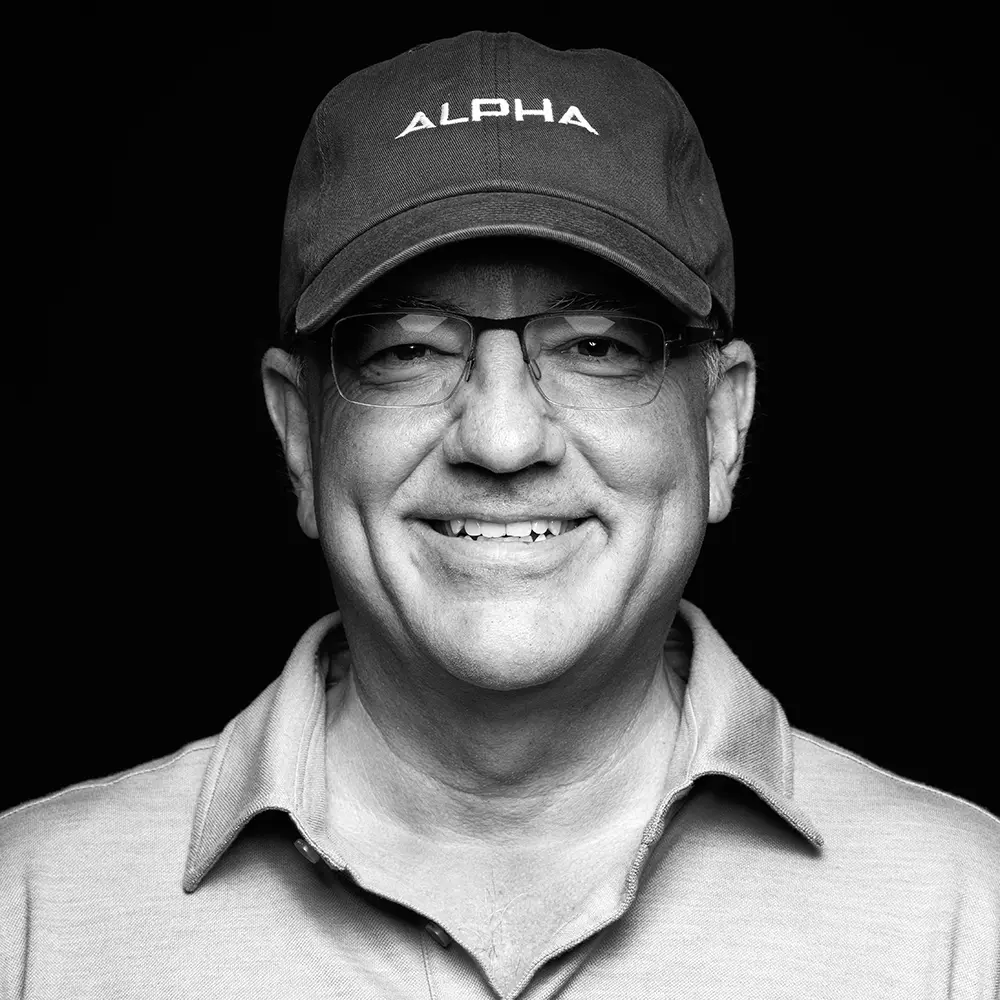
About this Guest
Joe Liemandt
Joe Liemandt is a technology entrepreneur and the principal of Alpha School.
This transcript is currently under human review and may contain errors. The fully reviewed version will be posted as soon as it is available.
Joe Liemandt:
We don't do the basics. We need to nail the basics, just like in sports. My famous example I always use is if you lose the ball 20% of the time going down the court, the coach is not saying, "Let's work on the dunks and the alley-oops," or even the layups. They're like, "Ball handling. We're going to get ball handling. 20% isn't acceptable. 15% isn't acceptable."
Andrew Huberman:
Mm-hmm.
Joe Liemandt:
You can't be 85, 80% accurate. In America, we're like, "You getting a B, man, move on. We're moving on to dunks. You just finished fourth grade at 80%, let's get you into that fifth-grade stuff." And the answer is no, no, because then all those problems compound.
Andrew Huberman:
Welcome to the Huberman Lab Podcast, where we discuss science and science-based tools for everyday life. I'm Andrew Huberman, and I'm a professor of neurobiology and ophthalmology at Stanford School of Medicine. My guest today is Joe Lemont, the principal of Alpha School, which is a novel approach to education that strives to ensure that every child reaches the frontier of their knowledge and skill potential. Kids in Alpha School spend just two hours a day, two hours a day, learning what they need to in order to ensure no gaps in their cognitive knowledge. Then they spend the rest of their day learning to and actually starting their own businesses, learning financial skills as well as communication and interpersonal skills. The goal of Alpha School is to tailor learning to the unique needs of the child. But unlike so many other non-traditional forms of learning in schools, they don't let the child pick what is easiest for them, nor force all kids to learn at the same rate across all subjects. So it's a truly unique approach. The data on Alpha School kids are astounding. K through 12 students from Alpha School test in the top 1% of students in the US, and their average SAT scores graduating from high school is a nearly perfect 1530. In addition, while still in school, many of the Alpha students start their own businesses that are highly successful, meaning they generate hundreds of thousands or even millions of dollars. During today's conversation, you're not just going to hear about how Alpha students do all this incredible stuff. It's really about how the ways in which they learn will allow you, adult or young, to learn better, and why filling in gaps in our basic knowledge that we all have at every age is both possible and can be done quickly with the correct lesson plans and understanding of neuroplasticity, the brain's ability to rewire itself. So some of today's discussion focuses on that as well. You'll also learn that no, Alpha School is not just for wealthy kids. They are changing education for students of all backgrounds and income levels. And Joe Lemont and his colleagues are striving to teach educators the real data on how kids and adults learn best in ways that serve the student both in and after they leave school. I have to say, as a university professor who lives in the land of education, our conversation today completely changed how I think about learning in and out of the classroom, and it also provides tools that I now use to learn more effectively. And I'm confident that it will do the same for you. Before we begin, I'd like to emphasize that this podcast is separate from my teaching and research roles at Stanford. It is, however, part of my desire and effort to bring zero cost to consumer information about science and science-related tools to the general public. In keeping with that theme, today's episode does include sponsors. And now for my discussion with Joe Lemont. Joe Lemont, welcome.
Joe Liemandt:
Thank you very much. Great to be here.
Andrew Huberman:
Tell us about learning and education 100 years ago, because that sounds like a long time ago, but it wasn't that long ago. And then we'll use that as a contrast point to where you're trying to take learning and education and schooling for young people now.
Joe Liemandt:
So 100 years ago, we were trying to say, how are we going to educate everybody? Universal access to education 200 years ago was not a thing. Every person on the planet did not have access to education. A hundred plus years ago, people said, "Let's start educating everybody." We're talking K through 12. So they started the industrialized model. Started over in Prussia, right, and then was imported, and it was very controversial, actually, if you look back, of you have a rural society, and you're saying, "Get off the farms and get into schools." And the best way to educate people back then was, let's put them in a room, let's teach them how to read and write, let's have a teacher in front of the classroom. And that became the model. And that today is actually one of the things that's the most universal in the world, is the education model. You can go to the richest school district down the street here or the richest private school, and there's a teacher in front of a classroom of kids. And you can go to the poorest school district in India, and the building's not as nice, but there's a teacher in front of a classroom. We have universal access. What we are trying to do is bring universal learning. So there's a vast disparity in how much kids learn during that 12 years, that while they may have access to it, learning is very different. And so what we think is because of new things that have become available and things like AI and technology, for the first time in 50 and 100 years, you can revisit and change education. How we educate kids is going to be radically different in five years, in 10 years, than the last 50 and 100 years. And that's what we're out doing, building that model, building the set of schools around it, and then figuring out how we scale it and get it out to a billion kids so that everybody can have access to it.
Andrew Huberman:
It seems to me that we think in terms of milestones. Even before a child is born, if they can have an ultrasound, the parents are-
Joe Liemandt:
Yeah
Andrew Huberman:
... looking, are they meeting milestones?
Joe Liemandt:
Yeah.
Andrew Huberman:
And then we think of biological milestones and cognitive milestones. How much of the current schooling system is based on milestones that make really good sense? Like, by time you finish a certain grade, you're supposed to be able to read-
Joe Liemandt:
Yeah
Andrew Huberman:
... you're supposed to be able to write. What we decide is a critical milestone can easily change. But I'm guessing there are still some milestones that are cemented in that don't make any sense any longer.
Joe Liemandt:
Yeah. There's a whole set of milestones that people have, especially the ones parents understand and grandparents is, whatever you went through Are the milestones that you understand. Kids should read by third grade. It used to be you memorized your multiplication tables by third grade. You'd learn cursive before that. And the standard, the books. You would read books. There's a book list in high school, and you would read it, and you'd understand the content that was in that books. And what has happened, and I think where a lot of the unhappiness in education is, is those standards have gone down. They've pulled those standards away around the academics for a lot of different reasons. And so when you think about development, there's behavioral standards. How should I behave? How much should I know? And then what are the non-academic skills, whether it's vocational or life skills that you need to have, financial literacy, that have changed from what were true 30 years ago or 50 years ago to where they are today, and there's generally a view that there's broad unhappiness. That whether it's the standard or the student's achievement of that standard, and are they actually even hitting the standards, that's causing this big demand for we need to change our education system. And that's sort of half of it. The other half is people are looking at things like AI and saying, "The world is really different." The world that's coming is really different, and it does put into parents' heads, the educational system I went through isn't going to get my kids ready for the future one. We're building schools everywhere and doing education, so I talk to lots of parents. When I have a 12th grade parent talking to me, they're at the finish line. They're just trying to get the kid into-- get them out, and so they're just like, "Whatever. Just, I'm done." But when you talk to the kindergarten parents, they are forecasting forward 12 years, and they sit there and say, "There's no way the current system is going to get my kid ready." They have the high demands to say, "We need to do something different."
Andrew Huberman:
I'd like to take a quick break to acknowledge one of our sponsors, David. David makes protein bars unlike any other. Their newest bar, the Bronze Bar, has 20 grams of protein, only 150 calories, and zero grams of sugar. I have to say, these are the best-tasting protein bars I've ever had, and I've tried a lot of protein bars over the years. These new David bars have a marshmallow base, and they're covered in chocolate coating, and they're absolutely incredible. I, of course, eat regular whole foods. I eat meat, chicken, fish, eggs, fruits, vegetables, et cetera. But I also make it a point to eat one or two David bars per day as a snack, which makes it easy to hit my protein goal of one gram of protein per pound of body weight. And that allows me to take in the protein I need without consuming excess calories. I love all the David Bronze Bar flavors, including Cookie Dough, Caramel Chocolate, Double Chocolate, Peanut Butter Chocolate. They all actually taste like candy bars. Again, they're amazing. But again, they have no sugar, and they have 20 grams of protein with just 150 calories. If you'd like to try David, you can go to davidprotein.com/huberman. Right now, David is offering a deal where if you buy four cartons, you get the fifth carton for free. Today's episode is also brought to us by Lingo. Lingo is an everyday wearable that tracks your glucose 24/7. Glucose drives a lot of key processes that support energy, body composition, and long-term health. When glucose is constantly spiking and crashing, that's where we can start to see metabolic dysfunction. And over time, that can even progress to prediabetes. Right now, about 115 million adults in the US have prediabetes. Most don't know it, and a higher percentage of men have it than women do. Often, there aren't clear symptoms of prediabetes early on, so people don't tend to look into it. But the fact is that metabolic health is shaping how your body functions every day, whether you feel it or not. Tracking your glucose with Lingo can help you see how food, activity, and stress impact your glucose throughout the day. I personally have used Lingo, and it's been an invaluable tool for improving my metabolic health. If you would like to try Lingo, Huberman Lab listeners in the US and UK can save 10% on a four-week plan. Just visit hellolingo.com/huberman for more information. Terms and conditions apply. Again, that's hellolingo.com/huberman. I hear some very polarized views out there. One, that you can get all the education you need off YouTube. I don't believe that's true. I think how one forages through technology, especially publicly available technology, is critical. Because you can ruin your life or you can potentially build some of your life out by watching YouTube videos, but that's a wide divergence, and so I don't believe that statement. The other thing that I'd like to just set as a context for our discussion is I think there are very divergent views on the notion of doing what you love versus doing things that are painful to learn.
Joe Liemandt:
Yeah.
Andrew Huberman:
So in terms of milestones and standards, the idea when I was growing up was that you have to have at least a certain level of aptitude in something if you want to progress forward. But you might be much more musical than you are whatever-
Joe Liemandt:
Mm-hmm
Andrew Huberman:
... or much more oriented towards the engineering, science, and math fields or towards something else, and that's okay, but everyone had to be above the bar-
Joe Liemandt:
Yeah
Andrew Huberman:
... in order to move forward. I think nowadays, because of this battle, basically-
Joe Liemandt:
Yeah
Andrew Huberman:
... between whether we're coddling kids too much or whether we're pushing them too much, I feel like the whole landscape is a bit of a mess. So what is Alpha School's philosophy with respect to what kids like to do-
Joe Liemandt:
Yeah
Andrew Huberman:
... versus what they absolutely should do independent of whether or not they like it?
Joe Liemandt:
Yeah. Great.
Andrew Huberman:
And I came from the latter category-
Joe Liemandt:
It works well
Andrew Huberman:
... where it's like you have to learn stuff because you have to learn it.
Joe Liemandt:
Yeah.
Andrew Huberman:
And then you find the things you love.
Joe Liemandt:
Yeah.
Andrew Huberman:
And then you eventually try and create a life.
Joe Liemandt:
Right.
Andrew Huberman:
You know?
Joe Liemandt:
These are great. So both of them, we have strong views on all of these. The first one of everything's available on YouTube or you can get MIT online. Why doesn't everybody-
Andrew Huberman:
Or Khan Academy.
Joe Liemandt:
Yeah, Khan Academy.
Andrew Huberman:
Yeah.
Joe Liemandt:
Why doesn't everybody have an MIT degree? The open courseware is available. Libraries have been here forever. Every textbook, you can just go to a library and read. School Is much more than just that. And I believe, and just to be really clear, 10 years from now, 20 years from now, 90% of parents are going to drop their kids off at a building, and in that building are going to be other kids and adults. That the way school, that part of school-- School's socialization, right? It's much more than, "I sat and watched a YouTube video." It's motivation. The material's available, the motivation isn't, right? Or the structure isn't. And schools provide a lot of that. And so that's when we look at it. We believe motivation is 90% of learning these days. Now, our view back to the day, if we do our job right, the six or seven hours your kid's in that building is going to be radically different and 10 times better than what we went through. Then the second part around standards and love school, do what you love. Wait, it's a grind. So this is a personal story for me. So I didn't start Alpha. I'm the principal, going on my fifth year. It was started by Brian and McKenzie 12 years ago. And parents want to educate their kids the way they were, even if they didn't like it that much. I went to Catholic school. I have two daughters, they were in Catholic school. McKenzie starts this school, and she's like, "You got to come to my new school." And I looked at it and I'm like, "This is a totally weird, janky school. No way."
Andrew Huberman:
What did you see that led you to-
Joe Liemandt:
"Oh, there's no teacher in front of a classroom." I'm like, "This is totally crazy," right? And, "Oh, they're going to learn on some apps?" The girls reciting their vocabulary words while they were doing handstands. And I'm like, I grew up a standard school system. It was weird. And it took her two years, actually, of trying to convince me. I actually saw one of mine struggling in standard school. And then what happened was St. Gabriel got out at the end of May, and Alpha was still in session, and my kids were going to go to summer camp. And McKenzie convinced my daughter, she's like, "Well, why don't you come to Alpha for a week before you go to summer camp? My daughters are there, it'll be really fun." I'm like, "You want to go to school in the middle of the summer?" "Sure." So they went for a week, and they came back at the end of the week, and they're like, "Dad, we don't want to go to summer camp. We want to go back to Alpha." And I thought that was the craziest thing I'd ever heard in the world, that somebody wanted to go to school instead of camp. That was an indicator to me where I'm like, "They have something here." And the kids are in second and fourth grade. I'm like, "Let's try it out." And that was 10 years ago, and it really worked out for us. And we can get to that later. But when I put my daughters in, I talked to Brian, and I was like, "What do I not understand as a parent?" He said, "There's two things. First, your kids must love school." And I was like, "Oh, that's not true at all. It's like spinach. You just grind it, right? That's what it's like. It's spinach, you grind it. I mean, sometimes it's okay, but you grind your way through it." He's like, "Nope. And someday you'll figure this out, and you'll see with your daughters that kids must love school." I was like, "Anything else?" He's like, "Yes. Your kids have so much more potential than you expect, than what you think." And I was like, "Oh, that's not true." I'm sort of like a tiger dad. I think my kids are going to do a ton of stuff. And I have really high expectations. And he's like, "They're going to blow you away." And that's sort of the dichotomy, I think, around Alpha that really confuses people, is kids love school. We make three commitments to the kids, and the first one is you will love school. And 90-some percent of our students, we survey them, right? Say, "I love school." We actually, in the last year or so, have started asking a follow-up question, which is, would you rather go to school or go on vacation? And depending on the vacation, the session, and how good our workshops were, between 40% and 60% of kids said, "I'd rather go to school than vacation."
Andrew Huberman:
Wow.
Joe Liemandt:
As a standard, like loving school.
Andrew Huberman:
Wow.
Joe Liemandt:
And when you engage kids and you think, "I'm going to put them in this system for 12 years," as a parent, you want them to love it. And so there's that part. But now let's talk about doing hard things. Kids want to do hard things. Kids have to do hard things. Which is, when I'm talking to parents who are worried because we have such high achievement, we're the number one academic school in the country. Every grade level is top 1% in every subject, right? My freshman honors SAT score, freshmen are at 1400, which is better than almost every senior class in the country.
Andrew Huberman:
Your freshmen are at 1400 on the SAT?
Joe Liemandt:
Honors class. My honors track in freshmen is 1400 SAT. And so we have great academics, and parents are like, "Wait, is this like this high stress, high standard?" And we explain to them, which is the key to your child's happiness is high standards. And I can't run a school that they love more than vacation if I have low standards. And it is that paradox, right, that tension, that is the magic of Alpha School, and it's the magic that parents need to understand, because that's what engages them, is they want to do things. Kids think they're awesome, and they are awesome, but they need to be put in an environment where they get to go do hard things with their friends. And with that, they do the grind. They do hard things. In America, we have a very different view. We have sort of how you treat academics and how you treat sports. And if we took the sports ethos and the athletic ethos in America, and we applied it to academics, we would fix every academic problem in this country. For example, Westlake High School football team in Austin, where I am, going to win the state championship, right? They're great. Every parent's like, "I want my kid to be on that team because it's going to be the hardest thing they've ever done." Because they're going to have to work harder. It's going to be crazy, but it's going to be the most fun thing they ever do, and they're going to remember it the rest of their life. And we believe that about sports. You can make education the same way, and that's what we're building to do that. So we believe on both, which is high standards, right, is what leads to loving school and happiness. I know you had Dr. Yeager on.
Andrew Huberman:
Mm-hmm. Yeah.
Joe Liemandt:
So Dr. Yeager was actually, his book, "10 to 25: The Science of Motivating Kids," is all about high standards and high support. And it is that combination that you want from a school, and that's what we built. He created our guide training. All the adults in our buildings follow that High Standards, High Support, his mentor mindset program. And most parents are one of two things. They're either high standards, low support. "I'm just going to throw my kid in and expect him to do great." And that's not good. Or they're low standards, high support. "I never want my kid to have stress." That's bad, too. And the real answer is you do both. And schools should do this. Schools should have high standards and high support. And back to my athletic analogies, great coaches do that. There's thousands of movies in America of our sports team is in last place, and a coach comes in and he's like, "I know we're in last place, but we're going to win the state championship next year." The whole movie is about how he turns around the team by having high standards and teamwork and hard work, and they do it, and then they win. Where are those on academics? I think there's three. We know that's how you develop kids. Child development experts will sit and explain the key to developing a child is that they struggle and fail on their road to success, supported by a caring adult. And you just want to run that loop. If you talk to most parents, they're like, "My kid learns the valuable life skills in after-school sports." Parents are like, "Yes, they're going to struggle. They're going to fail. They're going to lose the game, whatever's going to happen." But it's going to be on the road to success. And that coach, I pick the coach because I know he cares about my kid achieving it, and he's going to be there to support him. And that's what you should just do in school for the other seven hours, is have those same loops. I will add one thing that happens, especially when you start with kindergarten, kids struggle and fail, sometimes cry on their road to success, supported by a caring adult. And it's really hard for parents as soon as the kid cries, obviously, and that struggle part, and that's the linchpin for parents being like, "I don't want the struggle." Because you hear this, you're like, "Well, why don't you just... Okay, that sounds all logical. Why don't you do it?" And you're like, well, when you're a parent and your kid's crying, you want to go protect them. You want to make sure they're safe. And that's why you have to make sure they're in an environment where you think they're safe, where the adult in charge is making sure it's not low standards and they're leaving them hanging out. At Alpha, we have great workshops where 85% of Alpha parents in the last year said, "I saw my kid do something that I literally thought was impossible for their age." Back to high standards. And one of them is our kindergartners climb a 40-foot rock wall at our San Francisco campus. They rode their bikes five miles, learned how to ride a bike, rode it five miles across the Golden Gate Bridge without stopping. And then we have a, we call them Alpha tests for these life skills. Ten weeks into school, there's the kindergartners, and they're climbing up. And sometimes they do get halfway, and they are stuck, and they sit there, and they're worried, and the parents want to go rescue them. And we always tell them, "Just watch, because this is what the school's about." And their guide is down at the bottom of the wall and coaching them up. And then eventually, and maybe they have to wait there, and maybe they even whimper a little while they're struggling. They then, "I can do it," and they climb to the end, supported by their Alpha guide at the bottom. And when they come down after achieving it, they ring the bell, they come down. That kid is beaming, and their parents are beaming. And that's why we have such fanatical love of school and why we have such evangelism. And why everybody talks about Alpha is because the parents go through that experience, and they see their kids thrive, and they see them thrive via these things that are hard. And that's the environment we need to build for kids, because that is how you develop kids. When you think of old societies, every society had rites of passage.
Andrew Huberman:
Mm-hmm.
Joe Liemandt:
They were hard. And it's what is the struggle and fail on your road to success supported by an adult? That's what the educational system needs to be and should be. And we do it a lot in sports and not a lot on education.
Andrew Huberman:
What you said is so rich with ideas. Let me organize them the following way. I've heard you say before, and you sort of touched on a bit a moment ago, that most of the way that we teach kids how to navigate life in the United States-
Joe Liemandt:
Yeah
Andrew Huberman:
... is in sports, not in academics.
Joe Liemandt:
Yeah.
Andrew Huberman:
And I completely agree. And when I first heard you say that in a prior conversation with Patrick O'Shaughnessy, I thought, "Yes, absolutely." And the contrast with academics is really striking because I think there's this idea that kids are, by the time they're in high school, they're going to be good at certain things and other things not so much. And the words "Do the best you can" sounds like support, sounds like high standards, but it kind of avoids both. So maybe we could just drill a little more specifically into what support really looks like at the level of parenting and maybe peers as well. So I can imagine high standards could, let's take a zero to 10 scale, arbitrary units, and say zero is like you'll never be anything. Everyone agrees that it's not a good model. 10 would be you can do and become anything you want. We believe this in America, and there are examples to support the 10 model. It's not totally true. It's not totally true. I went to a very competitive public high school, and there were some phenoms in my class at sports. A pair of twins, Joe and John Cannon. People can look them up. One became a goalie for the San Jose Quakes. The other one had a 100-mile-plus fastball in high school. I forget who he played for. Maybe it was the Mariners or whoever. But anyway, he was a pro pitcher. Their younger brother, Colt Cannon, picked up a skateboard. Eight months later, he had a pro model, or he was on a team, then he had a pro model. Maybe it wasn't eight months to that. But there's something going on in that family. Okay? And they were good at academics.
Joe Liemandt:
Yeah.
Andrew Huberman:
But none of them became, dare I say, professors at Stanford, but they probably could have, but we don't know. So we have this model that, like in sports, some genetics plays a role.
Joe Liemandt:
Yeah.
Andrew Huberman:
Family lines play a role. We're kind of okay with that conversation now.
Joe Liemandt:
Yeah.
Andrew Huberman:
But you can become anything.
Joe Liemandt:
Yeah.
Andrew Huberman:
That's the highest standard. Somewhere in between is probably what you'll tell me is most effective, because we have to put reality into the picture sometimes.
Joe Liemandt:
Yeah.
Andrew Huberman:
But the support thing is the one that's completely opaque to me. Because we know what the zeroes are, right?
Joe Liemandt:
Yeah.
Andrew Huberman:
Figure it out on your own. Make yourself breakfast. Get yourself to school. That's not support, right? And then the other one is, I'm going to try and get in there and do everything for you. I'm going to climb the rock for you. I'm going to do your homework for you, and we know that's not good. We haven't really defined clearly what real, truly useful support is-
Joe Liemandt:
Yeah
Andrew Huberman:
... and standardized that.
Joe Liemandt:
Great.
Andrew Huberman:
So maybe you could enrich our thinking about what it might look like or what you think it looks like.
Joe Liemandt:
Great. And I think that's a great framework. Let's do the athletic side, and then we'll throw it over, because that's one of the things that's changed. How we provide support or actually the training, i.e. educating the instruction, is what's dramatically changed, which lets us get athletic level in academics. So in athletics, right, we do know. We know there are physical constraints. You have your story. My daughter in middle school was like, "I'm going to be the world's best volleyball player. I'm going to start for Stanford, and I'm going to be there." And it motivated her. It drove her. Every afternoon, she's practicing. When she became a freshman in high school, she's like, "I'm not tall enough. I'm just physically not tall enough. I can't play my position. Four years from now, there's no way Stanford's going to let me in on that dimension." And so while she had gotten very good, to sort of the limit of her frontier, and so we believe there are physical limitations that map your frontier. But in athletics, we actually know how to get you to the frontier. That's the delta, and that's why we do so much via athletics in America, because we have a training system that gets kids there. We don't say, "Hey, do your best. I hope you become a good basketball player or golfer." You don't watch YouTube videos to be like, "Oh, I guess I'm the world's best golfer now." You have coaches, and we have training that is going to get you there. And we know how to deliver it, right? We know how to instruct it, right? You wouldn't have your kid go on a sports team where they're like, "Yeah, we do inquiry training here where we don't teach you. We just let you productively struggle and figure it out yourself." Which is something we do a lot in schools. That's not an effective way to teach somebody, right, a sport. You're like, "Show me how to block. Give me the step-by-step. Give me the instruction you need so that I can do this better, so I play this position perfectly." Nick Saban is like, "Do what I say. Play your position." On academics, the difference was we have a teacher in front of a classroom, and the teacher in front of the classroom has to just give the median instruction to everybody. Imagine all the different players on your football team are all getting exactly the same instruction. You're like, "Well, the quarterback needs something different than the wide receiver." But the teacher just sits there and has to give everybody, 25, 30, however many it is, the exact same instruction. And that's what's different now. If you look at why do we have access to education but not universal learning? We have universal access but not universal learning. It's because kids need individualized instruction.
Andrew Huberman:
Right down to the true individual, because at least in my high school, we had honors track for certain things.
Joe Liemandt:
Yeah.
Andrew Huberman:
So it was tiered a little bit-
Joe Liemandt:
Yeah
Andrew Huberman:
... that if people were really, really proficient at something-
Joe Liemandt:
Yeah
Andrew Huberman:
... you'd get into honors English or honors math, and you would just kind of be among kids that were better performing, so the mean shifted.
Joe Liemandt:
Yeah.
Andrew Huberman:
Basically.
Joe Liemandt:
So individualized tutoring. Think back, Plato and Socrates, Aristotle, Alexander the Great. Individualized tutoring is the best model. A one-on-one model is the best model. A mentorship model, an apprentice mentor. That is the best model. It's not cost-effective, which is why 100 years ago, when you have to get it to everybody, you're like, "Well, I can't give everybody an individualized one." And so 30 to one was what societies could afford. The number one thing parents measure schools on is class size, and smaller is better because you're trying to get to one. And so 20 to one is better than 30 to one. Ten to one's better than 20 to one. Five to one's better than 10, and one to one's the best.
Andrew Huberman:
In terms of homeschooling, because I know there's a lot of interest in that now, but not everyone can afford it.
Joe Liemandt:
Yeah.
Andrew Huberman:
What do the data say about the outcomes for homeschooling? Do those kids do well?
Joe Liemandt:
Yeah.
Andrew Huberman:
And I guess on what standards?
Joe Liemandt:
Homeschooling's totally bimodal.
Andrew Huberman:
Okay.
Joe Liemandt:
Which is, are they homeschooling them for high standards or not? And there's a lot of homeschoolers who are like, "I don't like standardized tests. I don't like the standardized curriculum. I reject that whole system." And so those people do very poorly on anything like that. The level of academics that those students know is very low because the parents have basically abandoned that and said, "I care all about the life skills." For parents who really care about academics, those kids crush it. You have ex-teachers homeschooling their kids in a one-on-one environment, and they can do it dramatically better. Now, there's still value even homeschooling socialization and because we have these high standards and the life skills at our schools, we actually have a bunch of homeschoolers who come who say, "Wow, this is the schooling system I was looking for because I get both the high standards on the academic side, but then all the afternoons of these life skills that I thought I'd only get via homeschool." You want to get to one-on-one, and that's the magic. And so let's go on this because we haven't talked about the academic side and what is the breakthrough that allows us to change education from 50 and 100 years ago. So learning science, there's a whole field of learning science, right? You can cognitive load theory, cognitive science. There's a famous paper from the '80s, Bloom's 2 Sigma program, where he's like, "If you give An individual tutor to mastery level. Kids can learn at two sigma, right? Two sigma, it is top 2%. We could get everybody. So when you talk about the frontier, he's basically claiming you can get everybody to the top 2% performance today.
Andrew Huberman:
Assuming high levels of motivation.
Joe Liemandt:
Correct. Mastery is actually the part everybody forgets about on that. If you have a tutor that's not mastery-based, you won't get to the top 2%. One sigma came from the tutor, one sigma comes from mastery. Which once again, we'll talk about, we all accept mastery in athletics, but we reject it, explicitly reject it in education. And you actually need both. You need individualized instruction at a mastery level to get that performance. And now with AI tutors at cost effectively, you can give every kid perfectly tailored lessons at their level for them at a mastery level. And that is the magic that then allows kids to learn 10 times faster. In our schools, when we talk about we're the best academic performing school, we're top 1%. We do it in two hours a day. Our average student does not sit in class for six and do homework. They sit at an AI app and they spend two hours a day. The average kid spent 121 minutes last year in the apps and learned more than two X what they would've in sitting in class for six and doing homework. So when you just look at those standards, it's depending on the class and stuff between five and 10X normal speed. Because you have six hours a day in homework versus two, and you're performing at a level that's exceeding them, how much the average student learns by two X.
Andrew Huberman:
Could you enrich the picture in our minds a bit of this kid for 121 minutes? Just the top contour of what sorts of things they're doing. Is it a human face that's teaching them or is it text prompts? What does it look like?
Joe Liemandt:
So the first, just to be really clear on this, when people think AI, chatbots.
Andrew Huberman:
Mm-hmm.
Joe Liemandt:
It's not chatbots. If you take a chatbot and put it into a standard school, 90% of the kids use it to cheat. Doesn't matter what grade level you're at. I can't remember which Ivy League professor gave a final that he made in person, right? He made an in-person final, and literally everybody except two people failed the exam. They're just ChatGPT'ing their papers up. They're not reading books. They're getting ChatGPT summaries of them. And there's a whole push to ban them and things like this. And while we're at AI school, used incorrectly just like any technology, they can be bad. Here's how you want to think about it is what you know is the basis of what you can learn. And so being able to have a foundation and then building on that foundation is critical. And so if I am in material that's too hard and it's just too hard for me, you can give it to me all day long and I'm not going to learn it. Back in my world or your world, if you gave me an MCAT, I don't know the words on the page. You can tell me to have grit or growth mindset, or you can tell me whatever you want. I'm not going to pass that test. And you need to roll me back to freshman bio and say, "That's where you are," and then build me up from there to be able to do that. And that's the problem in our current education system today, is we are taking eighth graders, and we are delivering them eighth-grade content because that's what an eighth-grade teacher does. By law, they need to stand up and deliver the eighth-grade content. If you look at the stats, we have people who need to be in seventh grade in that classroom, sixth grade, fifth grade. Because of COVID, you even have some who need to be in fourth and third grade because of all that learning loss that happened. They never learned it, right? We have kids who didn't learn how to read in third and fourth grade.
Andrew Huberman:
Oh my goodness.
Joe Liemandt:
And so now we're wondering why all the curves are going down, and it's like, well, because they're in eighth grade and they're being told eighth-grade content, and no one ever taught them how to read. Or other things when you talk about lower standards. They took away memorizing your multiplication tables and science of reading, teaching phonics. They took away some of the basics that as you get into higher level grades, as a kid, it just kills you. Right?
Andrew Huberman:
What was the rationale behind doing that?
Joe Liemandt:
That it gets into a lot of debate around why that happened.
Andrew Huberman:
Mm-hmm.
Joe Liemandt:
I don't think there's a clear answer. I believe at the end of it, they didn't realize how important it was. Like the science of learning. If you talk to your average teacher and you look at what's taught in schools of education, cognitive load theory, right, and cognitive science and how all this works is not a main part of what the curriculum is. And so these teachers don't know. We just had our staff days before school starts, so I have hundreds of teachers. These are the best teachers in the world, right? We're the employer of choice for teachers around the country. And I was like, "How many of you guys learn direct instruction?" Which is one of these concepts. 5% raised their hand. There's this Project Follow Through, a big project in the '70s that was the largest educational study ever about effective ways to teach kids. I was like, "How many of you guys read Project Follow Through when you were getting your master's?" And none.
Andrew Huberman:
Wow.
Joe Liemandt:
And so she was a big teacher, in Houston School District. And she came, and she's an Alpha Guide now. And I saw a Twitter post after the staff day. She's like, "I learned more in listening to Joe's six-hour presentation," which I have the world's best learning science team who helps educate me as well. "I learned more in six hours of listening to Joe about how kids learn than I did getting my master's or even my PhD." And just that curriculum, we don't have that knowledge, and we need to. We need to fix that. It's not there.
Andrew Huberman:
Is there not a textbook for teachers? If somebody wants to become a neuroscientist or even just get a neuroscience degree, they read the book "Principles of Neurobiology" by Dachun Luo or "Principles of Neuroscience," which used to be by Kandel, Jessell, and Schwartz. I think there's someone else on there. But everyone gets those books. You learn electrophysiology from Bernard Hill. You get the biochemistry book from Stryer. These are the books used everywhere. So that it doesn't matter if you're in a state university and ... wherever, or you're at Stanford, pretty much everyone is educated at the front end from the same textbooks.
Joe Liemandt:
Correct.
Andrew Huberman:
So you can go to a big international meeting and everyone understands more or less the action potential.
Joe Liemandt:
Yeah. Education is not that. So our educational system is not fact-based, which seems crazy, but there's a dean of a school of education for one of the best schools in the country who, when he was talking about the status of facts in education, put up a picture of Galileo's trial, where he's like, "This is a religious war. This isn't a fact-based trial about these things." There's a lot of evidence behind it. Take the UC system.
Andrew Huberman:
Mm-hmm.
Joe Liemandt:
There's a huge debate on whether the UC schools should use standardized tests or not, and do standardized tests help, and are they good things-
Andrew Huberman:
To get in or to progress through?
Joe Liemandt:
Yeah. To get in.
Andrew Huberman:
Yeah.
Joe Liemandt:
Well, there's whole things of should kids have a standardized test to get out of high school? To graduate high school, should you be able to pass a test or not? And that's a debate. That's not a fact. Now, when you're letting someone into your university, there's a view of should we require standardized tests? 2,000 professors, I think, I don't know exactly what it was, but 2,000 professors are like, "Yeah, we should use these." But the board of regents voted, "Yeah, no, we're not going to take them." Whatever decisions are being made-
Andrew Huberman:
Mm-hmm
Joe Liemandt:
... around this stuff is not a fact-based decision. It's an opinion. It's I care about different goals. I'm trying to optimize on something besides academics. The goal of a school is not academics. When you look in education, it's a really complicated thing. And right, what is the purpose of a school? What is developing a child? Does academics matter? So when you think of these basic things like, well, the kid was struggling on his multiplication tables, and I was worried about his mental health, so I just told him, "Don't worry about it." And you're like, well, that's really going to hurt him to learn algebra. He's not going to do well at algebra. It's like the homeschoolers, like, "I don't care about academics," or there are parents at schools. And one of the things I've learned in education, especially in being principal of school, is, first of all, I have massive empathy for everybody running these schools. So, I was watching in Austin, we're closing a bunch of schools. A lot of public schools are closing, and it's being closed because it's not hitting academic standards. Five years in a row it's failed. It just literally is not teaching these kids. These are eighth graders who can't read at a third-grade level. And so the state and the school district's like, "We need to close the school and put the kids in a school that teaches them." And there's a mom who's just furious, and she's at the meeting, and she's like, "I don't care about that. What I care about is my older daughter in seventh grade had teacher ABC, had this great teacher who changed her life, and I want my younger child to have that same teacher. And if it means they're not good at math, whatever." And the rules of the government, the government school system is, we are funding this to educate them on academics. Parents' demands are very different. If you're the head of the school, your parents are saying, "Well, I don't care about that." Now, I believe you can do better and do it all-
Andrew Huberman:
Mm-hmm
Joe Liemandt:
... and those kind of things, but fundamentally, why is the regents at UC saying, "Yeah, no, we're not going to take standardized tests." 2,000 professors say it. There's also a bunch of professors who say, "Don't do it." And you get into all these debates on what the role of school is, and then that's in the air. And then even the learning science, inquiry learning versus direct instruction is a huge religious war around education on which is better. And so those kind of things are why it's not obvious. It's also part of being new into the space as coming in. Part of my magic is, and part of why Alpha's getting all this hype and talk is we're teaching kids five to 10 times faster. There is a set of the learning science that hasn't-
Andrew Huberman:
Yeah, the results are there.
Joe Liemandt:
The results are there. And there's a set of learning science that we're proving that hasn't been able to be implemented before.
Andrew Huberman:
Mm-hmm.
Joe Liemandt:
That people are like, "Wow, if that's really true." And so why all these great learning scientists are coming and working with us is they're looking at this data, and they're like, "Holy cow, this data is breakthrough level that we couldn't do before."
Andrew Huberman:
Mm-hmm. Yeah. I'd like to take a quick break and acknowledge our sponsor, AG1. AG1 just launched their newest formulation called AG1 Pro, and right now you can get an extra 20% off your first subscription. AG1 takes the clinically backed AG1 formula, which is a blend of vitamins, minerals, probiotics, and adaptogens, and adds three important new ingredients, creatine monohydrate, calcium HMB, and zinc carnosine. It has five grams of creatine monohydrate to support muscle strength and performance, along with brain health, calcium HMB to support muscle recovery and reduce muscle breakdown, and zinc carnosine to support and improve the lining of your gut. Some of these ingredients I personally was already taking separate from the AG1 formula, so it's great to see all three of them now in the new AG1 Pro. As you may know, I've been taking AG1 every single day for about 14 years now. That means I discovered it and started taking it daily long before I even knew what a podcast was. I continue to take it and back it here on the podcast because it is an excellent formula, and it's now even better with the AG1 Pro formula. For a limited time, you can get an extra 20% off your first subscription to AG1 Pro by going to drinkag1.com/huberman and using the code Back2Routine. So that's with a numeral two, Back, numeral two, Routine. Just go to drinkag1.com/huberman. Today's episode is also brought to us by Helix Sleep. Helix Sleep makes mattresses and pillows that are customized to your unique sleep needs. Now, I've spoken many times before on this and on other podcasts about the fact that getting a great night's sleep is the foundation of mental health, physical health, and performance. When we aren't getting great sleep on a consistent basis, everything suffers. And when we are sleeping well and enough, our mental health, physical health, and performance in all endeavors improve markedly. Now, the mattress you sleep on makes a huge difference in the quality of sleep that you get each night. How soft it is or how firm it is all play into your comfort and need to be tailored to your unique sleep needs. If you go to the Helix website, you can take a brief two-minute quiz, and it will ask you questions such as, "Do you sleep on your back, your side, or your stomach?" Maybe you know, maybe you don't. "Do you tend to run hot or cold during the night?" Things of that sort. You answer those questions, and Helix will match you to the ideal mattress for you. For me, that turned out to be the Dusk, D-U-S-K, mattress. I've been sleeping on a Dusk mattress for more than four years now, and it's been far and away the best sleep that I've ever had. If you'd like to try Helix, you can go to helixsleep.com/huberman, take that two-minute sleep quiz, and Helix will match you to a mattress that's customized for you. Right now, Helix is giving up to 27% off their entire site. Helix has also teamed up with TrueMed, which allows you to use your HSA, FSA dollars to shop Helix's award-winning mattresses. Again, that's helixsleep.com/huberman to get up to 27% off.
Joe Liemandt:
When you think about science and the development of sciences, chemistry, biology, physics, they had times which I'd call like education, where there's debates and it's Galileo's trial, right? It's unsure. Doctors are bloodletting and leeching people. This is really a good idea.
Andrew Huberman:
Phlegning.
Joe Liemandt:
Right. And you're just like, "Oh, this is really good."
Andrew Huberman:
Phrenology.
Joe Liemandt:
Right. No, that's the best guy, and he's saying to do it. The same way you're like, "Oh-"
Andrew Huberman:
There's a little bit of that going on now still.
Joe Liemandt:
It's unsettled.
Andrew Huberman:
Mm-hmm.
Joe Liemandt:
Now, in each of those, there was the invention of an instrument and a technology or an instrument that radically changed and inflected those sciences. So the microscope, right, the light microscope, the telescope, chemistry, the analytical balance. You didn't blow yourself up. Those inflected those sciences. And now, for the first time, with education, AI allows us to get, it allows that finer measurements. What those allowed was finer grain measurements, right?
Andrew Huberman:
Mm-hmm.
Joe Liemandt:
The microscope let me see cells, right? I'm like, "Oh, I'm starting to understand this, of how this works." AI, because it's on a one-to-one basis, is giving us a data loop that nobody in learning science, no one in education has ever had. And we have it. It's a closed loop. And that magical data loop is what's allowing us to get the five to ten times improvements in education because it's our microscope, it's our telescope. Now, it's not a chatbot. That's not getting you that. But if you generate a personalized lesson for every kid. Let's step back and say, what's a teacher in front of a classroom? The problem with a teacher in front of a classroom is it's so dirty, right? Your data, your effect size is driven by random classroom elements, not the learning science. So if I come up with a learning science idea and I give it to a teacher in front of a classroom, first of all, do they even teach it the way, right? Is the instruction done the right way? It's going to 30 people. Prereq matters. If I don't know algebra, don't give me a chemistry lesson. And do the students have the prerequisites needed? Second, are the students motivated? Are they spinning in their chair, not even paying attention? The effect size is dominated by all of that, not actually the learning science concept. And in our world, right, where we have kids super engaged for two hours in the app, I know when I give a lesson, I can measure their engagement. I can see if that lesson was good because I know how they did on the questions right afterward. I can then test them later because I'm getting spaced repetition. I'm getting recall later. I can say whether that really was transferred to long-term memory. And I can say, "Wow, that really works." So there's different theories of learning science. There's concepts of direct instruction, like should you have the kids struggle or should you just teach them directly?
Andrew Huberman:
How can you teach them directly without struggle? My understanding of neuroplasticity-
Joe Liemandt:
Yeah
Andrew Huberman:
... which is an area I come from-
Joe Liemandt:
Yeah
Andrew Huberman:
... but not specifically in the context of education, is that if a brain or a body can execute a particular thing, a movement or a cognitive process, a math problem, there is no reason for it to change. That the error signal is what actually drives the opportunity for change.
Joe Liemandt:
Mm-hmm.
Andrew Huberman:
And so without errors, there's no struggle, and therefore, without struggle, there's no learning. So I don't see a world where you can teach without a kid or an adult-
Joe Liemandt:
Sure
Andrew Huberman:
... feeling some degree of mild agitation. They might learn to think of that as excitement and curiosity.
Joe Liemandt:
Right.
Andrew Huberman:
But there's got to be some level of arousal, like I have to think, right? Got to be brought to the edge.
Joe Liemandt:
Engagement.
Andrew Huberman:
Yeah.
Joe Liemandt:
Yes. Engagement and attention, right?
Andrew Huberman:
Right.
Joe Liemandt:
You have to have engagement and attention, exactly what you're talking about, and errors definitely do matter.
Andrew Huberman:
Mm-hmm.
Joe Liemandt:
And we can talk about that side. But let's just take an example, which is I'll give you a math problem. No instruction. Figure it out. That's one way to try to learn. The better way to learn, the faster way to learn is to give them a worked example where you show them, and then you progressively remove the parts of the example where they're having to progressively go up, and then by the end, they can solve the problem with no scaffolding.
Andrew Huberman:
Mm-hmm.
Joe Liemandt:
It's a question of scaffolding. And that's a faster way to teach kids-
Andrew Huberman:
Mm-hmm
Joe Liemandt:
... than just saying, "Good luck."
Andrew Huberman:
So it's, in some sense, incremental learning with an example at the front end.
Joe Liemandt:
Exactly.
Andrew Huberman:
Okay.
Joe Liemandt:
And so that would be, a worked example is a good example. Then you have spaced repetition, which is everybody has a forgetting curve, and they're different by person. Back to that frontier curve.
Andrew Huberman:
Mm-hmm.
Joe Liemandt:
And so how often? And right before you're going to forget it, you want to remind them.
Andrew Huberman:
Mm-hmm.
Joe Liemandt:
And if you do that over a few times, then it gets your recall-
Andrew Huberman:
Mm-hmm
Joe Liemandt:
... from long-term memory. It will be there when you need it in the future. And so I have worked examples and then spaced repetition. Now- There's a debate, and there has been a debate about do you need some drill and kill, known as initial mastery, that you have to hit it with initial mastery the first time you're learning it, or can you not learn it to mastery, but because of spaced repetition over time, by the third or fourth time, you'll get the equivalent of mastery.
Andrew Huberman:
And you're defining mastery as like 95% or better?
Joe Liemandt:
Correct. And so that's been a debate around it. You can't measure that in a school. That's too fine-grained. We actually measured it over the last year, and our learning scientists actually, because of the papers that's published, is very much you don't need initial mastery. You can do it with spaced repetition. And what's interesting is at the end of the year, we were looking at our scores, and basically in eighth through 12th, we crushed it with just worked examples and spaced repetition. Because once you get into algebra, the multi-line problems, worked examples really matter. But in fourth through seventh, it wasn't as effective because the problems are easier. And so what you lose is you want more initial mastery because the worked examples aren't as important. And so like this year, when we saw the scores go down, we then just added initial mastery back to it. So you get the worked example, you get the initial mastery, and then spaced repetition. And that data set between those two things, that's a data set that doesn't exist out there.
Andrew Huberman:
And it seems to me that data set would be very valuable for schools outside of Alpha School, just to understand that for whatever it is that kids are generally taught in the curriculum of you said fourth to seventh-
Joe Liemandt:
Yeah
Andrew Huberman:
... that they need to get to 95% or better proficiency. English literature, calculus, things like that, if they're learning those things. You're saying if they don't need to get to mastery, where do they need to get to?
Joe Liemandt:
They need to get to mastery all the time. Initial mastery always matters. Just it always does.
Andrew Huberman:
Okay.
Joe Liemandt:
And so whether it's learning your vocabulary words, to that example, reading comprehension is a function of vocabulary. We can measure now. Today, the best way to do well on SAT English or to know English is just read lots of books.
Andrew Huberman:
And look up the words you don't understand.
Joe Liemandt:
And go-
Andrew Huberman:
And you'll kill the verbal. You'll just-
Joe Liemandt:
You'll kill it.
Andrew Huberman:
Like with the verbal GRE, it's always a little tricky with people in the sciences.
Joe Liemandt:
Yeah.
Andrew Huberman:
They're like, "I'm worried about the verbal GRE," and you just go, "Read a book, a good book, and underline every word you don't understand, look it up, and then have a vocabulary list."
Joe Liemandt:
Exactly.
Andrew Huberman:
I still have those vocabulary lists.
Joe Liemandt:
Totally.
Andrew Huberman:
And everyone ends up in the 90th plus percentile if they actually do that.
Joe Liemandt:
Correct.
Andrew Huberman:
Yeah.
Joe Liemandt:
That's why good schools who do well on the SAT have a great lit program. They have a great books program and, "Here, look at our book list. This is what all the kids read," because that's what's going to drive vocabulary, which drives those scores. It drives knowledge acquisition as well. In our apps, we can literally determine, okay, well, we can teach you the vocabulary words. We've actually learned the problem that you have is when you take a vocabulary word and it's just like a flashcard-like vocabulary word, you don't know its limits. What's the difference between happy and ecstatic? And if you just are flashcarding, you really can't tell the range. That's what you get from reading books. When you read 10,000 pages, you then are like, "Ah, I now understand the difference between ecstatic and happy." Where are the boundaries of the vocabulary words? And that's how you build a rich vocabulary and a rich reading comprehension and capability. That's one of the things like in our apps now, we can just be like, "Oh, we can give you vocabulary words and show you the limits and help educate you directly," where it's a more effective way than read the book and go look it up when you don't know it. And so back to all these different things, initial mastery matters just on everything. Let's even go further. There's sort of concepts which is have you solved it once? Have you done it enough to mastery? Which is I can do three easy problems, or I can do 10 hard ones. The 10 hard ones is mastery. And then even if I can do the 10 hard ones, can I do it a month later? Did I cram the night before? Because cramming's bad. Can I do it one month before, two months before? Spaced repetition covers that. There's a third dimension that really matters, and this is back to cognitive science, which is the way the brain works is you have a certain number of working memory slots, and then you have long-term memory. And your working memory slots are limited. You have limited attention. That's computing. That's where you're thinking. And the concept is, though, of fluency is this magical concept about brain science. It's magical, which is if you memorize something to fluency, when you use it, it doesn't take a working memory slot. When working memory slots are a function of IQ, it's like the best way to be farther on your frontier curve, independent of whatever your brain chemistry is, which is if I have memorized something to fluency, and here's the example to think about it. Let's take multiplication tables. And why is algebra hard if I haven't memorized my math facts? If I know seven times eight is 56, that takes nothing. You just know it. I have it to fluency. If I have to calculate seven times eight, I'm actually using my working memory slots. The problem is I only have a few of them. So when I'm in algebra, I'm in a multi-step word problem, and I'm using my slots up for something that I can't because I need it for other things. And that's why when kids get to algebra and they start to struggle, the issue's not the algebra. The issue is the third-grade math facts they didn't learn. And the way to fix the problem is not pound them with more algebra. It's to go fix the third-grade problem. You want the most crazy example we have is we had a girl who's low 700 math SAT. She kept taking the test and kept getting careless errors because then it was like, "Focus, focus. You need to focus." And then we figured out you don't know your math facts. So we had her go back and learn, right, memorize your multiplication tables. And first of all, back to changing education, you can't convince someone with a 710 that their problem's a third-grade lesson. You definitely can't convince their parents, right? That took a lot of motivational pushing on our guides to do that.
Andrew Huberman:
What about the student? What was her attitude toward-
Joe Liemandt:
Her attitude's like, "I don't need to do that. Look, I'm good in math. I'm in advanced math." 710 is not a bad score. It's not 800, but it's-
Andrew Huberman:
Mm-hmm
Joe Liemandt:
... but she's like, "It can't be that I need my multiplication tables." And everybody's telling her, "It's careless. You're being careless." She was just running out of working memory slots. And so she went back, memorized her multiplication tables, and she got a 790 math SAT.
Andrew Huberman:
Which speaks beautifully to what we know about neuroplasticity of learning. Like you're saying, memories, people always go, "Oh, it's like the hippocampus."
Joe Liemandt:
Yeah.
Andrew Huberman:
It's passed to the cortex, the fluency piece. I think this notion of freeing up working memory slots, maybe we just-
Joe Liemandt:
Yeah
Andrew Huberman:
... double-click on that for a second. I think people assume, well, even if it would take this-
Joe Liemandt:
Yeah
Andrew Huberman:
... this young woman a little bit longer to do the multiplication, then she could then move to the next step of the problem.
Joe Liemandt:
Yeah.
Andrew Huberman:
There are two issues there, right, as I understand, and you'll tell me that there's probably more. One is that there's a time pressure-
Joe Liemandt:
Yep
Andrew Huberman:
... on the test, and the other piece is that we know that ability to focus is also constrained by the things that you're not consciously thinking about. Like we know this from the phone, for example. I'm curious how Alpha School treats phones. We know that if the phone is upside down on a table, based on a good study, in a bag under the chair, performance drops. But if it's out of the room, performance is rescued. It doesn't get better. And we know that in every case, the student can focus, or the person can focus. I believe this was done in adults. But the issue is they don't have enough cognitive space to be able to elaborate on ideas, come up with novel solutions, and things like that. So it's not really a focus issue, it's that the brain is computing consciously and unconsciously. So my guess is that she could iterate, but that there's some higher order concept is not becoming clear.
Joe Liemandt:
Yeah. Correct. The number of working memory slots is the number of unique chunks that you can think about, and I'll give a different example, and maybe this also helps. You just have a limit, and you run out, and if you're using them for something, you can't use it for something else. And a certain math problem takes a certain number of slots. So I can predict, are you going to struggle with this math problem, and is it too hard for you based on whether you have fluency or not? Even if I know you know the problem, even if you've taught the material and you know how to do it, I can tell whether you're going to struggle. You can take gifted kids as an example. They have the most working memory slots. But every gifted kid goes through this in math, which is they do everything in their head. They never write down their work. And everybody's always like, "You're going to have to write down and show your work." And they're like, "Whatever, I just do everything in my head." And then every gifted kid at some point in their education hit their wall because there's some math that you just can't do in your head and you have to start writing down. And they haven't learned it. They've learned all the bad habits. They haven't learned the good habits, the good traits of actually how do I do a multi-step problem where I'm working it down, and they hit a wall, and for the first time, they're like, "I can't do a math problem."
Andrew Huberman:
Is that one of the reasons why child prodigies don't continue on a linear trajectory to hyper-performance? I was once told by a child prodigy-
Joe Liemandt:
Yeah
Andrew Huberman:
... because he was referred to as a child prodigy and had done something incredible. I don't want to reveal who this was. And he corrected me immediately. He said, "Former child prodigy." I was like, "Okay, get it."
Joe Liemandt:
Yeah.
Andrew Huberman:
But he said, "You should look up the data on child prodigies." The outcomes are not super impressive.
Joe Liemandt:
Yeah.
Andrew Huberman:
Sometimes, yes, within a very narrow domain, but-
Joe Liemandt:
Yeah. Well-
Andrew Huberman:
... the outcomes are usually not that impressive as adults.
Joe Liemandt:
We should go into that-
Andrew Huberman:
Yeah
Joe Liemandt:
... on that whole thing. So we have a school that we're building for gifted kids.
Andrew Huberman:
Mm-hmm.
Joe Liemandt:
A lot of the problems that we have in our current school system is we're not challenging and we're boring these child prodigies.
Andrew Huberman:
Mm.
Joe Liemandt:
And we're teaching them the worst habits in the world. And so we're giving them 12 years of the worst habits, and then even their capability can't overcome that. That it's the super gifted athlete who literally has every bad habit in the book, and then you're like, "Oh, now in the MLB, you're doomed." And that is what we do with most of our gifted kids.
Andrew Huberman:
Mm.
Joe Liemandt:
And we're not teaching. They're not challenged, right? They sit there, and they're bored, and they can answer every question like this through the program, versus giving them the challenging problem when they're in third grade and fourth grade, and then they're having to learn all the right skills so that they can progress through. And we also, in our culture, we highlight gifted athletes 100 times more. It's better to be the quarterback on the Westlake football team than it is to be the number one academic kid at that school.
Andrew Huberman:
In the US.
Joe Liemandt:
In the US. Yeah. Foreign's very different-
Andrew Huberman:
Yeah
Joe Liemandt:
... for sure, but in the US, that. So one of the things we're going to do with that program, and we can talk about later, is just find the 100,000 smartest kids in this country and turn them up to 11. If these kids can learn 10 times faster-
Andrew Huberman:
Mm
Joe Liemandt:
... let's get it to everybody. We started this program. Texas has a voucher program. We have rural Texas kids who, their school, they just don't have access to it. They're joining up this program, and they are crushing through it. And so we're going to get that out broadly across America.
Andrew Huberman:
That's great. This has always been the dream, like where's the next Einstein? Maybe this Einstein kid, she or he is like, I don't know. They don't even know that they have this capability.
Joe Liemandt:
Exactly. Our goal is to get these 100,000 kids academically MIT eligible by middle school. That's 1580 SATs, fives on Calc BC, Physics C, AP Lang Lit. Those kind of things where we're like, "These kids have all this potential. We are wasting it. We're boring them, and we should just turn them up." But we think every kid is like that. I don't think every kid, back to the frontier-
Andrew Huberman:
Mm-hmm
Joe Liemandt:
... every kid can't get to MIT eligible by middle school, but the ones who can, we should. But we can get every kid in America dramatically better than where they are today in academics.
Andrew Huberman:
Well, we can get them to their frontier.
Joe Liemandt:
Correct. We can get them to their frontier.
Andrew Huberman:
Yeah.
Joe Liemandt:
And that's what this system does, where you're like, "Well, get them to the frontier," which is reading is just fluency, right? When you're learning how to read, you're struggling because you don't know the words, and then eventually it becomes fluency, and then you don't have to think about it, and you can crush through it. And then reading becomes much more fun, much more enjoyable. And so a lot of this is just we don't do the basics. We need to nail the basics, just like in sports. My famous example I always use is if you lose the ball 20% of the time going down the court, the coach is not saying, "Let's work on the dunks and the alley-oops," or even the layups. They're like, "Ball handling. We're going to get ball handling. 20% is unacceptable. 15% isn't acceptable." You can't be 85, 80% accurate. In America, we're like, "You getting a B, man. Move on. We're moving on to dunks. You just finished fourth grade at 80%. Let's get you into that fifth-grade stuff." And the answer is no. No, because then all those problems compound. And let's go the other way. If you're struggling in chemistry, I can give you an algebra test and tell you how you're going to do in chemistry, because chemistry is basically algebra with cool word problems. And if you don't know algebra, the time to try to learn algebra is not in the middle of a chemistry problem. You need to know it. And so algebra, I can give you a fraction test. Algebra is basically can you do fast manipulation of fractions? And so what's your fluency on fractions? Fractions are just have you memorized your multiplication and division tables? Math more than anything, but even reading on stuff with vocabulary words, it's all just a layer. And if you don't have the foundation and you just keep pushing kids higher, the learning curves in this country slow down. If you take our learning curves, relatively, kindergarten, by the time you get to middle school and high school. High school, the median student in America doesn't learn anything. There's a test, there's a bunch of them, but you can use this one, which is NWEA map test. It's a 300-point scale. The average eighth grader to twelfth grader goes up one point. It depends on the subject, but 233 to 234 four years later. They don't learn anything. And the reason is because if I'm in the advanced math, I'm like, "I don't know my multiplication tables." And if I don't know it and I don't know it to mastery, I'm not going to able to progress, and it's going to eventually catch up with me. The same way in basketball. If you said, "I have a player who's a B player, 80% across every function," they're not going to score one point in a basketball game. Mm-hmm. Because they're going to miss the pass. They're going to lose the dribble. It's just there's too many things you have to put in sequence. And you put all those things in sequence right around education, and that's it. And before, we just didn't have the system. Now, an AI tutor can sit there and be like, "I know exactly what you know." Right? "I can give you an assessment. I can know exactly what you know, what you don't know. I can give you a lesson personalized to you that says you need this lesson, and then I give it to you. And then I'm going to hit you to mastery. I'm going to keep you in that loop to mastery. And then you're mastery, now I'm like, 'I'm going to let you go on to the next one.'" Last year, right, we starting open lots of campuses and we're high in private school. So these are kids coming from $50,000 private school. These are our best schools in the country they're coming from. The average student, when they transferred into Alpha and took our assessment test, were 2.2 grade levels behind. And what does that mean? I got in front of all the parents, and I'm like, "Look, this means two things. First, don't freak out. You are going to freak out because we're about to send you the scores, and it's going to show that your eighth grader can't answer some sixth-grade questions, some fifth-grade questions even." And when it got to writing, it was even lower because everybody's been using ChatGPT to write their papers. And so you're going to freak out because you're like, "Oh my god, my kid's two grade levels behind or three grade levels behind." But you're thinking that takes 200 hours, 180 school days, right, and all this. Our average student can do an entire grade level, one subject, between 20 and 30 hours in K through 8. Wow. Twenty to thirty hours, back to the 10,000-plus-hour rule. So they can catch up. Do an hour a day of homework to catch up, and you're three years behind, that's 90 days. The most positive use case, if you said, "What's the number one thing we could use AI for?" It's not giving kids chatbots that's going to work. It's giving them an individualized lesson plan based on their level to catch them up to grade level. And that would be the single best thing we could do to fix education in America. Let's talk about motivation and why it matters. And if you take an eighth grader, you can't go put him in third-grade classes. Right. And if you leave him in an eighth-grade class, he can't learn. She can't learn. And so we have this system where it's not the teacher's fault. They're like, "I have to teach eighth-grade material. I'm not teaching the third and fourth grade stuff and the fifth-grade stuff." And so this is where if we gave these person individualized lessons, right? AI could generate individualized lessons for everybody in America, and we could then go catch them up because it's not that hard. It doesn't take that many hours. It takes lots of hours when you're teaching years ahead of their capability. It's 20 to 30 hours per grade level if they're motivated. And that's the problem with edtech when we talk about that, of when we talk about motivation's 90%. Mm-hmm. When we design our schools, we are like, "We need to design a school that they love so that even when it's hard and they don't like the subject..." Look, when you love a subject, it's all easy, right? We don't have to worry about those problems, right? They solve themselves. You're like, what about the STEM kid who doesn't want to read the book, right, and doesn't like it, or vice versa? I have the arts theater middle schooler who's like, "I can't do math." How do we get them to do that? And that's why we say motivation's 90% of the problem or the solution, because you have to be able to motivate the person to engage with these personalized lessons to learn it. And the first step that we do on that is we show them it's tractable. When you're like, "I'm three years behind," you're like, "I'm out. It's too far. I'm a year behind. It's too much work." When you're like, "You're 22 hours behind. It's 22 hours." Totally. Hour a day. Totally different message. It's just a completely different message. Mm-hmm. We are taking kids who are years behind and catching them up because they see it and say, "I can do an hour of homework a day to go fix that problem."
Andrew Huberman:
I'd like to take a quick break and acknowledge one of our sponsors, Element. Element is an electrolyte drink that has everything you need and nothing you don't. That means the electrolytes, sodium, magnesium, and potassium, all in the correct ratios, but no sugar. Proper hydration is critical for brain and body function. Even a slight degree of dehydration can diminish your cognitive and physical performance. It's also important that you get adequate electrolytes. The electrolytes, sodium, magnesium, and potassium, are vital for the functioning of all cells in your body, especially your neurons or your nerve cells. Drinking Element makes it very easy to ensure that you're getting adequate hydration and adequate electrolytes. My days tend to start really fast, meaning I have to jump right into work or right into exercise. So to make sure that I'm hydrated and I have sufficient electrolytes, when I first wake up in the morning, I drink 16 to 32 ounces of water with an Element packet dissolved in it. I also drink Element dissolved in water during any kind of physical exercise that I'm doing, especially on hot days when I'm sweating a lot and losing water and electrolytes. Element has a bunch of great-tasting flavors. In fact, I love them all. I love the watermelon, the raspberry, the citrus, and I really love the lemonade flavor. So if you'd like to try Element, you can go to drinkelement.com/huberman to claim a free Element sample pack with any purchase. Again, that's drinkelement.com/huberman to claim a free sample pack. It seems to me that one of the really wonderful features of what you're describing is also the removal of the shame component, right? Yeah. Here, we're thinking about and talking about students not as robots because we- Yeah ... tend to, but sort of as these generic young woman, young man- Yeah ... who are gapping in algebra, they're going to learn algebra. But there's a whole social, psychological context here. And I'd like to touch on that just a little bit. Great. Because as you're explaining Alpha School, I'm seeing and, to some extent, remembering the many times I or others were either not in keeping or were ahead or bored. Yeah. I think we've all experienced being in the different positions. Exactly. If every kid is behind in something- Yeah ... or most every kid is behind in something, the idea that you're 22 hours behind in something, that gap can be made up, not in total isolation, but not with peers observing. Right. I have a friend, he's a brilliant and very successful musician. Yeah. And he describes an experience in the sixth grade where he got called to the board to do math, and he's dyslexic. And he wrote his seven backwards, and the whole class laughed. And he told another friend of mine, they went to elementary school together, maybe that was middle school, but this was in the East Bay, California, and he said, "What happened?" And this older kid said, "Well, if you think sixth grade is hard, seventh grade is way harder." And he told himself at that moment he was terrible at math. Yeah. Turns out he's brilliant in music, and he's actually exceptional in math because music and math- Yeah, very much ... certain music is very mathematical. So these key moments in people's childhood- Yeah ... getting picked last for the kickball team or what- Yeah. You hear these. I'm not trying to diminish those examples, but the psychological component is something that really gets embedded in people, and it can set their trajectory off from finding their frontier in a major way. So what you're describing- 100% ... is really wonderful because assuming the digital tutor- Yeah ... is not shaming the student- Right ... that's a wonderful thing. They can go- Yeah ... "Oh, God, I don't know this thing. I need to go learn this thing," and can do it, make up the gap- Yeah ... and you're done. You are 100% right. And let's talk about motivation's 90% of the solution. And so let's talk, you had talked before of what are bad standards that we have. Mm-hmm. When we talk about things, we talk about you learn twice as much in two hours a day because that's independent of your starting position, which is a critical part of our motivation, which is to this no shaming. Which is when we're sitting there saying you're learning twice as much, it's that eighth grader who needs to be in third-grade material. First off, he's getting lessons. Nobody knows he's in third-grade material. Mm-hmm. He's learning twice as much. It's showing his rate of lesson learning. And so for them, all our students are like, "I don't care where I am because I'm getting my points, right, our motivational model, based on wherever I started from." And back to if I'm learning to X, eventually I catch up to the norm. Now, that's something in our school system that's very bad, which is we measure our schools based on achievement. And I think this is one of the big problems we have, where this school is below level. There's two dimensions. Are kids at grade level, and how fast are they learning? So we should be looking at the slope of the line. You got to look at both, obviously. Yeah, sure. But yes. Sure. But if the slope's enough, they're eventually going to get there. And you should measure a school based on the rate of learning and the slope of the line, the growth rate, not its achievement. This is why everybody talks about selection effects and if you want to go into that, which is, oh, good schools are just selection effects. If I just go get all the best kids, then duh, they're the best, and so my scores are the highest. What we should be measuring schools on is development. Schools are supposed to develop kids. Mm-hmm. Right? Not just select them. And that's why we use growth rate, 2X in two hours, because it doesn't matter where you are. We believe a school's job is to accelerate their growth on lots of dimensions, whether it's academic or life skills, as much as you can, and to measure that. And that's what parents should look at, which is put your kid in an environment where they're going to grow and where they're going to grow at a rate that is independent of their starting location because, to your point, everybody has strengths and weaknesses, and I'm the great academic who's not good on the life skills or the social skills or vice versa. I'm the theater kid. And kids' frontier is great across all of them. We have to untap it. And when you talk about motivation, one of the elements that we always talk about is what our guides do. What do our adults do? Kids have blocks. I can't do that. I'm not that kind of person. I'm not good at that. I'm not good at that. And
Joe Liemandt:
A job of a school and the job of an educator is to break that block. It's to crush that block and show the kid that's not a true statement. You're awesome at that. And when you think about teachers, let's talk about teachers because our schools are going to be are full of teachers, they're always going to be full of teachers. AI is not going to replace the role of the human, because the human is the one who does sit there. We had 100,000 people, teachers apply for our roles last year. People want to be Alpha guides and the reason, think of this, the best teacher you had, everybody remembers the one or two teachers who changed their life. It wasn't because they marked up your paper really well. That wasn't what did it for them. It was because you had some block. They saw you, and they convinced you, you could do so much more. They removed that block. That's what our guides just do every day. They're like, "Where's the block on this kid, and how do I remove it?" So part of it is, how do you set a system up where just the learning system itself is not based on achievement, it's based on growth rate. And so 2X in two hours as a mechanism. The other is, what motivations do you have to blow through the blocks? We have a set of three girls who, when they were in middle school, they would've been considered, or they were, they are arts theater girls. And there's an epidemic in America of middle school girls who are like, "I'm not good at math and science." And they just have this block, and it's cultural, and you read on TikTok that, right, and all these things. And so they just believe they can't do it. It's just not a true statement, right? The brain I make them go, "Go find me the learning science paper that shows middle school girls can't learn math, science." There are none of those. They can learn this math, science, and it's middle school level, way back to their frontier. And so what we did is we figure out what's the motivation that will get them there. And my daughter was one of those girls when she was in middle school. And when she came in, she's like, "I'm not a top 1% math, science girl, and that's just not who I am." And I was like, "Well, I do know you love to shop. I bet you 1,000 bucks you can't get to top 1%." And she filled her shopping cart with the $1,000, and every day she went and did the science problems. And she got to top 1%. We use aggressive motivational to break through things.
Andrew Huberman:
Mm-hmm.
Joe Liemandt:
We will pay kids straight up, and that's a controversial thing.
Andrew Huberman:
Tell me more about that.
Joe Liemandt:
Yeah, let's talk about it.
Andrew Huberman:
Nothing controversial on this podcast.
Joe Liemandt:
Yeah. So we'll pay kids $1,000. So we're like, "Yeah, we'll give you $1,000 to get to top 1%." When kids go to Alpha, we will pay them $1,000 to get to top 1%, because we want to show them you can all get to top 1%. There's a whole lot of things when you get into self-determination theory and does it kill motivation. It doesn't. And there's a whole another debate about that. But just in our world, it doesn't. And we believe the research shows why, and we can get into it. But how I would term it is these kids have a block that they can't do it. You do whatever you can, including paying them, to break through the block. They then see themselves as a different person.
Andrew Huberman:
Mm-hmm.
Joe Liemandt:
Which then creates the intrinsic motivation going forward.
Andrew Huberman:
Mm-hmm.
Joe Liemandt:
So I'll take my daughter as an example. Actually, my wife and I were arguing about this. A, you're setting a higher standard, right, to top 1%. Two, you're paying for it. My wife wasn't as excited about that. After my daughter hit it, she went in and she's like, "Mom, I know you didn't like this. You need to understand, it's changed how I see myself. I didn't think I was as smart as my older sister. But now I realize I can do everything she can do if I just put the effort in." And I'm going to emotion about it, but-
Andrew Huberman:
That's a beautiful example.
Joe Liemandt:
It's that when you're putting things through the loop, try hard things, get them through that motivation, whatever it takes. Have them see themselves because they experienced it as capable. Have a kindergartner climb a 40-foot rock wall. Have a middle school girl say, "I can be top 1%." Those three middle school arts theater girls all got 790 math SATs. Didn't have to pay them on that. They are like, "Oh, I guess I can do math, and I'm able to go there." And so this concept of showing kids they're capable and breaking through whatever their blocks are, whether it's the academic or the life skill side, is the unlock back to growth.
Andrew Huberman:
Mm-hmm.
Joe Liemandt:
That is what growth is. And kids will do hard things. They'll grind through it, right? And sometimes you have to decide what the motivation is, and even if they're not intrinsically motivated on it. They're not intrinsically motivated because they see it as too hard and that's not who they are. And so you are figuring out, how do I get you through that? It's that same in athletics. I'm not a soccer player. How do I get you to do the drills? How do I get the reps? And so we talk about money on two things on, one, when you're trying to get them to do something hard and break through. And second, to do the daily habits, where if I can get the reps in, then I'm going to build a good habit. And so here's another place where we pay. This was one of my hardest problems my first year. So four years ago, I came in as principal, and I'm like, "Okay," to these seventh graders. I'm like, "You could all get 100 on the Texas Star, our state test." And these kids are like, "That's impossible, Mr. Lamont." And I have to teach them to hole fill though, to do it. Because it's correct, they can't today. There's no chance they can get one today. But I need them to go backward and do the third, fourth, fifth, sixth, seventh, right, wherever they had holes in their knowledge to get them up to mastery. Because they had mastery gaps. I then went to their parents. I'm like, "We need to go do hole filling with your kid. They don't know this material." Seventh graders don't want to go back in fourth grade. Parents want it even less. American parents have been told my kid always has to be at grade level as an educational philosophy, and the learning science does not support that. But I couldn't convince them, and it's a motivation problem now because I have the kid and the parents who are like, "We're not doing it." And I'm like, "I can't fix that then if I don't get those holes filled. I can't fix this."
Andrew Huberman:
Mm-hmm.
Joe Liemandt:
So I went to the kids directly, and I was like, "You can get 100 on the seventh grade." And they're like, "No, you can't." And I'm like, "Well, I'll give you 100 bucks if you get 100. 100 for 100." So we created 100 for 100. They're like, "That's still impossible. I still can't do that." I was like, "No, we have a catch. Any grade level."
Andrew Huberman:
And they're like, "I can take a kindergarten test and you're going to give me 100 bucks?" And I'm like, "Well, the Texas STAR starts in the third grade." And they're like, "I'm in." And they take the third-grade test and get 100 bucks because they got 100 on. And they take the fourth-grade test and get another 100 bucks. Then they take the fifth-grade test and get an 85. And I'm like, "Do you want the AI to generate those lessons you missed so you can get 100?" And they're like, "Let me see how many that is." And they're like, "Oh, I can do that this week, sure." Then they get 100. And then sixth grade, and then seventh grade. And that's an example of we have to whole fill.
Joe Liemandt:
Mm-hmm.
Andrew Huberman:
I have huge blocks, society, kids, parents, nobody wants to do what the learning science says. You pay the kid 100 bucks per lesson, per grade level, and sure, third and fourth grade, that $200 was wasted, but we could go fix our problems for 500 bucks, for 1,000 bucks. We spend $20,000 per kid in American education.
Joe Liemandt:
Standard schools, public schools.
Andrew Huberman:
Every school, yeah.
Joe Liemandt:
Okay. Public, the average public school-
Andrew Huberman:
20,000
Joe Liemandt:
... spends $20,000 per kid per year.
Andrew Huberman:
Per year?
Joe Liemandt:
Yeah, per year. So $240,000. We spend a quarter of a million dollars educating a kid. I'm like, let's take all those middle schoolers and pay them 1,000 bucks to get to top 1%, or let's take all those seventh graders and pay them 500 bucks to fill their holes.
Andrew Huberman:
Mm-hmm.
Joe Liemandt:
By law, actually, public schools can't give out cash to kids. Yeah.
Andrew Huberman:
How does that law get changed?
Joe Liemandt:
Exactly. How do we change that law?
Andrew Huberman:
That seems like a stupid law.
Joe Liemandt:
Second, and what's the proxy?
Andrew Huberman:
Yeah.
Joe Liemandt:
What's the other proxy I can give them that they really want instead?
Andrew Huberman:
Instead, they pay on the back end when they go out into society and hit a wall, right?
Joe Liemandt:
Yeah. It's the societal optimal thing is just to pay the kid. A lot of people don't like the whole pay cash stuff. I get a lot of flak from my own alpha parents about it, but it's super effective when that's needed. Now, if everybody wanted to whole fill, I wouldn't have to do this, and if everybody understood how important it was, you probably wouldn't. Whole filling is master the basics, go back. You're not good at dribbling.
Andrew Huberman:
Mm-hmm.
Joe Liemandt:
Let's go back and work on your dribbling skills.
Andrew Huberman:
Mm-hmm.
Joe Liemandt:
That's the sign of a good coach.
Andrew Huberman:
The shift in self-perception piece is the most important, right?
Joe Liemandt:
Yes, 100%.
Andrew Huberman:
Because we were talking about the importance of the slope of the line as well as meeting standards, but ultimately, it's that recognition, I can do hard things.
Joe Liemandt:
Yes.
Andrew Huberman:
Or maybe that phrase should be changed. Maybe it should be, I can do what I thought were hard things. If it's delivered to me in the correct context and the correct way, I can learn. I've spent a lot of time on this podcast over the last, whatever, six years, trying to convince people to get morning sunlight and hydrate and exercise.
Joe Liemandt:
Yeah.
Andrew Huberman:
And then I try and teach them neuroplasticity, and I try and not go too deep. But there's this great Max Stillbrook saying, I think it was Max Stillbrook, which was, "Assume zero knowledge and infinite intelligence." The dirty secret is there isn't infinite intelligence, right? But there's always someplace where somebody has zero knowledge.
Joe Liemandt:
Right.
Andrew Huberman:
And what you're saying is the motivation piece is really the recognition that learning in one context-
Joe Liemandt:
Yeah
Andrew Huberman:
... has some similarities to learning in other contexts. It's going to hurt a little bit, but we don't have to make it hurt a lot-
Joe Liemandt:
Correct
Andrew Huberman:
... if it's delivered correctly. And forgive me, it seems like a tangent, but being the child of at least one parent who's a first-generation immigrant-
Joe Liemandt:
Yeah
Andrew Huberman:
... I was told my entire life how lucky I was. You were born at this time.
Joe Liemandt:
Yeah.
Andrew Huberman:
You're in the United States. You went to the best public schools, one of the best public schools in the country.
Joe Liemandt:
Yeah.
Andrew Huberman:
It's true, I didn't make as much of it as I could've or should've, but eventually, I like to think I made up... There's probably still a few gaps. Maybe I'll go back. But the point being, I was told by my European relatives, in many countries in Europe, it's just thought you're good at something or you're not good at something and your life trajectory is kind of set. That might be changing now, but the United States has always had this idea that you can become anything.
Joe Liemandt:
Right.
Andrew Huberman:
But I do think, as beautiful as the Spud Web examples are, right?
Joe Liemandt:
Right.
Andrew Huberman:
This quite shorter guy winning the slam dunk competition in the NBA. It sends a complicated message, which is, how hard should we grind, right? I think at the root of almost everything we're talking about today is what should our attitude about suffering be?
Joe Liemandt:
Yeah.
Andrew Huberman:
Because what we're talking about here, learning to suffer to fill in gaps and get better, everyone meets a very high standard. Or what we're talking about here is there's a different way where actually the suffering is minimal.
Joe Liemandt:
Yeah.
Andrew Huberman:
So maybe we could just talk for a moment about suffering.
Joe Liemandt:
Sure.
Andrew Huberman:
And forget what we believe in the United States or in Europe or anywhere else, and just think, what is your framework to suffering?
Joe Liemandt:
Yeah.
Andrew Huberman:
Because most successful people think, "Yeah, I did hard things. I can do hard things."
Joe Liemandt:
Correct.
Andrew Huberman:
We want to pass that on to everybody.
Joe Liemandt:
Yes.
Andrew Huberman:
But I'm not sure that's the best message.
Joe Liemandt:
Yeah.
Andrew Huberman:
And as much as I love the David Goggins examples, he sat right in this chair where you're at.
Joe Liemandt:
Yeah.
Andrew Huberman:
It's one of our most viewed episodes, and those are beautiful examples. Most people aren't willing to suffer.
Joe Liemandt:
Right.
Andrew Huberman:
And maybe suffering isn't the best way to learn for most people.
Joe Liemandt:
If I can teach you something and it doesn't require suffering-
Andrew Huberman:
Mm-hmm
Joe Liemandt:
... that's better than requiring suffering. If I can teach it to you and you just can learn it and it's easy, we should teach you as much that way as we can-
Andrew Huberman:
Mm-hmm
Joe Liemandt:
... and get you through that. Now, back to suffering. When is suffering good? When do people want to suffer, or when do they suffer? They suffer when they're doing things that they care about, and this goes back to motivation. When you talk to people who say, "I have the greatest job in the world," there's a lot of suffering in that job, and they are happy, and they are fulfilled, and they are excited. There are students who are very motivated academically who suffer and struggle through it because it's doing something. There's no athlete who said, "Yeah, I never had to struggle. I never had to suffer." That's not true, but I did it in purpose of something. I was able to do the struggle because I was trying to hit my goals. And if you look at education how we look at it, K through 5 fundamentally is kids are just trying to make their parents happy. So if their parents say this, they follow their parents' lead in K through 5. As soon as they hit middle and high school, it changes, right? It's social. Dr. Yeager's whole book is middle and high school is about being accepted by the tribe, right? And socialization where and why there was always rites of passage and such, where why a 10-year-old would never do anything to make their parent upset, at 15, they'll do something they know their parent hates if it gets them street cred or social acceptance. And so what you have to decide for parents is starting in middle school, and there's a great book called "Self-Driven Child" that alpha parents read, that you have basically six years, right, or seven years in middle and high school where you're trying to decide one of two things. Are you trying to unlock your kid's potential? Or impose your value system on them. And parents are trying to do sort of both. They're like, "I think this is what matters." And a lot of the suffering that is ineffective in education is the kid's just like, "I'm not into this, and you can push me as far as you want, and all I'm going to do is push back harder." And you have that dynamic. If instead you lean into things the kid loves or they're focused on, they'll do incredibly hard things. And then I believe it's the educational system's design of, well, how do you put those two things together so we can do both, where they learn the hard things that are important, but they also get to be doing the things they love. And so let's take an example. Back to motivation's my biggest issue, and it's 90% of my solution. We have a sports academy where we have kids who are years and years behind academically, bottom 25% in the country. We'll be the largest recipient of vouchers in Texas for families who make less than $65,000. And we have a set of kids, we'll have over 1,000 of them, who aren't excited about academics, aren't excited about struggling in academics, haven't done academics basically for years, middle and high school age. And they're in our schools learning faster than the best private schools in the country. They're learning two X in two hours. And you're like, how do you get them to do that hard thing? How are you getting them to do that? Well, first, you make the learning as easy as possible for them in that don't take that eighth grader, age-wise, and put him in eighth grade material when his knowledge grade is third grade and fourth grade and fifth grade. Don't do that. That's impossible. That's not hard. That's not doable. So give him third, fourth, or fifth-grade lessons, which our individualized lesson gives it. So he's like, "Oh, this is now doable." It went from impossible to doable. Now, I still have to spend the two hours. I have to grind through it.
Andrew Huberman:
Mm-hmm.
Joe Liemandt:
I have to learn my multiplication tables. I never did. And so we give them the ability to do that. And in our system, for the first time, they're actually in a lesson that's not too hard or not too easy. It's right for them. But then, ah, I come, I'm not into education. I don't see what's important about it. What drives it? Well, you know what drives motivation is at noon, if they do the two X in two hours, if the AI says, "You've learned enough today because you're on track for two X in two hours," you get to play basketball. So I have a school, high school in Dallas. Jermaine O'Neal, the six-time NBA All-Star is head of the school. I get to go practice. They're the number one basketball team in the country. And those kids are like, "Yeah, I guess I'm going to do the academics because I want to play basketball, and I want to be on the best basketball team." We have the best baseball team in the country.
Andrew Huberman:
So that's the 1,000 bucks.
Joe Liemandt:
And that's the 1,000 bucks. Sports. We're rolling this out broadly. And it depends on access and how many vouchers are available and things like this and how many they're granted. But, across the state of Texas, there's going to be kids who voucher are able to then say, "I got this new advanced learning that's the best education you can get in America. The fastest, better than the best private schools. And at noon, I'm going to my sports facility, and I'm playing whatever sport I love." And they're gated. We used to do this a lot in education and back to lowering standards and changing stuff. You used to have to have a GPA minimum to play on after-school sports. And that drove a lot.
Andrew Huberman:
That doesn't exist anymore.
Joe Liemandt:
And that has been way watered down for a lot of reasons. And in our schools, we're like, "No, they're gated where you have to do this." And one of the things because of this back to, I can't run a school that delivers this without doing hard things. On this side, it's the academics. The kids are motivated with the sports. But one of the things it allows us to say is that if you go to one of these schools, your odds of a D1 scholarship double because every college coach in the country will tell you, "If I have two equivalent athletes, the one who's the great academic, who's ground, who's done hard things, I want them on my team." And that's a differentiator. And you're going to double your odds of getting one. So when you look at things, we wake up every day on this hard and struggle and say, "How do we build a school kids love? Love it more than vacation because that's what's going to drive them to do hard things." Now, we, as the adults, have to develop kids and say, "You can't just play and do all the things you want. There's requirements. You have behavioral standards. You can't act that way. No, you don't get your cell phone sitting next to you. During the academic part of the day, no cell phones." That actually changes when we get up into the upper high school because we're trying to get them ready for the real world. So K through 8, no way. As you start to get into high school, you can earn your cell phone because we have to show you out in the real world, there's going to be no one hiding it. And so you should hide it yourself, but we're not going to force it because we have to get you ready. But back to all these rules, adults have to set the standards for the kids. This is it. This is what's great performance. Kids want to do it. They'll go live up to them. We're not having trouble on the two hours on the academic side in the sports academy because they're doing what they love. And they see, okay, this all makes sense. This seems like a fair trade. And so that's what I believe is that kids will do hard stuff. Parents, guides, adults, we need to set these high standards for the kids, and they can live up to them if we're helping them be who they want to be, not just pounding them into whatever square peg we think they should be. That's the dichotomy. When you talk about mental health issues in high-end elite schools, a lot of it is the kids are being pounded into a cell they don't want, where if instead you're like, "I'm going to help you achieve what you want." But here's the things you have to do to be part of it. I'll give you more examples on this-
Andrew Huberman:
Please
Joe Liemandt:
... that we do on motivation. So we just announced a high school Our high school program. So we do our three commitments: love school more than vacation, 2X in two hours, and then third, learn all the life skills you want. And we have five stacks, leadership and teamwork, entrepreneurship and financial literacy, socialization, relationship building, storytelling, public speaking, grit, hard work. We have a stack starting in kindergarten for each one. And so when you talk about hard things, our grit, hard work, our kindergartners climb rock walls. Our second graders all run a 5K. By eighth grade, you have to do a Tough Mudder. It's a teamwork one combo, and cross the finish line at the same time as everybody, which is actually the hard part in eighth grade because someone always wants to finish first. But it's teamwork and tough, and so you have these standards of grit and hard work. But here's one of driving it is on our financial literacy entrepreneurship stack. We just announced, and it's opening this year for the first time, a high school program called Founder's School. It's an entrepreneurial school. And its promise is you'll earn a million dollars in profit. You'll start a business, earn a million dollars of profit, or you get all your tuition back.
Andrew Huberman:
Each kid?
Joe Liemandt:
Each kid earns a million dollars. And just life skills are trainable just like other skills. And you can teach grit and hard work. You can teach financial literacy. All of our kindergartners learn how to earn, save, spend, invest, and donate. And they just start that. Financial literacy is the number one thing parents request that schools don't teach. We just start it in kindergarten. And if you go up the stacks, we have middle school kids who are running Airbnbs and launching food trucks. We have vending machines. They learn gross margin trying to, what products do I put in the vending machines, and how do I get it placed somewhere where I can earn money?
Andrew Huberman:
So cool.
Joe Liemandt:
But then a million dollars-
Andrew Huberman:
Mm-hmm
Joe Liemandt:
... by high school. It's totally trainable. Alex Hormozi is helping design the program.
Andrew Huberman:
Yeah, he's perfect for this.
Joe Liemandt:
Yeah.
Andrew Huberman:
Yeah.
Joe Liemandt:
And all the kids love him.
Andrew Huberman:
All the kids wear the little nose thing.
Joe Liemandt:
Yeah, and they all love him. He's like influencer central, and they are like, "He is the one who I want to learn from."
Andrew Huberman:
Very cool.
Joe Liemandt:
But for that, if you go to that website, go to Founder's School website, and you look at the academic standards, they are as hard as any school in this country. This isn't going to be creating crypto bros who are just hacking the world to make money. This school is building philosopher builders, is their framework. And the academics, if you ask AI, analyze this book list, you're like, it's different than a classics book list that you'd get at Exeter or the best schools, but it's not less rigorous.
Andrew Huberman:
Mm-hmm.
Joe Liemandt:
These kids are like, "I'll absolutely do all that." Coming in, they were not thinking, "This is what I need. This was my path, was to crush academics." But back to the standards, they're like, "I will totally do it because I get to start a business and earn a million dollars, and I get to do what I love."
Andrew Huberman:
All the adults listening are like, "I want to go back to school." Right?
Joe Liemandt:
It is.
Andrew Huberman:
You probably hear this all the time.
Joe Liemandt:
No, it is. We have an event this weekend for this Founder's School, and we thought there'd be 10 or 15 people who wanted it, and there's 150 people who are showing up.
Andrew Huberman:
Amazing.
Joe Liemandt:
We literally have people moving to Alphas and cities because they're like, "My 10-year-old's going to go to Alpha, so they're ready for Founder's School" and stuff. But focusing on designing a school, we have them for 12 years. Let's build schools where the kids are like, "I wake up every day, and I rush to school because it's so awesome." And back to Sports Academy, there's a great testimonial where a mom is basically like, "Look, he used to skip school 25% of the time. I could never get him to go to school. Today, he wakes me up and is like, 'Mom, we can't be late because I got to get my two hours in because I can't keep coach waiting.'" And that whole picture, that's when we look at the problem. It's not just make kids work harder. It's be aligned with what they want, and they will willingly work harder. And as long as we, as the adults, set the high standards for what that is, they'll totally do it.
Andrew Huberman:
So it's suffering with a purpose, and the purpose-
Joe Liemandt:
Yeah
Andrew Huberman:
... is internalized in them.
Joe Liemandt:
Yes.
Andrew Huberman:
Is what I'm hearing.
Joe Liemandt:
Yes.
Andrew Huberman:
Because parents can try and ram stuff down kids' throats all day long, and that just-
Joe Liemandt:
Yeah
Andrew Huberman:
... creates more resistance.
Joe Liemandt:
It does. They push back.
Andrew Huberman:
And that's one of the beauties of youth is like the rebellion piece that kicks in around puberty is like-
Joe Liemandt:
Yeah
Andrew Huberman:
... it's an important part of our species-
Joe Liemandt:
Yeah
Andrew Huberman:
... evolution, right?
Joe Liemandt:
And but parents can help. Parents want their kids to excel. And actually, when kids are excelling, parents change their frame of what they expected. They just sort of have their frame of what they think excellence is. But when they see their kid in a different dimension excel, they're like, "That's really great, too." My example was with my dad, which was in academics, I was the total slacker, and I didn't like school.
Andrew Huberman:
Things worked out pretty well for you.
Joe Liemandt:
They did.
Andrew Huberman:
Yeah.
Joe Liemandt:
But I didn't like school. I tried to do the minimum possible.
Andrew Huberman:
This was high school?
Joe Liemandt:
Well, and I dropped out of college, so sort of both. But, you know.
Andrew Huberman:
But you left college in part to go create something.
Joe Liemandt:
Create.
Andrew Huberman:
Yeah.
Joe Liemandt:
But that's, well, I was busy doing other, like in high school-
Andrew Huberman:
Yeah
Joe Liemandt:
... it's the same thing. I'm doing other stuff.
Andrew Huberman:
You were driven.
Joe Liemandt:
And so in high school, I was not academically driven. I did the minimum. I wanted to go to Stanford. I knew I wanted to go to Stanford, so I'm like, "What's the minimum work I could do?" You'd round up. An A was a 90 or above. They only had one thing. And so I'd be like, "Well, I need an A 9.5." And I would literally be like, "I will do that much work and not one-"
Andrew Huberman:
Precision. You were precision.
Joe Liemandt:
"I will not do one more question than I need to to hit that grade to get in." The minimum possible. If I didn't need to go to school, you didn't see me there. Got in trouble for skipping too many times. And then I got to Stanford, and academically, I was sort of the same way. One of the things I was interested in since I've been, I wrote a paper in high school. 1985, I wrote a paper on AI. And it was old school AI, not today's, and neural nets.
Andrew Huberman:
Mm-hmm.
Joe Liemandt:
It said, "Neural nets," I had a paragraph, "they're decades away." And so expert systems and ontologies were the thing back then. And so I then went to Stanford. Professor Feigenbaum was the father of expert systems back then, and he was talking about all these great opportunities. And I'm like, "I can't motivate to go to Spanish class. I just can't." And all these other academic classes I'm just uninterested in. And I dropped out And back to my dad and this whole thing about what parents-- My dad was so devastated for my whole academic career because he's like, "You're a total slacker. You're not meeting your potential. You get in trouble at school. You do the bare minimum. You go to a great school, and you freaking drop out. You're not even doing your academics." There's a famous quote in Forbes or whatever, where he's like, "You're such a moron," for dropping out. That was new back then. That wasn't as common today.
Andrew Huberman:
The notion of dropping out.
Joe Liemandt:
Yeah. In the '80s, there weren't a lot of people dropping out.
Andrew Huberman:
Yeah.
Joe Liemandt:
And so he was just devastated by this because he had his frame of what was success. Eighteen months later, he was like, "Thank God you dropped out. That was the best thing that ever happened."
Andrew Huberman:
Mm.
Joe Liemandt:
Because in that 18 months, he saw me go to work 100 hours a week. I'm sleeping under the desk. We're doing everything we can to make this startup successful, and we're working like crazy. And he's like, "I was so worried that you were a lazy little shit." And he's like, "Thank God you're not."
Andrew Huberman:
He just needed to see the gears turn.
Joe Liemandt:
Exactly.
Andrew Huberman:
Yeah.
Joe Liemandt:
And that is what parents want. And so I was a total failure in his book on all the academic side and all those things because he was not seeing what the life skill, the grit, the things that make you successful. I wasn't demonstrating them sort of through my academic career. And it was only when I dropped out and started my business where he's like, "Ah, my kid's not going to be a loser. This is going to be great. He's going to do fine. Everything's fine."
Andrew Huberman:
Mm-hmm.
Joe Liemandt:
And in our high school, in the afternoons, kids do these project called Alpha X's, which is their passion project for four years. And they change a lot because kids change their things, but it's what they want to do. And these kids do amazing things.
Andrew Huberman:
Could you give me some examples?
Joe Liemandt:
So we had one student who is doing Broadway musical because she has four years where in Broadway venues, all the music was sourced off TikTok. She can fill a thousand-person venue with the songs. They streamed a million streams like the first day it was released. She's an arts theater girl, right? And she had to learn legal rights, music rights. She got in a big fight with one of the TikTok singers because in the audition, she picked somebody else first, and this person with millions of views is like, "I will ruin you."
Andrew Huberman:
That's a life education.
Joe Liemandt:
And all these things.
Andrew Huberman:
Yep.
Joe Liemandt:
And she's 16 and 17, and the parents are like, "This is the greatest thing ever." And she was one of the 790 girls.
Andrew Huberman:
Mm-hmm.
Joe Liemandt:
Got into Northwestern and NYU and UC and UCLA and all that stuff. But she was doing what she loved and had to do hard things, and that taught her what grit and hard work and hard things are, which made it easier when she has to do hard things in other domains. Other examples, we'll have the first high school student lead researcher published in "Nature."
Andrew Huberman:
That's no small feat.
Joe Liemandt:
And so peer-reviewed-
Andrew Huberman:
For those, I think some people probably heard of this, but there's sort of like two apex journals is "Nature" and "Science." These are international journals. The rejection rate for even reviewing a paper up front is about 90-plus percent, and then so the final acceptance rate is somewhere around 1% or less. Many scientists will go their entire career without ever publishing one, and if they do, you should ask them where they were on the author line. So a lead-
Joe Liemandt:
Yeah
Andrew Huberman:
... being first or last on the author line is truly an accomplishment.
Joe Liemandt:
Yeah. She trained an LLM in social emotional advice.
Andrew Huberman:
Mm-hmm.
Joe Liemandt:
Because there's a view of AIs are terrible. AIs can be good or bad, and obviously, if you use them as chatbots, they're bad in education. If you get addicted to them, it's bad on the social emotional side. But they can be trained and done well the other side. The interesting part of the study was she trained an LLM to give teens social emotional advice, but it won't be as good as parents. The surprising finding was it crushed the parents at giving social emotional advice to teens.
Andrew Huberman:
So she designed specific prompts-
Joe Liemandt:
Yes
Andrew Huberman:
... that are better than any sort of generic prompts.
Joe Liemandt:
Of what a parent would say, and the domain was dating and what advice would parents give. And a lot of it is, if you look at the paper, it's just parents give really bad advice about dating today because they're using their context, and they don't understand online and all these crazy things. It's a different environment than it was back then. And so she had to go on back to building things and things she loved. She has like 53 million likes on TikTok or whatever. She had this huge data source of I'm giving dating advice online, and we're going to embed this into a chatbot, test it and prove it, and then show with all my user base that it's super highly effective. And so these are the kind of things that kids can go do. If you had told that girl in eighth grade, "Hey, go be published in 'Nature,'" they're like, "That's too hard."
Andrew Huberman:
Mm-hmm.
Joe Liemandt:
But you can scaffold them into it. Other big projects, we have one who's now marketing Martin Scorsese's latest film, and so he's been learning all the things you need to do to do that. We have a set of our AI kids who Open claw, if you know, they presented at South By and Claude Con. They built little businesses. They earned $50,000 in ten days. And so these kids, it's not just academics that they can crush through. There's all these life skills. If you teach them entrepreneurship, right, if you unlock their potential in the afternoon. And let's step back a little second. When we sit and say we think people should reimagine education, right, over the next decade, for the next 100 years versus the last 100 years, it's development of the whole child. McKinsey, who's the founder, right, the co-founder, her favorite line, which we believe super strongly at Alpha, is "This is the best time in history to be a five-year-old." Which is our ability to make that first 12 years awesome and unlock their potential on all dimensions. They get to love school for 12 years. Their academics, they're going to learn ten times faster. These kids are going to have a head full of knowledge that's more than what their parents had. We're going to be able to fill their head with knowledge. The learning science shows that the more you know, the faster you learn, right? And so it's like ... increasing. And then the third part is the life skills that we think are important, they're going to have most of their day to work on this. They're going to be able to sit here and say, "This AI world's coming, things are going to change, and I get to go live and experience in that, and I get to do things." That framing we use about philosopher-builder. Who are kids that are going to come out of school? On the philosophy side, one, it's a proxy for good academics. You can crush your academics and fill your head. The other part is philosophy, which alternates over history between the most important thing and the least important major. I believe with AI is coming back into the fore, which is, what's humans' role when there's all these AIs around, and what's the existential debates, and what did all the great thinkers think about? And so you're going to have things like that on the philosophy side. But the second part, and I believe schools really need to do this, and this is when we think about the life skills, it's the builder side. We need to create builders. That is what kids need to be doing. That's what adults need to be doing. You can't just be thinking. Schools can't be just sitting in class all day. You have to build. And when kids get to build, whether it's physically in sports, and I'm climbing, or I'm building drones and robots, or I'm building a business, I'm writing books, I'm making videos, whatever those programs are. That's what engages kids. That's what they love. And we need to bring that back. There's whole vocational programs now for high schoolers, where it's like, "We're going to have you learn how to do advanced manufacturing and build robots," or things like that. In 100 years ago, or 50 years ago, shop class.
Andrew Huberman:
Mm-hmm.
Joe Liemandt:
Build things. We are very strong believers in the build philosophy, which is, and let's take middle school again, this time of transition. We get a ton of transfers into Alpha who are consumers. They're on the dopamine loop. They're caught on TikTok, they're caught on Fortnite. They're just caught in the loops. Causes mental health issues, they're isolated. All these problems. And what we do is we have a program called Dream Launcher, where we're like, "We have to break these kids out of this loop." We have to develop them. You can't develop a kid who's in that loop. And so Dream Launcher is do your vision board. Who do you want to be? And kids, even the ones in the dopamine loop, have great ideas of what they want to do. Not only do they think they're awesome, they're like, "I am awesome. I'm great." Do a Japanese Ikigai, if you know, which is, and back to these, what do you love, but what are you good at? Back to you can't just follow passion, you have to be good at stuff. And yet if you can develop the skills, great, but you can't do things that you're terrible at. Because in your Japanese Ikigai, the world won't pay you for that. What does the world value? What does the world pay you for? What are you good at? And what do you love? And you've helped them understand, and they can figure out how to find their sweet spot there. So they have these great visions of, "This is who I want to be," and they start thinking about it in middle school, these Alpha X projects, sort of in high school, they do it more. And then we hit them with reality. We're like, "Now you have to do the 168-hour project." You got to track every hour you're weak. And that's when they come back and they're like, "Ugh, I guess I'm going to be the world's best..." Because you are what you do. "I guess I'm going to be the world's best TikTok scroller."
Andrew Huberman:
Yeah, their thumbs are-
Joe Liemandt:
And the depression.
Andrew Huberman:
Yeah.
Joe Liemandt:
No, and they're different. They understand it. They're like, "I just draw my vision of who I want to be."
Andrew Huberman:
Mm-hmm.
Joe Liemandt:
"And now I realize my day-to-day habits aren't going to get me there."
Andrew Huberman:
Yeah. That's a big delta to internalize, which is just nerdy speak for that hits hard.
Joe Liemandt:
Yeah.
Andrew Huberman:
But it's great to get the lesson at the time they're getting it. Actually, in addition to this notion of motivation and suffering and the sort of concepts around that, and I think you illustrate beautifully how one can reconcile those and hold high standards, still feel supported, still come at things from an intrinsic place of, "I can do hard things," even if there's a lure-
Joe Liemandt:
Yeah
Andrew Huberman:
... of cash-
Joe Liemandt:
Right
Andrew Huberman:
... or a D1 or-
Joe Liemandt:
Yeah
Andrew Huberman:
... scholarship, whatever it is. I feel like this is the piece that I want to-
Joe Liemandt:
Yeah
Andrew Huberman:
... double-click on because most of the world are consumers. And it only occurred to me five years ago that even though I wasn't a particularly good high school student, the friends I was skateboarding with, even though I wasn't good enough to turn pro, they either turned pro or started companies or were dead or in jail. And the ones who started companies started big companies.
Joe Liemandt:
Yeah.
Andrew Huberman:
And the ones who-
Joe Liemandt:
Yeah
Andrew Huberman:
... made it through the shoot, because you know.
Joe Liemandt:
Yeah. Right.
Andrew Huberman:
Varying levels of support at home and elsewhere, they built really big things.
Joe Liemandt:
Yeah.
Andrew Huberman:
Like huge companies. Part of our staff here we recruited from DC and these action sport companies that are huge companies. Those-
Joe Liemandt:
Yeah
Andrew Huberman:
... were started by kids we knew.
Joe Liemandt:
Yeah.
Andrew Huberman:
And so there was always this model embedded in my mind that, yeah, there was Apple Computer, there was Steve Jobs nearby, but that wasn't really my proclivity, tech. But if you want to build something, like, "Oh yeah, you want to make a movie, you film your friend skateboarding."
Joe Liemandt:
Yeah.
Andrew Huberman:
This was before camera phones.
Joe Liemandt:
Yeah, right.
Andrew Huberman:
So I realized a few years ago, like, oh yeah, building a podcast, we set up cameras and like-
Joe Liemandt:
Yeah
Andrew Huberman:
... "Let's go." And get a team together and let's do this. But I think for a lot of the world, this feels very much out of their reach. And yet they hear about it, and you can learn about it all day from-
Joe Liemandt:
Right
Andrew Huberman:
... from Rosie or from-
Joe Liemandt:
Yeah
Andrew Huberman:
... whoever online. And so there's this gap between what people are being told they can do, and I believe actually can do.
Joe Liemandt:
Yes.
Andrew Huberman:
But then how they're spending their time.
Joe Liemandt:
Yes.
Andrew Huberman:
And that's just stating the obvious. But so how do you embed in people's minds-
Joe Liemandt:
Yeah
Andrew Huberman:
... that the ultimate experience in life, at the level of personal life, family, learning, and business, is to create something.
Joe Liemandt:
Yeah.
Andrew Huberman:
And you can still consume stuff.
Joe Liemandt:
Right.
Andrew Huberman:
But how do you embed that into people's mindset?
Joe Liemandt:
Yeah.
Andrew Huberman:
Because I feel like this is, I'm a bit of a-
Joe Liemandt:
Yeah
Andrew Huberman:
... patriot. This is what this country was built on. It was the idea, like, "I like cars. I'm going to start a-"
Joe Liemandt:
Totally.
Andrew Huberman:
"... manufacturing plant."
Joe Liemandt:
Yeah.
Andrew Huberman:
"Cars are good, but they could be better. I'm going to make better ones." This attitude has been challenged in recent years. And I'll just say one more thing about this. In particular, because of the emphasis on tech and AI.
Joe Liemandt:
Mm-hmm.
Andrew Huberman:
For many people, they hear tech and AI.
Joe Liemandt:
Yeah.
Andrew Huberman:
Not me. And they think of the five or six guys-
Joe Liemandt:
Yeah. Yeah
Andrew Huberman:
... it's mostly guys, and they go, "God, like-" The press has cast them as bad people.
Joe Liemandt:
Right.
Andrew Huberman:
These are bad people. This was not the way that Jobs and-
Joe Liemandt:
Yeah
Andrew Huberman:
... Bill Gates were cast early on. They were nerds and designers. This is not the picture. So I think now people hear builder, AI, motivation, learning, Alpha school, and they go, "Oh, shit. We have to become tech nerds."
Joe Liemandt:
Yeah.
Andrew Huberman:
"There's no place for humanity in this. I can't build things." And then they feel overwhelmed.
Joe Liemandt:
Yeah.
Andrew Huberman:
And so I'm casting out a kind of a picture.
Joe Liemandt:
Yeah.
Andrew Huberman:
It's not a specific question. How do you get people past consumerism-
Joe Liemandt:
Yeah
Andrew Huberman:
... to really internalize that they can build something? And how would somebody not at Alpha school start to internalize some of this stuff?
Joe Liemandt:
Great. Perfect stuff. And I'll hit the kids first, but then we'll talk about Alpha. Which is, if you talk to Alpha parents, there is this impression, robot Terminator, Alpha-
Andrew Huberman:
Mm-hmm
Joe Liemandt:
... AI, tech.
Andrew Huberman:
This is divorced from humanity.
Joe Liemandt:
No, totally. It's divorced.
Andrew Huberman:
Kids, they're punch, punch. By the way, I got one, I got one. It's not the-
Joe Liemandt:
And if you ask the moms at Alpha school, they're like, "This is the most socialization-rich human environment that's unlocking my child's potential that could be done, and it's not because of tech and AI and all of this. It's because of the guides, the humans, the culture, the building." And so-
Andrew Huberman:
The guides are the-
Joe Liemandt:
Quote unquote
Andrew Huberman:
... human teachers.
Joe Liemandt:
Yeah, these are the teachers.
Andrew Huberman:
Yeah.
Joe Liemandt:
We couldn't call them teachers because they're not teaching academics.
Andrew Huberman:
Right.
Joe Liemandt:
We had 100,000 people apply for our roles. We're getting the best ex-teachers. We also get people like world's best athletes-
Andrew Huberman:
Mm-hmm
Joe Liemandt:
... best coaches, if you're great at motivating kids.
Andrew Huberman:
Mm-hmm.
Joe Liemandt:
And so we get a range of them. But yes, our guides and coaches are what the role of teachers in a normal place or normal school.
Andrew Huberman:
Mm-hmm.
Joe Liemandt:
But they don't do academic teaching because the AI gives good lessons for that.
Andrew Huberman:
Okay.
Joe Liemandt:
McKenzie Price just did a podcast with Wendy Kopp, founder of Teach For America. And the line is teachers didn't become teachers to grade seventh-grade science quizzes. They became teachers to transform kids' lives, the human part, to develop humans. And at Alpha, our adults, our guides and coaches, that's what they do all day. They don't grade seventh-grade science quizzes. Let the AI do that. What our guides do and why teachers became them is spend time developing humans. Run them through the struggle fail, supported by a caring adult loop-
Andrew Huberman:
Mm-hmm
Joe Liemandt:
... that we talked about earlier. We look at, and stepping back, and let's hit AI generically, and then we'll go back to-
Andrew Huberman:
Mm-hmm
Joe Liemandt:
... the other one. AI generically, which is I understand why the AI pitch is negative, which is if you put chatbots in most schools, kids will learn less. So I'd be like, "Wow, AI seems bad. Chatbots seem bad." The overall pitch of, "Hey, AI's going to make it efficient for some people, so we lay everybody off. But don't worry, because the world's going to end soon right after that." So there's not a positive view out there of AI. I completely agree. Now, when we look at education and how we want to transform education for a billion kids, we look at it as we need to make sure when we use AI and tech in our class and in our schools, and with humans and development, it's a win for everybody.
Andrew Huberman:
Mm-hmm.
Joe Liemandt:
It's not a win-loss. It's the best time to be a five-year-old. Using this stuff is just part of the solution, but what it does is it unlocks the humanity. It gives the humans time. Kids get to love school. They get to learn more. Their parents get to see, "Wow, my kid is being held to high standards but loves it and is struggling through it." The teachers, they love their job. That's why we have so many applying from schools because they're like, "Wow, this is why I became a teacher. I'm connecting with these kids. I'm motivating them. I'm helping them thrive. I'm unblocking their biggest constraints. I'm letting them see that they're so much greater than what they thought." 85% of our kids are doing stuff even their parents thought was impossible, but not our guides and teachers. And so our whole loop for education is we have to make it better for everybody, not some win-loss or dystopian robots are taking over. That's not the reality, right? Nobody wants that. So that's the whole view when we talk about that. But when we talk about how do we take consumers and make them creators and builders and philosopher builders, the bigger picture on that is our education system was built to create consumers. Just fundamentally, 100 years ago, we lined you up in a classroom, and we told you to sit there and listen and write stuff down. You were being built for an industrial factory. The Prussians started, they're like, "We need people who follow rules, who do what we're told, and we put enough knowledge in that they can do those jobs." And it was an industrialization of education to create industrial workers. And that was why it started, and that is what we got. And we've created a system where that's all these kids. We put them in that system for 12 years. They're like, "Yeah, I scroll TikTok. It's the only fun thing I do all day." Right? Or whatever it is, and then they get caught in the loop. We aren't giving them the chance to be builders. And they can watch a YouTube video, but back as you said, MIT's online and so is all these entrepreneurs who started their own business. You can't watch a YouTube video and say, "I can build a business" any more than you can get your MIT degree that way. You need to be taught. You need to have workshops. You need to be with your friends and say, just like when I dropped out, I dropped out with my friends and we went and built a business. I did it during my school-age years. We've normalized that, at least in college, that you can drop out with a bunch of friends and build something, and build something significant. And back to what we do in these afternoons is our afternoons are the builder afternoons, these life skills. We're going to make you climb rock walls. We're going to have you start food trucks, right? One of our workshops about character building was the key to my happiness is contributing to my community. That's one of our values, one of our workshops. Every kid does it across all campuses. And so our Austin kids are like, Austin city limits, right?
Andrew Huberman:
Sure. Yeah, no, big music town.
Joe Liemandt:
We're doing Alpha City Limits. So these are fifth, sixth graders. They're putting on their own music festival. First of all, they all learned how to play an instrument, had their own band. They went and raised-
Andrew Huberman:
It's almost as if Jack Black in "School of Rock"-
Joe Liemandt:
Totally. "School of Rock."
Andrew Huberman:
Like hijacked-
Joe Liemandt:
No, make everybody watch this.
Andrew Huberman:
That's one of my favorite movies, in part because also the musical references that he describes on the chalkboard.
Joe Liemandt:
Yeah.
Andrew Huberman:
You should watch it again. Yeah. He has great taste, obviously, very specific knowledge in certain genres, and I'm like, "Okay, he really knows his music," because they weren't the generic things. But the amazing thing about that movie was the energy he brought to the work.
Joe Liemandt:
Yes.
Andrew Huberman:
Right? Flipping the switch on for these kids by identifying their unique abilities, but also pushing them through the keyhole sometimes of their lack of percept that they could do hard things. It's such a more important movie than it appears to be on the front side.
Joe Liemandt:
Yes.
Andrew Huberman:
And there's so much there.
Joe Liemandt:
But just imagine, everybody watches "School of Rock."
Andrew Huberman:
Yeah.
Joe Liemandt:
It's like, "Oh, I wish my school would do that." Well, why don't they? Because they're like, "Oh, we have to teach academics." No, we teach academics 10 times faster. It gets done in the morning. Now we have the afternoon, and Jack Black, if you want to teach one, come on in.
Andrew Huberman:
Oh, sure. Yeah.
Joe Liemandt:
But our guide is Jack Black in that movie saying, "We're going to launch a music festival."
Andrew Huberman:
Mm-hmm.
Joe Liemandt:
And he sent the kids out, and they had to raise $25,000 selling sponsorships. The kids afterwards, they're like, "Mr. Limon, can you believe companies will pay $1,000 just to have their name on the thing?"
Andrew Huberman:
They're learning a thing about advertising.
Joe Liemandt:
And then literally at the end, and then by the end, they're like, "We could have charged way more." Right? And so they're learning. They're out there doing it, right?
Andrew Huberman:
Yeah.
Joe Liemandt:
They're learning instruments. They're putting a band together, and they're doing this at fifth grade, and they're like, "Oh, I can do this." And both whether I'm learning an instrument, whether I'm learning to sell sponsorships, whether I'm calling bands and saying, "Will you play?" And are they showing up?
Andrew Huberman:
So cool.
Joe Liemandt:
That building concept.
Andrew Huberman:
Mm-hmm.
Joe Liemandt:
We should have all kids doing that. There was a weak form of that in shop class, those kind of things. But we now can do that so much more, right?
Andrew Huberman:
Oh, we had a sadistic shop teacher. He had all these rules about you had to clean up your own blood if you hurt yourself on the bandsaw. Everyone knew this guy, Mr. Mitchell. The coin flip of teachers is like-
Joe Liemandt:
Yeah.
Andrew Huberman:
And that's a darker example. But we had auto shop at our school.
Joe Liemandt:
Yeah.
Andrew Huberman:
Nobody went. This was Gunn High School in Palo Alto.
Joe Liemandt:
Yeah.
Andrew Huberman:
It was considered like, "Oh, why would you do that?"
Joe Liemandt:
Correct.
Andrew Huberman:
You're in Silicon Valley.
Joe Liemandt:
It wasn't relevant. Yeah.
Andrew Huberman:
It wasn't relevant. I learned how to balance tires. That was kind of cool.
Joe Liemandt:
Yeah. Okay.
Andrew Huberman:
Not relevant nowadays-
Joe Liemandt:
Yeah
Andrew Huberman:
... but it's kind of cool to get under a car.
Joe Liemandt:
But no, back to that.
Andrew Huberman:
Yeah.
Joe Liemandt:
We have a life skill. They have to learn how to change a tire.
Andrew Huberman:
Mm-hmm.
Joe Liemandt:
Physical. We can't keep them on screens all day. We minimize their screen time to two hours, and then you're like, "Yeah, you know what you're going to do in the afternoon? You're going to change a tire."
Andrew Huberman:
Could I ask you about biology and medicine? Because I'm heavily biased here.
Joe Liemandt:
Sure. Yeah.
Andrew Huberman:
But when I was in middle school, I dissected a frog.
Joe Liemandt:
Yeah.
Andrew Huberman:
It wasn't my favorite biology experiment, but getting in there and seeing things and feeling things with your hands-
Joe Liemandt:
Yes
Andrew Huberman:
... is a very important experience in becoming a biologist.
Joe Liemandt:
Yes.
Andrew Huberman:
And when you said the microscope changed everything, and I totally agree. The ability to sit at a microscope and you're the one panning around-
Joe Liemandt:
Yep
Andrew Huberman:
... and to actually stain cells or do a dissection of a brain or this kind of thing-
Joe Liemandt:
Yeah
Andrew Huberman:
... there's a lot of tactile learning inside of what we think are often just intellectual pursuits.
Joe Liemandt:
Yes.
Andrew Huberman:
So do they get the opportunity to do experiments?
Joe Liemandt:
Totally. Yeah.
Andrew Huberman:
Because it's an amazing thing to see a brain, and it looks all white and gray, and then you put on a particular label. You explain to somebody, doesn't matter what age, what it's labeling, and then they get to see, and it lights up like artwork. And you go, "You have these inside your brain, and here's what they do." There's something completely different about that experience than watching it on a screen.
Joe Liemandt:
100%.
Andrew Huberman:
Yeah.
Joe Liemandt:
And so back to that. One is, yes, part of what we're doing is we're redoing normal dissection biology classes are boring, and kids aren't excited. Or chemistry classes or whatever labs you do, and we're trying to build next generation ones. So if you have ideas about how we can make this 10 times better than whatever any lab you ever went into-
Andrew Huberman:
I don't know what the upper limits are.
Joe Liemandt:
Right.
Andrew Huberman:
You gave me a carte blanche and say, "We put channel ops ins into some live animals and shine light on their heads, and their behavior will change."
Joe Liemandt:
Yeah.
Andrew Huberman:
I don't know if you'd get permitted to do that.
Joe Liemandt:
Yeah. We'll have to go see what level we can do.
Andrew Huberman:
Sure.
Joe Liemandt:
But back to that kind of stuff, back to engaging kids around experiments and just science in general, like Mark Rober, right?
Andrew Huberman:
Oh, yeah. He's amazing.
Joe Liemandt:
So we're working with him on some things where we're like, "That is what science needs to be," which is think, go do 11 minutes in your app to make sure. Because you can watch all the Mark Rober videos, you're still not going to pass a test because you haven't actually learned it to mastery. So we're like, "Spend the 11 minutes, get it to mastery, but then spend 45 minutes the rest of the class doing this experiment and this project because it's awesome and it's engaging." And kids will do both, and it's combining those. One of the things we have in labs is when you first get into labs, what you're trying to do is sort of two dimensions, which is how many steps can you do in a row?
Andrew Huberman:
Mm-hmm.
Joe Liemandt:
Can you follow instructions? And then what's your margin of error?
Andrew Huberman:
Mm-hmm.
Joe Liemandt:
We'll start the kids early with baking.
Andrew Huberman:
Mm-hmm.
Joe Liemandt:
And we'll be cooking, and we're like, "Okay, can you follow the directions?"
Andrew Huberman:
Most of biology is just following recipes. Yeah.
Joe Liemandt:
Right? And can you follow the instructions, and what's your margin of error, right?
Andrew Huberman:
Mm-hmm.
Joe Liemandt:
And did you put the sugar instead of the salt? If you do a cooking one with third graders and second graders, they're going to start to be like, "Oh, I'm now getting the skills of labbing." Then we have one, our chemistry one that we start, that all the sixth graders start is called PFX, special effects. So we have videos online where you can see it, but they're everything from light your hand on fire using things to creating the plate glass that you can walk through, a special effect glass that's safe. It's super hard. It's like a 40-step process, and the margin of error at any step is very low. And kids will sit there, and they'll start it at 1:00, and they'll be like, "Oh, I'll be done by school." At 6:00, they're like, "I'm not going home, Mom. I got to finish this." One, because they want the Instagram or whatever they want to post on Snapchat of them breaking through it or whatever. But the kids get totally engaged and learn all the fundamental skills. And to your point, you can build ones for any subject, physics, biology, chemistry, that engage kids where they're like, "This is awesome. I love to do this." You can do it on computer science, too, on that dimension. Go build things. Back to being builders. Kids naturally want to build stuff. You want to teach kids how to program or use AI. You can say, "Let's go build a music video. Let's build a movie trailer." And they can now do that. At a quality level that couldn't be done before. There was one where we had a hackathon on the weekend about learn how to use Cursor. Totally voluntary. Kids would come in at 6:00 on a Friday, work through the weekend on this hackathon. It's all dimensions. We had a set of girls who were building one that was a Love Island social thing, so when they were all watching it, they could all chat online while they're doing it. So they're building projects they like, but they're learning actually all the skills of, okay, I can be a builder. And this would be a set of students who normally wouldn't do programming. And so when you engage around what kids like, you make it hard, they're coming in on a weekend. One of them showed me a few, and it's 10:00 on a, it was Saturday night. It was 10:00 Saturday night. She's a junior. She's like, "All my friends are out at a party, and they're all jealous of what I'm building in here." Back to doing hard things and having fun because they were building stuff that was significant. They were also working on an app that was, how do we show 100 million teens the key to their happiness is contributing to their community? And so it's an app that builds that daily habits of contributing. Now, their special hook that made them all wanting to work hard on this was influencers are contributing and helping them. So they're able to spend time with the influencers. The influencers get reach.
Andrew Huberman:
Mm-hmm.
Joe Liemandt:
But they're like, "Wow, I'll go work on these things." And so when you think about what do we need to do in school and development of kids, and what does AI letting kids learn? Once kids can learn 10 times faster, the question every parent, every education minister has to say, "What are the skills we want our family or society to have going forward?" And so we believe this whole concept of being a builder, these life skills that we teach, entrepreneurship and storytelling, financial literacy, that's where we should spend our kids' time. And by doing it, you actually see these kids thrive. They totally unlock. They love it.
Andrew Huberman:
Incredible.
Joe Liemandt:
Right? And that's the opportunity we have because we have built an educational system, to your point, that generates consumers. It forces them down that path. We all know we don't want it. We're like, "This isn't good. We're on a bad path here." And now we have the opportunity to say, "Okay, here's a new one." Right? Here's a new different way to do that. And the capability of your child, back to what I was told 10 years ago, we are limited. We as parents are limited because we went through this terrible system. We're fish and water. What we went through, our parents went through, our grandparents went through, it didn't help move the frontier. It didn't develop kids to their utmost potential. It's why in sports, more than anything we do in America, does that. Music, the same way, right? We have these stars who get developed. We just don't do that broadly in schools, and we have enough time now. The name of our product is Time Back, give kids their time back.
Andrew Huberman:
Hmm.
Joe Liemandt:
And so we've used up 100 years of six hours a day in homework. We have this new magic that makes it 10 times faster so that it only takes a couple of hours. You've given kids their time back, which is the actual biggest motivator. And then once they have their time back, how do we want to spend it, right? How do we want to help these kids become builders and creators who learn the skills that we think these are the things that you need to do to thrive in the world. There's a fourth grader in our New York campus. She's a fourth grader. She loves quantum mechanics. And so she started a podcast called "Quantemplations," and she's using it to go find the other kids who love quantum mechanics.
Andrew Huberman:
Oh, and I love it.
Joe Liemandt:
Right? Back to that thriving. She is learning. She's thriving to be able to work with that, and you can teach them how to be a creator as part of it and do it productively. You get the best of both worlds.
Andrew Huberman:
Hi, everyone. I'm delighted to share that I'll be hosting three live events very soon. I should say our past live events all sold out, so make sure you get your tickets for these events soon. The first live event is in New York City at the iconic Radio City Music Hall on September 17th. The second live event will be held in Los Angeles at the Dolby Theatre on October 8th. And the third live event is in San Francisco at the Masonic on October 28th. At all three of these events, I'll be discussing topics from my new book, "Protocols," and my favorite part, taking questions live directly from you, the audience. To get tickets, please go to hubermanlab.com/events. That's hubermanlab.com/events. I hope to see you at one of these live events, or who knows, maybe even several. And as always, thank you for your interest in science. I have a question. Throughout today's conversation, it almost seems that boys and girls-
Joe Liemandt:
Yeah
Andrew Huberman:
... are equally supported by this program, like maximizing potential, whatever you want to call it.
Joe Liemandt:
Yeah.
Andrew Huberman:
I haven't looked at the latest data on-
Joe Liemandt:
Yeah
Andrew Huberman:
... on the discrepancy of male, female performance. But when Scott Galloway was on the podcast-
Joe Liemandt:
Yeah
Andrew Huberman:
... or you flip on today's New York Times, or you actually can look at even like a Fox News thing, right?
Joe Liemandt:
Yeah.
Andrew Huberman:
And you're going to hear about this gender gap in performance, and-
Joe Liemandt:
Yeah
Andrew Huberman:
... it almost seems like that's been eliminated at Alpha School. Is that true?
Joe Liemandt:
Yeah. Back to the frontier-
Andrew Huberman:
Mm-hmm
Joe Liemandt:
... and wherever it is, most of these are self-imposed constraints that at least in the framework of K12, don't exist.
Andrew Huberman:
Right.
Joe Liemandt:
On whatever stuff. So if I have ADHD boys who now aren't doing as well as the girls on one dimension, sort of broadly. When you only take two hours a day, you know what happens to ADHD? Wow, what happened to it? They're building all afternoon. There's a set of things, which is, one, you take those kids. Those kids can lock in for two hours-
Andrew Huberman:
Mm-hmm
Joe Liemandt:
... in the apps. We always tell the parents when they come in, and they have their ADHD diagnosis. We're like, "Can he play a video game for 25 minutes straight?" And they're like, "Yes." And I'm like, "Well, we do 25-minute Pomodoro blocks. He'll be fine."
Andrew Huberman:
Mm-hmm. Yeah, this is a hallmark of ADHD.
Joe Liemandt:
Right.
Andrew Huberman:
The kids can focus if it's engaging enough.
Joe Liemandt:
If it's engaging.
Andrew Huberman:
Yeah.
Joe Liemandt:
And so we just make it engaging and motivating.
Andrew Huberman:
Mm-hmm.
Joe Liemandt:
If on the worst case, like in our sports academy, they run them before the apps.
Andrew Huberman:
Mm-hmm.
Joe Liemandt:
And so you can take any second, third grader-
Andrew Huberman:
Yeah
Joe Liemandt:
... engagement and solve that. And then they're doing things in the afternoon they love. One of our Alpha X projects, Rhett, he would just crush his apps in one day. And then he was a mountain biker. And then he went and he built a bike park outside of Austin. It was the best bike park in Texas. Texas Monthly is writing it up. Actually, one of the Walton family members told me, "We saw his bike park. It motivated us to go build one here in Bentonville." He went down, SpaceX hired him to build one on Starbase. So it took this kid who's like, he was not into just sitting in the books all day and all that stuff, but then all of a sudden he's like, "Okay, I can spend the time building." And so all these things, different discrepancies of where they're good and where they're not, and I believe as you unlock their potential, you'll see these differences go away because the kids are all just doing much better. Now, I don't know, maybe we move the frontier out and there's deltas when we get out there.
Andrew Huberman:
Sure.
Joe Liemandt:
But yes, right now, whether you're male or female in the Alpha, your kid, if they're performing here, is going to perform here, wherever it is. And let's talk broadly. Let's go to another dimension just about reach, which is selection effects, and this only works with rich kids and all that. Which is, in education, there's a concept that I think is really poison and why we have trouble innovating in education, which is there's a view that you must serve everybody all at once for free. Just anything you do in education, no matter who it's for, they're like, "I'm going to come up with a counterexample where it doesn't work for everybody all at once for free." And that's not how products are developed. There's no venture capitalist in Silicon Valley who, when you're presenting, said, "All right, I've been telling you about the product, but here, I promise you, I won't release it until it serves everybody all at once for free." You would never get funded. It doesn't work that way. Whether it's the Roadster to the Model S, to the Model 3, to what'll be 20-cent robotaxis. You have to move through a cost curve. You find a market where it works, and then you expand the radius of that market. And why'd we start? So we started high-end private school, so Alpha's an expensive private school. Now, back to this concept. Everybody dismisses our academic results. Oh, selection effects. But we have a very different view on it, which is, you know who doesn't? Parents don't dismiss it.
Andrew Huberman:
Mm-hmm.
Joe Liemandt:
That's why everybody's coming to the school and we have such demand.
Andrew Huberman:
It makes the current education system seem either completely deprived or partially deprived, right?
Joe Liemandt:
Yeah.
Andrew Huberman:
But that to me is a healthy thing to see.
Joe Liemandt:
Well, I think even taking a steel man, there's a lot of educators who are trying to fix education.
Andrew Huberman:
A calculator is faster for a lot of things than what people were doing on pen and paper.
Joe Liemandt:
Yeah.
Andrew Huberman:
Both are valuable.
Joe Liemandt:
Yeah.
Andrew Huberman:
But I think any new technology, which is really what this is, it takes time.
Joe Liemandt:
It takes time. But here's how we look at what we've done is using technology. We didn't build a robotaxi that just works on a test track. We literally have a robotaxi, our system, that beats F1, that wins F1 races. We are competing against the best schools in this country, the best students in the country, the best teachers in this country. The best systems. Our 1,400 freshman year, we're doing 2X in two hours, but our benchmark of 2X is given your percentile. So our top one percentile kids are learning twice as much in only two hours a day as other top one percentile kids are learning all day. So we benchmark and built, "I want to go against the best educational systems," not just rich kid selection effect, which is I didn't say I'm going to go compete with IMG, which is $100,000-plus tuition, the sports academy who doesn't do good academics. I'm like, "No, I want to go against the best schools."
Andrew Huberman:
Right.
Joe Liemandt:
The schools who know.
Andrew Huberman:
That's how you isolate the variable of what you're doing specifically that's working.
Joe Liemandt:
Correct. So build that. Now our answer is how do we get that broadly? And so, the American educational system today, because of how it's built and how it's structured, the single biggest indicator of your performance is your family income. You can predict somebody's test scores basically off that.
Andrew Huberman:
Not IQ?
Joe Liemandt:
IQ is a second effect within-
Andrew Huberman:
Mm-hmm
Joe Liemandt:
... but it's a secondary effect within that. Then with IQ, the second one, once you get to the next level, it's IQ and Big Five conscientiousness-
Andrew Huberman:
Mm-hmm
Joe Liemandt:
... are the two, which is IQ, you get more working memory slots, so if you're putting material that's too hard and stuff, you can struggle through it easier. And then Big Five conscientiousness is interesting, which is our system, our educational system isn't a mastery-based system. It's time-based. You got an 80%, you got a B, you're moving up to the next grade level. Conscientiousness is the concept of you're sort of a natural grinder. And so you do all the problems on the problem set. You do all the problems in the back of the book. You are basically implementing a mastery system for yourself. And so you are implementing a mastery system. So if you have high IQ and you're Big Five conscientiousness, those are the people who thrive in the traditional education system. High IQ people who don't have conscientiousness, those are the people who don't thrive. They're always like, "Ugh, he's smart and she's smart, but whatever."
Andrew Huberman:
And maybe I'm just extrapolating from a few examples.
Joe Liemandt:
Yeah.
Andrew Huberman:
But you see that a lot in wealthy families with smart kids that had enough exposure to good conditions early on and then just kind of blow it off. You left school. I'm not saying that was you.
Joe Liemandt:
Yeah.
Andrew Huberman:
I actually don't know your background at all and the family you grew up, except what you've told us. But when you left, you went into fifth gear.
Joe Liemandt:
Yeah.
Andrew Huberman:
It wasn't as if you left and were like, "I'm going to travel the world," which is an interesting thing to do. But you built something immediately at full tilt.
Joe Liemandt:
That's why I left, and that's what I wanted to go do. But back to this. This is where it's interesting, which is motivation is the piece. If you have all the skills but you don't have motivation, it doesn't matter. And our system, when we wake up, we're like, "Well, I have to solve, if I have to get this to a billion kids, I can't build a system that's based on income, IQ, and Big Five conscientiousness." That's all just rebuild our current system. And so the first part is on IQ, if I give you a lesson that's at your level You can learn it. If you're in seventh grade and I give you seventh grade lessons when you need fourth, you can't learn it. But if I give you the fourth-grade lesson, you can learn it. The way US Common Core is designed is for people to learn it, right?
Andrew Huberman:
Mm-hmm.
Joe Liemandt:
It is actually the mental, the conceptual leaps aren't that big so that everybody can learn it. So when you think through eighth grade, I can get everybody through eighth grade if I give them material at the right level. And so that solves your IQ issue of learning it. Second, I need you to do it, right? I need you to go to mastery. I need you to grind through it. And I'm going to solve that with motivation. Whatever motivation I need. You got sports in the afternoon? Grind through those lessons first, kid. I got to pay you? I'm going to do that. I'm going to do what I need to supplement that you don't have big five conscientious naturally, that you're not grinding naturally. And then on the income side, the income side is just are you designing your product for somebody who can afford it? So Alpha's expensive, but we're going to be in public schools this year where we're designing for-- We spend about $20,000 on average. We're in schools at, 19 five is one of them, and 24 is another. And so we're designing our workshops in the afternoon actually for that budget, right? Sports is actually one of our cheapest, right? We have over 1,000 kids who are getting it for free because there's a voucher system where we have to solve that thing for less than $20,000 a kid.
Andrew Huberman:
Mm-hmm.
Joe Liemandt:
And sports is actually cheaper because fields are cheap, right? There's CapEx, but then there's no OpEx, right? To your annual cost. And a coach is used to managing 30 kids, right? And I can manage a team of 30. So I can hit your cost target, too. And so when I think of the US educational system, we absolutely can, but you have to redesign the whole school day. And I want to be clear. You can't throw edtech in. You can't take our time back and throw it into a school. It's not going to work-
Andrew Huberman:
Right
Joe Liemandt:
... because you haven't solved any of the other problems. And so edtech is not a magic. It's not a silver bullet. We literally have to say in America, we want this new thing. We want our kids to thrive. We want them to love school. We do want them to learn 2x, but we want to teach them all these life skills and make them builders in the afternoon, and we're willing to redesign the school day for it. So some of these public schools that are going out, I wasn't able to convince the superintendent to go to two hours, but they're going to do three in the apps. The superintendent's like, he hates edtech, and he's just like, "I don't really believe this, but okay." He saw enough of our results to say, "Let's try it." But he's like, "I want the kids in three hours." But then the afternoon workshops are Alpha-like workshops designed for their constituency, their price point. And so our goal is we can get it out. We can break these links. But back to selection effects, I believe you have to design your product for your customer. And so let's take some of the different schools we have. We have the sports academy school. If you don't like sports, it doesn't work.
Andrew Huberman:
Right.
Joe Liemandt:
Now, your family income doesn't matter if I've designed it for the right price points because I'm going to give you lessons at the right level, and you're going to be motivated, and that's independent of income. And we have a gifted, talented school. It's the one place we actually test cognitively. You have to be top 10% cognitive. But we also say, when I say, "What would make you love school more than vacation?" You're like, "More academics." It's like 5% of the market, right?
Andrew Huberman:
Mm-hmm.
Joe Liemandt:
One in 20 kids is like, "I want more."
Andrew Huberman:
Mm-hmm.
Joe Liemandt:
And we're like, "We're going to design a school for you."
Andrew Huberman:
Mm-hmm.
Joe Liemandt:
"And we're going to crush you with academics," right?
Andrew Huberman:
God bless them.
Joe Liemandt:
Because they love it.
Andrew Huberman:
Yeah. No, I grew up with-
Joe Liemandt:
And my oldest-
Andrew Huberman:
... lots of kids like that. They're amazing
Joe Liemandt:
... yeah, my youngest daughter's the opposite. My oldest daughter, she was reading calculus books for fun. She's at Stanford. She's like, "Oh, I'm going to get my master's while in undergrad. I need more school." She's an English, math double major. She's just like, "More. More, more."
Andrew Huberman:
She's hungry for it.
Joe Liemandt:
Yeah, she was. She's not me. She's not dropping out. She's not doing the minimum. She's doing the max because she loves it. Schools are communities. Socialization matters. Like, putting those GT kids around each other, they build on each other, right? The number one motivator to get rid of a block, it's actually not the guide as the biggest one. The number one thing that convinces kids they can do something is watching their classmate do it.
Andrew Huberman:
Mm-hmm. This is huge in athletics. I don't want to take it back to a trivial example-
Joe Liemandt:
Yeah
Andrew Huberman:
... but being around people that are much, much better at whatever sport you're in-
Joe Liemandt:
Yeah
Andrew Huberman:
... you just push yourself harder.
Joe Liemandt:
Yeah.
Andrew Huberman:
And I will say, being a postdoc at Stanford years ago, it was the first time I looked around the entire room and everyone is at least submitting their papers to the top tier journals, and they deserve to be there.
Joe Liemandt:
Yeah.
Andrew Huberman:
And you just push harder.
Joe Liemandt:
Yeah.
Andrew Huberman:
You think harder. You don't just work longer.
Joe Liemandt:
Yeah.
Andrew Huberman:
You actually think much more carefully about what you decide to do and what not to do. That's a big piece of it. On the backdrop of all this, this is not a pushback, but it's something that I imagine a number of people are thinking, and part of my job is to-
Joe Liemandt:
Yeah, sure
Andrew Huberman:
... to reflect that.
Joe Liemandt:
Bring it.
Andrew Huberman:
At risk of editorializing too much, but I hit 50, so I think I can do it a little bit. I've lived in this country my whole life. There seems to be a kind of cultural stance that has been around a lot more in recent years.
Joe Liemandt:
Yeah.
Andrew Huberman:
Which is if somebody didn't suffer and have disadvantage, we don't really want to see them succeed. I'm not saying people have a problem with it per se.
Joe Liemandt:
Mm-hmm.
Andrew Huberman:
But if you look at the stories that are celebrated, they are stories of the underdog.
Joe Liemandt:
Mm-hmm.
Andrew Huberman:
Right? That's like an American tale, right?
Joe Liemandt:
Yeah.
Andrew Huberman:
And we have many of them that we could select from. But there almost seems to be a pushback against-
Joe Liemandt:
Mm-hmm
Andrew Huberman:
... people who had things mostly right-
Joe Liemandt:
Yeah
Andrew Huberman:
... getting to their frontier. I realize that's not your stance. That's not the stance at all that Alpha School takes. In fact, it takes quite the opposite stance, which is let's develop everyone to their frontier.
Joe Liemandt:
Yes.
Andrew Huberman:
And I think the big question here in a lot of people's minds is probably this everyone piece. You're saying we have to start here before this can wick out to the entire educational system.
Joe Liemandt:
Right.
Andrew Huberman:
I totally understand and support that. But I think there's this opportunity I think we have here in this discussion to embed in people's minds that seeing somebody succeed is not necessarily taking from anyone else, especially if the way they got there can be exported to anyone. Like the specific-
Joe Liemandt:
Yeah
Andrew Huberman:
... circumstances that we've tended to focus on in this country have been the outliers, right?
Joe Liemandt:
Yeah.
Andrew Huberman:
The Sud Webs and, and these are remarkable stories.
Joe Liemandt:
Yeah.
Andrew Huberman:
But there's not a lot that's exportable about that story except if you really want it and work really, really hard, you can have it.
Joe Liemandt:
Right.
Andrew Huberman:
And so we've sort of sold this myth-
Joe Liemandt:
Yeah
Andrew Huberman:
... that anyone can hit the frontier- Or their frontier. And I do think that if people hear the cost, the sort of the-
Joe Liemandt:
Yeah
Andrew Huberman:
... even the positivity, which I love, but then again, I'm born and raised in Palo Alto, California. But for the person who's listening thinking, okay, how do I ensure that my kid someday-
Joe Liemandt:
Yeah
Andrew Huberman:
... hopefully gets access to something like this? And it's not just a financial barrier, it's also a, it's a mindset-
Joe Liemandt:
Yeah
Andrew Huberman:
... barrier.
Joe Liemandt:
Totally.
Andrew Huberman:
So I'm not asking you-
Joe Liemandt:
No, no
Andrew Huberman:
... to be politically correct. I'm just saying-
Joe Liemandt:
Yeah, let's
Andrew Huberman:
... because this is a real thing.
Joe Liemandt:
No, I-
Andrew Huberman:
Right?
Joe Liemandt:
It's 100%. This is the biggest issue
Andrew Huberman:
And then this is like you're in Austin, you're a successful guy.
Joe Liemandt:
Yeah.
Andrew Huberman:
I'm here in California.
Joe Liemandt:
Yeah.
Andrew Huberman:
I've had a wonderful life with some hardship, but like the notion now at least that the public-
Joe Liemandt:
Yeah
Andrew Huberman:
... sort of newspapers, television-
Joe Liemandt:
Yeah
Andrew Huberman:
... et cetera, is like, it's only if you had nothing-
Joe Liemandt:
Yeah
Andrew Huberman:
... and you made it-
Joe Liemandt:
Yeah
Andrew Huberman:
... that we're cool with it. Otherwise, success is actually kind of looked down upon right now.
Joe Liemandt:
Yeah.
Andrew Huberman:
Which is its own problem. So how do you think about that, and how do you tell the kids coming through Alpha school, like, "Here's how-
Joe Liemandt:
Yeah
Andrew Huberman:
... to be a successful person in the world?"
Joe Liemandt:
Yeah.
Andrew Huberman:
Which is its own set of skills.
Joe Liemandt:
So there's two parts, which is we absolutely have to get this to everybody. I put a billion dollars in to say, "Let's make sure I have the resources-
Andrew Huberman:
Mm-hmm
Joe Liemandt:
... so that it's not just for high-end private school kids and rich kids, that we can get it out." And it's why we can sit and say, "Yes, we'll be the biggest school with kids under $65,000 income in Texas next year, and those kids are going to learn at the rate that private school kids learn better."
Andrew Huberman:
I think you should repeat that once more so people understand.
Joe Liemandt:
Let me-
Andrew Huberman:
You'll be the largest school-
Joe Liemandt:
So we will be-
Andrew Huberman:
... with kids with less than $65,000 family income.
Joe Liemandt:
Yes. So-
Andrew Huberman:
That's impressive
Joe Liemandt:
... and that's our sports academy, right?
Andrew Huberman:
Mm-hmm.
Joe Liemandt:
That's the product they wanted. So let's talk about sports academy as an example-
Andrew Huberman:
Yeah
Joe Liemandt:
... which is back to designing it, right?
Andrew Huberman:
Right.
Joe Liemandt:
And we talked about it. Sports is actually one where you can design for lower cost because fields are cheap.
Andrew Huberman:
Mm-hmm.
Joe Liemandt:
For workshops, they teach well. Coaches are used to teaching bigger teams, right? And kids are totally motivated by it, and they love it, right?
Andrew Huberman:
Mm-hmm.
Joe Liemandt:
And so it's magical. To give you an example, so Texas vouchers allow people in Texas, either you have a learning disability or you're under $65,000 income, you are able to get a voucher. Not all of them. They ran out. They put a billion dollars in, and they ran out. But we put up a website that said, Texas Sports Academy. On January 1st, when the vouchers opened, to 100 days later, we had over 120,000 families in Texas say, "If I get a voucher, I want that. I want Texas Sports Academy for my kid." Now, we got a little over 1,000 vouchers, which is the largest voucher recipient in the state. These are all families who are under $65,000 income, and their kids love sports. Those kids are going to be on the same academic system at Alpha super high-end private school.
Andrew Huberman:
Mm-hmm.
Joe Liemandt:
And they will be learning 2X in two hours. Their academic achievement coming in is below what Alpha is. They aren't at the same rate. They will be learning at the same rate. They will be learning faster than standard private schools. So you will put them in the system, it's free, and they will be learning in two hours. They'll be on the best academic system in the country. And we believe we can expand that across the country. There will be public schools where this is released, where if you're in those public schools, in the two hours, you will be on the Alpha system, Alpha Time Back, and your afternoons are going to be our workshop, creator, builder ones that we've all talked about. Now, they'll be a little different because you have a $20,000 budget instead of Alpha's $40-plus thousand budget, but they're still going to be fantastic life skill workshops, right?
Andrew Huberman:
Yeah.
Joe Liemandt:
20 grand's plenty, right? 20 grand a year, you can make a 10-year-old love school. And then for the sports guys, they'll be on that program. Our job is to make that work. We have to prove it, so we signed a deal with MIT because nobody believes us, obviously, because it's all too fantastical. And so MIT, Blueprint Labs, right, their Nobel laureate group is going to sit here and be like, "Let's run the test. Let's run the RCTs. Let's show that this works. Let's show where it doesn't work, and get that data out, so then we can start expanding this to everybody." There's 55 million kids in America, and we need to get it to everybody. We're on that path. We believe we're going to have a bunch of data over the next year that shows it. We'll have the sports academy one as like the big driver that everybody really wants. The other one we're going to have is this GT squared, where we're going to make 100,000 kids MIT eligible by middle school, academically eligible by middle school. And it's going to be rural kids. It's going to be available to everybody across the country. That program, for those who love school, more academics makes me love it. That's like four hours in the apps instead of two. So those things will be free. They'll be able to be paid for with vouchers and different programs. There's actually philanthropies who'll do it as well. And then we're going to be putting it in public schools. Now, it is going to take 20 years to change the whole educational system.
Andrew Huberman:
Sure.
Joe Liemandt:
I don't want to say it's overnight.
Andrew Huberman:
It would be a false advertising-
Joe Liemandt:
Right
Andrew Huberman:
... to say this is coming to you tomorrow.
Joe Liemandt:
Correct.
Andrew Huberman:
You know?
Joe Liemandt:
Now, but we're working on ones to get it out there as quickly as can. And I'll give you the best one that's going to come sort of quickest at the biggest scale. We have one of the other schools. We talked about how we have that founder school for the entrepreneurs in our sports school. We're also opening schools in Africa. This is one where we're like, they have a price point. I have to get down to $1,000, right? Less than $1,000. So that's going to take even longer and harder, but we're starting to work on that. And we have a bunch of Alpha high school kids who are like, "Okay, we know what Alpha is here. How can we go learn more and spend a year abroad figuring that out?"
Andrew Huberman:
So the students are building a school-
Joe Liemandt:
Yes
Andrew Huberman:
... in Africa.
Joe Liemandt:
In Africa.
Andrew Huberman:
Awesome.
Joe Liemandt:
And they're like, "Oh, we have to bring in solar and Starlinks and-
Andrew Huberman:
Mm-hmm
Joe Liemandt:
... dig a well," and the community's very different. When they signed up for this school, back to hard things, we made them sign a thing that said, "I understand this will be the hardest year of my life." But back to the key to my happiness is contributing to my community. They're all in. One of my biggest problems was I have an Alpha middle schooler who's like, "I want in." And her parents are like- She's too young. Don't let her in. Get her to wait till she's in high school. But then back to getting this access out, one of the things we have is there is a group of the best video game developers in the world who've been building a world-class video game, not like all the ed tech video games that have been out there. It'll literally, it's a team who's built the best video games in the world, and they are building one on take these learning science concepts that we all talked about in time back and imagine embedding that with a game. And the economic model for that is it's going to be available for 500 million kids. And it's starting with third through fifth grade, reading and math, and then it'll expand to the full-
Andrew Huberman:
Mm-hmm
Joe Liemandt:
... curriculum through 12th grade. But any kid in America after school is going to be able to use this and learn as fast as if you were in the best private school in the country. And it's going to be so back to solving motivation. Why do we do things like with influencers or video game developers is I have to solve the motivation problem to get them to engage through the material. And Alpha kids have been interns and testing it. They're like, "Dude, this is so fun." I'm not a gamer, but they're like, "Everybody's going to play this, Mr. Limon." And it's built where it'll be free, so it'll be free to learn for 500 million kids in the world. Kids can play it after school, so even if your school thinks ed tech's terrible and all this stuff, you'll be able to use it at home. And you're going to love it so much, you're going to use it instead of whatever video game you play after school, except it's going to put you top 1% academic performance.
Andrew Huberman:
Amazing.
Joe Liemandt:
And these are the kind of things when we talk about unlocking kids' potential and putting this all together and why we're so optimistic about it. And it does. It takes a lot of capital. They just had to raise hundreds of millions of dollars of capital to build this kind of stuff. We are at a renaissance in education. It's the best time in history to be a five-year-old, and every parent's going to be able to sit and say, "My kid will be able to thrive at levels I never expected, doing things that I couldn't do at their age." So we have an incredible optimistic view, and we believe that it's our job to build it and get it out to everybody.
Andrew Huberman:
I love it. What you've built and where you're taking it is truly incredible, and I say that both from the stance of somebody who loves learning-
Joe Liemandt:
Yeah
Andrew Huberman:
... who also had a period of floundering and then found the track, and when those gears switch on, it's a remarkable thing, and I can tell you want it for everybody.
Joe Liemandt:
Yeah.
Andrew Huberman:
And these kids sound incredible. The guides sound incredible. And I'm just very grateful to you for coming up with this, organizing the team. I realize you're part of a team that came up with this. I understand you're the principal. And for taking the time to come educate us about Alpha School, because what's more important, right? I mean, it sounds so cliché, right?
Joe Liemandt:
Yeah.
Andrew Huberman:
But what's more important than the neuroplasticity and learning of our species as they grow up and eventually replace us. This is super exciting. So, we'll keep tabs. We'll put links to all the things that are relevant to-
Joe Liemandt:
Perfect
Andrew Huberman:
... the general public. I also have to say, in listening to your previous podcast-
Joe Liemandt:
Yeah
Andrew Huberman:
... I'm going to flatter you a little bit. I hope you're okay with that. You have a remarkable mastery of the learning data, the neuroscience. We didn't get into critical periods and stuff today-
Joe Liemandt:
Yeah
Andrew Huberman:
... but you have a mastery of that. And dare I say, I'm not a psychologist, but you're super organized. But you also have this almost childlike delight about these children learning. It comes through and-
Joe Liemandt:
Yeah
Andrew Huberman:
... I think that's, in my experience, that's perhaps the most important thing about any educator. The best teachers have mastery of the material-
Joe Liemandt:
Yeah
Andrew Huberman:
... but they also are looking at the material and what's happening with the students with the same kind of awe and excitement as the first time they learned the material. So-
Joe Liemandt:
Yeah
Andrew Huberman:
... thanks for letting me and everyone else-
Joe Liemandt:
No
Andrew Huberman:
... experience that today.
Joe Liemandt:
Well, thank you very much. And to that point, I had a great career before I became principal four years ago. It was fantastic. The last four years have been the best years of my life and watching these kids thrive, right back to your point of education, it is awesome. There is nothing more exciting. There's nothing more important, right, for a family or society than this. But as an individual, and this is my appeal to everybody who's listening, which is if you want to come change education, I can promise you this will be the most rewarding thing you do in your career. Wherever you are, coming straight out of college, in college, after college, retired, wherever it is, this is the opportunity to spend time. And there's a lot of people who never went into education, right? These game designers had never been in education before. We're pulling in the best people in the world who want to help and change this and come join the team because it's awesome.
Andrew Huberman:
Well, your applicant pool just got bigger, so.
Joe Liemandt:
Well, great. Thank you very much.
Andrew Huberman:
Thank you. Thank you for joining me for today's discussion with Joe Limon. To learn more about Alpha School and the work they're doing, please see the links in the show note captions. If you're learning from and/or enjoying this podcast, please subscribe to our YouTube channel. That's a terrific zero-cost way to support us. In addition, please follow the podcast by clicking the follow button on both Spotify and Apple. And on both Spotify and Apple, you can leave us up to a five-star review. And you can now leave us comments at both Spotify and Apple. Please also check out the sponsors mentioned at the beginning and throughout today's episode. That's the best way to support this podcast. If you have questions for me or comments about the podcast or guests or topics that you'd like me to consider for the Huberman Lab podcast, please put those in the comments section on YouTube. I do read all the comments. For those of you that haven't heard, I have a new book coming out. It's my very first book. It's entitled "Protocols: An Operating Manual for the Human Body." This is a book that I've been working on for more than five years, and that's based on more than 30 years of research and experience. And it covers protocols for everything from sleep to exercise to stress control, protocols related to focus and motivation, and of course, I provide the scientific substantiation for the protocols that are included. The book is now available by presale at protocolsbook.com. There you can find links to various vendors. You can pick the one that you like best. Again, the book is called "Protocols: An Operating Manual for the Human Body." And if you're not already following me on social media, I am hubermanlab on all social media platforms. So that's Instagram, X, Threads, Facebook, and LinkedIn. And on all those platforms, I discuss science and science-related tools, some of which overlaps with the content of the Huberman Lab podcast, but much of which is distinct from the information on the Huberman Lab podcast. Again, it's hubermanlab on all social media platforms. And if you haven't already subscribed to our Neural Network Newsletter, the Neural Network Newsletter is a zero-cost monthly newsletter that includes podcast summaries as well as what we call protocols in the form of one to three-page PDFs that cover everything from how to optimize your sleep, how to optimize dopamine, deliberate cold exposure. We have a foundational fitness protocol that covers cardiovascular training and resistance training. All of that is available completely zero cost. You simply go to hubermanlab.com, go to the menu tab in the top right corner, scroll down to Newsletter, and enter your email. And I should emphasize that we do not share your email with anybody. Thank you once again for joining me for today's discussion with Joe Limon. And last but certainly not least, thank you for your interest in science.
Become a Huberman Lab Premium member to access full episode transcripts & more
Members also get to submit questions for AMA episodes, plus access to exclusive bonus content. A significant portion of proceeds are donated to fund human scientific research.
Become a Memberor sign in to Huberman Lab Premium

Huberman Lab Essentials are short episodes focused on essential science and protocol takeaways from past full-length Huberman Lab episodes.
Join 1M+ subscribers to get regular emails on neuroscience, health, and science-related tools from Dr. Andrew Huberman.
You'll also get Andrew's exclusive Daily Blueprint. In it, Andrew shares his daily routine. He also shares practical tools and protocols that you can use to stay productive and maximize your health.


