


How Hormones & Status Shape Our Values & Decisions | Dr. Michael Platt


My guest is Dr. Michael Platt, Ph.D., professor of neuroscience and psychology at the University of Pennsylvania. We discuss how our hormones and social status influence what we value and how we make decisions across various areas, from whom and what we find attractive to our political affiliations. We also explore how humans evaluate and exchange power in relationships and how our perceived place in a hierarchy impacts decision-making. Dr. Platt also shares new science-based tools for improving focus, creativity, and attention.
Articles
- Optimal foraging, the marginal value theorem (Theoretical Population Biology)
- Brain Drain: The Mere Presence of One’s Own Smartphone Reduces Available Cognitive Capacity (Journal of the Association for Consumer Research)
- Fictive reward signals in the anterior cingulate cortex (Science)
- Neural signatures of natural behaviour in socializing macaques (Nature)
- Invariant visual representation by single neurons in the human brain (Nature)
- Ovulatory cycle effects on tip earnings by lap dancers: economic evidence for human estrus? (Evolution and Human Behavior)
- Neural correlates of decision variables in parietal cortex (Nature)
- Monkeys pay per view: adaptive valuation of social images by rhesus macaques (Current Biology)
- Economic principles motivating social attention in humans (Proceedings of the Royal Society B: Biological Sciences)
- Distinct Value Signals in Anterior and Posterior Ventromedial Prefrontal Cortex (The Journal of Neuroscience)
- Neural correlates of social target value in macaque parietal cortex (Current Biology)
- Resilient cooperators stabilize long-run cooperation in the finitely repeated Prisoner’s Dilemma (Nature Communications)
- Neural Responses to Taxation and Voluntary Giving Reveal Motives for Charitable Donations (Science)
- Single-Dose Testosterone Administration Impairs Cognitive Reflection in Men (Psychological Science)
- Oxytocin and vasopressin flatten dominance hierarchy and enhance behavioral synchrony in part via anterior cingulate cortex (Scientific Reports)
- Hyperscanning shows friends explore and strangers converge in conversation (Nature Communications)
- Experiments in intergroup discrimination (Scientific American)
- Endogenous steroids and financial risk taking on a London trading floor (Proceedings of the National Academy of Sciences)
- Rhesus macaques form preferences for brand logos through sex and social status-based advertising (PLoS One)
- Experienced well-being rises with income, even above $75,000 per year (Proceedings of the National Academy of Sciences)
- Income and emotional well-being: A conflict resolved (Proceedings of the National Academy of Sciences)
- How celebrity status and gaze direction in ads drive visual attention to shape consumer decisions (Psychology & Marketing)
Books
Other Resources
- Monkey Pay-Per-View (New York Times)
- Chimp Empire (Netflix)
- Upworthy
- Questions for Increasing Closeness, Fast Friends (Greater Good in Action)
- The 36 Questions That Lead to Love (New York Times)
- What Monkeys Can Teach Us about Advertising (Scientific American)
- Business, the Brain and Brand Loyalty (Wharton Global Youth Program)
- Innovative Thinking: Using Neuroscience to Get Out-of-the-Box Ideas (Wharton Executive Education)
Huberman Lab Episodes Mentioned
- Josh Waitzkin: The Art of Learning & Living Life
- Dr. James Hollis: How to Find Your True Purpose & Create Your Best Life
People Mentioned
- Tim Ferris: investor, author, podcaster
- Chris Sacca: investor, advisor, entrepreneur
- Karl Deisseroth: professor of bioengineering and psychiatry, Stanford University
- Cal Newport: professor of computer science, Georgetown University
- Shanna Swan: professor of environmental medicine and reproductive health, Mount Sinai School of Medicine
- Torsten Wiesel: Swedish neurophysiologist, Nobel laurate
- David Hubel: American-Canadian neurophysiologist, Nobel laurate
- Karl Lashley: professor of psychology, Harvard University
- Duncan Watts: professor of computer science, University of Pennsylvania
- Robert Sapolsky: professor of biology, neurology & neurosurgery, Stanford University
- Gerd Gigerenzer: German psychologist, behavioral scientist, statistician

About this Guest
Dr. Michael Platt
Michael Platt, Ph.D., is a professor of neuroscience and psychology at the University of Pennsylvania and a professor of marketing at the Wharton School of Business.
This transcript is currently under human review and may contain errors. The fully reviewed version will be posted as soon as it is available.
Andrew Huberman:
Welcome to the Huberman Lab podcast, where we discuss science and science-based tools for everyday life. I'm Andrew Huberman, and I'm a professor of neurobiology and ophthalmology at Stanford School of Medicine. My guest today is Dr. Michael Platt. Dr. Michael Platt is a professor of neuroscience and psychology at the University of Pennsylvania. His laboratory focuses on decision-making, more specifically, how we make decisions and the impact of power dynamics, such as hierarchies in a given organization or group, as well as hormones on decision-making. We also discuss valuation, that is, how we place value on things, on people, and what you'll find is that there are many factors that impact whether or not we think something is good, very good, bad, or very bad, that operate below our conscious awareness. In fact, today's discussion will teach you how you make decisions, how to make better decisions in the context of everything from picking out a watch or a pair of shoes, all the way up to something as important as picking a life mate. Indeed, hormones, hierarchies, and specific things that are operating within you and adjacent to, nearby the things that you're evaluating, whether or not those things are people or objects, are powerfully shaping the neural circuits that lead you to make specific decisions. So today you're going to learn how all of that works and, as I mentioned, how to make better decisions. Dr. Platt also explains how we are evaluating the hormone levels of other people, both same sex and opposite sex, and the implications that has for relationships of all kinds. It's an incredibly interesting and unique conversation. Certainly unique among the conversations I've had with any of my neuroscience colleagues over the decades, and I know that the information you're going to learn today is going to be both fascinating to you, it certainly was to me, and that it will impact the way that you think about all decisions at every level in everyday life. Before we begin, I'd like to emphasize that this podcast is separate from my teaching and research roles at Stanford. It is, however, part of my desire and effort to bring zero cost to consumer information about science and science-related tools to the general public. In keeping with that theme, this episode does include sponsors. And now for my discussion with Dr. Michael Platt. Dr. Michael Platt, welcome.
Dr. Michael Platt:
Thanks. It's awesome to be here.
Andrew Huberman:
I've been following your work since I was a graduate student, and it's really interesting. You're an anthropologist by training, turned neuroscientist, turned practical applications of neuroscience and related fields to everybody as it relates to business, decision-making, social interactions, hormones. You've worked on a lot of different things. The first question I have is, let's all agree, we're old world primates.
Dr. Michael Platt:
Yes.
Andrew Huberman:
Right? Most people don't even think of us as old world primates, but we are all old world primates, and we share many similarities in terms of the neural circuits that we have in our skulls with some of the other old world primates, like macaque monkeys-
Dr. Michael Platt:
Mm
Andrew Huberman:
... for instance. When you step back and look at a process like decision-making or marketing out in the world, or how people interact with one another and gauge value of objects, relationships, or even their own value-
Dr. Michael Platt:
Mm
Andrew Huberman:
... if I may, how much of what you see in human old world primates do you think is reflected by the interactions of old world primates like rhesus macaque monkeys and vice versa? I mean, in other words, how primitive are we and/or how sophisticated are the other old world primates?
Dr. Michael Platt:
That's a great way of putting it, because I think it's both. I always like to say there's a little monkey in all of us, right? And I believed that going in, having spent actually my formative years just watching monkeys. And I worked at the Cleveland Zoo when I was in college, and I took every opportunity I could get to go. I went to the field. I watched monkeys in South America and in Mexico. And I think we all get that, but over the course of my career, I'm astonished at how deep that goes. And basically, for every behavioral, cognitive, emotional phenomenon that we've trained our lens on, it looks almost exactly the same in people and monkeys. Now, obviously, we're not just monkeys, and we can talk, and we're doing this, and that's a big, big difference. But all the things that you talked about, decision-making, social interaction, the way that we explore the world, the fountain of creativity, not only the neural circuits, but the actual expression is so similar. We have monkeys and people do the exact same things in the lab, and if I didn't label the videos, the outputs of the avatars and whatnot in games, you couldn't tell the difference.
Andrew Huberman:
Hmm. What's striking about what you just said is that I recall, I guess at that time it was called a tweet- ... and I think it was from Elon, that said that we're basically a species that got a supercomputer placed on top of a monkey brain. So in thinking about it the other way, what aspects of being human, this old world primate-
Dr. Michael Platt:
Mm
Andrew Huberman:
... that we are, do you think is distinctly different than, say, a macaque monkey, aside from language?
Dr. Michael Platt:
I don't know that anything really is. So actually, it's an interesting time to have you ask me that question, because this spring semester, I teach a seminar for the psychology department at Penn called Being Human, and the whole idea of that, each week, we tackle an aspect of who we are that has at one point or another, been considered to be uniquely human or close to, right? And that could be something like art and creativity or theory of mind, right? Or economics and markets and things like that.
Andrew Huberman:
And when you take a look at these things through the lenses of neuroscience and anthropology, this is how we do it, economics, psychology, neurology, and on and on and on, you start to really see that there's a lot more continuity than discontinuity, and that's pretty shocking. And I want to go back to that Elon tweet if I may because I think that's where we go a little bit astray, too, in thinking about the brain as a computer. Right? So obviously it's not built on silica. It's made of meat and fat, and it's subject to all of the constraints that go along with that. And what I think instead is a better metaphor is that we've got a 30-million-year-old Swiss Army knife in our heads, right? So yes, you can learn how to do all kinds of different things, but you've got a brain that's got essentially specific tools in it. It's like having a knife and a corkscrew, which is the most important one, nail file, saw, et cetera, and monkeys got those, too. Now, ours might be a little bigger and sharper, but they look pretty similar, and they do the job in a very similar way. And I think once we appreciate that, then that opens up a lot of territory for applications. Not just trying to understand how some of those tools might get broken or dull as a result of illness or injury or disorders, et cetera, but also how we can measure them and how we can develop them better because some of those we use all the time, say, in business. I'd like to take a quick break and acknowledge our sponsor, Our Place. Our Place makes my favorite pots, pans, and other cookware. Surprisingly, toxic compounds such as PFAS or forever chemicals are still found in 80% of non-stick pans, as well as utensils, appliances, and countless other kitchen products. Now, I've talked before on this podcast about these PFAS or forever chemicals like Teflon, which have been linked to major health issues such as hormone disruption, gut microbiome disruption, fertility issues, and many other health problems. So it's really important to avoid them. This is why I'm a huge fan of Our Place. Our Place products are made with the highest quality materials and are all PFAS and toxin-free. I particularly love their Titanium Always Pan Pro. It's the first non-stick pan made with zero chemicals and zero coating. Instead, it uses pure titanium. This means it has no harmful forever chemicals, and it also doesn't degrade or lose its non-stick effect over time. It's extremely durable, and it's also beautiful to look at. I cook eggs in my Titanium Always Pan Pro almost every morning. The design allows for the eggs to cook perfectly without sticking to the pan. I also cook burgers and steaks in it, and it puts a really nice sear on the meat. But again, nothing sticks to the pan, so it's really easy to clean, and it's even dishwasher safe. I love it, and I use it every day. For a limited time, Our Place is offering an exclusive 20% discount on the Titanium Always Pan Pro. If you go to the website fromourplace.com/huberman and use the code SAVEHUBERMAN20, you can claim the offer. With a 100-day risk-free trial, free shipping, and free returns, you can experience this fantastic cookware with absolutely zero risk. Again, that's fromourplace.com/huberman to get 20% off. Today's episode is also brought to us by Wealthfront. I've been using Wealthfront for my savings and my investing for nearly a decade, and I absolutely love it. At the start of every year, I set new goals, and one of my goals for 2025 is to focus on saving money. Since I have Wealthfront, I'll keep that savings in my Wealthfront cash account where I'm able to earn 4% annual percentage yield on my deposits, and you can as well. With Wealthfront, you can earn 4% APY on your cash from partner banks until you're ready to either spend that money or invest it. With Wealthfront, you also get free instant withdrawals to eligible accounts every day, even on weekends and holidays. The 4% APY is not a promotional rate, and there's no limit to what you can deposit and earn. And you can even get protection for up to $8 million through FDIC insurance provided through Wealthfront's partner banks. Wealthfront gives you free instant withdrawals, where it takes just minutes to transfer your money to eligible external accounts. It also takes just minutes to transfer your cash from the cash account to any of Wealthfront's automated investment accounts when you're ready to invest. There are already a million people using Wealthfront to save more, earn more, and build long-term wealth. Earn 4% APY on your cash today. If you'd like to try Wealthfront, go to wealthfront.com/huberman to receive a free $50 bonus with a $500 deposit into your first cash account. That's wealthfront.com/huberman to get started now. This has been a paid testimonial of Wealthfront. Wealthfront brokerage isn't a bank. The APY is subject to change. For more information, see the episode description. So if we were to start at what us neuroscientists would call more low-level functioning, even though it's pretty high level, with something like attention. Mm-hmm. We are very visual creatures, for those of us that are sighted. Most humans are sighted. Yeah. We rely on vision to assess the world around us, to assess emotions of others, et cetera, and so are the other old world primates. Yeah. Right? How do we allocate attention? What grabs our attention? And maybe in this discussion, we could also touch on, because I know you've worked on this, what underlies some deficits in attention. Mm-hmm. So yeah, if we could just explore this from the perspective of, okay, you go into an environment, let's say it's a familiar environment. You wake up in the room you wake up in each day. What grabs your attention? What keeps your attention? And if we do in fact have control over our attention, which we do to some extent, why is it so difficult for many of us to decide, "You know what? I'm just going to put everything away, and I'm just going to focus on this task for the next hour"? Why is that so challenging for so many people Regardless of whether they have a diagnosis of attention deficit-
Dr. Michael Platt:
Yeah
Andrew Huberman:
... hyperactivity disorder.
Dr. Michael Platt:
Okay, there's a lot in that question. Many questions in there. And let's talk about what attention is, right? It is a prioritization, or an amplification of what you're focusing on. And we do that by where we point our eyes. And then that, it gets turned up in the brain with a lot of consequences. And really why do we have attention? Because you can't do everything at once, right? So it's in the name of efficiency. What we attend to is a product of two things. It's what we're looking for and what the world looks like. Right? And that kind of what the world looks like part is importantly shaped by what our ancestors experienced and also what we experienced when we were developing, when we were growing up. So things that are bright or shiny or moving fast, or loud or whatever, that grabs our attention. Things that stand out, that are different. And for us as primates, one thing that's super important and kind of really deeply baked in is other people. So if there are faces, if there are people in the environment doing something, then that naturally just grabs our attention unless we happen to be an individual who's sort of wired a little bit differently, like folks on the autism spectrum disorder or schizophrenia, things like that, where that prioritization is not quite the same. So that's kind of how our experience as primates, and just the design principles of the way our brains work to overcome some of these limitations in the name of efficiency come about. And then, as you mentioned, what we can control our attention to a certain degree. And that's super important for a lot of, I think, overcoming a lot of the challenges that we have, and we can talk about that, like in decision making, for example, or learning, because you can't control what you're attending to. That gets turned up in the brain, and that affects what we choose, and it affects what we learn, it affects what we remember as well. So now I'm trying to kind of go back to then the end part of your question. Oh, so that had to do with multitasking or just things in the environment. And that gets at this question, or topic of, in my view, of foraging. Right? And so, I think that attention, this is the argument we've made, operates according to essentially the same rules and principles that our bodies do when we are searching the environment for resources. So all mobile animals search for food, search for mates, search for water, for the resources that they need to survive and to reproduce and, as it turns out, that kind of decision, that The Clash made very memorable, should I stay or should I go? That's the key thing. So when you encounter something, the question is: Do I take it? Do I stick with it even though it might be depleting, getting worse? Or should I take a risk and invest time and energy and go look for something else? All animals have to do that. It turns out there's an optimal solution to that, which was written out by one of the great mathematical ecologists, Eric Charnov, in a paper in 1976. And so he wrote this out, and what's cool about it is it's very simple. And it's basically, you leave, you abandon the thing that you're harvesting when what you're getting from it falls below the average for the environment. It just makes sense, the marginal returns, right?
Andrew Huberman:
And this could be a social interaction.
Dr. Michael Platt:
Could be a social interaction, it could be food, could be water, could be the money that you're making in the moment, could be the information that you're getting from a book or from a website or whatnot. From studies done over the last, whatever that is now, 50 years, have shown that every animal that's ever been observed behaves as if they're performing that computation.
Andrew Huberman:
Could you give an example in the context of, let's say, social media? And as we were walking in to record today, we were comparing and contrasting X-
Dr. Michael Platt:
Yeah
Andrew Huberman:
... as a platform versus Instagram, and it occurred to me now, based on what you said a few moments ago, that Instagram is very visual, so you see faces.
Dr. Michael Platt:
Mm-hmm. Yep.
Andrew Huberman:
Many accounts on X, either the icon is so small-
Dr. Michael Platt:
Mm
Andrew Huberman:
... or people even just have cartoons or whatever, avatars there that aren't really faces in many cases.
Dr. Michael Platt:
Yeah.
Andrew Huberman:
And it does seem that on X, there's a kind of a elevated level of emotionality to what people write. That's what tends to grab attention, and I wonder whether or not that's because of the absence of faces. When somebody's on an Instagram post and they're kind of ranting a bit, in fact, I saw this yesterday, Tim Ferriss, another podcaster-
Dr. Michael Platt:
Yeah
Andrew Huberman:
... had the investor Chris Sacca on, and Chris was talking about environmentalism and the fires, and he had opinions about AI. He's a very smart, very opinionated guy, but people were commenting, I don't know how he felt, how could I?
Dr. Michael Platt:
Yeah.
Andrew Huberman:
But people were commenting, "He's so angry." And he was just being passionate and emphatic. Maybe he was angry, I don't know, but he was clearly very alert, leaning forward into the camera. And most of their comments were paying attention to the emotion behind what he was saying. And whereas on X, I feel like if you just took the text of what he was saying and you put it there, it would be kind of below the average emotionality on X.
Dr. Michael Platt:
Mm.
Andrew Huberman:
And so, when you say that we are drawn to faces or that we naturally forge towards faces versus other things, that feels very true. And do you feel like Elevated levels of emotion in faces are what harness the most attention. And by parallel, if you get a bunch of monkeys together and one of them is really upset, do they all look at that monkey?
Dr. Michael Platt:
Speculating a little bit here-
Andrew Huberman:
Yeah
Dr. Michael Platt:
... since I've not thought about it in the context of, say, X versus Instagram.
Andrew Huberman:
Mm-hmm.
Dr. Michael Platt:
But I think you're right on. I think that's spot on. You're just combining, the volume gets turned up because there are faces there, and if they're more emotional, they're just going to be much more salient and grab your attention. And that's something that's really important to pay attention to, because somebody who's very aroused, that's sort of pre-activation before they do something.
Andrew Huberman:
Mm-hmm.
Dr. Michael Platt:
They might attack you, or they might take something from you. Who knows, right? Something could happen there. But I want to take this back a little bit. I'm older than you, and I want to take this idea of different sources, like where you could place your attention, take it back a little bit more in time. Because what's been shown, and it's interesting, computer science picked up on this marginal value theorem from mathematical ecology around 2000 or so, and began to investigate how people searched the web. And it turned out people would leave a website the moment their information intake rate fell below the average for all the websites that they were encountering.
Andrew Huberman:
The average is determined by your behavior in the what? The preceding bin of time, like 10 minutes until you arrive at a site or within site?
Dr. Michael Platt:
So that's less well-known, but we're now learning that it is pretty short-term, right?
Andrew Huberman:
Mm-hmm.
Dr. Michael Platt:
So, it seems to be driven by reinforcement learning processes that kind of are telling you how rich that environment is. And so one of the things about the marginal value theorem I think is really profound for understanding our current predicament, is that it says that if you're in a really poor environment, let's say you forage for apples, right? And there's one apple tree for the next 10 miles. You stay at that apple tree until you've picked every apple, rotten or not rotten, not ripe, right, before you move on. If you are in an orchard with apple trees everywhere, you just pick the ones that are easiest to get, and then you move on. So now think about it in the context of web surfing, the web link. If you're coming up when I did, I was in graduate school or as an undergraduate, the way I accessed the internet was through a dial-up modem. So it was very slow. It was a very poor environment. You're sitting there waiting for the information to load up, right? And it might take 30 seconds or longer. You don't abandon that. You read the whole thing. You might print it out, put it in your file cabinet, right? Now you get super high-speed internet.
Andrew Huberman:
Yeah, you can have 12 tabs open, 50 tabs open.
Dr. Michael Platt:
And you're like, so you spend half a second or a couple of seconds on any one. You certainly don't scroll down beneath the fold, right? So it totally makes sense. Now think about all the devices you might have, or it could be tabs, it could be most people are sitting around with a TV on, their phone, a tablet, a laptop, whatnot.
Andrew Huberman:
Yeah, I'm guilty of having-
Dr. Michael Platt:
And so what do you do?
Andrew Huberman:
I have three phones and a laptop.
Dr. Michael Platt:
Yeah. So you're just cycling. You are doing exactly what you're designed to do, right? Which is to move between these resources quickly and easily because it's so easy. So, and some of that's going back to your question about why is it so hard, it's going to be really deliberate. You have to either reduce, make it a harder environment, I guess is the idea. You would have to actually put things away or make the return rate that you're getting from any of them much worse. Like for example, if you turn your phone monochrome, which we know works, right? It helps you to stop checking your phone and spend less time on it, because it's just not as good of a source.
Andrew Huberman:
Yeah. The information feels really depleted. You reposted a paper result recently, and I did as well after I saw it on your X account, that if you look at working memory, the ability to keep information online in real time and work with it, it seems that working memory is worst when your phone is right next to you. If it's somewhere else in the room that you're working, or trying to do real work of some sort, your performance is slightly better than if it's right next to you. But if the phone is completely outside of the room, improvements in working memory are statistically significant. In other words, get the phone completely out of the room. It's not sufficient to have it next to you turned face down or even in your backpack behind you. It needs to be in a completely separate environment in order to maximize this effect.
Dr. Michael Platt:
Yeah. I mean, it's completely consistent with what we're saying here with regard to foraging.
Andrew Huberman:
But if I take my phone and I put it, I don't have my phone here under the chair-
Dr. Michael Platt:
Yeah
Andrew Huberman:
... but let's say I did, and this result suggests that some component of our neural circuitry is operating in the background, thinking, "Well, I guess something could be on there," or, "Maybe I got a text," or, "Maybe there's a tweet I should look at or an Instagram post." It suggests that we are multitasking even when we think we are not multitasking.
Dr. Michael Platt:
Yeah. I think you're absolutely right. It's beneath our awareness, right? And that's where I think the kind of comparative psychology, comparative neurobiology is really important here because I don't necessarily impute conscious awareness to all these critters that are out there doing these things, behaving exactly the same way we are. And so to me, that just indicates that all that hardware, those same routines are just running under the hood, running under the surface, and we're not aware of it. So when your phone is somewhere within the sphere That could be accessed, the brain's aware of that, and it's including that in the calculations about what to do next. And it actually reminds me now of a couple of papers that we published some time ago on foraging. And one of the things that's really interesting about it is that as you are considering your options and you're experiencing sort of these depleting rewards or whatnot, you see this urgency signal kind of building up in a part of the brain, the anterior cingulate cortex, that we know is important for moving on, for switching, for searching for something new. I don't know what the emotional component of that is, we never explored that, but it seems reasonable to imagine that that's tied to this sense of like, I really want to turn my phone over and check what's going on there.
Andrew Huberman:
Are there any data that suggest that just being able to maintain a thought train independent of visual input can help us get better at maintaining attention? So for instance, this morning I woke up very early, unusually early for me, because I went to bed unusually early for me, and I decided to try something, which is something that actually our colleague in neuroscience, Karl Deisseroth, had mentioned he does, and a previous guest on this podcast, Josh Waitzkin, who's a former chess grand master champion, has described something like this. I decided to try it, which was to keep my eyes closed and just try and think in complete sentences, not let my mind drift off topic for a while, have a conversation with myself in my head, but with the constant redirect of trying to stay in a thought train. And it's actually much more difficult than I thought it would be, right? There's no other input. My eyes are closed. I was comfortable at the temperature the room was, et cetera. I was well-rested. No phone, no input, and you get one sentence of thought out, then the next. It's a bit like writing, except here no visual input, so I would've thought it's a lot easier because you don't have a set of tabs across the top or even a Word doc with a like, do you want to change it to bold, et cetera. No other input competing for one's attention. And I found that after about 10 minutes it became pretty easy, but it took me about 10 minutes to get into this redirect of focus. And then at one point I thought, I better stop this because this is seeming kind of weird. But that was very different, I would say, than sitting down to, say, meditate and think about my breath, which is a physical phenomenon that's tangible at the level of feeling one's breath. So how do you feel about practices that teach us to maintain attention and redirect our attention that are very deprived of visual input as a kind of training ground for being able to harness and maintain visual input when we need to get work done, work on problem sets, write, do what I call real work, or Cal Newport would call deep work?
Dr. Michael Platt:
So I've never tried that, and it sounds fascinating, and I'm going to try to give it a shot tomorrow morning. At first, I was thinking, this sounds a lot like meditation, right? I'm no expert on meditation, but there are a whole variety of different kinds of meditation. Some, as you mentioned, you're focusing on breathwork, physical stimulus. But there are others that are not, and that are much more kind of cognitively focused. So, for example, loving kindness meditation-
Andrew Huberman:
Mm-hmm
Dr. Michael Platt:
... is one where you're kind of thinking about a particular person, you're imagining them, and you're imagining something really good happening to them, right? So it's sort of one of these self-transcendent types of meditation, which are not, I don't think, really tied to any external input coming in, although it's an internal input, right, that's based on your memory, or awe-based meditation. So maybe it's more similar to those.
Andrew Huberman:
Mm-hmm. But that's like thematically anchored.
Dr. Michael Platt:
Exactly.
Andrew Huberman:
Yeah.
Dr. Michael Platt:
Exactly.
Andrew Huberman:
As opposed to visually anchored, like staring at a flame or concentrating on one's breath.
Dr. Michael Platt:
Staring at a flame. Yeah.
Andrew Huberman:
Yeah, it was like free, in terms of putting in language of foraging, it was like I didn't have a plan. I wasn't writing a paragraph. It was just, can I stay in a conversation with myself where there's no moment that some external voice or input or thought about something else in the room, just can I just kind of stay in there? Can I just stay in there? That was really the question.
Dr. Michael Platt:
Yeah, I think that that makes complete sense because it's kind of like you're foraging for apples in that tree that's in the middle of the Serengeti somewhere, right? And there's nothing anywhere around you, and so you're going to stick with that and just keep mining it until there's nothing left.
Andrew Huberman:
One of the reasons that I brought up this example was I noticed that anything that has to do with attention, whether or not it's visual attention or needing to write or cognitive attention and redirecting attention, unless there's some high level of, as you call it, arousal or emotionality, I find there's always a kind of warm-up period required, and that this isn't taught to us in school, and that so many people who think that they have a hard time maintaining attention, I have this hypothesis that they are training non-attention or brief attention by scrolling through movies on a social media platform, is basically training redirecting your attention every couple seconds or maybe every few minutes. So you get good at that. You get good at scrolling. You get good at what you do. But also, I think it was always the case ... that sitting down to do something difficult, or learn, or write, or pay careful auditory attention maybe even to a podcast, that there's a kind of a warming up period. What is the evidence that neural circuits in the brain are, here I'm using very top contour language in front of another card-carrying neuroscientist, but that neural circuits are more dispersed in their activation patterns, but that over time we drop into a trench, not just of attention, but that then the signal-to-noise of that circuit required for attention and the other components of the task gets much greater compared to the background noise. Is there evidence for that? In the same way that warming up to work out, no one expects to walk in and train with their work weight or to run at the speed that they would in mile three. You warm up. But this notion of warming up the brain for specific cognitive activities doesn't seem as abundant out there, and I think part of the reason might be, and I'd like your thoughts on this, that we are all familiar with something super exciting or scary grabbing our attention. But then I would say, well, you can sprint into the street to save your kid from getting hit by a car. You didn't warm up for that, but that's not how you exercise because there isn't the same level of urgency.
Dr. Michael Platt:
That's a deep question. It's funny to me, too, because I don't warm up often before I work out and that's so-
Andrew Huberman:
You seem to be in great shape
Dr. Michael Platt:
No, but it's funny. I've been doing CrossFit for 17 years.
Andrew Huberman:
Oh, wow. And you're still uninjured? You're one of the few that don't.
Dr. Michael Platt:
Oh, no, I've got plenty of injuries.
Andrew Huberman:
Okay. Got you.
Dr. Michael Platt:
I've had a couple hernia surgeries and-
Andrew Huberman:
Maybe just like five or 10 minutes of mobility work. We have a lot of episodes on this with experts.
Dr. Michael Platt:
No, the mobility is really good.
Andrew Huberman:
Mm-hmm.
Dr. Michael Platt:
Periodically, it's like take many months off to do just purely mobility and PT.
Andrew Huberman:
Great.
Dr. Michael Platt:
And I did Pilates intensively for a year and a half after one injury, and I loved it.
Andrew Huberman:
Oh, it's great.
Dr. Michael Platt:
It's cool to see what it does to your body because it totally refashioned it. Because I've always been like big guy up here, and then you do Pilates or yoga for a long time, went through a yoga period, too, and suddenly it's all core.
Andrew Huberman:
Mm-hmm.
Dr. Michael Platt:
You become like a very different human.
Andrew Huberman:
Yeah, so this issue of warming up. You don't like warming up, which explains your injuries.
Dr. Michael Platt:
No, I like warming up. It's more a question of time.
Andrew Huberman:
Yeah.
Dr. Michael Platt:
And that's why I got into CrossFit in the first place-
Andrew Huberman:
Yeah
Dr. Michael Platt:
... was because I could do a workout in 10 minutes or under that left me dead on the floor, and it was super awesome.
Andrew Huberman:
I'm telling you, 100 jumping jacks, just like in PE class, is still the best warm-up I'm aware of.
Dr. Michael Platt:
It's amazing.
Andrew Huberman:
People laugh at me. It's so old school, but you do 100 jumping jacks before you do any kind of cardiovascular resistance training, and I haven't run a study on this, but you greatly diminish your chance of injury, probably because of just raising core body temperature.
Dr. Michael Platt:
Yeah.
Andrew Huberman:
So the question is, okay, well, then let's pose it in this parallel fashion. What is the equivalent of the 100 jumping jacks for cognitive work? For me, it's internally going like, "What's wrong with you, Andrew? Why is it so hard for you to punch out these 10 paragraphs?" But if someone on my team says, "Hey, we need this in eight minutes," I could do that anywhere. Unless I'm actually driving a vehicle, I can work anywhere, anytime. But I would say we don't have the equivalent of 100 jumping jacks for cognitive work, but we need it. We need that. I think people need that, and they need the understanding that it can help them get into that trench of attention.
Dr. Michael Platt:
I have a bunch of disconnected thoughts on this.
Andrew Huberman:
Please.
Dr. Michael Platt:
So one would be the converse of that, which you kind of alluded to earlier, which is the not warming up, but the opposite of warming up, like the distraction. So there have been some really interesting studies done in more businessy settings, management settings, that looked at foraging. And think of it this way, it is more like a measure of creativity, your proclivity to explore, to try new things, to be the opposite of focused. And you can measure that, for example, like an anagram task. So you get a bunch of letters, make as many words as you can. At some point, you decide to dump them and get new letters. And so you're taking a risk, and you're exploring, and you're getting a new set. You don't know what's going to happen. And really cool studies showed that if you precede that task with a task where people are foraging for points on a screen, it's like a visual kind of thing, and you're just looking for stuff. If the points are really dispersed and spread out, we don't know how long that kind of after effect lasts, but then people are way more hyper explorers.
Andrew Huberman:
With the words in this instance.
Dr. Michael Platt:
With the word thing later. And if they have to decide, if they're playing virtual fishing, and the rate at which you catch fish in a pond is declining, and you can press a button and take a time out to travel to another pond, people are much more willing to move on when they do that. Whereas if you put all the points together, which is essentially related to what you're saying, cognitively warming up by focusing, literally instead of having your filter, your aperture or your lens like this, it's now like this, even though it's a different task that you're going to do.
Andrew Huberman:
Oh, I love this.
Dr. Michael Platt:
Then-
Andrew Huberman:
Yeah
Dr. Michael Platt:
... you're much more focused on that.
Andrew Huberman:
Okay. I've sat here and done many, many podcasts, and I have to say, it's rare that I say I love this. Probably the first time. I absolutely love this because as a person who's worked on a variety of topics in neuroscience, but visual neuroscience has really been my first home And continues to be the way that I think about a lot of this. There are a couple of really interesting papers that have led to some practices, mainly in China, where students focus on a fixation point before they sit down to do cognitive work. And it improves their attention and performance on cognitive work. And it sounds so silly to people. People think, "Oh, okay. I'm going to stare at a dot." And then you're going to stare at a dot at the given distance, then I'm going to do my work. How lame is that? Well, I think it's incredible because what you just said fully supports this idea. Well, we all agree here, there's two of us, that we're mainly visual, even those of us that like to listen to music and things like that, and we're very somatic, very visual creatures. And that where we place our visual attention and the size of the aperture of that attention, whether or not we're looking at a small box or a big box, not metaphorically, but literally, determines the aperture of our attention going forward. In other words, I think this is such an important thing because when we look at a horizon or we walk through a city, there's information flowing past us, in all kinds of-- Without us placing our eyes on any one particular point. And that people don't notice until they do this and they hear this, but that's very relaxing. We look at a horizon, it relaxes us, and that's because panoramic vision, non-foveated vision, it's associated with a decrease in autonomic arousal. So has this been leveraged toward teaching kids and adults how to attend better? Because I think this is immensely valuable. This is behaviorally driven pharmacology, as I like to call it, because clearly there's a change in our chemistry when we do this sort of thing.
Dr. Michael Platt:
Other than what you just said about the work that's done and what they're doing in China, which is entirely consistent with what I just said, I'm unaware of any utilization, and I think it could be. I love that phrase that you just used, which is when we understand the underlying neurochemistry, let's say, that's great, but you're not going to go in and directly manipulate people's neurochemistry.
Andrew Huberman:
No.
Dr. Michael Platt:
But if you can change the environment they're in, or you can change the state that they're in-
Andrew Huberman:
Mm-hmm
Dr. Michael Platt:
... behavioral state, cognitive state, emotional state, then that's a potentially effective, practical, ethical-
Andrew Huberman:
Right
Dr. Michael Platt:
... way of having this kind of same or similar impact.
Andrew Huberman:
I'd like to take a quick break and thank our sponsor, AG1. AG1 is an all-in-one vitamin mineral probiotic drink with adaptogens. I've been taking AG1 daily since 2012, so I'm delighted that they're sponsoring this podcast. The reason I started taking AG1, and the reason I still take AG1, is because it is the highest quality and most complete foundational nutritional supplement. What that means is that AG1 ensures that you're getting all the necessary vitamins, minerals, and other micronutrients to form a strong foundation for your daily health. AG1 also has probiotics and prebiotics that support a healthy gut microbiome. Your gut microbiome consists of trillions of microorganisms that line your digestive tract and impact things such as your immune system status, your metabolic health, your hormone health, and much more. So I've consistently found that when I take AG1 daily, my digestion is improved, my immune system is more robust, and my mood and mental focus are at their best. In fact, if I could take just one supplement, that supplement would be AG1. If you'd like to try AG1, you can go to drinkag1.com/huberman to claim a special offer. They'll give you five free travel packs, plus a year's supply of vitamin D3 K2 with your order of AG1. Again, go to drinkag1.com/huberman to claim this special offer. I think that so many people, including myself, think, "Okay, what's a way that I can increase my level of alertness and attention?" Well, I have this gallery of caffeine. Actually, the middle one's water. For those that are just listening, I've got a mate gourd here. Plenty of caffeine in there. I had a cold brew mate, plenty of caffeine in there. I had several, actually. And then water in the center. But caffeine raises our level of alertness, and thereby our attentional capabilities. But I think that most people are not familiar with using behavior as a way to increase their endogenous release of the neurochemicals that increase arousal and attention. And we just tend to over-rely on pharmacology, and I'm not against that. I use it, obviously. But what do you think it is? Now I'm asking you to be a bit of a cultural anthropologist.
Dr. Michael Platt:
Mm-hmm.
Andrew Huberman:
What do you think it is that has led people in the United States and Europe to mainly focus on this idea that if you can't attend easily, that it's a pharmacologic issue, that behavioral tools are not as useful? Because the experiment you described is so cool. Look at dots that are close together, your then cognitive space becomes more bundled into a tighter bundle. Look at dots that are more dispersed, and you tend to disperse your cognition. It becomes almost like more of a creative exploration. Maybe this is why my friend Rick Rubin, whose name is sort of synonymous with creativity because he wrote that amazing book, "The Creative Act," is so into sky and clouds and sunsets and space, open space. Rarely have I ever heard Rick say, "Hey, you should stare into a little soda straw." I'd love for you to just kind of riff on what you think some of the better tools are for improving attention and focus, and whether or not you think we're really as challenged in that as many people assume.
Dr. Michael Platt:
Well, I don't think we're that challenged. I think, as I mentioned earlier, our brains are just performing the computations that they have been endowed with by millions of years of evolution, which is to allocate attention, to allocate behavior, to allocate focus according to how rich, I'll call it rich-
Andrew Huberman:
Mm-hmm
Dr. Michael Platt:
... or poor the environment is. How many different sources are there? And so those are the rules your brain lives by, and you're not really going to change those. You could kind of modulate up and down a little bit, whether that's through neurochemistry or other kinds of things, but ultimately it's, in this case, the brain in the environment that it's in.
Andrew Huberman:
Mm-hmm.
Dr. Michael Platt:
So from my perspective, the best thing you could do is just change the environment. Put those devices away
Andrew Huberman:
Mm-hmm
Dr. Michael Platt:
to enable you to focus, right? And so anyway, I don't know if I had that much more to say on that topic.
Andrew Huberman:
Yeah. No, I think what's great about this is that you're essentially pointing to the fact that we have control. We're not somehow deficient or messed up if we find ourselves having a hard time directing our attention, because we've been training ourselves to scroll. We've been training ourselves to redirect our attention constantly to new things. As you can probably tell, I'm a big fan of intervening in that process so that one has the ability to drop into focused work. I do feel as if progress in life scales fairly directly with the ability to focus on one thing for some period of time, for sake of learning in school, for sake of sport, for sake of relationships, the ability to have a real connection to somebody. And we're going to get into a discussion about social interactions in a bit. But when it comes to foraging, do you find that people fall out into different kind of clusters of how they forage for information? And what are some of the themes of that, or kind of signatures of the different groups?
Dr. Michael Platt:
Yeah, that's a great question. We haven't really approached it with the idea that there are clusters, but rather that there's, let's say, a continuum-
Andrew Huberman:
Mm-hmm
Dr. Michael Platt:
... and of being either, most people are somewhere in the middle, of course. But some folks, hyper-focused, right? And you might just metaphorically imagine them at the extreme, like obsessive compulsive almost, right?
Andrew Huberman:
Mm-hmm.
Dr. Michael Platt:
You can't get unstuck from a routine. And at the other end would be folks who explore too readily, right? So folks who we would say have attention deficit hyperactivity disorder. And so folks fall somewhere along that distribution. Now, we've seen that there are differences between species in terms of where they are on that. Difference is a function of age in humans, so you kind of move from being more hyper-exploratory toward more focused as you get older.
Andrew Huberman:
Oh, good.
Dr. Michael Platt:
And that also one of the things that we've talked about a lot is that variation where you are on that continuum might make you more or less suited to different types of careers, different types of jobs. It's not to say that people can't change, but think of it this way. You've got a dial that goes from super focused to a major explorer, and creativity goes along with that.
Andrew Huberman:
Mm-hmm.
Dr. Michael Platt:
One person might come with their dial set at three, another person at seven. And you could help that person at a three maybe turn theirs to five, but probably not to 10, right? The person who's at a seven, you could turn them up to nine. So through various kinds of practices. Because I think that's really important to just recognize that people do vary, and that variation we pick up on in the sort of neurological context of issues, problems that people experience, like with focus in school, et cetera like that.
Andrew Huberman:
People are-
Dr. Michael Platt:
Yeah
Andrew Huberman:
... no doubt wondering, "Well, if I am good at dropping into a trench and focusing my attention for long periods of time," maybe it's more obvious what types of careers that person would be better at. Maybe it's programming or writing, or who knows, painting. But when you have somebody whose attention tends to flit between different things, what sorts of professions do they align well with?
Dr. Michael Platt:
Yeah, that aligns with creative professions.
Andrew Huberman:
Mm-hmm.
Dr. Michael Platt:
And also being entrepreneurs. Actually, if you look at the data on entrepreneurs, the rate of attention problems is two, three, four X-
Andrew Huberman:
Hmm
Dr. Michael Platt:
... the general population. You also see that it's often comorbid with other issues related to anxiety, bipolar, et cetera. So they kind of all cluster there with a real issue on that sort of focus. And we work with a team out in Berkeley actually that provides support to entrepreneurs, so that they can do their best, do their thing, which is to be wildly creative, and innovative, I should say, but when they need that focus, so they can have it. And we have a big research project going on right now, looking at entrepreneurs in California and also MBA students at Wharton, to just try to identify the prevalence of these issues and then to potentially provide support for them, and that support could take any number of different forms. It could be true psychiatric support in the sense of maybe attention-focusing pharmaceuticals, drugs like Ritalin, Adderall, which can be used appropriately, but that doesn't rob those individuals of their mojo. But in other cases, it's going to be more like providing an ecosystem, so where they can learn focusing practices as we've already talked about, where when they build their teams, they can build complementary strengths-
Andrew Huberman:
Mm-hmm
Dr. Michael Platt:
... in the people that surround them so that they're much more likely to be successful. And our economy depends on those people being successful, right? So that's where the vast majority of economic activity is coming from, is people who start small businesses, who are entrepreneurs, and who are innovators, so it makes all the sense in the world to do that. But I think we've been neglecting all this now. Actually, the thing I wanted to say earlier about this, and that where I think neuroscience gives us a new tool to approach a lot of these business questions, is that let's imagine you're hiring. And you're hiring, we need a creative type. Okay? So you put an ad out, and you get resumes and responses and people have come in for interviews. How do you measure that creativity, typically? Are you going to say, "Oh, how creative are you?" And you're like, "You really want the job," so you're like, "Yeah, I'm super creative." Or you give them a personality test, for example, like Myers-Briggs or something like that. And we know those are not particularly accurate, and self-report can be not only inaccurate but biased, and biased by the context. Why am I here? Who's asking me a question? How is that question asked? Whereas the neuroscience gives us tools to kind of measure those things directly.
Andrew Huberman:
Mm-hmm.
Dr. Michael Platt:
And in some cases, you could measure it directly from the brain, and we do that, but that's not going to be practical, not going to be scalable, right? Not going to be something a lot of people want to embrace, let's say, as applicants. But find ways to interrogate the brain that are not asking people to assess themselves.
Andrew Huberman:
For instance, what would a small number of questions be for this?
Dr. Michael Platt:
Not even questions. One of the things that we've done is develop games, like brief little, very engaging games, that are based on specific tasks that we know interrogate specific circuits in the brain, like foraging, for example-
Andrew Huberman:
Mm-hmm
Dr. Michael Platt:
... where people are literally harvesting berries, let's say, okay? And they're going along, and the goal is to kind of get as many as you can. And from their behavior, we can figure out exactly where they are on that continuum-
Andrew Huberman:
Hmm
Dr. Michael Platt:
... mathematically-
Andrew Huberman:
Mm-hmm
Dr. Michael Platt:
... and say, okay, well, in the dashboard that we create, like okay, you are pitched a bit more toward being an innovator and creative type explorer, so less likely to be, say, a good manager who would need to have a higher degree of focus. And we do that for a number of different aspects of cognitive and emotional performance, so things like in terms of social competence, for example. And so we have actually a little game, it mimics soccer, and we've had monkeys play it, humans play it. We know exactly what it kind of elicits from the brain and what circuits it relies on. And that allows us to numerically identify your strategic planning abilities or your something like theory of mind, getting in the head of an opponent. And those games, we've found, it's really been very gratifying to demonstrate that those predict performance in a number of different jobs, in high-performance jobs, like actual soccer players
Andrew Huberman:
Mm-hmm
Dr. Michael Platt:
... but also in the military, in cyber operations. And so we're now exploring, and we've helped to stand up a startup company in Philadelphia, that's their mission, is to go out and try to use those tools to see if they can do better than basically a whole bunch of questions.
Andrew Huberman:
Yeah, it certainly goes way beyond kind of typical Myers-Briggs or Enneagram type personality tests.
Dr. Michael Platt:
Yeah.
Andrew Huberman:
Which I think has certain value. If nothing else, people like to know about themselves, and I do think categorizing oneself a little bit according to like, are you a three on the Enneagram, or a four, or an eight? Certainly gives you a frame of reference, but, yeah, it doesn't seem very useful for the kinds of work environments that you're describing, whereas what you're describing sounds much more sophisticated. You mentioned theory of mind.
Dr. Michael Platt:
Mm-hmm.
Andrew Huberman:
We should talk about theory of mind because here we are back to visual neuroscience, but I have the understanding, you can tell me if I'm right or wrong, that as old world primates, one of the more impressive features that we've developed is the ability to attend to a location with our eyes but pay attention to something else in the periphery. People used to refer to this as the other cocktail party effect. The cocktail party effect is the ability to pay attention to a conversation while there's stuff in the background, but this is the other cocktail party effect that sort of with sometimes chuckles, gets described as you're out to dinner with somebody, and you're listening to them and you're paying attention to them, but you're also paying attention to the conversation next to you or maybe someone else at the bar. You can fill in the blanks there. This is an amazing ability, regardless of what it's used for, that a lot of other primate species don't have.
Dr. Michael Platt:
As far as I know, no other species have. So this seems to be, but we know macaques can do this, for example, and humans do this routinely. We assume all apes do this. And the adaptive explanation is I think exactly what you're alluding to, which is the fact that when you live in a complex multilevel society with differentiated relationships, where the things that matter to you are your family ... your rank, your status, your friends, your enemies, all those kinds of things, that then creates a really complex environment for, as you said, devoting your attention because where we look, typically, that's the focus of your attention and what's turned up, and other brains know that.
Andrew Huberman:
Mm-hmm.
Dr. Michael Platt:
Right? And so now let's imagine you're a baboon, and you're not the highest ranking baboon.
Andrew Huberman:
Mm-hmm.
Dr. Michael Platt:
And the high-ranking alpha's over there, and so you train your gaze on that alpha baboon, but there's a really attractive female over here that you want to know where she's heading because that's a good mating opportunity later. So it's that ability to kind of split attention from your overt attention, what your gaze is pointed at, and covertly what you're amplifying and tracking in the environment. And to tie this back to theory of mind, I think it's reasonable and consistent with some of the data that theory of mind, which is a sense of being able to infer what somebody else knows, what they can see, what they want, their state of mind, which might be different from yours, that it develops through the way that, as infants and young children, our experience of first gazing at a caregiver, maintaining attention with them, and then learning to follow their gaze when they look somewhere and they say, "Hey, that's an apple," or whatever, that you do the same thing. And that gaze-following then is a precursor to joint attention.
Andrew Huberman:
Mm-hmm.
Dr. Michael Platt:
And joint attention being really important for the development of the theory of mind, which is our sense of being able to understand, make predictions, make inferences about what's going on in somebody else's head.
Andrew Huberman:
I feel like the overlap of covert attention and theory of mind, as you described, comes from this assumption that I have, which is that we have effectively two spotlights of attention, and that we can merge them. So I can place all my attention on you and what we're talking about, or your face, et cetera. I can split my attention between you and something over there in the corner. Or I can take that second spotlight of attention and place it on myself, like, "Oh, I need to move to the side because I've got a little maybe an itch on my thigh or something like that." But I don't think we have three spotlights that we can work with very easily anyway. Maybe we could train that up, but that we don't naturally have more than two spotlights of attention. We can merge these two spotlights of attention, and I feel like, and I've done some practice at this, just because I'm a neuroscientist and I like to try things, of ramping up my level of focus, just trying to really, like I'm doing it right now, I'm looking at you and the contour of your shape against the background. I can really decide to emphasize those borders. I'm not really doing anything behaviorally that's different than I was a few moments ago. But then I could also bring that spotlight of attention kind of down a little bit in intensity. So I feel like we have two spotlights of attention that we can ramp up in intensity, and we don't normally do this so consciously. Normally, we're more in stimulus response. And I think about this a lot nowadays because, and forgive me for referencing previous podcasts, but we had this brilliant, absolutely brilliant, 84-year-old psychoanalyst, Jungian analyst, named James Hollis on the podcast. And he talked about what it is to be human and to create a life, and it boiled down basically to two things, which was to acknowledge that we're in stimulus response a lot of the day, and how to be functional in that domain was a lot of that conversation, but that there's this essential aspect to life, which is to get out of stimulus response and bring those spotlights of attention inward, and to think and to reflect, and then go back into stimulus response. And when we just sleep, wake up, and go into stimulus response all day, or if we go meditate all day and are not in stimulus response, neither is good. So it's that balance. And so this notion of two spotlights of attention, I'd love for you to tell me this is complete BS or that it works. I don't need to be validated here. I was more putting it out there as a hypothesis because it feels true to me, but that's obviously just a feeling.
Dr. Michael Platt:
Well, I think that feeling, as far as I know, is consistent with what we understand about how attention amplifies the visual signals or other signals that are coming into our brains, and the ways in which we can, I don't know if it's divided purely or if it sort of bleeds over-
Andrew Huberman:
Mm-hmm
Dr. Michael Platt:
... and what that really exactly looks like. But the landscape, let's imagine it's a landscape of neural activity, and you can kind of raise up two humps or just one hump, and it doesn't feel like you can go beyond that. That's really, really hard to measure.
Andrew Huberman:
Mm-hmm.
Dr. Michael Platt:
And I think our best data on that comes from recording the activity of neurons in macaques, in monkeys, while they are doing attention, these sort of visual discrimination tasks. And I think that'd be really, really hard to actually elicit that kind of behavior from them.
Andrew Huberman:
Well, we both agree, I know because we were talking before we started recording, that certain types of stimuli really grab our attention and influence our decisions and our valuation of things out there in the world. So talk to me about monkey porn.
Dr. Michael Platt:
Okay. We never called it monkey porn, but-
Andrew Huberman:
Well, we're calling it monkey porn here
Dr. Michael Platt:
... a lot of people have said that essentially, no matter what else I do in my career, that's going to be on my tombstone.
Andrew Huberman:
This man unpacked the neurobiology of monkey porn.
Dr. Michael Platt:
Okay, so let's go back in the wayback machine, and so back when I was an anthropologist, and I'm going out and watching monkeys, and it's very clear that there are certain ... things in the world that are important to them, that they prioritize, and those are the same things that we do. So they pay attention to each other, to their faces, but also to other cues, and these cues seem to make adaptive significance, right? That they're relevant for your ability to survive and reproduce, which is the name of the game for evolution. That's all that really counts. Okay, and what are those things? Well, they're cues to status. So who's dominant, who's subordinate, who can take my stuff? Who do I got to watch out for? Who can I dominate and take stuff from? And cues to sort of mate quality, mating opportunities. And if you look at non-human primates, they display those things very conspicuously, right? So, males have these big canines, and they have sort of physical, dominant features, very square jaw, all that kind of stuff. And females, for example, in macaques, display their hormonal state, how receptive they are to mating, and likelihood of ovulating at that time through the sort of the swelling and coloration on their perineum. Here's a good word for your listeners, perineum, which we introduced, I think, into the neuroscience literature. And that's just the sort of anogenital region. So that's where-
Andrew Huberman:
The taint
Dr. Michael Platt:
... they're putting a lot of signaling taint. Okay.
Andrew Huberman:
Someone else on here, listen, another card-carrying researcher-
Dr. Michael Platt:
Yeah
Andrew Huberman:
... Dr. Shana Swan, came on here to talk about phthalates in microplastics and endocrine disruptors.
Dr. Michael Platt:
Yeah.
Andrew Huberman:
She spent a career working on this. She's a serious scientist. And she talked about how taint sizes are diminishing in males by virtue of endocrine disruptors accessing the fetus during pregnancy. This is a statistically very robust effect. I know we're going to get into a discussion about fertility later, because you've worked on this issue as well. So we can say, the perineum, taint, and now everyone knows what we're talking about. So, the females display their perineum region-
Dr. Michael Platt:
Yeah
Andrew Huberman:
... differently when they're ovulating?
Dr. Michael Platt:
Yeah, so it becomes redder, fuller, et cetera. So if you go to the zoo, and you see the monkeys with the big red butts, they're the ones who are the females. It turns out that males do that, too. So, males signal their circulating testosterone levels by how red their taint is, and actually, even you can just see the physical size of their testes is a pretty good proxy and a cue. And in rhesus macaques, there's also these signals around the eyes that they get a little bit darker.
Andrew Huberman:
Hmm.
Dr. Michael Platt:
The theory is that humans, so for a long time people said, "Oh, humans don't display anything about their hormonal biological state to promote monogamy and all kinds of stuff like that." Even though it seems that monogamy in terms of mating does not seem to be the dominant strategy in humans. Let's call it that.
Andrew Huberman:
Yeah, but just to make sure that I'm clear on this, you are saying that it used to be said that humans don't signal their hormonal status, and the reason people were saying that is because it was a promotion of monogamous behavior, which is actually not true in humans?
Dr. Michael Platt:
Well, so, this goes back to Darwin, really, who sort of theorized that humans, during human evolution, that as monogamy became more adaptive for whatever reason, it's all speculation, right? That these sort of cues were hidden, so that you wouldn't be encouraged to find other mating opportunities outside-
Andrew Huberman:
I see
Dr. Michael Platt:
... your monogamous relationship. And so it would kind of keep the focus, to get back to that, on your partner. But all the data that's out there, both from when societies were encountered by Western scientists, whether polygyny was practiced or not, to just what we understand about extra pair matings, like in offspring, et cetera, that strict monogamy does not seem to have been the dominant strategy. Now, that's also consistent with the observation that we are a sexually dimorphic species, so when you look at the animal kingdom, in primates in particular, those that are obligate, pair-bonded, monogamous primates, males and females don't really differ much. Like if you look at marmosets or tamarins-
Andrew Huberman:
In terms of body size.
Dr. Michael Platt:
Body size, coloration, conspicuous sexual characteristics.
Andrew Huberman:
Brain structure as well.
Dr. Michael Platt:
That's another interesting point which we can circle back to.
Andrew Huberman:
Yeah.
Dr. Michael Platt:
But even if you just look at brain size relative to body size, that is smallest in pair-bonded, monogamous species.
Andrew Huberman:
The difference in brain size between the males and females.
Dr. Michael Platt:
Not between males and females, but just overall, and it sort of scales up with group size and group complexity. It's slightly different, but there's a point there which is that pair-bonded monogamous species look very different, right? It-
Andrew Huberman:
Different. I'm sorry, a different thing is?
Dr. Michael Platt:
It's very unusual. Let's just say this, so it's very unusual, right? In mammals overall, it's very unusual. In primates, there's only a few-
Andrew Huberman:
Monogamous primates
Dr. Michael Platt:
... monogamous, obligate, pair-bonded primates. And in general, their behavior is not as complicated or complex-
Andrew Huberman:
Mm-hmm
Dr. Michael Platt:
... as individuals that live in societies where there's a lot more
Andrew Huberman:
Going on in terms of strategizing to attain mating opportunities either through physical challenge or through being sneaky or making friends, et cetera. There's this sort of proliferation of different strategies that requires a lot more mental calculation, apparently, that goes hand in hand with an increase in brain size, cortex size, et cetera. Which makes sense from the standpoint of more prefrontal cortex, more context-dependent strategy setting, and decision-making. It could be based on-- It seems that with more prefrontal cortex, a species can incorporate different valuations of mates. It can be about hormonal status, and I want to make sure we get back to that, how humans signal hormonal status. Yeah. But it could also be about reproductive potential as it relates to resource allocation, or whether or not they'll be a good caretaker. A lot of additional factors can be incorporated in, and working with more variables flexibly requires more neural real estate. Mostly in prefrontal cortex, right? Absolutely, although based on a paper we published last year in "Nature," I would say that our notions of sort of the breakdowns of where stuff is in the brain and how it's encoded, I think is going to change a lot, and there are a number of other studies that have come out in the last year or so that echo this. And so this was a paper in which we did something unthinkable, I think in the sort of history of neuroscience, which is all about reduction. Let's make the experiment as simple as possible. Only vary one thing, right? Mm-hmm. And we're going to find where that one thing is in the brain. And that's the tradition going back to Hubel and Wiesel, right? Hubel and Wiesel, folks Sash ... my scientific great-grandparents. No, we were bound to do it sooner or later. They won the Nobel Prize for their understanding. Absolutely. For their parsing of the neural basis of vision, neuroplasticity, et cetera. Torsten's still alive. I think he's like 100 now. Last time I saw him, he was 96, and he was still jogging and doing art. David passed away. Amazing. You can look it up. H and W we call them, Hubel and Wiesel. They're on the Mount Rushmore of neuroscience, and we'll get back to this. So please, yeah, explain to us what this paper showed, and then we will then talk about how humans signal their hormonal status. And we'll go all the way back to monkey porn, I hope, because- Oh, we won't leave monkey porn in the- It's really near and dear We won't leave monkey porn in the past, no. So near and dear to my heart. Okay, so Hubel and Wiesel. We're going to really simplify because that's how we figure out exactly how it works. But that's not what our brains do. That's not the environment our brains are in. When you're out there in the world, you've got this incredibly complex visual environment, social environment. And what you do in any moment depends on what you experienced recently, what you think might happen next, what might have happened last week in a similar circumstance. It's super complicated, and it reflects all these different competing interests and values, and that's true for monkeys, too. Okay? And so we did my dream experiment from back when I was an anthropologist, which was to get rid of the lab, okay? And instead, we recorded wirelessly from thousands of neurons in the brain, in prefrontal cortex, which you mentioned, and we tend to think of as being important for decision making and setting goals and context. And also, the sort of high-level visual area in the temporal lobe that's important for sensing objects and maybe faces and things like that. So seemingly, one at an input level and one at a higher order level. We did this mostly because of some technological limitations, but it turned out to be really a good thing in the end because it told us something really unusual. So what we did then is we let monkeys just be monkeys with each other, okay? So we'd have a male with his female friend, or alone with a female friend on the other side of a plexiglass divider. And then there could be other monkeys present, like as observers, who are watching what they're doing or not. And then we also introduced challenges to them. So basically, my graduate student would come in and threaten one of the monkeys, and this elicits a lot of agitation and arousal because monkeys- We're going to have to say how you threaten a monkey ... look, we're just big kind of not as hairy monkeys to them, and that makes- To threaten them, you look at them directly in the eye. You look at them and you open your mouth. Yeah, so if you go to the zoo, folks, and you look directly at a monkey and you smile, that's a threat. If you want to be friendly with the monkeys, lip smack. That's a good thing. It's an affiliation thing. It almost looked like we were blowing kisses at one another. You notice we both looked away. That's probably where it comes from. That's right. That's probably where it comes from. So you got a naturalistic experiment. So you got a natural experiment. Yeah. And so rather than having one, varying one thing, these monkeys engaged in 27, 28 different kinds of behaviors. Okay? They would forage, they'd scratch, they'd groom each other, they'd threaten, they'd mount, they'd do everything that monkeys do, right? And then we also, as we were varying the context as well. And so that blows the lid off of the complexity in a typical experiment. And what did we find? We found that neurons in both these areas, they were indistinguishable. Were modulated. They were affected. Their firing rates, their activity was affected by the behaviors that the animals engaged in.
Dr. Michael Platt:
And what the other animals engage in too. Also, who's around? Who's watching me? Is it male X or female Y? And what was really surprising, so first of all, you see these signals, they're basically the same. These two parts of the brain are supposed to be very different. And the average neuron cared about something like seven things, rather than one or two. Okay? A grandmother cell, which was one idea for how the brain encoded things, like there's one neuron, it only responds to your grandmother. Something like that.
Andrew Huberman:
Jennifer Aniston cells.
Dr. Michael Platt:
Jennifer Aniston cells. A very famous-
Andrew Huberman:
Barack Obama cells
Dr. Michael Platt:
... study. Barack Obama cells.
Andrew Huberman:
And now there's this question about whether or not they're in a relationship.
Dr. Michael Platt:
Yes.
Andrew Huberman:
So that's why I brought it, but that was actually in the paper. There were neurons in the cortex-
Dr. Michael Platt:
Yes
Andrew Huberman:
... that responded to Jennifer Aniston specifically. Jennifer Aniston cells. Barack Obama specifically. I'm guessing there are Donald Trump neurons.
Dr. Michael Platt:
There's probably quite a few.
Andrew Huberman:
Right. And I'm guessing there were Biden neurons. So-
Dr. Michael Platt:
Maybe
Andrew Huberman:
Maybe. So, you're saying that two very distinct brain areas can respond very similarly to the same things, so that's one interesting finding. The second interesting finding, as I understand, is that neurons are paying attention not just to what you're looking at, or the monkey is looking at, but also who's looking at them, who else is around, what the goal is. So individual neurons are multitasking.
Dr. Michael Platt:
They're multitasking.
Andrew Huberman:
Got it.
Dr. Michael Platt:
Or, as we say, multiplexing, but it's really the same thing as multitasking, and that raises a lot of really interesting question, why? Why are these signals all over the place? Which it seems to be the case. And one idea that's out there is that because, let's say it's a visual area, those visual neurons might need to know the context in which something is happening in order to appropriately encode that stimulus. Because it matters, the meaning of that stimulus. It's another monkey, like when I'm looking at you, it matters that we're in this setting here in California and I flew out here yesterday and all that stuff. Might be really important for what my brain does with that information. How I encode it, what I put into memory, et cetera. So that's one hypothesis that I think that we're all entertaining because it would be heresy to say that actually, it's more like, another name drop, Karl Lashley view of the brain, that it's just one big mush that is all sort of doing-
Andrew Huberman:
So in 30 seconds, Karl Lashley ran a really critical experiment where it was the equipotentiality of cortex experiment, where basically, there'd been decades of experiments with people lesioning a given area of the brain and seeing some deficit in behavior. Lashley decided to do the same experiment and found that regardless of which area of the cortex, this is important, that it was the cortex specifically that he scooped out, lesioned, got rid of, set it in a dish next to the, in his case, I think it was rats. He didn't observe deficits in that behavior, at least that persisted. But you see this in the monkey and human data. You can lesion a brain area, see a huge deficit. I know I'm telling you what you already know, Michael, but I think most people don't realize this. A brain lesion can lead to a huge deficit in behavior that is recovered later, over time through plasticity, unless you start digging into the deeper stuff of the brain-
Dr. Michael Platt:
Yeah
Andrew Huberman:
... where lesions lead to permanent deficits-
Dr. Michael Platt:
Yeah
Andrew Huberman:
... unless some intervention is provided.
Dr. Michael Platt:
Yeah. The cortex seems to be maybe a little bit, I don't want to say equipotential, but it's very plastic, it's very flexible, and very adaptive. So, this was a really cool finding, I thought, and we could decode from the population of neurons exactly what each of the animals was doing and who was around and who's watching. Which, to me, was very gratifying. But the thing that was most exciting to me, I think that finding is really cool for neuroscientists. But for the primatologist, the anthropologist in me, the finding that was most exciting was that we discovered the account, the mental account, for our social relationships. Okay, so for monkeys, a large fraction of the way that they build and maintain relationships is through grooming each other. So when they go, and they pick through each other's fur, and that's how you make friends. Okay? That's how you make allies. And what has been observed, going back to when monkeys were first being watched, is that they tend to be really equitable. They're like, "If I invest two minutes in you, you will eventually invest two minutes back in me. It might not happen right away, but we're going to balance out. It's going to come even." And that raised the idea, which most people thought was ridiculous, that wow, they're actually tracking and keeping notes on all this. They've got a ledger for their investments and withdrawals in this social relationship. So to make it more salient for the listeners, think of it as like when you're texting, and you text a friend, and they text you back, and then you text them, and you text them again, and you text them again, and you're like, "Am I getting ghosted? What the heck's going on here? Why are you not texting?" You start to feel that sense of urgency, betrayal. Like, "Oh, I'm not going to text you now. I'm going to wait until you text me back." It's the same kind of thing. We have this sense of, and in fact, when we think about now all the stuff that's going on sociopolitically, in terms of equitable relationships, I think that this bears on that. So- We did something that had never been done before, which is we tracked every single grooming interaction that ever happened between these monkeys over months, because we could. We had cameras on them, and we used computer vision to do all that tracking. And yeah, they were perfectly equitable. But sometimes it would take minutes to balance it, sometimes it took weeks. Like, "You owe me." And then it would come back. What we found is that in both of these brain areas, we're carrying that mental account that precisely tracked who owed whom what.
Andrew Huberman:
Amazing.
Dr. Michael Platt:
How much grooming. That blew my mind. Because we all feel that, right? It's like one of the most salient things there is in our lives.
Andrew Huberman:
I'd like to take a quick break and acknowledge our sponsor, BetterHelp. BetterHelp offers professional therapy with a licensed therapist carried out entirely online. Now, I personally have been doing therapy weekly for well over 30 years. Initially, I didn't have a choice. It was a condition of being allowed to stay in school. But pretty soon I realized that therapy is an extremely important component to one's overall health. There are essentially three things that great therapy provides. First of all, it provides a good rapport with somebody that you can trust and talk to about pretty much any issue with. Second of all, it can provide support in the form of emotional support and directed guidance. And third, expert therapy can provide useful insights. BetterHelp makes it very easy to find an expert therapist with whom you resonate with and that can provide you those three benefits that come from effective therapy. Also, because BetterHelp allows for therapy to be done entirely online, it's super time efficient and easy to fit into a busy schedule. There's no commuting to a therapist's office or sitting in a waiting room. No traffic, no parking issues, et cetera. If you'd like to try BetterHelp, you can go to betterhelp.com/huberman to get 10% off your first month. Again, that's betterhelp.com/huberman. This explains, occasionally I'll get a text from a friend that says, "Nice conversation," which means they texted me a bunch before and I didn't respond.
Dr. Michael Platt:
Yeah.
Andrew Huberman:
And part of that has to do with, for me, the way that texts are archived, they can kind of drift down and then they're hard to find. And I'm a known long latency response person, but then I barrage, not intentionally. I'll get on a plane and be like, "Oh, that's right. I'm going to get to these texts from a couple of weeks ago and respond to them, or a couple of days ago." And, I find voice memos to be a good solution to this.
Dr. Michael Platt:
Mm-hmm.
Andrew Huberman:
I have a couple of people in my life with whom I mainly communicate through voice memo. But it is very interesting that my team here, we have what feels like a very consistent cadence and balance of accounts. Like even the text duration, I'm fine with a one-word, or even one-letter text, and I'm fine with an essay. But certain relationships, you just don't do that. So what is this, just because I can't help myself, what is the brain area that's tracking this account or is it a network?
Dr. Michael Platt:
It's a network.
Andrew Huberman:
Okay, great.
Dr. Michael Platt:
Yeah.
Andrew Huberman:
Then we don't have to-
Dr. Michael Platt:
We don't have to
Andrew Huberman:
... bog people down with brain areas. Well, this is amazing. I think that, rather than people talk about love languages, right? Is it physical touch? Is it acts of service? Some of you words of affirmation. I'm guessing that some people are tracking these very carefully, too, in humans and balancing the account. And that kind of love language idea seems like our five acts of support or our five physical contact events, whatever you want to call it. I know I'm really sounding like a scientist. A nerd. Are those equivalent to five sentences of affirmation? What I'm gathering is that the brain is probably calculating these things on an individual basis. And so it's not like five sentences equals five acts of service. But maybe it is. That there's some internal valuation that is very mathematical. You're just trying to balance the checkbook.
Dr. Michael Platt:
I think it is very mathematical, but I want to point out that in the pairs of monkeys, we've now expanded this to multiple monkeys in a big open field, but they're equal kind of partners, right? So it made sense that that balance was sort of one for one. And we know that studies of wild monkeys, wild primates, that the sort of conversion, like dollars to pesos or whatever, is not one to one if there's something else in that relationship. So if there's a power differential, it's like if you're beta male, and you're grooming alpha male, it might be 100 minutes of grooming that alpha male that you get one groom back. Or more importantly, you groom that alpha male for months and years on end, and then he comes and saves your life when you are in an aggressive encounter with another individual. So you see how that-
Andrew Huberman:
Mm-hmm
Dr. Michael Platt:
... I think that's what you're getting at, maybe, with the love languages, which is that there is this underlying currency, but the value of that currency for each individual varies, depending on what they, I don't know where that variation comes from, but depending on what's most important, what's most salient for them, and then also probably what that relationship is like, and if there's a power differential, if there's any other kind of differential as well.
Andrew Huberman:
The math of power dynamics online is really interesting to observe on X, where people tend to be a bit more combative, at times. Not everybody. But I've noticed this notion of don't feed the trolls, right? Like someone says something that's insulting and you don't honor them with a response. You just let it go by. That that would be somehow completing some sort of reward circuitry, because what they really want is not to harm your reputation, but to be acknowledged. That their opinion matters. And social media As long as people have access to an account, effectively, it levels the field. Although, then there's this prioritization of high follower accounts and what used to be... When blue checks became purchasable, a lot of people were upset because it was essentially equaling the status playing field somewhat. But it's very interesting to see how this stuff plays out. Do you honor somebody with a response or do you ignore somebody's insult? The classic "Mad Men" Don Draper response in the elevator that has turned into a meme, the, "Well, I don't think about you at all," being the ultimate sort of display of his power that in terms of not even allowing his neural circuits to keep track of an account. It's like zero for you, is essentially what he was saying. So is it the case that power dynamics are tracked across for conflict, for collaboration? We talked about love languages, which is a collaboration. Some people do seem, in life, to be very transactional, is the word we assign to it. They're tracking, like, "You did this and I did this. No, you paid last time, I paid this time," this kind of thing. Or they're elevated by the idea that, oh, yeah, they did this and this, therefore, the relationship must be much tighter than perhaps the other person in the relationship thinks it is. These are complex features, but the idea that we are old world primates and that there's a brain network tracking this stuff, to me, makes really good sense, and I think it's wonderful that you've identified a physiological anatomical substrate for it. I think it lends a lot of support to thousands of years of observations.
Dr. Michael Platt:
Well, thanks. No, I think you're spot on there in the sense that at some point, it's all really transactional in the calculus of evolution, right? So ultimately, if your calculations do the right thing so that you get resources and mating opportunities and translate that into offspring, and that they do that into offspring as well, then whatever the biological substrate was that did that is going to proliferate and potentially become honed and really specialized for doing the job. And that's actually one other argument for why we study primates because we're so closely related to them. We share all these features of our biology and our behavior. But also because, and this is where I think, for example, personally, I find it much more compelling to study animals like rhesus macaques as opposed to, say, marmosets, which we talked about a little bit, in the sense that if we're thinking about the forces that have made us who we are, which as we just talked about, you see it displayed on X every day. Attending to all these things, tracking all these different relationships, deciding whether or not to give somebody your attention, the purest form of generosity, as it was said. That's what monkeys have to do, too. And so this argument from what we call neuroethology, and ethology being the science of basically trying to understand behavior as a product of evolution, right? That it's designed just like physical features, just like the wing of a bird. That our mental processes and the underlying mechanisms are designed to serve very specific functions. And so if we want to understand how we got to be the way that we are, we should look toward animals that seem to be doing the same kind of things, facing the same kinds of pressures in the environment, and particularly the social environment, which seems to be the one that's most important for us.
Andrew Huberman:
How do humans signal their hormone status? This is on a very different end of the spectrum.
Dr. Michael Platt:
Yeah.
Andrew Huberman:
But everything we're talking about, which is fairly high level and in the brain, exists, as I like to think about it, on a water level or a tide that's set by our levels of autonomic arousal. Like thinking, feeling, action changes when levels of autonomic arousal are very high, AKA stress, alertness versus when we're sleepy. And hormones certainly influence autonomic arousal and a bunch of other things, too. Hormones is a broad category, but let's just stay with the ones that most people are familiar with. So, what are the data on how females signal, let's just say, testosterone, estrogen, and other relevant hormones, and for males as well, what are the external signals?
Dr. Michael Platt:
Sure.
Andrew Huberman:
Or behavioral signals.
Dr. Michael Platt:
Yeah. That's a really important point that you made because those things go together. So, it's been most controversial for females, but, in my view, the data is pretty clear, and it aligns, I think, with our own intuitions, just from daily life. Well, some things are apparently not consciously perceptible. It's hard to report, but through studies where you just ask males for, like, "Okay, how attractive is this woman?" or et cetera, that there are changes in the face, for example, and that's been one argument, is that, this is going to sound funny, but that the signals that in non-human primates are in the rear, because we're walking upright, you can't see that really, so now it's in the face. And so these changes that happen, that the ovulatory cycle is reflected in the turgidity, how tight the skin is in the face because it gets a little plumper and a little bit redder. And we may not be consciously aware of that, but That it's there, right, and it shows up in sort of preference data when you ask heterosexual males, "How attractive is this woman?" et cetera. So that seems to be the case. And also behavioral, so sort of flirtatious behavior-
Andrew Huberman:
Increases around the time of ovulation.
Dr. Michael Platt:
Yeah. There's a classic study that exotic dancers, strippers, would actually get bigger tips, more tips, when they were ovulating than when they're not ovulating.
Andrew Huberman:
Interesting.
Dr. Michael Platt:
So there maybe-
Andrew Huberman:
And it could be by virtue of their behavior, their dance-
Dr. Michael Platt:
Physical
Andrew Huberman:
... but it could be the way they dance, proximity-
Dr. Michael Platt:
Absolutely
Andrew Huberman:
... to the, what I guess the observers, clients, whatever you call them. Yeah.
Dr. Michael Platt:
I don't recall that being quantified-
Andrew Huberman:
Mm-hmm
Dr. Michael Platt:
... but it suggests that there's a latent signal there.
Andrew Huberman:
And that men are unconsciously processing this. They're not saying, "Oh, her cheeks are particularly-
Dr. Michael Platt:
Exactly
Andrew Huberman:
... plump and red right now." But that if you measure their ratings or-
Dr. Michael Platt:
Right
Andrew Huberman:
... their scores of attractiveness when she's ovulating, it's these features that might be drawing out that response.
Dr. Michael Platt:
Correct. We can take this back to the monkey porn studies, which was our first real foray into trying to quantify the value of various kinds of social information for guiding decisions. And we already came into this, with a sense that things like status, physical prowess, mating status, you look like a good mate, bad mate, are you in mating condition, et cetera. And so when you think about that, how do you ask a monkey that question? You could ask him. He's not going to tell you because they can't talk. But you have to develop a behavioral way to elicit that. And so what we did, I think it was pretty clever, was to riff on the studies that I had already done, looking at varying the expected value of two options. So this was the work I did as a postdoc with Paul Glimcher, where we revealed economic signals in the brain, in the parietal cortex. An area between where visual signals come in and where you make a choice, to make a behavioral response. And we varied, in this case, monkeys don't work for money, though they'll work for juice, okay? Actually, it's really fun. You spend a lot of time figuring out what juice they really love best. And then economically, you would vary the size of the juice reward that each of the two offered, or its probability while maintaining size constant. That when you combine those, you multiply those together, you get expected value. That's the first model of economic decision-making that was really ever developed, right? You compute the expected value of different options. You choose the one that has the highest value. It doesn't work all the time, but it's sort of a rough proxy. And we showed that, yeah, neurons in parietal cortex signal that. Monkeys are good economists. They choose the one that has a higher expected value. Okay, so now take that experiment. I'm going to have monkeys choosing between two options that vary in how much juice they pay out, but I'm also going to pop up a picture when they choose one of them, okay? And they don't know what picture's coming up, but the picture's going to be, it could be a nothing burger, just like some gray square. It doesn't mean anything. Or it could be the perineum of a female if it were males that we were studying. We did this with females making choices eventually as well. Could be a face of a dominant male, face of a subordinate male, face of a female, et cetera.
Andrew Huberman:
What's the equivalent of the swollen taint of a female monkey for if you reverse the experiment and it's the female monkey who's making a choice about male monkeys, what do they find really attractive in a male monkey?
Dr. Michael Platt:
Yeah, so it's the taint of the male monkey-
Andrew Huberman:
Okay
Dr. Michael Platt:
... because it's providing a signal about how much-
Andrew Huberman:
So it's just monkeys looking at taints of other monkeys.
Dr. Michael Platt:
Yeah, how much testosterone is circulating, that they've got on board basically-
Andrew Huberman:
Mm-hmm
Dr. Michael Platt:
... which is a good predictor of their status. It's a good predictor of their fighting ability, all that kind of stuff. And if you're a female, that's a reasonable kind of choice to make, because if you have male offspring and females are predisposed to choose that, then your male offspring are going to do pretty well.
Andrew Huberman:
Mm-hmm.
Dr. Michael Platt:
So that's what we did, and we varied how much juice. So sometimes monkeys would get paid, they'd have to give up juice to see the pictures. Sometimes they'd get paid more to see the pictures. And what we did then is we construct a choice curve and we use the differential. If it's not 50/50, if it slides one way or the other, it tells us that monkeys are paying X amount to see certain kinds of pictures, or you have to overpay them, right? And so what did we find? It was really, I think, scientifically revealing, but it's pretty fun. People got it immediately. They will pay-
Andrew Huberman:
Juice
Dr. Michael Platt:
... juice. They will give up juice. They will pay it to see pictures of the perineum, the hindquarters of females.
Andrew Huberman:
Mm-hmm.
Dr. Michael Platt:
This was the original study. It was in male monkeys. They will pay to see the faces of dominant males, and you had to pay them to see the faces of subordinate males, okay? So -
Andrew Huberman:
So females will give up juice to see the taints of testosterone-rich male monkeys, and male monkeys will pay juice to see the swollen taints of female monkeys-
Dr. Michael Platt:
Yeah
Andrew Huberman:
... that are, because of the swelling-
Dr. Michael Platt:
Yeah
Andrew Huberman:
... indicates a better reproductive competence.
Dr. Michael Platt:
Yeah. Yes, better, now's the time. The time is ripe-
Andrew Huberman:
Mm-hmm
Dr. Michael Platt:
... okay, to mate. But just in general, it's a signal that is what we would say is it's important. It has value.
Andrew Huberman:
Monkey porn.
Dr. Michael Platt:
It's something you should try.
Andrew Huberman:
Yeah.
Dr. Michael Platt:
And in fact, yeah, they're paying for it. So, it just blew up on the internet even back then. It was like suddenly every website was like, "Oh, you've proven monkey porn," blah, blah, blah. It was kind of a fun ride. It was a New York Times Idea of the Year in 2005, which was, again, kind of shocking. There's like a little award on that. But it makes sense.
Andrew Huberman:
Mm-hmm.
Dr. Michael Platt:
And the thing I want to point out is that we ran this same experiment in people, not with unclothed humans. So we had to create our own stimulus set, because all the stimulus sets that were out there for visual studies of humans were a bunch of German people looking very dour. They were very well controlled, and we wanted something that was more natural. So we downloaded thousands of photos from this website, hotornot.com. I don't know if you recall that, but it was a website where you could upload pictures and people would rate you. I mean, now it's like-
Andrew Huberman:
Probably wouldn't be allowed now.
Dr. Michael Platt:
Would not be allowed.
Andrew Huberman:
I remember Rate My Pet.
Dr. Michael Platt:
Rate My Pet, Rate My Professor, I think, which is still around.
Andrew Huberman:
And we're saying rate.
Dr. Michael Platt:
Rate, yes.
Andrew Huberman:
Rate.
Dr. Michael Platt:
Rate.
Andrew Huberman:
With a T. My pet, yeah.
Dr. Michael Platt:
But this was hotornot.com. So you get all these really natural looking... And then we had, this was really funny though too. So we had separate groups of raters from the people who we actually tested in the experiment. So we had a group of heterosexual males rating the female photos and vice versa. And that was interesting in its own right. So we were just trying to establish, we're not saying why they're attracted or anything like that, just let's measure it, okay? And it was really fun because it was hard work. You have to do one every three seconds, and it took like an hour. When the women were done rating, they were like, "Phew, okay, I'm glad that's over." The hour's over, and our male raters were like, "Did you have any more? I'd be happy to sit here and rate more photographs for you."
Andrew Huberman:
Interesting. So women got tired of rating males for attractiveness.
Dr. Michael Platt:
Yes.
Andrew Huberman:
Males did not tire of rating females for attractiveness.
Dr. Michael Platt:
They did not at all. That's anecdotal, but it's still, I think it's revealing. Then we ran the pay-per-view experiment, just like in monkeys, on humans.
Andrew Huberman:
Pay-per-view.
Dr. Michael Platt:
And we also ran a couple of other standard economic tests. One would be, how long are you willing to wait? So that's a delay discounting.
Andrew Huberman:
Mm-hmm.
Dr. Michael Platt:
In general, you will wait longer for a bigger reward than a smaller reward. And also, how hard would you work? And the work was like you had to alternate pressing two keys on a keyboard. It was really just menial, laborious, et cetera. So, the two interesting, just sociologically, it's interesting what comes out of this. Our female subjects basically wouldn't give up money. They were working for money. They were hearing the sound of coins coming out of a slot machine, which was proportional to how much money they actually got.
Andrew Huberman:
Real money.
Dr. Michael Platt:
For each choice. Real money.
Andrew Huberman:
Mm-hmm.
Dr. Michael Platt:
If you ignored the pictures, you'd go home with $17 extra compared to if you were influenced by them. And the females did really well economically. So they pretty much ignored the pictures of the males, even though they were rated. Even the ones that were super hot, they were not very concerned with that. For the males, it was the exact opposite. So the males are giving up, essentially, they're paying, and they had thousands of trials. They're paying somewhere between a half and three quarters of a cent to see images of women who were rated in the top third of attractiveness. They also would wait significantly longer, and they would work really hard. It was like rats pressing for cocaine-
Andrew Huberman:
Wow
Dr. Michael Platt:
... quite literally, to keep those pictures up on the screen. Okay, so that's the setting. We've established in monkeys and in people, similar economic principles that are guiding social, you'd call it attention, social valuation, whatever. So we're like, "Okay, let's go look in the brain." So we did an fMRI experiment, measured blood flow to different parts of the brain. We only tested males, because they were the ones who displayed differential preferences there. And what we found is that parts of the visual system that are involved in encoding faces, but then the reward system was activated and tracked linearly how much money these guys were paying to see images. There's basically the trade-off value, the currency, the translation of pictures into money. Okay? Then in monkeys, we studied all the same areas, but now we could record from individual neurons in those areas rather than looking at blood flow, which is a crude proxy. And we found exactly the same thing, which is that neurons in the reward system were spontaneously and strongly activated by those pictures, that made sense, right? So the pictures on the perinea of females by dominant male faces, and that correspondence, I thought, was pretty compelling, right?
Andrew Huberman:
So these are brain areas that are involved in value-based decision making.
Dr. Michael Platt:
Yeah.
Andrew Huberman:
Not unlike the value-based decision making of tracking how many grooming events one received versus needs to give.
Dr. Michael Platt:
Yeah.
Andrew Huberman:
Or texts one has received or gives, or acts of service one trades for some other love language. I mean, here I'm extrapolating to a lot of different themes, but talk about transactional. This implies that our neural circuitry, while flexible, we can trade two of those for one of those, or we can decide, I'm just going to be a selfless giver. That's a decision And that altruism, well, it certainly exists.
Dr. Michael Platt:
Mm-hmm.
Andrew Huberman:
I mean, we fortunately see acts of altruism a lot. Probably not as much as humanity would be served by, but it exists. Altruism exists. But nonetheless, there's a formula-
Dr. Michael Platt:
Mm
Andrew Huberman:
... that's maintained in the brain. Like, "I'm going to do all this for nothing," and the circuit kind of understands that, versus, "I'm going to do this," but there's an expectation, maybe with a long latency, that at some point, it's going to be payback. I expect to be paid back.
Dr. Michael Platt:
The idea of altruism has been very controversial within evolutionary biology for a long time, because it's hard to imagine a scenario in which being purely selfless-
Andrew Huberman:
Mm
Dr. Michael Platt:
... could persist if there was a genetic part of that, right? If it were heritable. So that's why we have ideas of kin selection, like, "I will give up my life for eight of my cousins," for example.
Andrew Huberman:
Well, right, and I was saying in parenting and taking care of young, we give selflessly, but there's this unconscious or semi-conscious backdrop, which is you want your own offspring to survive and flourish, and so it's not, quote-unquote, "really selfless," although in the short term, it can appear selfless. That's, I guess, the real evolutionary biology argument. I would say that in terms of just pure acts of giving, where we don't expect anything in return, I think most people that do that say, certainly I've had this experience, right? It feels good. So there is a return on investment. It's just that the return doesn't come from somebody else doing something to reciprocate in the same domain, but it feels good. There's nothing more impressive than an anonymous donor, right? Actually, I don't want to take us too far off track, but there's this idea in a lot of Europe that if somebody donates a lot of money to a cause, that they're doing philanthropy, that they're trying to hide something. Whereas in this country, that tends to be not the case, although it's sort of growing, this idea that, oh, if somebody's giving a lot of money to a university, they want their name on the side of a building, they're really looking to kind of either hide other features of their life and/or they want respect, right? They want fame. So it's kind of interesting. I like to believe in pure altruism. It feels good to me to believe in true altruism.
Dr. Michael Platt:
So I don't think this is settled, and I think this is where there's another feature of human and maybe human evolution, that humans and human evolution that's relevant here, which is that we may be one of the only organisms in which something called group selection might happen, right? And that's this idea that groups are competing with each other in addition to individuals competing and collaborating and competing. And so that evolution might favor groups in which there are certain individuals who are, in a sense, wired to be selfless.
Andrew Huberman:
Mm-hmm.
Dr. Michael Platt:
And one of my colleagues at Penn, a guy named Duncan Watts, has done these really interesting experiments where he ran these massive online prisoner's dilemma games, where people are having to decide whether to either support their partner or defect, essentially. But what was unusual about these games is he let people play them over and over again, hundreds and hundreds of times. And what typically happens is once you've experienced the fact that if you cooperate, you're going to get screwed eventually, then everybody just says, "I'm just screwing the other guy from here on out." But he identified that there's a population of 20% of people, I think, something like that, who are persistent cooperators.
Andrew Huberman:
Hmm.
Dr. Michael Platt:
Who cooperate no matter what their experience. And that is resonant with this idea from group selection, that groups that had individuals who were cooperators, who were selfless no matter what, might out-compete other groups, right? And I think that's a really interesting idea. I want to circle back to what you were saying about the feel good, like when you give. There's a real substrate to that, if we can engage in a little reverse inference, which is that, and this was shown actually a couple of decades ago by a neuroeconomist named Bill Harbaugh for the first time, which is that when you give to a charity that you love, you see activation of reward circuitry that looks just like if you got the reward yourself, right? So it's like if I give to, whatever, March of Dimes or something, and that's what I love, then it, in essence, feels good to me. And that reward system activation, right, is the thing that, through dopamine, reinforces behavior. So when you have that warm glow, it makes you more likely to do that again in the future. It's a self-reinforcing signal.
Andrew Huberman:
I love that those sorts of circuits exist because they seem to serve the greater good, and I'm not trying to rub away our more, I don't know, harsher features of primate brain wiring, but they're all in there. So, speaking of which, are there external signals besides muscularity, jaw shape, et cetera, that relate to levels of testosterone in male humans that are transient? The male hormones don't cycle as robustly as female hormones because of the lack of a menstrual cycle.
Dr. Michael Platt:
Right.
Andrew Huberman:
They might change with age, et cetera, but is there anything that signals testosterone or free testosterone level Certainly stress hormone level is signaled, quaking of hands, that kind of thing. But what about testosterone signaling that is independent of the vigor display stuff that we normally hear about?
Dr. Michael Platt:
It's a good question. I think it's important, as you pointed out, that it doesn't vary too much over weeks or months or anything like that. It's pretty stable. But well, one thing we can think about is work done by my colleague, Gitty Naveh, who's in the marketing department at Wharton, and working with Colin Camerer, actually out here at Caltech. These are a number of studies, not where they are measuring testosterone, but doing very well-controlled placebo trials of applying testosterone gel versus something that you didn't know which arm you were getting.
Andrew Huberman:
So testosterone versus placebo.
Dr. Michael Platt:
Versus placebo. Yeah. And measuring things like desire for conspicuous consumption, so buying luxury cars or things like that, or other things are their cognitive reflection, like they're really bad at -- They start to fail on things that require not just giving the simple answer. They become more risk-taking. So there's a number of features that we I think collectively anecdotally think of as being hyper-masculine, associated with testosterone. Like you want to signal you're a big guy, you take more risks.
Andrew Huberman:
And you're less reflective.
Dr. Michael Platt:
You display more, and you're less reflective. And I'm going to screw it up right now if I actually tried to give you the question. But it's like a bat and a ball cost $1.10 together. I'm going to screw it up, and then you're going to say, "Well, you lack cognitive reflection." Let's just leave that aside. But then they're much more likely to give the wrong answer, jump to the conclusion, which seems obvious, but it's wrong.
Andrew Huberman:
So higher testosterone, more impulsive with-
Dr. Michael Platt:
Yeah
Andrew Huberman:
... responses, less reflective.
Dr. Michael Platt:
Yes.
Andrew Huberman:
Tend to be wrong more often.
Dr. Michael Platt:
Yes. But more confident.
Andrew Huberman:
But more confident. More risk-taking, that kind of thing.
Dr. Michael Platt:
More risk-taking.
Andrew Huberman:
That's a kind of okay, fully expected one. And I guess the purchasing items that signal wealth or status.
Dr. Michael Platt:
It's a display.
Andrew Huberman:
Got it.
Dr. Michael Platt:
So think of it as like the chimpanzee. When researchers first went out to study chimpanzees in Africa, and then they had generators or whatnot around, and they had these big gasoline cans or whatever, and one of the male chimps discovered that he could take these cans and run around the group, banging them together -
Andrew Huberman:
Cool
Dr. Michael Platt:
... and getting a lot of attention. Which is similar, you see them up in a tree and trying to-
Andrew Huberman:
Yeah, vigor display.
Dr. Michael Platt:
Vigor display, displaying the -- Yeah, just grabbing, I think, so much of its attention.
Andrew Huberman:
Mm-hmm.
Dr. Michael Platt:
Just look at me. And I think that's what you've got going on with this sort of buying a Jaguar or whatever. It's like-
Andrew Huberman:
Or people are trying to signal what they don't actually have, right? It's tricky because now you can buy things on credit. There are a bunch of jokes about Los Angeles that can be made here. I grew up in the Bay Area, and there are areas of the Bay Area where there's a tremendous amount of wealth. And my dad used to always say, "Up here, wealth is really kind of hidden back in the trees, literally. You go to LA and there's all this display through stuff." It depends on where you are in LA. But it's largely true. Let me put it this way, you see a lot more yellow Lamborghinis here than you do in Portola Valley, but I'll be willing to bet that there's far more money in Portola Valley than there is in all of Rodeo Drive in Los Angeles, if you really just looked at actual net worth. Not an experiment I want to run-
Dr. Michael Platt:
Right
Andrew Huberman:
... but I'd be willing to bet one entire limb of somebody's choice to run that experiment. And so there is this kind of strange thing where the display of vigor is so flexible in humans, right? Nowadays, there's a lot of discussion about billionaires signaling more traditional or primitive forms of vigor, like fighting ability or muscle. And I think part of the reason for that is that the concept of a billion dollars is very hard for most people to conceptualize as an operational thing, like what they would do with it and how it would impact their level of happiness, which is probably actually very little, et cetera. But we can assess physical qualities so readily. And so, anyway, I guess that this is really just my way of taking us back to this idea of valuation, like how we place value on a potential mate or a friend or a coworker. It sounds so transactional, but clearly the brain is performing these operations all the time, and it's highly variable depending on who you are, the social context you live in. And yet these hormones, especially testosterone and estrogen, seem to really be playing with the volume-
Dr. Michael Platt:
Absolutely
Andrew Huberman:
... or the gain on all of this stuff.
Dr. Michael Platt:
Yep. That's exactly it. And in fact, that's how I think about all -- We can think about oxytocin the same way, as like a volume knob for pro-social interactions in general, and testosterone. So I think that works.
Andrew Huberman:
I'd like to take a quick break and acknowledge one of our sponsors, Function. Last year, I became a Function member after searching for the most comprehensive approach to lab testing. Function provides over 100 advanced lab tests that give you a key snapshot of your entire bodily health. This snapshot offers you with insights on your heart health, hormone health, immune functioning, nutrient levels, and much more. They've also recently added tests for toxins, such as BPA exposure from harmful plastics, and tests for PFAS, or forever chemicals. Function not only provides testing of over 100 biomarkers key to your physical and mental health, but it also analyzes these results and provides insights from top doctors who are expert in the relevant areas. For example, in one of my first tests with Function, I learned that I had elevated levels of mercury in my blood. Function not only helped me detect that but offered insights into how best to reduce my mercury levels, which included limiting my tuna consumption, I'd been eating a lot of tuna, while also making an effort to eat more leafy greens and supplementing with NAC, N-acetylcysteine, both of which can support glutathione production and detoxification. And I should say, by taking a second Function test, that approach worked. Comprehensive blood testing is vitally important. There's so many things related to your mental and physical health that can only be detected in a blood test. The problem is, blood testing has always been very expensive and complicated. In contrast, I've been super impressed by Function's simplicity and at the level of cost. It is very affordable. As a consequence, I decided to join their scientific advisory board, and I'm thrilled that they're sponsoring the podcast. If you'd like to try Function, you can go to functionhealth.com/huberman. Function currently has a wait list of over 250,000 people, but they're offering early access to Huberman podcast listeners. Again, that's functionhealth.com/huberman to get early access to Function. Let's talk about oxytocin. We hear about it as the love hormone, the affiliative hormone. Folks, it's a neurohormone, so somewhere in between a neuromodulator and a hormone. Let's set all that aside, all the mechanistic stuff, and I'd love to know your knowledge about what changing levels of oxytocin does to perception, to behavior.
Dr. Michael Platt:
Yeah.
Andrew Huberman:
Humans and all that.
Dr. Michael Platt:
So yeah, oxytocin, we've been interested in it for a long time because, as you said, it seems to be a dial that can turn up or turn down certain aspects of social behavior and other aspects of mental and emotional function. It's important to point out that oxytocin and its sister neurohormone, vasopressin, arginine vasopressin, which is maybe a little more important in males than in females. In females, oxytocin is a little more important. But they're in both, and they've been around a long time. They're very early in vertebrate evolution. In mammals, oxytocin has the primary role of helping to build bonds between mom and babies. So oxytocin's released during childbirth, it's released when mom is nursing. And it seems that in humans and some other really social creatures, it's now been co-opted to have that similar kind of role in the relationships you have with other people who are not your offspring or your pair mate. Because oxytocin, for example, is released when you orgasm. And so then that's thought to be why that sort of pillow talk afterward is more engaging, and people feel things at that time that are different from what they would've felt before.
Andrew Huberman:
It fosters attachment.
Dr. Michael Platt:
Fosters attachment, that's a good way of putting it. So oxytocin levels are hard to measure. You can measure at a distance in the periphery in the blood, but it's not exactly one-to-one correlated with what's going on in the brain, and in general, we don't want to put a pump or a little thing in your brain that we could measure how much is in there. So instead, what is often done is to look at what happens if you introduce more oxytocin than you normally have into the brain. You can't inject it or anything like that. And the way that it's typically applied is to squirt it up your nose or inhale it intranasally. So it then is taken up by the nerves that are in your sinuses and whatnot and then goes into the brain. That was what it was thought to. I think that we were the first to show that that's actually how it works. We did all the work in monkeys, where all these things are just sort of easier to do, and the behavior's a little bit less complex, so our readouts are, I think, a bit more straightforward. In the human studies, it's controversial because there's some crap studies, and there's just a lot of variability in the effects across studies, and I think some of that's just because you ask people to squirt it up their own noses, and so that introduces variation in just how good they were at getting it in the right place. With the monkeys, what we did instead is we used what's called a nebulizer or aerosolizer. I had noticed when my kid had pneumonia, and I took him to the ER, they put this mask on him, and they mist this albuterol, which opened up his airways. Oh, we could do that with oxytocin, too. So that's what we do with the monkeys. It makes sure they get a really good dose, and then we show that that gets right into the brain. Okay, now that puts us in a position to ask questions of what does it do? Well, one of the first things that oxytocin does is it relaxes you. So just overall, you were talking about autonomic function, it's a relaxer. It's an anxiolytic. And in monkeys, what that does is it reduces their vigilance to any threats. So they're just a lot more chill.
Andrew Huberman:
Mm-hmm.
Dr. Michael Platt:
So that's sort of a primary thing. And then we've looked at how it affects their behavior in males and females separately because, as I said before, first of all, males and females have different strategies and behaviors, and the expression of where oxytocin receptors are in the brain, et cetera, and vasopressin receptors are a little bit different. In male monkeys, it's super interesting because we've been talking about how dominance and rhesus macaques have this really steep hierarchy. And one of the things we found right away is that you give oxytocin and it just flattens the hierarchy. So the dominant male monkeys become super chill and friendly, and the subordinate ones become a bit bolder. Perhaps because, if I dosed you with oxytocin, it'd change your behavior, which would change my behavior, so it reverberates-
Andrew Huberman:
Mm
Dr. Michael Platt:
... across individuals. So it flattens the hierarchy. They spend more time making eye contact, they pay more attention to the other individual, and we've shown that-
Andrew Huberman:
It's Burning Man.
Dr. Michael Platt:
Yeah, it's true.
Andrew Huberman:
I've never been to Burning Man.
Dr. Michael Platt:
I've never either, but-
Andrew Huberman:
But this is what I hear.
Dr. Michael Platt:
No, I think that's the right point, and I'll circle back to that because we also showed that in a task-based situation where a monkey can choose, we gave monkeys choices of whether they could give a reward to themself, to another monkey, to a bottle they could collect reward, in case they just like to see juice dripping out. And they would become more pro-social. So they're much more likely to give a reward to another monkey. They're more altruistic as we talked about earlier. It looks like a real pro-social kind of thing, right? Which I think is super interesting. In females, it's a little bit different. The females become nicer to each other, and we see the greater eye contact, et cetera, but they become more aggressive toward males.
Andrew Huberman:
Mm-hmm.
Dr. Michael Platt:
And we speculate, I think it's the hypothesis, that because oxytocin is released when you've got an infant, basically, for females, males are a bigger threat then. Because in many primate societies and other mammals, males sometimes can be infanticidal because if they kill off a female's infant, then that will bring that female into receptivity for mating much more quickly. And so that's sort of the-
Andrew Huberman:
Brutal
Dr. Michael Platt:
... evolutionary. Yeah, it is brutal, the evolutionary rationale behind that. So that's our supposition. The other thing that I thought was really interesting as well is we find an increase in the synchronization of behavior. You know this idea of mirroring?
Andrew Huberman:
Mm-hmm.
Dr. Michael Platt:
Which has been talked about in business context for a long time. It's a real thing, and it's a marker of a good relationship, a strong relationship. If you have good rapport with somebody, you tend to adopt the similar movements and postures, and if you do those things-
Andrew Huberman:
Shirts.
Dr. Michael Platt:
Shirts. Exactly.
Andrew Huberman:
I'm just kidding. We didn't coordinate here.
Dr. Michael Platt:
Yeah, similar clothes. Yeah.
Andrew Huberman:
You just happen to be a great dresser.
Dr. Michael Platt:
Oh, well.
Andrew Huberman:
Yeah.
Dr. Michael Platt:
Same here. Actually, if you do those things, if I subtly mirror you, and I'm in a job interview, I'm more likely to get the job, going to get a higher salary, et cetera.
Andrew Huberman:
Really?
Dr. Michael Platt:
All those sort of good things. So oxytocin turns up behavioral synchrony, and one of the things, this is something I've been fascinated in for the last decade, and we and a lot of other people have been working on, is that this synchrony, the behavioral and neural level, physiological synchrony, it's this black magic of social behavior. It's the glue that allows us to live and work together. So the observation is that if you and I, we have a good rapport here, let's say. If we are measuring activity in our brains right now, we'd see that they were coming into alignment. So they might've been very disparate when I arrived here and you arrived here today, and as we've grown closer, and we discovered things that are similar about us, that our mindsets and our emotional sets are more overlapping. So we see this world more similarly, we feel more similarly about it. We're more likely to take similar decisions, and the coolest thing is this reverberates down to your body. So if our brains begin to align, our hearts actually begin to beat together, even if we have different resting heart rates. We begin to breathe together, and you start to move together, and you start to look at the same things in the environment. We've talked about attention. When you look at the same thing, you're getting the same data, and that feedback loop, which I think now you can see that that is a way to coordinate behavior. That's our secret sauce as a species-
Andrew Huberman:
Mm-hmm
Dr. Michael Platt:
... which is that we can collaborate and do things together, and it seems too, like oxytocin, vasopressin are involved in this as a way of turning up the dial on synchrony. It seemed to turn up the so-called social brain network, and then that synchrony is the glue, and it's a biomarker, a biological marker of a close relationship that predicts better communication, increased trust, better teamwork, whether your marriage is going to last. The things that it predicts, group decision-making, so we showed that in a business context. Committees that are more in sync with each other, their hearts are beating together, are more likely to reach the right decision in a really difficult problem than committees that are not. The cool thing is that now that you have a biomarker, you can hack that, right? In the sense that now we can start looking at all those trust-building exercises or anything else that we're supposed to turn things up, turn up the dial on teamwork or communication, and we have a readout, and we could say, "Yeah, that's working. That's actually doing the thing. It's not BS," right? You should invest your time and energy in that rather than something else. Now, we've been working through this list as well as others. There's a whole host of things That seem to actually turn up synchrony, and that's a shortcut to team chemistry.
Andrew Huberman:
So interesting. I'm sure you're familiar with the molecule, MDMA, AKA ecstasy.
Dr. Michael Platt:
Never taken.
Andrew Huberman:
I have.
Dr. Michael Platt:
High on my list.
Andrew Huberman:
Yeah, I have. It's an illegal drug, but-
Dr. Michael Platt:
Yeah
Andrew Huberman:
... if you are part of a clinical trial exploring MDMA, then you can do it legally. If you're not, you're breaking the law.
Dr. Michael Platt:
Right.
Andrew Huberman:
So, methylene dioxymethamphetamine, it's very interesting because it dramatically increases dopamine, but not nearly as much as it increases serotonin.
Dr. Michael Platt:
Mm-hmm.
Andrew Huberman:
And it also leads to enormous increases in oxytocin. And it's not really a classic psychedelic, it's an empathogen.
Dr. Michael Platt:
Mm-hmm.
Andrew Huberman:
And it has unique properties in that it raises dopamine and serotonin simultaneously. That's unusual among-
Dr. Michael Platt:
Mm-hmm
Andrew Huberman:
... compounds.
Dr. Michael Platt:
Right.
Andrew Huberman:
Like amphetamine, dopamine, epinephrine, psilocybin, serotonin, broadly speaking. There's a really nice experiment that was done trying to isolate the effects of dopamine versus serotonin versus oxytocin-
Dr. Michael Platt:
Mm
Andrew Huberman:
... on the empathogenic effect. And by administering different drugs, and in the case of oxytocin, oxytocin directly, what they basically concluded was that oxytocin has very little, if anything, to do with the empathogenic aspects of MDMA. But if I recall correctly, and I'd have to go back and look at this, but if I recall correctly, it had a profound impact on, as you pointed out, the reducing anxiety. And that reduction in anxiety brings us back to this idea that, as we change the tide of autonomic arousal, things become more or less available to us in terms of emotions and behavior.
Dr. Michael Platt:
Mm-hmm.
Andrew Huberman:
So I find oxytocin to just be a spectacularly interesting compound for so many reasons, but perhaps for that reason more than all the others. That it's like it's our own affiliative, as you said, anxiolytic. Did I pronounce that correctly?
Dr. Michael Platt:
Yeah.
Andrew Huberman:
Yeah. I never actually said that word out loud. I've written it many times, but-
Dr. Michael Platt:
It's kind of, when I said it, I was worried that maybe I'm saying the opposite.
Andrew Huberman:
Or anxiolytic? Or is it anxi- Anyway. Reduces anxiety, folks.
Dr. Michael Platt:
Yeah. Chills you out.
Andrew Huberman:
Chills you out. And I think that's so interesting that oxytocin can be evoked by all these different types of stimuli.
Dr. Michael Platt:
Yeah.
Andrew Huberman:
So, as you mentioned, it's like post-coital or post-orgasmic. But it can be elicited by non-sexual affiliative touch. There's actually really interesting evidence that, and this led to this question about whether or not cesarean sections versus-
Dr. Michael Platt:
Mm-hmm
Andrew Huberman:
... traditional vaginal births are they truly equal in terms of their effect on the fetus? And it does seem to be, at least in rodent models, that the passage through the vaginal canal during birth helps stimulate oxytocin, that it has a bidirectional effect on the mother-infant relationship. Is there any evidence of that in primates as well?
Dr. Michael Platt:
I know the evidence that you're talking about. I don't know of evidence in primates for that.
Andrew Huberman:
Mm-hmm.
Dr. Michael Platt:
But I think I'd like to circle back to what you talked about in terms of social touch.
Andrew Huberman:
Mm.
Dr. Michael Platt:
Which I think is a really, especially right now, today, I think is a very important topic to consider. So we, like other primates, we have these, they're actually unspecialized sensors in our skin, the hairy parts of our skin, like your arm, whatever. And they provide input, essentially, to a system that releases oxytocin directly, and that's basically all they do. They're really bad at telling you exactly where or what's being done or how much pressure, but they operate best at body temperature. So you're being touched with a body temperature stimulus, and in a way that's what we would consider to be very pleasant, like getting tickies.
Andrew Huberman:
Yeah.
Dr. Michael Platt:
It's like grooming.
Andrew Huberman:
Yep.
Dr. Michael Platt:
Like this is the same thing as grooming in monkeys, and so it tells us that this is an ancient part of our heritage to building relationships, which is actually through social touch, right? And it's been said, and I think reasonably, that we're living through an epidemic of the loss of social touch. For a lot of good reasons, right? Because of raising awareness of inappropriate touch, et cetera. But now it's almost as if we've swung the pendulum too hard in one direction, which is that we're being robbed of this very natural, intrinsic signaling mechanism for building bonds that humans would normally, in the past, have benefited greatly from. And it's not clear how we move forward in terms of replacing that. But I do think it's possibly part of the constellation of forces, of losses that is making us very sick as a species and as a society. Namely the loneliness epidemic, the sort of antisocial century, with concomitant, with basically all these follow-ons in terms of anxiety and depression and-
Andrew Huberman:
Despair
Dr. Michael Platt:
... despair, exactly.
Andrew Huberman:
Yeah. What a-
Dr. Michael Platt:
Despair. It's such a great word
Andrew Huberman:
... heavy word.
Dr. Michael Platt:
It's a great word.
Andrew Huberman:
Yeah, it captures so much. Couple of reflections about this, because I think about this a lot. I'll never forget when I was traveling overseas in 2019, so this is pre-lockdowns and all that. You would see in certain areas of the world, men walking holding hands.
Dr. Michael Platt:
Mm-hmm. Right.
Andrew Huberman:
And I didn't know their sexual orientation, but my assumption was that they were heterosexual men holding hands-
Dr. Michael Platt:
Yeah
Andrew Huberman:
... because it was just very much part of the culture over there. The other thing was, and I have gone to South America, you'll see school kids walking home, all holding hands.
Dr. Michael Platt:
Mm-hmm.
Andrew Huberman:
Boys and girls just walking, holding hands.
Dr. Michael Platt:
Right.
Andrew Huberman:
It's very casual-
Dr. Michael Platt:
Yeah
Andrew Huberman:
... non-romantic handholding.
Dr. Michael Platt:
Right.
Andrew Huberman:
A lot more hugging. A lot of, I wouldn't say long, firm embrace, but I'd say like-
Dr. Michael Platt:
Right
Andrew Huberman:
... vigorous embrace upon-
Dr. Michael Platt:
Yeah
Andrew Huberman:
... meeting kind of thing.
Dr. Michael Platt:
Yeah.
Andrew Huberman:
And, and I grew up in the era of fist bumps and side hugs.
Dr. Michael Platt:
Yeah.
Andrew Huberman:
That was a thing over here. And, as you pointed out, I think that the lack of physical touch of that sort, meaning just whatever is culturally acceptable, consensual, casual, physical touch-
Dr. Michael Platt:
Absolutely
Andrew Huberman:
... definitely, according to the literature that I'm aware of, signals to the rest of the nervous system and body isolation, even if we're surrounded by people. And I watched that "Chimp Empire" series on Netflix, where they talk about this allopathic grooming, this collaborative grooming. Like I'll trade five-
Dr. Michael Platt:
Right.
Andrew Huberman:
I'll pick your back for a while, you pick mine. And when they decide that they are going to ostracize a given member of their troop, for whatever reason, sometimes it's because a chimp misbehaved, other times it's more diabolical than that, and they're trying to really get rid of-- They're trying to adjust the power balance in the troop for other reasons. They basically just leave that chimp to try and groom itself, and then the parasites start to eat away at it, it develops these immune issues, and then they often just go off on their own and die.
Dr. Michael Platt:
Hmm.
Andrew Huberman:
It's an incredibly hard thing to watch.
Dr. Michael Platt:
Yeah.
Andrew Huberman:
And what the underlying reasons are in each case are not made completely clear. But, I think about this whole thing of deaths of despair and not long ago, you were talking about group selection.
Dr. Michael Platt:
Mm-hmm.
Andrew Huberman:
I feel like these two themes might be related. I feel like right now, politically and culturally in this country, and now starting in Europe as well, it has become an us versus them kind of scenario. There doesn't seem to be a middle at all. It's like a big trough.
Dr. Michael Platt:
Yeah.
Andrew Huberman:
And even the suggestion that somebody could kind of switch between groups is kind of like a no, because they believe and have said and done this. No, because they believe and have said and done this. And very strong opinions from both sides. So, I don't think we're in a just hug it out kind of landscape right now. And, so I'm curious what forms of non-physical affiliative behavior exist out there. There are social media accounts out there like Upworthy, which just consistently puts out positive content. There are people who are very positive in their online behavior. And there's encouragement exists online, but it seems to be swamped by these high salience attacks. Like what's-
Dr. Michael Platt:
Yeah
Andrew Huberman:
... the deal? What can we do?
Dr. Michael Platt:
Yeah. This is a fundamental question for our age, I think, and we're on a trajectory toward... Well, I don't want to give the impression that I'm a complete pessimist, but I was about to say toward oblivion, between the despair that has been driving people to either commit suicide or to develop severe mental illness or physical health issues, cardiovascular disease, diabetes, et cetera, that are I think in some cases, a consequence of being isolated because you are not interacting. That's part of who we are-
Andrew Huberman:
Yeah
Dr. Michael Platt:
... as a species, and we don't thrive. The work is very clear that being isolated, being alone is worse for your health than smoking 15 cigarettes a day. It's just really, really bad, and it scales. It's almost linear to how many contacts you have per week or per month. So, that's all really bad, and I do believe that's a big driver for not just the deaths of despair, but the lack of coupling and crashing rates of fertility, which is also a real thing, and it is happening, and if we don't counter it, it's going to be bad. Getting back to synchrony, one of the most effective ways to get in sync with somebody that you're out of sync with or that you don't know, who's different from you, is through conversation, but deep conversation, okay? And there's a couple parts to this. You have to make the time and the space to do this. You have to have an intentional mindset. And we and other scientists have worked with, there are these structured sets of questions that have been developed. There's one called Fast Friends, developed by the Ahrens in the late 1990s. There's commercially available decks online that you can get. And they're cool because each question, you can kind of take at a superficial level or a deep level, but they're designed to break the ice and then get you really fast into really deep questions.
Andrew Huberman:
Is this like the 100 questions to fall in love type thing-
Dr. Michael Platt:
It's very similar
Andrew Huberman:
... that was published in "The New York Times?"
Dr. Michael Platt:
Yeah. It's very similar to that. But in this case, it's about connecting, like deep connection. I think it's more about deep connection than sort of romance part of this. And, what happens during that, and my good friend and colleague, Emily Falk at the Annenberg School, had a really nice paper recently that showed that by measuring brain activity ... itself in people who don't know each other, as they work through these questions and one brain is in this space, another brain is in this space, and they, over time, come into really close alignment, and that's associated with all this good stuff. Like, "I like you more, I feel closer to you, I value you more," et cetera. And once you are in that kind of alignment, now you're set to sort of do things together. And now I think that gets back to your question, we can't hug it out, but we have to somehow create space. And when I say space, give people the space to do that. I'm going to talk to somebody from the other political party or from the whatever. That's not a bad thing, right? In fact, that's what we need to do. But instead we're, especially online, reinforcing and making the barriers harder to have those conversations, which are the necessary thing, I think, to establish the glue that keeps us together.
Andrew Huberman:
Yeah. I feel like unless there's an organized effort to try and create a bridge, it ain't going to happen. I just feel like there's, I don't want to take us too far off course, but maybe this is a good segue into the neuroscience of decision-making and value-based decision making, which is so much of the work that you've done. But I feel like there's this property of the human brain that there's evidence for. I've seen a beautiful neuron paper showing that confirmation of our beliefs leads to an activation of a reward-based mechanism. Basically, we're getting a little bit of dopamine-
Dr. Michael Platt:
Yeah
Andrew Huberman:
... for confirming our biases essentially-
Dr. Michael Platt:
Right
Andrew Huberman:
... about others. And then, of course, if we then experience more affiliative behavior from our group, we feel more protected, and then there's a tendency to do more of that. And, I feel like with the knowledge that we have about dopamine incentive schemes, group selection behavior, there ought to be a program that could be established that isn't hug it out, but that is designed to, again, that word exploit is so loaded, to leverage the same neural circuits that led to the divide, to try and bridge this divide. And what it has to do, though, is it has to break with the value system of both groups. Let's just be frank. We're talking about the left and the right here.
Dr. Michael Platt:
Yeah. Right.
Andrew Huberman:
I don't want to dance around the margins.
Dr. Michael Platt:
No, don't dance around it.
Andrew Huberman:
And somehow acknowledge that there's good and bad within both of those groups. Which itself, as I say, is a heretical statement, there's just so many assumptions made just on the basis of that. But create a new value-based system that is self-rewarding and allows for group selection to fill in the gap, or at least come up with a third option. If not politically, then in terms of sociology.
Dr. Michael Platt:
Yeah. So the solution is "Independence Day," that movie. So we need an alien invasion, so there's an out-group that we can all identify with each other as, "Okay, we have to come together to fight." Because I think that's really at the root of this, which is that because of group selection, humans are sort of very tribal by nature. We are wired to connect, to glue together with the people who are in our tribe, but that means almost by definition, there's another tribe, right?
Andrew Huberman:
Mm-hmm.
Dr. Michael Platt:
So that we are over here, and we are defending ourselves against them. Now, it's not complete, right? People have been engaging in long-distance trade for 100,000 years plus. There was interbreeding between Homo sapiens and Neanderthals and Denisovans, so there's some flexibility in those rules. But in general, yeah, to have an in-group, that means you have to have an out-group. And if we want to take the left and right and put them together, in some ways, it's like the easiest way to do that is if we had a third out-group that we needed to unite against, such as drones from over New Jersey or-
Andrew Huberman:
Mm-hmm
Dr. Michael Platt:
... aliens or who knows what. But something.
Andrew Huberman:
Well, these go back to classic psychology experiments, right? As I recall, where the best way to build affiliations, have a common goal and/or enemy.
Dr. Michael Platt:
Yeah.
Andrew Huberman:
Unfortunately, being under attack, when two opposing groups are both under attack, they form alliances.
Dr. Michael Platt:
So it's the classic minimal group experiments of Zajonc in the '60s, which I love and I teach on this all the time because it's relevant for all these tribal biases. And what he did was you take the random people off the street, and you go, "Okay, you're on the red team, you're on the blue team, you're on the red team, you're on the blue team. Okay. In five minutes, you're going to have to compete against the other team." And immediately, the people on the red team are like, "I don't like the people on the blue team. They're stupid, and they're ugly." And you don't know anything about them, right? But you end up immediately forming a tribe, even though you might not have had anything in common. And what I think is really interesting and relevant here is that any number of different biases that are sort of superficial based on race or ethnic group or whatnot, which have been shown to, even though people say, like, "Oh, I feel if I see you in pain, like you're getting stuck with a needle," I'm like, "Oh, I feel the same for anyone, doesn't matter." But it tends to be selective for your own tribe when you measure the brain activity. But if you now put the emphasis on team, literally you do that science experiment, that minimal group experiment, and I put you in a red, or we're both wearing black T-shirts, and so you're going to work with the other people with black T-shirts. It doesn't matter who you are. That, and I think the way it does this is through attention, is put my attention on what's shared-
Andrew Huberman:
Mm-hmm
Dr. Michael Platt:
... rather than what's different.
Andrew Huberman:
Mm-hmm.
Dr. Michael Platt:
So now we're on the same team, and now that kind of recovers, restores ... that empathy that I didn't feel toward you before. And that's interesting when you think about, say, in the US, the first places, the first groups that became integrated were military and sports. And what's common amongst those? They wear uniforms. So the uniforms say we're on a team. It takes your attention away from the things that are different.
Andrew Huberman:
And the Stanford Prisoner famous Zimbardo experiment, where assigning people to prisoner versus guard.
Dr. Michael Platt:
Yep.
Andrew Huberman:
And that led where it led.
Dr. Michael Platt:
Exactly.
Andrew Huberman:
That occurred not but a short distance from where my lab was. So we have this anxiety-lowering, pro-affiliative oxytocin thing activated by touch affiliation. And it's bi-directional, like it promotes more touch, which promotes more feelings of safety, which lowers anxiety further. And then we have testosterone, which signals certain things about others and seems to play a role in the hierarchy. And you mentioned that when oxytocin is given, that it kind of flattens the hierarchy. And my understanding of testosterone from Robert Sapolsky-
Dr. Michael Platt:
Mm
Andrew Huberman:
... and others is that testosterone tends to exacerbate existing traits in people. It doesn't turn nice people into jerks or jerks into nice people but rather it turns jerks into super jerks and nice people into super nice people, which fits well with my idea that testosterone makes effort feel good.
Dr. Michael Platt:
Mm.
Andrew Huberman:
And what type of effort feels good depends on a lot of complex features within us as humans. Like too many things to explain by molecules.
Dr. Michael Platt:
Yeah.
Andrew Huberman:
So I feel like the primate literature and the human literature map so well to one another, and I think this is a good segue to take us into value-based decision making, because I do recall a paper published, I think it was in "Proceedings of the National Academy of Sciences, USA," I should point that out, there are other proceedings in other countries, that showed that if day traders or people on the stock market floor took testosterone, or they tended to be more aggressive and impulsive in their decision making, or if you just looked at performance and then you measured testosterone, that it tended to fall out on a pretty nice correlation between higher testosterone and basically more aggressive decision making, more risk-taking. So is that all still true?
Dr. Michael Platt:
That's my read of literature.
Andrew Huberman:
Okay.
Dr. Michael Platt:
That is still true, and does raise, I think, a worrying specter of... Because I don't know how much of a phenomenon it is now, but it was the case, maybe a decade ago or so, that a lot of guys who were traders who were feeling like they were losing their mojo after 40 or whatnot, declining testosterone, so they decide they're going to start juicing. Okay, put some AndroGel on. And if that's taking you above typical levels, then what might that do in terms of markets if enough people are actually... Or even if they're juicing just for physical performance, and they're engaged in trading. That could have a lot of bad effects as it cascaded through the market.
Andrew Huberman:
Yeah, I would say that probably the dominant effect of exogenous androgens and all this TRT nowadays is it's very clear that it allows people to maintain moderate to high testosterone levels, even if they're not sleeping as much. It enhances recovery. So if people have their behaviors right, their nutrition, their sleep, et cetera, it really does give them a significant advantage. If they don't have their behaviors right, it gives them the significant advantage of not having to deal with the normal fluctuations caused by minimal sleep, et cetera. But the decision-making process, like to say "Yes, no, maybe, or maybe later," is reliant on things like good sleep, being rested, things other than testosterone. Like this is the idea of a committee as opposed to one individual recklessly driving decision based on state of mind or androgens. So if we could zoom out and in for a moment on some of the work that you did with Paul Glimcher when you were a post-doc in his lab, but also in your own laboratory. When I sit down to make a decision, should I do something, should I not do something? Let's say I have some general sense of what the potential payoff is within a range, the potential payoff of not doing it within a range, and I always think of some kind of tension or pressure as it relates to time. Like for instance, I've been considering buying a house. I really like the house. It's a bit of a reach for me for a number of reasons, and I'm trying to make this decision. And I'm trying to gauge whether or not other people are looking at this house also. What do we know about how we start to establish an internal representation of that? And I give that example as just one example. This could really translate to any number of different scenarios about whether or not to get married or not, whether or not to stay in a relationship or not, whether or not to move, whether or not to have another kid, and on and on and on. What are the core mechanics of value-based decision making as it relates to outcomes and time?
Dr. Michael Platt:
Yeah. So I think we understand this system pretty well at this point. So the last 25, 30 years have been enormously productive. So we have a good sketch of the circuitry that does this. And essentially what happens is you're confronting a situation, and it doesn't really matter. It seems to be the same process, doesn't matter whether you're trying to decide between eating a donut or an apple Or buying this house versus renting an apartment, or marrying this person, proposing or not. It's sort of all the same system. And what happens is you come to the situation, and your brain takes in evidence about the alternatives. What are the options that are available to me? What do I know about them from their stimulus properties and from maybe prior encounters or just other information? And it takes that evidence, and it weighs it against stored information about things you've done in the past, other decisions you'd made, and then begins to assign value, computes the expected value on those different options in terms of what it will return to you, and then essentially that is the basis along which that decision gets made. So it's a soft max function, as we say, so it's not like a hard deterministic one, so there's some statistical noise in there for some. We could talk about what that reason might be. You make a choice, and whenever you make a choice, in any behavior that you're engaging in, your brain is making a forecast of what's going to happen next as a result of that. And your brain then determines, computes, did things go exactly as predicted, right? Is it better than predicted, or is it worse than predicted? And then that signal gets fed back into the system to update it so that it hopefully performs that job better in the future. Right? So like, "Oh, actually, it went way better than expected. You should assign that a higher value and do that thing again." This process of weighing up the evidence takes time, and that's why we have this speed-accuracy trade-off in decision-making, where we observe that the faster you go, the more mistakes you tend to make.
Andrew Huberman:
Been there.
Dr. Michael Platt:
Exactly. We've all made split-second decisions that we regretted later.
Andrew Huberman:
Oh, yeah, or slightly sleep-deprived.
Dr. Michael Platt:
Sleep-deprived, exactly. The more time you take, the more evidence you can accumulate. And when you have to recognize that the data your brain is taking in from the environment is noisy. It's not perfect. It's noisy because of the environment. It's noisy because the wet wear of the brain is statistical and biological. So you can make the wrong choice by virtue of the noise dominating the signal, and that happens when you go too quickly. So there's a good mantra from that, which is if you want to make really good decisions or if it's really important, you kind of have to decide ahead of time, like, do I need to be accurate, or do I need to be fast? And if accuracy is important, you need to slow down, take your time, take as much time as needed to get the most information that you can. And even in the moment, that doing simple strategies like breathing or having a mantra that says, like, "Every little decision does not what counts, but it's the long run," that helps to turn... We've talked about arousal a lot here, and that turns down arousal. And one of the things you can think of arousal as doing, when you keep talking about volume knobs, it's like a volume knob for the stuff that's coming into your brain that could be signal or noise. So it can turn up noise, too. So you could count as evidence toward the value of an option, something that is not actually evidence, and then you make the wrong decision. So by turning down arousal, slowing down, you're relying more on evidence than on noise.
Andrew Huberman:
Does increasing arousal increase the likelihood of false positives, that is, thinking something's there that's not, generally speaking, as well as false negatives, thinking that something's absent when actually it's present?
Dr. Michael Platt:
I haven't thought about it that way before, but it seems to me like that's a... Yeah, that seems consistent with my understanding.
Andrew Huberman:
Just by way of example, one of the things that's been really different for me in the last few years is how quickly you move to publication when you podcast or when you're doing social media. You just click, say it's out in the world. Versus the way I was weaned was spend two, three, four years on a project. Maybe it doesn't go anywhere, maybe it does, goes to multiple papers, gets reviewed. So by the time it comes out, it's been proofread, and you've read the proofs, and it's been vetted by a number of, hopefully, expert sources, usually really good sources of feedback. As opposed to nowadays, where you can just kind of move immediately to publication. And I used to have this saying, which was in the lab, because sometimes you have two months to do a revision or something. It's never really two months. It always takes five times as long. I used to say, "I go as fast as I carefully can." And I used to tell my students in post-docs that. We go as fast as we carefully can because the moment you start going fast, you start making mistakes.
Dr. Michael Platt:
Yeah.
Andrew Huberman:
You start making mistakes, you definitely pay for it later. And the mistakes that I've made podcasting were a product of going fast.
Dr. Michael Platt:
Mm-hmm.
Andrew Huberman:
And/or fatigue, and the two things kind of relate to one another. Or occasionally somebody will highlight conflicting evidence, and then nowadays you can go back and repair things with AI. You put things in. But I feel like so much of life in terms of decision-making is trying to make decisions when most of the time we think we don't have more time. But most of the time, we do have more time. Unless somebody's hemorrhaging, we usually have more time. But then there are some real things where we don't always have more time. We are biological-
Dr. Michael Platt:
Absolutely
Andrew Huberman:
... aging machines, and there is such a thing as too late.
Dr. Michael Platt:
Yeah.
Andrew Huberman:
So how do you think these systems change as a function of playing a game for some money in the lab, or we can get caught up in it, but there's this tremendous backdrop of context. $100 might be fun for one person, might be the difference between making rent and not making rent for another person. The decision to stay in a relationship or leave a relationship when you're in your teens or twenties is fundamentally different than when somebody's, for instance, at near the transition zone of having versus losing their fertility. These are like-
Dr. Michael Platt:
Mm.
Andrew Huberman:
Yeah. And those change all sorts of... These pressures are so real, and yet if we only have one system in the brain that handles this similarly to the reward system, it seems like we ought to learn in school how to work with and update our decision-making process based on immediate term, short term, all the different timescales. To be able to do that seems really important. Are there any ways to train that up?
Dr. Michael Platt:
Yeah. So there's a few things in here that I think are worth unpacking. One is what you brought up about fatigue, which I think is really critical. And we did some work with the wrestling team at Penn. Coach came to us, and I had had a few of the wrestlers working in my lab, and he said, "We're having this problem," which is that, and I don't know if you've ever wrestled. I wrestled. My middle son-
Andrew Huberman:
One match.
Dr. Michael Platt:
It's the worst six minutes of your life.
Andrew Huberman:
Well, I didn't quit because I lost that match, and I did lose that match. It was seventh grade. I quit because my dad gave me a choice. I could either continue to wrestle-
Dr. Michael Platt:
Yeah
Andrew Huberman:
... or I could play this other sport that I really wanted to play. He said, "You can't do both."
Dr. Michael Platt:
Yeah.
Andrew Huberman:
Because it was going to impact my grades negatively.
Dr. Michael Platt:
Yeah.
Andrew Huberman:
And so I opted for the other sport.
Dr. Michael Platt:
What was the other sport?
Andrew Huberman:
Soccer.
Dr. Michael Platt:
Okay.
Andrew Huberman:
Yeah.
Dr. Michael Platt:
Okay. Yeah.
Andrew Huberman:
And I love soccer.
Dr. Michael Platt:
Yeah.
Andrew Huberman:
But losing that one wrestling match was informative. The guy just dead fished on me the whole time.
Dr. Michael Platt:
Ah.
Andrew Huberman:
And he deserved to win. It was a really good strategy. He just dead fished on me.
Dr. Michael Platt:
Flopped on top of you.
Andrew Huberman:
Yeah. And I couldn't gum me out of there.
Dr. Michael Platt:
But it is the worst six minutes of your life. You're exhausted within 30 seconds.
Andrew Huberman:
Yeah.
Dr. Michael Platt:
It's incredibly grueling. And what the coach observed was that their guys, it was the men's wrestling team, was they were performing very well in the first two periods. Then they got to the third period, and they started making really dumb mistakes, bad decisions. And so he said, "What's going on?" I said, "Well, it's about this speed accuracy trade-off, but we have to investigate how it's related to fatigue." So, what we did, this was a really fun experiment. So we go to the wrestling room, and we wire these guys up. They got wearable EG heart rate monitors, the whole nine yards. And what we did, we gave them this simple little decision-making/impulse control task, which is just like a controlled response task. It was a trade-off. If you go too fast, then you make mistakes. Okay? So it's like a go no go. And so they do it, then we run them through two minutes of CrossFit exercises, really brutal, and then they come back off, and they have to do the same thing again. And we do that three times, and then they have to wrestle each other.
Andrew Huberman:
Oh, so it's cognitive and physical.
Dr. Michael Platt:
Yeah, cognitive and physical.
Andrew Huberman:
Not unlike chess boxing, which is not a sport I recommend. Have you seen this?
Dr. Michael Platt:
I have.
Andrew Huberman:
Where they play around-
Dr. Michael Platt:
Yeah
Andrew Huberman:
... they play some chess, and then they-
Dr. Michael Platt:
That's insane
Andrew Huberman:
... literally fight. It's crazy. It's like switching between these two-
Dr. Michael Platt:
Yeah
Andrew Huberman:
... very different states of mind.
Dr. Michael Platt:
It's insane, but also somehow really appealing. It's like-
Andrew Huberman:
Well, I think for the neuroscientist in you and me, and I think we're all neuroscientists to some extent, we want to understand the brain and ourselves. So this notion of very disparate behaviors, boxing and playing chess, being associated with very disparate types of arousal-
Dr. Michael Platt:
Mm-hmm
Andrew Huberman:
... and how those map onto one another, I think is interesting.
Dr. Michael Platt:
I think the confluence of chess boxing is fencing, which is very much like chess. My youngest son fenced for a number of years, and so mentally it's like that, but it has the physicality.
Andrew Huberman:
Or jujitsu. My friends-
Dr. Michael Platt:
Jujitsu, yeah
Andrew Huberman:
... who do Brazilian jujitsu tell me that there's an infinite number of options that become constrained in certain-
Dr. Michael Platt:
Yeah
Andrew Huberman:
... dynamics and-
Dr. Michael Platt:
Yeah.
Andrew Huberman:
Yeah.
Dr. Michael Platt:
Yeah.
Andrew Huberman:
Yeah.
Dr. Michael Platt:
Very similar. So this was really cool because what we found was that speed accuracy trade-off, the more fatigue they got, the more calories they spent, the faster they would slide down to emphasizing speed over accuracy. They just started like, "Just got to get done." I don't know what they're feeling, but they are just not deliberating, not really being focused. They just lost the capability of doing that. And aside from, you could say, "Well, we could help you guys. You could become more physically fit, and maybe you wouldn't fatigue as fast," but they were about as fit as they could be. They said, "Well, why don't we do this? Why don't we offload the decision in the third period to the coach? In the third period, you're going to just look at the coach at some cadence or whenever he's going to yell at you to look, and you do what the coach tells you." And I think this is really interesting because if you think about it in other contexts, like in a business context or something, when if somebody's really fatigued or your unit's fatigued, maybe you have an external person then who takes over making the decision that you just execute in a sense, right? The other thing I wanted to say about this all, too, which it gets to your point about, well, in the lab, it's one thing. You got an undergraduate gambling for $10 over an hour, and how well does that map onto the real world where there are all these other things going on? And I think that's the challenge. When I teach business school and classes MBA students or executives through exec ed, they all want to know, like, "Give me the five-step formula." And it's like- That's supposed to apply. How do I take into all, and it's like, well, we mostly know about one, this dimension or that dimension or that dimension, and not how in the real world, in a real complex environment, to put that all together. So that is, I think, that's a gap. That's an one that we're trying to fill, which is to study decision-making, whether it's individual or collective decision-making, in real-world environments, right? To where all of these factors, context, and the various priorities that are coming in are more natural. They're not controlled. And how then, we think we know how that works, but we haven't really proven it yet.
Andrew Huberman:
So often we think that we know how we feel about something, but some of the work that you've done in monkeys and in humans has really highlighted the extent to which we base our valuation of other things and people based on things that are in proximity to those things and people. Could you tell us about this experiment? And I swore I wasn't going to say the words highly processed foods during this episode, but I think we got to talk about monkeys and Doritos.
Dr. Michael Platt:
All right. I thought this could have gone, there's a number of different, and I do want to bring up one study that I think people find interesting that gets at this difference between what we think we know and feel, and what our brains are actually telling us. So we talked about how monkeys and people, their brains are, I don't want to say hardwired, but they're tuned to value social information and particular kinds of social information, like information about high status individuals, right? And information about sexy individuals, attractive individuals, right? And it's baked into the same circuitry or attention circuitry or reward circuitry. And once we observed that, of course, it led me to wonder, well, okay, there's this really weird phenomenon in humans that in marketing, right, that we use celebrity status, celebrity and sex to sell to people like why should they ever care about Brad Pitt likes this thing or Jennifer Aniston likes Smart Water. What in the world? You're never going to meet them. Do they really know a lot about water or whatever? What's the point of all that? And if you-
Andrew Huberman:
George Clooney selling Nespresso.
Dr. Michael Platt:
Yeah. Who cares, right? But now when you think about it in the context of like, oh, our brains are wired, tuned to attend to and process more deeply and value information about others that are essentially high status, celebrity, sexy, whereas George Clooney's all of those things put together. Now that starts to make some sense. And so we thought, well, given that monkeys and humans are so alike in this regard, I bet we could run an advertising campaign on monkeys that's based on sex and celebrity. So that's what we did. We just basically had monkeys, they were just sitting there in their home colony, and we had a television monitor, computer monitor in there that would display the Doritos logo next to high status monkey A, and maybe the Cheetos logo next to low status monkey B, or Coke next to sexy monkey butt, and Pepsi next to the front end or backside of monkey that's not so sexy. Okay, so you just do that, just pairing, and so it's just association, simple association. And then what we did is we then gave the monkeys choices between brand logos that had either been endorsed by essentially celebrity monkeys, sexy monkeys, or peon monkeys, right? And they got the same reward no matter what. No matter what they chose, they always got the same banana pellet. But the monkeys favored the brands that had been paired with celebrity and sexy monkeys, just like you see in people. I just keep saying this, there's a little monkey in all of us.
Andrew Huberman:
I'm shaking my head because it says a couple of things to me, but one of the things that it says to me as a neuroscientist is that it's almost like the bins, like the map of valuation in the brain, there's overlap of, I'm going to get into lingo here for a second, and then I'll explain, of the receptive fields.
Dr. Michael Platt:
Mm-hmm.
Andrew Huberman:
So like you mentioned Hubel and Wiesel, H and W, and they basically won the Nobel Prize for a couple of things, but not the least of which was the identification of like what are the specific qualities and positions of light and shapes of light that activate a given neuron, which eventually led to the Jennifer Aniston-
Dr. Michael Platt:
Right
Andrew Huberman:
... Barack Obama cells. And by the way, their coexistence in the same sentence does not mean that I have knowledge of their dating. I have no knowledge.
Dr. Michael Platt:
And that paper was, that study was done a long time ago.
Andrew Huberman:
Right. But it speaks to the same principle, which is that when we see two things next to one another, sometimes there's a merging of those in our cognitive space or our memory, when in fact there's no overlap conceptually, right? You know where you see this very dramatically? Is that if there's a podcast with a male and a female guest host pairing, I guarantee that 25% of the comments are theories about their dating and their sleeping together.
Dr. Michael Platt:
Right.
Andrew Huberman:
It's incredible. It's like people see male and female together-
Dr. Michael Platt:
Yeah. Right
Andrew Huberman:
... and they just start doing this thing of like, "Oh, they're dating," or they see flirtation where it may or may not have existed. It's just wild. And so when I hear about this experiment that you did of pairing ... products-
Dr. Michael Platt:
Yeah
Andrew Huberman:
... with sexy monkey or non-sexy monkey, or high status or low status monkey, I can't help but feel that the area of the brain that's involved in valuation is just taking visual images, conceptual images, because it'd be visual, it could be-
Dr. Michael Platt:
Yeah
Andrew Huberman:
... any number of things, and that there's just overlap in the maps of these in the brain, and then that the effect is born out of that overlap. That's one interpretation. The other interpretation, I suppose, and they're not mutually exclusive, is that we want to go up the hierarchy.
Dr. Michael Platt:
Mm-hmm.
Andrew Huberman:
And that's kind of an assumption that maybe we could just poke at, like a couple of nerd academics for a second. Because I like my life very much. There are people that live near me that have far more resources than I do, and I never, for a nanosecond, wish for their home or my home. I've tried to make it a point in life to either have the life I want or be aspiring to the life I want. Have the things I want or aspire to the things I want. But I've never found myself in a mode of like, "Oh, I want to be working on that experiment," or, "I want to be living in that house." If I see a beautiful house or beautiful thing or some feature of someone's life, it inspires me to want to go try and create something similar.
Dr. Michael Platt:
Mm.
Andrew Huberman:
And so it's not that I'm without competitive spirit in me. I am, like anyone else, but I feel like that's so far and away different than the notion of a hierarchy where for me to move up, someone else has to move down. And for somebody to be above me in any domain, that means that I'm, quote-unquote, "below." So can we talk about hierarchies as they-
Dr. Michael Platt:
Yeah
Andrew Huberman:
... exist in old world primates-
Dr. Michael Platt:
Yeah. Sure
Andrew Huberman:
... like macaques versus us?
Dr. Michael Platt:
Sure.
Andrew Huberman:
Because I don't want to map this onto anything political, but oftentimes this will get mapped onto the political. Some people live through the lens of abundance. There's plenty to go around. Some people live through the lens of scarcity. Their win is my loss. Their loss is my win, that kind of thing. Do you see this in monkeys, too?
Dr. Michael Platt:
Again, it's really hard. You can ask the monkey, but he won't necessarily tell you because he doesn't know what you're asking him. But I think it is... Well, first of all, across primate species, there's different degrees of the steepness of hierarchy. So in rhesus macaques, they're really despotic. They have a very steep hierarchy. In Barbary macaques, which live in North Africa and in Gibraltar, very relaxed society, even though they're macaques. They're all the same genus. So why that's so, we don't really know. The general idea is it has something to do with how rich the environment is, the resources that are available, and how monopolizable they are. So if you can monopolize resources, then that can help to create a steeper hierarchy. If they're not mono-- Let's imagine you eat grass for a living. You're like a cow or whatever, and there are some monkeys that do that, eat grass. I can't hoard all the grass to myself. It's just everywhere, and so everybody can just spread out and kind of eat grass. It's a very boring life, and you spend all your time digesting and fermenting in this extended gut, which is kind of a gross thing to do. Set aside. But I think you can see that spans a continuum from what you're saying, from abundance to scarcity, and has a lot more to do with whether it's sort of monopolizable. And does that make sense? So if you can monopolize something, then you have something that other monkeys need.
Andrew Huberman:
Mm-hmm.
Dr. Michael Platt:
Right? And you're creating that scarcity.
Andrew Huberman:
Yeah, so let's drill into this, because I think everybody is operating from a certain frame in this context. And so, for instance, there are billionaires. Some people, like Elon-
Dr. Michael Platt:
Yeah
Andrew Huberman:
... has hundreds of billions of dollars. Doesn't seem to care much about money for money's sake, or I think he's sold all his homes or whatever. He's motivated by clearly other things as well, if money at all. And then there are people who are destitute poverty. I think many people will say, "Why does anyone need that much money?" Kind of thing.
Dr. Michael Platt:
Yeah.
Andrew Huberman:
They'll say this about billionaires. What's been interesting is one of the more prominent themes in pop psychology that is supported by research is this idea that past a certain level of income, your happiness doesn't scale upwards linearly with the increase in income or maybe at all. And that the number that's thrown around is like past $75,000 a year, your happiness doesn't grow. I would argue that indeed money can't buy happiness, but it absolutely can buffer stress or certain kinds of stress.
Dr. Michael Platt:
Yeah.
Andrew Huberman:
Let's just give an example of a single mother raising three kids on her own versus a single mother raising three kids with three night nurses when they're infants, and nannies. Different level of output required. Like you just can't argue between those two. Now, whether or not one is happier than the other is a-
Dr. Michael Platt:
Yeah
Andrew Huberman:
... different discussion altogether. Excuse me. But I think the cow example makes a lot of sense. The hierarchies within primate troops make sense. But as humans, I think that I observe tremendous variation as to whether or not people say, "Oh, wow, this person is a millionaire or billionaire, but I'm good with what I've got." Or, "This person has so much more, and I resent them for it." And I guess we don't really think about there being a limited amount of money in the same way that we think of as like grass or resources. Now, if we were to talk about mates and that, that's a whole other thing.
Dr. Michael Platt:
Yeah.
Andrew Huberman:
But you just have to go to a bar with a particular bias towards having more men or women, and then that starts to play out immediately, right?
Dr. Michael Platt:
Right.
Andrew Huberman:
But let's keep it simpler. Do you think that this whole stance about abundance versus scarcity is dynamic?
Dr. Michael Platt:
Yeah.
Andrew Huberman:
If you're surrounded by people that make more or less the same amount of money as you, do you feel better than if you're surrounded by billionaires that have yachts and-
Dr. Michael Platt:
No, I think the fundamental drive is to climb the hierarchy is more or less kind of baked in. Again, with a lot of variation across individuals and probably across cultures, which I'll get to in a moment. Going back to that 75,000 being where it just asymptotes, there's a number of papers that came out from colleagues at Penn and Wharton. So a guy named Matt Killingsworth showed in a famous paper five or six years ago that, in fact, it actually continues, happiness just keeps going up with income. And then there was a back and forth with Danny Kahneman about that. And then they worked on a paper together, and what it looks like is this. It kind of goes up, flattens out for a while, and then above another level, wow, happiness really goes up when you got a lot of lot of money.
Andrew Huberman:
Ah, so that study isn't discussed as much.
Dr. Michael Platt:
Well, it's new. It's like in the last year or two.
Andrew Huberman:
So being very, very wealthy does increase your level of happiness.
Dr. Michael Platt:
I think it, yeah.
Andrew Huberman:
There it is, folks.
Dr. Michael Platt:
For a variety of reasons, right?
Andrew Huberman:
Yeah.
Dr. Michael Platt:
Sure, it's a buffer of stress, but it also allows you access to lots and lots of different things. It can make your life just easier, right? So that's, I think, part of it. But the other part, and I think this gets back to that question of what makes us human, is that we can intentionally, just like you said about yourself, it's like, well, I'm just going to chill. I'm happy with what I've got. And there's lots of ascetic traditions in a variety of cultures, especially Eastern cultures, that have taken that approach, or even in the West, like early Christianity, et cetera. And I'm trying to remember the name of the book that was recommended to me. I haven't read it yet. But that, for example, in India, in amongst some of the most extreme poverty in the world, you have people who are ecstatically happy, and they're very, very happy with being alive, and being alive where they are, when they are, and with the people that they're happy with. How does that happen? I don't know, but here's my guess, or part of my guess, I guess, which gets back to what we talked about in terms of attention. So what you attend to is being turned up in the brain, and what you're not attending to is being turned down. It's like glass half full, glass half empty. And if you're paying attention to the good things, then those are getting priority of access to your brain. So you're getting like, oh, it's magnifying, every little small positive surprise is amplified in your brain, and you get a bigger dopamine hit for that, rather than the small negative surprises. Now, I'll put that into another context, which is we've done a number of studies on loss aversion. And loss aversion is this observation that if I give you a 50/50 gamble of win some money, lose some money. In general, for most people, I have to offer them a lot more to win than to lose for them to take the gamble, which doesn't make any sense rationally and economically. It's even chances. So people are loss averse, and there's been a lot of theories about why. Danny Kahneman famously thought that people feel the pain of loss more than the pleasure of winning, right?
Andrew Huberman:
Probably.
Dr. Michael Platt:
And I think that's true. We investigated that using a combination of computational modeling, and we looked at people's behavior, and we did eye tracking because we're measuring where people attend. Your average person, most people attend to what they might lose rather than what they might win. And the longer they focus on what they might lose, the more loss averse they are, and that tends to be associated with people who have negative affects. So if you're anxious or you're depressed, you're in a negative state, then you're looking more for what you could lose than what you could win. So that sets up a really interesting test, causal test, which we were like, well, where you look is a function of what you're looking for. They're looking for what might hurt them and also what the world looks like. So let's just manipulate the visual display. We made the wins bigger font or brighter than the losses, okay? When you do that, that attracts people's attention. They look at the wins, the good things they could get rather than the bad things.
Andrew Huberman:
Just by changing the font.
Dr. Michael Platt:
Just by changing the font size or the brightness. They look at it more, this gets turned up in the brain, and now they're not loss averse anymore. Now they're willing to take the gamble. So that's what I'm talking about in terms of what you focus on. And that's a way to do it, obviously, you could take advantage of people by doing that, but with their consent. So, for example, we started that work on behalf of a financial services company who was saying, "We're having trouble with our customers, older customers, to get them to take good risks that could really pay off for them because they're too afraid." And so we did some basic work, and then we tested that we could actually causally change that. We could shift that. So with their consent, yeah, if we amplify, we just put what you could win instead of what you could lose, make it more obvious. People pay more attention to that, and then that will subtly shift the decisions that they make.
Andrew Huberman:
Wow. We are so malleable when it comes to changing the context and thereby the variables that shape our decision-making. But I'm always struck by the way that it comes in below our conscious detection. This might be, this is the appropriate time to ask about meme coins.
Dr. Michael Platt:
Ah.
Andrew Huberman:
Right. Because we all grow up learning about the US dollar or euro or whatever, backed by something, right?
Dr. Michael Platt:
Mm-hmm.
Andrew Huberman:
Backed by the Fed, but also backed by real-world physical objects of gold.
Dr. Michael Platt:
Yeah.
Andrew Huberman:
That's what we're told anyway, right?
Dr. Michael Platt:
Right.
Andrew Huberman:
And this is why just printing more money is never the solution, right? Because meme coins, born out of the kind of larger theme of cryptocurrency and Bitcoin-
Dr. Michael Platt:
Mm
Andrew Huberman:
... are an interesting kind of derivative of cryptocurrency, whereby you're pairing reputation of a person, or in some cases a Shiba Inu dog- ... right? With a currency that has no intrinsic value except for the person's reputation. Plus whatever backing, whatever value backing it's obtained when people decide to purchase that coin. So I don't know how many listeners track cryptocurrency, and I am by no means an expert on this, but one thing that people get excited about is how much money is flowing into a coin, not just the value of the coin on a given day. So, essentially how much has been invested in that coin as something of potential value. So when we hear about Hawk Tuah girl coin, the Hawk Tuah coin, or-
Dr. Michael Platt:
Yeah
Andrew Huberman:
... there's a Trump coin now, I think.
Dr. Michael Platt:
Yeah.
Andrew Huberman:
There's a Melania coin.
Dr. Michael Platt:
There is.
Andrew Huberman:
There's a Doge coin-
Dr. Michael Platt:
Yep
Andrew Huberman:
... that was developed long before the idea of a Department of Government Doge, the Shiba Inu coin. Is this all just exploiting, again, there comes that word, leveraging this proximity between reputation and value?
Dr. Michael Platt:
So I think that's partially it, but it may be even simpler than that. Which is, it's leveraging, it's harnessing our wiring to attend to what other people are doing and what they're getting or losing. So we care a lot about when we're in a group, the behaviors of other people. So let's think about how we learn something, the value of something. If you're a simple animal, you learn from direct experience, and that's reinforcement learning driven with the dopamine system, et cetera. You can also learn from what you didn't choose, counterfactual effective learning. And then in groups, you have this rich source of information of what other people are doing. Like I could watch you try that food, and if you die from eating it, then I won't eat it, right? So we're deeply wired to pay attention to the decisions that other people are making, and if they look good, then we start to copy what they're doing. And you see this in, it's not just these meme coins, but meme stocks like GameStop.
Andrew Huberman:
This is very similar to the FTX phenomenon/debacle, where celebrities joined in and people had trust in these celebrities, admiration of these celebrities, and invested a lot of money in what turned out to be, in the end, a failure. So how often is this happening in advertising? If we really step back and we go like, "Is the BMW really the better choice compared to the Range Rover?" Are we really basing our decisions on the thing that we're purchasing as much as we think?
Dr. Michael Platt:
No, I don't think so at all. And there's a few things we could kind of unpack there. I think in terms of meme coins, meme stocks, there's probably two things, a confluence of two things going on. So one is this sort of celebrity endorser, and we have studied that also as well. We talked about the monkey stuff, but we did eye-tracking studies of people making choices amongst products and brands that had been endorsed either by celebrities or not, just paired with them, right? And one of the things we found is that when people chose a product or a brand that was sort of unfamiliar to them, if it had been endorsed by a celebrity, their pupils didn't dilate. Normally, they would dilate because that's like overcoming your default and mental effort, and arousal goes up because it's sort of surprising. And so the pupil staying silent is an indicator of kind of enhanced confidence and trust, if you will, that I'm not making a mistake. I'm putting a lot of words here, but that was the impact in a very subliminal way of that celebrity endorser. So I think that could be going on, as well as this other process I was talking about in terms of what we pay attention to what other people are doing, which seems to be a major driver of bubbles in stock markets. Like, that goes all the way back to Isaac Newton losing his fortune in the South Seas trading market. He famously said, "I can divine the mechanics of the planets and the heavens, but I can't understand the minds of men," or something like that. He just couldn't help himself. He got out first, and then he got back in when he saw his friends were continuing to make money, and then he got wiped out. So we were super interested in this, and we ran an experiment with MBA students at Wharton, and they were playing a stock market game. Actually, it turns out it's a stock market we developed for monkeys. We had monkeys play the exact same stock market. They're buying, selling. They've got a portfolio that they can trade in for juice. The humans get money for this, okay? This was based on some studies that Colin Camerer and his colleagues had, and Benedetto De Martino did a while ago. In the MBA students, we used a standard psychometric ... scaler, a questionnaire that's used to test people for social impairments. Okay. And then what we did is we looked at how their likelihood of getting caught in a bubble market related to social sensitivity, how attuned they were to other people. And basically, the more dialed in you were to other people, the higher your likelihood of losing everything in a bubble. And it was those people who were socially impaired who did the best. They never got sucked into bubbles. Now, what was cool is we found the same thing in monkeys. Okay, so monkeys in the same stock market. If they're playing alone, they're making pretty good decisions. As soon as you put another monkey in the market that they can see, they watch what that monkey did. That monkey buys GameStop or whatever, then I buy GameStop. And he sees me do that, and then he does the same thing. And it just goes back and forth. They create this bubble, and then you get this crash. It was really phenomenal. And we found that the brain circuit that is essentially involved in theory of mind, but is about controlling your attention to others and registering what they're doing, is driving that. Okay? And it was really funny. It was like the bigger the portfolio imbalance between what I've got and what you got, the higher the signal in this area. The monkeys are like, "Shit." Well, I don't know if I can say that, but-
Andrew Huberman:
You can say whatever you want on here
Dr. Michael Platt:
... okay, well, fuck. I'm losing-
Andrew Huberman:
Mm-hmm
Dr. Michael Platt:
... relative to you, so I'm paying even more attention to what you're doing and what you've got in your portfolio, and I'm going to be much more likely to copy you and do what you're doing. So again, there's a little monkey in all of us. I see very little difference between what people are doing with GameStop and what monkeys are doing in that market.
Andrew Huberman:
So when we hear about these, for lack of a better phrase, pump and dump type things where-
Dr. Michael Platt:
Yeah
Andrew Huberman:
... I'll never forget, in 2017, a friend who's a spectacularly successful investor said, "You should put 2% of your investable earnings into Bitcoin." And I was like, "Well, I don't know about that." And then not long after that, there were some press releases about who was buying Bitcoin, and the price shot up. And then I went back to them and said, I have to be really careful here, and said, "You were right." And they said, "Yeah, but whenever you read about who's buying Bitcoin, it's not clear when they bought that."
Dr. Michael Platt:
Mm.
Andrew Huberman:
A lot of those purchases were likely made a long time ago. So there are ways that people build some hydraulic pressure through social interaction on these things, right?
Dr. Michael Platt:
Yeah.
Andrew Huberman:
It's very different than someone picking up the phone and the whole notion of insider trading, right?
Dr. Michael Platt:
Yeah.
Andrew Huberman:
Very different.
Dr. Michael Platt:
Yeah.
Andrew Huberman:
If people kind of create a swell around something, "This is great," or let's make it real estate, it's a little more tangible for people.
Dr. Michael Platt:
Mm-hmm.
Andrew Huberman:
Like, "That neighborhood is really terrific. We're all going to move there." And then people will start moving there. Then you realize that they've actually owned that very inexpensive property for a long time.
Dr. Michael Platt:
Right.
Andrew Huberman:
And they're actually the seller.
Dr. Michael Platt:
Right.
Andrew Huberman:
You get a very different impression of the advice that you got. And I'm not a finance guy, but I think about these things in terms of the neuroscience and the human psychology. Again, I'm just struck by how our notion of valuation is adjusted in the short term by virtue of proximity.
Dr. Michael Platt:
Mm-hmm.
Andrew Huberman:
Probably also in the long term, but how we kind of lose ourselves in these things. That we just become less than rational based on things like arousal, the relationship between hormones and arousal. What I love about what we're doing today is, in case people haven't caught on already, is that we've got multiple mechanisms and themes here that are starting to converge.
Dr. Michael Platt:
Yeah.
Andrew Huberman:
As arousal goes too high, it's mostly what we're exploring, you start speeding up, you start misjudging information. You think noise is signal. And you start correlating things that are not correlated in reality, and then you can quickly find yourself down the path of bad decisions. I think one of the best advice I ever got was, if somebody ever wants you to make a decision very quickly, and it's not clearly an emergency, like you don't see them hemorrhaging, chances are it's a scam.
Dr. Michael Platt:
Hmm.
Andrew Huberman:
This is the best thing to tell anyone that's older, let's say, because they'll get these calls from people, and it's like, "This is urgent." The urgency usually is suggestive of it being false. Like using time pressure on people. Like, "I need this money now. I'm going to miss my bus and my kid's going to be waiting for me," this kind of thing. And it pulls on you, right?
Dr. Michael Platt:
It does.
Andrew Huberman:
You don't want some kid waiting out in the middle of nowhere, but if this is somebody you don't know, then you could say, "Well, maybe five bucks. I'm willing to lose it." That's probably the calculation I would do. I'm willing to lose it. If they're lying, okay. If they're telling the truth, great. But when it starts getting higher stakes, it gets kind of scary.
Dr. Michael Platt:
I think we should address the word rational, rationality that you used, which is like, "Oh, we're being irrational. It seems like we lose our rationality." That's a word that's bandied about a lot, right?
Andrew Huberman:
Mm-hmm.
Dr. Michael Platt:
And especially in economics, and that kind of makes the assumption that we are essentially a computer, and we just kind of weigh things up dispassionately, and we have complete access to all information here and now and into the future. There are other concepts here. One is called bounded rationality. Which this guy Gerd Gigerenzer came up with, and which is the idea that there are constraints, there are brain constraints that are built in. We've got energetic constraints, which actually limit how much information we can process, which is why we fall prey to choice fatigue and decoy effects and things like that, and why we see visual illusions in some ways. And then there's another concept of ecological rationality, which takes that bounded rationality, and it puts it into what you might call the environment of evolutionary adaptation, which we've talked about before. What's the environment our brains are designed for? And it's not the one we're in right now. So our brains are designed for probably one 30 million years ago, but let's say 200,000 years ago, our species. Homo sapiens. And what was that environment like? Well, we lived in small groups with face-to-face contact of somewhere between probably 20 and no more than 100 people. You knew all of them. You talked to them every day. Things didn't really move faster than an antelope or change faster than the seasons.
Andrew Huberman:
Mm-hmm.
Dr. Michael Platt:
Okay. There was very little wealth inequality. Okay? People are physically active all day long, and they ate natural food. Right? And so what are we like now? We're in these so-called WEIRD environments, Western, educated, industrialized, rich, democratic, but you are in these industrialized societies. We have money. We're in markets. We're interacting with thousands of people, perhaps millions of people. Their behaviors, their thoughts, everything are impinging on us. Stuff is changing super, super fast, right? We sit on our butts all day long. We're not active, right?
Andrew Huberman:
Mm-hmm.
Dr. Michael Platt:
It's like you have to be intentional and have enough resources-
Andrew Huberman:
Mm-hmm
Dr. Michael Platt:
... to be active, and we eat garbage. And for those reasons, I think that's the source of a lot of the misery that we have is that ... Now, I'm not saying we should go back to being subsistence hunter-gatherers or horticulturalists. Maybe we should. It'll be a painful process to get there, and we may end up getting there, given some of the trajectories that we're on. But people who live in those environments seem to generally be healthier and happier. For example, studies of brain and body in subsistence hunter-gatherers, horticulturalists. People who are in their 70s look like Westerners in their 30s or younger. They're incredibly fit, lean, no evidence of cardiovascular disease, no evidence of anything like dementias, major cognitive decline.
Andrew Huberman:
And we're always trying to hack that. We're trying to-
Dr. Michael Platt:
We're trying to hack it
Andrew Huberman:
... blue zones, and then people say, "Well, it's the diet." No.
Dr. Michael Platt:
Yeah.
Andrew Huberman:
It's the wine. By the way, it's not the wine.
Dr. Michael Platt:
It's not the wine.
Andrew Huberman:
Now, finally, after years, I'm not going to say I told you so, but alcohol is not good. A little bit maybe every once in a while, but-
Dr. Michael Platt:
Well, I-
Andrew Huberman:
... not more than a little bit
Dr. Michael Platt:
... I'll respond to that in a minute.
Andrew Huberman:
Yeah. But the social component seems critical.
Dr. Michael Platt:
Yeah.
Andrew Huberman:
What are your thoughts on the longevity movement, if you will? I always assumed if I do well-
Dr. Michael Platt:
Yeah
Andrew Huberman:
... that I'll probably live to be somewhere between 85 and 102.
Dr. Michael Platt:
Hmm.
Andrew Huberman:
And my hope is that my last five years, I like the Peter Attia thing, like what is the quality of your-
Dr. Michael Platt:
Yeah
Andrew Huberman:
... final decade-
Dr. Michael Platt:
Right
Andrew Huberman:
... will be at least as vigorous as my dad's. My dad's 80, gosh, he's 81, and he's doing great mentally, physically. He was a guest on this podcast, actually.
Dr. Michael Platt:
Awesome.
Andrew Huberman:
He's a scientist. But he's always been very moderate about his drinking. He'll have a half glass of wine now and again. He just never ate too much. He never exercised too much. He worked 9 to 5, 9 to 6, just consistently.
Dr. Michael Platt:
Mm-hmm.
Andrew Huberman:
But he never was a burn the midnight oil type, but his consistency is what's so impressive. So I think that might have something to do with it. But what are your thoughts on the economics of decision-making as it relates to live fast, die young- ... versus be more monastic and try and live a very long time?
Dr. Michael Platt:
Well, that's a personal preference, isn't it? So, that's interesting because it maps onto concepts in ecology that typically we use to describe different species, which are r-selected and K-selected. I don't know if you've heard of this before, but r-selected are species that are limited just by their pure reproductive rate.
Andrew Huberman:
Mm.
Dr. Michael Platt:
Think about weeds or rabbits, something like that. And K-selected are like oak trees and, I don't know-
Andrew Huberman:
Whales
Dr. Michael Platt:
... whales. And humans are sort of like this mix, right? And so that's where we are very plastic and flexible. So in some environments, you can be more r-selected, especially if conditions are really not very favorable toward investing in the long term, then it's like kicking up your reproductive output. But if conditions can be favorable, that investment is worthwhile, then you can do that and be more like the whale or the oak tree or something like that. Now, yeah, you're right. I think that does map onto economics in a certain way because certain people, by virtue of what they know and what they have, can invest in trying to live the longest, healthiest life. And other people who may not either have the wherewithal or the knowledge are going to be invested in surviving until the next day. Right? And so humans exist in that whole space in between. My dad died at 55, so I outlived him by two years. So for me, every day is like ... gravy.
Andrew Huberman:
Mm-hmm.
Dr. Michael Platt:
But I also don't have this sense of a long time horizon, which is just being a little weirdly self, just introspective may be part of my drive to work a lot.
Andrew Huberman:
And it might have served you well. I've read and listened to Steve Jobs' biographies by Walter Isaacson several times.
Dr. Michael Platt:
Mm-hmm.
Andrew Huberman:
In part because I grew up seeing that stuff happening.
Dr. Michael Platt:
Yeah.
Andrew Huberman:
Because I was born and raised in the South Bay, and then Steve used to come into the toy store/skateboard shop that I worked at to get new rollerblade wheels. And so I would see him around, and see him at this little shop called Shady Lane, which is little trinkets and stuff. He was around town a lot.
Dr. Michael Platt:
Yeah.
Andrew Huberman:
And so then, of course, he became Steve Jobs, right? Or he was Steve Jobs, and he stayed Steve Jobs. But in that book, where it talked about him, that humans' knowledge that we are going to die someday can be the ultimate motivator.
Dr. Michael Platt:
Right.
Andrew Huberman:
I look at some of the mistakes I made with bringing myself to places of physical risk in my life, and it's not like I thought I was immortal, but I didn't really have a good sense of time.
Dr. Michael Platt:
Mm.
Andrew Huberman:
And I think as I get older, I'm 49 now, so I can finally say that, I think my sense of the passage of time and mortality is much more visible to me in my psychology.
Dr. Michael Platt:
Yeah.
Andrew Huberman:
So yeah, this is the ultimate timescale over which one has to make decisions. So actually, let's talk about this. So if your dad died two years younger than you are now, do you have the assumption that you'll make it to a given age, or are you just trying to maximize on the day, the week, the month? What's your unit of timescale?
Dr. Michael Platt:
So I think I did not anticipate... Like 55 was a magic number for me. The double nickel.
Andrew Huberman:
Mm-hmm.
Dr. Michael Platt:
Like Michael Jordan. I didn't know what I would do or think about if I got past that. And I got past it, and I was like, "Okay, I got past it." But now I'm confused, I guess. Physically, I show no evidence of rapid decline or anything like that.
Andrew Huberman:
No, you appear very healthy.
Dr. Michael Platt:
Yeah.
Andrew Huberman:
Not just for your age, but you're very physically fit. You're cognitively fit, clearly.
Dr. Michael Platt:
So that's started to... I think that I'm opening up and I'm trying to look at some wisdom that's out there about, like, "Hey, yeah, probably got a lot of life ahead of me, and if I keep doing what I'm doing, what do I want to do?"
Andrew Huberman:
Mm-hmm.
Dr. Michael Platt:
That's another part of it. Probably because of the focusing on that 55, and I'm like, "Oh God." Everything that's come my way, every opportunity that's come my way, I've taken it. And I just keep adding. I don't subtract.
Andrew Huberman:
Ooh.
Dr. Michael Platt:
So-
Andrew Huberman:
We could talk about this
Dr. Michael Platt:
... I keep adding-
Andrew Huberman:
Yeah
Dr. Michael Platt:
... more and more things.
Andrew Huberman:
Yeah.
Dr. Michael Platt:
You can look at the diversity of papers that I've published or the other things that I'm doing, and it's just getting wider and wider, and I keep taking more things on, and reluctant to give anything up. But at some point, I think, that's not the recipe for success. There's going to have to be some-
Andrew Huberman:
Yeah
Dr. Michael Platt:
... winnowing. And okay, 57, so when's that going to happen? I don't know, 62, 65? I don't plan on retiring, although, also that was like, "Wow, people in my family never got the chance to retire because they didn't live long enough."
Andrew Huberman:
This is a-
Dr. Michael Platt:
But that's the short way to death, though, I think, too, and decline, is retiring if you don't do something else.
Andrew Huberman:
Yeah.
Dr. Michael Platt:
So I might have a solution for you.
Andrew Huberman:
Okay, good. Give it up.
Dr. Michael Platt:
I've thought about this a ton.
Andrew Huberman:
Give it up.
Dr. Michael Platt:
And I think about time perception-
Andrew Huberman:
Yeah
Dr. Michael Platt:
... constantly, and people can laugh because I'm always late, but that's because I'm really enveloped in whatever-
Andrew Huberman:
Yeah
Dr. Michael Platt:
... I was doing previously.
Andrew Huberman:
Yeah.
Dr. Michael Platt:
I'll be thinking about this conversation tonight and tomorrow morning when I wake up.
Andrew Huberman:
Yeah.
Dr. Michael Platt:
For sure.
Andrew Huberman:
Right. Okay. A couple of reflections and then ideas about this. So previous guest on this podcast, Josh Waitzkin, Grandmaster chess champion at a very young age, then realized at some point, started asking the question of whether or not his love for the game was gone or whether or not it was taken away from him. Was it the fame? Because a lot of things came to him young around chess, and he spent two years asking himself that question, and then cut ties with chess forever, never picked up a chess piece again.
Dr. Michael Platt:
Wow.
Andrew Huberman:
But pivoted into martial arts, investing, now foiling.
Dr. Michael Platt:
Yeah.
Andrew Huberman:
Yeah.
Dr. Michael Platt:
Yeah.
Andrew Huberman:
But then had a near-death experience. He had a drowning event, survived fine. Decided then to move his family down to Costa Rica, where he now spends four and a half hours a day or more foiling, raising his sons.
Dr. Michael Platt:
Hmm.
Andrew Huberman:
That struck such a chord with me. I've been involved in a number of things. I don't want to make this about me, but early on it was fish. I was obsessed with fish, then birds, then skateboarding, then firefighting, then eventually it was neuroscience.
Dr. Michael Platt:
Yeah.
Andrew Huberman:
And then now I do this. And so I would say I've read a lot about people who need something to bite down into. They can't retire. And it seems to me, my informal read of this is that the ones that are happiest, who don't die young or in their 50s like Steve Jobs did, tend to be, for lack of a better way to describe it, kind of serial monogamists as it relates to their pursuits.
Dr. Michael Platt:
Mm-hmm.
Andrew Huberman:
Which is the way I would describe myself.
Dr. Michael Platt:
Right.
Andrew Huberman:
I'm super into whatever it is professionally, and then after about anywhere from five to 15 years, it's like done, and kind of move forward some of the elements and the learnings from that into the next thing. But Josh Waitzkin is the ultimate example-
Dr. Michael Platt:
Mm-hmm
Andrew Huberman:
... of this, of achieved world champion status in multiple things. And then now seems very ... very much to have achieved world champion status at family life.
Dr. Michael Platt:
Yeah.
Andrew Huberman:
And he's got his economic and professional life intact from the previous stuff, but also he's still involved. He coaches for the Celtics, and he's not the head coach, but he coaches, and so on. So I feel like the serial monogamy version of this is the ultimate, and then the question is when to cut and pivot into the next thing.
Dr. Michael Platt:
Yeah.
Andrew Huberman:
But I'm not telling you not to go with breadth.
Dr. Michael Platt:
No, yeah.
Andrew Huberman:
But I was looking over your CV and your papers, and I was like, "This is going to be a really interesting conversation," because you have worked on a tremendous number of different things. Adding in more isn't the thing, but then again, maybe some of us are just designed to be involved in a ton of different stuff, and your vigor is undeniable, right? You're super fit mentally and physically. So I don't know. I'm not going to tell you what to do. I offered Josh as an example-
Dr. Michael Platt:
Yeah
Andrew Huberman:
... of one extreme.
Dr. Michael Platt:
Yeah.
Andrew Huberman:
You're sort of at the other extreme, I suppose, and I suppose I'm kind of in the middle.
Dr. Michael Platt:
So I think, well, I've done a bit of that over my career, and the way that has happened is through external leadership opportunities. Not really opportunities, I was like, "You need to do this." As your broad portfolio's getting bigger, and then somebody says, "I want you to direct this thing." And then I would say, "Well, then I have to cut some of this out," and then go back and narrow again. And then the problem is then I start to do this again, and then, okay, then I move to Penn and Wharton, and I got to narrow again, but now it's bigger than it ever has been. So the question is, at some point, does that just fall apart or can I, I think intentionally, at some point... And maybe some of those decisions, the other thing one can do is just allow the universe to make some of those decisions for you, right? It might be the case that some of the research I do will not be fundable at some point, right? And then that decision is made for me. I know I have lots of other things I can do.
Andrew Huberman:
Mm-hmm.
Dr. Michael Platt:
For example, if outside of the pure neuroscience, basic and clinical and technology development, we've got all this corporate-facing work, funded work through Wharton, which is a totally new space, a new opportunity. So if one, I don't want it to be taken away, but if it is, then there's plenty left to do.
Andrew Huberman:
Well, you're clearly one of the few people that I'm aware of that is a true card-carrying research neuroscientist, highly respected in the domain of real neuroscience, who's also involved in business school type stuff, and people on both sides of that take you really seriously because there's real rigor there. And the vigor perhaps goes along with it. It's hard to know what's causal there.
Dr. Michael Platt:
Which comes first.
Andrew Huberman:
Yeah, which comes first. But in any event, maybe we parse this over a coffee sometime.
Dr. Michael Platt:
Yeah.
Andrew Huberman:
Apple and Samsung.
Dr. Michael Platt:
Ooh, Apple and Samsung.
Andrew Huberman:
I'm a Apple guy.
Dr. Michael Platt:
Me too.
Andrew Huberman:
But I heard that the cameras on the Samsung phone is pretty cool.
Dr. Michael Platt:
How much do you love your iPhone? What's your loyalty? What's your brand loyalty for Apple?
Andrew Huberman:
I grew up near the original Apple Store. It was in a different location.
Dr. Michael Platt:
Right.
Andrew Huberman:
Gosh, I love Apple products. I don't like that they keep changing the ports.
Dr. Michael Platt:
I know. That's annoying.
Andrew Huberman:
That's super annoying. But they seem to be hovering on USB-C now.
Dr. Michael Platt:
Yeah.
Andrew Huberman:
I love the ease and simplicity and yeah, I have a bit of a historical-
Dr. Michael Platt:
Yeah
Andrew Huberman:
... South Bay relationship to it. So yeah, I would say, could you get me to use a Samsung phone? Nah.
Dr. Michael Platt:
Yeah, so this is the interesting observation, like loyalty for, let's just talk about smartphones, and Apple and Samsung are the dominant players in the US market. They're basically the same device. They're both handheld computers that can do a million things, and amazing stuff. And yet the loyalty amongst the Apple users is through the roof. It's near 100% year in, year out, and that's not true for Samsung.
Andrew Huberman:
Despite Steve Jobs passing away.
Dr. Michael Platt:
Yeah, despite, it's just a legacy, right? But I think that reflects a lot of the design and the emphasis, I think, that he put into the product, but also trying to understand it through the lens of the customer, right? So that's like an empathy. It really is empathy. This was one of the first questions I got when I came to business school is like, "Well, what the hell accounts for empathy for a brand?" It's not a person or this connection. Why do I have loyalty to a thing that's not a human being? A product and a brand, a company, right? What in the world is that all about? Doesn't make sense. And there's this idea in marketing that actually, and it makes sense, is that what's happening is we're applying or we're getting leveraged the hardware in our brains that's used to connect to people, and now it's connecting to brands and to the brand community. And you could see that kind of in the words we use to talk about brands, for example. That's a rugged brand, a creative brand. We use personality words to talk about them. Say, "I love my brand. I hate that brand," whatever.
Andrew Huberman:
And Steve understood this.
Dr. Michael Platt:
Yeah.
Andrew Huberman:
He talked about the Apple icon needing to look a certain way, that it was friendly, but technically right, but balanced.
Dr. Michael Platt:
Yeah.
Andrew Huberman:
The idea that objects or images could look friendly when they weren't objects or images of faces or bodies is a very interesting concept.
Dr. Michael Platt:
Yeah. So we decided to test this idea. So we brought people in the lab. We've done now like, I don't know, 10 studies on this. We brought people in who are Apple or Samsung users. And the first experiment we did was a brain imaging experiment. And first we just asked all the standard marketing questions. How long have you had the product? How much do you love it? What's your loyalty? What's your identification with it? Et cetera. And it was equivalent, Apple and Samsung. ... said the same things about their brands. Okay, so now we bring them into the lab, put them in the MRI machine, and we're going to expose them to news bits about each of the two brands, like something good happened to Apple, something bad happened to Apple or Samsung, et cetera, and we ask them to rate it. How do you feel? Good, neutral, bad about that. And so we go through the whole thing, and we scan their brains, take pictures of what's going on in their brains. And it was really interesting because what we found is that behaviorally, in terms of their responses, they both expressed empathy for their brands, which hadn't been really measured before. I feel good for good news about my brand, bad for bad news about my brand. And for Apple customers, they said, "Yeah, that's really true for Apple, but I don't feel so much about Samsung." Samsung customers said, "Yeah, I feel really strongly about my brand." Oh, and they had reverse empathy or schadenfreude for Apple, which was part of the story. So they felt really good when something bad happened to Apple, and they felt really bad when something good happened to Apple. Talk about tribalism. That's tribalism right there. When you look at their brains, it's totally different. So Apple customers show empathy in their brains for Apple. You get activation of areas that are active for reward for myself, reward for my kid winning a spelling bee for good news, and the extended pain network, pain for me, pain for my loved one, for things that happen to Apple if I'm an Apple customer, and silent for Samsung. You look at Samsung customers, and if you're the CMO of Samsung, you should be worried because they show absolutely nothing. No feelings towards anything that happened to Samsung. The only thing you see is this schadenfreude or this reverse empathy. So you see pain for good news about Apple and joy for bad news about Apple. So the first take-home message is it's all about Apple. Apple customers choose Apple because they love Apple, and they want to be part of something bigger, and I'll get to that in a second. And Samsung users choose Samsung because they hate Apple. Right. So that's sort of that-
Andrew Huberman:
Or they hate winners.
Dr. Michael Platt:
Or they hate winners, whatever. There's a whole thing. They don't want to be part of the community. They don't want something bigger than themselves. There is something, too, in our data, that essentially Apple is like a cult. You could say it's a family. Whatever.
Andrew Huberman:
I would say it's the dominant culture now, though.
Dr. Michael Platt:
Yeah.
Andrew Huberman:
They're not the niche thing. Samsung's the niche thing.
Dr. Michael Platt:
Yeah.
Andrew Huberman:
Right? Yeah.
Dr. Michael Platt:
And what's really fascinating now is that, and this is by virtue of smart things Apple has done to reinforce this sense of in-group, be part of that community, like the green text bubble thing. So now it's like 91% of teenagers are choosing Apple over Samsung because they don't want to be left out. They don't want to be ostracized. Now, we talked about synchrony before, and synchrony is this marker of community and closeness, and we're all on the same team. So we used EEG to measure brainwaves in people in a number of conditions, while they're getting news about Apple and Samsung. Also, while they're watching the commercials.
Andrew Huberman:
Mm-hmm.
Dr. Michael Platt:
You remember that spectacular Apple commercial where they crushed all those beautiful instruments and whatnot and turned into an iPad or whatever, and then there was the Samsung response to that. So we measured EEG activity, and what we found is that Apple people are all in sync with each other. Their brains are humming along at the exact same rhythm to news of the world, to ads about Apple. And Samsung, each Samsung person is like an island unto themselves. They're just not in sync at all. They're-
Andrew Huberman:
These are like the incels of technology.
Dr. Michael Platt:
You said it. I didn't say it. Probably going to catch a lot of flak for this. But look, the data's the data. And so Apple's this sort of extended family, and they're all in sync with each other, right? They're like a real team. And you don't see that in Samsung. So Apple people are seeing the world through similar eyes, right, and feeling similar things. And beyond that, I said, "Well, if this is all true, it's a question of now are Apple people wired that way at birth in a sense?" Or what's the balance of who they are versus what Apple has done through their marketing and design activities? We can't do that experiment. It's really hard. But when we looked at the structural MRI data, we found something really interesting, which is the parts of the brain that are really intimately involved in managing our social relationships, so the parts that are involved in theory of mind and empathy. So those are physically larger in Apple people than in Samsung people. They're physically larger. In monkeys who have more friends, those same brain areas are bigger than monkeys who have fewer friends.
Andrew Huberman:
Please tell me you've run this on politically leaning left versus politically leaning right.
Dr. Michael Platt:
So we started to do that experiment, and then the pandemic hit, so we haven't gotten that back off the-
Andrew Huberman:
Nice excuse, Claes.
Dr. Michael Platt:
It is. I know it's an excuse. We haven't gotten that back off the-
Andrew Huberman:
I'm just kidding.
Dr. Michael Platt:
No, it's true.
Andrew Huberman:
I would be too afraid to run that experiment. Not because I'd be concerned about the result or what people would say if I shared the result, but here's why. I feel like when I was growing up, it was like if you were a rebel, you were associated with anything like indie music, punk rock, you were associated with hip-hop, anything that was kind of outside the mainstream, which at the time, this was like the '80s and '90s.
Dr. Michael Platt:
Yeah.
Andrew Huberman:
We had a mix of Republican and Democrat-
Dr. Michael Platt:
Yeah
Andrew Huberman:
... governments at that time.
Dr. Michael Platt:
Yeah.
Andrew Huberman:
Depending on which four-year segment we're talking about. But there was this idea that if you liked anything about the government, this is kind of the carryover, I think, from the Vietnam era-
Dr. Michael Platt:
Yeah
Andrew Huberman:
... and the post-Vietnam era, that if you liked anything associated with government, that you were a conformist.
Dr. Michael Platt:
Yeah.
Andrew Huberman:
And if you didn't, you were an iconoclast.
Dr. Michael Platt:
Yeah.
Andrew Huberman:
Right?
Dr. Michael Platt:
Yeah.
Andrew Huberman:
Now I feel like it's become Very issue specific, right? Like who's in power, basically, the party, politics has... It was always split into two. It used to be you agree with the establishment or you don't agree with the establishment. Now, it's like depending on who's in power, people say, "Well, they're the establishment." So it's like the game has changed. It sort of subdivided itself-
Dr. Michael Platt:
Yeah
Andrew Huberman:
... and changed.
Dr. Michael Platt:
Yeah.
Andrew Huberman:
And so if one were to run the experiment of kind of like affiliation, I would assume, my prediction would be that within the right, there's a lot of affiliation. Within the left-
Dr. Michael Platt:
Yeah
Andrew Huberman:
... there's a lot of affiliation.
Dr. Michael Platt:
Yeah.
Andrew Huberman:
But that you wouldn't necessarily see a difference in terms of activation of affiliative neural circuitry. It depends on with whom they're sitting.
Dr. Michael Platt:
Absolutely.
Andrew Huberman:
Which is very different than the phone situation, that the Samsung versus Apple thing is a lot more like when I was growing up. And it's complicated because what used to be niche and rebellious inevitably becomes mainstream.
Dr. Michael Platt:
Yeah.
Andrew Huberman:
Like I remember the movie "Revenge of the Nerds."
Dr. Michael Platt:
Of course.
Andrew Huberman:
Which of course was about the nerds being marginalized and then-
Dr. Michael Platt:
Yeah
Andrew Huberman:
... and then being like the popular ones.
Dr. Michael Platt:
Yeah.
Andrew Huberman:
And on and on. Everything was like a John Hughes film, jocks versus-
Dr. Michael Platt:
Yep
Andrew Huberman:
... rockers versus nerds versus... Things really blended together for 20 years or so, and then now it's very divided along the lines of politics.
Dr. Michael Platt:
Yeah.
Andrew Huberman:
Whereas before, it was politics versus non-conformists.
Dr. Michael Platt:
Yeah. Right.
Andrew Huberman:
Now it's like depends on which camp, like literally what color you're wearing.
Dr. Michael Platt:
Well, everybody's divided. Yeah, everybody's-
Andrew Huberman:
Yeah, it's like gang warfare, basically.
Dr. Michael Platt:
It is. Yeah.
Andrew Huberman:
Yeah.
Dr. Michael Platt:
Yeah.
Andrew Huberman:
It's blues versus reds. And so-
Dr. Michael Platt:
Jets and Sharks.
Andrew Huberman:
Jets and Sharks. So it feels very like the experiment, that's why I'd be afraid to run the experiment. I wouldn't know how to design the experiment.
Dr. Michael Platt:
Yeah, I think, well, it would be interesting just at the outset to demonstrate that, like a very easy way to elicit these sort of empathy signals is just create a video that's fake, is what something a former post-doc of mine did in some studies. You just, like a fake needle stick to the cheek, and you get generally this sort of activation of empathy signals in the brain. But it tends to be tribal specific or ethnic group specific, which is like, even though people say, "I feel just as much pain for these two different people," the brain signals, which we know are what actually predicts what you'll do next, it predicts your behavior. The brain signals are specific to within your group. So I think that was, in fact, the experiment we were going to do, which is like people are going to be s- We'll have these videos of a proud Republican or proud Democrat or whatever you want to say on the hat, and then they're getting stuck with a needle. And then we ask you what you feel, and then we measure your brain activity. And, I think it would be obviously very highly specific. You might say you feel pain for that person who's from the other political party. Maybe you wouldn't now anymore. Maybe you'd be like, "Yay." But-
Andrew Huberman:
You see a lot of gosh, you see a lot of people take enjoyment in other people suffering, when the person suffering is sort of perceived by a lot of others as a winner.
Dr. Michael Platt:
Yeah. We saw that with the fires with rich people's houses burning down and a lot of people piling on. "Oh, yeah," you know?
Andrew Huberman:
Right. Well, the media was very skewed there. We were hearing about people's first of three homes burning, and that's hard for people that have very little.
Dr. Michael Platt:
Right.
Andrew Huberman:
At the same time, for anyone experiencing loss, it's loss.
Dr. Michael Platt:
Yeah.
Andrew Huberman:
It's a tough one.
Dr. Michael Platt:
It's tough.
Andrew Huberman:
It's a tough one.
Dr. Michael Platt:
Yeah.
Andrew Huberman:
Man, this conversation has given me a ton more to think about, which means it's a great conversation. I have to say, in our business of research science, there's that term, he or she is a serious scientist. I feel like there are very, very few serious scientists doing experiments in the real world or trying to map to the real world. I probably just offended about 300 scientists, but hey, listen, we only have a limited number of guests we can bring on here anyway. So no, I'm just kidding. There are others, certainly, but I have to just applaud you for the range of things that you've embraced and taken on at the level of neural, anthropologic, sociologic, psychology, endocrinology. This is a big field that you're trying to get your arms around, a big set of questions, and yet it's clear you are a serious scientist. You do real experiments with isolating variables and all the necessary controls that are required to really tease out mechanism and larger themes. So whereas a few minutes ago, we were talking about maybe you taking on less, I'm not. I would say, first of all, who am I to tell you what to do? Second of all, and I'm not, hope I didn't give that impression. And second of all, what a service to the world you're doing because certainly in researching for this podcast, and even with guests, oftentimes it's really a struggle to try and figure out how to talk to someone who's really down at the level of mechanism, who's not working on small animal models, or even if they are, how to map that to everyday experience. And today, we've been talking about potential mate valuation, meme coins, politics, hierarchies, decision-making, timescales, I mean, all through the lens of real serious science. So first of all, thank you so much for coming here and spending these hours with us, educating us, and right alongside that, thank you for doing the work that you're doing. It's really spectacular. I knew we were going to get into a number of these things, but I didn't really anticipate just how much it was going to ... geyser out of this in terms of changing my way of thinking, and I'm certain that it's changing the way that other people are thinking now and are going to think about their decisions and just kind of themselves and the world. I'd be very grateful if you'd come back again and talk to us about the next round of amazing experiments before too long.
Dr. Michael Platt:
Well, I would love that. And thanks for having me, and this has been a really stimulating conversation. I've enjoyed it. There is a lot more that we could cover, which would be super fun.
Andrew Huberman:
Surely. And your endurance is- ... something to behold. Thank you. Please do come back again. Thank you for the work that you're doing. We will provide links to all the resources and places to find out more about your book, the work that you're doing, and some of these tests that you were talking about earlier-
Dr. Michael Platt:
Yeah
Andrew Huberman:
... where they go beyond standard personality tests, so that people can answer those critical questions about where they are perhaps best placed in the landscape between creativity and strategy implementation in a different way. So thanks so much. This was a real thrill for me.
Dr. Michael Platt:
Thank you.
Andrew Huberman:
Thank you for joining me for today's discussion with Dr. Michael Platt. To learn more about Dr. Platt's work and to find links to his books, please see the show note captions. If you're learning from and/or enjoying this podcast, please subscribe to our YouTube channel. That's a terrific zero-cost way to support us. In addition, please click follow for the podcast on both Spotify and Apple. And on both Spotify and Apple, you can leave us up to a five-star review. If you have questions for me or comments about the podcast or guests or topics you'd like me to consider for the Huberman Lab Podcast, please put those in the comments section on YouTube. I do read all the comments. Please also check out the sponsors mentioned at the beginning and throughout today's episode. That's the best way to support this podcast. For those of you that haven't heard, I have a new book coming out. It's my very first book. It's entitled "Protocols: An Operating Manual for the Human Body." This is a book that I've been working on for more than five years, and that's based on more than 30 years of research and experience. And it covers protocols for everything from sleep to exercise to stress control, protocols related to focus and motivation, and of course, I provide the scientific substantiation for the protocols that are included. The book is now available by presale at protocolsbook.com. There you can find links to various vendors. You can pick the one that you like best. Again, the book is called "Protocols: An Operating Manual for the Human Body." If you're not already following me on social media, I am hubermanlab on all social media platforms. So that's Instagram, X, formerly known as Twitter, Facebook, LinkedIn, and Threads. And on all those platforms, I discuss science and science-related tools, some of which overlaps with the content of the Huberman Lab Podcast, but much of which is distinct from the content on the Huberman Lab Podcast. Again, that's hubermanlab on all social media platforms. And if you haven't already subscribed to our Neural Network Newsletter, the Neural Network Newsletter is a zero-cost monthly newsletter that includes podcast summaries as well as what we call protocols in the form of one to three-page PDFs that cover everything from how to optimize your sleep, how to optimize dopamine, deliberate cold exposure. We have a foundational fitness protocol that covers cardiovascular training and resistance training. All of that is available completely zero cost. You simply go to hubermanlab.com, go to the Menu tab in the top right corner, scroll down to Newsletter, and enter your email. And I should emphasize that we do not share your email with anybody. Thank you once again for joining me for today's discussion with Dr. Michael Platt. And last but certainly not least, thank you for your interest in science.
Become a Huberman Lab Premium member to access full episode transcripts & more
Members also get to submit questions for AMA episodes, plus access to exclusive bonus content. A significant portion of proceeds are donated to fund human scientific research.
Become a Memberor sign in to Huberman Lab Premium
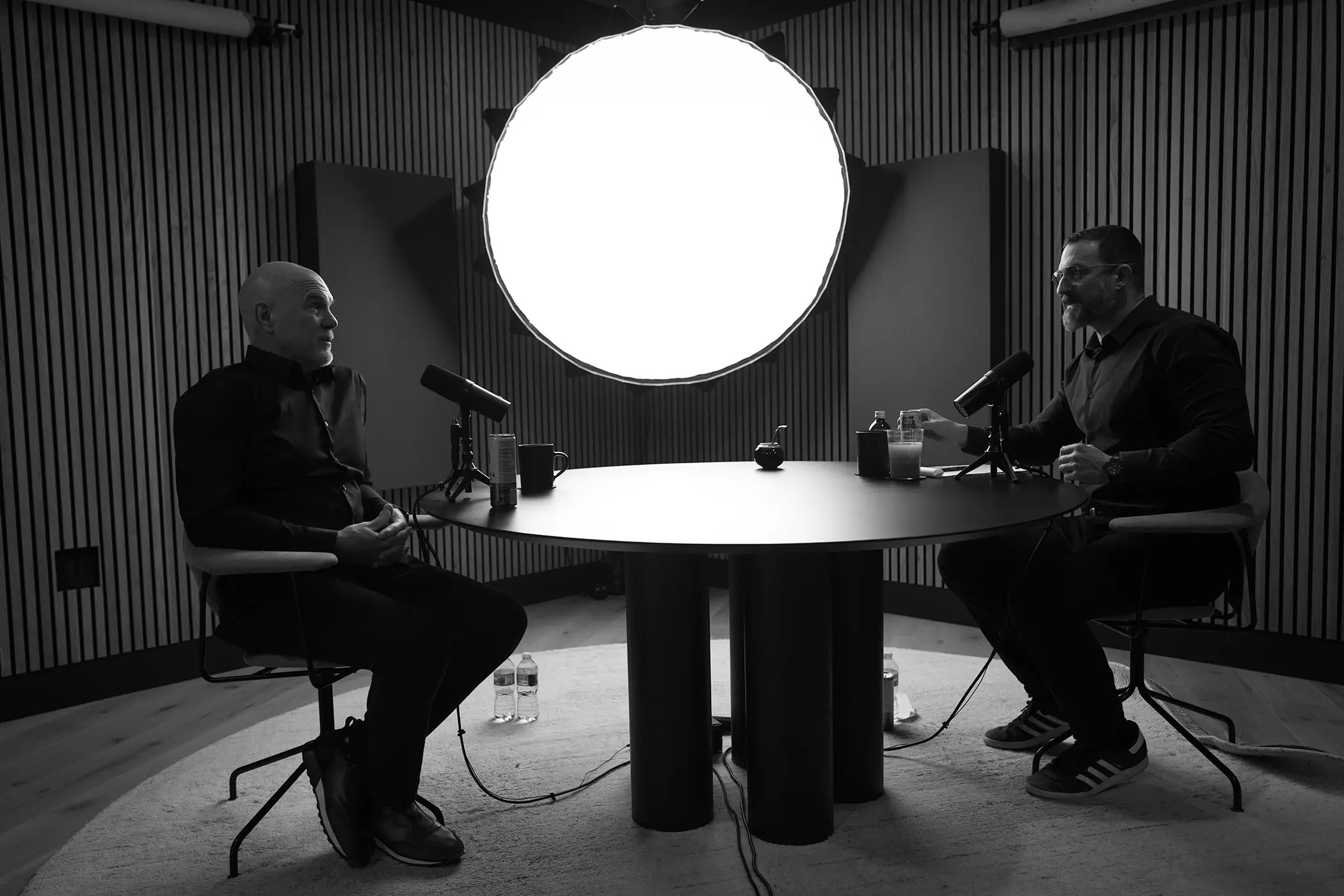


Huberman Lab Essentials are short episodes focused on essential science and protocol takeaways from past full-length Huberman Lab episodes.
Join 1M+ subscribers to get regular emails on neuroscience, health, and science-related tools from Dr. Andrew Huberman.
You'll also get Andrew's exclusive Daily Blueprint. In it, Andrew shares his daily routine. He also shares practical tools and protocols that you can use to stay productive and maximize your health.


