


Using Existing Drugs in New Ways to Treat & Cure Diseases of Brain & Body | Dr. David Fajgenbaum


My guest is Dr. David Fajgenbaum, MD, professor of translational medicine and human genetics at the University of Pennsylvania. He explains how, unbeknownst to most doctors, many approved medications can successfully treat or even cure diseases other than the ones they are typically used to treat. He shares his story of escaping death from Castleman's disease by discovering a life-saving treatment using repurposed drugs that were approved for other purposes. Our conversation explores how researchers, physicians, and you—the general public—can explore novel treatments and cures to conditions the medical profession has deemed untreatable, including cancers. We also discuss the crucial role of mindset in battling diseases and the lesser-known use of compounds to promote health and longevity.
Articles
- Effect of Peritumoral Infiltration of Local Anesthetic Before Surgery on Survival in Early Breast Cancer (Journal of Clinical Oncology)
- Aspirin use, tumor PIK3CA mutation, and colorectal-cancer survival (The New England Journal of Medicine)
- Efficacy and Safety of Low-Dose Colchicine after Myocardial Infarction (The New England Journal of Medicine)
- Colchicine in Patients with Chronic Coronary Disease (The New England Journal of Medicine)
- Angiosarcoma treated successfully with anti-PD-1 therapy – a case report (Journal for ImmunoTherapy of Cancer)
- Prolonged sleep deprivation induces a cytokine-storm-like syndrome in mammals (Cell)
- TNF inhibition in vasculitis management in adenosine deaminase 2 deficiency (DADA2) (Journal of Allergy and Clinical Immunology)
- Identifying and Targeting TNF Signaling in Idiopathic Multicentric Castleman’s Disease (The New England Journal of Medicine)
- Repurposing eflornithine to treat a patient with a rare ODC1 gain-of-function variant disease (eLife)
Books
- Chasing My Cure: A Doctor's Race to Turn Hope into Action; A Memoir
- The Comfort Crisis: Embrace Discomfort To Reclaim Your Wild, Happy, Healthy Self
Every Cure Resources
- Every Cure
- Drug Repurposing Portfolio
- Partner with Every Cure
- Expert Volunteering for Every Cure
- Donate to Every Cure
- Every Cure Newsletter
Other Resources
- OpenEvidence
- Castleman Disease Collaborative Network
- ALS Association
- Michael J. Fox Foundation
- The Dirty Drug and the Ice Cream Tub (Radiolab)
Huberman Lab Episodes Mentioned
- Dr. Eddie Chang: The Science of Learning & Speaking Languages
- How to Grow From Doing Hard Things | Michael Easter
- Health Effects & Risks of Kratom, Opioids & Other Natural Occurring Medicines | Dr. Chris McCurdy
People Mentioned
- Benjamin Castleman: professor of pathology Harvard Medical School, described Castleman’s disease
- Chip Chambers: physician advocate, DADA2 Foundation
- Luke Chen: Professor, Department of Medicine, University of British Columbia
- Kazu Yoshizaki: Professor of Immuno-Medical Science, Osaka University, Japan
- Josef Parvizi: professor of neurology, Stanford University
- Grant Mitchell: co-founder of Every Cure
- Tracey Sikora: co-founder of Every Cur
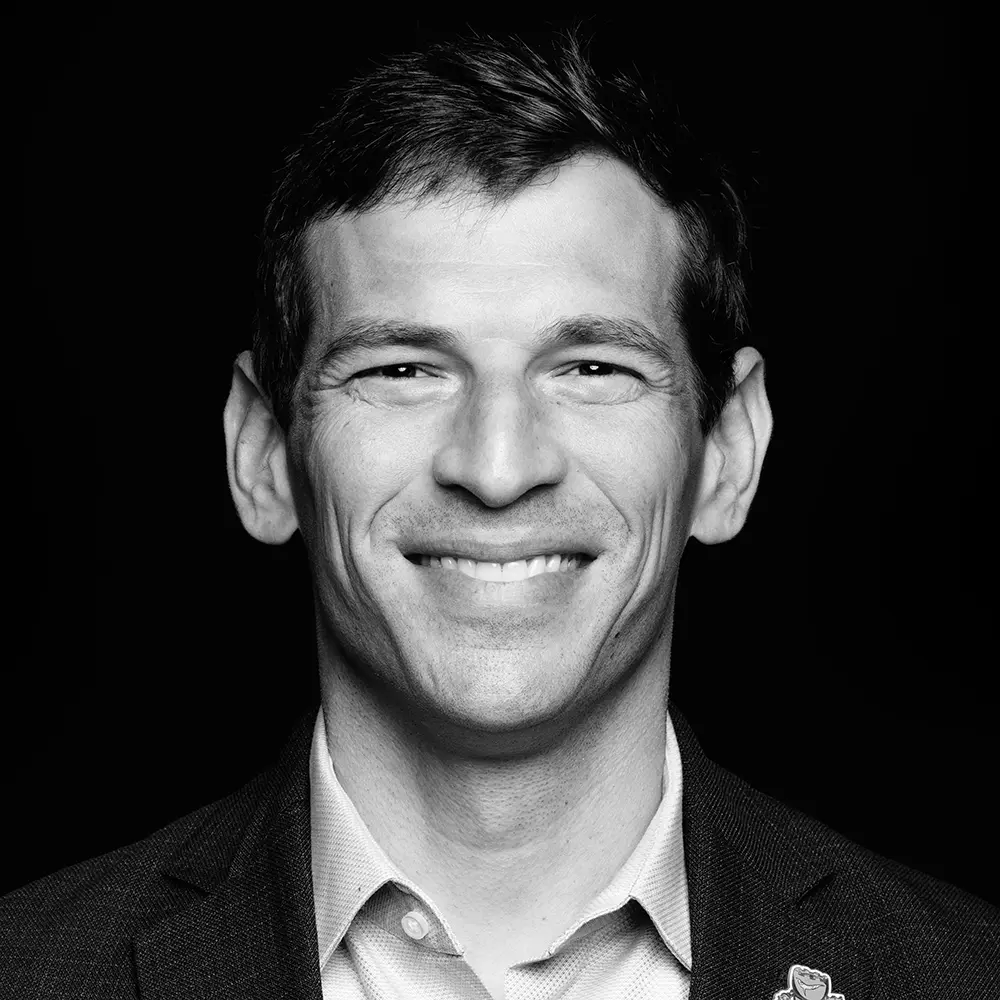
About this Guest
Dr. David Fajgenbaum
David Fajgenbaum, MD, is a professor of translational medicine and human genetics at the University of Pennsylvania.
This transcript is currently under human review and may contain errors. The fully reviewed version will be posted as soon as it is available.
David Fajgenbaum: ... my doctor explained to me that we were out of options. He said, "David, we've tried everything. We tried these chemotherapies, we tried this one experimental drug. There's nothing more that we can do." There was a few-minute period where my dad, and my sisters, and my girlfriend were around me, and we were just bawling our eyes out. This is the world's expert. And I kept probing him, "Is there any cell type or signaling pathway or is there something we can target?"
David Fajgenbaum: And then he said, "David, there's nothing." "Is there anything in early stage of development?" "David, there is nothing." I heard what he was saying, but then I thought to myself, "You just gave me seven chemotherapies that were made for lymphoma and multiple myeloma, and they've saved my life now three times. It's not long-term. I know I keep relapsing, but if these seven chemotherapies are working, how do we know there's not an eighth chemotherapy, or a ninth drug for something else? You can't tell me... We haven't tried all 4,000 drugs. We've just tried the drugs that maybe we thought to try."
David Fajgenbaum: And so, I just locked in right then, and I turned to my family and just sort of wiped away my tears and said, "I'm going to dedicate the rest of my life, however long that's going to be, it might be a couple of days, maybe it'll be a couple of months, but however long I've got to try to find out, is there a drug out there that could help me and other patients with my disease that's made for another condition?" I just believe that the 4,000 drugs we have today should help all the patients who can benefit from them.
Andrew Huberman: Mm-hmm.
David Fajgenbaum: Period. No one should suffer if there's a drug at your CVS that could help you.
Andrew Huberman: Welcome to the Huberman Lab podcast, where we discuss science and science-based tools for everyday life.
Andrew Huberman: I'm Andrew Huberman, and I'm a professor of neurobiology and ophthalmology at Stanford School of Medicine. My guest today is Dr. David Fajgenbaum. Dr. David Fajgenbaum is a professor of translational medicine and human genetics at the University of Pennsylvania.
Andrew Huberman: His work focuses on finding novel cures to both rare and common human diseases by using drugs and other treatments that already exist and that are approved for use in humans for other purposes. As it turns out, most approved drugs impact at least 40 different pathways and mechanisms across the human brain and body, but these drugs are generally approved for use in just one or two of those pathways.
Andrew Huberman: David shares with us the many commonly unknown yet powerful benefits of drugs that are already approved for things like heart health, combating cancer, neurodegeneration, and more. From his own near-death experience with Castleman's disease, David discovered that the medical profession already has in hand excellent treatments, and perhaps even cures, for many of the childhood and adult diseases that the medical profession deems uncurable or untreatable.
Andrew Huberman: In addition to running his laboratory, where they search for novel treatments and cures using already approved drugs, David has started a not-for-profit called Every Cure, which helps people find treatments and cures to diseases that the medical field has essentially deemed untreatable. And that work has already saved countless lives. Our discussion today is about how to navigate your health journey and how to approach the treatment of any illness that you or a relative may face.
Andrew Huberman: It's also about the fact that while the fields of medicine and science are truly incredible and well-intentioned, they do have a giant blind spot built into them, which is that many effective treatments, and in some cases cures, exist to diseases that we are told are hopeless to treat, and that even the best trained and well-meaning MDs are often unaware of those treatments. Not because they are lazy or that they have some other agenda, but simply because of how medications are studied, patented, and categorized. As you'll soon learn, Dr. Fajgenbaum is on a mission to educate doctors, scientists and most importantly, you, the general public, about these facts. He has lived them directly. He's an MD who got very sick with what he was told was a terminal disease, and when the existing system left him at a cliff, he went about curing that disease using old medications in new ways, and he is now helping others who need to do the same.
Andrew Huberman: Before we begin, I'd like to emphasize that this podcast is separate from my teaching and research roles at Stanford. It is, however, part of my desire and effort to bring zero-cost-to-consumer information about science and science-related tools to the general public. In keeping with that theme, today's episode does include sponsors. And now for my discussion with Dr. David Fajgenbaum.
Andrew Huberman: Dr. David Fajgenbaum, welcome.
David Fajgenbaum: Thanks so much for having me.
Andrew Huberman: These days, people are very concerned about their health, even if they're healthy, and I think the reason for that is ever since 2020, I think people have started to realize that they need to do more self-advocacy in terms of their health, whether or not it's behaviors to take care of their health, learning how to explore medical and health information online more effectively.
Andrew Huberman: No one knows who to trust, and yet people are realizing that they are a critical element in their health, and should they encounter challenges to their health, they realize they can no longer be passive participants and just go to their doctor, that doctors are human too.
David Fajgenbaum: Yeah.
Andrew Huberman: So, you have a very unique health story, and we'll get into that, but maybe we just start off by educating people a little bit about some of the common misperceptions in order to give them more sense of agency about what they can do.
Andrew Huberman: One of the things that you've been very vocal about is that you believe, through experience and observation, that many of the treatments or even potential cures for the things that challenge people may already exist in the form of medicines that are prescribed or available, maybe even over the counter, but that people, including doctors, are not aware of that.
David Fajgenbaum: Right.
David Fajgenbaum: Mm-hmm.
Andrew Huberman: Could you just elaborate on that? What we're basically saying is the answers may already be here.
David Fajgenbaum: Sure. Well, first off, I love that you're talking about agency in health and in medicine, because I think oftentimes we talk about agency, I can get a good night's sleep, or I can exercise and eat well in the sense of wellness, but oftentimes when people get really sick with a horrible disease, whether it's cancer or Castleman's, feel like, "Well, we're just going to do whatever our doctor, our local doctor tells us to do." But you're right. I think that there's so much more that we can do, and there's so much agency that we can take. And part of it, to your point, is that there are drugs that we have.
David Fajgenbaum: There's 4,000 FDA-approved drugs that are approved for about 4,000 diseases, but we know from laboratory work, and also from clinical trials, that many of those drugs can be used in more diseases, but unfortunately the system really isn't set up to find new uses for old medicines. And so, that's the work that I do, but I also think it gives all of us really a sense of responsibility that if we're diagnosed with a bad disease, that we find out what's the disease organization advocacy group. Maybe they're aware of a drug being used in one part of the world that others aren't.
David Fajgenbaum: Who's the leading expert? Can you go drive to see the leading expert? And can you make sure that once the expert tells you what to take, you ask questions like, "Is there potentially something else?"
Andrew Huberman: Mm-hmm. I think of aspirin, for instance.
David Fajgenbaum: Yeah.
Andrew Huberman: Most people think of aspirin as a pain reliever.
David Fajgenbaum: Yep.
Andrew Huberman: But aspirin is now used as a way to offset heart attacks.
David Fajgenbaum: Mm-hmm.
Andrew Huberman: For its blood-thinning effects, among other effects. Just off the top of your head, I'm not trying to test you here. You're the MD, I'm the PhD, as we were talking about before, and I'm not going to test you on medicine, I'm not equipped to.
David Fajgenbaum: No.
Andrew Huberman: But are there other uses for aspirin that we perhaps haven't heard of, or similar drugs that might surprise people?
David Fajgenbaum: Yeah.
David Fajgenbaum: Yeah, aspirin also has been shown to reduce risk of recurrence of colon cancer. Particularly, individuals with colon cancer who have a mutation actually in the mTOR pathway. But because it's aspirin, because it's sort of widely available, and it doesn't have maybe the same sort of system behind its use, it's really not actually utilized by all the patients that have colon cancer to reduce the risk of recurrence of colon cancer. And that's sort of mind-blowing in itself, and there are other great examples.
David Fajgenbaum: Many folks have probably heard about how Viagra was repurposed from heart disease to its well-known use. Most people are aware of erectile dysfunction, but most people don't realize that it's also been repurposed for a rare pediatric lung disease. Kids were dying because they weren't getting enough blood flow to their lungs, and if they take Viagra, they can actually get blood flow to their lungs and live full lives on Viagra. And that, fortunately, was discovered early on in the patent life of Viagra, so there was really a way to push it forward. But a lot of times, these happen after drugs are generic.
Andrew Huberman: Yeah, isn't it that the cousin of Viagra, Cialis, was initially tadalafil, used to encourage prostate health, circulation to the prostate, and then only later was it discovered to have these other effects related to sexual function?
David Fajgenbaum: Mm-hmm.
David Fajgenbaum: That's right, yeah. And then we talked about the side effect of a drug, it can be bad or can be good. We were chatting earlier, the average small molecule, so a drug that's approved for a condition, can bind between 20 and 30 different proteins in the body. So, we call a drug... We say it does one thing, but actually it's doing a lot of other things in the body, and unless that drug company began working on it early on for that condition, oftentimes those insights and those other roles for the medicine just fall through the cracks.
Andrew Huberman: Mm-hmm.
Andrew Huberman: So, the idea that a drug is useful for other things aside from what it's best known for is seldom discussed, whereas side effects are being discussed more and more nowadays.
David Fajgenbaum: Yep.
David Fajgenbaum: Yep.
Andrew Huberman: Tell us about lidocaine.
David Fajgenbaum: Sure.
Andrew Huberman: This is fascinating.
David Fajgenbaum: Sure. So, yeah, I couldn't believe it when we came across this. So, I run a nonprofit called Every Cure. We scan the world's knowledge of every drug and every disease to find new uses for the medicines we have, and when we came across lidocaine, we were just sort of blown away. So, lidocaine, of course, the numbing medicine you get if you go to the dentist, and it's used wholly for the body for numbing all kinds of things.
David Fajgenbaum: There's interesting data, actually a large trial that was done in India, of 1,600 patients, where women who had localized breast cancer, if they had lidocaine injected around the tumor before surgery, eight to ten minutes before surgery, there was a 29% reduction in mortality at five years, versus those who did not have lidocaine injected.
Andrew Huberman: Wow.
David Fajgenbaum: Now, lidocaine is already going to be used during the surgery, it's used at the site of the incision, it's widely used in so many cases. And what's so interesting, it was published in a great journal, the "Journal of Clinical Oncology," yet there's still been barely any uptake all around the world.
David Fajgenbaum: And so, this is just sort of another example for us for why you've got to have an entity that's looking for these great opportunities and then actually doing the work to make sure that they get into patients, because there's close to no downside of something like lidocaine, and if the upside's as high as a 30% reduction in mortality, I don't know how it's not being used all over the place.
Andrew Huberman: Is lidocaine an expensive drug?
David Fajgenbaum: It's a very inexpensive drug. It's pennies an injection, and that doesn't mean anyone's hiding lidocaine. I'm of the belief that drug companies do such important work to develop brand new drugs and they're so good at it, they do a great job getting those drugs to be used for the uses that they're intended for, and it's no one's fault, but once that drug becomes generic, like lidocaine's been generic for decades, that means that there's a number of other companies that make the exact same drug, and the profit for each of those doses becomes close to pennies an injection.
David Fajgenbaum: And so, again, it's not that anyone's hiding it, but it's just that no entity is incentivized to actually go call on doctors and say, "Hey, did you do the lidocaine before your surgery?" Or to really push to get them into guidelines. And I will say, this was a really major study, this study that was published, or that was done in India, it was published in a great journal. There's interesting laboratory data, but we at Every Cure actually feel responsible to better understand the potential mechanism for how it might work, and also to review the evidence wholly before we actually go out and start encouraging everyone to do it.
David Fajgenbaum: So, there's still steps that have to be taken, but our belief is that when you come across something that looks promising like this, we need to have some group that's actually pushing and pushing to make sure that it actually gets to patients once you feel comfortable with the data.
Andrew Huberman: I'd like to take a quick break and acknowledge our sponsor, Eight Sleep. Eight Sleep makes smart mattress covers with cooling, heating, and sleep tracking capacity. One of the best ways to ensure a great night's sleep is to make sure that the temperature of your sleeping environment is correct, and that's because in order to fall and stay deeply asleep, your body temperature actually has to drop by about one to three degrees. And in order to wake up feeling refreshed and energized, your body temperature actually has to increase by about one to three degrees.
Andrew Huberman: Eight Sleep automatically regulates the temperature of your bed throughout the night according to your unique needs. Eight Sleep has just launched their latest model, the Pod 5, and the Pod 5 has several new important features. One of these new features is called Auto Pilot. Auto Pilot is an AI engine that learns your sleep patterns to adjust the temperature of your sleeping environment across different sleep stages. It also elevates your head if you're snoring, and it makes other shifts to optimize your sleep.
Andrew Huberman: The base on the Pod 5 also has an integrated speaker that syncs to the Eight Sleep app and can play audio to support relaxation and recovery. I've been sleeping on an Eight Sleep mattress cover for over four years now, and it has completely transformed and improved the quality of my sleep. If you'd like to try Eight Sleep, go to eightsleep.com/huberman to get up to 350 dollars off the new Pod 5. Eight Sleep ships to many countries worldwide, including Mexico and the UAE. Again, that's eightsleep.com/huberman to save up to 350 dollars.
Andrew Huberman: Today's episode is also brought to us by Rorra. Rorra makes what I believe are the best water filters on the market. It's an unfortunate reality, but tap water often contains contaminants that negatively impact our health. In fact, a 2020 study by the Environmental Working Group estimated that more than 200 million Americans are exposed to PFAS chemicals, also known as forever chemicals, through drinking of tap water.
Andrew Huberman: These forever chemicals are linked to serious health issues, such as hormone disruption, gut microbiome disruption, fertility issues, and many other health problems. The Environmental Working Group has also shown that over 122 million Americans drink tap water with high levels of chemicals known to cause cancer. It's for all these reasons that I'm thrilled to have Rorra as a sponsor of this podcast. I've been using the Rorra countertop system for almost a year now.
Andrew Huberman: Rorra's filtration technology removes harmful substances, including endocrine disruptors and disinfection byproducts, while preserving beneficial minerals like magnesium and calcium. It requires no installation or plumbing. It's built from medical-grade stainless steel, and its sleek design fits beautifully on your countertop. In fact, I consider it a welcome addition to my kitchen. It looks great, and the water is delicious. If you'd like to try Rorra, you can go to rorra.com/huberman and get an exclusive discount. Again, that's Rorra, R-O-R-R-A.com/huberman.
Andrew Huberman: There are a couple avenues that we could explore, given what you've said so far, but the one I'd like to drill into a bit is this thing related to drug companies and patents. I don't want to set up the idea that everything is conspiratorial, and yet years ago, when my laboratory was working on eye diseases, glaucoma in particular, I spent a lot of time around people working at companies that develop drug treatments for eye diseases. They've developed great drugs for the treatment of over-vascularization of the eye, for instance, that can cause blindness or it's related to some blinding diseases.
David Fajgenbaum: Mm-hmm.
David Fajgenbaum: Yeah.
Andrew Huberman: And I learned that many of these drugs go to market. They are, quote, unquote, blockbuster drugs.
David Fajgenbaum: Mm-hmm.
Andrew Huberman: People's symptoms improve. These drug companies make a lot of money. And then the patent is headed toward expiration, and at that point, the cost of the drug drops markedly.
David Fajgenbaum: Yeah.
Andrew Huberman: So, the drug companies are heavily incentivized, I learned, to find new uses for that drug to renew the patent under this new application to basically keep the generics away.
David Fajgenbaum: Mm-hmm. Yep.
Andrew Huberman: And on the one hand, it makes sense because the research and development for a drug is exceedingly expensive, and so if they can repurpose a drug and maintain the patent for two diseases, essentially, one drug, two diseases, this is kind of the bread and butter of how drug companies get and remain very wealthy.
David Fajgenbaum: Yeah.
David Fajgenbaum: Yeah.
Andrew Huberman: It has two, what I consider, kind of darker sides to it. One is that the generic, cheaper drugs don't arrive on market for a much longer period of time.
David Fajgenbaum: Mm-hmm.
Andrew Huberman: The other side of the coin, however, is that people suffering from a different disease now can take this drug.
David Fajgenbaum: Yeah.
Andrew Huberman: But that second, darker piece is that drug companies are not very incentivized to go look for new molecules to treat new conditions. They are heavily incentivized to use old molecules to treat new conditions and maintain control.
David Fajgenbaum: Yeah.
Andrew Huberman: There's a lot in this statement, but my understanding is this is how it works.
David Fajgenbaum: Yeah.
Andrew Huberman: And so, how do you reconcile that? I mean, how is it that we should be exploring existing drugs for new conditions, but do it in a way that's really driven toward curing a disease, as opposed to just kind of finding a new purpose so we can keep the generics out for a while?
David Fajgenbaum: Yeah. It such a great question. So, you're absolutely right that, as drugs begin to reach their patent cliff, oftentimes the drug will be... The dose might be changed slightly, the formulation might be changed slightly to create new intellectual property so that way this sort of new version can be used in that same initial disease. Which, to your point, there's, I wouldn't say pros and cons. There's side effects of that sort of a system.
David Fajgenbaum: But what is pretty clear is that companies will typically not, as it's getting close to patent exclusivity, find a new disease to go after with that drug. It's usually the same disease, it's just a new formulation, so that way they can keep working on that disease. And what that means is that though that drug might be able to be used for a different disease, that's rarely explored.
David Fajgenbaum: And so, especially, to your point, once it's generic, I mean, all research and development discontinues, and even, you know, I mentioned earlier that there's 4,000 FDA-approved drugs. They work for 4,000 diseases. That's incredible, but there's still 14,000 diseases that don't have a single treatment right now. And of the 4,000 drugs we have, 80% of them are already generic, which means that there is no incentive to find a new use for those medicines.
David Fajgenbaum: So, every time I walk past a CVS, all I think about is how many drugs are in there that are used for one condition, but could actually help so many more kids, or adults with other conditions.
Andrew Huberman: And we're hearing a lot these days about lithium, as a potential protectant, for Alzheimer's or other forms of dementia.
David Fajgenbaum: Mm-hmm.
David Fajgenbaum: Yep.
Andrew Huberman: I don't know that the data are so solid that I'm ready to run out and take lithium, so I'm not suggesting that to anybody.
David Fajgenbaum: Yeah.
Andrew Huberman: But I know a few psychiatrists that tell me for years they've been taking low-dose lithium for a couple months out of the year, based on their understanding of the data. So, you've got doctors doing things.
David Fajgenbaum: Mm-hmm.
David Fajgenbaum: Yeah.
Andrew Huberman: People don't often talk about this, but doctors often will do things, based on their read of the literature that they're not talking to their patients about, because they're not in a position to do it ethically.
David Fajgenbaum: Yeah. That's right.
David Fajgenbaum: For sure.
David Fajgenbaum: Yeah.
Andrew Huberman: There's too much liability there. Where and how should the typical person without any training in medicine or science, or even a little background in science, go to find information about existing drugs, generic or otherwise, that could help them treat their ailments, be it a skin condition, or something as serious as cancer?
David Fajgenbaum: Yeah.
David Fajgenbaum: What I'd recommend first is to make sure that you're connecting with whatever the disease group is for your condition. They oftentimes are so well-connected with physicians all over the world, they hear about what things are being tried. So, connect with whatever your condition is, whatever that disease organization is.
Andrew Huberman: Could you explain disease organization?
David Fajgenbaum: Sure. So, the Castleman Disease Collaborative Network is the group that's come together to support Castleman's patients, and to physicians and researchers. There's an ALS association, for example. There's Michael J. Fox for Parkinson's disease. So, find that group that has coalesced around your condition, because they'll oftentimes have, to your point, understanding about, "Hey, I heard this one patient's using this one thing." So, I'd go there first.
David Fajgenbaum: The second is I would figure out where is the world's expert, who is that person that really is the guru. They'll oftentimes have insights on these things. And then the third is to really keep asking questions. So, even when they say, "This is the first thing that's recommended," well, is there something else that's used somewhere else? And I'll share one example of this. It's a bit heartbreaking, but also really powerful and informative, and that's that there's a rare condition called DADA2.
David Fajgenbaum: Basically, kids are born with a mutation in a gene that results in them having dozens and dozens of strokes from the time they're born, until they usually pass away in their teenage years because of the accumulated effect of literally dozens of strokes. It's horrible. Well, about 20 years ago, a doctor apparently was treating a patient with DADA2, and also treating a patient with a form of vasculitis, and treated that patient with vasculitis with what's called a TNF inhibitor. It inhibits this one cytokine called TNF. And he apparently had left TNF inhibitor in his vial, and he was like, "You know what? We've got this kid over here having all these strokes. Why don't I just try what I've got in this vial in this kid?" Well, the kid stopped having strokes. And that was amazing. And so, this doctor, the next few patients he had with DADA2, he treated them for their strokes. But about 10 years went by.
David Fajgenbaum: Meanwhile, hundreds and thousands of kids around the world are dying from DADA2, where the word wasn't being spread until this amazing doctor named Chip Chambers, sadly, had two children born with DADA2, and he started looking around to figure out and learned about, oh my gosh, TNF inhibitors. I was honored to be able to help Chip and his team to basically bring data together on the effectiveness of TNF inhibitors, also even come up with treatment guidelines for how do you treat DADA2.
David Fajgenbaum: And it turns out that if you start kids on a TNF inhibitor, they stop having strokes, all over the world. Literally, it's a life-changer. And so, the reason I share this as an example is that the world knew, someone in the world knew that you could save kids' lives with a TNF inhibitor, but the world didn't know, and we hadn't gotten the word out about it. And to me, that's so heartbreaking. It's almost like a travesty, you know?
David Fajgenbaum: It's one thing if you have a horrible disease, and everyone dies from it, and there's nothing out there. But I think it's so much more heartbreaking when you think that, oh my gosh, there was something there. We as a system hadn't done the work to make sure people get the medicine.
Andrew Huberman: Yeah, I think it's a harsh reality that one's knowledge network really has a big impact on outcomes to disease.
David Fajgenbaum: Yeah.
Andrew Huberman: I mean, I sit surrounded by MDs and PhDs and people working on disease and treating disease, and I'll tell you, there's no question in my mind that, because I've experienced it when a friend's spouse or kid is dealing with something, I'm just one example of somebody who knows who to call, because I don't know the answer, but I know who might know the answer, and within two or three calls, that person is in touch with somebody who is in communication with the five or six people who are best at this around the world.
David Fajgenbaum: Yeah.
David Fajgenbaum: Yeah.
David Fajgenbaum: Yes. Exactly.
Andrew Huberman: But most people don't have access to that. It's one of the reasons I started this podcast, frankly to get people like you on here, people like Eddie Chang, who's a lifetime friend, and chair of neurosurgery at UCSF. I always say, "May you never need his help."
David Fajgenbaum: Right. Yeah.
David Fajgenbaum: Yeah.
David Fajgenbaum: Yes.
Andrew Huberman: Right? But these are the people that I call when friends have questions about things unrelated to neurosurgery, for instance.
David Fajgenbaum: Yeah.
Andrew Huberman: So, it seems to me there's a pretty straightforward solution, that in addition to these groups that are centered around certain diseases, there should be databases. There should be ways that people can not just go online and ask a question, but go to a database, and say, "I was just diagnosed with..." or, "I'm having symptoms that are the following, and what are the existing prescription and non-prescription meds known to treat this?
David Fajgenbaum: Yep.
David Fajgenbaum: Yep.
Andrew Huberman: What are the side effects? But also, what are the potential pathways that overlap with other approved drugs that are prescription or over-the-counter?"
David Fajgenbaum: Yeah.
Andrew Huberman: And then it should feed into a pipeline of how to get a hold of the people that could help treat that. It should be that straightforward.
David Fajgenbaum: Yeah. Yeah.
Andrew Huberman: I mean, this is 2025.
David Fajgenbaum: Yeah. Exactly. Yeah.
Andrew Huberman: I mean, there's no reason why people should have to know somebody in the medical or scientific field at a major institution in order to be able to navigate this.
David Fajgenbaum: I totally agree, and I think that the more I've gotten into this, the more surprised I've been that there hasn't been something like that. This nonprofit I mentioned, Every Cure, so we use this, they're called biomedical knowledge graphs, basically mapping out what the world knows about human biology. We use an AI platform, and machine learning models to quantify how likely every drug is to treat every disease, and then we start at the top to go, what match looks promising. We've got nine active programs, and from those, we're moving them forward to reach patients.
David Fajgenbaum: And the idea is that, let's hope all nine of them end up being effective in helping patients. That's sort of the start of this hopefully master list of additional uses for medicines that we already have. But to your point, it's not just that they are speculative, but really that the work's been done to really prove that they actually work.
Andrew Huberman: I can't help but ask of some other examples of drugs that have been shown to treat things other than what most people associate that drug with.
David Fajgenbaum: Sure. A few come to mind. So, the first one's thalidomide. You probably have heard about the horrible birth defects that thalidomide caused, 50-plus years ago.
Andrew Huberman: Originally designed as an anti-miscarriage drug.
David Fajgenbaum: Well, it was originally designed as anti-nausea for pregnant women. So, the thought was that it could help them with their nausea.
Andrew Huberman: Yeah.
Andrew Huberman: I see.
David Fajgenbaum: But it ended up causing horrible birth defects.
Andrew Huberman: I see.
David Fajgenbaum: Children were born without limbs, and so it was taken off the market. But then about 20 years later, researchers figured out that it could be effective for leprosy. So, it's FDA-approved for leprosy, and then what's crazy is that shortly thereafter, it got FDA approval for multiple myeloma, a rare or somewhat rare hematologic blood cancer.
David Fajgenbaum: And the reason that it can work for leprosy and multiple myeloma, and also the reason that it causes birth defects, is it has a major anti-angiogenic effect, so it reduces blood vessel growth. So, in the same way that you need blood vessel growth to grow limbs, you also need blood vessels, or you need overproduction, or increased blood flow for multiple myeloma cells to survive, and also in leprosy.
David Fajgenbaum: And so, the same compound that causes birth defects, helps treat leprosy, also treats multiple myeloma. It's saved thousands and thousands of lives of multiple myeloma patients. Again, the reason that that in particular has been utilized in multiple ways was that it had a full patent life when the work was first begun for leprosy, and then myeloma was discovered shortly thereafter.
David Fajgenbaum: But if a drug like thalidomide was discovered for leprosy, and then 20 years later, someone figured out it could be useful for multiple myeloma, patent is gone. And so, there wouldn't have been an incentive to then figure out that, oh, thalidomide could also be useful for multiple myeloma. The list sort of sadly goes on and on.
David Fajgenbaum: I mean, one of my favorite examples is a drug called pembrolizumab that is now used for dozens of cancers, but initially it was first developed for melanoma and for lung cancer. And actually, the work that we did in my lab, I guess this is 2016, and it was actually simple work. A patient came to us in 2016 with metastatic angiosarcoma, which is a horrible form of cancer, and his doctors told him that he was out of options, and we did something really simple. We went on PubMed and looked for angiosarcoma treatment. It was that simple.
David Fajgenbaum: And we came across a paper from 2013 where a researcher had looked at five tumors from five different patients with angiosarcoma, and four out of the five tumors had increased expression of PD-L1, which is a marker that you might respond to a PD-1 inhibitor.
David Fajgenbaum: And so, even though the paper was published in 2013, and this gentleman came to us in 2016, and of course hundreds of people had died in the previous three years, no one had ever actually tested whether a PD-1 inhibitor could be useful for angiosarcoma, even though... Again, it was just a laboratory study published three years earlier, but no one had ever translated that insight into using it in a patient. So, we treated Michael as the first patient ever, that we're aware of, with a PD-1 inhibitor, and he responded so incredibly well.
David Fajgenbaum: A couple things happened. One is that his doctor started prescribing it to all patients with angiosarcoma. It turns out it works in about 18% of patients. So, it was a uniformly fatal cancer within one year. Now, about 20% of people will live beyond a year, and it can be really transformative. So, it changed clinical practice for angiosarcoma. The other thing it did specifically for Michael is that it has put him into now a nine-year remission.
David Fajgenbaum: Just last month, he walked his daughter down the aisle on her wedding day in Nashville, Tennessee, nine years after he was told that this is it. And so, these drugs are out there, and sometimes there's even breadcrumbs. It didn't require any brilliance from my lab. We literally just had to find a study that was published three years earlier, and that again is really what drives us with this work now to say, "Can we find all these breadcrumbs? Can we put them together and can we make sure people actually benefit from all the great science that's being done all over the world? Let's actually translate it then to patients."
Andrew Huberman: Yeah. It seems to me that PubMed, and other sources of science knowledge, are great for stacking papers, and they're pretty decent in terms of how they're organized, by keyword search.
David Fajgenbaum: Mm-hmm.
Andrew Huberman: They're not perfect, but you can find stuff.
David Fajgenbaum: Yeah.
Andrew Huberman: And you get suggestions about related articles, and somebody with a little bit of time and energy will get some degree of information there. But it seems to me that no one has really organized the enormous database of information about science as it relates to disease. It occurred to me a moment ago, there should be a database where one can enter whatever knowledge they have about how old their grandparents were when they died, and of what, how old their parents are or were, maybe they're alive, maybe they're deceased.
David Fajgenbaum: Mm-hmm.
Andrew Huberman: Any knowledge, any kind of family history.
David Fajgenbaum: Yeah.
Andrew Huberman: This is the first thing a doctor would ask you.
David Fajgenbaum: Yeah.
David Fajgenbaum: Yeah, exactly, yeah.
Andrew Huberman: If I come in and you're the MD, and if I say, "Hey, listen, I've got this swollen lymph node on the left-hand side."
David Fajgenbaum: Yeah.
Andrew Huberman: I don't think you're going to say, "Hey, go get it scanned." You'll say, "Any history of blank and blank in your family?"
David Fajgenbaum: Yes. Exactly, yep. Yep.
Andrew Huberman: First thing, right? One should be able to do this from home and then enter any symptom profiles they might be having, and with the appropriate cautionary notes, get some ideas back about what might be going on.
David Fajgenbaum: Yeah.
Andrew Huberman: Now, that might sound like, oh, this is people playing their own doctor, but I'll tell you right now, if I put in left armpit lymph node pain, or swelling into any online search engine, it's going to tell me some of the worst possible outcomes.
David Fajgenbaum: Yeah.
David Fajgenbaum: Yes.
Andrew Huberman: So, it's not like we need to shield people from potential outcomes.
David Fajgenbaum: Yes.
David Fajgenbaum: Totally.
Andrew Huberman: But it seems to me that this should be pushed through an AI read of PubMed, which already exists, right?
David Fajgenbaum: Mm-hmm.
Andrew Huberman: Most of the large language models are trained on the entire internet, including PubMed, and that it should point somebody in some actionable directions, including which of these groups... I meant to ask this earlier... Excuse me, which of the various groups for a given disease is the best one?
David Fajgenbaum: Yeah.
David Fajgenbaum: Yeah.
David Fajgenbaum: Yeah, exactly.
Andrew Huberman: Like if somebody's kid, God forbid, has a blood cancer, which group do you go to?
David Fajgenbaum: Yeah.
David Fajgenbaum: Yeah.
David Fajgenbaum: Yeah.
Andrew Huberman: Is there a best one? Are these rated by anybody? I'm not trying to throw our arms around all of medicine here, and all of the problems in the world, but it seems to me that all of this is tractable.
David Fajgenbaum: Yeah.
Andrew Huberman: Someone just needs to get organized about the database.
David Fajgenbaum: I completely agree. I think that there's such randomness to healthcare and to our biomedical research system. I think that's probably maybe the most heartbreaking part of this all, is that because it's so random, Michael gets a drug and he walks his daughter down the aisle nine years later, and a bunch of other people don't get a drug and they aren't alive. And so, I love the idea of that centralized database. I think that there's a company called OpenEvidence, which is trying to basically create a GPT but for healthcare.
David Fajgenbaum: I don't think it's to where you described it, where you can really put in your personal family information and get answers. But I'm hopeful that others will. The role that I see our work, and my work, fitting into that is basically finding as many of these connections and proving them out in the lab and in clinical trials as possible.
David Fajgenbaum: So, that way, when you type in your disease and your situation, that that drug that we worked on rises to the top, because it wasn't just a connection in PubMed, but it was a connection in PubMed that we've validated in the lab and that we did the trial to prove that it works.
Andrew Huberman: Yeah. It's kind of wild that on a completely different end of the spectrum, recently everyone's talking about creatine.
David Fajgenbaum: Mm-hmm. Yeah.
Andrew Huberman: Creatine, creatine, creatine.
David Fajgenbaum: Yeah.
Andrew Huberman: Okay. I've been taking creatine since my teens because I heard back then that it would help make me stronger and it'll make you stronger.
David Fajgenbaum: Yeah.
David Fajgenbaum: Yeah.
Andrew Huberman: Now people are talking about creatine for women, for men, for older people, and under conditions of sleep deprivation for cognitive support.
David Fajgenbaum: Yeah.
David Fajgenbaum: Yeah.
Andrew Huberman: Let's face it, the effects, while documented, are fairly mild for cognitive support, but they're there.
David Fajgenbaum: Mm-hmm.
Andrew Huberman: And this is not being touted as a treatment for dementia, although it might help offset some minor dementia or something like that.
David Fajgenbaum: Mm-hmm.
David Fajgenbaum: Mm-hmm.
Andrew Huberman: I don't know. But the point is that people are talking about it, it's in the news, it's covered all the time.
David Fajgenbaum: Yeah.
Andrew Huberman: But we really should be talking about, or also talking about drugs like aspirin that can be very useful potentially for colon cancer and for heart attack, not just for pain, and all the other examples that are out there.
David Fajgenbaum: Mm-hmm.
David Fajgenbaum: Yeah.
David Fajgenbaum: Yeah.
Andrew Huberman: But I think there's this fear that if you talk about a drug, that people are just going to start taking it as an attempt at a prophylactic, right?
David Fajgenbaum: Yes.
David Fajgenbaum: Yes.
Andrew Huberman: And I think that there's a lot of caution around that, for understandable reasons. But I want to know... I just turned 50, I want to know all the things that I could be taking to potentially offset heart attack because I'm already exercising, and trying to get my sleep, and doing all that stuff.
David Fajgenbaum: Mm-hmm.
David Fajgenbaum: Yep. Exactly.
Andrew Huberman: And then I can make a decision. So, where is the database of information about, as a 50-year-old male who does the following things to support his health, no history of heart disease in my family that I'm aware of, well, what drugs are on the counter, or molecules that exist behind a script from a doctor that could potentially extend my life?
David Fajgenbaum: Mm-hmm.
David Fajgenbaum: Yep.
Andrew Huberman: I want to know that information.
David Fajgenbaum: Yeah.
Andrew Huberman: And we're talking about creatine.
David Fajgenbaum: Yeah.
Andrew Huberman: So, for once, I'm not being disparaging of supplements, but it doesn't make any sense.
David Fajgenbaum: Yeah.
David Fajgenbaum: Yeah.
Andrew Huberman: The conversation is skewed in the wrong direction.
David Fajgenbaum: Yeah. I think that what we're trying to do with Every Cure, and with our work, is trying to start this conversation and keep the conversation going so that way you can go to your doctor with X drug. I mentioned that we have nine active programs. So, on the one end of the spectrum, really common is our program with lidocaine and breast cancer where we're doing laboratory work. We're also evaluating clinical data, and I hope at some point in the future that the data is strong enough.
David Fajgenbaum: And if it is, then we'll work to encourage every woman who's about to go in for breast cancer surgery to talk to their surgeon beforehand and say, "Hey, I want to make sure you do this," and so really empowering them in that way. But all the way through even to the rarest of conditions, there's a condition called Bachmann-Bupp syndrome where kids are born with a mutation that cause them to have elevated levels of an enzyme called ODC1.
David Fajgenbaum: And basically, they're on feeding tubes. They are wheelchair or bed-bound, unless you give them a drug that was made for African sleeping sickness, which is a perfect covalent binder to ODC1. So, that enzyme that's too high in these kids, African sleeping sickness medicine actually binds to ODC1. And if you start it early enough in life, these kids get their feeding tube taken out. They might be able to sit up. They can even play with their siblings. And so, the reason I mention this is that there aren't that many people with Bachmann-Bupp.
David Fajgenbaum: In fact, it's only been described in 20 kids, which means there's probably hundreds of kids, because the medical literature is typically behind reality. But let's say there's hundreds of kids. At some point, we're going to need to get the word out so that way we can find every kid possible with Bachmann-Bupp so they can get this medication, DFMO. And so, these are microcosms of what you're talking about, which is that no one should suffer from Bachmann-Bupp without being on DFMO. No one should have breast cancer without having had lidocaine.
David Fajgenbaum: No one should be a healthy 50-year-old man who might be able to have their risk of heart attack reduced. It might be that colchicine is helpful for reducing your risk of heart disease. But to your point, how can we get this more proactively so we're not just sort of hoping and waiting that all these random things line up?
Andrew Huberman: We used to use colchicine in the lab.
David Fajgenbaum: So, colchicine's an interesting one. So, colchicine is typically utilized for gout. It's been around forever. Actually, I learned that it's, like, 3,000 years ago was when it started being used, because gout often occurs in individuals who consume too much alcohol. And so, apparently, in Egypt 3,000 years ago, some of the wealthy people were drinking too much alcohol and somehow they figured out that this molecule, colchicine, of course I think it was a root at the time, could be helpful for reducing gout.
David Fajgenbaum: And we should fact-check that statement, because I don't know the exact details, but it's been around a long time.
Andrew Huberman: If there were a database, you could just go to the database.
David Fajgenbaum: That's right.
Andrew Huberman: You can tell tell where my mind's going.
David Fajgenbaum: Yeah, exactly.
Andrew Huberman: Yeah.
David Fajgenbaum: So, colchicine's been around forever. It's been used for gout for decades. People who have gouty arthritis, they get these painful joints. If you give them colchicine, it helps them out. Well, a researcher a couple decades ago had a hypothesis that because of its anti-inflammatory properties, and a few other properties of colchicine, that it might be able to reduce the risk of heart attacks in people who have already had a heart attack, or maybe in general, but in particular in people who have already had a heart attack.
David Fajgenbaum: And because it's been around forever, they really couldn't raise the funding needed to do all the trials to prove it, because heart disease prevention trials are big, expensive trials. You've got to follow people for years to prove that they didn't get a heart attack, versus people who got a placebo.
David Fajgenbaum: So, they ended up changing the dose of that medicine, of colchicine. So, it's a slightly different dose from the one they use for gouty arthritis, but it has a very substantial reduction in heart disease risk if you had a prior heart attack and, in particular, if you had a prior heart attack and you have diabetes, a really, really meaningful reduction. So, it got FDA approval for that particular subpopulation. But I mention it because if they hadn't changed the dose, it would've been a paper that some academic would've published that I think colchicine could help, and no one would have ever done the big trial. And again, that's sort of the tragedy here, is that people are literally not having heart attacks right now because they're on colchicine, but if not for someone figuring out a way to make the system work, you know, they would've had their heart attack.
Andrew Huberman: We've known for a long time that there are things that we can do to improve our sleep, and that includes things that we can take, things like magnesium threonate, theanine, chamomile extract, and glycine, along with lesser known things like saffron and valerian root. These are all clinically supported ingredients that can help you fall asleep, stay asleep, and wake up feeling more refreshed. I'm excited to share that our longtime sponsor, AG1, just created a new product called AGZ, a nightly drink designed to help you get better sleep and have you wake up feeling super refreshed.
Andrew Huberman: Over the past few years, I've worked with the team at AG1 to help create this new AGZ formula. It has the best sleep-supporting compounds in exactly the right ratios in one easy-to-drink mix. This removes all the complexity of trying to forage the vast landscape of supplements focused on sleep and figuring out the right dosages and which ones to take for you. AGZ is, to my knowledge, the most comprehensive sleep supplement on the market.
Andrew Huberman: I take it 30 to 60 minutes before sleep, it's delicious by the way, and it dramatically increases both the quality and the depth of my sleep. I know that both from my subjective experience of my sleep and because I track my sleep. I'm excited for everyone to try this new AGZ formulation and to enjoy the benefits of better sleep. AGZ is available in chocolate, chocolate mint, and mixed berry flavors, and as I mentioned before, they're all extremely delicious. My favorite of the three has to be, I think, chocolate mint, but I really like them all.
Andrew Huberman: If you would like to try AGZ, go to drinkagz.com/huberman to get a special offer. Again, that's drinkagz.com/huberman.
Andrew Huberman: Today's episode is also brought to us by David. David makes a protein bar unlike any other. It has 28 grams of protein, only 150 calories, and zero grams of sugar. That's right, 28 grams of protein and 75% of its calories come from protein. That's 50% higher than the next closest protein bar.
Andrew Huberman: These bars from David also taste amazing. Right now, my favorite flavor is the new cinnamon roll flavor, but I also like the chocolate chip cookie dough flavor, and I also like the salted peanut butter flavor. Basically, I like all the flavors. They're all delicious. Also, big news, David bars are now back in stock. They were sold out for several months because they are that popular, but they are now back in stock.
Andrew Huberman: By eating a David bar, I'm able to get 28 grams of protein in the calories of a snack, which makes it very easy for me to meet my protein goals of one gram of protein per pound of body weight per day, and to do so without eating excess calories. I generally eat a David bar most afternoons, and I always keep them with me when I'm away from home or traveling, because they're incredibly convenient to get enough protein. As I mentioned, they're incredibly delicious, and given that 28 grams of protein, they're pretty filling for just 150 calories, so they're great between meals as well.
Andrew Huberman: If you'd like to try David, you can go to davidprotein.com/huberman. Again, that's davidprotein.com/huberman.
Andrew Huberman: Well, I feel like we could spend hours going through the catalog of drugs for which these examples exist, and we may return to a few more, but I'm putting in a strong vote for this database. I know you're working hard on this. I'd like to talk about your journey into this, because you are not a typical doctor. I think that's apparent to people already.
Andrew Huberman: You care very much about human health and treating human disease, but you have a very unusual and interesting trajectory into medicine, and I do believe it's helped lead you to this very unique orientation within the field of medicine and science. So, tell us that story and teach us about Castleman's disease.
David Fajgenbaum: Sure. Well, my story, I think really starts back when I was 18 years old, and I was a freshman at Georgetown. We were talking earlier about I played football at Georgetown, and for me growing up, that was my dream to be a Division 1 college quarterback. That's all I could think about. I was not quite as jacked as you, but somewhere in that realm.
Andrew Huberman: I saw a photo. You were larger than I was. Yeah, we'll put up a link to a photo. David was 230.
David Fajgenbaum: Yeah.
Andrew Huberman: You're taller than I am.
David Fajgenbaum: Yeah.
Andrew Huberman: I'm 6'1", so you're probably about 6'3".
David Fajgenbaum: Like 6'2".
David Fajgenbaum: Yeah, something like that.
Andrew Huberman: I think you might be 6'3". Either that or I'm shrinking. And super large, fit, low body fat. I mean, you look...
David Fajgenbaum: Yeah.
Andrew Huberman: Clearly, you were a quarterback but you were large even for a quarterback.
David Fajgenbaum: Yeah.
David Fajgenbaum: I was, yeah.
Andrew Huberman: Yeah. Okay.
David Fajgenbaum: So, you know, that was my dream, I wanted to play college football, and I got there and I had been on campus at Georgetown for a couple weeks and I got a call that changed my life. My dad called and told me that my mom had brain cancer. And, Andrew, I went from all I could think about was football and I'm finally at this goal that I'd always set, to oh my gosh, this has just changed everything. My mom and I were so close and I was heartbroken for her.
David Fajgenbaum: Glioblastoma brain tumors are uniformly fatal. They're horrible. I was only 18, so I don't think I knew just how bad it was, but I knew it was really bad. And watching her battle with cancer over the next 15 months just changed everything in me. It completely locked me in, and I told her just before she passed away that I would dedicate my life to trying to find treatments for patients like her.
David Fajgenbaum: And she couldn't say many words, at the end, but she said, "Unconditional love." Those were the two words that she said when I told her I would do that, and I was like, "All right, I've got to do this." She wants me to do it. And for me, I sort of haven't been able to stop thinking about helping people like her from the moment that I started seeing this horrible cancer take her life in front of me. And, of course, the promise that I made to her.
David Fajgenbaum: I also learned so much from her in watching her battle against brain cancer. I'll just tell one quick story. So, I got that call from my dad. I immediately came home to North Carolina, and within a few days, she was having brain surgery to get the tumor resected. And they did a surgery where they put you to sleep to open up your skull, and then they actually wake you up while your skull's open.
David Fajgenbaum: And the reason for that, which you're very familiar with, is that as they're cutting out, particularly in the left side of the brain, cutting out parts of the brain tumor, you want to be able to see how far you want to go. You ask people to speak and sort of when they start slurring their speech, you stop cutting. And so, they went through this whole surgery, it was like a four-and-a-half-hour surgery, cut out most of the tumor, but not everything. And they woke her back up after the surgery, and she was in the waiting area and we went back to see her.
David Fajgenbaum: And I remember my dad... I've got two amazing older sisters, and my dad and I, we went back to see her and we were so nervous like, "Is it going to be our mom who's going to come out?" They took out a lot of her brain as part of this surgery, and so nervous, and we walked back, Andrew, and pulled the curtain back and I'll never forget it.
David Fajgenbaum: I saw my mom sitting there just about as far away as you are and she had a wrap around her head, bandages and she had this bulb coming out that was collecting fluid, and she looked at us and she pointed up to her head and she said, "Chiquita banana lady." And we just burst into laughter.
David Fajgenbaum: She was saying she looked like the Chiquita banana lady, and that, for me, was this incredible moment of just taking agency back from this horrible cancer. You just went through surgery, but you're going to find something to laugh about and something to get your family to laugh at and to show that you're still there. And so, that was sort of the first of many lessons that I learned from my mom, obviously in her health, but also in her illness.
David Fajgenbaum: And so, that set me on this journey, which is, "Okay, I'm going to dedicate my life to trying to find treatments for patients like my mom. I'm going to try to live in the way that she did." And I was sort of well on my way. I finished medical... Or sorry, finished undergrad at Georgetown. I did a graduate degree at Oxford, and then I was couple years into med school at Penn, when... You mentioned Castleman disease, when I went from being totally healthy, I shared earlier I'd won a bench pressing contest right around that time I was so healthy, to being in the ICU with all of my organs shutting down.
Andrew Huberman: The story about your mom is a remarkable one. My first thought when you mentioned the Chiquita banana lady reference is that even though she was the patient, it seemed like she was successfully taking care of all of you.
David Fajgenbaum: She was trying to take care of us.
Andrew Huberman: Yeah. I know very little about her, only what you've shared, but she sounds like a very impressive woman.
David Fajgenbaum: She was amazing and I so appreciate you saying that.
Andrew Huberman: Yeah. That comes through. So, Castleman's, I've never heard of it. Who's Castleman? These physicians like to name diseases after themselves. But my guess is that they're not the ones with the diseases, they're the ones that discover the diseases, correct?
David Fajgenbaum: That's right. Yep. So, Benjamin Castleman was a doctor in Boston, at Harvard. He'd been getting these cases of patients that were thought to have lymphoma, and they appeared like they had lymphoma, getting very, very sick very quickly.
David Fajgenbaum: But when he looked under the microscope at them, they didn't look like a typical lymphoma patient. And so, maybe as I share sort of what my progression looked like, I was third year med student, I had just finished an OB-GYN rotation, I had just delivered babies into the world, which is sort of a peak moment in medical school, and then within a couple weeks, I noticed that I had enlarged lymph nodes in my neck. I felt more tired than I'd ever felt, and you're tired in med school and grad school, you know well, but I was more tired than ever. I had horrible abdominal pain, and I noticed fluid pooling around my ankles and I thought, "This is so weird. What's going on?"
David Fajgenbaum: But the fatigue got worse and worse and worse, and over the course of really it was just a couple weeks, I got so bad that I went, I took a med school exam, then I went down to the hall to the emergency department and I basically stumbled down to the ER and just told them my symptoms, and they ran blood work, and I remember my doctor coming back and looking at me and saying, "David, your liver, your kidneys, and your bone marrow are all shutting down. We have to hospitalize you right away."
David Fajgenbaum: And I'm like, "What do you mean?" I was just like... I delivered a baby a couple weeks ago. All my organs are shutting down? And so, they hospitalized me and I deteriorated really rapidly. I had a retinal hemorrhage that made me temporarily blind in my left eye. I gained a total of about 100 pounds of fluid, because my liver and my kidneys stopped working. You saw that picture where I had just fluid everywhere because of the multi-organ failure, and I needed daily transfusions of red blood cells and platelets just to keep me alive.
David Fajgenbaum: I was on dialysis at the time as well. So, basically everything was shutting down, and we had no diagnosis, so we didn't know what it was. Some doctors thought it was lymphoma. Others thought it maybe was an autoimmune disease. Others had no idea what it was. But over the course of about 11 weeks, I got worse and worse and worse, and at one point, I was so sick that I said goodbye to my dad, and my sisters, and my girlfriend at the time, Kaitlin, and a priest came in my room and read me my last rites when I was 25 years old.
David Fajgenbaum: Fortunately, right around the time of having my last rites read to me, which was really the end, I didn't have more than a couple days left, that's when the diagnosis came in of Castleman disease. So basically, a pathologist looked at my lymph node and they thought I had lymphoma, but they figured it was a really aggressive lymphoma, which is a form of cancer. But they looked at it and just like Benjamin Castleman did, looked at it and said, "This doesn't look like lymphoma. This actually looks different. It looks like this thing called Castleman disease," which is basically what we call an atypical lymphoproliferative disorder. So, it's kind of like lymphoma, but it's got features that are more like an autoimmune disease, and so basically your immune system becomes highly activated and starts attacking all your vital organs. So, the reason that all of my organs were shutting down is because my immune system was producing cytokines and other factors that were basically shutting it down.
Andrew Huberman: Do you think that the long hours of medical school, plus being athletic, very driven, contributed to the autoimmune flare-up? And we don't often discuss this, but anyone that's dealt with an autoimmune issue, even if it's like psoriasis or something, which can be very severe, but in most cases it's minor to...
David Fajgenbaum: Yeah.
Andrew Huberman: You know, there are over the counter things you can use. But it's associated with people who are pushing very, very hard and tend to pull long hours, and as a consequence, the immune system understandably ramps up its activity, and then goes past the tipping point where it starts attacking one's native tissue.
David Fajgenbaum: Yep.
David Fajgenbaum: Yeah.
David Fajgenbaum: Yeah. It's funny, no one ever asked that, but it's the right question to ask, and I think people are always sort of afraid to get into the whys of these things happening to you. I'm glad you asked, because actually there was a paper that was published a couple years ago, I think it was in "Cell," where mice that were sleep deprived, like significantly, multi-day sleep deprived, what actually killed them was a cytokine storm due to their immune system reproducing all these cytokines. Because we know that sleep deprivation is deadly, right? You don't sleep enough, you know this very well.
David Fajgenbaum: But again, in these mouse studies, the actual thing that killed them was their immune system producing cytokines, including interleukin-6, which is an important cytokine in Castleman's. And by just trying a couple medicines that basically block the production of some cytokines, you could keep the mice alive longer, really pointing to this idea that it's sleep causing some disruption in immune balance, causing excess production of cytokines, causing death. And so, I don't know if you... Had you seen? I can share the paper with you. It's pretty fascinating. Yeah.
Andrew Huberman: No, I'm not familiar with that one. I just-
David Fajgenbaum: But it connects to your point, right?
Andrew Huberman: Yeah, I mean, again, this is all anecdotal coming from my side, anyway growing up in Silicon Valley, I've known a lot of people who have cancers, and who seem to be dealing with autoimmune things, and I know a lot of very ambitious, hard-driving people.
David Fajgenbaum: Yeah.
David Fajgenbaum: Mm-hmm.
David Fajgenbaum: Yeah.
Andrew Huberman: It's baked into the culture I grew up in, you know? And sometimes I've just wondered about these naturalistic observations.
David Fajgenbaum: Yep, yep.
Andrew Huberman: Again, these are not controlled studies, where some of the most hardworking, long-hour, athletic, academic, hybrid, founder people are the ones that oftentimes are dealing with severe health issues. And, you know, how could that be?
David Fajgenbaum: Yeah.
Andrew Huberman: Well, maybe there's a relationship. And the more I learn about the kind of general backdrop of supporting health, sleep being fundamental, and all the rest, and natural light exposure, but not too much UV, and you know this kind of thing, you've got to kind of wonder.
David Fajgenbaum: Yeah.
David Fajgenbaum: Yeah.
Andrew Huberman: I'm not saying people shouldn't work hard. Otherwise, I'm headed for a quick death, because I always worked very long hours, mostly from a place of enthusiasm, sometimes fear.
David Fajgenbaum: Yeah, exactly.
David Fajgenbaum: Mm-hmm.
Andrew Huberman: But I guess the immune system is a highly conditional system.
David Fajgenbaum: Yeah.
Andrew Huberman: And I'm not saying mellow, laid-back people don't get cancers, but has that ever been looked at, whether or not temperament and propensity for autoimmune-induced diseases correlate?
David Fajgenbaum: I haven't seen it. There may be. I mean, what I have seen, and to your point, I think there's really strong data that among people who have autoimmune diseases, stress results in flares of their autoimmune diseases. And so, if you have it, stress, lack of sleep, all that sort of stuff can result in flares. I haven't seen data on whether it's sort of like at the etiological level of actually causing it, but I think that this mouse study of these mice was sort of eye-opening for me. And I was working crazy hours, and I was, as you heard, I was on a mission. I'm still on a mission, which is to find drugs for patients like my mom, and that meant that I worked crazy, crazy hours.
Andrew Huberman: I teach medical students, and they work crazy hours.
David Fajgenbaum: Yeah.
Andrew Huberman: It's really impressive and striking, and at times, a little concerning.
David Fajgenbaum: Yeah.
Andrew Huberman: So, you get this diagnosis.
David Fajgenbaum: Yeah.
Andrew Huberman: Thank goodness they figured out it wasn't lymphoma, and it was Castleman's, because that at least gave you kind of a thin end of the wedge to start exploring various treatments. At the time, was there any treatment for Castleman's disease, known treatment?
David Fajgenbaum: At the time, there were no approved treatments, but sort of as we were talking about earlier about like sort of information asymmetry, there was a drug that was originally developed in Japan for Castleman's. But my doctors didn't know to try it. They gave a form of chemotherapy to me, which fortunately chemo sort of saved my life just in time. But there was this drug in Japan that has pretty strong data that it works for Castleman's, but that information hadn't... And the drug's available in the U.S. for another condition.
David Fajgenbaum: That information exchange just hadn't happened. And actually, I'll share a quick story about that drug. It's called tocilizumab, and it was made by a doctor named Kazu Yoshizaki, or discovered by a doctor named Kazu Yoshizaki. And I had heard from a colleague that Kazu had given it to himself before it was given to any other humans to prove that it was safe.
Andrew Huberman: Old school medicine.
David Fajgenbaum: Right? This is the '90s, and monoclonal antibodies were a new technology, and so apparently he was afraid to give it to patients, because he didn't know what it was going to do, so he's like, "I'll give it to myself." So, I heard that, and I said, "Kazu, I heard you gave yourself tocilizumab." He said, "No, no, I didn't give it to myself. The nurse gave it to me."
Andrew Huberman: Ah.
David Fajgenbaum: I was like, "All right, Kazu."
Andrew Huberman: I love the specificity. Yeah.
David Fajgenbaum: Yes, exactly. And so, he gave it to himself, and he didn't die when he got it. It was safe enough for him. So, he studied it in Castleman's patients. It got approval for Castleman's in Japan, and then it got repurposed for rheumatoid arthritis here in the U.S., and a number of other autoimmune diseases. So, it's approved in the U.S. for autoimmune diseases. But like I said, it was made for Castleman's in Japan, approved and available, but my doctors didn't even think to try it. Chemo saved my life, but then I relapsed a few weeks later. We tried that drug from Kazu from Japan.
David Fajgenbaum: It didn't work for me. It works in about a third of patients. And so, I ended up needing a combination of seven different chemotherapies, Adriamycin, Cytoxan, Etoposide, Velcade, Enzalutamide, Rituxan, like the worst chemos out there was what I ended up needing to get my disease into remission. And just to give you a sense for how sick I was, this is now the third time that I almost died in a six-month period. I was so sick that once they started giving me that combo of seven chemos, I started feeling better with every dose.
David Fajgenbaum: And these are the worst chemos in the world, but because they were killing my immune system, which was producing cytokines, which was killing me, I actually felt better on chemotherapy. And eventually, I got well enough to where I could be discharged from the hospital, and there's that picture I showed you from the book, which is me a couple weeks after I got out of the hospital, and I was just so thankful to be alive.
Andrew Huberman: Yeah. We'll post a link to that photo as well, and to your book, of course. Yeah, that photo, if you show that photo to the typical person, they're not going to say that's a healthy looking person, but you said you were so grateful to be alive because relative to where you were before, I mean, 100 pounds of fluid accumulating in your legs and body prior to that.
David Fajgenbaum: So grateful.
David Fajgenbaum: Exactly.
David Fajgenbaum: It's crazy.
Andrew Huberman: You were in a very unique position, because you have this inquisitive mind, it's very clear you were motivated not just from your illness, but motivated generally based on the story about your mom, and people would listen to you, is my guess.
David Fajgenbaum: Yep.
David Fajgenbaum: Mm-hmm.
Andrew Huberman: They would at least listen to your questions. I'm reading into this a bit, but I think many patients don't know what questions to ask.
David Fajgenbaum: Yeah. Yep
David Fajgenbaum: Yeah.
Andrew Huberman: They don't know whether the person they're asking has access to the best answers, or even the answers. I like to think most doctors are benevolent, so let's just assume that.
David Fajgenbaum: Yep.
David Fajgenbaum: Mm-hmm.
Andrew Huberman: But they're also busy and, they get as confused as anybody. I'm not trying to knock on medicine here, but this is just the reality.
David Fajgenbaum: Mm-hmm.
Andrew Huberman: So, simple question, when a physician finishes their training all the way through residency, and they start practicing, let's say an oncologist or a general practitioner in the United States, but perhaps elsewhere, is the typical physician accessing the literature often?
David Fajgenbaum: Yeah.
Andrew Huberman: I know they're required to do some continuing medical education, but it could be the case that their education around a disease is just locked in at the time they finish their residency, plus any major updates that come through.
David Fajgenbaum: Yeah.
David Fajgenbaum: Yeah.
Andrew Huberman: How does this work? Because I want to know when my physician finished training, and I want to know how often they read papers, and I want to know who else is on their committee of people that they share ideas with.
David Fajgenbaum: Yeah.
Andrew Huberman: I want the most connected physician in the world to be treating me.
David Fajgenbaum: Yeah, and I do, too. And I think that the problem is that given all the constraints and requirements of a typical physician, they just don't really have that much time to do all the things that we want them to be doing. So, you're right. Physicians are reading the literature, but typically it's because they have a patient with something that maybe led them to it, or maybe someone sent that paper to them. It's very random and sort of piecemeal.
David Fajgenbaum: You know, no doctor can look at millions of papers, for example. And they can't even look at the hundreds that maybe would be relevant for the diseases that they treat. And so, they get sort of some watered down summaries. They go to a conference and they hear sort of what's being told, but it's very piecemeal. And I think the big takeaway from this whole conversation is that so much of this is piecemeal, and it's not systematic, and it is random, and it's did your doctor happen to come across this one paper?
David Fajgenbaum: As opposed to the world that we should be in, which is where it shouldn't matter what doctor you go to see because the data's the data. I mean, this whole idea of like we talked about getting second opinions from doctors. It's like for some reason we call it a second opinion, yet we believe that what's being told is exactly what should be done. And it's like, well, it's an opinion, right? And oftentimes second opinions aren't consistent with the first opinion, because they're opinions.
David Fajgenbaum: I mean, they're educated, they're driven in science, or oftentimes grounded in evidence. But it's still... You just don't know if your doctor's going to have the information that's needed for you. Which is sort of scary, right? We want to go to our doctor and believe, like, full trust, you've got all the answers. And actually, I sort of have this concept that I talk about in my book, which maybe will resonate with what we're talking about now.
David Fajgenbaum: I called it the Santa Claus theory of civilization, which is before I got sick with Castleman's, and when I was a medical student, I had this sort of idea that there were like rooms of scientists and doctors collaborating, working together to come up with solutions, kind of like Santa's workshop and all the elves are working together, and as soon as humanly possible that a drug could be discovered, it's at your doorstep. As soon as they can figure out... But then I've sort of realized that actually there aren't workshops.
David Fajgenbaum: There aren't groups of scientists and doctors sitting together to figure out solutions. And if they are, it's just not necessarily at the pace that you had hoped that it would be at. And so, I think that that's just one of the many things that's been a bit depressing.
Andrew Huberman: Yeah, I'm going to resist the temptation to editorialize too much on that point, because I want to get more information from you, but I can't resist saying that one of the things I've really wished for for a long time is that the model of how biomedical research is done in the United States would shift from what we call the independent investigative model, where we each have a lab.
David Fajgenbaum: Yep.
Andrew Huberman: Huberman Lab is not just a podcast. It was, and to some extent, still is a laboratory space, although I've certainly pared down the size of my lab in recent years for the podcast reasons, and other reasons.
David Fajgenbaum: Yep.
Andrew Huberman: But the point is that in this country, you get a PhD if you decide to do a postdoc and start a laboratory. You have a laboratory that's named after you.
David Fajgenbaum: Yep.
Andrew Huberman: You get funding to do things that are really associated with your name. It's like a small startup that can grow into a medium-sized startup, or a large startup, but you stay independent.
David Fajgenbaum: Mm-hmm.
Andrew Huberman: The whole notion of the independent investigator is that it's a very romantic model of science, but I think we've reached the point nowadays where the sharing of information and collaboration around a particular goal is far more powerful.
David Fajgenbaum: Yeah.
David Fajgenbaum: Mm-hmm.
David Fajgenbaum: Yep.
Andrew Huberman: And I don't have a magic wand, and the level of influence I will have over the NIH is questionable, but what I'm really pushing for is laboratories named after a puzzle, or a disease, or a challenge and people coming together to try and solve those issues, because it's not just a matter of naming and branding.
David Fajgenbaum: Yep. Yep.
Andrew Huberman: It has everything to do with how willing people are to share ideas, as opposed to feeling like they have to fight for their piece of the pie.
David Fajgenbaum: That's exactly right.
Andrew Huberman: So, this is perhaps a conversation for another time, but you've done a marvelous job of not just trying to educate people about Castleman's, but your story, and we'll continue down that path in a moment, of trying to solve a problem that was life or death for you, and then taking that knowledge and instead of just saying, "Hey, I'm going to help other people with Castleman's," which you have, to really say, "Hey, let's do this for all of disease, all of medicine."
David Fajgenbaum: Yep.
Andrew Huberman: And it's so admirable. I have to ask, are there other physicians doing what you are doing, or are you the lone wolf out there?
David Fajgenbaum: I think I'm probably the lone wolf in the scope of what we're doing. It's all FDA-approved drugs, all 4,000, and all 18,000 human diseases. I'm not aware of anyone else who's taking this sort of all-versus-all systematic, like, let's find the lowest hanging fruit. But there are amazing colleagues of mine who work within hematology, the doctor named Luke Chen, who calls me up when he's got patients on death's doorstep to figure out, "What can we do? What can we try? We're brainstorming. Let's try this or try that."
David Fajgenbaum: And oftentimes, they work, and this patient's alive because we tried a combination of five different chemotherapies that weren't made for that cancer. And so, there are certainly really incredible... And there are so many incredible doctors all over all over the country.
Andrew Huberman: Sure.
David Fajgenbaum: And there are some who are really pushing the boundaries of what's possible. But I'm not aware of any other effort that's being made that's really at the system level, of like, "I don't care in particular the name of the disease or the name of the drug. I just believe that the 4,000 drugs we have today should help all the patients who can benefit from them."
Andrew Huberman: Mm-hmm.
David Fajgenbaum: Period. No one should suffer if there's a drug at your CVS that could help you. And so, the problem is that that's not the world we're in. The problem is that we've got to create that world. And so, that's what we're doing.
Andrew Huberman: Yeah, and most scientists are incentivized to find new things.
David Fajgenbaum: Mm-hmm.
Andrew Huberman: And most physicians are not scientists.
David Fajgenbaum: That's right.
Andrew Huberman: I'm not saying scientists are better, but the two need each other.
David Fajgenbaum: That's right.
Andrew Huberman: So, anyway, I will now pull back on my desire to editorialize about how the system could be better. My hope is that some of this will be implemented going forward. But if you would, you're sitting here now very much alive. How did this story progress?
David Fajgenbaum: Sure. So, you know, I mentioned that I got that chemotherapy, got out of the hospital, went back to med school at Penn, as a third-year med student.
Andrew Huberman: How much time did you gap?
David Fajgenbaum: Spent six months in the hospital, and then about six months in medical leave, just sort of building myself back up. Amazingly, I had this girlfriend Kaitlin, by my side through it all. Kaitlin never left my side, was just amazing. And got back to med school. So, it was now a total of a year, because six months in the hospital, six months recovering, and I was so excited to be back and to really get back on that path that I had before, which is that I'm going to go into oncology. I'm going to help patients like my mom. And I was on an experimental drug.
David Fajgenbaum: It's actually a drug that's very similar to the drug that my friend, Kazu, made. And unfortunately, about a year after I got out of the hospital, I was back in the hospital again with a relapse. And that relapse was really tough for a few reasons. One, I almost died again for the fourth time. And I was in the ICU for a month, with all of my organs shutting down.
David Fajgenbaum: But maybe what was even harder than that, was that I was on that experimental drug that we had hoped would keep me in remission, and it was helping other patients. And my doctor explained to me that we were out of options. He said, "David, we've tried everything. You know, we tried these chemotherapies. We tried this one experimental drug. There's nothing more that we can do." And there was a few-minute period where my dad, and my sisters, and my girlfriend around me, and we were just bawling our eyes out.
David Fajgenbaum: You know, this is the world's expert, to use the Santa Claus theory. This is Santa Claus telling you, "There's nothing more." And I kept probing him, like, "Is there any cell type or signaling pathway, or is there something we can target?" And he said, "David, there's nothing." "Is there anything in early stage of development?" "David, there is nothing." And so, we just bawled.
David Fajgenbaum: And then I had a really sort of a moment of clarity, where it was basically I heard what he was saying, but then I thought to myself, "You just gave me seven chemotherapies that were made for lymphoma and multiple myeloma, and they've saved my life now three times. It's not long-term. I know I keep relapsing, but if these seven chemotherapies are working, how do we know there's not an eighth chemotherapy, or a ninth drug for something else? Like, you can't tell me... We haven't tried all 4,000 drugs. We've just tried the drugs that maybe we've thought to try."
David Fajgenbaum: And so, I just locked in right then, and I turned to my family and just sort of wiped away my tears, and said, "I'm going to dedicate the rest of my life, however long that's going to be, it might be a couple days, maybe it'll be a couple months, but however long I've got to try to find out, is there a drug out there that could help me and other patients with my disease that's made for another condition?" And I became just totally locked in on this.
David Fajgenbaum: And part of it, too, for why it had to be a repurposed drug is that I didn't have a billion dollars and 15 years to make a new drug from scratch. I wouldn't even have known where to start, right? But I had examples where my life was saved by drugs that weren't made for me, and so I just said, "Well, we should do everything we can to find something else." And so, I started storing blood samples on myself every couple weeks shortly thereafter. Started doing some work in the lab. I was literally an MD who had a master's in public health who knew nothing about the lab but started working...
Andrew Huberman: We call that dangerous.
David Fajgenbaum: Yeah, exactly. Very dangerous. And with a clock ticking, right? So, you've got a lack of skills, which the clock's ticking down. Very dangerous. And so, started doing laboratory experiments. Did a lot of flow cytometry to characterize immune cells that were activated. Did something called serum proteomics, where I measured 1,000 proteins in my blood.
Andrew Huberman: Who's letting you do all... I mean, whose lab space are you using?
David Fajgenbaum: So, a colleague...
Andrew Huberman: Were you breaking in at night?
David Fajgenbaum: No, I wasn't breaking in at night. A colleague was very generous to...
Andrew Huberman: All right.
Andrew Huberman: People have done it.
David Fajgenbaum: A very kind colleague gave me some space in her lab. And so, I was doing this work in the lab, and also trying to look at other drugs that were being used for other related conditions to see what could work for me, and we were making progress. I started a foundation called the Castleman Disease Collaborative Network. We really were pushing things forward, and I was optimistic that we would find something.
David Fajgenbaum: And then I relapsed, fifth time, back in the ICU, organs shutting down, doctor explaining to my family that this is it. In fact, it was so bad at one point that, for some reason over these years, I think it was maybe a bit of denial, I'd never put together a will. But this time, the fifth time, my doctor told family, you need this, you need to put down. And so, I had a piece of printer paper that the nurse gave me, and I sort of wrote down who I wanted my things to go to, and I didn't have much but... Cried, hugged my girlfriend. She was my fiancé at that time, Kaitlin.
David Fajgenbaum: Just so disappointed that I hadn't figured something out. Because what I didn't mention is that from that lab work, I thought two drugs might be able to work and we tried both of them. We tried Cyclosporine and we tried IVIG and it didn't work, and I got worse, and I ended up back in the hospital. And so the two drugs we tried, I thought that was it, like I got my shot and I missed. And I felt so disappointed. And I remember saying goodbye to everyone and starting to sort of have life fade away. And I thought that was it. And they gave me all the chemo. They gave me the highest dose of Etoposide, this horrible chemo that you could imagine, and two days later I started to wake up. And, Andrew, there's this sense... I call it overtime and it's basically like it's like extra time in a game where every second counts.
David Fajgenbaum: And I can't tell you the joy that comes from getting... Like when you start to wake up after you've said goodbye to the people you love and you're looking at them, and my sister Gina is here, and Kaitlin's here, and my dad's there, and I'm like, "Oh my gosh." When you start getting life back that you thought you lost, and this is now the fifth time, I can't put into words what it was like, but I remember as soon as I started waking up, I saw them and I was like, "Gina, I need you to get the lymph node that's in North Carolina to Philadelphia. Kaitlin, I need you to get my serum samples that are downstairs in Little Rock, Arkansas, to Philly." Like, I got another shot at this. And I remember starting to wake up and being like, "Oh my gosh, I'm going to get another shot." And so, about three weeks later I was out of the hospital. I was back in Philadelphia, and that started about a month-long period where I thawed all those samples. I did more flow cytometry, I did more serum proteomics, I did immunohistochemistry on my lymph node.
David Fajgenbaum: And when you put all the data together, what I discovered was that a communication line in your immune system, or in all of our immune systems, called mTOR, was turned into overdrive. And I had a lymph node that I had resected during my last relapse where I actually looked at it and I stained it for mTOR activation, and it came back blazingly positive. And so, I took the data to my doctor and said, "What do you think about trying an mTOR inhibitor on me?" Sirolimus had never been used before. Rapamycin's the other name for this drug. Had never been used before for Castleman's, but it's approved for organ transplant rejection, and I sort of had nothing else to try. And so my doctor prescribed it to me and, you know...
Andrew Huberman: Rapa?
David Fajgenbaum: Rapa, at the dose of a transplant dose. So, I take Rapamycin at the same dose that a kidney transplant patient would take. It's a lot higher than the typical longevity dosing that people do.
Andrew Huberman: My dose of Rapa for longevity is zero.
David Fajgenbaum: Yeah. What do you do? Zero?
Andrew Huberman: Yeah, I'm not a fan.
David Fajgenbaum: Okay.
Andrew Huberman: We can talk about that a little later, but...
David Fajgenbaum: Yeah. Yeah, we definitely should.
Andrew Huberman: A lot of people that were taking Rapa for longevity purposes.
David Fajgenbaum: Are off of it now.
Andrew Huberman: I don't want to, because I'll get it wrong. I don't know what Peter Attia is doing right now. He's a friend. We could call him. But my understanding is that a number of people who were very bullish on Rapa for longevity are no longer bullish on Rapa for longevity.
David Fajgenbaum: Yeah. I've definitely seen that shift, and I'm not sure if it's based on human data, because I don't think anyone's ever done the data, the study in humans, but the reason that people were bullish on it is that every organism that you give Rapamycin to, the earlier you give it to them, the longer they live. Now, these are organisms that are in cage settings that are not getting exposed to viruses and pathogens. So, that's probably part of it. I think that whatever maybe longevity benefit you get from the metabolic aspect of Rapamycin, I think that's counteracted by the fact that we don't live in cages and we actually get exposed to pathogens. And so, there's probably a negative effect in terms of survival, because Rapamycin is a very potent immunosuppressant. The doses that I take, I take such a high dose that if I were to get your kidney transplanted into me, my immune system wouldn't notice your kidney in my body. I mean, that's the level of dose I take.
David Fajgenbaum: And so, Sirolimus is approved for organ transplant rejection. As you mentioned, it's used sometimes in the setting of longevity. And it had never been used before for Castleman's. In the three and a half years before I started taking it, I almost died five times from my disease. I said goodbye to my family on five different occasions, and my doctors were sure I wasn't going to survive.
David Fajgenbaum: Since starting Rapamycin, it's now been 11 and three quarter years that I've been in remission on this drug, and it's just sort of like... It feels like such a dream.
Andrew Huberman: Awesome. I mean, just no other word for it. Your description of overtime is I think a very apt one.
David Fajgenbaum: Yep.
Andrew Huberman: And I find it equally apt that when you're emerging from near death, you're calling plays like a quarterback.
David Fajgenbaum: Yeah.
Andrew Huberman: You're telling your sister what she's going to do with your lymph node. She's going to run the lymph nodes down field, right?
David Fajgenbaum: Yes.
Andrew Huberman: You're calling plays. And to me, you're the quarterback, playing quarterback again. And I can't help but ask the past that you had as an athlete, do you think it served you? I mean, the level of drive and determination to say like, "Oh, these eight drugs helped me for a while. They're no longer helping. There's got to be a ninth. Try the ninth." Doesn't work. Okay, let's try something else. Almost dead. Coming out of near death. "All right, you run the lymph node this way." I mean, it's almost impossible to not wonder whether or not you learned some of that resilience playing sport.
David Fajgenbaum: A lot from playing sports. I think that your listeners may not know Georgetown even has a football team, but we do have a football team.
Andrew Huberman: Is it any good? No, I'm just kidding.
David Fajgenbaum: Depends on who you ask. We play...
Andrew Huberman: I'm sure it's very good. Good enough to be in some league, right?
David Fajgenbaum: That's right.
David Fajgenbaum: Yeah, it's division... We play Ivy League schools, so it's like Patriot League, Ivy League schools. But the reason I mentioned that is that we lost a lot of football games. So, certainly there's a bunch of things I learned from football. I mean, first off, I decided when I was eight years old that I wanted to be a Division I college quarterback. I decided as an eight-year-old and, Andrew, I literally had poster boards all over my walls with how far I could throw a football, how accurate I was, how fast my 40-yard dash time was, how fast my mile dash, for the next 10 years, and this literally, that's all I could think about. I was just locked in. And that sort of, like, 10 years of working towards a mission is sort of the same sort of approach you need to take to solve a massive problem in healthcare, to discover a drug. It's that same sort of, you know, just constant drive. So, I think one part was that it was the first of what's now been a few of these sprints that I've gone on. So, I think that was part of it. Another is I mentioned sort of loss and resilience.
David Fajgenbaum: We lost a lot of football games, you get back up and you just sort of keep fighting. But also physical pain and challenges. You know, I've broken both my collarbones, broken both my hands at different times. I remember there were times when for punishment for the team, we did something called rolling, where literally you just start rolling on your side on the football field until everyone gets sick, and then you stop rolling, but that's like you're rolling for a long time until everyone gets sick. That's the kind of physical, like I wouldn't use the word abuse, but it's the sort of physical demands that get put on your body that enable you to then gain 100 pounds of fluid in the hospital and be in the worst pain you could ever imagine. I mean, it was way worse pain than breaking my collarbones, but I'd felt bad pain before. And so, I can feel some bad pain now, and I think that a lot of that came from football.
David Fajgenbaum: I also think that when I was in the ICU for that first six-month period, I learned a lot about myself, and I learned a lot about how do you overcome challenging situations. And I think there were three things that really helped me. So, the first was that the whole time I was in the ICU for that six-month period, I had this clear vision for the future, which was a family with Kaitlin, who I was dating at the time, and a career discovering drugs for patients in memory of my mom. So, that clear vision for the future helped to deal with what was just horrible, excruciating pain, because of the fluid that you gain around your organs. It felt like I was getting basically simultaneously stabbed for months at a time. So, one is vision for the future.
David Fajgenbaum: Two was that I got so much strength from my family around me, like my dad, my sisters, Kaitlin, they were holding my hands and I could feel their strength in my hands, and they were literally helping me to keep going.
Andrew Huberman: Mm-hmm.
David Fajgenbaum: And I remember there was a moment during when I'd very first gotten sick, so the first time I almost died from my disease, and doctors came in, said I wasn't going to make it. We had no diagnosis at this time.
David Fajgenbaum: Said goodbye to my family, you know, just heartbroken, and I remember with every breath I took, just the horrible pain. And so, when you have that much pain with every breath, you start slowing your breathing, and I was starting to let go. I was letting go, and I thought that I was maybe going to miss out on a couple of days of life, but, you know, "I'm in a lot of pain. I'm just going to slow down and let go." And I remember hearing my sister, Gina, who was on my left side, she was holding my hand, I remember her looking at me and everyone else was crying and sort of like, I think was maybe had an idea for what was going to happen, but Gina was holding my hand and she said, "Just breathe, Dave. Just breathe." And I remember when I heard that, I was like, "All right, I'm going to do one more breath, and it's going to be really painful, but I got this." And I did one more, and I did another one, and fortunately the medicines that I'd received helped me to make it a little bit longer.
David Fajgenbaum: And so, the key takeaway for me was that you can do anything for, like, one minute, or one hour, or one day, but you can't do... Like, if you had told me at the beginning, "David, you're going to be in the worst pain of your life for six months. It's going to be horrible. You're going to suffer. Your organs will be failing," no way I would have the strength to survive that. But I could survive for one minute, and one hour, and one day, and I think a lot of that you learn. I think I learned some of that from playing football, and I think that just this sort of, like, putting your body through a lot of challenges I think helped me a lot.
Andrew Huberman: Mm-hmm. Older sister or younger sister?
David Fajgenbaum: Two older sisters, yeah. Lisa and Gina are seven and five years older than me.
Andrew Huberman: Awesome, man. As the younger brother of a older sister, they're the best.
David Fajgenbaum: They're the best.
David Fajgenbaum: They're the best.
Andrew Huberman: The best, yep. Big shout out for the sisters, older and younger.
David Fajgenbaum: Yes.
Andrew Huberman: The best.
Andrew Huberman: I'd like to take a quick break and acknowledge one of our sponsors, Function. Last year, I became a Function member after searching for the most comprehensive approach to lab testing. Function provides over 100 advanced lab tests that give you a key snapshot of your entire bodily health. This snapshot offers you with insights on your heart health, hormone health, immune functioning, nutrient levels, and much more.
Andrew Huberman: They've also recently added tests for toxins, such as BPA exposure from harmful plastics, and tests for PFASs, or forever chemicals. Function not only provides testing of over 100 biomarkers key to your physical and mental health, but it also analyzes these results and provides insights from top doctors who are expert in the relevant areas. For example, in one of my first tests with Function, I learned that I had elevated levels of mercury in my blood.
Andrew Huberman: Function not only helped me detect that, but offered insights into how best to reduce my mercury levels, which included limiting my tuna consumption, I'd been eating a lot of tuna, while also making an effort to eat more leafy greens and supplementing with NAC and acetylcysteine, both of which can support glutathione production and detoxification. And I should say, by taking a second Function test, that approach worked. Comprehensive blood testing is vitally important. There's so many things related to your mental and physical health that can only be detected in a blood test.
Andrew Huberman: The problem is blood testing has always been very expensive and complicated. In contrast, I've been super impressed by Function's simplicity and at the level of cost. It is very affordable. As a consequence, I decided to join their scientific advisory board, and I'm thrilled that they're sponsoring the podcast. If you'd like to try Function, you can go to functionhealth.com/huberman. Function currently has a waitlist of over 250,000 people, but they're offering early access to Huberman podcast listeners. Again, that's functionhealth.com/huberman to get early access to Function.
Andrew Huberman: You had an amazing team, so another parallel to football, and another signal that for people combating disease or just general health issues, that social support piece is so key. I mean, there's so much data on this. And we've done podcasts about this, and we could probably do 100 more, and the message is always the same, which is to the best that you can surround yourself with at least one person you can rely on, and the best way to do that is to be that person to people.
David Fajgenbaum: Yeah.
Andrew Huberman: Should you stay healthy, you have that person. Should you not be healthy, you have that person. So, yeah, and over and over. It's really an incredible story, because you emerge from it with 11 years of overtime. Do you still think about it as overtime?
David Fajgenbaum: That's right. I do. Fifth overtime, yep. Although, I will admit, I think to your question, I don't have the same sort of... Because in overtime, there's both fear and clarity, and the fear, I think, drives some clarity, and I think you'd be able to talk to the science of it a lot more than I would.
David Fajgenbaum: I will say, as 11 years and three quarter of a year go by, there isn't maybe the same heightened sense of, like, "I'm in overtime."
David Fajgenbaum: But every once in a while, I have a port where I get my infusion every few months on my chest. I've got scars on my neck from where lymph nodes got taken out. And every once in a while, I just sort of put my hand here and here, and it reminds me, okay, I'm in overtime. Like, I've got to be really thankful because we don't know how much time we have.
Andrew Huberman: The brain's wild in this way. We had a guest on this podcast, Michael Easter. He wrote the book "The Comfort Crisis."
David Fajgenbaum: Mm.
Andrew Huberman: It was an incredible book, really, about how to navigate life generally, and doing really hard things voluntarily. And he'd go do really hard expeditions, and then come back from them with a renewed sense of gratitude for, like the smallest things, the smallest things.
David Fajgenbaum: Yes. Yes.
Andrew Huberman: And I asked him, you know, "How long does that gratitude last?"
David Fajgenbaum: Yeah.
Andrew Huberman: And I think he said, "About two months, and then it resets."
David Fajgenbaum: Oh.
Andrew Huberman: And of course, those weren't life or death circumstances of the sort that you're describing.
David Fajgenbaum: Yeah.
David Fajgenbaum: Yeah.
Andrew Huberman: So, he just goes on more of these things, right?
David Fajgenbaum: Yeah. That's great.
Andrew Huberman: And it's a wonderful book, and dare I say, an important book for people healthy, and certainly healthy or sick.
David Fajgenbaum: Yeah.
Andrew Huberman: I think this notion that you're on borrowed time, or overtime, it's hard to hold onto, because you also have to just live your life. But clearly, you're making the most of that, and as I mentioned earlier in service to others. So, your background as an athlete helped you navigate this health challenge. Then the health challenge dovetails with your work as a physician, and you're really a physician scientist, because you hold both titles formally, and as a practitioner.
David Fajgenbaum: That's right.
Andrew Huberman: So, nowadays, do you get contacted by people all the time whose kid or themselves are dealing with a challenging disease with the question, "Is there a drug that's approved that can help me, or a combination of drugs?"
David Fajgenbaum: We do. We get contacted a lot. And to share sort of what these last 11 and a half years have looked like, so after medical school, I actually enrolled in business school in part because I realized that the greatest barriers to progress did not appear to be scientific or medical. They had to do with things like getting people to collaborate with one another, efficient use of resources, coming up with a strategy to solve a disease.
David Fajgenbaum: So, it was actually in business school that I discovered sirolimus that saved my life. And after business school, I joined the faculty at Penn and set up a lab. And we got started out first focused on Castleman's, and first it was about understanding how does mTOR play a role in Castleman's disease, started treating other patients with the drug that I'm on, sirolimus. And so, I'll never forget we treated a patient in Brazil, and then treated a patient in New Zealand, but I just heard about them. I wasn't physically with them. But then the fourth patient we treated was a patient named Joey, who was a child, just a 13-year-old boy at Children's Hospital of Philadelphia, and it completely turned his disease around. He was literally dying in the children's hospital.
David Fajgenbaum: We used sirolimus, and I would come in every day to see him, and I'll never forget seeing the blood work, seeing him the couple days after we started sirolimus, and it was just, Andrew, it was so incredible to see this boy who was on death's doorstep start to turn around because of the drug that saved me, and now we're saving other people. And again, we'd use it in Brazil, use it in New Zealand, but I hadn't seen them. I hadn't felt what his family was feeling. I actually just saw Joey a couple days ago, and his parents a couple days ago as well. He's a college student at Temple University now.
David Fajgenbaum: But, so that, for me, was this huge moment. It's like, "Oh my gosh. The drug I'm on is helping other people. It's not just a sort of one-off thing." And then we found a drug that's used for a bone marrow condition called myelofibrosis, that we thought could also treat Castleman's patients. So, there was a young girl named Kyla in a hospital in Chicago, wasn't responding to anything, and she didn't respond to my drug either, sirolimus, and we recommended her doctor try ruxolitinib, first time ever for Castleman disease, and she responded incredibly well. She's in college now at Marquette University. She's going to be a nurse.
David Fajgenbaum: And that was amazing. I was like, "Okay, not only did we find this drug for me and give it to other people, but now we found another drug for Castleman's." Like, "Wow, maybe there's even more we can do." So, our lab kept working and working, and that's when Michael, the patient with angiosarcoma came to us back in 2016, and we found out that this drug for melanoma could actually treat his angiosarcoma cancer.
David Fajgenbaum: And then it's, "Oh my gosh, we can find it for another disease." And this, over the course of the last 11 years has totaled 14 drugs for diseases they weren't intended for. And with every one of them, we get so excited, and then we also think to ourselves, "How many more drugs are there out there that are made for one disease that could actually treat more diseases?" And so, that meant that three years ago, as artificial intelligence was really continuing to move forward at an incredible pace, my co-founders, Grant Mitchell and Tracey Sikora. Grant was utilizing artificial intelligence to support drug companies with finding new uses for their medicines, to find subpopulations that might benefit from their medicines. But we thought, what if instead of using AI one drug company at a time to find one new use for a medicine, what if we could utilize artificial intelligence to scan across all drugs and all diseases to find the best opportunities?
David Fajgenbaum: So, we started Every Cure three years ago, and since starting Every Cure, you're absolutely right, we get contacted by lots of patients and families, and we try to help them any way that we can. And I'll share a couple really exciting examples.
David Fajgenbaum: And at the same time that we're having all these incomings about people that are on death's door, what we keep focusing on is, can we find these matches, like lidocaine for breast cancer, or DFMO for Bachmann-Bupp, that syndrome I mentioned, can we find these matches and do the work so that way people don't get to death's doorstep? Do the work to do the clinical studies, get the word out so doctors who are prescribing them, so they're not coming to us for a Hail Mary, but we're actually getting the work done ahead of time, so that way the drug is just being used.
Andrew Huberman: Mm-hmm.
David Fajgenbaum: Can we match every drug to every disease that they can treat and do the work to get it to people? Because that's really, I think, the way that we really solve problems at scale, as opposed to this sort of that one-off Hail Mary approach. But I'll share a couple one-off approaches that I'm really, really proud of. One of them is a patient named Al in Vancouver, who wasn't responding to any medicines. He also has Castleman's and the subtype that I have, the really deadly one.
David Fajgenbaum: And the number one ranked drug in our machine learning algorithm for Castleman disease when we ran it for the first time two years ago, was a TNF inhibitor, actually. I mentioned TNF earlier. And based on some other work in our lab, we thought that maybe we could try it for him. He received the drug. He responded really well.
Andrew Huberman: For Castleman's?
David Fajgenbaum: For Castleman's, yeah. TNF inhibitor.
Andrew Huberman: TNF? Tumor necrosis factor?
David Fajgenbaum: Yeah, TNF inhibitor. Yeah, so, sorry, not TNF directly, the inhibitor of TNF, exactly. So, we gave him adalimumab, and he responded incredibly well. He's been doing great now for two years. Published in "The New England Journal of Medicine" earlier this year.
Andrew Huberman: Can I ask you, forgive me for interrupting.
David Fajgenbaum: Sure.
Andrew Huberman: Okay, so an inhibitor of tumor necrosis factor alpha.
David Fajgenbaum: Mm-hmm.
Andrew Huberman: TNF-alpha is involved in an inflammatory response. Earlier you said that this inhibitor can help treat this condition of multiple strokes in childhood.
David Fajgenbaum: DADA2.
David Fajgenbaum: Yes.
Andrew Huberman: Okay, strokes are basically bleeding out in brain areas, essentially.
David Fajgenbaum: Yeah.
Andrew Huberman: Right? Okay, I'm sure there's a mechanistic pathway that can be, you know, connected to that, right, involving any number of things.
David Fajgenbaum: Connected, yeah.
Andrew Huberman: And I'm sure there's a mechanistic pathway that can be linked to this other observation. Does it matter to you? Like does it matter that, I think I actually have seen papers where TNF-alpha is involved in the kind of like endothelial neural interface. And then you have inflammation, and then you have some shearing, and then you have bleeding, and okay, so like I can...
David Fajgenbaum: Mm-hmm.
David Fajgenbaum: Yep, yep.
Andrew Huberman: It's a just so story in my mind, that works, right?
David Fajgenbaum: Yes.
David Fajgenbaum: Mm-hmm.
Andrew Huberman: Does it matter, or is the goal to screen drugs in patients, as these Hail Mary passes, and figure out things that work, and then worry about mechanism later? This is typically not the way science and medicine is done. Especially in this country.
David Fajgenbaum: Yeah.
Andrew Huberman: People don't like the notion of eating a plant, or eating a seed and then seeing benefits and not knowing what the molecules are. I mean, we like reductionist science in this country.
David Fajgenbaum: Yeah.
Andrew Huberman: This is changing somewhat, but that's been the pattern. To you, for a patient that's suffering, is all that matters that they get better? I could understand why that might be the case.
David Fajgenbaum: Yes, 100%. Ever since I saw my mom die from brain cancer, all I've wanted to do is think about how can we help people with these horrible conditions. And then when I went through my own experience, I realized that, oh my gosh, helping people with these horrible conditions may not be spending my whole career to develop one drug. It might actually be spending my whole career finding out all the uses for all these other drugs. And to use a football analogy, it's like we've got all these drugs that are on like, you know, the one yard line that could be useful for a new condition, but there's no incentive to do that, so can we just push them in? So, yes, it's all about can we help patients? And I think it goes bidirectionally. So, when a drug helps a patient, like that TNF inhibitor helped Al, we believe it's because T cells in Castleman's patients, CD4-positive T cells, are producing too much TNF when they become activated and we've shown that in the lab.
David Fajgenbaum: So, you can actually start working backwards. So, like when a TNF inhibitor helps the patient, so let's look at their blood and let's figure out why. And then maybe we can learn something for the next patient. So, I think it should be bidirectional.
Andrew Huberman: Mm-hmm.
David Fajgenbaum: Clinical observations, and in the lab, and let's go in both directions. And then I also wanted to share about another patient named Joseph, who has a rare cancer called POEMS syndrome, and so his girlfriend, Tara, reached out to us in one of these sort of Hail Mary attempts, because his doctors were getting ready to take him off life support because he was dying from his POEMS syndrome. And we recommended three drugs that are typically used for multiple myeloma. We mentioned myeloma earlier. Myeloma and POEMS are really, really similar.
David Fajgenbaum: So again, it wasn't rocket science to recommend three drugs that are used for a really similar form of cancer for his condition, but he was dying, his doctors were afraid to try chemotherapy, they were worried that it would kill him, the drugs themself, but they were going to take him off life support so they tried it, and he responded incredibly well. He's been doing great. It's been over a year and a half of remission.
David Fajgenbaum: And I mention all of these examples because like each one of them sort of teaches us something else about this, and that's that like, they're similar conditions, yet they weren't being, you know... But we weren't thinking creatively. Yes, there were no treatments for POEMS syndrome, but there were treatments for myeloma, and so there's shared mechanisms between the two. So, I think that some doctors are doing this, but we have to create a system where we uncover these and then we can get it out to the masses so they use them.
Andrew Huberman: ... the fear is that you try one of these novel drug applications, drugs are-- Sorry, existing drugs used in a novel way, to be very specific with the language here.
David Fajgenbaum: Yep.
David Fajgenbaum: Yeah.
Andrew Huberman: And the patient gets sick or dies.
David Fajgenbaum: Yep.
Andrew Huberman: You know, it wasn't, but... Gosh, maybe a decade and a half ago that this kid was given gene therapy and died.
David Fajgenbaum: Yes, yes.
Andrew Huberman: And that delayed, setback, however you want to view it, the whole field of gene therapy by a very long time. All it takes is one patient death.
David Fajgenbaum: Yep.
David Fajgenbaum: Yep.
Andrew Huberman: And then in the supplement realm, I don't know if you remember this, because we're about 10 years apart and you're younger than I am, is tryptophan, the amino acid, to induce sleep.
David Fajgenbaum: It's exactly 10 years, yeah.
Andrew Huberman: Because, you know, it's in the serotonin synthesis pathway, but the binders used in a particular batch of tryptophan that I think was sold out of Japan ended up being contaminated, and somebody got very ill and died.
David Fajgenbaum: Mm-hmm.
David Fajgenbaum: Yeah.
David Fajgenbaum: Oh my God.
David Fajgenbaum: [unintelligible] Wow.
Andrew Huberman: You couldn't buy tryptophan for a long time. Now, tryptophan is not as critical as life-saving drugs, in my opinion, except for the naturally occurring tryptophan, of course.
David Fajgenbaum: Yeah, yeah, of course.
Andrew Huberman: But all it takes is one bad situation, and the whole thing gets vaulted for a very long time. So, how do you mitigate that risk? Is it by only focusing on patients that are really, kind of at the end of their rope in terms of possibilities?
David Fajgenbaum: Yeah.
Andrew Huberman: And it seems to me that the medical community has been pretty open to what you're doing. But I have a little bit of a traditionalist fear voice in the back of my head.
David Fajgenbaum: Yeah.
Andrew Huberman: Like, what if you start giving aspirin to kids with this other condition, and kids start getting really, really sick, and you can't pull those symptoms back?
David Fajgenbaum: Strokes or something, yeah.
David Fajgenbaum: Yeah.
Andrew Huberman: Because it's one thing to halt a drug, and symptoms stop.
David Fajgenbaum: Yeah.
Andrew Huberman: It's another to halt a drug, and those side effects, symptoms, or whatever you want to call them, persist, and a kid, and God forbid, a kid dies.
David Fajgenbaum: Yeah.
Andrew Huberman: You know? So, what you're doing is extremely exciting, but it's also risky.
David Fajgenbaum: Yeah. You're asking all the right questions. I mean, I think that there are a couple of ways that we think about this, and one is that we really do try to avoid the Hail Marys. As you mentioned, and as you thought, lots of people are reaching out to us, and unless we have solid evidence about a drug for that disease, we don't want to just speculate, because, to your point, speculation can actually lead to harm. So, there's this fine line between speculation that could save a life and harm, and of course, we are only doing what we're doing to help people.
David Fajgenbaum: It's a nonprofit organization. We literally just exist just to help people. There's nothing else here to it. So, we definitely don't want to cause harm. So one part is that we focus on... We look across everything versus everything, every drug versus every disease, to find the best opportunities, and then we move them forward in a really rigorous way. We do laboratory studies. We do clinical trials. We evaluate the results of those trials.
David Fajgenbaum: We look in observational data so we can be really rigorous about the things that we do at the end of the day and say, "We are advocating for this use." That's one way to do it. The other thing to consider is that there's always a physician that's prescribing the medicine to the patient. And so, the best thing we can do is to educate those physicians and those patients on what it is that maybe we found in a clinical trial or in the lab work. But it still has to be a decision between the patient and their physician.
Andrew Huberman: And what about outside the domain of disease in the domain of health?
David Fajgenbaum: Mm.
Andrew Huberman: Very brief anecdote. Colleagues of mine, some don't like it when I tell this story, but I'm going to tell it anyway.
David Fajgenbaum: I love it.
Andrew Huberman: Because many years ago, I went to visit Columbia University School of Medicine, right? This is like-- Columbia Med's a fantastic place, and there's a Nobel Prize-winning neuroscientist there.
David Fajgenbaum: Amazing.
Andrew Huberman: Met with him to discuss his work. He happens to be an MD.
David Fajgenbaum: Mm.
Andrew Huberman: But he's a researcher, and I noticed he chewed six pieces of Nicorette inside of the 45 minutes we met. So I asked him like, "What are you doing?"
David Fajgenbaum: Yeah. Yeah.
Andrew Huberman: The guy was in his late 60s then, and now he's in his late 70s, very, very sharp. The Nobel Prize wasn't an accident. He looked at me like this, and he said, "Nicotine is protective against Alzheimer's and Parkinson's." He said, "Smoking..." and, there wasn't really vaping then, but "Smoking will kill you."
David Fajgenbaum: Yeah.
David Fajgenbaum: Mm-hmm.
Andrew Huberman: "But nicotine isn't carcinogenic. Nicotine, despite raising blood pressure, protects dopaminergic neurons and cholinergic neurons. So that's why I do it." And he said that he used to smoke, and he was much sharper. Now he uses Nicorette, and I thought, "Well, should I use Nicorette?" So I said, "Should I be doing this?" He said, "You're young. You probably want to wait until you're in your 60s or 70s."
David Fajgenbaum: Mm.
Andrew Huberman: But he said, "But it's protective against Parkinson's and Alzheimer's."
David Fajgenbaum: Wow.
Andrew Huberman: And he also said, "Don't get your head hit. Don't play football."
David Fajgenbaum: Yeah. Whoops.
Andrew Huberman: You know, this kind of thing. Okay, so I took that, and I decided, "All right, someday I'll chew Nicorette." Now nicotine is all the rage. I actually don't suggest that most people take nicotine because of the blood pressure effects.
David Fajgenbaum: Yep.
Andrew Huberman: Vasoconstrictor, there could be other things. It's very, very popular but very, very habit-forming/addictive.
David Fajgenbaum: Mm.
Andrew Huberman: So I want to be very clear about that. But I realize there are really smart people inside of my profession who have medical degrees who are doing things to promote their health, like take lithium, not continuously, but for one or two months per year.
David Fajgenbaum: Yep.
David Fajgenbaum: Mm-hmm.
Andrew Huberman: I know a colleague doing that, a colleague like, taking nicotine. Who's now in his late 70s and still very, very sharp. Now, you can't run the other...
David Fajgenbaum: Yeah, yeah.
Andrew Huberman: You can't be the control experiment for yourself. But what I want to know is, do you think that there are things that are of value that people can and should explore to maintain or promote their health to avoid disease in the same kind of framework that you're approaching the treatment of disease?
David Fajgenbaum: Yeah.
David Fajgenbaum: Absolutely, and I think we need to be as rigorous in this realm as in the world of treating disease. I think that the challenge is that there's such limited data, right? Like, you said, your one friend is doing really well, but it's hard to know if it was because of the Nicorette or if he was going to be fine either way.
David Fajgenbaum: I just think we have to figure out ways. And I think you've done such a great job of spotlighting these opportunities, so that people will think about it more and actually will do further investigation. And I was thinking in terms of this prevention side of things about GLP-1s, and so, there's interesting evidence emerging, and you'll know better than I will, but around improvement in Parkinson's symptoms in patients that are on GLP-1s and have Parkinson's disease, improvements or reduction in risk of Alzheimer's and also breast cancer, and people who are on GLP-1s.
David Fajgenbaum: And so, there's likely a very complex interplay between weight loss, and maybe it's the GLP-1s that are reducing the risk of these things because of metabolic effects, maybe there are direct effects, maybe it's anti-inflammatory. So these are preventative concepts with pharmaceutical products that I think we need to be thinking about. And to your point, there really isn't an actual line between natural and pharmaceutical.
David Fajgenbaum: I mean, think about the drug I'm on, sirolimus. It's called rapamycin because it was found on the island of Rapa Nui in the soil, and I don't know if you know that story. It was found in...
Andrew Huberman: No.
David Fajgenbaum: So rapamycin, or sirolimus, the other name for it, was found in the soil of the island of Rapa Nui, and there was a researcher at Wyeth Pharmaceuticals who was going all around the Pacific Ocean to a bunch of different islands and picking up soil samples.
David Fajgenbaum: And he thought that maybe I could find some drugs in the soil, and he eventually found this molecule, now called rapamycin, where they synthesized a bunch of it. It's completely naturally occurring. The other name for Rapa Nui is Easter Island. It's from the island of Easter Island.
David Fajgenbaum: So synthesized it, and they initially thought that it might be a good drug for-- As an antifungal, but it's a lousy antifungal. And so, they were trying to figure out what else could it do, and they found out that it's a really potent immunosuppressant. And in fact, the research into the immunosuppressor role ended up really accelerating understanding of how the mTOR pathway works in the first place, and it actually is an amazing story that was done on "Radiolab" about how it eventually, or at one point, it was shelved.
David Fajgenbaum: Wyeth and Pfizer decided not to study it, and then it sort of got taken off the shelf, and it got approved for organ transplant rejection. But I just think about something like that. I mean, if that scientist hadn't picked up the soil sample in Rapa Nui, I'm not sitting here with you talking to you, right?
Andrew Huberman: Incredible.
David Fajgenbaum: And of course, there's thousands of people all over the world who aren't sitting here talking to anyone because that drug wouldn't have been discovered, and it was in the soil, and it's not some pharmaceutical synthetic thing. This is a totally naturally occurring compound.
David Fajgenbaum: So, I think the line that we put between creatine and sirolimus and GLP-1s, there's a lot of overlap here. And yes, some of these molecules are very much synthesized. And you think about the chemos that I've gotten are like horrible compounds that you probably don't want to put in your body. But it's a lot grayer than I think we like to think it is.
Andrew Huberman: I think the term is "bioprospecting" when people from pharmaceutical companies go out and look for things in nature and then develop drugs from them.
David Fajgenbaum: Oh, yeah.
Andrew Huberman: We had a guy on here, a very impressive guy, Chris McCurdy.
David Fajgenbaum: Mm-hmm.
Andrew Huberman: He's down in Florida. He studies kratom and kratom leaf products.
David Fajgenbaum: Okay, kratom.
Andrew Huberman: Kratom is a... It's being sold as a kind of natural opioid replacement.
David Fajgenbaum: Mm-hmm.
Andrew Huberman: Anytime it comes up, I have to be very careful because you all cut clips, and you take them out of context. So I'm going to just-- I've learned how to guard against that. Forgive me. But kratom products and the kratom leaf have been used by some former prescription opioid addicts to get off those prescription drugs.
David Fajgenbaum: Yeah.
Andrew Huberman: However, it's very clear that a lot of these products, which are sold over the counter in convenience stores, corner stores, 7-Eleven, et cetera.
David Fajgenbaum: Wow.
Andrew Huberman: CVS. It can also be highly addictive alone, and they're sold to kids.
David Fajgenbaum: Wow.
Andrew Huberman: It's a serious, serious issue. But the kratom leaf, "kra-tom," I think, is the way the traditional pronunciation, contains a bunch of different plant alkaloids.
David Fajgenbaum: Yeah.
David Fajgenbaum: Wow.
Andrew Huberman: And the synthesized purified kratom is the one that has this pain relief aspect, that also can be very addictive. And we discussed the coca plant and cocaine, but also other elements within the coca plant that, he runs a laboratory, that are being isolated and being tested for different pain relief and psychoactive properties that can be very beneficial to people.
David Fajgenbaum: Oh.
Andrew Huberman: So, bioprospecting is something that drug companies don't really discuss a lot, but the way they're doing this is going into nature, looking at the kratom leaf and the coca plant.
David Fajgenbaum: Yeah.
Andrew Huberman: Mucuna pruriens is this velvety bean that is 99% L-DOPA.
David Fajgenbaum: Hm.
David Fajgenbaum: Oh, really? Wow.
Andrew Huberman: Yeah. Which you can buy this over the counter.
David Fajgenbaum: Fascinating.
Andrew Huberman: So we think it-- So the line between supplementation and prescription drugs is very, very fine.
David Fajgenbaum: It is.
Andrew Huberman: It's just that there's no control over over-the-counter stuff.
David Fajgenbaum: Exactly.
Andrew Huberman: And so, this is where it runs into problems and gets a bad reputation, and understandably so. We don't want people harming themselves with this. I'm beginning to think that what's really needed, and people in the current administration do listen to the podcast. I don't know what they do with the information, but I think we need more thoughtful, safe bioprospecting to develop drugs that they can be tested in preclinical models, animals. Preclinical means animals, folks.
David Fajgenbaum: Yeah.
Andrew Huberman: And then eventually clinical trials. But I don't know that we have the time for clinical trials on all these bioprospected molecules, or even the molecules that you're talking about, which are already FDA approved. It sounds like a lot of it just has to be run in real time in people. Like, the experiment, in some sense, has to be done in humans.
David Fajgenbaum: Yeah.
Andrew Huberman: I just don't see... Otherwise, it's going to be another 50 years before we have a cure for Alzheimer's or we solve some of the most serious psychiatric illnesses.
David Fajgenbaum: I agree. The answer comes from actually testing these things in humans. There are so many things that cure mice, and they don't ever translate to humans, and vice versa. So, I think that I'm really bullish on the idea of leveraging the world's biomedical knowledge and using artificial intelligence to help to prioritize among all of these different things.
David Fajgenbaum: And so, at the end of the day, we talk about the 4,000 drugs and the 18,000 diseases, the reason we do the scoring on everything versus everything is so that we can just know where to start. Because we rank everything versus everything, and maybe the fifth highest-scoring thing is the thing to go after, but maybe the 10,000th highest-scoring thing is. So this point being is that AI can at least help us to focus in on where do you start because, to your point, there's so many opportunities of the existing drugs that we have, of the molecules that are already available in nature.
David Fajgenbaum: But you need somewhere to start, and I think AI is really well-positioned to direct us humans to where to start.
Andrew Huberman: Amen to that because in theory with AI, you could develop, I guess they call it, in silico. You could say, "Let's run 10,000 cell cultures in parallel."
David Fajgenbaum: Yep.
Andrew Huberman: The graduate student cost is nothing. They don't need to sleep. It's AI after all.
David Fajgenbaum: Mm-hmm.
Andrew Huberman: And with all the properties of this immune cell type, different concentrations of drug, and while it's not a real-world experiment, you can get an indication of what the outcome might be and what might be worth taking a better look at. Is that what you're imagining?
David Fajgenbaum: That's right, and also that's a true simulation where the work hasn't been done. What is also the case is that, as you know, there are labs all over the world running experiments all the time on various cell lines and animal models, and humans. All that's happening, and so what I really am bullish on using AI for is not to simulate something that hasn't been done yet, but it's actually to find connections between what has been done.
David Fajgenbaum: So, in the example earlier, that one lab found increased PD-L1 expression in this one form of cancer, and this drug inhibits PD-1.
Andrew Huberman: Mm-hmm.
David Fajgenbaum: So therefore, let's make a connection that no one had made yet. So there are two truths that hadn't been connected. A and B are connected. B and C are connected. Let's connect A to C. And I think that AI is particularly well-suited to find these patterns of things that we know. So it's not a total-- It's not a simulation.
David Fajgenbaum: It's actually just connecting, really, like breadcrumbs into one story.
Andrew Huberman: You're a parent?
David Fajgenbaum: I am.
Andrew Huberman: How do you navigate healthcare for a kid, knowing what you know about medicine and knowing what you know about what medicine doesn't know?
David Fajgenbaum: I'm a very rigorous parent of two kids when it comes to healthcare. Yeah, I've got a seven-year-old and a three-year-old. It feels like a dream to be here talking to you 15 years after I went through all that I've gone through. It definitely feels like a dream that I'm able to tell you I've got a seven-year-old and a three-year-old. I'm just, I'm so lucky. But like you said, I'm really rigorous, you know? One of my doctors suggests, "Try this" for my daughter, and I ask a lot of questions.
David Fajgenbaum: I mean, I try to really stay on top of things. And it sort of gets me thinking about something I was hoping to ask you about, and it's that over the course of my challenges and sort of the ups and downs that I've had in my health and the work that I've done to find treatments, I've found that I think there's this circuit that I, again, I'd love to get your thoughts on.
David Fajgenbaum: So, I find that it starts with hope, so I'm hoping for some future, so maybe it's that my child's health condition will be improved, or my health condition will improve. But you start with some sort of hope, that you hope something will happen, and then that drives some amount of action. So, like maybe in my case, I run experiments on my own blood samples, and then that results in some impact that maybe I get or learn something. Maybe that drug is going to work for me. And that impact gives me more hope, and then it creates this circuit.
David Fajgenbaum: So it's hope, action, and impact, which gives you more hope, action, and impact. And I haven't figured out exactly, like, if there's some neuroscience behind this, but I found that for me, and just thinking about your question around whether that's helping your child with a medical issue that they're facing or, again, my own, that that circuit has just been a game changer for me. I don't know if there's some neuroscience behind that that you could help me to understand this hope, action, and impact.
Andrew Huberman: There absolutely is. And the person who deserves credit for revealing this circuit is my colleague Joe Parvizi at Stanford, who's a neurosurgeon who was in the brain of awake patients, stimulating different brain areas in anticipation of neurosurgery, like you described earlier, and had electrodes in a structure called the mid-cingulate cortex.
David Fajgenbaum: Wow.
David Fajgenbaum: Mm.
Andrew Huberman: It's part of a larger network, of course, as is every brain structure. And he noticed when he stimulated a subregion called the "anterior mid-cingulate cortex" that patients would report in real-time that they felt like there was some challenge kind of bearing down on them, like going into a storm.
Andrew Huberman: Each one described it differently, but that the stimulation also made them feel as if they wanted to lean into that challenge. Now, here's where it gets really interesting. If he marches the electrode back a millimeter or less, completely different set of effects. Laterally, a completely different set of effects. So the anterior mid-cingulate cortex seems to be the seat of some sort of sense of tenacity to lean into challenge.
David Fajgenbaum: Wow.
Andrew Huberman: Gets really interesting when you start looking at the data of the kind of volumetric imaging of the structure in people that, for instance, successfully overcome obesity through exercise and diet, or people who decide to undertake some other challenge, like a cognitive challenge or learning how to dance, something that's challenging.
David Fajgenbaum: Mm.
David Fajgenbaum: Yeah.
Andrew Huberman: And then you look at the literature on longevity, and you look at this group of so-called "super-agers," which is a misnomer because they actually age very slowly, right?
David Fajgenbaum: Yeah.
Andrew Huberman: And what you find is that psychologically, they report a very strong will to live, and their anterior mid-cingulate cortex is one of just several areas that seem to maintain volume as they age relative to these age-matched cohorts.
David Fajgenbaum: Wow.
Andrew Huberman: Now, none of these are perfect experiments on their own, but when you start to put these together as a collection of things, you realize that all the things that are the reverse of depression, so what's major depression?
David Fajgenbaum: Yeah.
Andrew Huberman: A lack of positive anticipation of the future. A lack of understanding or belief, or rather, a lack of belief that changing one's behavior could change circumstances, like at a job or in a new relationship, or overcome something.
David Fajgenbaum: Mm-hmm.
David Fajgenbaum: Yeah. Yeah.
Andrew Huberman: And you see the exact inverse of that in people with a kind of naturally large or perhaps self-fertilized anterior mid-cingulate cortex. These people report a lot of positive anticipation about some hopeful future event.
David Fajgenbaum: Wow.
Andrew Huberman: And it's not always a big monumental thing. Sometimes these are closer milestones, sometimes it's a bigger thing, and they live longer, and they have this incredible will to live. So it seems that taking this to its kind of extreme conclusion, the will to live sits somewhere in the network of this structure. It's not just this structure, and it's intimately related to dopamine networks, so reward reinforcement and learning networks, and all the rest.
David Fajgenbaum: Wow.
David Fajgenbaum: Yeah.
Andrew Huberman: But it's hard to pinpoint one structure, but if I had to put a pin in one structure, it would be Joe Parvizi's discovery of the anterior mid-cingulate cortex. And it has all the elements you described: hope, plan, and action.
David Fajgenbaum: Yep.
David Fajgenbaum: Yep.
David Fajgenbaum: Action, exactly.
Andrew Huberman: Repeat.
David Fajgenbaum: Yes.
Andrew Huberman: And so, for people who are not ill or who are ill, having that sequence... I had a good friend who was in tier one special operations in the SEAL teams. He described this as, "When there's a challenge, you have to shorten the horizon and get a forward center of mass, but think duration, path, and outcome."
David Fajgenbaum: Mm-hmm.
Andrew Huberman: What path, how long, outcome, iterate. And it's the same way you work down a football field as the way you kind of lathe through these challenges. So, again, I'm creating a tapestry from a bunch of disparate things here, but none of it is outside the realm of peer-reviewed science. It all sits there. So, we haven't scanned your brain.
Andrew Huberman: I don't think we need to know that your anterior mid-cingulate cortex is clearly very robust, and I would wager the hypothesis that it was probably built and reinforced through your postering up of athletic goals on the wall of your childhood bedroom.
David Fajgenbaum: Yeah.
David Fajgenbaum: I think you're right. I think you're right. Yeah, the more you work, the better your times get, and the better those numbers get, and then, as you said, it becomes a true circuit, you know? The thing you're hoping for, when you get closer to that thing you're hoping for, it drives you to take more action, and then you can keep going in that circuit.
Andrew Huberman: Well, clearly, you are living in that circuit, and it lives in you. Could you tell us about ways that people can get involved with Every Cure? I have to imagine more information is better than less.
David Fajgenbaum: Sure.
Andrew Huberman: So what can people do?
David Fajgenbaum: Sure. So, anyone can go to everycure.org/ideas and tell us about maybe there's a drug that you were prescribed off-label by your doctor, or maybe you're a researcher and you think that a drug could be used in a new way, so you can go to everycure.org/ideas, tell us about that medicine, and we'll look into it. We'll compare it next to our AI predictions, and we'll determine whether maybe it can be moved forward.
David Fajgenbaum: If you're an expert, say in neuroscience, or you name the area, you can go to everycure.org/experts, and you can sign up so that if we find a drug that might be useful for a condition that you're an expert in, you might be able to give us advice and guidance on maybe what the right development path is.
David Fajgenbaum: And anyone who's watching can help us to raise awareness about the work that we're doing. So you can follow us on social media at everycure.org and beyond. I did a TED Talk recently. You can help spread the word and check that out. And finally, of course, people can support our work financially. We're a nonprofit organization.
David Fajgenbaum: Clinical trials are expensive. You can go online to everycure.org/donate and donate to our work. And we're just so excited for this opportunity we have to help people with the drugs that we have, but we realize that we can't do it alone. We actually really need the whole community to get behind us.
Andrew Huberman: Where is funding currently derived from? Is it just public support?
David Fajgenbaum: So right now, about half of our funding actually comes from the US government, from an agency called ARPA-H. They're one of our earliest supporters, and the other half comes from individuals who've decided that this is important. It may be that they have a loved one that has a condition that they would love for us to work on, or maybe it's that they just want to see us be able to help patients with the drugs that we already have, and we are just so excited about that opportunity to match the drugs we have to the patients who need them.
Andrew Huberman: Fantastic, and I should ask, if a drug application is discovered, is there a feedback mechanism for you guys to derive income from it, or is this completely nonprofit?
David Fajgenbaum: It's completely nonprofit. So, I think by the end of, let's say, the next few years, I will guess that nearly all of the opportunities that we advance forward are the same dose, the same formula, no one makes any money off of them whatsoever. I think there'll be rare cases where, let's say, the drug looks like it'll be effective, but it needs to get into the brain, where a tweak will have to be made, where a different dose or a formulation will be needed. And I think there'll probably be rare cases where probably a company will be needed to be spun out to do it.
David Fajgenbaum: But for the vast majority, we're nonprofit. We just want to take the drugs we already have to use them for the diseases that could benefit from them.
Andrew Huberman: Terrific. We'll put a link to it in the show notes.
David Fajgenbaum: That'd be awesome.
Andrew Huberman: David, thank you so much for coming here today to share your story with us and just a ton of actionable knowledge for people that are healthy and continue to explore options safely, think about what's possible, understand there are things that are known, there are a lot of unknowns, and again, explore safely.
David Fajgenbaum: Yeah.
Andrew Huberman: For people that are ill, find a disease-related group that really has an eye on what's new, what's existing, who the best people are, search for a few of those, is kind of what I took away from that.
David Fajgenbaum: Yeah.
Andrew Huberman: And thank you for doing the work you do. It's amazing. We need more people like you. You're truly one of a kind, so we're immensely grateful that you've taken the hardship and transmuted it into so much good. And would love to have you back sometime to talk about all the millions of other things we didn't have time to talk about. But this has been incredibly enriching for me, and I'm certain it has for everyone else.
David Fajgenbaum: Well, thanks so much for having me. Thanks for all that you do to advance the public health and also to get the word out about the work we're doing through Every Cure.
Andrew Huberman: Thank you for joining me for today's discussion with Dr. David Fajgenbaum. To learn more about his laboratory's work and his nonprofit, Every Cure, please see the show note captions.
Andrew Huberman: If you're learning from and/or enjoying this podcast, please subscribe to our YouTube channel. That's a terrific zero-cost way to support us. In addition, please follow the podcast by clicking the Follow button on both Spotify and Apple. And on both Spotify and Apple, you can leave us up to a five-star review, and you can now leave us comments on both Spotify and Apple.
Andrew Huberman: Please also check out the sponsors mentioned at the beginning and throughout today's episode. That's the best way to support this podcast. If you have questions for me or comments about the podcast or guests or topics that you'd like me to consider for the Huberman Lab podcast, please put those in the comment section on YouTube. I do read all the comments. For those of you that haven't heard, I have a new book coming out. It's my very first book. It's entitled "Protocols: An Operating Manual for the Human Body."
Andrew Huberman: This is a book that I've been working on for more than five years and that's based on more than 30 years of research and experience, and it covers protocols for everything from sleep to exercise to stress control, protocols related to focus and motivation, and of course, I provide the scientific substantiation for the protocols that are included. The book is now available by pre-sale at protocolsbook.com. There you can find links to various vendors. You can pick the one that you like best.
Andrew Huberman: Again, the book is called "Protocols: An Operating Manual for the Human Body." And if you're not already following me on social media, I am Huberman Lab on all social media platforms. So that's Instagram, X, Threads, Facebook, and LinkedIn. And on all those platforms, I discuss science and science-related tools, some of which overlaps with the content of the Huberman Lab podcast, but much of which is distinct from the information on the Huberman Lab podcast.
Andrew Huberman: Again, it's Huberman Lab on all social media platforms. And if you haven't already subscribed to our "Neural Network Newsletter," the "Neural Network Newsletter" is a zero-cost monthly newsletter that includes podcast summaries as well as what we call protocols in the form of one to three page PDFs that cover everything from how to optimize your sleep and how to optimize dopamine to deliberate cold exposure.
Andrew Huberman: We have a foundational fitness protocol that covers cardiovascular training and resistance training. All of that is available at completely zero cost. You simply go to hubermanlab.com, go to the Menu tab in the top right corner, scroll down to Newsletter, and enter your email. And I should emphasize that we do not share your email with anybody.
Andrew Huberman: Thank you once again for joining me for today's discussion with Dr. David Fajgenbaum. And last, but certainly not least, thank you for your interest in science.
Become a Huberman Lab Premium member to access full episode transcripts & more
Members also get to submit questions for AMA episodes, plus access to exclusive bonus content. A significant portion of proceeds are donated to fund human scientific research.
Become a Memberor sign in to Huberman Lab Premium

Huberman Lab Essentials are short episodes focused on essential science and protocol takeaways from past full-length Huberman Lab episodes.
Join 1M+ subscribers to get regular emails on neuroscience, health, and science-related tools from Dr. Andrew Huberman.
You'll also get Andrew's exclusive Daily Blueprint. In it, Andrew shares his daily routine. He also shares practical tools and protocols that you can use to stay productive and maximize your health.


